Why bosses need to wake up to dark patterns(The necessity for managers to become aware of deceptive design practices, the importance of leaders recognising manipulative user interface strategies)
Of roach motels and countdown clocks
roach
(North American English, informal) = cockroach
a large brown insect with wings, that lives in houses, especially where there is dirt
eg. The apartments were infested with rats and roaches.
eg. The kitchens were discovered to be infested with cockroaches.
roach motel
In this context, "roach motel" is a slang term for a dirty, low-quality motel—not the pest trap. It evokes the idea of such motels being grimy, unhygienic places where roaches (a sign of filth) are common. The name plays on the original pest trap’s "no escape" idea, hinting the motel feels undesirable or hard to leave for those with no better options.
eg. Nothing behind the toilet except this roach motel.
eg. It’s just a roach motel. Trust me, it’s not worth it.
eg.This roach motel looks shady.
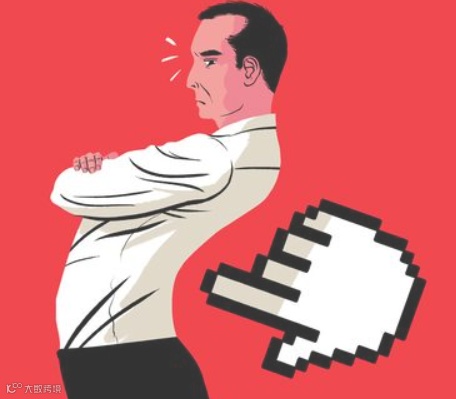
Illustration of a businessman arching his back to avoid being poked by a pointing finger cursor
DIGITAL DESIGN sounds innocuous enough. Dark patterns, less so. That’s the term for user interfaces which nudge or manipulate consumers into making choices they otherwise wouldn’t.
innocuous /ɪˈnɑːkjuəs/
(formal)
not intended or likely to offend or upset anyone
synonym harmless
eg. It seemed a perfectly innocuous remark.
not harmful or dangerous
synonym harmless
eg. an innocuous substance
You will recognise many of them. The button to turn down an offer that says something like: “Yes, I would like to miss out on the bargain of the century.” The “Enroll now for rewards” option which is three times bigger and much brighter than the one saying, “I’d just like the thing I came here for.” The cancellation journey so byzantine that people forget what it was they were trying to do. The message that implies 300 people are looking at the same hotel room as you.
byzantine/ˈbɪzəntiːn/
(also byzantine) (formal) (of an idea, a system, etc.) complicated, secret and difficult to change
eg. an organization of byzantine complexity
eg. The instructions for assembling the furniture were so byzantine that it took us hours to figure out.
eg. The byzantine tax system confused even the most experienced accountants.
Such practices can be very effective, at least in the short term. A study published in 2021 by Jamie Luguri and Lior Strahilevitz of the University of Chicago Law School exposed samples of American consumers to dark patterns when promoting a free trial of a service.
Mild dark patterns, such as a choice between one button marked “Accept and continue (recommended)” and another marked “Other Options”, made participants more than twice as likely to proceed than members of a control group exposed to a simple “Accept” or “Decline” choice. Aggressive designs, such as forcing people to click through several screens in order to decline the service, more than quadrupled the acceptance rate. Numbers such as these are hard for bosses to dismiss.
Dark patterns are not all sinister. Design choices can be shadowy in some lights and reasonable in others: it is useful to know whether inventories of hotel rooms or tickets are running low, for example. Some forms of manipulation are part and parcel of commerce: if advertising is not quite legitimised lying, as H.G. Wells supposedly called it, it is not the unvarnished truth either.
sinister
seeming evil or dangerous; making you think something bad will happen
eg. There was something cold and sinister about him.
eg. There is another, more sinister, possibility.
eg. We needn’t assume that there was a sinister motive for what she did.
part and parcel of something
an essential part of something
eg. Keeping the accounts is part and parcel of my job.
eg. While automation is key, humans remain part and parcel of this operation.
eg. Perversity /pɚˈvə..sɪti/ is part and parcel of comedy.
perversity /pɚˈvə..sɪti/
[uncountable]
deliberate determination to behave in a way that most people think is wrong, unacceptable or unreasonable
eg. He refused to attend out of sheer perversity.
unvarnished
[only before noun] (formal) with nothing added
eg. It was the plain unvarnished truth.
Consumers themselves differentiate between levels of deception. A recent paper by Shannon Duncan of the University of Pennsylvania and her co-authors looked at how people reacted to adverts from an aid organisation. They found that people objected more to artificiality (using a child actor to accurately represent poverty in a village, say) than to misleading devices such as cherry-picking a real child who is atypically poor.(They discovered that individuals expressed greater disapproval towards artificiality (for instance, employing a child actor to authentically depict poverty in a village) compared to deceptive tactics like selectively choosing a real child who is unusually impoverished.)
atypical /ˌeɪˈtɪpɪkl/
not typical or usual
opposite typical
eg. atypical behaviour
eg. Both groups exhibit below-average empathy, rigid attitudes and an atypical preoccupation with themselves.
Dark patterns can replicate without much thought. According to Marie Potel, a co-founder of Fair Patterns, a firm that helps to fix dark patterns, problematic designs are often cut and pasted from standard templates. Generative-AI tools may make this problem worse because they are trained on the dark-patterned internet. But bosses have two big reasons to pay more attention to design choices.
The first is a rising tide of regulation and litigation. Lawmakers from Brussels to California to London have cracked down on dark patterns. Last month the Federal Trade Commission reached a record $2.5bn settlement with Amazon, after the agency alleged that the retailer had manipulated consumers into enrolling in its Prime subscription service and then made it unreasonably hard to cancel. (Amazon says the settlement does not imply any admission of guilt.) In June a Dutch consumer association launched a class-action lawsuit against Booking.com, a hotel-booking platform, accusing it of using unlawful design tactics to mislead customers.
The second reason for managers to eschew dark patterns is that they can hurt their firms’ long-term interests. Consumers dislike egregious attempts to manipulate them into buying things: the study by Messrs Luguri and Strahilevitz found that aggressive techniques upset the consumers who encountered them.
egregious/ɪˈɡriːdʒiəs/
(formal) extremely bad
eg. egregious behaviour
eg. an egregious error
ergonomic/ˌɜːrɡəˈnɑːmɪk/
designed to improve people’s working conditions and to help them work more efficiently
eg. ergonomic design
Making it hard for customers to extricate themselves from contracts can also backfire, according to Navdeep Sahni of Stanford University, one of the authors of a study that randomised the type of subscription offer shown to over 1m customers of a European media business. Some were offered promotional trials that auto-renewed into paid subscriptions, and others were offered trials that automatically expired.
People on auto-renewal contracts stuck around in greater numbers, as you might expect. But that wasn’t the whole story. Initial take-up of the auto-renewal option was 35% lower, for instance. Aware that they might ultimately spend more money than they wanted to, plenty of people avoided the product altogether. Auto-cancellation subscriptions ended up being better for the business, says Mr Sahni. Dark patterns can make consumers behave in self-defeating ways. They can do the same for firms.■
self-defeating
causing more problems and difficulties instead of solving them; not achieving what you wanted to achieve but having an opposite effect
eg. Paying children too much attention when they misbehave can be self-defeating.
eg. It becomes self-defeating to go on wrangling about tactics.