BEIJING, October 20th (Xinhua Silk Road/Shao Li) -- In recent years, China has made remarkable progress in international cooperation on green infrastructure, particularly in green and low-carbon transportation and renewable energy, turning the vision of a Green Belt and Road into reality. On October 18th, experts in green and low-carbon development from China and abroad gathered in Beijing for the Thematic Dialogue on Jointly Building Beautiful Cities and Empowering Green Infrastructure with a New Future and the 2025 Annual Meeting of the Green and Low-Carbon Expert Network (GLEN). They shared experiences, built consensus, and offered recommendations for deepening urban green and low-carbon cooperation and advancing green development.
Advancing a Green Belt and Road and Driving the Green Transformation and Upgrade of Infrastructure
The interwoven challenges of escalating climate change, soaring energy demands, and a sluggish global economic recovery have placed greater urgency on accelerating the worldwide green transition. This is particularly true for enhancing the resilience, smart capabilities, and sustainability of infrastructure on a comprehensive scale. Cities, as major hubs of energy and resource consumption, possess significant potential for emission reduction and can serve as powerful demonstration cases. Promoting green, low-carbon development in urban infrastructure can generate substantial scale effects, offering considerable mitigation potential and playing a critical exemplary role.
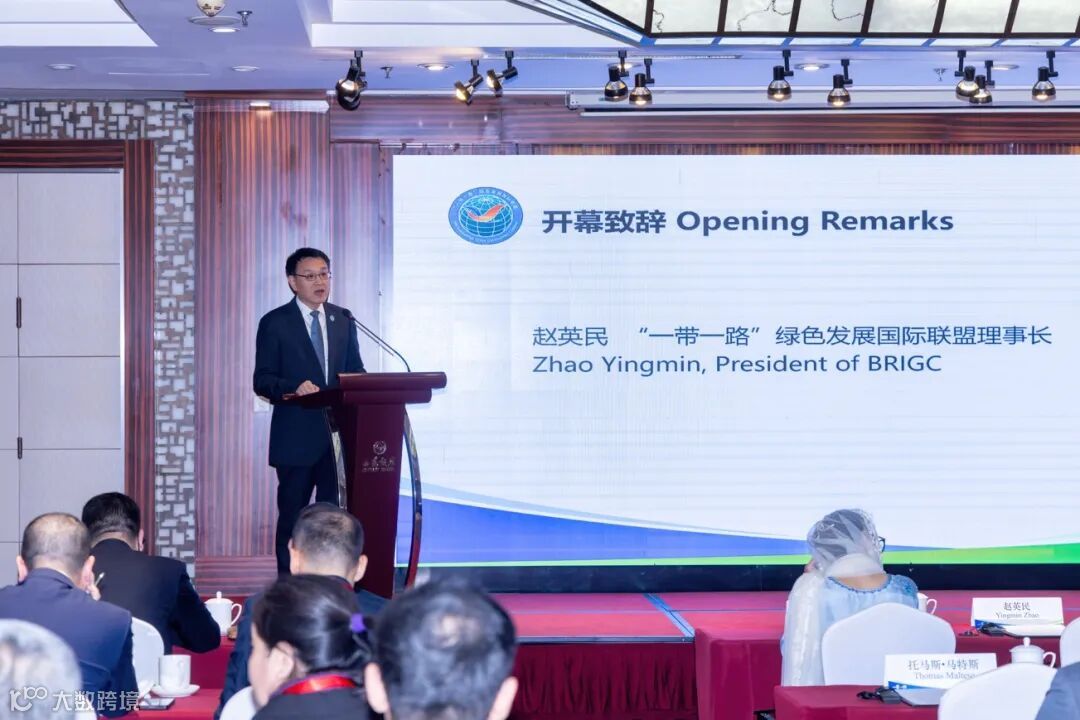
Zhao Yingmin, President of the BRI International Green Development Coalition (BRIGC), noted in his remarks that the demand for green infrastructure in developing countries is growing increasingly urgent. Some countries face challenges such as "large energy gaps but high costs of traditional infrastructure" or "a desire to reduce carbon emissions but a lack of technological support." China's green technologies align closely with these needs. For example, small-scale, distributed photovoltaic systems can quickly solve power supply issues in villages, while advanced battery technologies provide critical support for the electrification of transportation in developing countries. These practical and "down-to-earth" solutions are becoming important bridges connecting China's supply capabilities with developing countries' demands.
In green energy, a series of clean, efficient, and high-quality projects, including the Mozura Wind Park in Montenegro and the Karot Hydropower Project in Pakistan, have been completed, providing sustainable development momentum to many countries. Particularly over the past decade, China has helped reduce the average cost of electricity for global wind and solar projects by 60% and 80%, respectively, through technological upgrades and industrial scaling, making clean power a widely accessible solution to energy shortages in developing countries.
In green transportation, China has supported partner countries in transforming their transportation infrastructure with lower costs and greater efficiency through technological cooperation. Data show that the China–Laos Railway has reduced freight transport carbon emissions by over 80% compared to road transport, carrying a cumulative 46.5 million tons of cargo in 2024 and reducing approximately 1.86 million tons of CO₂ emissions. The Jakarta-Bandung High-Speed Railway uses permanent magnet traction motor technology, reducing lifecycle carbon emissions by 30%, and has become the first low-carbon railway in Southeast Asia.
Mark Watts, Executive Director of C40 Cities Climate Leadership Group, noted that China has made tremendous progress in clean energy and electrification, with technological innovation driving significant advancements in infrastructure construction. Guangzhou now operates an almost fully electrified bus fleet with an intelligent digital management system, and residents of Qingdao have easy access to charging stations, inspiring visions of more cities offering such quality of life and infrastructure. He added that bus electrification in Africa is still at an early stage and could benefit greatly from China's transformation experience.
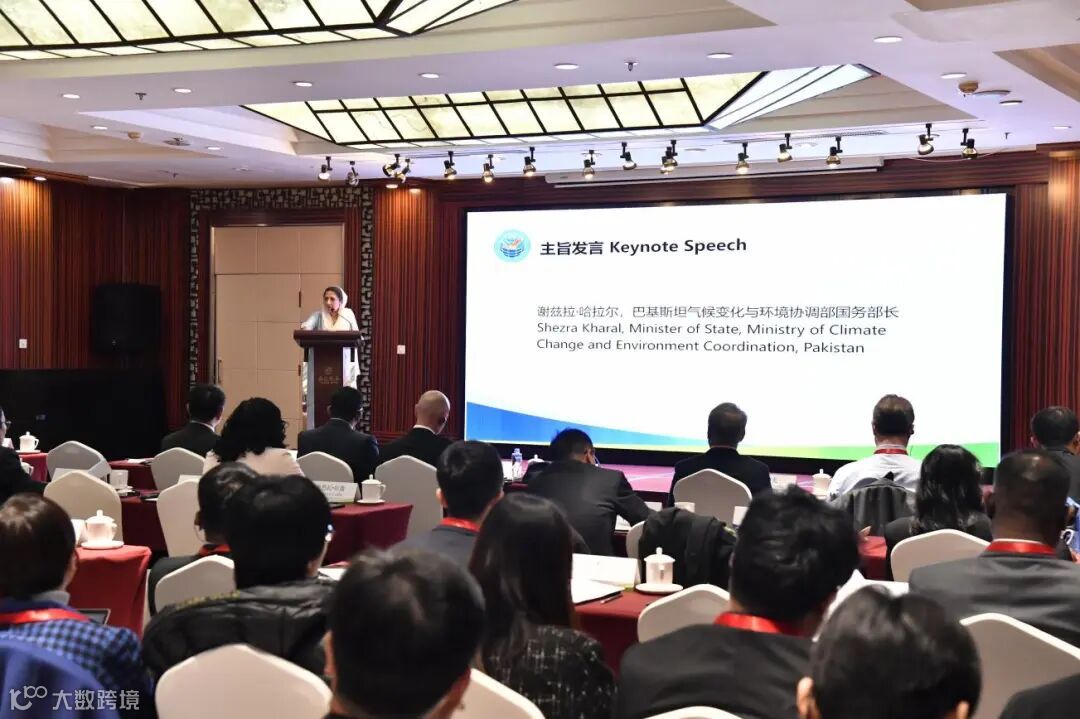
Shezra Kharal, Minister of State of the Ministry of Climate Change and Environmental Coordination of Pakistan, emphasized that the path to sustainable development must be achieved through urban transformation. Cities are not only engines of development but also centers of emissions and resource use. "To achieve global climate goals, we must reimagine urban infrastructure to make it greener, more resilient, and more inclusive," she said.
Ibrahim Mimrah, State Minister of the Ministry of Tourism and Environment of the Maldives, stated that green and resilient infrastructure is crucial for small island developing states like the Maldives. The Belt and Road Initiative (BRI), with its focus on green development, provides a strong framework for infrastructure development, ensuring that projects achieve long-term benefits with minimal environmental impact. Regional cooperation platforms established under the BRI framework help countries share experiences, strengthen capacity building in the Global South, and promote the scaling up of technologies such as smart grids and digital twin systems, acting as catalysts for green development.
Boosting Synergies Across Sectors and Advancing Beautiful Cities through Innovative Technologies
As one of the eight actions proposed by China to support high-quality Belt and Road cooperation and promote green development and an important platform for technological innovation and exchange, GLEN brings together leading domestic and international experts in green and low-carbon development related areas to provide targeted policy recommendations and technical solutions to address the specific challenges and practical needs faced by Global South countries in their green transitions.
Jointly building beautiful cities requires effectively addressing environmental challenges arising in the process of urban development. Innovative technologies such as information systems and artificial intelligence play a major role in pollution prevention and control, as well as in improving residents' well-being and sense of gain. Experts at the meeting shared successful practices and experiences on this front.
Chui Ho Kwong, Director of the Environmental Protection Department of Hong Kong Special Administrative Region Government, introduced a large-scale environmental assessment system built on 30 years of historical data, integrated with environmental data, intelligent tools, and three-dimensional construction models. This system can accurately monitor air pollution and noise and conduct complex assessments of ecological species, cutting the time required for large-scale environmental assessments in half. Chui noted that the platform has been tested in Shanghai and can be adapted and applied by cities in different countries based on their specific circumstances.
Thilak Hewawasam, Chairman of the Central Environmental Authority of Sri Lanka, emphasized the need to establish air quality forecasting systems through modeling to better predict and respond to air pollution challenges.
Wang Silian, Chair of the Board of China Everbright Environment Group Limited, shared insights resulted from the company's experience in waste-to-energy investment and operation, emphasizing that environmental infrastructure must become more intensive and efficient, enhance ecological governance effectiveness, and foster sustainable ecosystems, public engagement, and business models.
Chen Jianxiang, Chairman of Shenzhen Lions King Hi-Tech Group, highlighted how eco-industrial parks can use AI systems for integrated urban waste treatment, produce biodiesel through biotechnology, and convert methane into green electricity, with the parks themselves becoming part of the urban landscape.
Experts also discussed low-carbon buildings, the contribution of nature-based solutions to urban development, and the role of green finance. Ju Xiaolei, Deputy Director of the National Engineering Research Center for Human Settlements, noted that building-integrated photovoltaics have become a major policy focus in China, with the demand for low-carbon buildings further driving their application.
Yu Can, Senior Engineer of Beijing Energy Conservation and Environmental Protection Center, stated that Beijing is at the forefront of photovoltaic construction and is prioritizing the development of distributed photovoltaics in the building sector.
Craig Hanson, Managing Director and Executive Vice President for Programs of the World Resources Institute, pointed out that nature-based infrastructure can enhance environmental resilience, create jobs, and serve as an accelerator for green development.
"Sustainable finance and green innovation will serve as twin engines for advancing high-quality urban infrastructure development," said P C Chan, CEO of Hong Kong Quality Assurance Agency (HKQAA). Since 2016, HKQAA has developed a green finance certification program that provides certification and evaluation services to ensure funds are effectively directed toward green projects with environmental and social benefits.
Experts from the China Solid Waste and Chemicals Management Center of the Ministry of Ecology and Environment, the Guangzhou Municipal Transportation Bureau, Guangzhou Bus Group, Qingdao Urban Transportation Energy Technology Group Co., Ltd., the Qingdao Institute of Transportation Science, the Planning and Research Institute of the Ministry of Transport, the China-Africa Development Fund, the Hong Kong Exchanges and Clearing Limited, as well as transport authorities from Durban and Cape Town in South Africa, and C40's Zero Emission Bus Rapid-Deployment Accelerator (ZEBRA) Partnership, also shared their perspectives.
Synergizing Cooperation and Innovation to Drive Sustainable Urban Development
While sharing their experiences in green development, representatives from various countries also expressed their desire to promote urban sustainability through cross-regional, cross-sectoral, and cross-departmental cooperation under the BRI framework, leveraging green innovation.
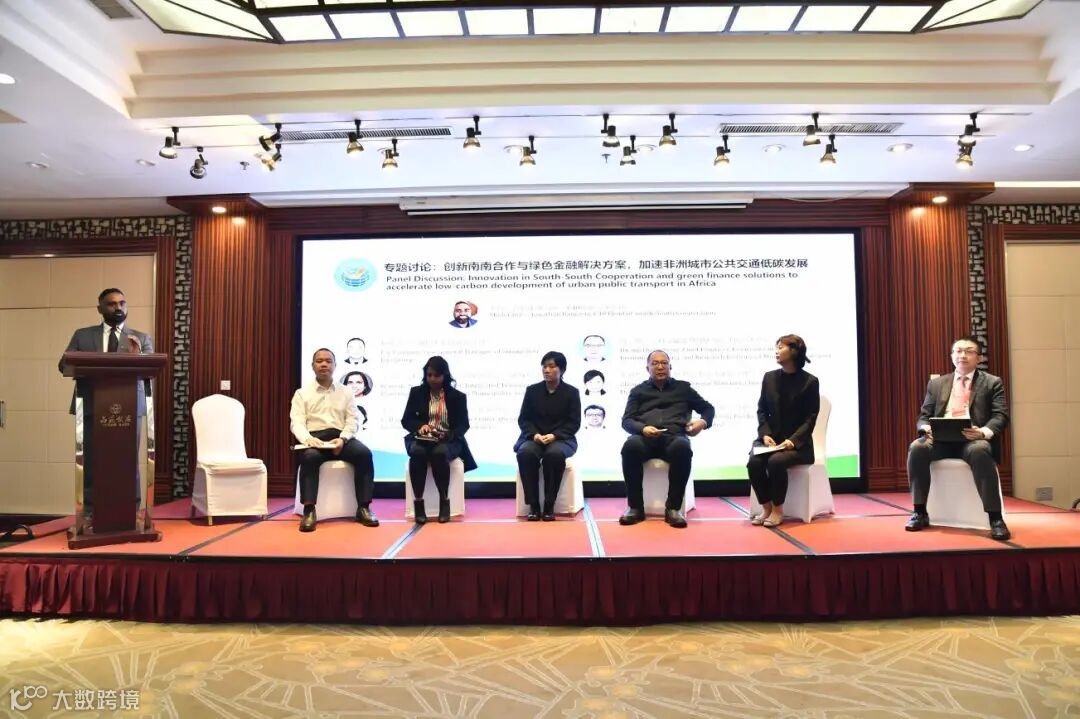
"Let us work together to seek a new paradigm for urban climate cooperation," said Mark Watts. The Global South, especially Africa and Latin America, is seeking greener pathways for urbanization. However, disparities in policy, technology, and financing make such transitions challenging. Today, many developing countries can learn from China's transformation experience and achieve green development in more convenient and cost-effective ways, benefiting their populations. "C40 began exploring Belt and Road urban South-South cooperation with BRIGC two years ago and stands ready to connect cities and facilitate communication and exchange between cities in the Global South and other regions."
A representative from Cape Town expressed a desire to learn from other cities' experiences in developing low-carbon public transportation and called for more opportunities for exchange. A representative from Qingdao noted that many cities in China and Africa share common needs in urban transport governance and green and low-carbon transition. Qingdao hopes for more opportunities to "go global" and carry out technical exchanges and project cooperation with African cities to jointly advance the green and low-carbon transformation of the transportation sector.
To further deepen cooperation between China and Belt and Road partner countries in the field of green urban infrastructure, Zhao Yingmin proposed three recommendations:
The first is strengthening policy coordination and consensus on green development. BRIGC can be used as a platform to enhance dialogue and exchange on green infrastructure policies, promote coordinated approaches in areas such as technical standards, market access, and environmental regulation, and host regular green infrastructure exchange activities through multilateral platforms to further consolidate international consensus.
The second is promoting the alignment and application of green technology innovations. The focus can be centered on sharing cutting-edge technological achievements in key areas such as photovoltaics, electric buses, and low-carbon buildings, and leveraging resources from GLEN and the BRI Environmental Big Data platform to provide partner countries with specialized services such as technical consulting, solution design, and risk assessment.
The third is enhancing the technical capacity of partner countries for green development. Initiatives such as the Belt and Road South-South Cooperation Initiative on Climate Change and the Green Silk Road Envoys Program can be utilized to organize thematic seminars on green infrastructure, green cities, and climate change response, helping partner countries improve their overall capacity to independently advance green transitions and address climate challenges.
The thematic dialogue was hosted by BRIGC and co-organized by the C40 Cities Climate Leadership Group and the Tanoto Foundation China with the aim to build a platform for dialogue and exchange on green innovation in infrastructure under the BRI. It explored the use of various innovative approaches to empower urban infrastructure development with advanced digital and intelligent technologies, promoting interconnectivity and innovative development of urban infrastructure among Belt and Road partner countries.

推荐阅读
Building a Green Finance System for Global Sustainability
Events|Belt and Road Green Innovation Conference Held in Beijing
MEE|2025 BRI Green Innovation Conference Held in Beijing