


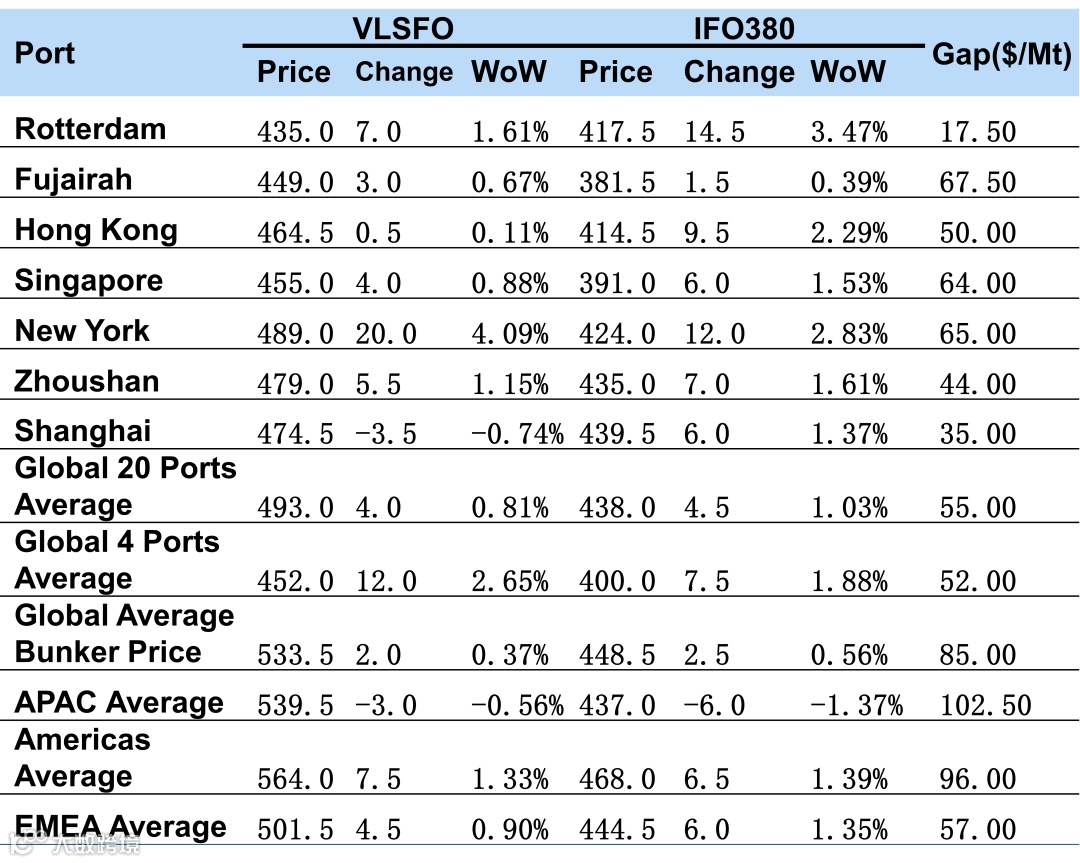
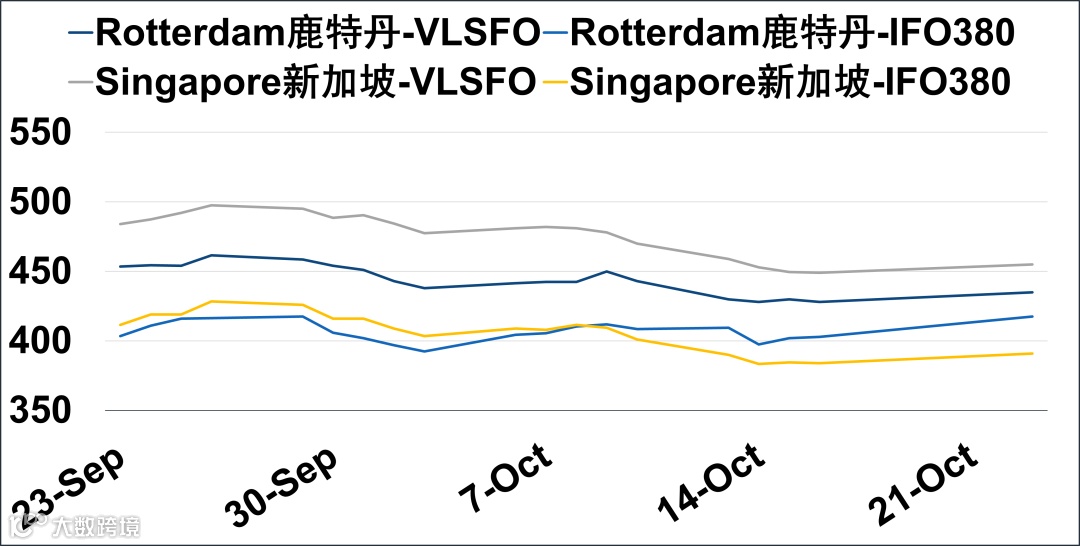
BUNKER PRICE

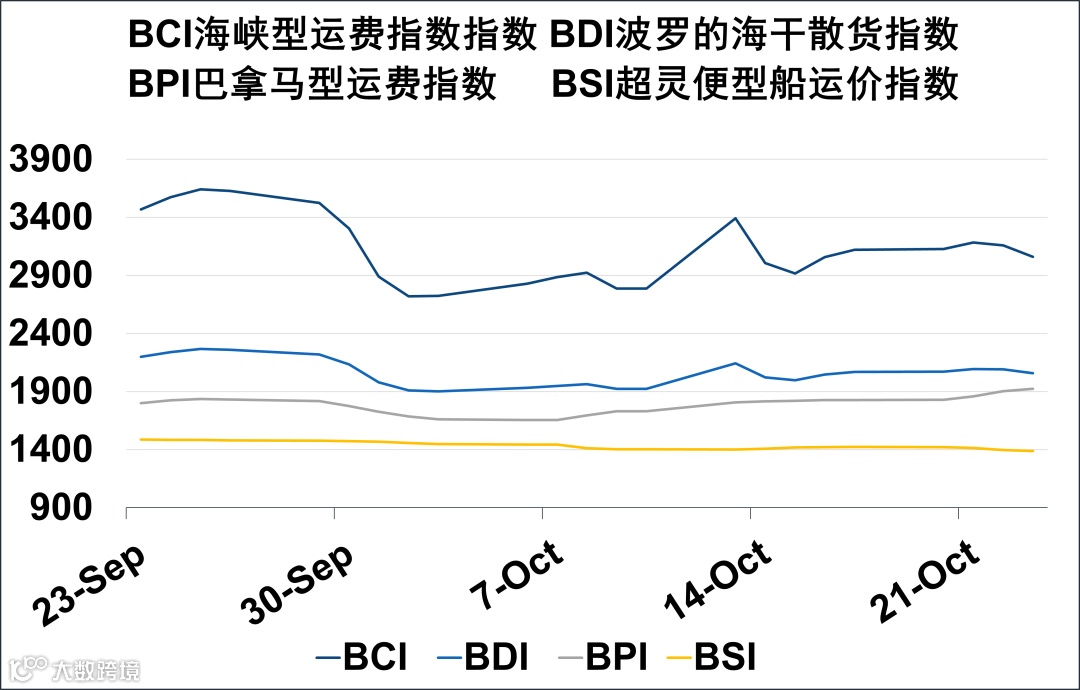
BALTIC DRY INDEX

New Building Orders
(2025.10.13-10.19)


市场动态
News Corner
Industry Expert Challenges Viability of Mainstream Green Shipping Fuels, Calls for New Technology
At the European Shortsea Network Summit in Greece, Panos Zachariadis, technical director of Atlantic Bulk Carriers, raised fundamental concerns about currently proposed green shipping fuels. The seasoned marine engineer revealed that green hydrogen is 60-100 times more potent as a greenhouse gas than CO₂ and prone to leakage; green methanol faces carbon capture scalability issues; while ammonia poses lethal toxicity risks.
"Sorry to be the bearer of bad news, but we need new technologies," Zachariadis stated. He dismissed LNG as a true alternative fuel and noted biofuels, while available, would be insufficient for industry needs. Among existing options, he considered diesel "the lesser of all evils."
Advocating operational innovations, Zachariadis highlighted that "virtual arrival" implementations could reduce international shipping emissions by 30%, urging EU authorities to mandate port compliance. On nuclear power, he envisioned "atomic batteries" becoming viable in 10-15 years, though waste management remains unresolved.
The discussion coincided with the IMO's decision to postpone its Net-Zero Framework vote by one year, underscoring persistent divisions in maritime decarbonization pathways.
Haitong Development Announces Q3 Results and "100-Ship Plan" for Fleet Expansion
Fujian Haitong Development Co., Ltd. (603162) has released its third quarter 2025 report. The company reported Q3 revenue of RMB 1.209 billion, up 34.27% year-on-year, with net profit attributable to shareholders of RMB 166 million, down 1.49% year-on-year. For the first three quarters, cumulative revenue reached RMB 3.009 billion, increasing 16.32% year-on-year, while net profit was RMB 253 million, declining 38.47% year-on-year.
The company unveiled a "100-ship plan" aiming to expand its owned fleet to 100 vessels by 2028-2029, with an estimated addition of 15 ships annually. The future fleet structure will be optimized to a ratio of 7:2:1 for Supramax:Panamax:Capesize vessels.
Haitong Development remains optimistic about the dry bulk shipping market, anticipating sustained global commodity demand growth coupled with slow supply growth. The company is particularly positive about transportation demand generated by the Simandou iron ore project. It is also actively developing its heavy-lift vessel business, having established dominant routes.
Given current high newbuilding prices, tight shipyard capacity, and increasingly stringent environmental regulations, the company will temporarily postpone new vessel orders until reaching a certain fleet scale. Regarding dividend policy, more retained earnings will be used for fleet expansion, with commitment to increase cash dividend ratios once the fleet reaches sufficient scale.
Interest Growing in Nuclear-Powered
Shipping as Industry Prepares for Technol
-ogical Advances
Amid mounting decarbonization pressure, the feasibility of nuclear-powered ships is gaining serious consideration from industry organizations. Lloyd's Register and DNV have recently published respective technology assessment reports, while the MIT Maritime Consortium released a "Nuclear Ship Safety Handbook" this week.
Classification societies acknowledge nuclear power as a potential future option for shipping propulsion, while highlighting complex challenges including high costs, emerging technologies, and regulatory uncertainties. LR's Power to X Director Mark Tipping emphasized that the core challenge lies not in reactor technology itself, but in achieving economic viability while ensuring utmost safety standards.
The International Maritime Organization has initiated updates to its non-mandatory Nuclear Code, with preliminary discussions scheduled for January 2026. Concurrently, Lloyd's Register is collaborating with the International Atomic Energy Agency on the "ATLAS" program, focusing on licensing frameworks for maritime nuclear applications.
Proponents suggest new reactor technologies could be adapted as "nuclear batteries" for ships, enabling zero-emission voyages with minimal refueling requirements. However, DNV Maritime CEO Knut Ørbeck-Nilssen stressed that technical, regulatory and social acceptance barriers remain. A DNV senior researcher added that viable business cases must account for full lifecycle costs including fuel supply, reactor maintenance and waste management, noting that modular standardized designs could significantly reduce expenses.
国际速讯
Market News From LLOYD'S list
Falling attack costs help fuel rising cyber risk at ports

Los Angeles faces up to 90m attempted attacks per month
Source: ipopba - stock.adobe.com
Many companies in port ecosystems lack the management or finances to deal with online threatsTHE threat landscape for cyber attacks on port and terminal infrastructure is evolving, with state actors and criminal organisations and ‘hacktivists’ all having the motive and capability to cause disruptions and target critical points.But the challenge is organisational as well as technical, according to Chloe Rowland, data collaboration, risk and resilience manager with the International Association of Ports and Harbors.“Many ports still lack standardised cyber security protocols,” she told the World Ports Conference in Kobe. “They face fragmented oversight and often struggle with underinvestment in digital resilience.”As more infrastructure became automated and ports became smarter and more digital, cyber security must be built into the foundations and not treated as an afterthought, she added.One of the key issues was a lack of awareness at board level. In large companies, cyber security accounted for between 8%-15% of IT budgets, but in smaller companies it was often much less, said Chin Beng Ong, Maritime and Port Authority of Singapore chief information security officer.This was relevant in multi-stakeholder ports, where smaller companies often interacted on the same networks shared by the port authority and other users.“There is the weakest link factor,” he said. “If any part of that fails, it can take down the whole port.” Port of Los Angeles chief information officer Sheeba Varuguese warned that IT departments needed to clearly communicate risks and allocate budget to risks, but this was difficult in organisations that did not have a C-level security function in management.But putting a value on risk meant it was difficult for boards to price the cost of security.“The RoI is not like other investments,” Varuguese said. “One metric is the number of attacks defended. Los Angeles sees 80m-90m attempted attacks per month, any one of which could affect cargo movement.”Chin said the problem was being exacerbated by the falling cost of AI-assisted attacks. The cost of an average attack is thought to have fallen to around $0.10 from $10 in recent years.“The NotPetya attack on Maersk woke up cyber security, but attacks can now also affect physical operations,” he said.A mismatch between the digital world of IT and the physical infrastructure of ports could also lead to potential risks, he added.“IT doesn’t know how a crane works,” he said. “On the other hand, a chief engineer’s first response when something goes wrong is to hit the reset button. But if he does this, it will likely wipe any chance of doing forensics on the problem.”The solution, he suggested, was to train IT in how ships and infrastructure worked, and to train engineers about IT.Other protective measures suggested included constant training for evolving threats and continuous monitoring of weak points, as many threat vectors included insiders not following security protocols rigorously.
AII the Information Is from the Internet
END