



引言 introduction
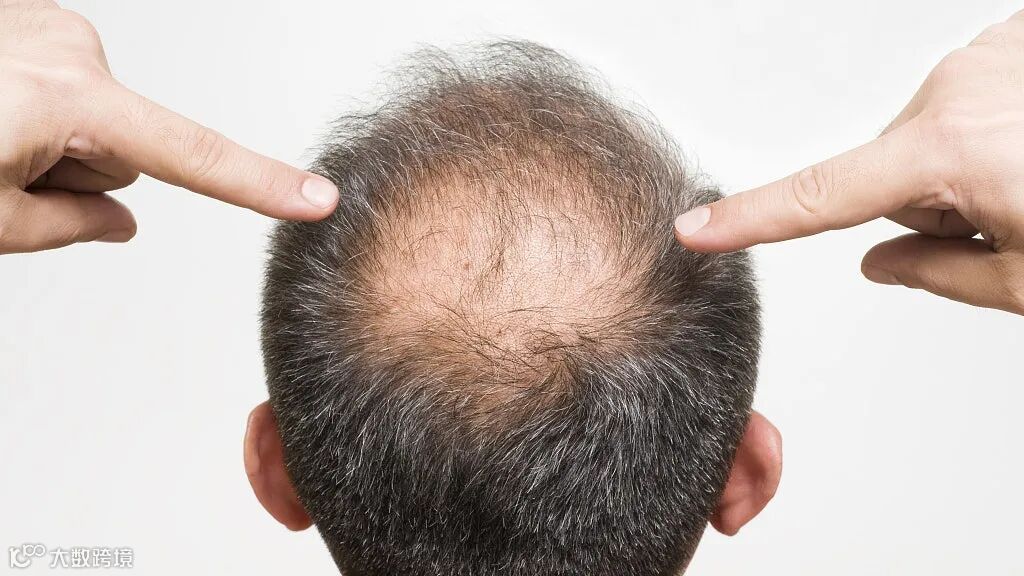
根據國家衛健委統計,中國已有超過 2.5 億人正被脫髮困,其中35歲以下人口比超過60%佔。不只中年人,90、95後都在為髮際線焦慮。
傳統治療方案像米諾地爾、非那雄胺,雖然有一定效果,但副作用、依賴性和復發風險始終難以解決。
就在最近,一項「幹細胞外泌體注射治療脫髮」的臨床研究引發了廣泛關注。
According to statistics from the National Health Commission, over 250 million people in China are struggling with hair loss , with over 60% of them under the age of 35. This anxiety isn't limited to middle-aged adults; those born in the 1990s and 1995s are also experiencing hairline concerns.
Traditional treatment options such as minoxidil and finasteride, although effective to a certain extent, are always difficult to solve due to side effects, dependence and the risk of recurrence.
Just recently, a clinical study on "stem cell exosome injection for the treatment of hair loss" has attracted widespread attention.
研究者聲稱,僅用6週時間,就讓頭髮密度顯著提升,掉髮數量驟降,毛囊狀態全面恢復。
Researchers claim that in just 6 weeks, hair density was significantly increased, hair loss was sharply reduced, and the condition of hair follicles was fully restored.
01|為什麼頭髮會「越來越少」?答案藏在毛囊生命週期裡
01|Why is hair growing thinner and thinner? The answer lies in the life cycle of hair follicles
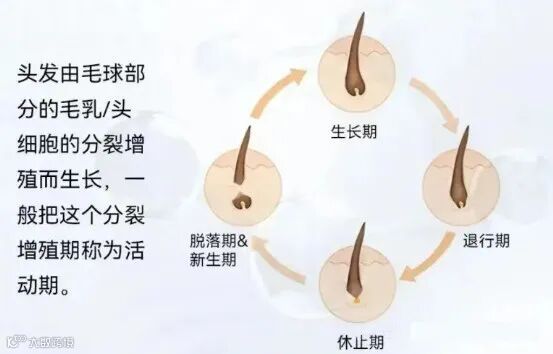
掉髮這件事,從來不是頭髮掉下來的一瞬間,而是毛囊在一點點「沉默」。
我們每一根頭髮的誕生,其實都遵循一個固定的生命週期:生長期(Anagen)— 退行期(Catagen)— 休止期(Telogen)— 脫落(Shedding)頭髮越多、越粗,說明毛囊處在活躍的生長期;而當大多數毛囊進入休止期,頭髮就會變稀、變軟、變細,最終脫落。
Hair loss is never about the moment when the hair falls out, but about the hair follicles becoming "silent" little by little.
The birth of each of our hair actually follows a fixed life cycle: growth phase (Anagen) - regression phase (Catagen) - resting phase (Telogen) - shedding (Shedding). The more and thicker the hair is, the more active the hair follicles are in the growth phase ; when most hair follicles enter the resting phase prematurely, the hair will become thinner, softer, thinner, and eventually fall out.
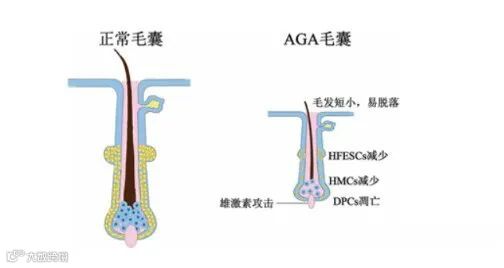
🧬 雄性禿(AGA)最關鍵的問題有二:
DHT攻擊毛囊:體內的雄激素(睪固酮)在5α-還原酶作用下轉化為DHT(二氫睪固酮),它會作用在有遺傳敏感性的毛囊上,造成毛囊逐漸“微型化”,即:毛囊變小、週期變短、產生的頭髮越來越細。
毛囊微環境惡化:毛囊周圍的血液循環變差、發炎細胞增多、營養供應減少,進一步抑制了毛囊幹細胞的活性,讓原本還能生髮的毛囊進入「休眠期」。
🧬 There are two key issues with androgenic alopecia (AGA):
DHT attacks hair follicles : The androgen (testosterone) in the body is converted into DHT (dihydrotestosterone) under the action of 5α-reductase, which will act on genetically sensitive hair follicles, causing the hair follicles to gradually "miniaturize", that is: the hair follicles become smaller, the cycle becomes shorter, and the hair produced becomes thinner and thinner.
Deterioration of the hair follicle microenvironment : The blood circulation around the hair follicles deteriorates, the inflammatory cells increase, and the nutrient supply decreases, further inhibiting the activity of hair follicle stem cells, causing the hair follicles that were originally able to grow hair to enter a "dormant period."
這就像一個工廠,原本每月生產100根頭髮,但因為上游能源中斷、工人罷工、管理混亂,慢慢只剩下幾十根,最後乾脆關門大吉。
It's like a factory that originally produced 100 hairs per month, but due to upstream energy outages, worker strikes, and chaotic management, slowly only a few dozen hairs were left, and finally the factory simply closed down.
💊 那傳統的治療方法解決了嗎?
米諾地爾:是血管擴張劑,能延長毛囊的生長期,但只能維持,不治本,停藥即退。
非那雄胺:抑制5α-還原酶生成DHT,從而減緩毛囊萎縮,但長期用有性功能風險,且僅限於男性使用。
植髮:本質是“搬運工”,把後枕部毛囊移到前額,但不能“再生”毛囊,也無法阻止原生區繼續掉髮。
護髮品/營養補劑:輔助效果,無法解決核心的毛囊休眠問題。
💊 So, have traditional treatments solved the problem?
Minoxidil : It is a vasodilator that can prolong the growth period of hair follicles, but it can only maintain the effect and cannot cure the root cause. The effect will disappear when the drug is stopped.
Finasteride : Inhibits 5α-reductase to produce DHT, thereby slowing down hair follicle atrophy, but long-term use poses risks to sexual function and is limited to male use.
Hair transplantation : It is essentially a "porter" that moves the hair follicles from the back of the head to the forehead, but it cannot "regenerate" hair follicles, nor can it prevent the original area from continuing to lose hair.
Hair care products/nutritional supplements : auxiliary effects, cannot solve the core problem of hair follicle dormancy.
📌 所以,真正的「突破點」在於:
如何「叫醒」那些已經沉睡但尚未死亡的毛囊幹細胞,重啟它們的生長程序。
而這正是外泌體在毛髮治療領域展現潛力的原因——它不是壓制,也不是替代,而是喚醒和引導。
📌 So, the real “breakthrough point” is:
How to "wake up" those hair follicle stem cells that have been dormant but not yet dead, and restart their growth program.
This is exactly why exosomes show potential in the field of hair treatment - it is not suppression or replacement, but awakening and guidance.
02|外泌體像工程師,重啟毛囊車間
02|Exosomes act as engineers, restarting the hair follicle workshop
外泌體就像細胞之間派發的“訊息快遞”,每一個小囊泡都裝著修復指令和生長訊號。它不是簡單刺激毛囊工作,而是教導毛囊怎麼重新恢復功能。
這次在掉髮治療中登場的,是胎盤間質幹細胞來源的外泌體(PMSC‑Exos),含有多種對毛囊至關重要的因子,例如microRNA、生長因子、訊號蛋白等。我們可以把它想像成:
工程師+ 快遞員+ 導演 三合一-傳送訊號、送工具、安排流程。
Exosomes are like "message couriers" sent between cells. Each small vesicle contains repair instructions and growth signals. They do not simply stimulate hair follicles to work, but teach them how to restore their function .
This time, exosomes derived from placental mesenchymal stem cells (PMSC-Exos) are being used in hair loss treatment. They contain a variety of factors that are crucial to hair follicles, such as microRNA, growth factors, signaling proteins, etc. We can think of it as:
Engineer + courier + director three in one - sending signals to hair follicles, delivering tools, and arranging processes.
📌 外泌體是怎麼「叫醒」沉睡毛囊的?
|
|
|
|
|---|---|---|
|
|
|
|
|
|
|
|
|
|
|
|
|
|
|
|
|
|
|
|
這些“外泌體指令包”,讓毛囊不再是被動接受治療的部位,而變成一個主動修復的再生工坊。
📌 How do exosomes “wake up” dormant hair follicles?
|
|
|
|
|---|---|---|
|
|
|
|
|
|
|
|
|
|
|
|
|
|
|
|
|
|
|
|
These "exosome instruction packages" make the hair follicles no longer a passive part of treatment, but a regeneration workshop for active repair .
03|6週,毛囊恢復之旅
03|6 weeks, hair follicle recovery journey
樣本數:30位雄性禿患者(15男15女)治療方式:PMSC‑Exos頭皮注射,2週一次,共3次追蹤節點:基線、3週、6週觀察指標:密度、直徑、掉髮量、安全性、滿意度
📊 關鍵結果一覽:
|
|
|
|
|
|---|---|---|---|
|
|
|
|
|
|
|
|
|
|
|
|
|
|
|
|
|
|
|
|
|
|
|
|
|
Sample size : 30 patients with androgenic alopecia (15 men and 15 women) Treatment : PMSC-Exos scalp injection, once every two weeks for three times Follow-up intervals : Baseline, three weeks, and six weeks Observational indicators : Density, diameter, amount of hair loss, safety, and satisfaction
📊Key Results at a Glance:
|
|
|
|
|
|---|---|---|---|
|
|
|
|
|
|
|
|
|
|
|
|
|
|
|
|
|
|
|
|
|
|
|
|
|
04|外泌體治療脫髮案例總結
04|Summary of cases of exosomes treating hair loss
除了這項胎盤外泌體的前瞻性研究,近年來還有多項臨床探索正在建構「證據拼圖」:
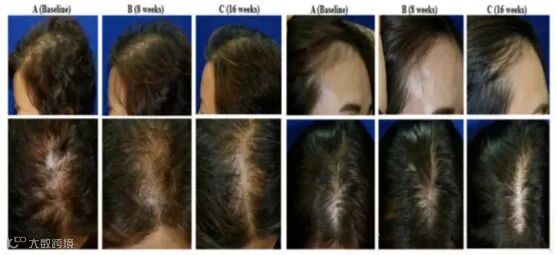
🔹 韓國雙盲對照研究(2024年)
38人參與,脂肪幹細胞外泌體
16週後毛髮密度↑28.1%,毛直徑↑14.2%
無嚴重不適
In addition to this prospective study of placental exosomes, several clinical explorations have been underway in recent years to build the “evidence puzzle”:
🔹 Double-blind controlled study in South Korea (2024)
38 people participated, adipose stem cell exosomes
After 16 weeks, hair density increased by 28.1% and hair diameter increased by 14.2%.
No severe discomfort
🔹 一篇發佈在《Aesthetic Plastic Surgery》臨床研究(2025年)
微針+外泌體,12個月內頭髮平均成長35根/cm²
滿意度高達87%,無系統性副作用
🔹 系統性回顧研究(2024年)
總結全球125例外泌體干預AGA患者數據
顯示短期療效積極、安全性良好、反覆注射耐受性高
🔹 A clinical study published in Aesthetic Plastic Surgery (2025)
Microneedle + exosomes, average hair growth of 35 hairs/cm² within 12 months
Satisfaction rate is as high as 87%, with no systemic side effects
🔹 Systematic review (2024)
Summarize the data of 125 patients with AGA treated with exosomes worldwide
Demonstrated positive short-term efficacy, good safety, and high tolerance to repeated injections
結語:頭髮長出來的那一刻,不只是毛囊的勝利
Conclusion: The moment hair grows out, it is not just a victory for the hair follicles
過去我們治療掉髮,像是在「拖延時間」──防止再掉一點,或是補上一塊假髮、移一點毛囊。
但外泌體的想法不是延遲掉發,而是重啟生髮系統,讓身體自己重新啟動「原廠設定」。
每一根重新長出的頭髮,都不是藥物強迫的結果,而是毛囊聽懂了身體「說」的語言。
它們長出來的那一刻,不只是毛囊的勝利,也意味著再生醫學正一步步走入現實世界,從實驗室,走向鏡子前每一個焦慮的你我。
In the past, when we treated hair loss, it was like "delaying time" - preventing further hair loss, or adding a wig or moving some hair follicles.
However, the idea of exosomes is not to delay hair loss, but to restart the hair growth system and allow the body to restart its "factory settings".
Every hair that grows back is not the result of forced medication, but the result of the hair follicles understanding the language the body "speaks".
The moment they grow out, it is not only a victory for the hair follicles, but also means that regenerative medicine is stepping into the real world, from the laboratory to every anxious you and me in front of the mirror.