Level up
Are video games getting harder?
Our analysis shows how games have changed in the past 40 years
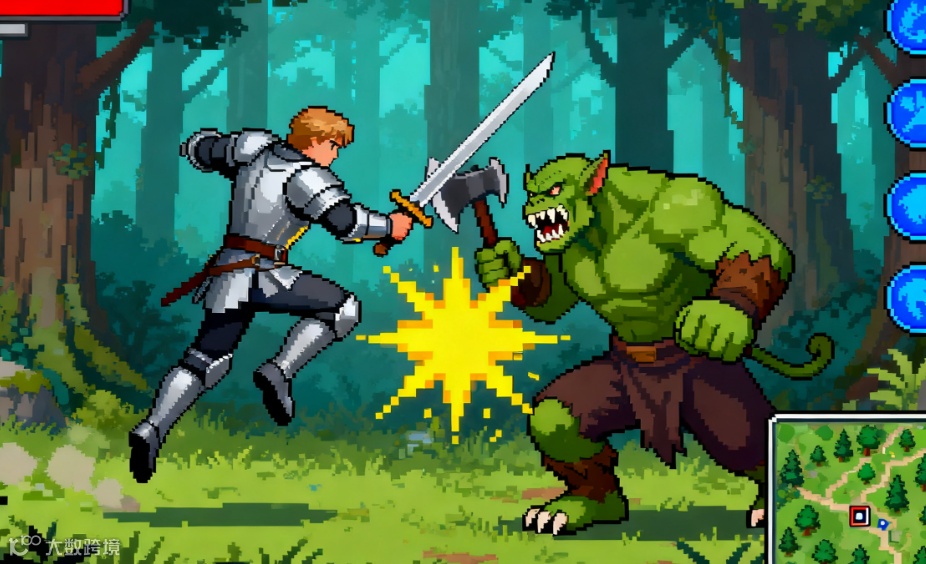
“ABOUT READY to give in?” taunts “Hades II”. Inspired by Greek mythology, the video game takes players to the underworld, where they must dispel Chronos, the “titan of time”. Like Sisyphus, most will end up doing the same thing over and over again (though pushing buttons rather than a boulder). Every time you are killed, you go back to the beginning. Failure is part of the experience; some gamers have been complaining that it is vexing.
dispel
dispel something to make something, especially a feeling or belief, go away or disappear
eg. His speech dispelled any fears about his health.
eg. " By no means." He passed his hand over his forehead, as if dispelling some strong impression.
boulder /ˈboʊldər/
a very large rock which has been shaped by water or the weather
eg. huge granite boulders underneath the cliff
eg. fallen rocks and boulders
eg. As the ice sheet rode over the land, huge boulders were ripped from the underlying rock.
ride
on water/air
[intransitive, transitive] to float or be supported on water or air
eg. (+ adv./prep.) We watched the balloon riding high above the fields.
eg. The ship was riding at anchor in the harbour.
eg. (ride something) surfers riding the waves
eg. A large bird was riding the air currents beneath it.
vexing /'vɛksɪŋ/
(old-fashioned or formal) annoying or worrying
eg. a vexing problem
eg. I found their attitude extremely vexing.
Anyone who has attempted such challenging missions may reasonably wonder: are video games getting harder? To find out, The Economist analysed rankings from GameFAQs—a website where users can rate the difficulty of games, from one (“simple”) to five (“unforgiving”)—for the most popular titles released in the past 40 years. Our findings show two things.
unforgiving
(of a place, situation, etc.) unpleasant and causing difficulties for people
eg. The island is an unforgiving place in winter.
eg. The online space can be unforgiving, and controversial personal voices can easily spiral into brand crises.
eg. Amidst the chaos of an unforgiving planet, most species will fail.
eg. The desert is a dry and unforgiving place to live.
First, games were tougher in the 1980s and 1990s. Arcade games had long been deliberately difficult, as designers wanted to coax coins from competitors. Greedy operators could even flip a switch to reduce the number of “lives” offered per turn.
When games moved into homes on consoles, money was made by selling the cartridge(or game cartridge) containing the game rather than an individual go at it.(As video games transitioned to home consoles, revenue was generated through the sale of cartridges that housed the games, rather than through individual play sessions.)(In this context, a game cartridge is a small, portable plastic case. It holds electronic components (like a circuit board with the game data) that plugs directly into a home console (e.g., Nintendo Entertainment System) to run the game. It’s not the same as printer cartridges (which hold ink/toner); this is a specialised gaming storage device.)(Here, "go" is a noun meaning a single attempt or play session. "An individual go" refers to paying to play a game one time—like how you would pay coins for a single round on an arcade machine, before home consoles existed.) Over time developers realised that games would have to be easier if they were to reach a wide audience. Nintendo, a Japanese firm, initially did not release “Super Mario Bros 2” (1986) abroad in part because it was considered too difficult. Western players instead got a version of “Doki Doki Panic”, another game.
cartridge or game cartridge
A game cartridge is a sealed container that houses a video game, including the media (usually a form of ROM chip) and additional components necessary for loading the game onto a gaming console or handheld device. Cartridges are often designed to be inserted into a compatible gaming system, allowing players to access and play the game.(Cartridges were predominant during the earlier generations of video game consoles, particularly in the 1970s through the 1990s. They are commonly associated with systems like the Nintendo Entertainment System (NES), Sega Genesis, and the Game Boy. The use of the term can extend to any physical media containing game data designed for a specific platform.)
The term “cartridge” derives from the Middle French “cartridge,” meaning a small box, container, or packaging. The use of the word in conjunction with “game” refers to the fact that these containers house electronic components and software for video games. You can also use game card (in some contexts, referring specifically to handheld and modern systems); game module (less common); ROM cartridge (specific to games that use read-only memory). Unlike this form, there are other forms like digital download (referring to games that are delivered and played via the internet, without physical media); blu-ray/DVD (for modern consoles that use disc-based media); streaming game (where the game is played in real-time from a remote server, without direct download).
Game cartridges represent an important development in the history of video gaming, providing a tangible way to distribute and play games. Although their prevalence has waned with the rise of digital distribution methods, they remain a nostalgic and iconic symbol of earlier gaming eras.
"Cartridge" here specifically refers to a game cartridge, the dedicated plastic-and-electronic device that stores a game and plugs into home consoles.
It’s different from, say, printer cartridges (for ink) because its only job is to hold and run video game data on systems like the original Nintendo or Sega Genesis.
Game Cartridge(s) means interchangeable plastic cartridges adapted for use with the N64 System, housing the Game embodied in electronic memory devices or comparable medium authorised by NINTENDO for storing and playing Games on the N64 System.
A ROM cartridge, usually referred to in context simply as a cartridge, cart, or card, is a replaceable part designed to be connected to a consumer electronics device such as a home computer, video game console or, to a lesser extent, electronic musical instruments. In old consoles, the cartridge was a simple electronic circuit which contained the game on a ROM chip (the game file is loaded in the chip with a dedicated device which depends what type of chip it is), and possibliy a little ram and a small lithium battery for saves. The Nintendo Switch uses non-volatile flash memory technology similar to SD cards that are officially called game cards. These are distinct technologies from volatile game cartridges that are similar to RAM boards. This iteration is smaller and has a larger storage capacity than its previous versions.
Game cartridges are much more durable than optical discs. A properly archived cartridge with any batteries removed or regularly replaced might expect to last 50+ years. If stored any other way, it will vary greatly but as an electronic engineer and based on experience with older systems I would expect to see the failure rate start to rapidly increase in the next few years. The reason why cartridges are so expensive, as highlighted by Eurogamer, is one of manufacturing cost. Optical media, even Blu-ray discs, are very cheap to mass produce. Cartridges are relatively-speaking much more expensive. They also are not a set cost. Game carts have a limited lifespan, of course. I am going to assume that anyone who invests in cartridges are fully aware that they will be rendered unplayable at some point. Everyone realises that, it just could not, to the same degree as the other physical media, such as discs, last for 20 years if you did not keep cartridges in proper way. Improper storage can make cartridges expire. If stored in direct sunlight, at too high or too low temperatures, or if the cartridge was exposed to air (called oxidation /ˌɑːksɪˈdeɪʃn/), your cartridge may go bad faster than usual. The PlayStation signalled Sony's rise to power in the video game industry. It received acclaim and sold strongly; in less than a decade, it became the first computer entertainment platform to ship over 100 million units. Its use of compact discs heralded the game industry's transition from cartridges.
Many games allow players to select their preferred level of difficulty. Some modern ones use artificial intelligence to adjust the game to suit people’s skills. If players miss shots too often, targets get easier. A vocal minority of “hardcore gamers” gripe that such innovations can make games too simple and taunt inexpert players to “git gud” (get good).
git gud
Getting better at a task or skill. It is a slang rendering of get good, refers to getting better at a task or skill, used especially among video gamers online. Where does git gud come from? Git gud is a deliberate misspelling of the phrase (to) get good (at something), based on an apparent “folksier” /ˈfoʊksi/ pronunciation of the phrase.
eg. You'll have to git gud if you want to beat this level.
eg. The only advice I can give you is to git gud.
The second thing our analysis shows is that a few particularly taxing games may skew players’ perceptions of the market overall. Average difficulty ratings reached their lowest point in 2010 and have plateaued since. Inevitably it is gnarly /'nɑ:li/ titles, such as “Hades II”, “Dark Souls” (2011) and “FTL: Faster Than Light” (2012), that get the most attention.
gnarly /'nɑ:li/
(slang) very good; excellent
eg. Wow, man! That's totally gnarly!
hades /ˈheɪdiːz/
[uncountable]
(in ancient Greek stories) the land of the dead
synonym is hell
eg. However it happened, the underworld is overcrowded, and Zeus has ordered Hades to let some spirits out.
How do casual players feel about daunting quests? Jay Ma, co-founder of Subset Games, which developed “FTL”, says they sought to make something they “would want to play”. Many “FTL” players were not put off by its “roguelike” nature. (The term takes its name from “Rogue”, a game of 1980 in which players are forced into do-overs.)(The term (likely "roguelike" or a related term) derives from the 1980 game "Rogue," where players often have to restart (to do over) due to the game's challenging, permadeath-like mechanics.)(The term derives its name from "Rogue," a game released in 1980 that compels players to restart their progress.)
do-over
an instance or chance of doing something for a second or further time, after an unsuccessful or unsatisfactory first attempt:
eg. if Smokey sings off key, he gets a do-over.
Yet the reception of “Hollow Knight: Silksong”, released in September, suggests there is a fine line between thrilling and infuriating. Players have lamented that “‘Silksong’ is extremely punishing”; one vowed that “I’ve had more fun at the dentist.” The creators quickly released an update to give players an easier time of it. Gaming ought to be more enjoyable than a root canal, after all. ■
the space inside the root of a tooth
eg. A general dentist, which is what we do typically, are like cleanings, fillings, root canals, crowns.
eg. Eventually, bacteria travel down into the root canal space, and fill the entire inside of the tooth.