


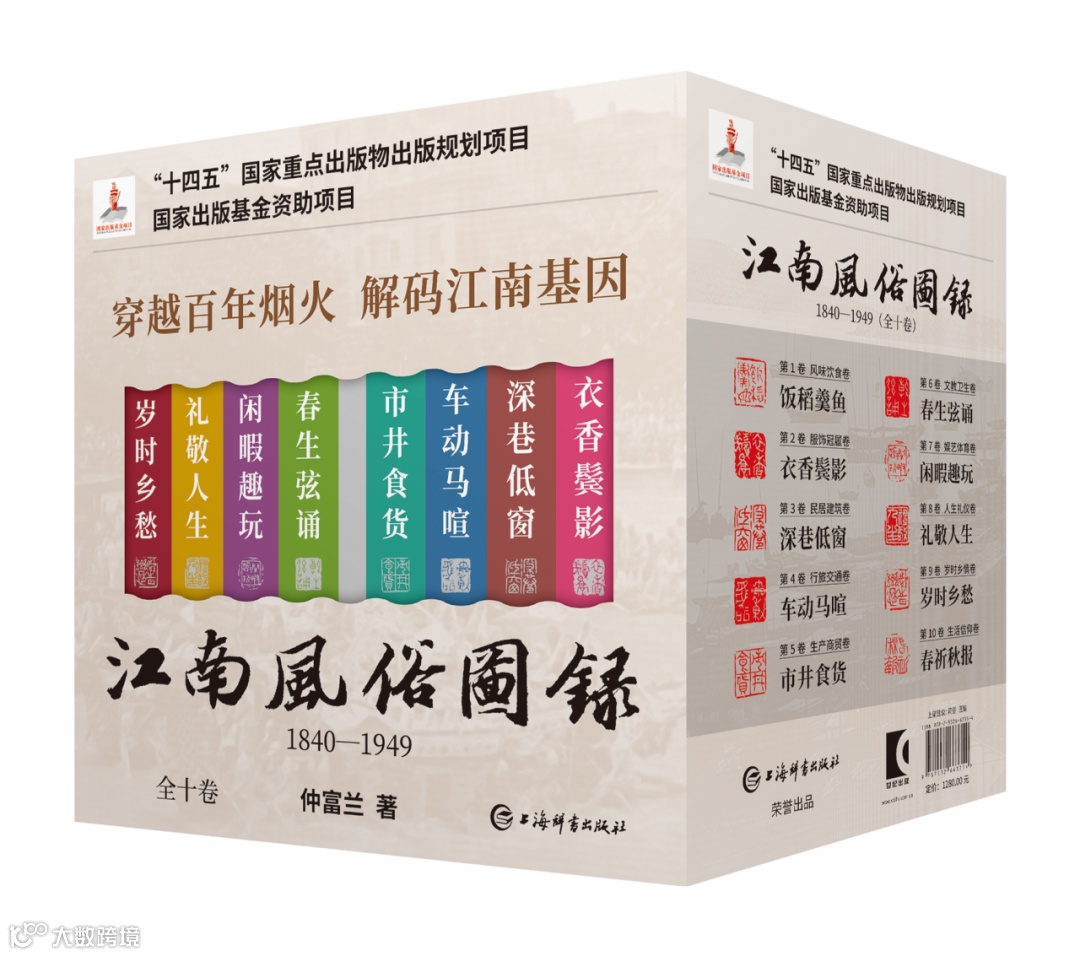
I am delighted that my ten-volume work, Illustrated Chronicles of Jiangnan Customs, has been selected for the "14th Five-Year Plan" National Key Publication Project and is being published by the Shanghai Lexicographical Publishing House, which also compiles and publishes Cihai, an Encyclopedic Dictionary of the Chinese Language. Combining illustrations with Zhuzhi poetry to organise and narrate the customs and culture of Jiangnan is a new attempt. As this book is about to launch, I would like to share a few thoughts and reflections on the process of compiling this “illustrated chronicle” and seek advice from scholars and readers alike.
Rare for a civilisation, China possesses a rich repository of historical records, with an unbroken history of documentation from ancient times to the present. However, for much of history, these records often glorified emperors, ministers, or ruling elites, focusing predominantly on politics, economics, warfare, and culture. There has been relatively little attention given to documenting the lives of ordinary people. More than forty years ago, with the advent of the “Reform and Opening-up Policy”, this began to change, and there has been a rise in publications on folklore, some of which have even become quite popular. I find this rather gratifying. History is made by the people, and social progress depends not only on the development of productive forces but also on the influence of various factors, including the natural environment, population, social systems, social consciousness, social psychology, and cultural transmission. The daily lives of ordinary people are just as significant as those of monarchs, generals, and aristocrats.
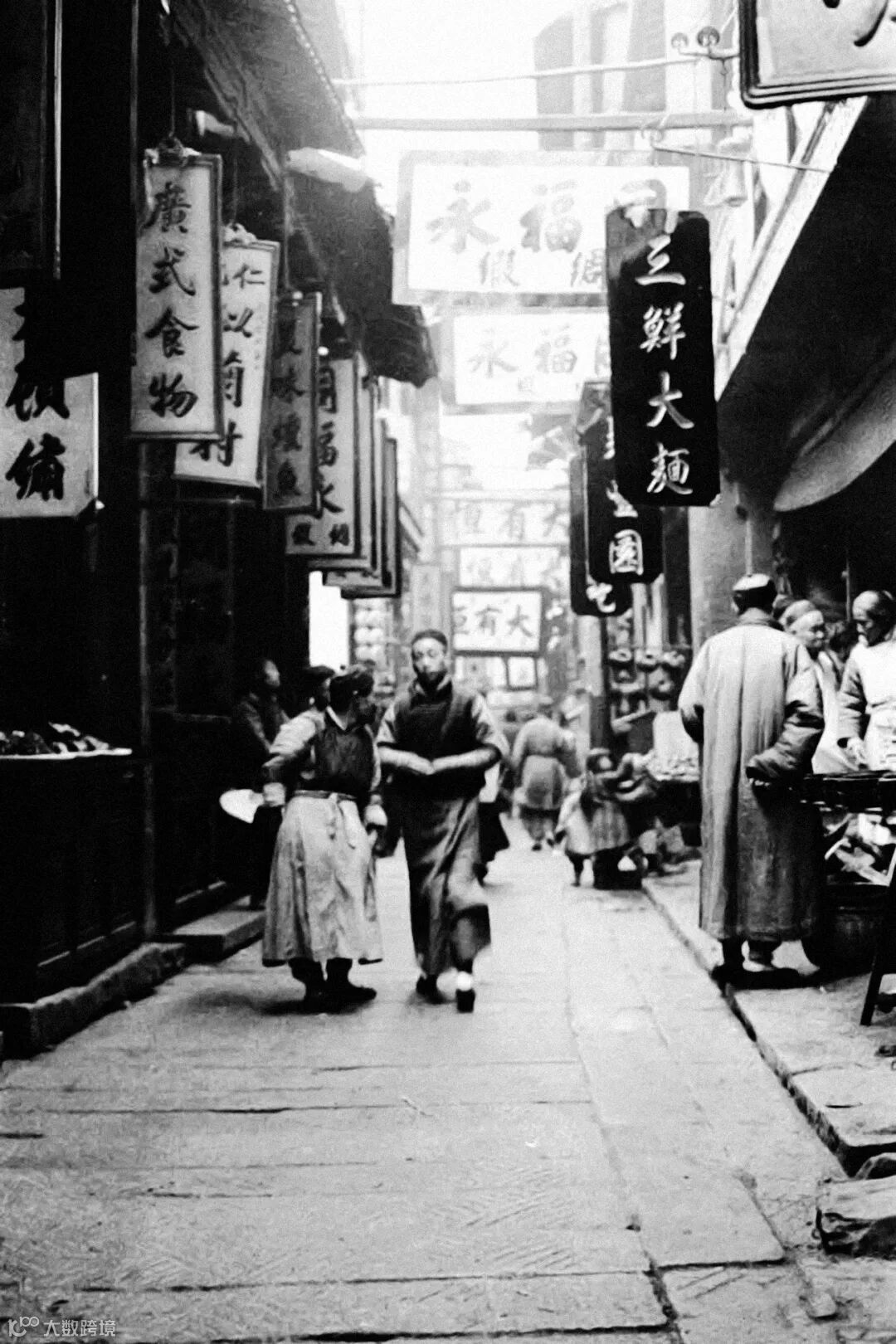
The eye-catching sign of "Three Delicacies Noodles" on Guanqian Street during the late Qing and early Republican period
I named this series Illustrated Chronicles of Jiangnan Customs rather than Illustrated Chronicles of Jiangnan Folk Culture, and this choice of title reflects a particular academic reasoning. While folk culture and customs both fall under the broader umbrella of cultural studies, there are significant scholarly differences between them, primarily in terms of conceptual meaning and research scope. From the perspective of conceptual meaning, “folk culture” refers to the totality of cultural phenomena formed by a particular ethnic or social group over a long period of productive and everyday practice. It encompasses material culture, social organisation, ideology, and other areas, with an emphasis on cultural continuity and collectivity. “Customs”, on the other hand, focuses more on the conventions and social behaviour that develop in particular regions or groups through the course of historical development, placing greater emphasis on the outward expression of habitual behaviour.
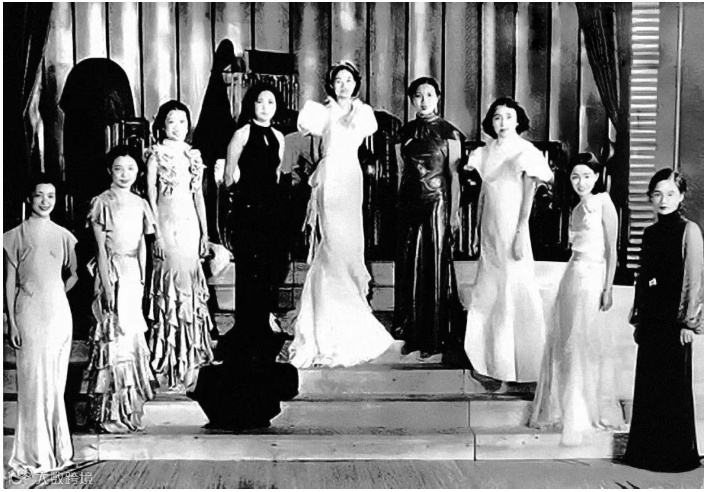
In the mid-1930s,Shanghai Hongxiang Company held a domestic fashion exhibition at the Paramount
In terms of research scope, “folk culture” is an interdisciplinary object of study, broadly involving fields such as ethnology, anthropology, and sociology. It aims to explore the origins, development, and evolutionary patterns of cultural phenomena. “Customs”, by contrast, is more concrete in its focus, centring on specific customary practices and their practical impact on social life. In practical usage, “folk culture” often appears in academic research and discussions on cultural heritage --- such as “folk culture studies” or “theories of folklore” --- whereas “customs” is more commonly used in daily contexts to describe the traditional practices and local character of a region.
Based on these considerations, this book adopts the term “customs” in its title, aiming to use over 3,200 precious images to spotlight the Jiangnan region’s everyday behaviour, ceremonial practices, and traditional festivalsconcrete cultural expressions that vividly portray Jiangnan’s distinctive way of life and regional culture through a visual lens. Moreover, the term “customs” better highlights the role of ritual norms in traditional Jiangnan life and their contribution to maintaining social order. It more precisely conveys the unique charm and lineage of Jiangnan culture, allowing readers to appreciate the vibrant appeal of its local traditions and human landscape. That is why I chose the term “folk culture” when writing An Introduction to the Study of Folk Culture, whereas now, in creating the Illustrated Chronicles of Jiangnan Customs, I have opted for “customs”. Please note in advance.
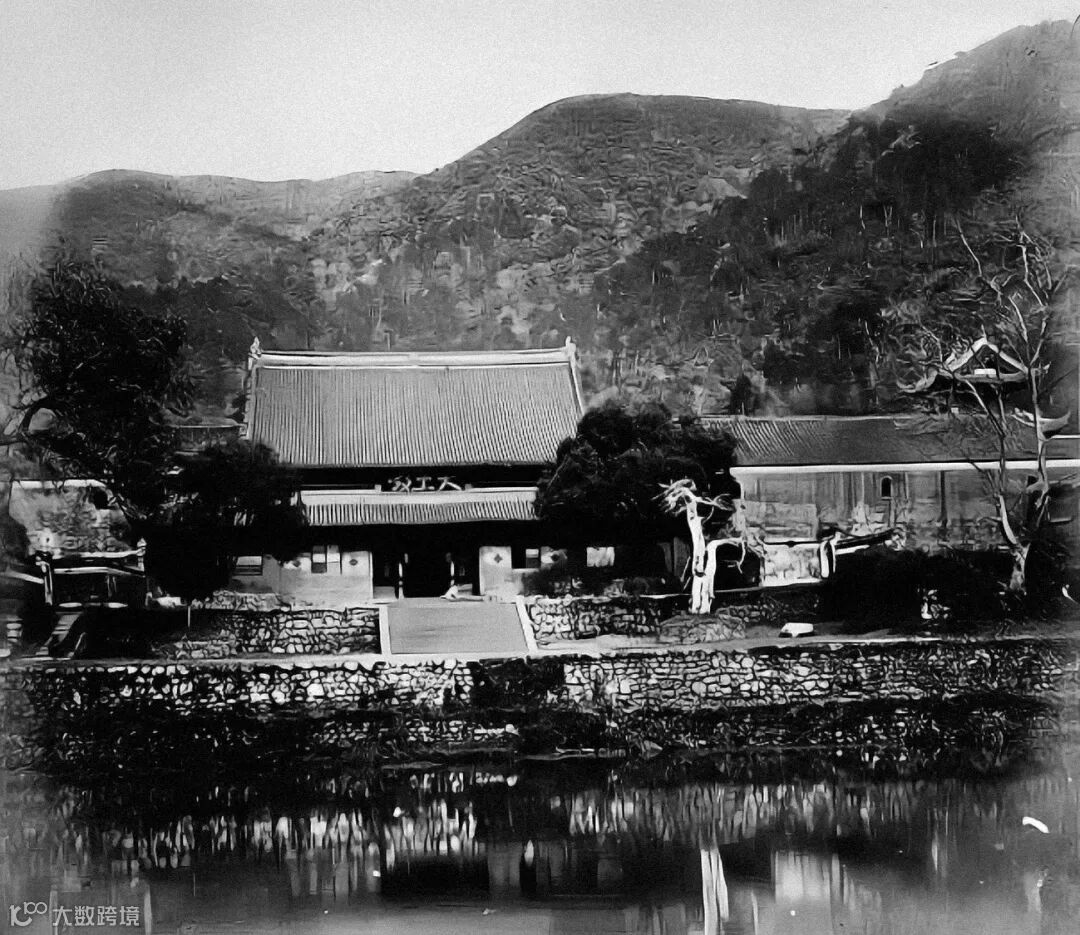
Tiantong Temple in east Ningbo, Zhejiang Province during the Republican era
Customs have always accompanied human history. Temporally, they are a product of the development of human society; spatially, whether in the remote tribal villages of ethnic minorities from the past or the bustling metropolises of today, customs have always been an important companion. Folk culture is both material and measurable, as well as spiritual and immeasurable. This connection between the spiritual and the material, the measurable and the immeasurable, determines that folk culture is both tangible and intangible. In 2003, UNESCO introduced the concept of “Intangible Cultural Heritage,”the same as what we call “folk culture” in China. It encapsulates the values of the Chinese people and is a cultural treasure created by our ancestors that continues to thrive today, embodying the cultural creativity of countless generations. It serves as a bridge between the material and spiritual lives of the people, reflecting the collective will of the community and being passed down through generations primarily by people as the carriers of this ever-living cultural phenomenon. In my three-volume work, General Theory of Chinese Folk Culture, I translated this concept into English as “Folk-Culture” and provided a detailed discussion, which I will not bore my readers by repeating the arguments here.
This ten-volume work, Illustrated Chronicles of Jiangnan Customs, is compiled based on the “folk culture theory” I have proposed. The scope of its discussion is also defined with clear bounds. Temporally, it is limited to the century from the Opium War in 1840 to the founding of the People’s Republic of China in 1949. Spatially, it is framed around the academically recognized Jiangnan region, particularly the “Eight Prefectures and One State” of the Ming and Qing dynasties: Suzhou, Songjiang, Changzhou, Zhenjiang, Yingtian (modern Nanjing, Jiangsu), Hangzhou, Jiaxing, Huzhou, and Taicang carved out of the ancient Suzhou Prefecture. Although the scope of the narrative is not strictly confined to these areas, it largely centres on the core region of the Yangtze River Delta, with a particular focus on the rapidly changing Shanghai area and its surroundings.
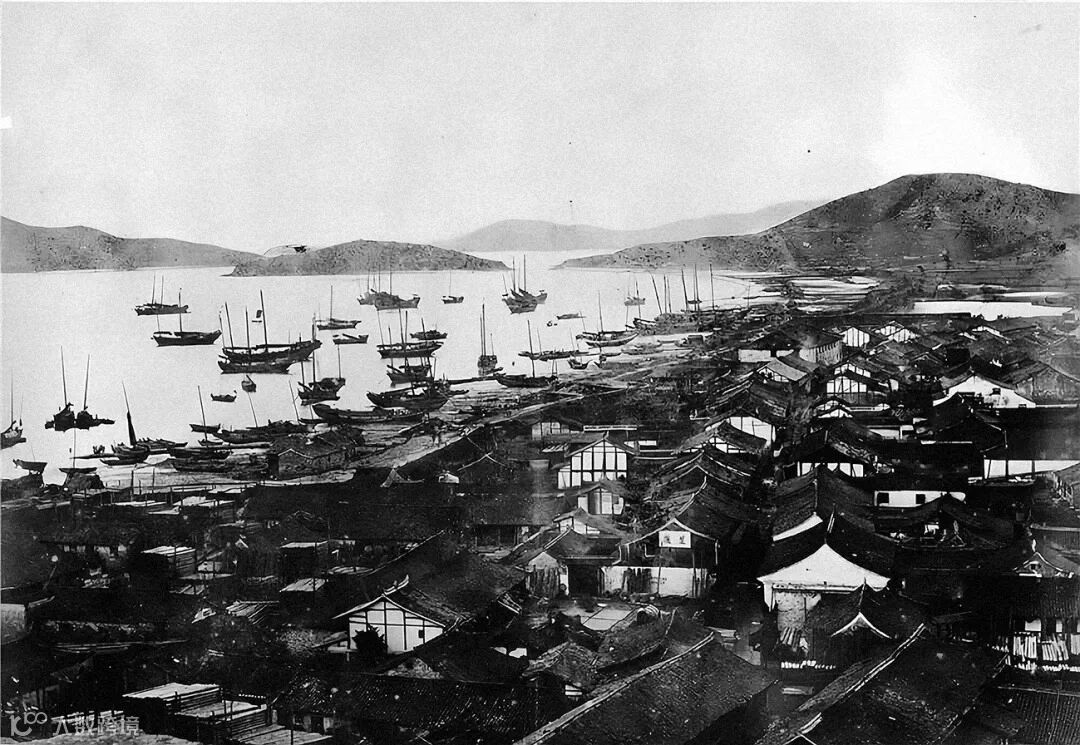
Ningbo Port has been one of China's premier seaports, naval bases, and shipbuilding centers.This is Ningbo Port after its opening as a treaty port
The prosperity of Jiangnan culture has seen three significant historical milestones: Jiankang (modern Nanjing, Jiangsu) during the Six Dynasties, Lin’an (modern Hangzhou, Zhejiang) during the Southern Song Dynasty, and Suzhou during the Ming and Qing dynasties. Before the Opium War, many cities in Jiangnan opened up to foreign trade. There has always been an intrinsic connection between Shanghai and the other cities of Jiangnan. Shanghai is part of Jiangnan, and Jiangnan is the cultural origin of Shanghai. Suzhou culture is considered the precursor to Shanghai’s modern culture, and this connection is very close. Following the opening of the ports, the first factor was related to Shanghai’s unique geographical location. It faces the vast sea and is backed by the expansive hinterland of the Taihu Basin. Therefore, the Western powers arriving by sea naturally chose Shanghai first. The second factor was the severe impact of the Taiping Rebellion on Suzhou and Hangzhou. During the brutal conflict between the Qing army and the Taiping forces, Suzhou suffered significant damage. In contrast, post-opening Shanghai was minimally affected by the war due to the intervention of foreign powers. This shift caused the economic centre of the Jiangnan region to move to Shanghai. The flow of people, goods, and wealth from across Jiangnan rapidly converged in Shanghai. From the opening of the port in 1843 to 1863, within approximately 20 years, Shanghai firmly established itself as the economic centre of Jiangnan. The popular saying about the “Great Suzhou” turning into “Little Shanghai” reflects this transformation that indeed took place. Shanghai’s extensive and well-connected network of river, sea, and land routes, along with the Jiangnan water system, Yangtze River shipping, and both domestic and international maritime trade, gave Shanghai a distinctive transportation advantage. As China’s largest port and the primary hub for domestic and international trade, Shanghai established its status as an economic centre after 1843, a position it maintains to this day.
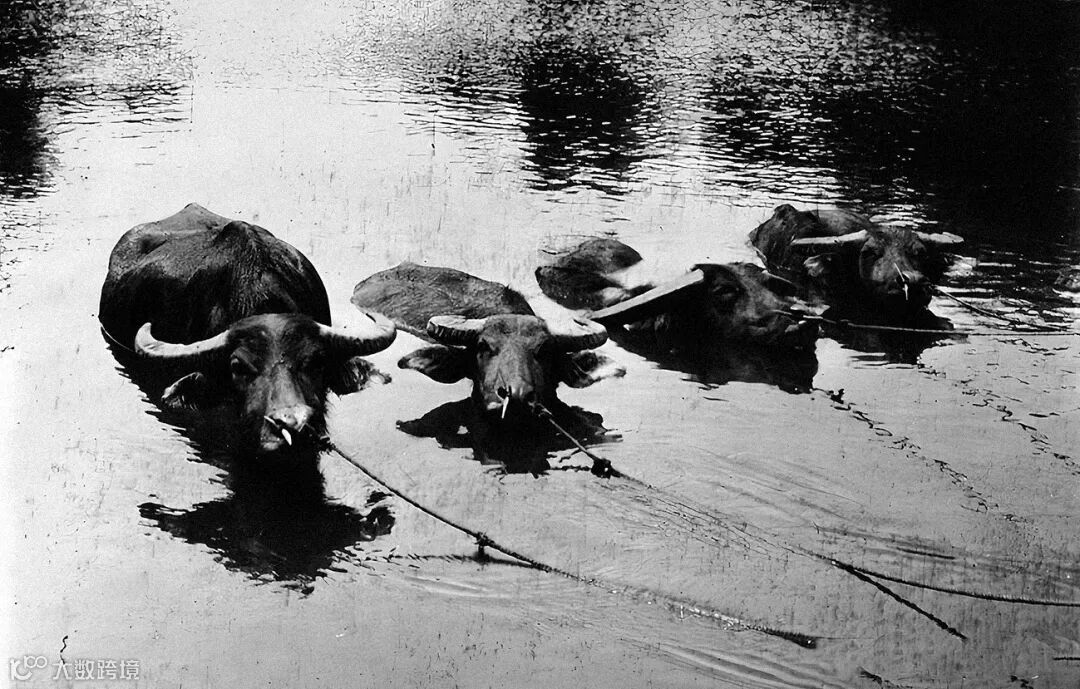
Four water buffaloes in Hangzhou's canal in 1918 . Buffaloes were indispensable farming assistants for peasants in the Jiangnan region
Jiangnan is both a geographical and cultural concept. Understanding Jiangnan requires a consideration of its regional landscape and environmental characteristics. The dense network of rivers, warm and humid climate, and the natural environment are fundamental conditions. These factors gave rise to a region known for its rice cultivation and seafood, as well as its refined craftsmanship, which are deeply ingrained in the local culture. Since ancient times, the people of Jiangnan, especially those in the Wu dialects area, have shared similar customs and local traits. Their customs are similar, and their people are closely connected. Through shared labour and living, population mobility, and social interactions, various cultural phenomena have emerged in their customs and practices. Whether in understanding the explicit forms or implicit qualities of folk culture or in depicting various specific folk customs, this has significant epistemological and methodological value.
As for the temporal focus on the period from 1840 to 1949, it is because this era --- from the Opium War to the founding of the People’s Republic of China --- was a time when China was a semi-colonial, semi-feudal society, and also a period of immense upheaval. Over these hundred years, almost all the imperialist powers in the world invaded China, forcing it to pay indemnities, cede territory, and open ports for trade, while granting extraterritorial rights to foreigners. Li Hongzhang, who once bitterly called himself the “imperial plasterer of the Qing Empire”, stated in his two Memorials to the Throne--- “Reconsideration of the Manufacturing of Ships” and “The Planning of Coastal Defense Due to the Taiwan Incident”—in May of 1873 (11th year under Emperor Tongzhi’s reign) and 1875 (the first year under Emperor Gangxu’s reign) --- that the Qing Dynasty faced “the greatest upheaval in over 3,000 years” and “a situation unprecedented in several thousand years.” The Qing dynasty reached its peak during the reigns of Kangxi and Qianlong, but the rulers became increasingly corrupt and incompetent afterward, leading to a rapid decline in national power. Consequently, the Qing government was defeated in both Opium Wars, forced to cede territory and pay indemnities; the Anglo-French forces captured Beijing and burned the Summer Palace; Tsarist Russia seized vast territories in the northeast and northwest; and in the Sino-French War, “France did not win, but China surely lost.” These almost consecutive events created a painful chapter in modern Chinese history, highlighting the extreme societal changes during this period. It was also during these hundred years that China experienced the most significant transformations in its social fabric and folk culture in several millennia.
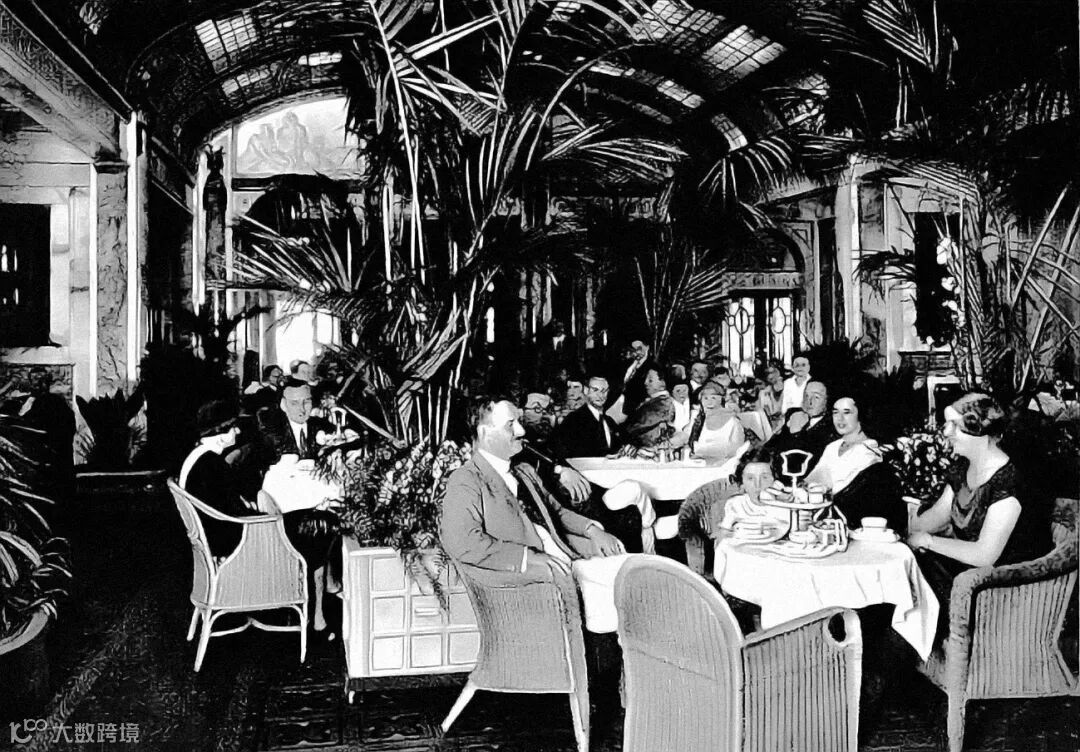
In the 1930s, the coffee shop inside the Majestic Hall in Shanghai
Jiangnan is a typical example of an agricultural society, where families passed down traditions of farming and studying, prioritised education, and supported each other. However, within this hundred-year period, foreign civilisations first appeared with force, even violence, and later blended in the influence of rationality. Within the unique social structure of China, this propelled ethnic conflicts and class struggles, creating waves of transformation. These changes, particularly in Jiangnan, have been profound, with the transition between the old and new social and economic foundations and political systems leading to significant changes in social life and folk culture.

供稿 | 朱志凌
英文翻译 | 唐玥芳
英文校译 | 秦悦