2、Fuzzy Global History
全球史,待然性,模糊性,史料缺,文字惘,眼界窄,
方法异,理论多,偏见大,无中心,整体论,客观写,

Global history is fuzzy. Historians may find it hard to accept this claim. Historians believe that "historical facts" are true, and therefore global history should be exact, true, accurate, and clear. So, is history/historiography objective?Are there subjective factors affecting its objectivity? Is the conclusions of history/historiography eternal?
“Any physical theory is always provisional, in the sense that it is only a hypothesis: you can never prove it.” What are about historical theories and theories of social sciences? Are historical theories provisional? Are theories of social sciences hypotheses? Are we limited by the terminology we are using? Fuzzism means that global history is nothing but a fuzzy understanding, interpretation and description of what happened in the past of the globe as a whole. This is due to the fuzziness of language, fuzzy logic thinking, lack of historical data and materials, uncertainty of historical development and, last but not the least important, fuzziness of theory.
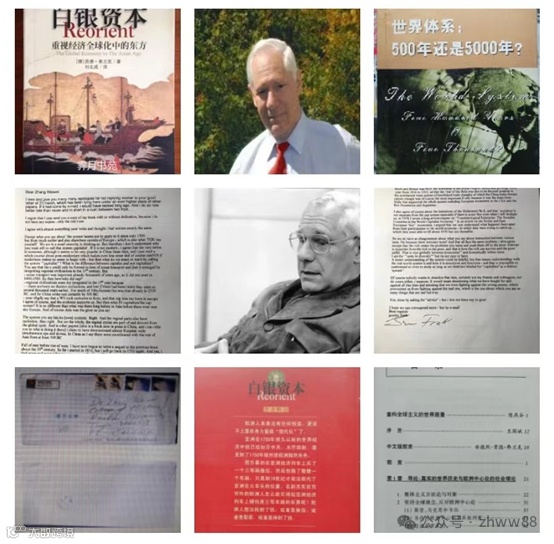
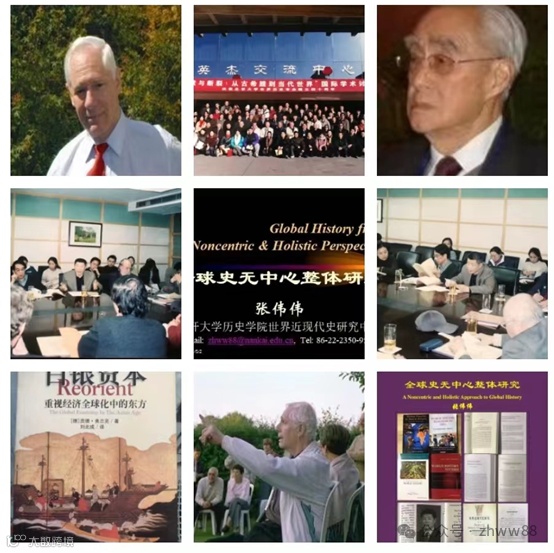
The terminology, notions, concepts and theories we use today were mostly invented in 18th and 19th centuries in Europe from an Eurocentric perspective rather than a global one. Those notions and concepts have been redefined and revised again and again ever since when they were cast. Wallerstein pointed out: “The social sciences, as we know them today, are a child of the Enlightenment. Indeed, in some ways, they are the finest products of the Enlightenment: they represent the belief that human societies are intelligible structures whose operation we can understand. From this premise, it has been thought to follow that humans can affect their own world crucially by using their capacities to achieve rationally the good society. Of course, social science has accepted, virtually without questioning it, the further Enlightenment premise that the world is evolving inevitably toward the good society, that is to say, that progress is our natural heritage.”
Frank said retrospectively: “In view of my past work, of special interest to me and perhaps to many of my readers are the notions of ‘development,’ ‘modernization,’ ‘capitalism,’ and even ‘dependence,’ or call it what you will. All are procrustean and empty categories; because the original sin of Marx, Weber, and their followers was to look for the ‘origin,’ ‘cause,’ ‘nature,’ ‘mechanism,’ indeed the ‘essence’ of it all essentially in European exceptionalism instead of in the real world economy/system. All of these allegedly essential exceptionalisms, whatever their name, were derived from the same Eurocentric perspective that, on the evidence reviewed in this book, has absolutely no foundation in historical reality—that is in ‘universal’ history, ‘as it really was.’ They were all derived only from European/Western ethnocentrism, which was propagated around the world—West and East, North and South—as part and parcel of Western colonialism and cultural imperialism.” So, I think it is high time to have more appropriate terms and notions suitable for studying global history from a holistic perspective.
One of the utilitarian purposes of history being keen on is to understand and predict the future. Fear of uncertainty about reality and the future is an anxiety of mankind exclusively. “The human race has always wanted to control the future, or at least to predict what will happen.That is why astrology is so popular.” Historians have long claimed that to know the past can understand the present and predict the future. However, man is only a part of nature, and nature is not human-centered. “Man selects only for his own good; Nature only for that of the being which she tends. Every selected character is fully exercised by her; and the being is placed under well-suited conditions of life.” Human history is only a part of natural history, subject to the overall history of nature contingently. Global history should study the relationship between man as a glober and nature, and the influence of nature on human history. The Black Death and the global outbreak of the new coronavirus in 2020 are undoubtedly warnings of human’s destructive behaviour to nature. Human beings should realize that they should not focus on their own likes and interests, respect nature, and must find their right place in nature and live in harmony with the ecological environment. An important purpose of studying global history is to understand the relationship between man and nature from historical experience, because this relationship will determine the future of mankind.
One of the toughest problems scholars are facing is that the instrument we use to describe global history, i.e. language, is fuzzy.“The term fuzzy means shades of gray between 0% and 100%.Most concepts are fuzzy because they have inexact borders. There are no hard lines between water that is warm and not warm or between sunsets that are red-orange or not red-orange or between front teeth that are crooked and not crooked.These concepts have opposites that shade into each other.”Unfortunately, historians, like many social scientists, don’t have a scientific language to record or describe history.We are often unaware of how vague or fuzzy we are when we talk about “feudalism”, “capitalism”, “socialism”, “freedom” and many other notions and concepts coined in the West and translated into other languages of various backgrounds because different person might have different understanding and interpretation of the definition of same concepts.Carl Jung pointed out:“Each of us receives any abstract or general notion in the context of the individual mind, and we therefore understand and apply it in our individual ways.When, in conversation, I use any such terms as ‘state,’ ‘money,’ ‘health,’ or ‘society,’ I assume that my listeners understand more or less the same thing I do.But the phrase ‘more or less’ makes my point.Each word means something slightly different to each person, even among those who share the same cultural background.The reason for this variation is that a general notion is received into an individual context and is therefore understood and applied in a slightly individual way. And the difference of meaning is naturally greatest when people have widely different social, political, religious, or psychological experiences.As long as concepts are identical with mere words, the variation is almost imperceptible and plays no practical role.But when an exact definition, or a careful explanation is needed, one can occasionally discover the most amazing variations, not only in the purely intellectual understanding of the term, but particularly in its emotional tone and its application.….even the most matter-of-fact contents of consciousness have a penumbra of uncertainty around them.Even the most carefully defined philosophical or mathematical concept, which we are sure does not contain more than we have put into it, is nevertheless more than we assume.”
“Everything is vague to a degree you do not realize till you have tried to make it precise, and everything precise is so remote from everything that we normally think, that you cannot for a moment suppose that is what we really mean when we say what we think.” I’ve found out that when “feudalism” was discussed, the feudal society in Europe and that in China were different from Chinese historians to West historians since “Every concept in our conscious mind, in short, has its own psychic associations.” West historians’ psychic associations on “feudalism” might be mainly what happened in Europe from about 9th to 15th century while the Chinese historians’ associations were what happened in China before 1911 for more than two thousand years in an effort to accommodate Chinese history to West theoretic procrustean bed. How can we define and explain “feudalism” from not a regional/national but a global perspective? How can we describe and interpret capitalism and socialism, which have been so vague and fuzzy that each nation-state has her “ism” herself. For instance, each “socialist countries” had her own “socialism” in the belief that her socialism is the true orthodox Marxism during the Cold War. Capitalism has been different from one another among “capitalist” countries, too. Moreover, the changing of realities make the meanings (connotation and denotation) of a concept fuzzier.
“Name is only the shadow of reality.” Name was given to certain thing in certain place and time from certain perspective/s. Most words are vague or fuzzy because they are relative and do not have very clear definitions. We can see various realities and definitions of “feudalism”, “capitalism”, and “socialism” in global history. Many theories of great thinkers have been understood and interpreted/reinterpreted differently in different times and places. Maybe this is one of the reasons that “The Tao is forever undefined.” and “No name can fully express what it represents.” The historical and socioeconomic terms we use to describe and discuss global history are fuzzy, too. The whole picture of global history may not as accurate as a national history in details, but it certainly will provide a fuzzy image of the whole and explains how its parts’ functioned and why each part became what it was from a holistic perspective. I have to use “mixism”, a fuzzy notion, to describe the general picture of global history in terms of mode of production in the hope that it may leave more room for an elastic or appropriate understanding of what it was in global history based on the principle of “seek truth from facts”, as an old Chinese idiom goes. This doesn’t mean that we should have a fuzzy historiography in the sense of fuzzy logic, fuzzy mathematics and fuzzy linguistics. What historians have to keep in mind is that the fuzziness of history, especially the global history, has to be fully realized and understood.
We think in fuzzy logic. Human brain is especially good at fuzzy thinking. “Minds are not digital processors. Our concepts are fuzzy to the core and our reasoning is approximate.The statement ‘Red apples taste good’ holds for each of us only to some degree.The statement’s fuzz or vagueness stems in part from the subjective nature of taste and from the fuzziness of taste and goodness.” When you “recognize” the face of your friend, you only have the face identified as something similar to the fuzzy image, not the digital picture, of the face of your friend in your mind.So are our historical concepts.When you make a decision of what you like or what you dislike, you make it from the result of fuzzy thinking and analyzing.For instance, we think a historical figure is a “good” or “bad” one not only according to our fuzzy analyses on what we know about him, which might be very limited, but also depending on what theory/standard, which might be either objective or subjective, we use to judge him.Some time we have to say the King is 60-70% “good” and 30-40% “bad”.But,why?We may not be able to provide statistic analyses on him to show how good or how bad he was.But we can express our fuzzy impression on him by describing what he did in fuzzy words/notions such as enforcing “many” “active (how active?) economic reform policies” or “political reforms”.How much is “much” and how less is “less”?There may be a scientific definition of “much” and “less”.But people often have their own understanding and usage of words in a fuzzy way according to their backgrounds. “Fuzzy logic is reasoning with vague concepts.” Our impression is fuzzy owing to fuzzy logic thinking.
It seems historical records, evidences, materials and statistical data are not only never enough but also fuzzy. This can be understood from the fact that historians’ conclusions have often been reversed by archaeological discoveries and newly opened documents. The lack of historical data and materials makes global history a fuzzy one in terms of evidence and statistics. For example, historians as well as economists of economic history may never get the statistical data enough for a global history. Not only are there enough records on production and trade (local, national and international), but those data available are not satisfying at all to some extent. In modern times, most of those statistics are estimated, let alone those “figures” for the time when and the place where no official records be made or available, which are estimated belatedly according to some references or simply by guess and by god. Even in our contemporary time, official statistics are far from accurate for many reasons. GDP or GNP excludes the output of underground factories and unlicensed/illegal production/trade, which accounts a great deal in a nation-state as well as the globe and shouldn’t be overlooked. Official foreign trade records do not include smuggling, which has been increasing in scale and value all over the world. Furthermore, “national” production and “foreign” trade have become fuzzier because of the economic globalization. Invisible trade has been difficult to record. So are production and trade of the multinationals and transnational companies. Any way, historical fact/evidence/record/datum is fuzzy not only for the past but also for the modern times. Statistical data might be unreliable to certain degree because of the manipulating accounts and records for political, economic, financial and other purposes. That is why scholars’ estimations on the same figure (of population, production or trade) are so different from one another owing to their sources and statistical methods that we can only get a fuzzy impression from them.
Global disequilibrium is fuzzy, too. There are not accurate measurements for many forces and elements/factors in global history. Historians might know how many forces economic, political, military, cultural, religious, and etc. functioned as parts of the join forces in a certain historical event/incident or change and know which one is more or less influential, but they couldn’t measure how much (percentage) of a force in the global disequilibrium. Unlike the Nash equilibrium, which can predict the results of cooperative or non-cooperative games by mathematical models, the global disequilibrium is so complicated that there are neither measurements nor mathematical models for forces within it. There are so many acting and reacting forces interacting within the global disequilibrium, like a complex of countless cooperative games and non-cooperative games, that it is hard to predict the direction of the global history. “He (Tolstoy) was right that history moves through the combined effects of billions of human wills and outside forces. He was wrong to think that that movement reduces to a simple sum of wills. …. The whole is more than the sum of its parts. The whole can also be less than the sum of its parts. And some of the smallest part can shape the whole some of the time. A great man or a common man can push the wrong button or throw the wrong stone or ask the right question and set in motion causal chains that change the world and the history books. Chaos theorists sometimes call this the ‘butterfly effect’ in a nonlinear system. Small changes in input can produce large changes in output. How an orange monarch butterfly flaps its wings in Mexico may in time affect how much rain falls in France. Tolstoy should have said that history proceeds as a nonlinear combination of wills. But then he could not dismiss out of hand the nonlinear effects of ‘great’ men like Napoleon or Ghengis Khan or the reigning Pope.”
Social development is a complex of countless cooperative games and non-cooperative games because there are so many aims and desires from different interests and motives. Everyone, every group of people who share something in common, every nation-state has her/his/its interest and motive and thinks that he/she/it is right and history should development in the direction he/she/it wants. It is those motives and drives that form the global disequilibrium. Historical development is aimless of in general because it is driven by the joint force of various aims of individuals, interest groups, classes, religions, cultural traditions, national-states, regional entities, etc.
“The uncertainty principle had profound implications for the way in which we view the world.”Historians can tell when the globe history is in global equilibrium (peaceful evolution) or global disequilibrium(troublesome political or economic revolution/war) relatively from historical movements and changes. But that is only a fuzzy impression and description drawn from fuzzy evidences and records through fuzzy logic analyses. Of course, historians should not only measure social changes by economic or sociologic statistics. There are many forces not being able to measure in statistics. For instances, religious and ideological influences are hard to measure. So is psychological factor. Historians/scholars may never tell how much global history has been affected and shaped by the fear caused by terrorism, especially after the attacks on the United States on September 11, 2001. Maybe, the more accurately we try to measure those forces, the less accurately we can tell which one is the last straw that broke the back of the camel or which flapped butterfly in Tokyo will cause rain in New York’s Central Park, even though we know there must be one somewhere. So, fuzzism is an approach to the fuzzy global history.
Historians have been reluctant and embarrassed to the fact that global history is fuzzy because they believe or want it to be believed that everything they write and say is truth or fact. “Social scientists generally stay away from anything labeled ‘fuzzy’ because their work is so often described this way by others, especially by scholars in the ‘hard’ sciences. My initial title for this book, Fuzzy Social Science, made so many of my colleagues cringe that I felt compelled to change it so that the adjective ‘fuzzy’ applied to sets, not to social science.” Wallerstein pointed out, “…the belief in certainties, a fundamental premise of modernity, is blinding and crippling.” Historians may have a clearer holistic picture of global history by fuzzism which has been proved doing well in computer and robotics.
“Yet it seems that the uncertainty principle is a fundamental feature of the universe we live in. A successful unified theory must therefore necessarily incorporate this principle.” “The digital age has its own uncertainty principle: Issues get fuzzier as their parts get more precise. Lots of small blacks and whites add up to more gray. The overall uncertainty stays the same or maybe even grows. Digital precision does not make it go away.” As far as we know, there are many variables and uncertainties in global history. But those uncertainties will not keep historians from getting a holistic picture of global history by fuzzy analysis of global disequilibrium.
“After 1500 this Eurasian balance gradually gave way to a global unity imposed by an emerging West and culminating in the nineteenth century in an unprecedented worldwide hegemony. Finally, the essence of twentieth-century world history is the growing reaction against this hegemony and the perilous groping toward a new world balance necessitated by the rapid diffusion of Western technology and ideology.” Global disequilibrium and global equilibrium from the sixteenth to the twentieth centuries led to global disequilbrium in the twenty-first century. There is so many uncertainties in the current global disequilibrium that the clearer the predictions, the more vague they become.
“Every beginning is difficult, holds in all sciences.” In fact, it should be that every ending is diffcult to be well. But the real difficulty is at the very top of every science where is always something unknown and uncertain. “The eventual goal of science is to provide a single theory that describes the whole universe.” Is there any possibility for us to have something for global history like the Theory of Everything (TOE) which scientists are looking for? “A complete, consistent, unified theory is only the first step: our goal is a complete understanding of the events around us, and of our own existence.” “Even if we do discover a complete unified theory, it would not mean that we would be able to predict events in general, for two reasons. The first is the limitation that the uncertainty principle of quantum mechanics sets on our powers of prediction. There is nothing we can do to get around that. In practice, however, this first limitation is less restrictive than the second one. It arises from the fact that we could not solve the equations of the theory exactly, except in very simple situations. ” When nutural scientists are so helpless about uncertainty, what can social scientists do?
“Scientists guess at how things cause other things.Then they test these hypotheses about the causes and effects. They might guess whether sunspots cause droughts. Then they look at data on sunspots and droughts to test the guess. A hypothesis is a guess about a class or about how classes affect on another.” People have been trying to find a time division of an undivided evolution. trying to separate something unseparated conceptionally.
History is long and life is short. Social development has been much slower than one expected in terms of human lifetime. Man is also highly limited in knowledge and experiences. So, my fuzzist and holistic approach to a noncentric global history is only one of these approaches to global history.
“The greatest form has no shape.” The best theory of global history might be non-theory. Like shapeless water that can fit any form, non-theory is a fuzzy holism calling for a better understanding of the reality instead of creating “theory” or “model” which the reality is cut to fit into. Owing to the fuzziness of global history, I don’t think there going to be ONE global history recognized by all. What I do believe is that if there is a TOE on global history, it must be a fuzzy one. At this moment, it is going to be a long way to go for historians to have a multidisciplinary fuzzy study of global history from a noncentric and holistic perspective.