
点击上方“中国政治传播研究”可订阅



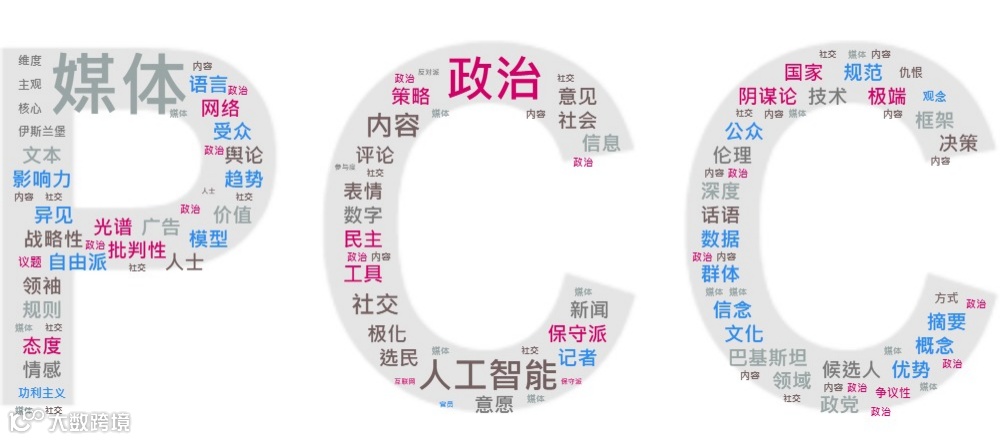
关键词一览
一
Let me be perfectly unclear: strategic ambiguity in political communication
让我把话故意说含糊些:政治传播中的战略性模糊
作者:
Parker Bach:美国北卡罗来纳大学赫斯曼新闻与媒体学院博士生;
Carolyn E. Schmitt:北卡罗来纳大学教堂山分校赫斯曼新闻与传媒学院研究员;
Shannon C. McGregor:美国北卡罗来纳大学信息、技术与公共生活中心副教授
While clarity is often upheld as a core element of successful communication, we argue that a lack of clarity can also benefit a speaker, a concept called strategic ambiguity. This concept has been used across disciplines for decades, but its definitions are often overly context-specific. In this article, we follow Chaffee’s (1991) framework for explication to survey the literature and provide a unified definition of strategic ambiguity as a rhetorical tactic in which a communicator creates a: (1) polysemic message with multiple reasonable interpretations supported by the text, that is: (2) aimed at audiences from varying interpretive communities; and (3) by which polysemy the communicator stands to gain some specific advantage. We offer methodological suggestions on the study of strategic ambiguity, accompanied by two case studies of strategic ambiguity, centering Congressional newsletters and conservative political satire. We close with suggestions for scholarships that could be informed by incorporating strategic ambiguity.
摘要:尽管明晰性常被视为有效沟通的核心要素,但我们提出,刻意模糊同样能为言说者带来策略性优势——这一现象被定义为“战略性模糊”。该概念虽已在跨学科领域应用数十载,然其定义往往囿于具体语境。本文采用Chaffee(1991)的概念阐释框架,通过系统文献梳理,将“战略性模糊”界定为包含三重维度的修辞策略:(1)建构具有文本依据的多元合理释义的复义讯息;(2)针对分属不同阐释社群的受众定向投放;(3)言说者藉此复义性谋取特定利益。我们不仅提出了战略性模糊的研究方法论,更以国会通讯与保守派政治讽刺作品为双案例展开实证分析。文末则探讨了该理论对相关学术研究的启示价值。
Keywords: Strategic ambiguity, political communication, populism, irony, interpretation
关键词:战略性模糊;政治传播;民粹主义;反讽修辞;阐释
来源:Communication Theory, Volume 35, Issue 2, May 2025, Pages 96–106
链接:https://doi.org/10.1093/ct/qtaf001
二
Generative propaganda: Evidence of AI’s impact from a state-backed disinformation campaign
生成式宣传:来自国家支持的虚假信息运动中人工智能影响的证据
作者:
Morgan Wack:苏黎世大学 IKMZ 的博士后研究员;
Carl Ehrett:克莱姆森大学媒体取证中心;
Darren Linvill:克莱姆森大学教授;
Patrick Warren:克莱姆森大学副教授
Can AI bolster state-backed propaganda campaigns, in practice? Growing use of AI and large language models has drawn attention to the potential for accompanying tools to be used by malevolent actors. Though recent laboratory and experimental evidence has substantiated these concerns in principle, the usefulness of AI tools in the production of propaganda campaigns has remained difficult to ascertain. Drawing on the adoption of generative-AI techniques by a state-affiliated propaganda site with ties to Russia, we test whether AI adoption enabled the website to amplify and enhance its production of disinformation. First, we find that the use of generative-AI tools facilitated the outlet’s generation of larger quantities of disinformation. Second, we find that use of generative-AI coincided with shifts in the volume and breadth of published content. Finally, drawing on a survey experiment comparing perceptions of articles produced prior to and following the adoption of AI tools, we show that the AI-assisted articles maintained their persuasiveness in the postadoption period. Our results illustrate how generative-AI tools have already begun to alter the size and scope of state-backed propaganda campaigns.
摘要:人工智能在实践中能否增强国家支持的宣传活动?人工智能和大语言模型的日益普及使得人们开始关注这些配套工具被恶意行为者利用的可能性。尽管最近的实验室和实验证据从原则上证实了这些担忧,但人工智能工具在宣传活动生产中的实际效用仍然难以确定。通过分析一个与俄罗斯有关联的国家附属宣传网站对生成式人工智能技术的采用,我们测试了人工智能的采用是否使该网站能够扩大并增强其虚假信息的生产。首先,我们发现生成式人工智能工具的使用促进了该机构生产更多数量的虚假信息。其次,我们发现生成式人工智能的使用与发布内容数量和广度的变化相吻合。最后,通过一项调查实验比较人们对采用人工智能工具前后生产的文章的看法,我们表明人工智能辅助的文章在采用后仍保持其说服力。我们的研究结果表明,生成式人工智能工具已经开始改变国家支持的宣传活动的规模和范围。
Keywords:artificial intelligence, large language models, propaganda, disinformation, misinformation
关键词:人工智能、大型语言模型、宣传、虚假信息、错误信息
来源:PNAS Nexus ,Volume 4, Issue 4,April 2025
链接:https://doi.org/10.1093/pnasnexus/pgaf083
三
To Report or Not to Report? A Qualitative Analysis of Journalists’ Perspectives on Harm to Public Opinion
报道与否的抉择:基于记者视角的舆论危害质性分析
作者:
Ricardo R Ferreira:英国苏格兰爱丁堡市爱丁堡大学社会与政治科学学院客座讲师;
Jean-François Daoust:加拿大魁北克省舍布鲁克市舍布鲁克大学应用政治学院副教授
Journalists face intricate decisions regarding what to publish, especially when problematic content may impact public opinion in a way that could fuel hate and/or undermine democratic attitudes. While scholarship has recognized the importance of this issue, most studies focus on published content, how citizens engage with it, and the implications of published news. In this article, we provide a fresh perspective on the crucial dilemma faced by journalists concerning their perceived impact on public opinion, by leveraging data based on 36 semistructured in-depth interviews with journalists covering Brazil’s political landscape. The interviews were conducted between December 7, 2021, and July 20, 2022. Our main findings are threefold. First, we find a consensus among journalists regarding what is seen as problematic content, which is centered around threats to democratic attitudes and misinformation on critical issues. Second, we examine the rationales underpinning journalists’ choices to publish problematic content, which include the concept of “competing voices,” the legitimacy conferred to elected representatives (e.g., the head of a government), and journalists’ fear of being viewed as left leaning and losing their audience. Third, we find that journalists who do not publish problematic content do so because they expect to negatively impact public opinion, in particular democratic attitudes, and that their reporting of hate speech may not meet ethical standards. We conclude by highlighting the complex interplay of journalistic norms and expectations regarding their impact on public opinion and the news production process.
摘要:新闻从业者在内容刊发决策中常面临复杂权衡,特别是当争议性内容可能以助长仇恨或削弱民主观念的方式影响舆论时。尽管学界已认识到该议题的重要性,但现有研究多聚焦于已发布内容、公众反馈及其社会影响。本文通过对36名巴西政治记者的半结构化深度访谈(2021年12月7日至2022年7月20日),首次从从业者主观认知维度,揭示了其对舆论影响的决策困境。主要发现包括:首先,记者群体对“争议性内容”存在共识性判断标准,核心是可能威胁民主价值与传播关键议题错误信息的报道。其次,剖析了记者仍选择刊发此类内容的三大动因:(1) “竞争性声音”的职业理念,(2) 对民选代表(如政府首脑)发言权的制度性尊重,(3) 担忧被贴上“左倾”标签导致受众流失。第三,拒绝刊发的记者主要基于两类考量:预见报道可能对民主观念产生负面影响,以及仇恨言论报道可能违背新闻伦理准则。结论部分指出,新闻生产过程中存在着专业规范与舆论影响预期的复杂博弈,这种张力持续形塑着现代新闻业的实践逻辑。
来源:Public Opinion Quarterly, Volume 89, Issue SI, 2025, Pages 683–715
链接:https://doi.org/10.1093/poq/nfaf028
四
‘Hook’-shaped polarization: how conservative super-commenters shape conspiracy beliefs and news engagement across the political spectrum
“钩形极化”:保守派超级评论者如何塑造跨政治光谱的阴谋论信念与新闻参与
作者:
Yiiia Erika Zhu:美国威斯康星大学麦迪逊分校生命科学传播系的博士生;
Sebastian Scherr:德国奥格斯堡大学跨学科健康研究中心以及媒体、知识与传播系的数字健康传播教授
Conservative news comment sections are raising concerns about polarization. These sections have become hotbeds for participatory propaganda, as some conservative media outlets employ this strategy to segment, obscure, and amplify propagandistic messages. This study examines how users across the liberal-conservative political spectrum respond to participatory propaganda, with a special focus on top-ranked comment threads featuring content from so-called ‘super-commenters’ – a small group of highly active commenters. We reanalyzed a nationally representative dataset (N = 4912) from an online experiment on Breitbart News to examine how exposure to conservative super-commenters influences conspiracy beliefs, news-sharing, and commenting intentions. Machine learning and Ordinary Least Squares (OLS) regression models revealed consistent ‘hook’-shaped patterns: all outcomes peaked among extreme conservatives, were smaller among moderates, and slightly higher again among liberals. Conspiracy beliefs showed the most pronounced asymmetry, with extreme conservatives scoring much higher than liberals. News-sharing and commenting intentions followed similar but weaker trends, with generally high levels across the political spectrum. Moderation analysis showed that exposure to super-commenter exposure did not alter the ‘hook’-shaped patterns in conspiracy beliefs or news-sharing intentions but did increase commenting intentions across the political spectrum. Notably, it reduced conspiracy beliefs among extreme liberals while boosting news-sharing and commenting among conservatives. These findings suggest that participatory propaganda heightens conservative engagement and paradoxically lowers conspiracy beliefs among extreme liberals – potentially deepening polarization from both sides.
摘要:保守派新闻评论区正日益成为政治极化的温床。研究发现,某些保守派媒体通过“参与式宣传”策略——即利用评论区实现宣传信息的分众投放、模糊化处理和声量放大——将网络评论区转化为意识形态战场。本研究以自由-保守政治光谱上的用户为研究对象,重点分析了由“超级评论者”(一小批高活跃度评论用户)主导的热门评论链的传播效应。通过重新分析布莱巴特新闻网在线实验的全国代表性数据集(N=4912),我们检验了接触保守派超级评论者内容如何影响用户的阴谋论信念、新闻分享意愿及评论参与度。机器学习与普通最小二乘回归模型揭示出一致的“钩形”分布规律:所有结果变量均在极端保守派群体中达到峰值,在温和派中显著降低,而在自由派中又出现小幅回升。其中阴谋论信念呈现最显著的非对称性,极端保守派的得分远高于自由派;新闻分享与评论意愿虽呈现相似但较弱的趋势,但整体上仍保持跨政治光谱的高位水平。调节效应分析显示:超级评论者内容暴露虽未改变阴谋论信念和新闻分享意愿的“钩形”分布模式,但普遍提升了各群体的评论参与意愿。值得注意的是,该暴露在降低极端自由派阴谋论信念的同时,却强化了保守派的新闻分享和评论行为——这种矛盾效应可能导致来自政治光谱两端的极化同步加深。
Keywords:Participatory,propagandapartisan,medianews ,super-commentersconspiracy, beliefsnews, engagementmachine-learning
关键词:参与式宣传;党派媒体;新闻超级评论员;阴谋论信念;新闻参与度;机器学习
来源:Information, Communication & Society, August, 1–26.
链接:https://doi.org/10.1080/1369118X.2025.2539299
五
The web of Big Lies: state-sponsored disinformation in Iran
谎言之网:伊朗国家支持的信息操纵战略
作者:
Shahram Akbarzadeh:澳大利亚迪肯大学阿尔弗雷德·迪肯公民与全球化研究所教授、卡塔尔多哈中东全球事务委员会;
Amin Naeni:澳大利亚迪肯大学阿尔弗雷德·迪肯公民与全球化研究所博士生;
Galib Bashirov:澳大利亚迪肯大学商学院和法律学院副研究员;
Ihsan Yilmaz:澳大利亚迪肯大学阿尔弗雷德·迪肯公民与全球化研究所教授
The 2022 ‘Women, Life, Freedom’ protests in Iran have led to the escalation of state-sponsored online disinformation campaigns. This paper aims to examine how, amidst a growing legitimacy crisis, the Iranian regime has employed a ‘Big Lie’ to shatter hopes for change by discrediting influential dissidents and hindering the formation of an effective opposition movement. Three target groups have borne the brunt of this strategy: celebrities, political dissidents inside the country, and prominent opponents in the diaspora. By reviewing state-owned media content and tweets, this paper reveals a consistent pattern of character assassination against dissidents. The ruling regime’s ultimate goal is to foster a sense of public hopelessness for an alternative to the Islamic Republic. By conceptualizing the Big Lie online, the study engages with the mechanism of control in modern despotism in the age of the internet and social media.
摘要:2022年伊朗爆发的“女性、生命、自由”抗议活动引发了国家支持的网络虚假信息活动的加剧。本文旨在探讨在合法性危机日益加剧的情况下,伊朗政权如何利用“弥天大谎”来打击变革的希望,诋毁有影响力的异见人士,并阻碍有效反对派运动的形成。该策略主要针对三类群体:名人、国内的政治异见人士以及流亡海外的知名反对派人士。通过审查国有媒体的内容和推文,本文揭示了针对异见人士的一贯的诽谤模式。统治政权的最终目标是让公众对伊斯兰共和国之外的替代方案感到绝望。通过将网络上的“弥天大谎”概念化,本研究探讨了互联网和社交媒体时代现代专制主义的控制机制。
Keywords: Big Lie;disinformation;authoritarianism;lran
关键词:“弥天大谎”策略;虚假信息战;威权统治;伊朗
来源:Contemporary Politics Volume 31,2025 - lssue 2
链接:https://doi.org/10.1080/13569775.2024.2374593
六
Utility and Democracy in Political Campaign Advertising: Toward a Rule-Utilitarian Ethic for Political Marketing and the Ethics of Meddling in the Other Party’s Primary
政治竞选广告中的功利与民主:迈向政治营销的规则功利主义伦理及干预他党初选的伦理问题
作者:
Joel Lansing Reed:阿肯色大学新闻与战略媒体学院
Political advertising ethics has long been dominated by an adherence to the norms of democratic idealism or the highly situational ethics of act utilitarianism. This article proposes an alternative system of political advertising ethics grounded in Brandt’s ideal moral code theory, a form of rules-based utilitarianism. To illustrate the relative advantage of rule utilitarianism, the author investigates the ethics of advertising campaigns aimed at intervening in an opposing party’s primary. The past decade has seen a dramatic resurgence in Democratic and Republican candidates in the United States meddling in the opposing party’s primary through advertising campaigns designed to exploit tensions between electability and viability within the political outgroup. The author critiques the common act-utilitarian defenses of interparty–intraparty intervention and proposes a rule-utilitarian alternative that prioritizes the preservation of democratic norms over individual election outcomes.
摘要:政治广告伦理长期受两种范式主导:一种是遵循民主理想主义的规范,另一种则是高度情境化的行为功利主义伦理。本文提出一种基于布兰特理想道德准则理论(一种规则功利主义形式)的替代性政治广告伦理体系。为阐明规则功利主义的相对优势,作者针对旨在干预对立政党初选的广告活动进行了伦理分析。过去十年间,美国民主党和共和党候选人通过精心设计的广告策略介入对方政党初选的现象显著回潮——这类竞选手段刻意利用政治外群体内部“选举可行性”与“候选人资质”之间的张力。作者批判了当前为政党间-政党内干预行为辩护的常见行为功利主义论点,进而提出一种规则功利主义的替代方案,该方案将维护民主规范置于单一选举结果之上。
Keywords:Political marketing,Rule utilitarianism, Advertising ethics
关键词:政治营销;规则功利主义;广告伦理
来源:Journal of Business Ethics,2025.pp1-20.
链接:https://doi.org/10.1007/s10551-025-06012-x
七
The Role of Memes in Shaping Political Discourse on Social Media
表情包在塑造社交媒体上的政治话语中的作用
作者:
Mohammad Awad AlAfnan:中东美国大学文科系
The article explores the role of memes in shaping political discourse on social media platforms, examining their influence on public opinion, political behavior, and the dynamics of ideological polarization. With the rapid proliferation of meme culture across platforms such as Twitter (X), Instagram, TikTok, and Facebook, memes have emerged as potent tools for political communication, serving as vehicles for political expression and instruments for reinforcing ideological divides. By analyzing political memes’ circulation, engagement, and sentiment, this study reveals how memes predominantly circulate within political echo chambers, fostering increased engagement within ideologically homogenous groups while limiting exposure to opposing viewpoints. Additionally, the emotional resonance of memes and their viral potential contribute significantly to their effectiveness in influencing political opinions and mobilizing support for political movements. However, the study also highlights concerns regarding the spread of misinformation and the role of memes in exacerbating political polarization. The findings suggest that memes facilitate political participation and awareness and challenge democratic discourse by amplifying divisiveness. The article calls for further research into the long-term effects of meme-driven political communication on voter behavior, civic engagement, and democratic processes.
摘要:本文探讨了表情包在塑造社交媒体平台上的政治话语方面所起的作用,研究了它们对公众舆论、政治行为以及意识形态极化动态的影响。随着表情包文化在推特(X)、Instagram、抖音和脸书等平台上的迅速蔓延,表情包已成为强大的政治传播工具,既充当政治表达的载体,又是加剧意识形态分歧的手段。通过分析政治表情包的传播、互动情况和情感倾向,这项研究揭示出,表情包主要在政治回音室中传播,这在增强意识形态同质化群体内部互动的同时,也限制了人们对对立观点的接触。此外,表情包的情感共鸣及其病毒式传播潜力,极大地提升了它们在影响政治观点和动员政治运动支持力量方面的效力。然而,该研究也强调了与虚假信息传播相关的担忧,以及表情包在加剧政治极化中所扮演的角色。研究结果表明,表情包在促进政治参与和政治意识的同时,也因放大分歧而对民主话语构成挑战。本文呼吁进一步研究由表情包驱动的政治传播对选民行为、公民参与和民主进程的长期影响。
Keywords:Political memes, social media discourse, political polarization, public opinion, digital communication
关键词:政治表情包、社交媒体话语、政治极化、公众舆论、数字传播
来源:Studies in Media and Communication Vol. 13, No. 2; June 2025
链接:https://doi.org/10.11114/smc.v13i2.7482
八
Voice and Value: How Elected Officials Evaluate Online and Offline Constituent Feedback
声音与价值:民选官员如何评估线上和线下的选民反馈
作者:
Nathan Lee:美国纽约州罗切斯特市 CivicPulse 董事总经理;
Kaiping Chen:美国威斯康星州麦迪逊市威斯康星大学麦迪逊分校生命科学传播系副教授;
William Marble:美国宾夕法尼亚州费城宾夕法尼亚大学民意研究与选举研究项目数据科学主任;
Curtis Bram:美国得克萨斯大学达拉斯分校政治学助理教授
Social media has made it easier than ever for citizens to voice their opinion to their elected representatives. However, officials may infer that constituents who write to them via low-effort online mediums care less about the issues than those who communicate in person. To test how policymakers evaluate messages from constituents, we fielded a national survey of local US policymakers to examine responsiveness to different types of messages. Our findings indicate that online communication presents a double-edged sword: while it lowers the effort needed for constituents to communicate, officials discount information conveyed through social media. We examine this trade-off using an embedded conjoint experiment. Our results suggest that a social media message would have to be sent by more than 47 constituents for it to exceed the value of a single face-to-face meeting. These findings illustrate that, all else equal, in-person meetings likely remain the most persuasive form of grassroots communication. However, using social media can be an effective choice to the extent that it facilitates a large increase in overall levels of constituent engagement.
摘要:社交媒体让公民比以往任何时候都更容易向民选代表表达自己的观点。然而,官员们可能会认为,通过低付出的在线渠道给他们写信的选民,对这些问题的关注度不如那些亲自沟通的选民。为了测试政策制定者如何评估选民的信息,我们对美国地方政策制定者进行了一项全国性调查,以研究他们对不同类型信息的回应情况。我们的研究结果表明,在线交流是一把双刃剑:虽然它降低了选民沟通所需的付出,但官员们会轻视通过社交媒体传递的信息。我们通过一项嵌入式联合实验来研究这种权衡。我们的结果显示,一条社交媒体信息需要由超过47名选民发出,其价值才能超过一次面对面会面的价值。这些发现表明,在其他条件相同的情况下,面对面会面可能仍然是基层沟通中最具说服力的形式。然而,只要社交媒体能大幅提高选民参与的整体水平,它就可能是一个有效的选择。
来源:Public Opinion Quarterly, Volume 89, Issue 1, 2025, Pages 31–48
链接:https://doi.org/10.1093/poq/nfaf006
九
AI Chatbots in Political Campaigns: A Practical Experience in the EU’s 2024 Parliament Elections
欧盟2024年议会选举中的实践经验:政治竞选活动中的人工智能聊天机器人
作者:
Davide Tosi:意大利因苏布里亚大学;
Marco Chiappa:意大利米兰大学;
Dario Pizzul:意大利帕维亚大学
As the application of artificial intelligence in various domains and sectors grows, politics—especially political communication—is no exception. However, academic considerations on the topic remain limited, partly due to its novelty. To contribute to the ongoing discussions at the intersection of AI and political campaigns, this research report presents the development and use of an AI chatbot employed by an Italian candidate during the 2024 European Parliament elections. The aim of this work is to engage with the technical aspects of the tool’s development and implementation by outlining the challenges and strategies involved in creating an AI chatbot that supports a political campaign using OpenAI APIs. Furthermore, this report offers reflections on the role of AI in politics and communication, focusing on the concepts of intermediation and participation, also addressing issues of compliance and trustworthiness of these new AI tools.
摘要:随着人工智能在各个领域和行业的应用不断扩大,政治领域 —— 尤其是政治传播 —— 也不例外。然而,关于这一主题的学术研究仍较为有限,部分原因在于其新颖性。为助力人工智能与政治竞选交叉领域的现有讨论,本研究报告介绍了 2024 年欧洲议会选举期间,一名意大利候选人所使用的人工智能聊天机器人的开发与应用情况。本研究旨在通过概述利用 OpenAI API 开发支持政治竞选的人工智能聊天机器人时所面临的挑战和采用的策略,探讨该工具开发与实施的技术层面。此外,本报告还对人工智能在政治和传播中的作用进行了思考,重点关注中介和参与的概念,同时也探讨了这些新型人工智能工具的合规性和可信度问题。
Keywords:Artificial intelligence,large language models,political campaigns,political elections,democracy
关键词:人工智能、大型语言模型、政治运动、政治选举、民主
来源:Social Science Computer Review
链接:https://doi.org/10.1177/08944393251320063
十
Testing theories of political persuasion using AI
利用人工智能测试政治说服理论
作者:
Lisa P. Argyle:美国杨百翰大学政治学系;
Ethan C. Busby :美国杨百翰大学政治学系;
Joshua R. Gubler:美国杨百翰大学政治学系;
David Wingate:美国杨百翰大学计算机科学系
Despite its importance to society and many decades of research, key questions about the social and psychological processes of political persuasion remain unanswered, often due to data limitations. We propose that AI tools, specifically generative large language models (LLMs), can be used to address these limitations, offering important advantages in the study of political persuasion. In two preregistered online survey experiments, we demonstrate the potential of generative AI as a tool to study persuasion and provide important insights about the psychological and communicative processes that lead to increased persuasion. Specifically, we test the effects of four AI-generated counterattitudinal persuasive strategies, designed to test the effectiveness of messages that include customization (writing messages based on a receiver’s personal traits and beliefs), and elaboration (increased psychological engagement with the argument through interaction). We find that all four types of persuasive AI produce significant attitude change relative to the control and shift vote support for candidates espousing views consistent with the treatments. However, we do not find evidence that message customization via microtargeting or cognitive elaboration through interaction with the AI have much more persuasive effect than a single generic message. These findings have implications for different theories of persuasion, which we discuss. Finally, we find that although persuasive messages are able to moderate some people’s attitudes, they have inconsistent and weaker effects on the democratic reciprocity people grant to their political opponents. This suggests that attitude moderation (ideological depolarization) does not necessarily lead to increased democratic tolerance or decreased affective polarization.
摘要:尽管政治说服的社会和心理过程对社会至关重要,且相关研究已开展数十年,但关于这一过程的关键问题仍未得到解答,这往往是由于数据限制所致。我们提出,人工智能工具,特别是生成式大型语言模型(LLMs),可用于解决这些限制,为政治说服研究提供重要优势。在两项预先注册的在线调查实验中,我们展示了生成式人工智能作为研究说服工具的潜力,并就导致说服力增强的心理和沟通过程提供了重要见解。具体而言,我们测试了四种人工智能生成的反态度说服策略的效果,这些策略旨在检验包含定制化(根据接收者的个人特质和信念撰写信息)和精细化(通过互动增强对论点的心理参与)的信息的有效性。我们发现,与对照组相比,所有四种类型的说服性人工智能都能产生显著的态度改变,并使支持持有与处理组观点一致的候选人的投票意向发生转变。然而,我们并未发现证据表明,通过微目标定位实现的信息定制化,或通过与人工智能互动实现的认知精细化,比单一的通用信息具有更强的说服效果。这些发现对不同的说服理论具有启示意义,我们将对此进行探讨。最后,我们发现,尽管有说服力的信息能够缓和一些人的态度,但它们对人们给予政治对手的民主互惠感的影响却不一致且较弱。这表明,态度缓和(意识形态去极化)并不一定能导致民主容忍度的提高或情感极化的减弱。
Keywords:Persuasion,large language models,microtargeting,elaboration likelihood model,political communication
关键词:说服、大型语言模型、微目标定位、精细加工可能性模型、政治传播
来源:PNAS 2025,Vol. 122,No.18
链接:https://doi.org/10.1073/pnas.2412815122
十一
Influence of AI and Digital Media Trends, Algorithms and Big Data on Agenda Setting and Narrative Building of Media Students: A Case Study of Universities in Islamabad
人工智能与数字媒体趋势、算法及大数据对媒体专业学生议程设置和叙事构建的影响 —— 基于伊斯兰堡高校的案例研究
作者:
Tanveer Nasir:巴基斯坦伊斯兰堡巴赫里亚大学博士研究生;
Nusrat Azeema:法蒂玛・真纳女子大学客座讲师;
Maria Irum:里法国际大学媒体科学学院讲师;
Dr. Syed Abdul Siraj:伊斯兰堡巴里亚大学媒体研究系主任
The purpose of this research is to survey the influence of AI and Digital Media trends, algorithms and bigdata on media studies students in Islamabad Universities including NUST, NUML, AIOU, FAUST, FJWU and Bahria University while analysing shift in Agenda Setting and narrative building. Two research questions and three research hypotheses led the study. Uses and gratification theory is used in this deductive research. To accomplish this, Quantitative and the descriptive survey research design is employed. The study focused on undergraduate, masters and doctoral students of Media studies, Mass Communication and Journalism in Islamabad Universities. The stratified sampling technique is utilized to select a sample of 200 students. Likert Type Rating Scale Questionnaire is employed to assemble data from the students. Descriptive statistics of male and female counts and percentage is utilized to scrutinize the demographic statistics. The study's conclusions shed light on how new technologies particularly artificial intelligence (AI), digital media trends, algorithms, and big data are changing the theoretical and practical frameworks that media students in Islamabad use to set agendas and create stories. The study's local focus offers contextually pertinent insights into how Pakistani media students understand and assimilate worldwide digital trends. Research findings revealed that Pakistan's distinct cultural, political, and economic characteristics such as differences in internet access, laws governing the media, and sociopolitical sensitivities modify the impact of artificial intelligence and digital trends in subtle ways. Through their narrative practices, students actively negotiate, adapt, and occasionally oppose the forces of digital influence rather than being passive recipients of it.
摘要:本研究旨在调查人工智能、数字媒体趋势、算法和大数据对伊斯兰堡各大学(包括巴基斯坦国立科技大学、国立现代语言大学、全巴基斯坦开放大学、费萨拉巴德农业大学、法蒂玛・真纳女子大学和巴里亚大学)媒体专业学生的影响,同时分析议程设置和叙事构建方面的转变。两项研究问题和三项研究假设指导了本研究。这项演绎性研究采用了使用与满足理论。为实现这一目标,本研究运用了定量研究和描述性调查研究设计。研究对象为伊斯兰堡各大学媒体研究、大众传播和新闻专业的本科、硕士及博士研究生。研究采用分层抽样技术,选取了200名学生作为样本,并通过李克特式评分量表问卷收集学生的数据。研究利用男女数量及百分比的描述性统计来分析人口统计学数据。研究结论揭示了新技术(尤其是人工智能、数字媒体趋势、算法和大数据)如何改变伊斯兰堡媒体专业学生用于设置议程和构建叙事的理论与实践框架。该研究的本地视角提供了与语境相关的见解,有助于了解巴基斯坦媒体专业学生如何理解和吸收全球数字趋势。研究结果表明,巴基斯坦独特的文化、政治和经济特征(如互联网接入差异、媒体管理法规以及社会政治敏感性)以微妙的方式改变着人工智能和数字趋势的影响。学生并非数字影响力的被动接受者,而是通过自身的叙事实践,积极地协商、适应,偶尔还会抵制这些数字影响力。
Keywords:AI, Digital Media, Trends, Algorithms, Bigdata, Agenda Setting, Narrative Building, Media Students
关键词:人工智能、数字媒体、趋势、算法、大数据、议程设置、叙事构建、传媒学生
来源:Review Journal of Social Psychology & Social Works, Volume3,No.2, 161–175.
链接:http://socialworksreview.com/index.php/Journal/article/view/184
十二
The Role of Deepfake Political Video in Shaping Ideological Discourse on Instagram
深度伪造政治视频在塑造 Instagram 上的意识形态话语中的作用
作者:
Iram Sagheer:巴基斯坦拉合尔里法国际大学语言与文学研究所博士研究生
The potential transformation of Generative Artificial Intelligence (Gen-AI) has reshaped public perception on social media with the emergence of deepfake videos. Such videos have been circulating on social media, questioning the veracity of online content, especially in political media. The present study addresses the existing gap and uses a qualitative approach to critically analyse a highly shared deep fake political video, employing Fairclough’s Critical Discourse Analysis (CDA) model alongside Van Dijk’s Ideological Discourse Theory (IDT). By analysing the video’s text, visuals, and audience comments, this study uncovers the use of ironic language, the role of pop culture references, gendered metaphors, political labels, and religious markers within a contested ideological context. The findings showed that deepfakes function as ideological texts that reinforce political polarisation and shared resentment, through humour, satire, and cultural beliefs. Moreover, a critical analysis of the fake video’s comments section revealed discursive polarisation and identity-based attacks, demonstrating how digital discourse becomes a battleground for narrative construction and resistance. Moving beyond the technological detection of deepfakes, this research offers an interdisciplinary framework to analyse their rhetorical, cultural and ideological implications. It may provide a critical lens for understanding the role of deepfakes and user engagement in shaping sociopolitical discourse in the Pakistani digital context.
摘要:生成式人工智能(Gen-AI)的潜在变革,随着深度伪造视频的出现,重塑了社交媒体上的公众认知。这类视频在社交媒体上流传,引发了人们对网络内容真实性的质疑,尤其是在政治媒体领域。本研究针对这一现有空白,采用定性研究方法,结合费尔克劳夫的批判性话语分析(CDA)模型和范戴克的意识形态话语理论(IDT),对一个被广泛传播的深度伪造政治视频进行了批判性分析。通过分析该视频的文本、视觉内容和观众评论,本研究揭示了在存在争议的意识形态背景下,反讽语言的使用、流行文化引用的作用、性别隐喻、政治标签以及宗教标记。研究结果表明,深度伪造作为一种意识形态文本,通过幽默、讽刺和文化信仰,加剧了政治极化和共同的怨恨情绪。此外,对该伪造视频评论区的批判性分析显示,存在话语极化和基于身份的攻击,这体现了数字话语如何成为叙事构建与反抗的战场。本研究超越了对深度伪造的技术检测层面,提供了一个跨学科框架来分析其修辞、文化和意识形态影响。它或许能为理解在巴基斯坦数字环境中,深度伪造及用户参与在塑造社会政治话语方面所起的作用提供一个批判性视角。
Keywords:Deepfakes, Social Media, Critical Discourse Analysis, Ideological Discourse Theory, Narrative Construction
关键词:深度伪造、社交媒体、批判性话语分析、意识形态话语理论、叙事构建
来源:Journal of Applied Linguistics and TESOL (JALT) ,Vol. 8 No. 3 (2025)
链接:https://doi.org/10.63878/jalt968
十三
Intimate and Opinion-Oriented Communication?Examining Social Media Influencers’ Opinion Leader Potential Through Their Political Content
亲密且以观点为导向的交流?通过社交媒体影响者的政治内容审视其意见领袖潜力
作者:
Darian Harff:比利时鲁汶市鲁汶大学传播科学系媒体心理学实验室
Social media influencers (SMIs), described as popular social media users, have repeatedly posted about political topics on their channels. Extant work has described these SMIs as (parasocial) opinion leaders, partly based on three suppositions: first, that they provide subjective perspectives on political issues; second, that their posts contain intimacy cues which allow SMIs to develop an informal influence on followers; and third, that they fulfill certain opinion leader functions by sharing mobilizing, simple, and engaging messages. However, we lack research that evaluates whether these assumptions hold for SMIs’ political content. Closing this research gap, this content analysis of YouTube videos (NTotal = 678, NPolitical = 295) shows that SMIs who are popular among youth primarily communicate opinions to their audiences in their political posts. When factual claims are made, these commonly constitute the basis for opinionated statements. Furthermore, parasocial content attributes (e.g., self-disclosure) are often featured in the political content of these popular SMIs, where they occur as frequently as in their nonpolitical content. Last, fact-oriented and female SMIs in this sample are most likely to offer simplifying and potentially interest-arousing content. They may thereby fulfill specific opinion leader functions for followers and be especially capable of raising audiences’ political involvement.
摘要:社交媒体影响者(SMIs)指的是受欢迎的社交媒体用户,他们在自己的频道上反复发布有关政治话题的内容。现有研究将这些社交媒体影响者描述为(类社会的)意见领袖,这在一定程度上基于三个假设:第一,他们对政治问题提供主观观点;第二,他们的帖子包含亲密线索,使社交媒体影响者能够对粉丝产生非正式影响;第三,他们通过分享具有动员性、简洁且吸引人的信息来履行某些意见领袖的职能。然而,我们缺乏评估这些假设是否适用于社交媒体影响者政治内容的研究。为填补这一研究空白,本项对 YouTube 视频(总样本量 = 678,政治类样本量 = 295)的内容分析表明,在年轻人中受欢迎的社交媒体影响者主要在其政治帖子中向受众表达观点。当做出事实性声明时,这些声明通常构成带有意见的陈述的基础。此外,类社会内容属性(如自我表露)在这些受欢迎的社交媒体影响者的政治内容中经常出现,其出现频率与在非政治内容中相当。最后,本样本中以事实为导向的社交媒体影响者和女性社交媒体影响者最有可能提供简洁且潜在能引起兴趣的内容。因此,他们可能为粉丝履行特定的意见领袖职能,并且特别有能力提高受众的政治参与度。
来源:Mass Communication and Society Latest Articles
链接:https://doi.org/10.1080/15205436.2025.2550597
+
相关推荐

策 划 | 荣宝莹 谢霄曈 宋新钰 田兴 张宇晖
编 辑 | 贺代春
校 对 | 肖 婷
责 编 | 于淑婧
审 核 | 苏 颖
终 审 | 金 勇