


1. Ankle sprains are the most common type of ankle injury. The development of repetitive ankle sprains and persistent symptoms after injury has been termed chronic ankle instability (CAI). Within 3 years of their first ankle-sprain incident, 34 % of those injured incur a residual problem. Freeman first described functional instability (FI) and introduced his articular deafferentation theory in which FI is attributable to proprioceptive deficits. A more recent definition of FI is the occurrence of recurrent ankle instability and the sensation of joint instability due to the contributions of proprioceptive and neuromuscular deficits. However, mechanical instability (MI) can be defined with clinical findings such as pathological laxity, impaired arthrokinematics, and a difference in the talar test. Functional instability, as opposed to MI, describes the situation of subjective giving way, pain, and instability without anatomic ligamentous incompetence. Anterolaterally localized hypertrophicsynovitis was demonstrated arthroscopically in patients suffering from repetitive ankle sprains. Also, good-to-excellent results following arthroscopic synovectomy have been demonstrated for the treatment of ankle instability and related impingement syndromes. Gait analysis is an important tool in the objective assessment of patients with ankle instability. No study to date has utilized gait analysis for functional ankle instability (FAI) patients who have undergone arthroscopic synovectomy. Another residual problem is the fear of the ankle giving way, which continues to worsen over time for FAI patients. Also, return to the patient’s previous activity level is closely correlated with increased proprioceptive capacity. Portal placement is strongly influenced by the neurologic patterns of the lower extremity. Anteromedially, the saphenous nerve is on average 7 mm away for portal placement next to the tibialis anterior. The medial portal is always created first as it allows the easiest access and the least risk to neurologic structures. The anterolateral portal is established second and uner direct visualization. The superficial peroneal nerve and its branches are at risk with this portal. The superficial peroneal nerve divides proximal to the ankle into the intermediate and medial dorsal cutaneous branches. The intermediate cutaneous branch passes superficial to the inferior extensor retinculum, crosses anterior to the extensors to the fourth and fifth toes, and then runs toward the third interspace between toes 3 and 4. This is the nerve at great risk with anterior ankle arthroscopy.
2. The patient was placed in a supine position under general anesthesia with a pneumatic tourniquet on the thigh. During the operation, intracapsular working space was maintained by using a joint-irrigation system with approximately 60 mm Hg pressure. No distraction devices were applied to the ankle. A 2.7-mm 30 deg arthroscope was inserted into the ankle joint via the anterolateral portal. The accessory anterolateral portal was established approximately 10 to 15 mm distal from the anterolateral portal, in the superior margin of the anterior talofibular ligament, and instruments were inserted using this portal. Because the ossicle was partially or completely embedded within the fibers of the anterior talofibular ligament, its size and location were confirmed by palpation with the probe. A 3.5-mm full-radius shaver was inserted, and resection of the surrounding inflamed synovial tissue was performed to obtain visual space. The ossicle was then carefully dissected from the surrounding ligament fibers by use of a banana knife, but the procedure was maintained as noninvasive as possible by not disrupting the continuity of ligament fibers. The ossicle was removed piece by piece with a grasper. Surgery was complete when no remains of the ossicle could be confirmed by palpation with the probeor by use of an intraoperative radiograph. The ossicles were carefully and marginally dissected from the surrounding ligament fibers, and able to minimize damage to the ligaments for patients. A comprehensive arthroscopic evaluation from an anterior approach allows for an eigt point examination. The arthroscopic exam is always done with the camera in the anteromedial portal initially and the working instruments laterally. Anterior ankle impingement lesions occur most commonly in the athletic population, particularly dancers and soccer playeres. These lesions can be bony or comprise soft tissue, and the soft tissue lesions may be due to congenital bands, scar tissue, synovitis, inflammatory arthritides, or infection. Anterior ankle spurs can be removed arthroscopically or via open arthrotomy. The first line treatment for talar osteochondritis dessicans lesions remains an arthroscopic evaluation and treatment. Arthroscopic treatment of talar OCD involves three principles, removing loose bodies, securing the OLD to the talar dome, and stimulating development of fibrocartilage. The technique of arthroscopic ankle srthrodesis has benn associated with high fusion rates and low complication rates and can often be performed on an outpatient basis.
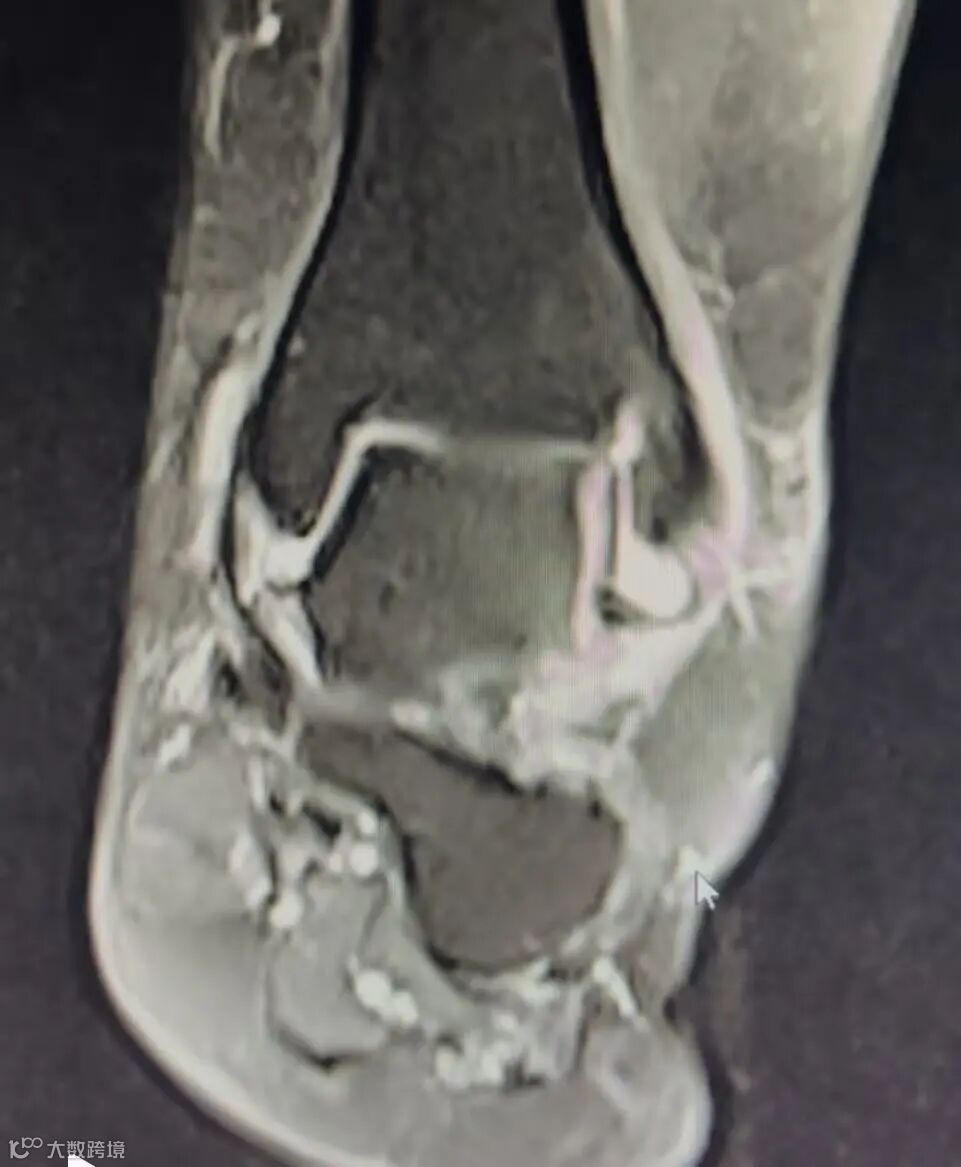
3. Arthroscopic synovectomy was performed on patients with standard portals. Anterolaterally localized hypertrophic synovitis and scar tissue were observed and debrided. In order to exclude MI, a clinical anterior drawer and/or talar tilt tests were conducted. Incombination with the stress fluoroscopy, where there was markedly a symmetricanterior laxity of the talocrural joint (5 mm), an open lateral stabilization procedure was performed and excluded. Furthermore, preoperative magnetic resonance imaging (MRI) scans were reviewed in order to document the intact or attenuated anterior talofibular ligament (ATFL) and hypertrophic synovitis. Functional instability and MI are two possible causes of CAI. Although mechanical and functional instability may occur in isolation, when combined they may contribute to CAI. MI is referred to as an increased flexibility and joint laxity and is usually attributed to damage to the ligaments of the ankle. After repetitive ankle sprains, individuals may develop chronic instability demonstrating laxity and MI. Some individuals with chronic ankle instability may present proprioceptive deficit, muscular weakness, impaired balance control, and increased neuromuscular reaction time, leading to FI. Diminished range of motion was thought to be a predisposing factor for lateral ankle sprains; indeed, many authors have shown that a dorsiflexion deficit creates a tendency toward hypersupination in CAI patients.
4. Ankle arthroscopy is an emerging field and some of its indications, concepts, and techniques have significantly evolved during the last few years. The arthroscopic treatment of ankle instability has attracted particular interest among foot and ankle surgeons. Intra-articular pathology is frequently encountered in association with ankle instability and its treatment at the time of surgery is essential for an optimal result. The potential for addressing both the instability and any associated pathology places ankle arthroscopy as the technique of choice when treating ankle instability. This increasing role of arthroscopy in surgically treating ankle instability has been described in either assisted or all-arthroscopic techniques. As in open surgery, several arthroscopic techniques have been proposed to restore ankle stability. They canbe grouped into arthroscopic modified Broström (or Broström–Gould), arthroscopic anatomic repair, and arthroscopic reconstruction. Anatomic repair under direct arthroscopic visualization is preferred when possible due to the preservation of the original ligament. However, there are occasions, where anatomical repair is not possible owing to poor ligament tissue remnant or the absence of remnant ligament. In these cases, the recommendation is to resort to reconstruction techniques that use grafts to replace the torn ligament. The early arthroscopic techniques to treat ankle instability have been improved and modified since their first descriptions. The first all-arthroscopic repair technique was described by Vega et al. in 2013, as an all-inside arthroscopic lateral collateral ligament repair with a knotless suture anchor. Variations of this procedure include ligament repair through a knot anchor or a soft anchor, as well as portals modifications. These technique modifications reflect differences in terms of surgeon preferences, but they are not intended to address the differences in the patient’s or ankle tissue characteristics. The surgical technique should account for patient specific features, such as age, body weight, labor or sports activity, ankle laxity, severity of mechanical instability, or the quality of the ligament-tissue remnant. The stability required by people who perform ordinary daily activities differs from that needed by high-demand athletic patients.
5. Classification based on CT scan, stage 1 shows cystic lesions within dome of talus and intact roof on all views, stage 2A means cystic lesion with communication to talar dome surface, stabe 2B shows open articular surface lesion with overlying nondisplaced fragment, stage 3 indicateds nondisplaced lesion with lucency, and stage 4 means displaced fragment. Classification based on MR image, stage 1 means subchondral trabecular compression and marrow edema on MRI with normal plain radiograph and positive bone scan, stage 2A shows formation of subchondral cyst, stage 2B means incomplete separation of fragment, stage 3 indicates unattached and nondisplaced fragment with presence of synovial fluid around fragment, and stage 4 means displaced fragment. The arthroscopic examination of the ankle is begun by establishing the antrior portals. Care must be taken to avoid injuring the greater saphenous vein when establishing the anteromedial portal and the superficial peroneal nerve during placement of the anterolateral portal. Prior to the creation of the portals, the superficial peroneal nerve can be visualized and marked along the lateral aspect of the foot when the ankle and fourth toe are in plantar flexion and inversion. The portals are created by incising only the skin, the soft tissue is spread down to but not through the joint capsule to avoid injuries to subcutaneous nerves. The anteromedial portals is created first, it is established just medial to the anterior tibial tendon at the level of the joint line. The anterolateral portal is established under direct visualization just lateral to the peroneus tertius tendon at the level of the joint line. The posterior portals can be of use to control inflow and outflow as well as to aid in visualization of the posterior structures. Optional accessory portals can be beneficial when operating within the tight confines of the medial and lateral gutters. Surgery is begun by first performing a thorough arthroscopic evaluation of the ankle. Anterior examination from the anteromedial portal includes evaluation of stuctures, central examination from the anteromedial portal to evaluation of structures, and posterior examination from the posterolateral portal. Upon completion of the diagnostic arthroscopy, all intra articular pathology, including the OCL, is noted and appropriate surgical treatment can be initiated. The OCL is identified, probed, and sized. For lesions that are primarily chondral, the loose cartilage fragments are debrided down to bone using a combination of biting instruments and full radius arthroscopic shavers until a stable rim of articular cartilage is prepared. The calcified cartilage layer of the lesion is disrupted using curettes and the shaver to abrade the surface to produce a bleeding bony bed. For smaller sized OCL, abrasion may be sufficient for treatment and stimulation of fibrocartilage growth. For medium and lager sized OCL, it is necessary to penetrate the subchondral bone to induce blood flow from the subchondral vessels. Lessions can be prepared using a microfracture technique or by drilling. A medial malleolar osteotomy is often needed for OAT treatment of these OLT. The donor harvester in the supracondylar ridge of the lateral femoral condyle is malleted to depth of 15 mm and twisted under pressure to withdraw the graft, and the graft is tapped into place of the talar lesions dome. It si firmly seated using a tamp.
6. Peroneal tendon disorders are frequently missed and can be a source of lateral ankle pain in athletes. Several common pathologies can affect the peroneal tendons in the athletic population, including tendonitis, tears, and instability. The peroneus longus and brevis muscles from the lateral compartment of the leg and are innervated by the superficial peroneal nerve. The peroneus brevis originates from the lateral surface of the middle one third of the fibula and intermuscular septum and inserts at the peroneal tuberosity at the base of the fifth metatarsal. It acts primarily as an everter of the ankle joint and also provides some lateral ankle stability. The peroneus longus originates from the lateral condyle of the proximal tibia and the head and lateral aspect of the fibula, distal to the tip of the fibula, it crosses the peroneal tubercle and turns sharply to obliquely cross the plantar aspect of the foot, inserting on the plantar aspect of the first metatarsal base. Its primary action is to plantarflex the first ray and also to assist in eversion of the foot. Approximately 4cm proximal to the distal end of the fibula, the peroneal tendons enter a common synovial sheath. At the level of an ankle, the tendons course through a fibroosseous tunnel bordered anteriorly by the fibula, medially by the calcaneal fibular ligament, the posterior inferior tibiofibular ligament, and the posterior talofibular ligament, and posterolaterally inferior tibiofibular ligament. The superior peroneal retinaculum acts as the primary restraint to subluxation and dislocation of the peroneal tendons and is always torn in an acute peroneal tendon dislocation. In the majority of patients, the posterior aspect of the distal fibula forms a recess or groove the retromalleolar groove, and this concavity deepens the area available for the peroneal tendons. Longitudinal tendon tears may affect either the peroneus longus or the peroneus brevis. Acute tears in the athletic population generally result from sudden inversion injuries. Theoretical mechanisms of the injury include impingement of the peroneus brevis between the longus tendon and the posterior aspect of the fibula, split that occur in the setting of instability as the tendons sublux out of the retromalleolar groove, and a low lying peroneus brevis that overstuffs the retrofibular groove. Peroneus brevis tears tend to occur in the retromalleolar sulcus, while longus tears often occur distal to the tip of the fibula near the peroneal tubercle. Pain with resisted active eversion/dorsiflexion may suggest peroneal pathology. MRI remains the gold standard when advanced imaging is required for the evaluation of peroneal tendon disorders. A lateral curvilinear incision is made just posterior to the fibula border, this starts approximately 5 cm proximal to the tip of fibula and extends distally approximately 2 cm beyond the tip of the fibula toward the base of the fifth metatarsal along the peroneal tendon course. The superior peroneal retinaculum should be incised close to the fibular border, taking care to leave a sleeve of tissue to allow for reattachment. In general, tendon tears involving less 50% of the tendon should be treated with debridement of the poor tissue involving the tear and subsequent tubularization of the remaining healthy tendon. In cases of extensive degeneration involving more 50% of the tendon, consideration should be given for tenodesis of the brevis tendon to the longus both proximally and distally, with excision of the degenerated segment. In cases of peroneal tendon dislocation, careful attention must be paid to the chronicity of the injury and the patients individual morphology.
7. Symptomatic laxity of the lateral ligaments of the ankle despite appropriate rehabilitation program. Lateral ligament testing is performed to assess the stability of the anterior talofibular (ATFL) and calcaneofibular (CFL) ligaments. Testing for ATFL stability is performed with an anterior drawer test, which places an anterior force on the posterior calcaneus with the ankle in 10 degrees of plantar flexion from neutral. CFL testing is performed with a lateral inversion force on the lateral calcaneus with the ankle at neutral. Commonly patients will have calcification on the lateral side of the ankle indicating previous injury, or even a small avulsion fracture of the distal fibula, secondary to AFTL or CFL avulsion. The ATFL originates on the anterolateral portion of the fibula and inserts on the neck of the lateral talus. The CFL originates on the unersurface of the fibula and inserts on a tubercle on the posterolateral aspect of the calcaneus. The peroneal tendons lie just lateral to the structure. The intranervous plane is between a branch of the superficial branch of the peroneal nerve and branches of the sural nerve. The sural nerve is located an average of 19mm lateral to the lateral border of the Achilles tendon at the level of the insertion of the Achilles tendon. The surgical safe zone is identified between these superficial nerves. The extensor retinaculum is identified in the distal portion of the incision as it attaches from the calcaneus to the talus. A curvilinear incision that parallels the distal portion of the fibula to expose the ATFL and CFL. The distal aspect of the incision allows exposure of the extensor retinaculum. Arthrotomy is performed anteriorly into the ankle joint and the peroneal sheath is entered distally and posteriorly. Care is taken to direct the scalpel blade toward the fibula to avoid injury to the talar articular cartilage anteriorly or the peroneal tendons posteriroly. Peroneal tendons are inspected for longitudinal tears, and treated sa appropriated. The ankle joint is inspected anteriorly for damage or loose bodies. The CFL is identified and sharply dissected from the distal fibula. The peroneal tendons are carefully retracted posteriorly and distally. The ATFL is identified anteriorly, attached to the lateral wall of the talar neck. The ligament s a condensation of the anterior ankle joint capsule. The origins of the ATFL and CFL are freshened and prepared with curettage and rasping to establish bleeding bone for a robust healing surface. Two parallel bone tunnels (2mm) are drilled from the posterior lateral fibula, exiting at the attachment points of the CFL distally and posteriorly. Anteriorly, one or two metallic bone anchors are placed in a parallel fashion at the ATFL origin site. The CFL sutures are passed through the bone tunnels and the ATFL anchor sutures are passed through the anterior tissue. The sutures are tied sequentially from posterior to anterior.
8. The main indications of ankle arthroscopy include both soft tissue and/or bony pathology. Soft tissue pathology mainly includes chronic synovitis, chondromatosis, and excessive scar tissue. Bony pathology includes loose bodies, ossicles, posttraumatic calcificatioins, avulsion fragments, and osteophytes of the posterior tibial rim. Posterior ankle impingement syndrome encompasses a group of pathologies that are characterized by posterior ankle pain in plantar flexion. The mechanism can be caused by overuse or trauma. It is important to differetiate between these two groups, because posterior impingement from oversue has a better prognosis and patients are more satisfied after arthroscopic treatment. Hyper dorsiflexion or eversion trauma can result in avulsion of the posterior talotibial ligament at its insertion into the medial tubercle of the talus. This may result in posttraumatic calcifications or ossicles in the deep portion of the deltoid ligament. Posterior ankle impingement syndrome is often accomplished by tenosynovitis or degeneration of the FHL, especially in ballet dancers. Peroneal tendon pathology frequently coexists with or is secondary to chronic lateral ankle instability. These disorders often cause chronic ankle pain in runners and ballet dancers. In the absence of intra articular ankle pathology, posteromedial ankle pain is most often caused by disorders of the posterior tibial tendon. On clinical examination, valgus angulation of the hindfoot is frequently seen with accompanying abduction of the forefoot, the too many toes. Pathology of the Achilles tendon can be divided into noninsertional and insertional problems. Patients with tendinopathy can present with three patterns, diffuse thickening of the tendon, local degeneration of the tendon that is mechanically intact, or insufficiency of the tendon with a partial tear. The posterolateral portal is made directly in front of the Achilles tendon just proximal of this line. After making a vertical stab incision, the subcutaneous layer is split by a mosquito clamp. When the tip of the clamp touches the bone, it is exchanged for a 4.5 mm arthroscopic shaft with the blunt trocar pointing in the same direction. By palpating the bone in the sagittal plain, the leel of the ankle joint and subtalar joint can often be distinguished since the prominent posterior talar process or os trigonum can be felt as a posterior prominence in between the two joints. The posteromedial portal is made medially to the Achilles tendon, at the same level as the posterolateral portal, medially to the lateral malleolus. After makin ga vertical stab incision, a mosquito clamp is pointed into the direction of the arthroscopic. The tip of the shaver is directed in a lateral and slightly plantar direction toward the lateral aspect of the subtalar joint. In the hindfoot, the crural fascia can be quite thick. Loose bony particles can easily be created with the microfracture awl in case of puncturing the subchondral plate in ODs. During endoscopic groove deepening for recurrent peroneal tendon dislocation, the posterior ankle ligament is potentially at risk. Medial from the fibular groove the posterior syndesmotic ligaments and the posterior talofibular ligament are located. The contour of the groove must be followed from proximal to distal. The calcanofibular ligament inserts more anteriorly in the most distal part of the lateral malleolus. The fibular groove must be deepened anteriorly and distally, while the shaver is directed medial from the calcaneofibular ligament inserion. The depth of the fibular groove needs to be sufficient in order to prevent redislocation of the peroneal tendons and should approximately be 5mm.
9. 作者颜登鲁,广州市第十二人民医院骨科主任,骨科博士,教授、主任医师,博士研究生导师、硕士研究生导师。主持国家自然科学基金面上项目及省市级科技计划项目4项;发表学术论文四十余篇,SCI收录二十余篇;2007年到美国学习脊柱外科技术,2013年到德国学习脊柱外科技术;参编人民卫生出版社出版的《微创脊柱外科手术学》等专著三部;获广东省及广州市级科技奖励多项。专治:颈肩腰腿痛、脊柱侧弯畸形、寰枢椎骨折脱位、脊柱肿瘤、脊柱感染、颈椎病、腰椎间盘突出症、股骨头坏死、髋关节发育不良脱位、膝关节疼痛畸形、骨关节肿瘤、关节软骨半月板损伤、关节韧带损伤、四肢骨折等。擅长:微创脊柱外科手术、微创脊柱侧弯矫正手术、微创脊柱内镜手术、微创髋膝关节置换手术、微创关节镜手术、微创四肢骨折手术等。颜登鲁主任门诊时间:广州市第十二人民医院骨科,黄埔院区:周一上午、周三上午。颜登鲁主任的联系电话189 2938 3787,199 2837 2149.