


点击蓝字,关注我们
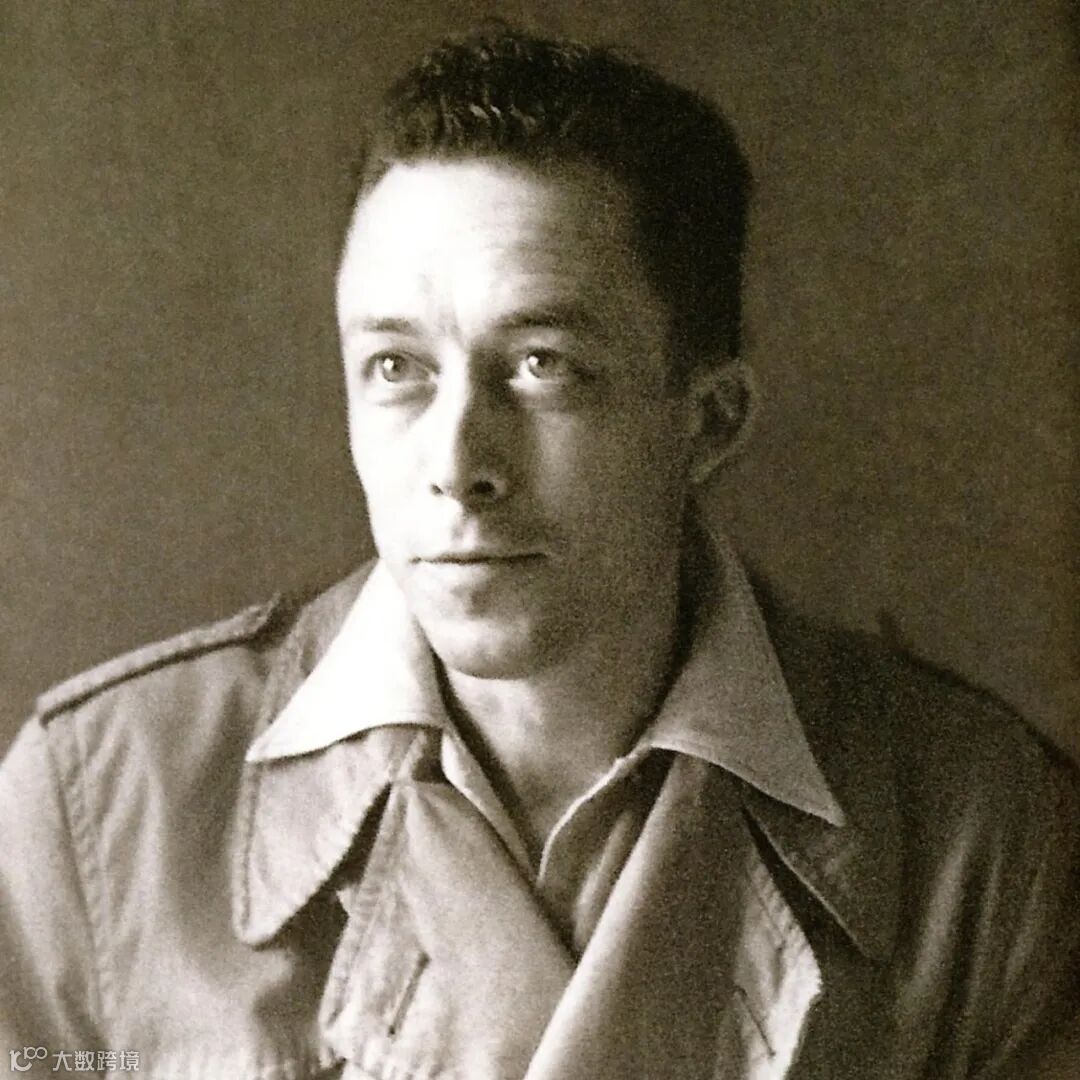
Albert Camus (1913–1960) was a journalist, editor and editorialist, playwright and director, novelist and author of short stories, political essayist and activist—and, although he more than once denied it, a philosopher.
Camus is often considered an existentialist, but the philosophy he most identified with and developed was called absurdism. In the Myth of Sisyphus (1942), he wrote:
“The absurd is born of this confrontation between the human need and the unreasonable silence of the world.”
For Camus, humans longed for order, clarity, and understanding of the world. We ask why?, but at the end of the day, life has no meaning. The absurd represents the tensions between the humanistic desire for purpose and an indifferent universe.
However, Camus isn’t nihilistic. Since the world is indifferent, Camus believes humans have three options to life:
(1) To commit suicide
(2) To make a “leap of faith” and choose to believe in God
(3) To accept the absurd and create one’s own meaning in life
To Camus, the human response to the absurd is equally important as the absurdity of life itself. Hence, the first option doesn’t seem to make much sense, and neither the second. He even goes far to call faith a kind of “psychological suicide”, indicating his rejection of transcendence. The third option is what Camus upholds in his philosophy. He believes that human solidarity and moral decency is capable of creating purpose even in a meaningless world. In other words, the world is random and meaningless, so it is up to ourselves to actively lead a purposeful life.
To better understand Camus’s philosophical worldview, we shall proceed to examine two of his most famous works: The Stranger (1942) and The Plague (1947):
The Stranger
The Stranger tells the story of Meursault, a detached and emotionally indifferent French-Algerian man. The novel starts off with Meursault’s indifferent response to his mother’s death:
"Mother died today. Or maybe yesterday. I can’t be sure"
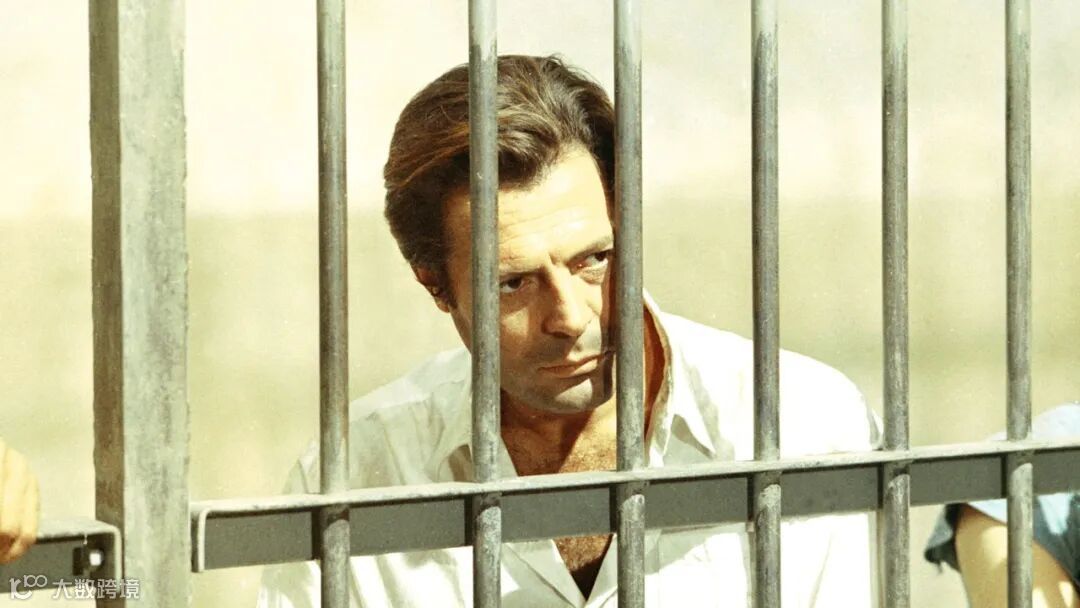
This sets the tone for the entire narrative — detached, observant, indifferent. The story unfolds in two parts. In part one, Mersault attends his mother’s funeral, begins a physical relationship with a coworker named Marie, and leads a life without passion or conviction. He becomes friends with his neighbor Raymond, helping him write a cruel letter to his mistress. During a beach trip, Meursault encounters an Arab man—Raymond’s enemy—and, overwhelmed by the blinding sun and heat, shoots him five times. In part two, Mersault is arrested, tried, and sentenced to death. Throughout the trial, Mersault’s lack of emotion and rejection of God horrifies onlookers more than the crime itself.
A characteristic quality of Mersault is his unwavering nihilism. He fails to make any sense of the human life. In a secular context, he lacks ambition of any kind at work and is indifferent towards “true love” in his relationship with Marie. When Marie asks Mersault whether he loves her and wants to marry her, he simply replies that both love and marriage are meaningless. In a religious context, even though he is advised by others — especially after the murder — to take up religion, he adamantly rejects it and believes only in the physical experiences of life. It can even be said that he rejects the emotional experiences of life, as he seems incapable of being emotionally aware of events happening around him — his mother’s death, his relationship with Marie, his murder of the Arab.

What’s more, Mersault’s nihilistic worldview is reflected in both his actions and thoughts. There is no logical motive for him to murder the Arab, and he doesn’t deny that on court. Death here is shown to be absurd, random, and without meaning. In prison, he reflects that it doesn’t matter whether he died now at the guillotine or 10, 20 years later, indicating the futileness of life itself. There are also various instances of how Mersault’s sense of life’s meaninglessness clash with other characters’ persistent efforts to impose structures of meaning — like how the judge believed in God. Here, Camus demonstrates that the world in itself is absurd, and any action to “reason” meaning out of it is equally absurd.
The Plague
If The Stranger represents the individual under Camus’s worldview, then The Plague is a depiction of how society functions in an indifferent world.
The Plague takes place in Oran Algeria, where a mysterious epidemic devastates the city. The story is a journalistic account of events that happened at the town before, during, and after the plague hit. It follows several key characters like Dr.Bernard Rieux, Father Panelous, Grand, Cottard, and Torreau, and documents what they observed, did, and thought through the plague.
It is quite natural to Camus that the plague is more than a literal disease. He writes:
"The plague bacillus never dies or disappears for good... it can lie dormant for years and years... and perhaps the day would come when, for the bane and the enlightening of men, it would rouse up its rats again and send them forth to die in a happy city."
The disease symbolizes human suffering, evil, and the absurd condition of existence. The plague diseased town is a microcosm of the universe, and the people involved account for all of the three “life options” Camus describes. Cottard is representative of the people who “commit suicide” in face of an indifferent world. They know that the world and all its suffering is meaningless, so just like Cottard, they commit suicide to actively end this randomness. Father Paneloux is representative of the second class, who seek solace through the divine. In his sermons, Paneloux preaches that the occurence of the plague is due to the sins of the people of Oran, and what they should do first and foremost is to turn their hearts to God. To Camus, this is a psychological equivalent of Cottard-like people because they also do not seem to counter the indifference of the world, but to passively attach “meaning” to it. In some sense, They are depriving themselves of their humanistic potential for action — a kind of “suicide”.
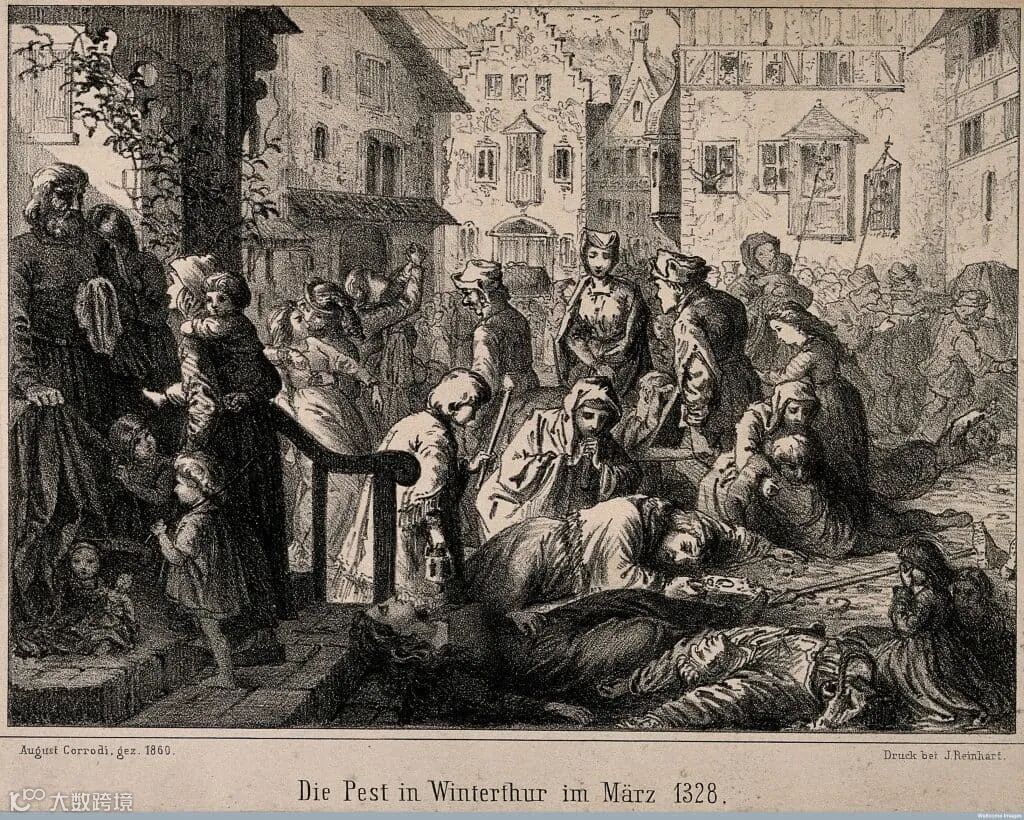
The third class of people, the ones who actively fight to create meaning themselves, is represented by Grand and Dr. Rieux. Rieux is an atheist. He fights the plague out of “moral decency” and work ceaselessly against it. Grand is the commonest everyone, but fights side by side with the doctor in the later stages of the plague. He is explicitly called a “hero” by Camus. In the face of a harsh, uncaring universe, one must struggle to help others to “defeat the plague”, even if death is inevitable.
Therefore, in short, we see that Camus isn’t against meaning. He is against meaning in itself — a kind of inherent order in the natural world that gives meaning. The kind of meaning he upholds is created through human actions and struggles, inspired by the “moral decency” as Rieux does in the novel.
A Theological Perspective
For devout Christians, accepting Camus’s absurdism might be a great challenge. He’s a reductionist, people say; He’s denying the existence of God and the ultimate salvation. But is he? I think Camus’s worldview deserves more respect than the “absurdist” label we give it. True, he called religious faith “psychological suicide”, but as an atheist, does he really understand what faith constitutes of and to what end it achieves? I believe he is only referring to a form of cheap psychological consolation that masquerades as faith.
For one thing, as Augustine might put it, Camus identifies the disease but rejects the cure. Camus’s world is indifferent and meaningless, and so is the Christian world without God’s grace. Ecclesiastes 1:2,14 writes:
"Meaningless! Meaningless!... Everything is meaningless... I have seen all the things that are done under the sun; all of them are meaningless, a chasing after the wind." This focuses on the vanity of worldly pursuits without God."
The secular world, in itself, is meaningless — it’s a “chases after the wind”. The physical world has no innate meaning, only an endless cycle of life, conversion, propagation, and death. In addition, both worldviews acknowledge the process to attribute meaning to a human life spent in a meaningless material world. Camus finds this seeking futile. Mersault is his absurd hero — he dies content in meaninglessness. However, the Christian worldview picks up exactly where Camus ends. We all have the hunger for meaning and purpose, and Christianity affirms this seeking. Augustine writes in his Confessions:
"You have made us for Yourself, O Lord, and our hearts are restless until they rest in You"
For Augustine, the seek for meaning isn’t futile, it is representative of the divine design. We are created in God’s image, but our original sin cuts us off from the eternal holiness of God. Hence, the desire for higher meaning can be seen as the reunification of the holy within us with the Holiness of God, a process that is meaningful under any circumstance. C.S. Lewis also develops this insight in Mere Christianity:
"If I find in myself desires which nothing in this world can satisfy, the only logical explanation is that I was made for another world."
For Camus, the hunger for meaning proves life’s futility; for Lewis and the Christian worldview, it proves eternity’s reality.
But does Camus deny meaning all together? Absolutely not. He denies the seeking of it. In other words, you shouldn’t think of a clever “explain-it-all” model and assume that it gives the world meaning. Instead, as we see in The Plague, he is an advocate of the active creation of meaning through man’s actions. More specifically, he holds faith in the common decency of man. Dr. Rieux reflects in The Plague that:
"The only means of fighting a plague is common decency."
He doesn’t fight out of faith, or the hope that the plague will end someday. He fights out of moral decency. Thus, we see that Camus’s moral vision aligns with the Christian worldview, with one fundamental difference — that it excludes the the grace of God. Camus assumes that man can create meaning out of his own actions, but can they?
Action is physical. Thought and/or emotion is psychological. But a sense of meaning is more or less spiritual. Positive psychology teaches that thought/emotion affects action, and action in turn either uplevels or downgrades a certain thought/emotion. So, as a doctor the act of fighting the plague might align you to your conscience. Or the act of doing community service makes you happy and satisfied with your morality. However, does that account for meaning? The jump from the physical/psychological to the spiritual is greater than we might assume — it’s a jump from the material to the non-material. If we acknowledge that jump, then the Camus’s claim that man can create meaning starts to become questionable. How can the actions of a material existence create non-material effects? Our spirituality can only be affected by existences of a higher order. This is like saying a square cannot possibly picture a cube, but the cube could appear to the square at whatever size (projection).
Therefore, it is God who gives meaning. This can be explained in two ways. First, God provides an ontological foundation for goodness. In other words, God provides the perfect standard for man, one to always live up to but always unattainable. Micah 6:8 writes:
"He has shown you, O man, what is good."
The existence of a universal moral conscience, the assumption made by Camus, points directly towards a moral Lawgiver. God gives the eternal law, and the “natural law” is participation in the eternal law. Therefore, it is only possible that man obtain meaning through God.
Note that any discussion of meaning is based on the redemption of sin. This is because a sinful life is always meaningless, as the body is ultimately reduced to dust and the soul is subject to eternal damnation in hell. Thus, the redemption of sin is the necessary condition for meaning. Since it was Jesus who redeemed us with his blood, we can say the grace of God preceeds all discussion of meaning.
But how does the redeemed Christian obtain meaning? Jesus tells us to bear our crosses and follow his path. He also famously quotes in John 14:6,
"I am the way and the truth and the life. No one comes to the Father except through me."
He is the way. So to attain meaning is to follow his way and not verge to the left or the right. God gives meaning, so to seek meaning in life Christians should first and foremost seek our God’s will in their lives. What does God want us to do? What is God’s goal for our life? This isn’t us deprived of our freedom. God is all Holy, all good, and all wise, so he always has the best plan laid out in front of us. To follow him is to act out the meaning God has for our lives.
In conclusion, Albert Camus offers one of the most honest and compelling portraits of the modern soul—alienated, yearning, yet courageously defiant before an indifferent universe. His insistence that man must live “without appeal,” creating meaning through moral action and solidarity, reflects a deep moral seriousness that Christians can admire. Yet, Camus’s philosophy ultimately stops at the threshold of transcendence. By denying God, he confines humanity within the limits of the finite, mistaking divine faith for escapism rather than restoration.
The Christian faith, however, reveals that meaning is not manufactured by human will but received through divine grace. Christ’s incarnation, suffering, and resurrection transform absurdity into hope, showing that even suffering has purpose within God’s eternal plan. While Camus teaches us the courage to live truthfully in a fallen world, Christianity completes that truth by offering redemption and eternal significance beyond the grave. The absurd may confront us all, but the cross transforms that confrontation into communion — where human struggle meets divine love, and where meaning, once lost in the silence of the world, is found again in the Word made flesh.