



分享兴趣,传播快乐,
增长见闻,留下美好。
亲爱的您,这里是LearingYard学苑!
今天小编为您带来文章
“喆学(183):精读硕士论文
《双重信息不对称下SaaS云外包激励机制研究》
SaaS云外包下的多任务动态激励机制设计(2)”
欢迎您的访问!
Share interest, spread happiness,
increase knowledge, and leave beautiful.
Dear, this is the LearingYard Academy!
Today, the editor brings the
“Zhexue (183): Intensive reading of
《Research on the Incentive Mechanism of SaaS Cloud Outsourcing
under Double Information Asymmetry》
Design of multi-task dynamic incentive mechanism under SaaS cloud outsourcing (2)”
Welcome to visit!
本期推文将从思维导图、精读内容、知识补充三个方面介绍精读硕士论文《双重信息不对称下SaaS云外包激励机制研究》SaaS云外包下的多任务静态激励机制设计。
This post will introduce the design of multi-task static incentive mechanism under SaaS cloud outsourcing from three aspects: mind map, intensive reading content, and knowledge supplement.
一、思维导图(Mind Maps)
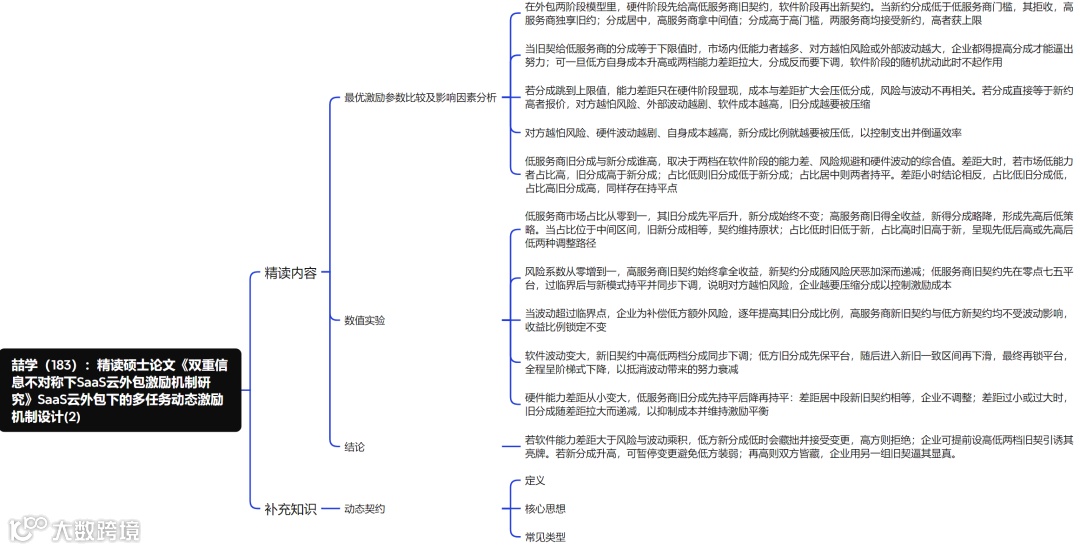
(1)最优激励参数比较及影响因素分析(Comparison of optimal incentive parameters and analysis of influencing factors)
在外包两阶段模型里,硬件阶段先给高低服务商旧契约,软件阶段再出新契约。当新约分成低于低服务商门槛,其拒收,高服务商独享旧约;分成居中,高服务商拿中间值;分成高于高门槛,两服务商均接受新约,高者获上限。若硬件阶段比例小于等于临界,规则类似但门槛值下调。固定报酬不影响努力,故只看分成变化:旧约分成、新约分成及二者差异决定谁能获得激励与多少。
In the two-stage outsourcing model, the hardware stage first gives the old contract to the high and low service providers, and then the software stage issues a new contract. When the share of the new contract is lower than the threshold of the low service provider, it will refuse to accept it, and the high service provider will enjoy the old contract alone; when the share is in the middle, the high service provider will take the middle value; when the share is higher than the high threshold, both service providers accept the new contract, and the higher service provider will receive the upper limit. If the hardware stage ratio is less than or equal to the critical value, the rules are similar but the threshold value is lowered. Fixed remuneration does not affect effort, so only the share change is considered: the share of the old contract, the share of the new contract, and the difference between the two determine who can get the incentive and how much.
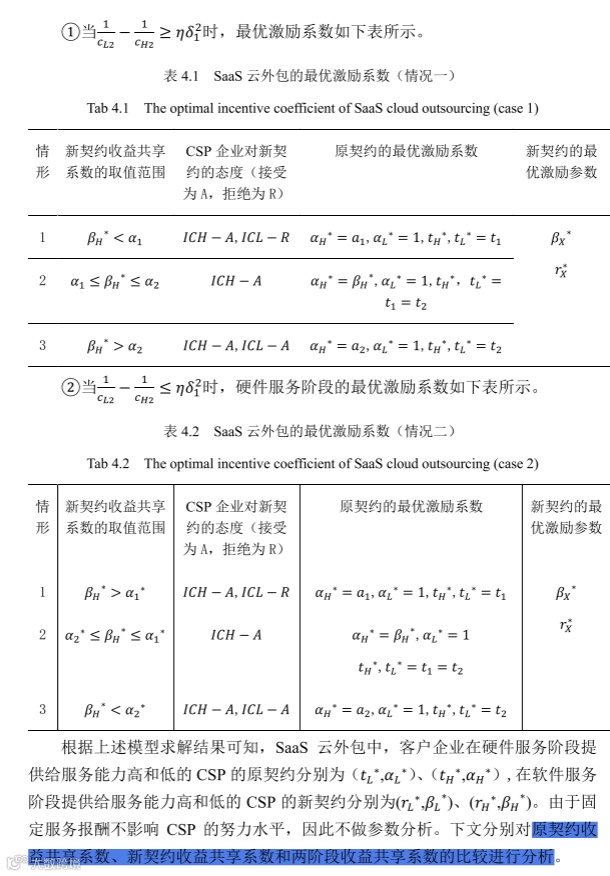
When the share of the old contract given to the low service provider is equal to the lower limit, the more low-ability people in the market, the more risk-averse the other party is, or the external volatility is greater, the company must increase the share to force effort; but once the low party's own costs increase or the gap between the two levels of ability widens, the share will have to be reduced instead, and the random perturbation of the software stage will not work at this time.
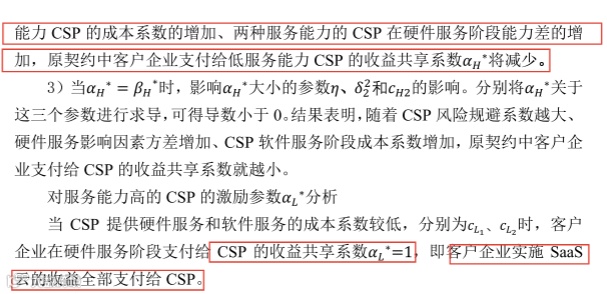
若分成跳到上限值,能力差距只在硬件阶段显现,成本与差距扩大会压低分成,风险与波动不再相关。若分成直接等于新约高者报价,对方越怕风险、外部波动越剧、软件成本越高,旧分成越要被压缩。对于高服务商,只要其硬件与软件成本都够低,企业会把硬件阶段全部收益让渡给他,自己不留一分,以换取最大投入。
If the share jumps to the upper limit, the ability gap will only appear in the hardware stage. The cost and the widening gap will lower the share, and risk and volatility will no longer be related. If the commission is directly equal to the higher bidder's new contract, the older commission will be squeezed, the more risk-averse the other party is, the more severe external volatility is, and the higher software costs are. For high-end service providers, as long as their hardware and software costs are sufficiently low, companies will transfer all profits from the hardware phase to them, keeping nothing for themselves, in exchange for maximizing their investment.
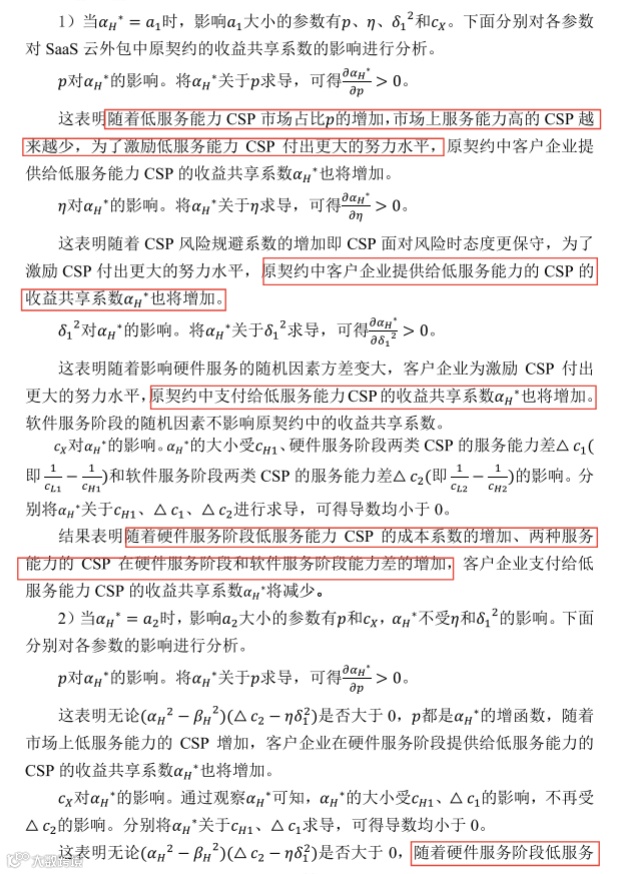
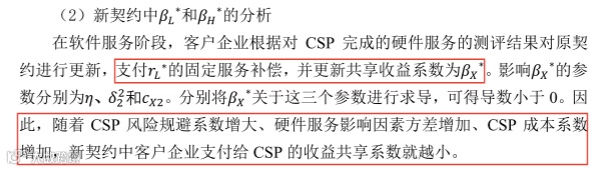
During the software phase, companies update contracts based on hardware evaluation results: the more risk-averse the other party is, the more severe hardware volatility is, and the higher their own costs are, the lower the new commission will be, in order to control expenses and drive efficiency.
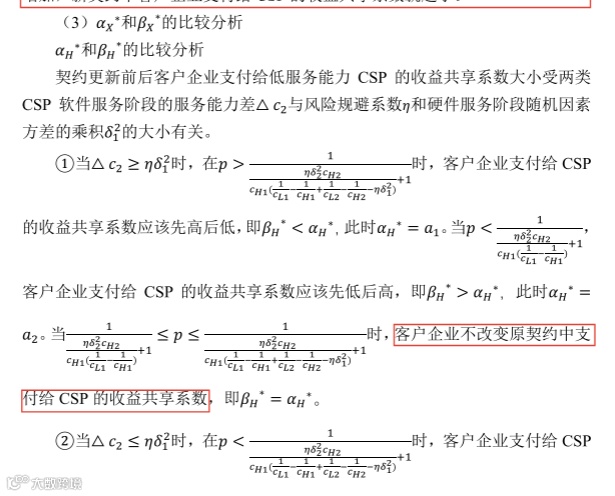
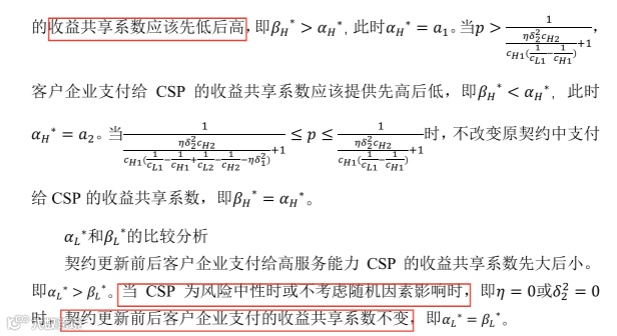
The higher share, the old or new, depends on the combined difference in software capabilities, risk aversion, and hardware volatility between the two tiers. When the gap is large, if the market share of low-capacity providers is high, the old share will be higher than the new share; when the share is low, the old share will be lower than the new share; and when the share is in the middle, the two will be equal. When the gap is small, the opposite is true: a low share results in a lower old share, while a high share results in a higher old share. There is also a break-even point.
高服务商的旧分成始终高于新分成,除非对方完全不怕风险或硬件毫无波动,此时旧新分成相等,契约不再调整。
The old share of a high-capacity provider is always higher than the new share, unless the other party is completely risk-averse or the hardware remains stable. In this case, the old and new shares are equal and the contract does not need to be adjusted.
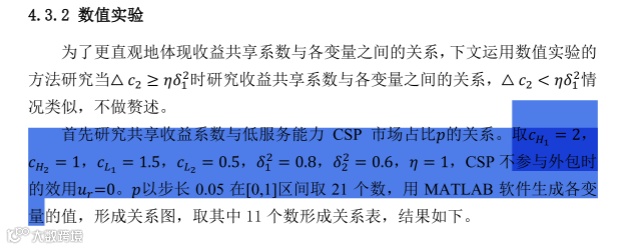
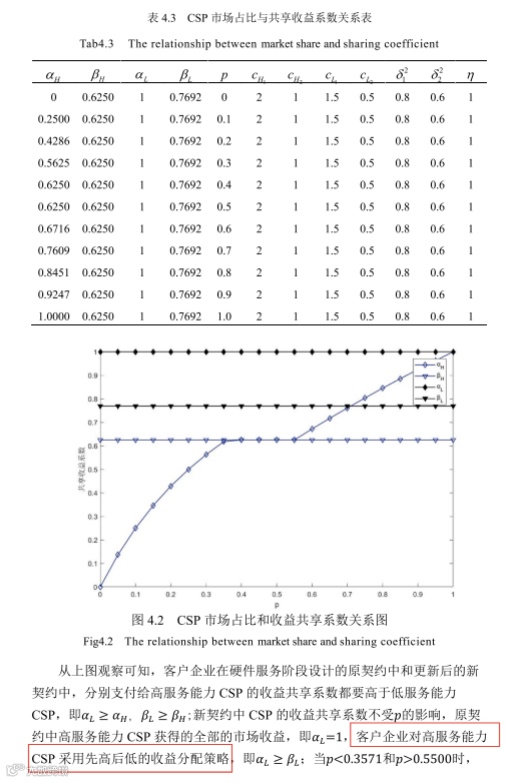
数值实验显示,低服务商市场占比从零到一,其旧分成先平后升,新分成始终不变;高服务商旧得全收益,新得分成略降,形成先高后低策略。当占比位于中间区间,旧新分成相等,契约维持原状;占比低时旧低于新,占比高时旧高于新,呈现先低后高或先高后低两种调整路径。
Numerical experiments show that when the market share of low-tier service providers increases from zero to one, their old share initially remains flat and then increases, while their new share remains unchanged. High-tier service providers receive full profits from the old contract, while their new share decreases slightly, forming a strategy of first high and then low. When the share is in the middle range, the old and new share are equal, and the contract remains unchanged. When the share is low, the old share is lower than the new share, while when the share is high, the old share is higher than the new share, showing two adjustment paths: first low and then high, or first high and then low.
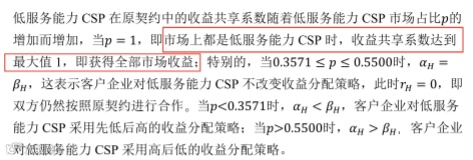
The article shows that when the risk factor increases from zero to one, high-tier service providers always receive full profits from the old contract, while the share of the new contract decreases as risk aversion increases. Low-tier service providers' old contracts initially reach the 0.75 level, then cross the critical threshold and reach parity with the new model, with the share decreasing in tandem. This suggests that the more risk-averse the other party is, the more the company should reduce its share to control incentive costs.
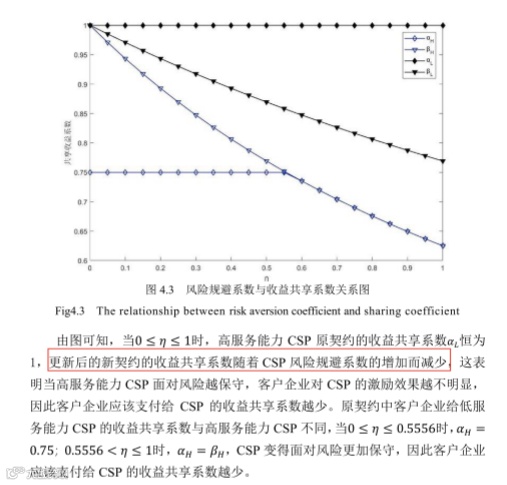
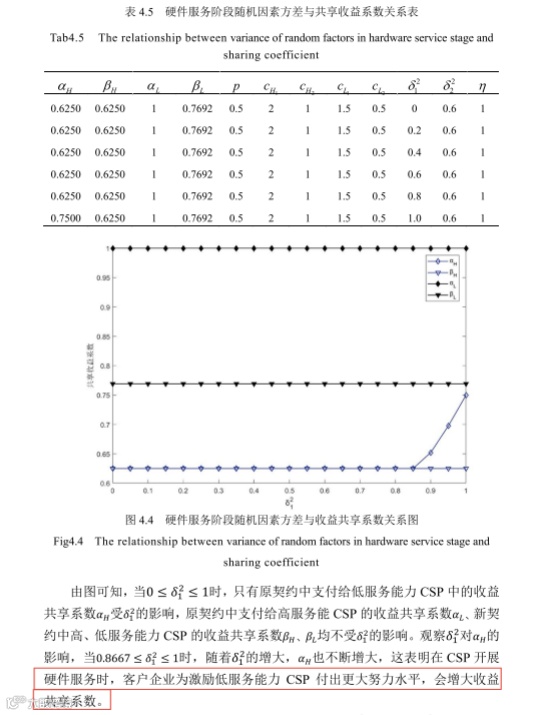
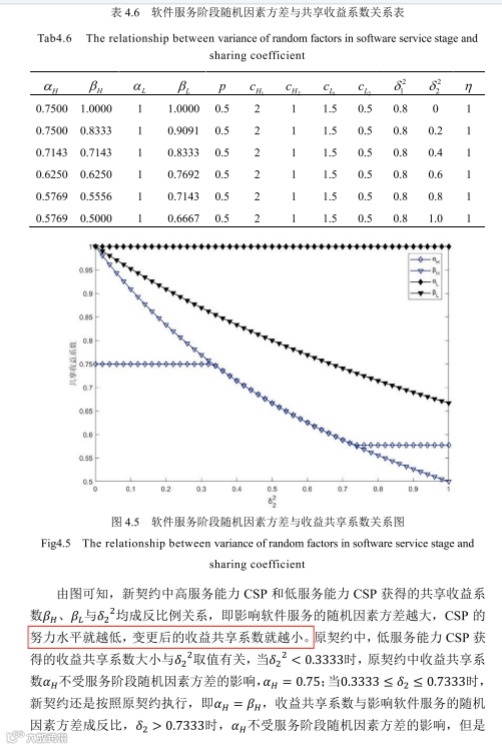
When hardware fluctuates randomly from zero to one, only the old share of the low-cost service provider increases as the fluctuation increases, while the other three lines remain flat. When the fluctuation exceeds a critical point, the company gradually increases its old share ratio annually to compensate for the low-cost service provider's additional risk. Both the old and new contracts of the high-cost service provider and the new contracts of the low-cost service provider remain unaffected by the fluctuation, and the profit ratio remains locked in.
When software fluctuations increase, both the high and low share ratios in the old and new contracts are simultaneously reduced. The old share of the low-cost service provider initially maintains the platform, then decreases when it reaches a consistent range between the old and new contracts, and finally locks in the platform again, with a step-by-step decline throughout the process to offset the effort loss caused by fluctuations.
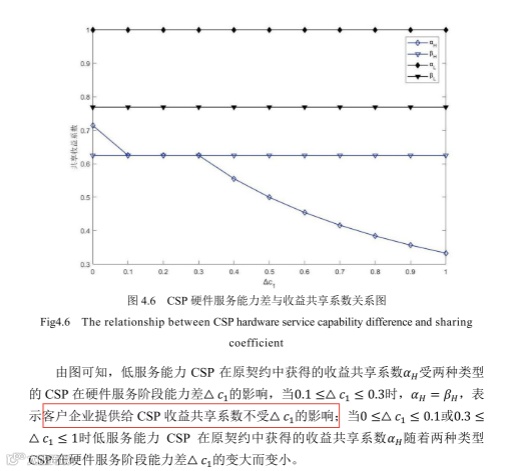
When the hardware capability gap widens from small to large, the old share of the low-cost service provider initially remains flat, then decreases, and then remains flat again. When the gap is midway, the old and new contracts are equal, and the company does not adjust. When the gap is too small or too large, the old share ratio decreases as the gap widens to contain costs and maintain incentive balance.
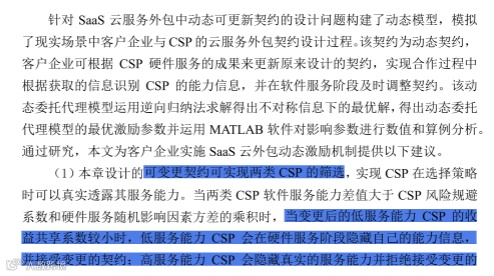
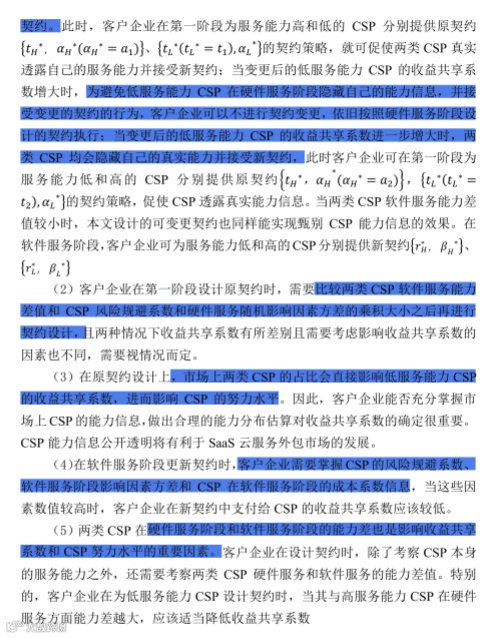
动态契约让企业在硬件阶段后根据成果刷新条款,可筛出真假高低的云服务商。若软件能力差距大于风险与波动乘积,低方新分成低时会藏拙并接受变更,高方则拒绝;企业可提前设高低两档旧契引诱其亮牌。若新分成升高,可暂停变更避免低方装弱;再高则双方皆藏,企业用另一组旧契逼其显真。差距较小时同样能甄别。设计旧契前须先比较差距与风险波动乘积,两种情形分成公式不同。市场占比决定低方旧分成,信息越透明越利市场。刷新新契时,若对方怕风险、波动大或成本高,应下调分成;硬件差距越大,低方分成亦应降低。
Dynamic contracts allow companies to update terms based on performance after the hardware phase, effectively screening out legitimate and fake cloud service providers. If the software capability gap is greater than the product of risk and volatility, the lower-cost party will hide their weaknesses and accept the change, while the higher-cost party will reject it. Companies can pre-set two tiers of pre-existing contracts to lure them into revealing their hand. If the new share increases, changes can be suspended to prevent the lower-cost party from playing it safe. If it increases further, both parties will hide, and companies can use another set of pre-existing contracts to force them to reveal their true colors. Smaller gaps can also be identified. Before designing pre-existing contracts, the gap and the risk-volatility product must be compared; the share formulas for the two scenarios differ. Market share determines the lower-cost party's pre-existing share; more transparent information benefits the market. When renewing a new contract, if the other party is concerned about risk, volatility, or costs, the share should be lowered. The larger the hardware gap, the lower-cost party's share should also be reduced.
动态契约指的是合同条款可以随时间和环境变化进行调整的合同安排,也就是说,合同双方的权利、义务和激励机制不是一次性固定的,而是根据未来不确定性的实现、信息的逐步揭示或行为表现进行动态调整。与传统静态合同不同,动态契约强调信息的逐步揭示和激励的时间序列设计,通过不同时间节点的决策和约束,实现长期合作中利益的最优分配。
A dynamic contract refers to a contractual arrangement whose terms can be adjusted over time and as circumstances change. In other words, the rights, obligations, and incentives of both parties are not fixed once and for all, but are dynamically adjusted based on the realization of future uncertainties, the gradual disclosure of information, or behavioral performance. Unlike traditional static contracts, dynamic contracts emphasize the gradual disclosure of information and the time-series design of incentives. Through decisions and constraints at different time points, they achieve the optimal distribution of benefits in long-term cooperation.
动态契约通常建立在委托-代理理论(Principal-Agent Theory)基础上。核心思想包括:
Dynamic contracts are generally based on principal-agent theory. The core concepts include:
1.信息不对称处理:合同一方(通常是委托方)对另一方(代理方)的能力、努力或外部环境可能不完全了解。动态契约通过分阶段观测行为或结果,将不对称信息逐步揭示出来。
1. Addressing information asymmetry: One party to a contract (usually the principal) may not fully understand the capabilities, efforts, or external environment of the other party (the agent). Dynamic contracts gradually reveal this asymmetric information by observing behavior or outcomes in stages.
2.激励与约束设计:合同条款在不同时间点可根据代理方行为或状态调整,从而持续激励代理方提供努力,减少道德风险。
2. Incentive and constraint design: Contract terms can be adjusted at different points in time based on the agent's behavior or status, thereby continuously incentivizing the agent to contribute and reducing moral hazard.
3.风险分担优化:合同可以随着外部环境(如市场价格、成本波动)变化调整收益分配,使双方在风险承受能力上达到最优匹配。
3. Optimizing risk sharing: Contracts can adjust the distribution of benefits as the external environment (such as market prices and cost fluctuations) changes, optimizing the risk tolerance of both parties.
常见类型如下:
Common types include:
1.基于业绩的动态激励:随着代理方实现阶段性目标或绩效指标,合同支付额动态调整,如销售提成随月度销售额变化。
1. Performance-Based Dynamic Incentives: Contract payments are adjusted dynamically as the agent achieves milestones or performance indicators, such as sales commissions that vary based on monthly sales.
2.续约型动态契约:合同初期设定基本条款,后续根据合作效果或市场环境进行续约和条件优化。
2. Renewable Dynamic Contracts: Basic terms are set at the outset of the contract, with subsequent renewals and optimizations based on the effectiveness of the collaboration or market conditions.
3.状态依赖契约:合同条款随外部环境状态变化调整,如原材料价格波动导致供应合同价格动态调整。
3. State-Dependent Contracts: Contract terms adjust based on external environmental conditions, such as fluctuations in raw material prices that lead to dynamic adjustments in supply contract prices.
4.可选择动态契约:合同双方可根据执行结果选择不同分支条款,常见于投资或创新型合作项目。
4. Optional Dynamic Contracts: Contracting parties can choose different terms based on performance outcomes, often seen in investment or innovative collaboration projects.
今天的分享就到这里了。
如果您对文章有独特的想法,
欢迎给我们留言,让我们相约明天。
祝您今天过得开心快乐!
That's all for today's sharing.
If you have a unique idea about the article,
please leave us a message,
and let us meet tomorrow.
I wish you a nice day!
翻译:谷歌翻译
参考资料:谷歌、Chat GPT
参考文献:吴琦超. 双重信息不对称下SaaS云外包激励机制研究 [D]. 合肥工业大学, 2020.
本文由LearningYard学苑整理发出,如有侵权请在后台留言!

文案|hzy
排版|hzy
审核|yyz