

[引文] Loibl S, André F, Bachelot T, et al. Early breast cancer: ESMO Clinical Practice Guideline for diagnosis, treatment and follow-up. Ann Oncol. 2024;35(2):159-182.
doi:10.1016/j.annonc.2023.11.016
European Society for Medical Oncology (ESMO),欧洲肿瘤内科学会
指南/共识等
[要点]
本ESMO临床实践指南为早期乳腺癌(EBC)患者的管理提供了关键建议和步骤。
建议,包括ESMO-MCBS和ESCAT评分(如适用),基于现有证据和专家意见。
作者小组来自多学科,专家代表世界各地的一系列机构。
患者沟通和共同决策涵盖了关于诊断程序和治疗方案。
【关键词】
diagnosis;early breast cancer;follow-up;guideline;screening;treatment
Incidence and epidemiology
Screening, diagnosis, pathology and molecular biology
Breast cancer screening
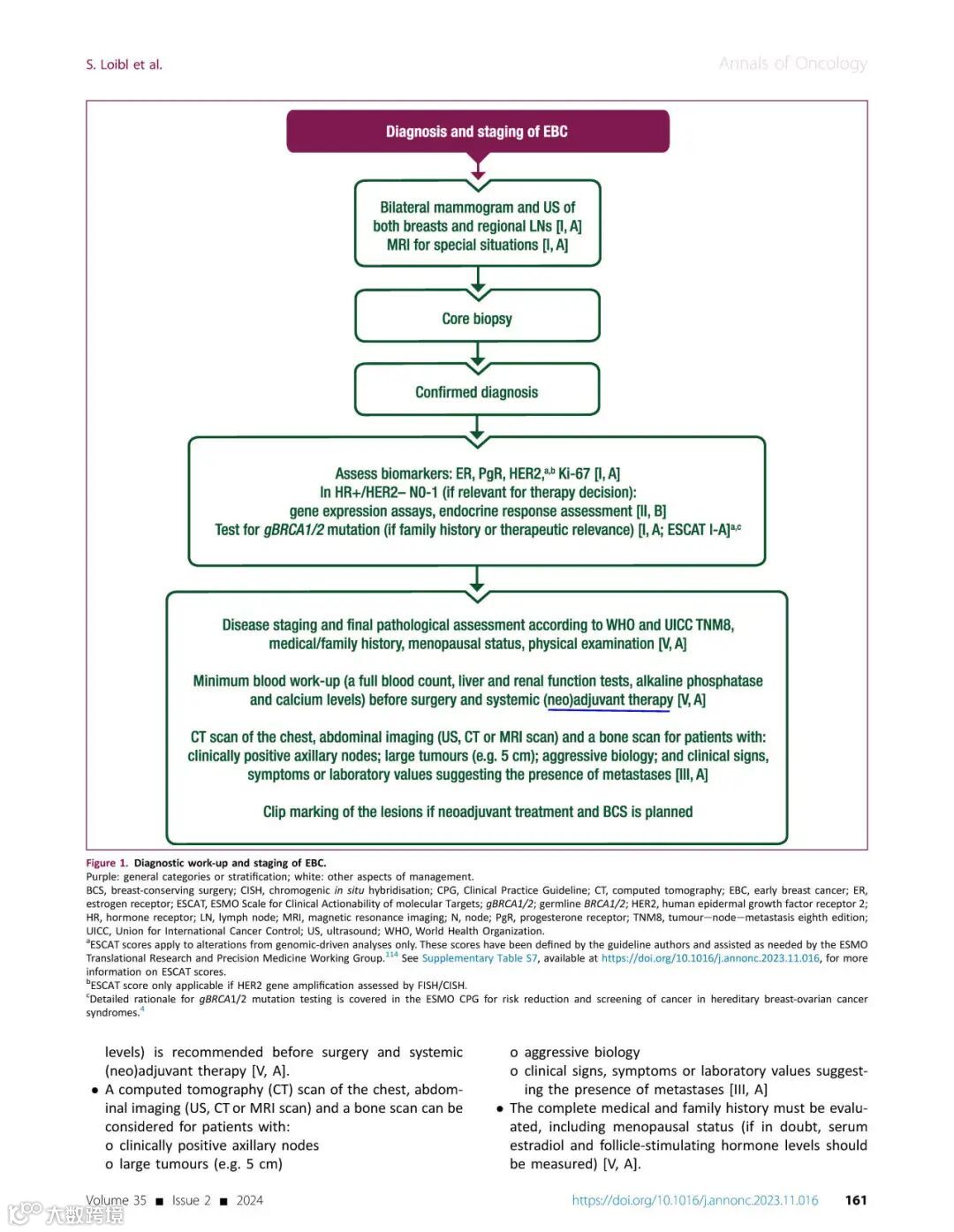
Diagnosis and imaging
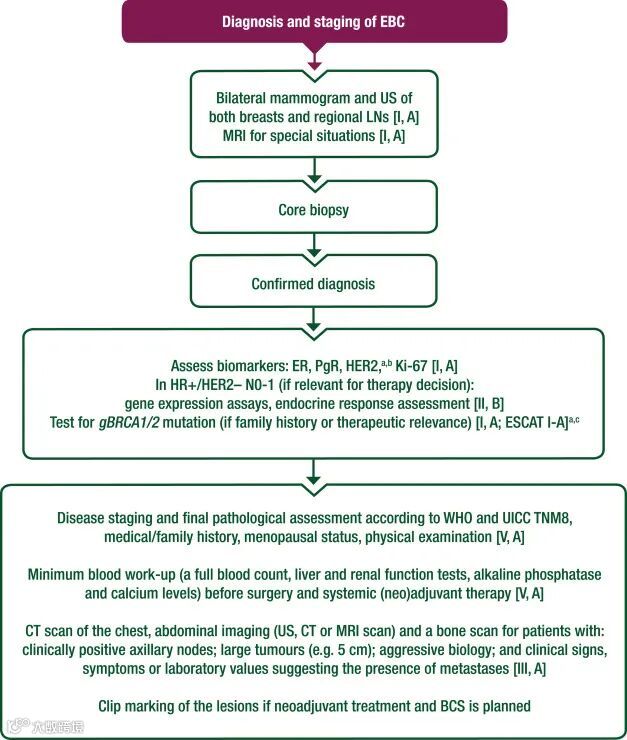
Figure 1
Hereditary breast cancer
Histomorphological assessment, biomarkers and molecular pathology
Recommendations
•
Regular (every 2 years) mammography screening is recommended in average-risk women 50-69 years of age [I, A]. Regular mammography may also be carried out in women 45-49 and 70-74 years of age, although there is less evidence of benefit [I, B].
•
Screening in women with a strong family history or known germline BRCA1/2 and other high-risk pathogenic variants (PVs) should follow the ESMO CPG for risk reduction and screening of cancer in hereditary breast-ovarian cancer syndromes [III, A].
•
Further diagnostic work-up is based on clinical examination and imaging, including bilateral mammography and ultrasound (US) of both breasts and regional lymph nodes (LNs) or two-dimensional digital mammography in the symptomatic setting [I, A].
•
Digital breast tomosynthesis (with or without synthetic mammography) and contrast-enhanced mammography can be considered as alternatives, where available and appropriate [II, B].
•
Magnetic resonance imaging (MRI) of the breasts is recommended in case of uncertainties following standard imaging and in special clinical situations [e.g. familial breast cancer associated with germline BRCA1/2 mutation (gBRCA1/2m) and other high-risk PVs, lobular cancers, suspicion of multifocality and/or multicentricity, presence of breast implants] [I, A].
•
Assessment of distant metastases (bone, liver and lung) is recommended only in patients with stage IIb and higher disease (especially with extended LN involvement), patients with a high risk of recurrence at first diagnosis and/or symptomatic patients [III, A].
•
Pretreatment pathological assessment, including a complete histomorphological, immunohistochemical and molecular assessment, if applicable, is recommended at the time of diagnosis and should include primary tumour histology and axillary node histology/cytology (if node involvement is suspected clinically) [I, A].
•
Assessment should include histological type, grade and immunohistochemistry (IHC) evaluation of estrogen receptor (ER), progesterone receptor (PgR) and human epidermal growth factor receptor 2 (HER2) biomarkers and a proliferation marker such as Ki-67 [I, A]. FISH testing should be carried out in cases of an equivocal HER2 IHC score (HER2 2+) [I, A; ESMO Scale for Clinical Actionability of molecular Targets (ESCAT) score: I-A].
•
Tumours should be grouped into biological subtypes, defined by routine histology and IHC results, as luminal A like, luminal B like, HER2 positive and triple negative [I, A]. Supplementary Material Section 4, available at https://doi.org/10.1016/j.annonc.2023.11.016 , provides details on subtype classification.
•
In cases of hormone receptor (HR)-positive, HER2-negative EBC with uncertainty about indications for adjuvant chemotherapy (ChT) (after consideration of all clinical and pathological factors), gene expression assays and endocrine response assessment in the preoperative setting can be used [II, B].
•
Tumour-infiltrating lymphocytes (TILs) may add prognostic and predictive information, particularly in triple-negative breast cancer (TNBC) and HER2-positive breast cancer, but there are no distinct TIL thresholds for treatment decisions [I, B].
•
Programmed death-ligand 1 (PD-L1) expression levels should not be used to guide treatment decisions in EBC [I, E].
•
Germline testing and subsequent genetic counselling for PVs in BRCA1/2 should be offered to patients who meet the respective national criteria and to those who are candidates for adjuvant olaparib therapy [I, A; ESCAT score: I-A].
Staging and risk assessment
Recommendations
•
Disease stage and final pathological assessment of surgical specimens should be made according to the World Health Organization classification of tumours and the eighth edition of the Union for International Cancer Control TNM (tumour–node–metastasis) staging system [V, A].
•
Minimum blood work-up (a full blood count, liver and renal function tests, alkaline phosphatase and calcium levels) is recommended before surgery and systemic (neo)adjuvant therapy [V, A].
•
A computed tomography (CT) scan of the chest, abdominal imaging (US, CT or MRI scan) and a bone scan can be considered for patients with:
o
clinically positive axillary nodes
o
large tumours (e.g. 5 cm)
o
aggressive biology
o
clinical signs, symptoms or laboratory values suggesting the presence of metastases [III, A]
•
The complete medical and family history must be evaluated, including menopausal status (if in doubt, serum estradiol and follicle-stimulating hormone levels should be measured) [V, A].
•
[18F]2-fluoro-2-deoxy-D-glucose (FDG)–positron emission tomography (PET)–CT scanning may be used instead of CT and bone scintigraphy particularly for high-risk patients and when conventional methods are inconclusive [II, B].
Management of EBC
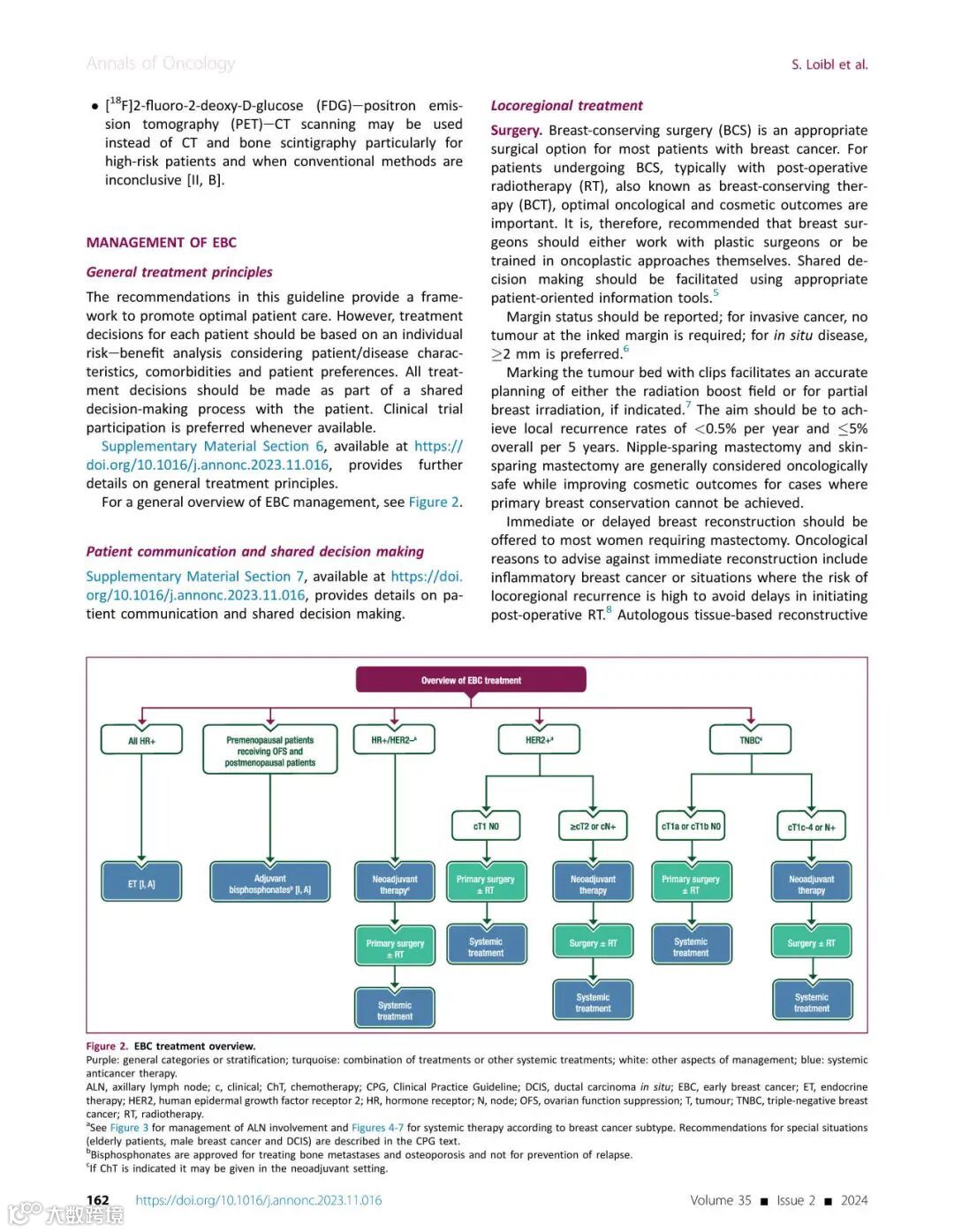
General treatment principles
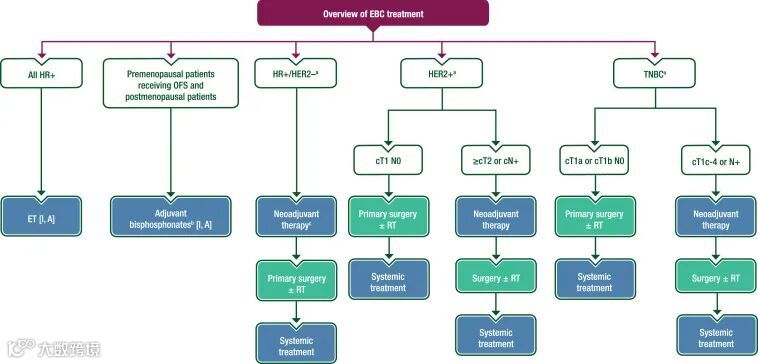
Figure 2
Patient communication and shared decision making
Locoregional treatment
Surgery Breast-conserving surgery (BCS) is an appropriate surgical option for most patients with breast cancer. For patients undergoing BCS, typically with post-operative radiotherapy (RT), also known as breast-conserving therapy (BCT), optimal oncological and cosmetic outcomes are important. It is, therefore, recommended that breast surgeons should either work with plastic surgeons or be trained in oncoplastic approaches themselves. Shared decision making should be facilitated using appropriate patient-oriented information tools.5
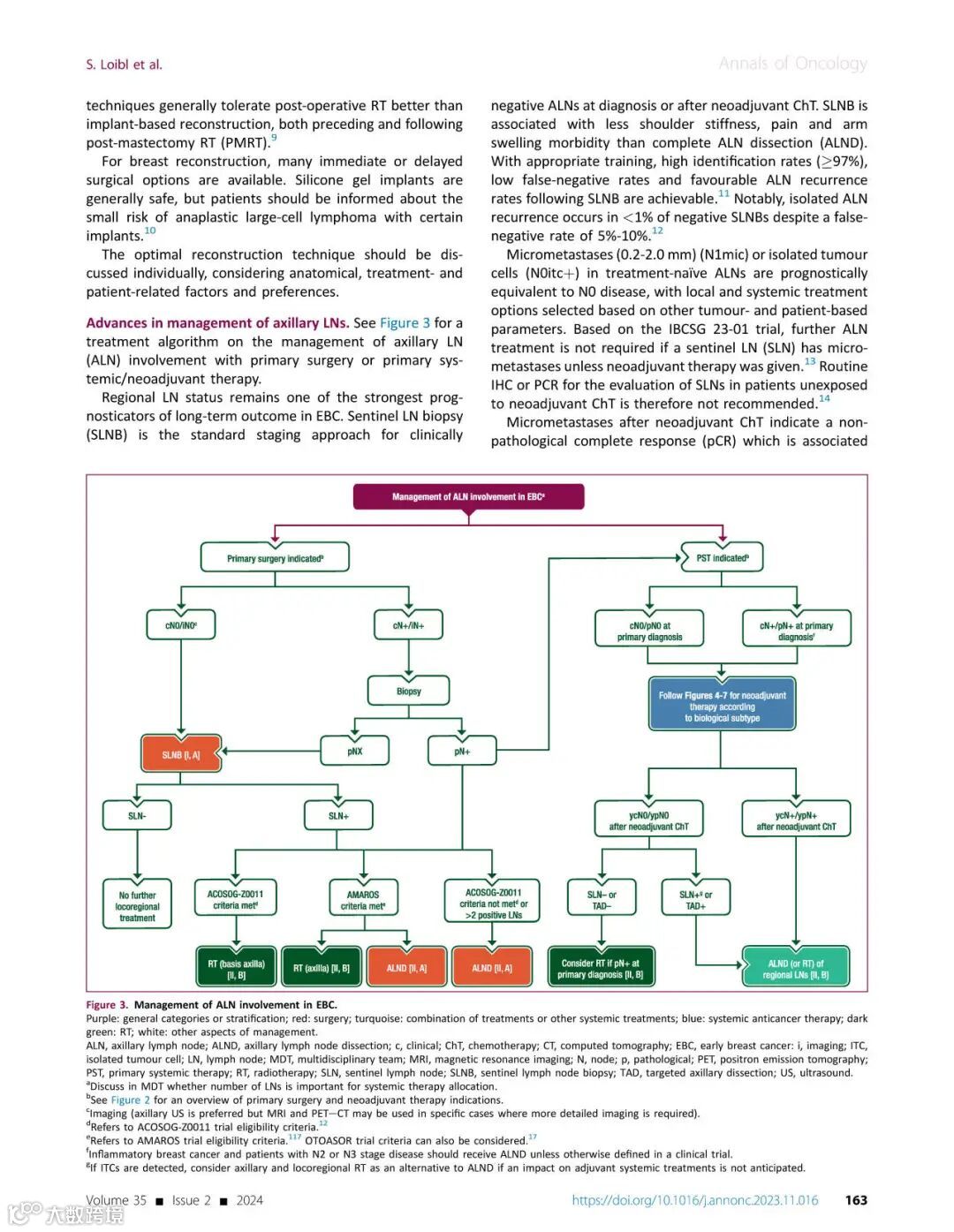
Advances in management of axillary LNs See Figure 3 for a treatment algorithm on the management of axillary LN (ALN) involvement with primary surgery or primary systemic/neoadjuvant therapy.
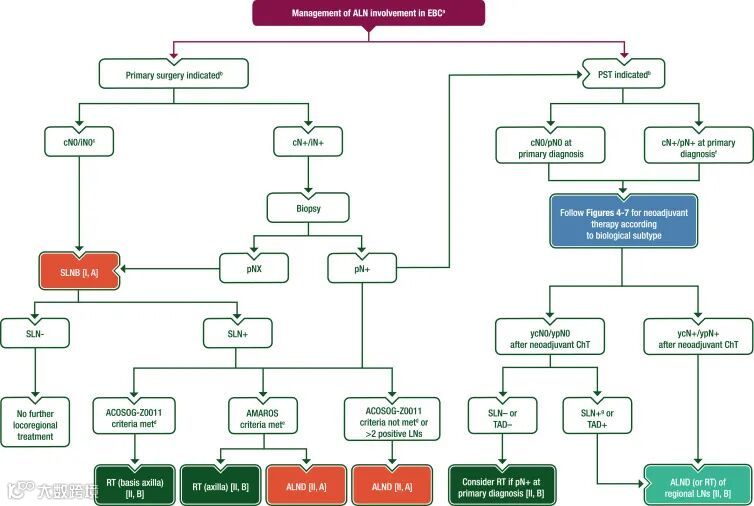
Figure 3
Surgery after primary systemic/neoadjuvant therapy Before primary systemic therapy (PST), it is recommended to mark the primary site (using a marker clip or carbon localisation) to facilitate accurate surgery when BCS is anticipated. In case of a positive ALN (cN1), marking the positive LN will allow ALND to be avoided for patients who are cN0 after PST. Although not mandatory, breast MRI is the most accurate modality for assessing the extent of residual disease following PST but only when coupled with pretreatment baseline MRI.
WBRT after BCS WBRT after BCS results in an absolute reduction in the 10-year risk of any first recurrence (locoregional or distant) and the 15-year risk of breast cancer-related mortality of 15.7% and 3.8%, respectively.25 Boost RT reduces local recurrence rates compared with no boost (relative reduction of 41% and 35% at 10 and 20 years, respectively) and is indicated for patients with unfavourable risk factors for local control.26
PMRT For patients with node-positive disease, PMRT results in an absolute reduction in first recurrence of 10.6% at 10 years and an absolute reduction in breast cancer-related mortality of 8.1% at 20 years.31 PMRT is recommended for high-risk disease (including involved resection margins, ≥4 involved ALNs and T3-T4 tumours) independent of the nodal status. It should also be considered in patients with intermediate-risk features (e.g. lymphovascular invasion, age), including those with 1-3 positive ALNs.31
Regional RT The use of comprehensive locoregional RT encompassing the chest wall and all regional LNs improves outcomes, especially for patients with ALN involvement. Modern locoregional RT, based on CT-planned locoregional targets, will result in reduced recurrence with the main effect being on distant recurrence. RT has been shown to significantly reduce breast cancer mortality [rate ratio 0.87, 95% confidence interval (CI) 0.80-0.94, P = 0.0010], with no significant effect on non-breast-cancer mortality (0.97, 0.84-1.11, P = 0.63), leading to significantly reduced all-cause mortality (0.90, 0.84-0.96, P = 0.0022).32
RT and breast reconstruction PMRT can be administered after immediate breast reconstruction. Better outcomes are usually obtained with autologous tissue reconstruction.9
RT doses and fractionation Doses used for local and/or regional adjuvant irradiation have historically been 45-50 Gy in 25-28 fractions of 1.8-2.0 Gy with a typical boost dose of 10-16 Gy in 2 Gy single doses. Moderate hypofractionation (e.g. 15-16 fractions of 2.50-2.67 Gy single dose) has shown equivalent effectiveness and comparable side-effects. The FAST-Forward trial demonstrated that after 6 years’ median follow-up, ultra-hypofractionation of 26 Gy in five fractions in 1 week results in the same oncological and safety outcomes for breast and chest wall irradiation.35 In terms of outcomes after ultra-hypofractionation for locoregional RT, data from a prospective sub-study are awaited. The ESTRO Advisory Committee in Radiation Oncology Practice consensus recommends shorter regimens whenever indicated.29 Another ultra-hypofractionation regimen using fraction sizes of 5.7-6.0 Gy, delivered once a week over 5 weeks, can be used for frail patients with difficulties of daily transportation.36
(Neo)adjuvant systemic treatment
General aspects of systemic therapy The decision regarding systemic treatment should be based on the opportunities for pathological response-guided post-operative systemic therapy and the benefit from its use as well as an individual’s risk of relapse and predicted sensitivity to treatment types. The final decision should also incorporate the short- and long-term toxicities and the patient’s biological age, general health status, comorbidities and preferences. Neoadjuvant therapy should start as soon as diagnosis and staging are completed (ideally within 2-4 weeks). Adjuvant systemic therapy should be started without undue delays (ideally within 4-6 weeks), as data show a decrease in efficacy when it is administered >12 weeks after surgery.37 Whenever systemic adjuvant ChT is indicated, neoadjuvant use of the same regimen can also be considered. ET should be used in all patients with HR-positive breast cancer unless contraindicated.38
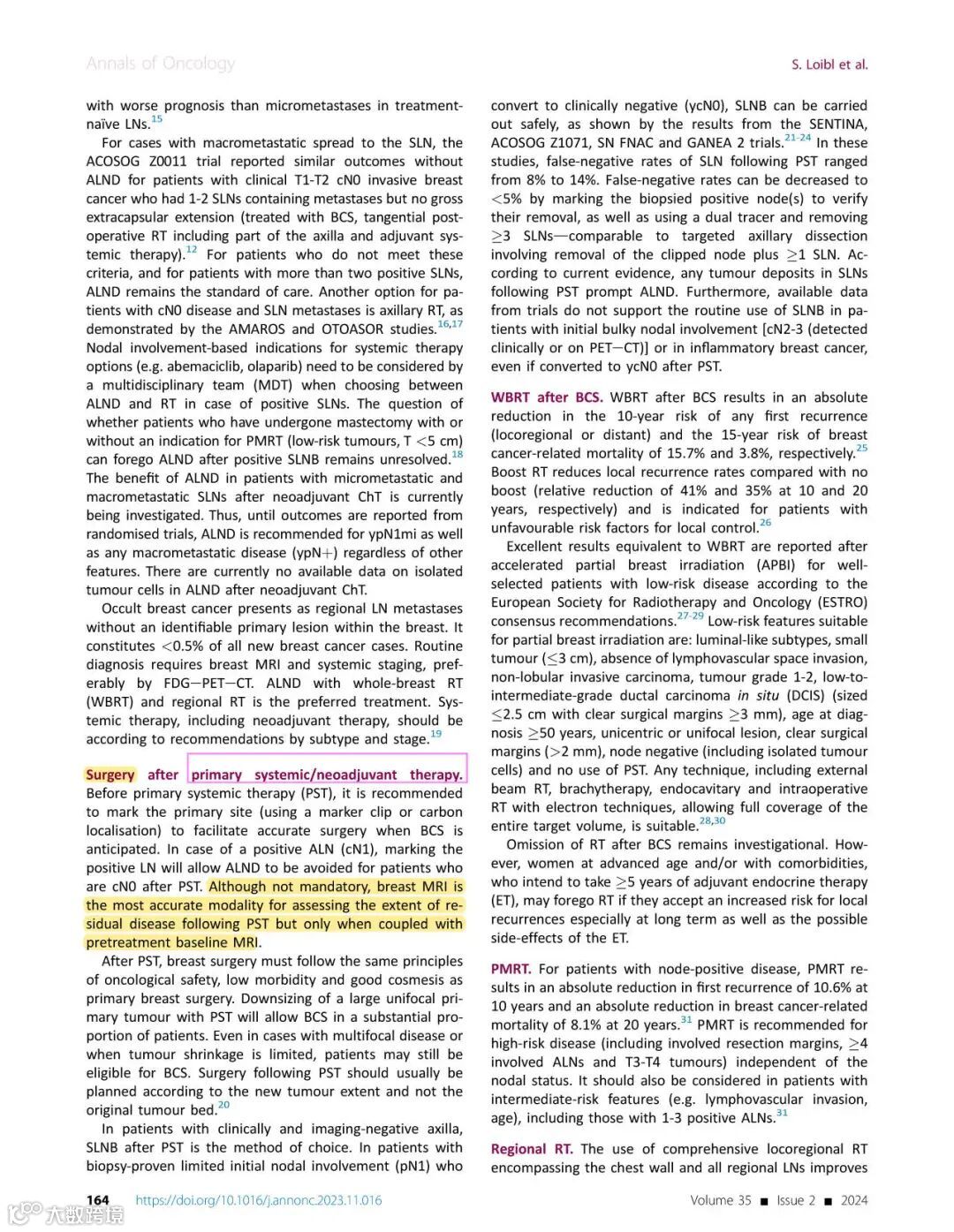
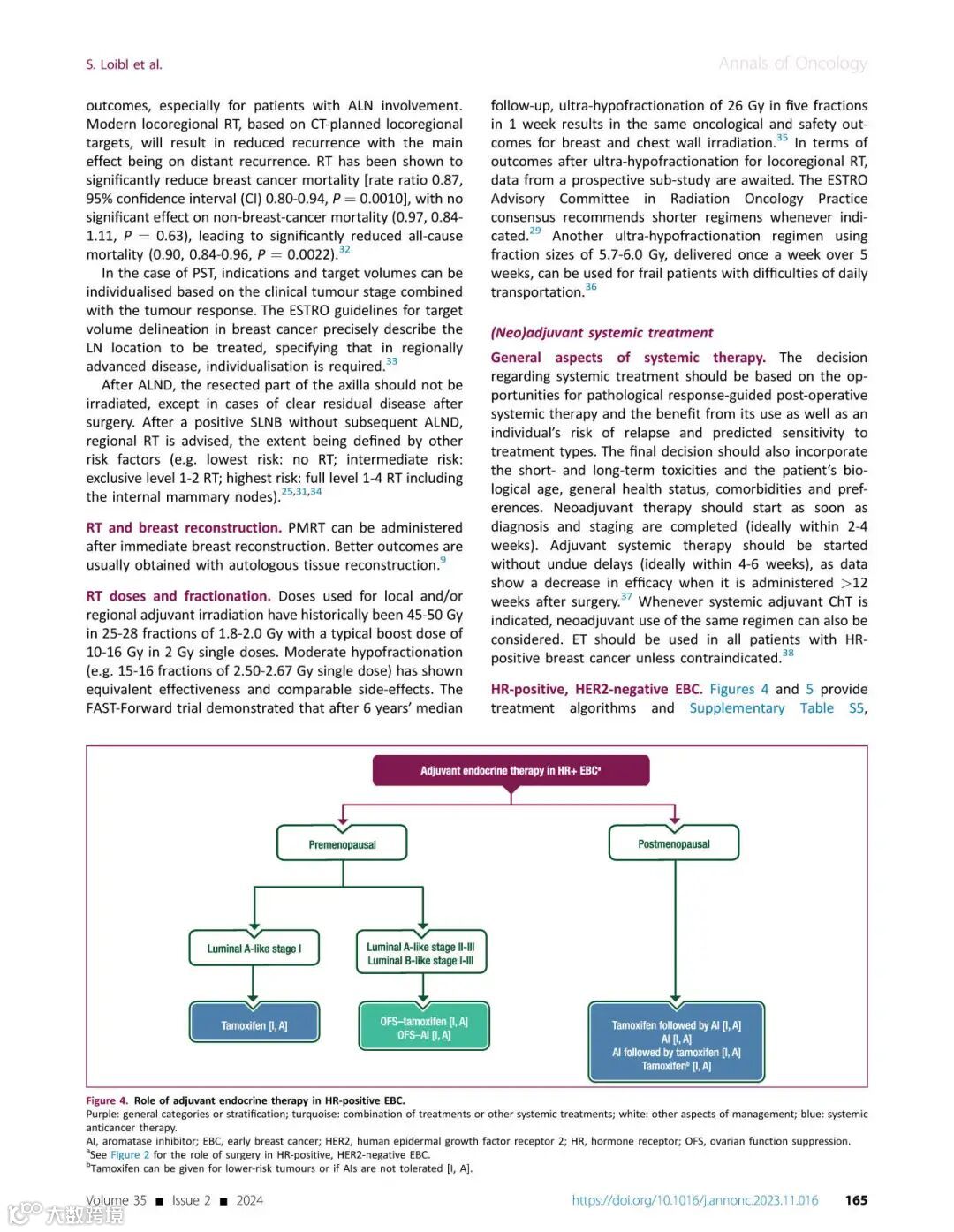
HR-positive, HER2-negative EBC Figures 4 and 5 provide treatment algorithms and Supplementary Table S5, available at https://doi.org/10.1016/j.annonc.2023.11.016 , provides an overview of adjuvant therapy for patients with HR-positive, HER2-negative EBC.
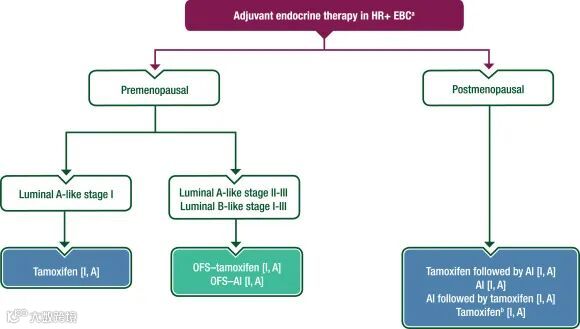
Figure 4
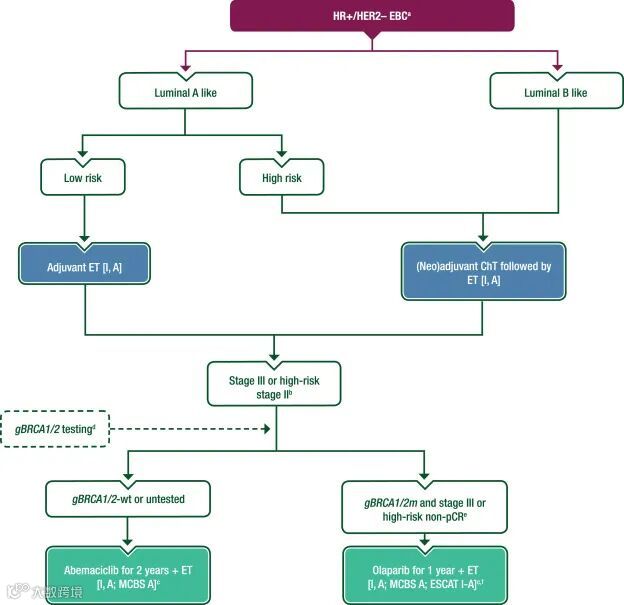
Figure 5
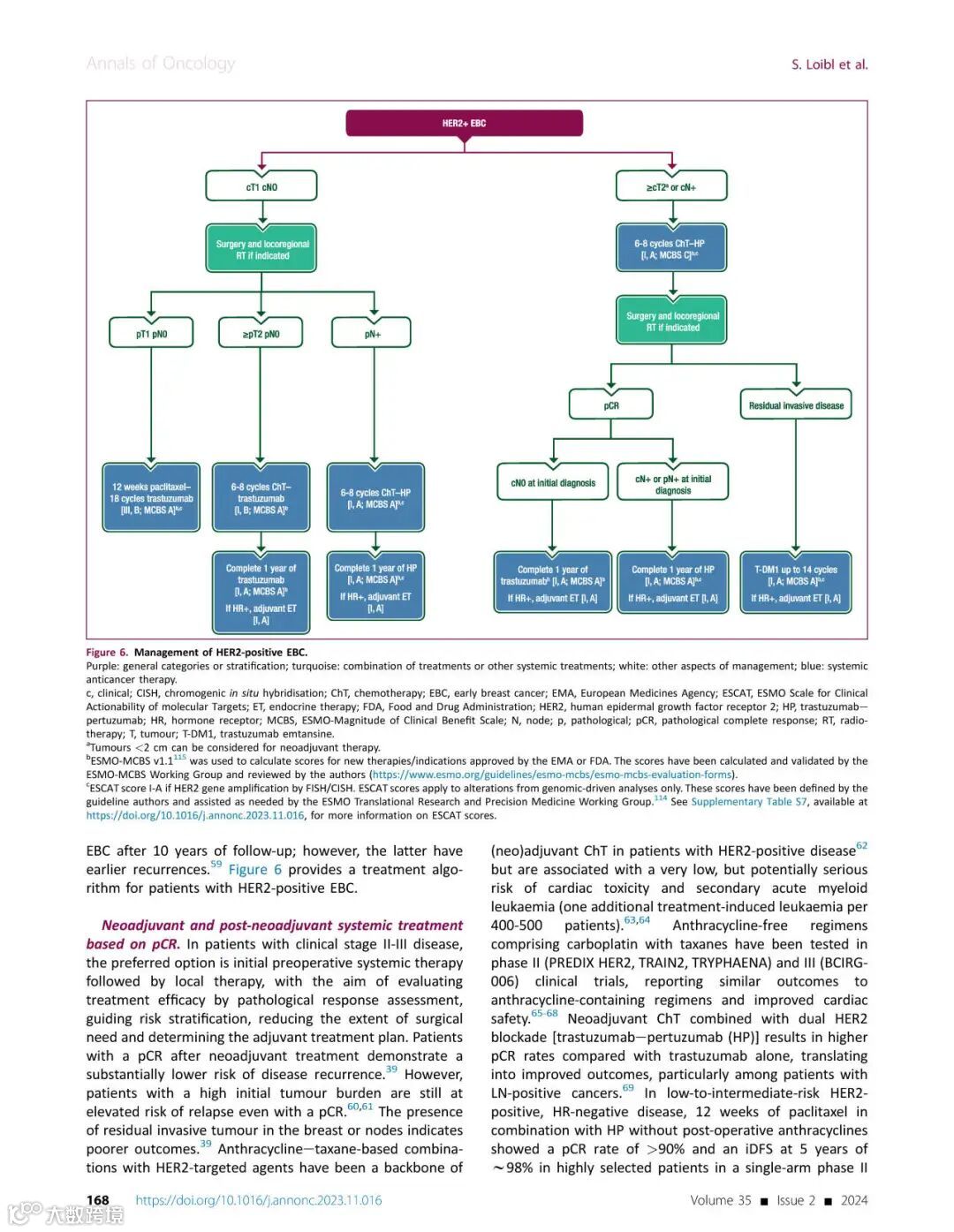
HER2-positive EBC The addition of trastuzumab to ChT improves OS by approximately one-third. The relative magnitude of the survival benefit for patients with HR-positive EBC is the same as for those with HR-negative EBC after 10 years of follow-up; however, the latter have earlier recurrences.59 Figure 6 provides a treatment algorithm for patients with HER2-positive EBC.
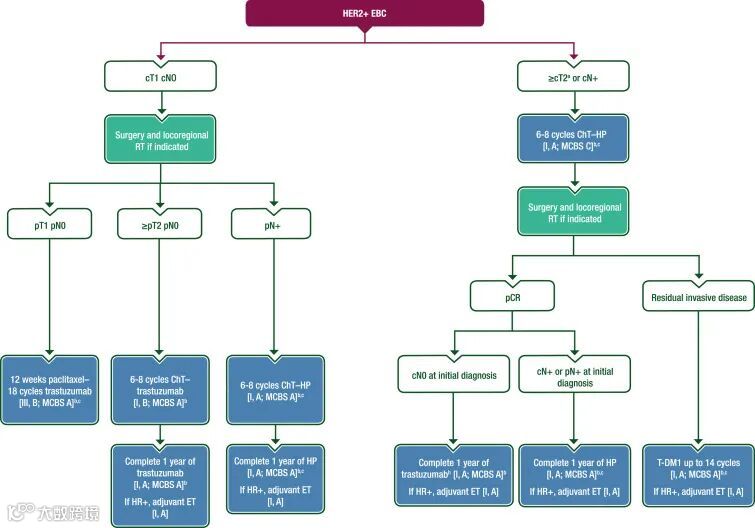
Figure 6
Neoadjuvant and post-neoadjuvant systemic treatment based on pCR In patients with clinical stage II-III disease, the preferred option is initial preoperative systemic therapy followed by local therapy, with the aim of evaluating treatment efficacy by pathological response assessment, guiding risk stratification, reducing the extent of surgical need and determining the adjuvant treatment plan. Patients with a pCR after neoadjuvant treatment demonstrate a substantially lower risk of disease recurrence.39 However, patients with a high initial tumour burden are still at elevated risk of relapse even with a pCR.60,61 The presence of residual invasive tumour in the breast or nodes indicates poorer outcomes.39 Anthracycline–taxane-based combinations with HER2-targeted agents have been a backbone of (neo)adjuvant ChT in patients with HER2-positive disease62 but are associated with a very low, but potentially serious risk of cardiac toxicity and secondary acute myeloid leukaemia (one additional treatment-induced leukaemia per 400-500 patients).63,64 Anthracycline-free regimens comprising carboplatin with taxanes have been tested in phase II (PREDIX HER2, TRAIN2, TRYPHAENA) and III (BCIRG-006) clinical trials, reporting similar outcomes to anthracycline-containing regimens and improved cardiac safety.65, 66, 67, 68 Neoadjuvant ChT combined with dual HER2 blockade [trastuzumab–pertuzumab (HP)] results in higher pCR rates compared with trastuzumab alone, translating into improved outcomes, particularly among patients with LN-positive cancers.69 In low-to-intermediate-risk HER2-positive, HR-negative disease, 12 weeks of paclitaxel in combination with HP without post-operative anthracyclines showed a pCR rate of >90% and an iDFS at 5 years of ∼98% in highly selected patients in a single-arm phase II study.70 This regimen is currently being evaluated in other optimisation trials.71
Adjuvant therapy for HER2-positive breast cancer Patients with HER2-positive breast cancer treated with initial surgery should receive adjuvant treatment with HER2-directed therapy plus ChT and ET if HR positive. ESCAT scores apply only in the case of HER2 gene amplification by FISH/chromogenic in situ hybridisation.
Duration of adjuvant treatment with HER2-targeted therapy The length of trastuzumab administration in the adjuvant setting has been established based on the results of pivotal trials, which have arbitrarily chosen a duration of 12 months.59 The HERA trial reported no additional benefit from 2 years of treatment.78 Clinical studies have investigated the non-inferiority of a shorter duration of trastuzumab of 6 months versus 12 months. The PERSEPHONE trial claimed non-inferiority for 6 months versus 12 months of trastuzumab treatment,79 while others could not rule out non-inferiority.80 While these results are considered inconclusive, the benefit of 12 months versus 6 months of trastuzumab may need to be balanced against the baseline risk of recurrence in resource-constrained settings with limited ability to provide 12 months of treatment.81 It remains unknown whether patients who achieve a complete response to neoadjuvant ChT plus HER2-targeted therapy need to complete 12 months of trastuzumab.
Tyrosine kinase inhibitors as adjuvant therapy Adjuvant tyrosine kinase inhibitors have been evaluated in clinical trials in HER2-positive EBC. None of the trials evaluating lapatinib in EBC significantly improved outcomes. The phase III ExteNET trial evaluated 1 year of extended therapy with neratinib after completion of 1 year of adjuvant trastuzumab. This trial showed that neratinib significantly improved iDFS overall (hazard ratio 0.73, 95% CI 0.57-0.92, P = 0.0083) but largely in the subgroup of HR-positive tumours (hazard ratio 0.60, 95% CI 0.43-0.83, P = 0.063).82,83 The study was conducted before the advent of pertuzumab- or T-DM1-based therapies, which are now standard. Neratinib is associated with high rates of moderate to severe diarrhoea; however, implementation of a dose escalation schedule and optimisation of prophylactic interventions can result in lower grade 3 diarrhoea rates, better therapeutic adherence and lower discontinuation rates.84
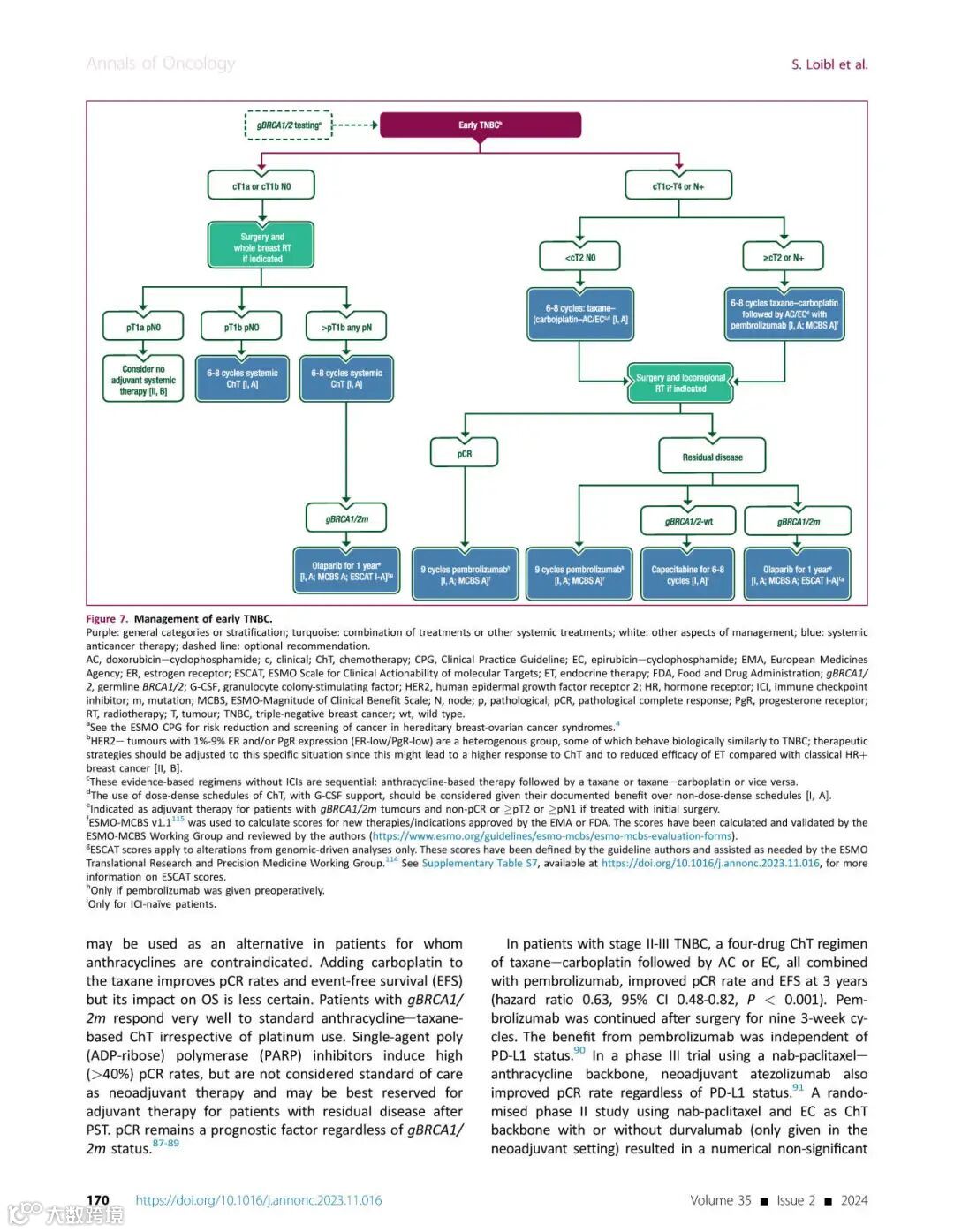
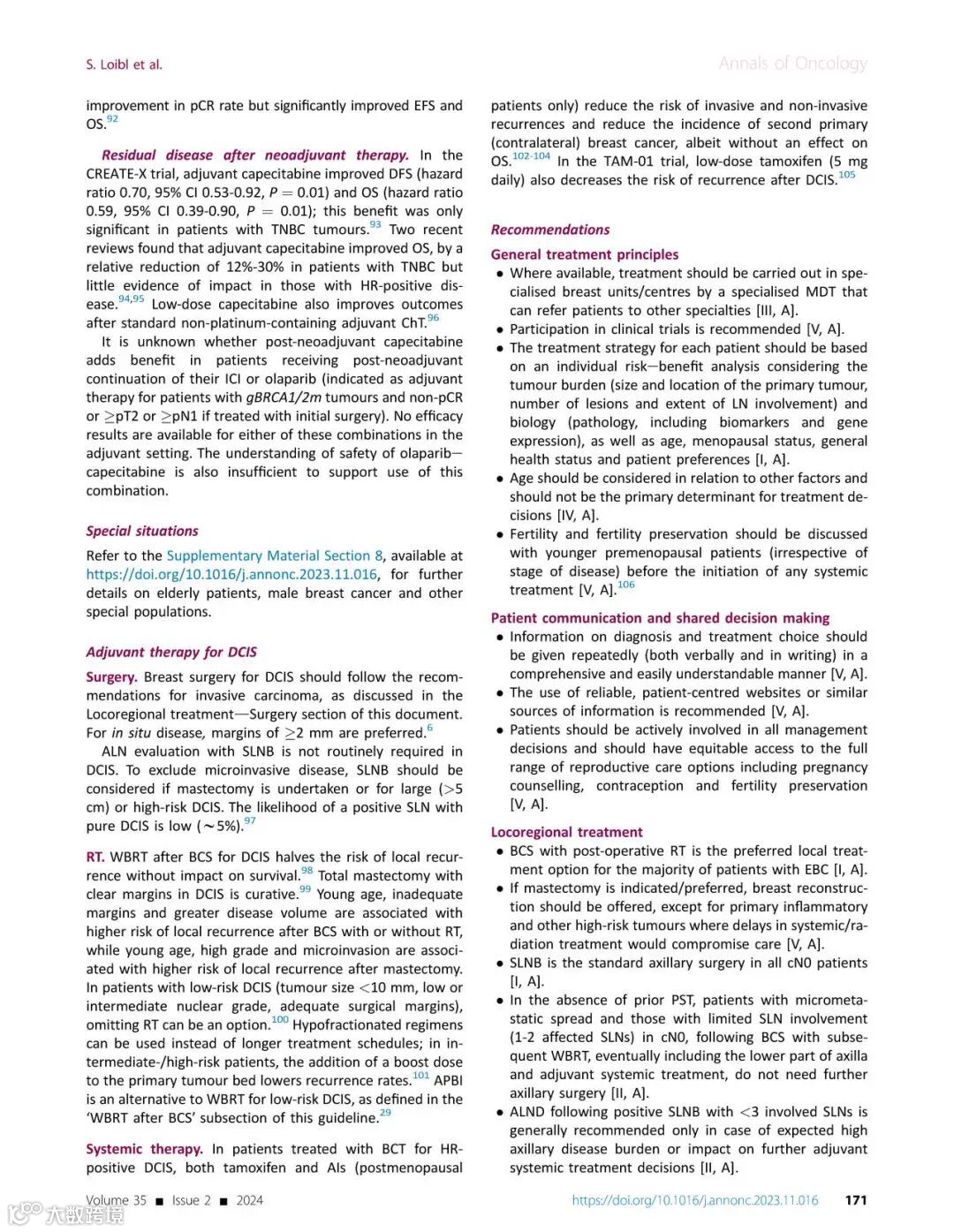
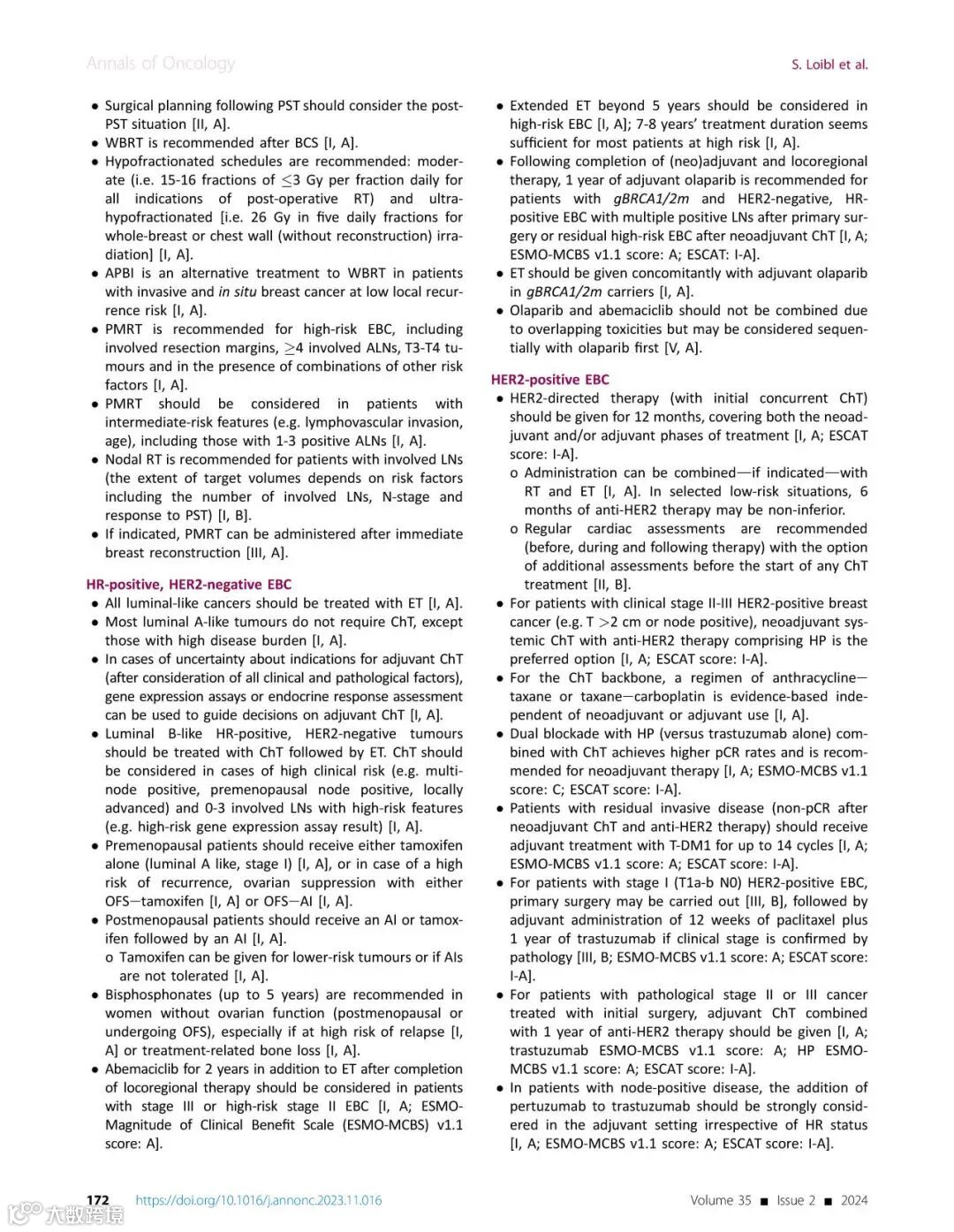
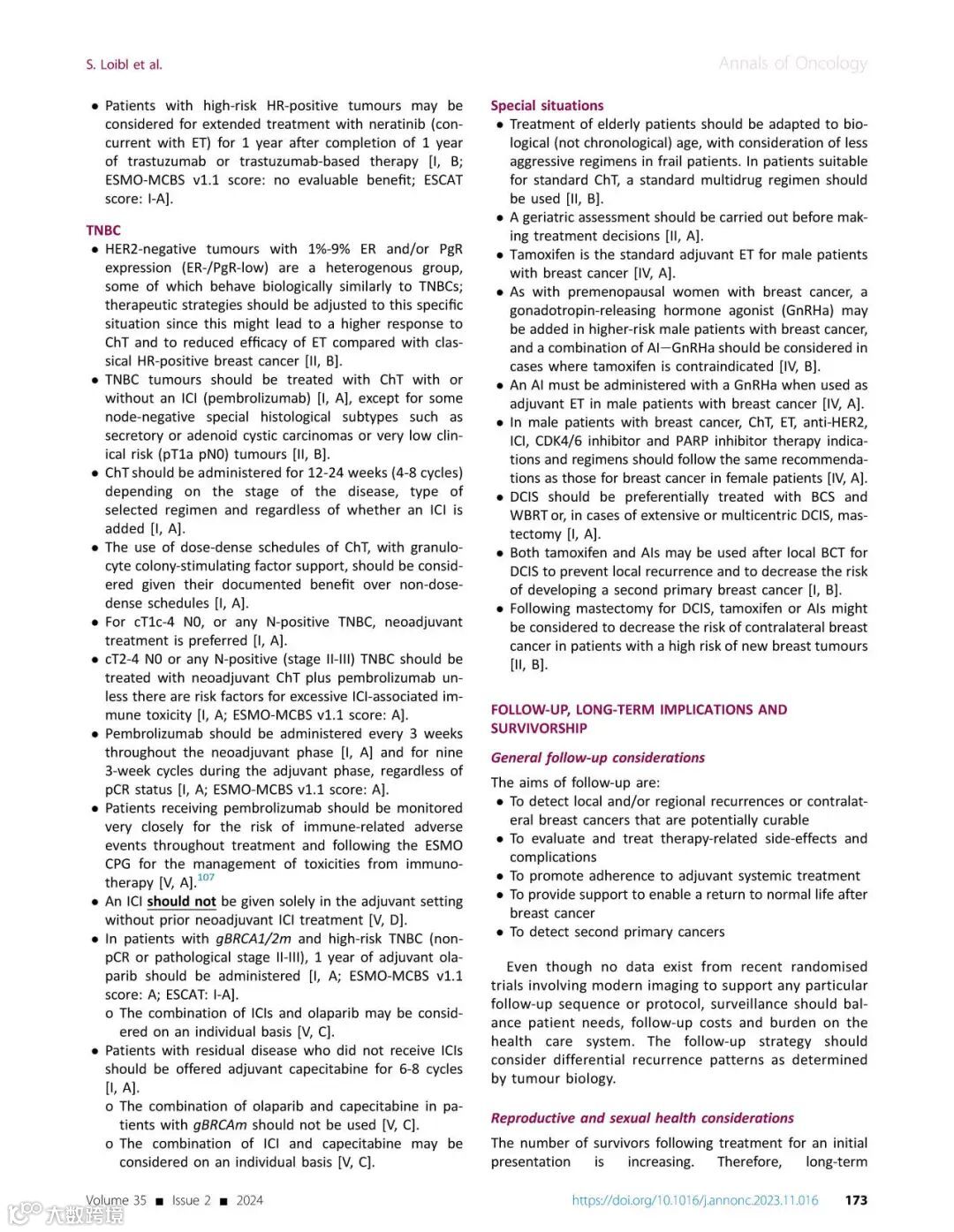
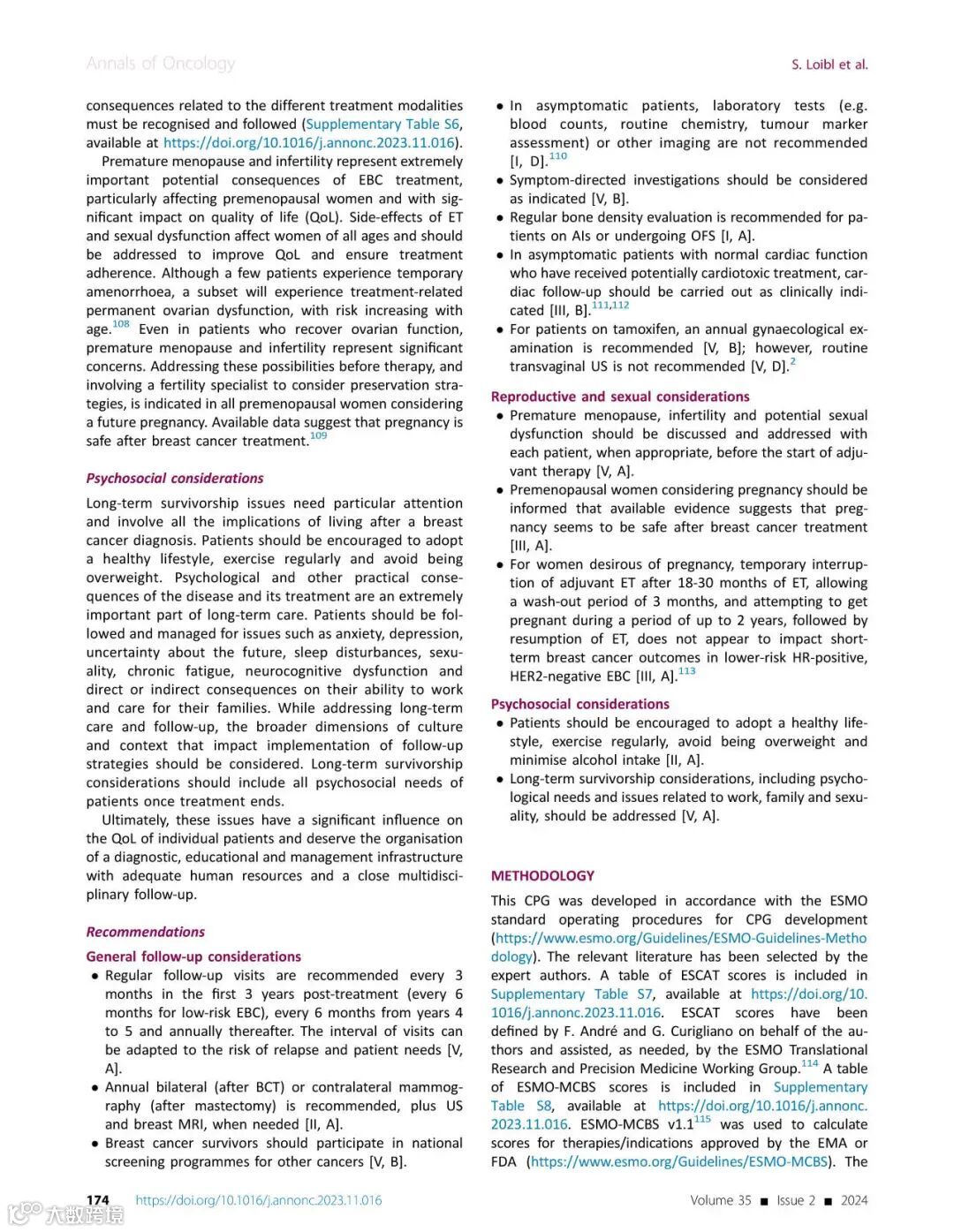
TNBC Figure 7 provides a treatment algorithm for patients with early TNBC.
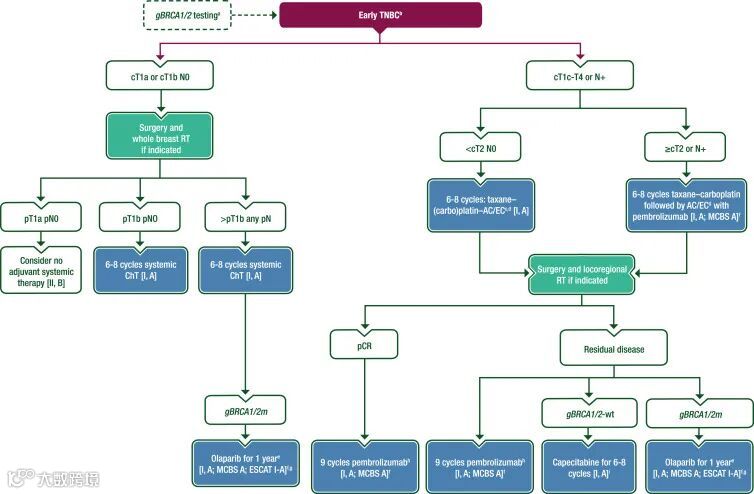
Residual disease after neoadjuvant therapy In the CREATE-X trial, adjuvant capecitabine improved DFS (hazard ratio 0.70, 95% CI 0.53-0.92, P = 0.01) and OS (hazard ratio 0.59, 95% CI 0.39-0.90, P = 0.01); this benefit was only significant in patients with TNBC tumours.93 Two recent reviews found that adjuvant capecitabine improved OS, by a relative reduction of 12%-30% in patients with TNBC but little evidence of impact in those with HR-positive disease.94,95 Low-dose capecitabine also improves outcomes after standard non-platinum-containing adjuvant ChT.96
Special situations Refer to the Supplementary Material Section 8, available at https://doi.org/10.1016/j.annonc.2023.11.016 , for further details on elderly patients, male breast cancer and other special populations.
Adjuvant therapy for DCIS
Surgery Breast surgery for DCIS should follow the recommendations for invasive carcinoma, as discussed in the Locoregional treatment—Surgery section of this document. For in situ disease, margins of ≥2 mm are preferred.6
RT WBRT after BCS for DCIS halves the risk of local recurrence without impact on survival.98 Total mastectomy with clear margins in DCIS is curative.99 Young age, inadequate margins and greater disease volume are associated with higher risk of local recurrence after BCS with or without RT, while young age, high grade and microinvasion are associated with higher risk of local recurrence after mastectomy. In patients with low-risk DCIS (tumour size <10 mm, low or intermediate nuclear grade, adequate surgical margins), omitting RT can be an option.100 Hypofractionated regimens can be used instead of longer treatment schedules; in intermediate-/high-risk patients, the addition of a boost dose to the primary tumour bed lowers recurrence rates.101 APBI is an alternative to WBRT for low-risk DCIS, as defined in the ‘WBRT after BCS’ subsection of this guideline.29
Systemic therapy In patients treated with BCT for HR-positive DCIS, both tamoxifen and AIs (postmenopausal patients only) reduce the risk of invasive and non-invasive recurrences and reduce the incidence of second primary (contralateral) breast cancer, albeit without an effect on OS.102, 103, 104 In the TAM-01 trial, low-dose tamoxifen (5 mg daily) also decreases the risk of recurrence after DCIS.105
Recommendations
General treatment principles
•
Where available, treatment should be carried out in specialised breast units/centres by a specialised MDT that can refer patients to other specialties [III, A].
•
Participation in clinical trials is recommended [V, A].
•
The treatment strategy for each patient should be based on an individual risk–benefit analysis considering the tumour burden (size and location of the primary tumour, number of lesions and extent of LN involvement) and biology (pathology, including biomarkers and gene expression), as well as age, menopausal status, general health status and patient preferences [I, A].
•
Age should be considered in relation to other factors and should not be the primary determinant for treatment decisions [IV, A].
•
Fertility and fertility preservation should be discussed with younger premenopausal patients (irrespective of stage of disease) before the initiation of any systemic treatment [V, A].106
Patient communication and shared decision making
•
Information on diagnosis and treatment choice should be given repeatedly (both verbally and in writing) in a comprehensive and easily understandable manner [V, A].
•
The use of reliable, patient-centred websites or similar sources of information is recommended [V, A].
•
Patients should be actively involved in all management decisions and should have equitable access to the full range of reproductive care options including pregnancy counselling, contraception and fertility preservation [V, A].
Locoregional treatment
•
BCS with post-operative RT is the preferred local treatment option for the majority of patients with EBC [I, A].
•
If mastectomy is indicated/preferred, breast reconstruction should be offered, except for primary inflammatory and other high-risk tumours where delays in systemic/radiation treatment would compromise care [V, A].
•
SLNB is the standard axillary surgery in all cN0 patients [I, A].
•
In the absence of prior PST, patients with micrometastatic spread and those with limited SLN involvement (1-2 affected SLNs) in cN0, following BCS with subsequent WBRT, eventually including the lower part of axilla and adjuvant systemic treatment, do not need further axillary surgery [II, A].
•
ALND following positive SLNB with <3 involved SLNs is generally recommended only in case of expected high axillary disease burden or impact on further adjuvant systemic treatment decisions [II, A].
•
Surgical planning following PST should consider the post-PST situation [II, A].
•
WBRT is recommended after BCS [I, A].
•
Hypofractionated schedules are recommended: moderate (i.e. 15-16 fractions of ≤3 Gy per fraction daily for all indications of post-operative RT) and ultra-hypofractionated [i.e. 26 Gy in five daily fractions for whole-breast or chest wall (without reconstruction) irradiation] [I, A].
•
APBI is an alternative treatment to WBRT in patients with invasive and in situ breast cancer at low local recurrence risk [I, A].
•
PMRT is recommended for high-risk EBC, including involved resection margins, ≥4 involved ALNs, T3-T4 tumours and in the presence of combinations of other risk factors [I, A].
•
PMRT should be considered in patients with intermediate-risk features (e.g. lymphovascular invasion, age), including those with 1-3 positive ALNs [I, A].
•
Nodal RT is recommended for patients with involved LNs (the extent of target volumes depends on risk factors including the number of involved LNs, N-stage and response to PST) [I, B].
•
If indicated, PMRT can be administered after immediate breast reconstruction [III, A].
HR-positive, HER2-negative EBC
•
All luminal-like cancers should be treated with ET [I, A].
•
Most luminal A-like tumours do not require ChT, except those with high disease burden [I, A].
•
In cases of uncertainty about indications for adjuvant ChT (after consideration of all clinical and pathological factors), gene expression assays or endocrine response assessment can be used to guide decisions on adjuvant ChT [I, A].
•
Luminal B-like HR-positive, HER2-negative tumours should be treated with ChT followed by ET. ChT should be considered in cases of high clinical risk (e.g. multinode positive, premenopausal node positive, locally advanced) and 0-3 involved LNs with high-risk features (e.g. high-risk gene expression assay result) [I, A].
•
Premenopausal patients should receive either tamoxifen alone (luminal A like, stage I) [I, A], or in case of a high risk of recurrence, ovarian suppression with either OFS–tamoxifen [I, A] or OFS–AI [I, A].
•
Postmenopausal patients should receive an AI or tamoxifen followed by an AI [I, A].
o
Tamoxifen can be given for lower-risk tumours or if AIs are not tolerated [I, A].
•
Bisphosphonates (up to 5 years) are recommended in women without ovarian function (postmenopausal or undergoing OFS), especially if at high risk of relapse [I, A] or treatment-related bone loss [I, A].
•
Abemaciclib for 2 years in addition to ET after completion of locoregional therapy should be considered in patients with stage III or high-risk stage II EBC [I, A; ESMO-Magnitude of Clinical Benefit Scale (ESMO-MCBS) v1.1 score: A].
•
Extended ET beyond 5 years should be considered in high-risk EBC [I, A]; 7-8 years’ treatment duration seems sufficient for most patients at high risk [I, A].
•
Following completion of (neo)adjuvant and locoregional therapy, 1 year of adjuvant olaparib is recommended for patients with gBRCA1/2m and HER2-negative, HR-positive EBC with multiple positive LNs after primary surgery or residual high-risk EBC after neoadjuvant ChT [I, A; ESMO-MCBS v1.1 score: A; ESCAT: I-A].
•
ET should be given concomitantly with adjuvant olaparib in gBRCA1/2m carriers [I, A].
•
Olaparib and abemaciclib should not be combined due to overlapping toxicities but may be considered sequentially with olaparib first [V, A].
HER2-positive EBC
•
HER2-directed therapy (with initial concurrent ChT) should be given for 12 months, covering both the neoadjuvant and/or adjuvant phases of treatment [I, A; ESCAT score: I-A].
o
Administration can be combined—if indicated—with RT and ET [I, A]. In selected low-risk situations, 6 months of anti-HER2 therapy may be non-inferior.
o
Regular cardiac assessments are recommended (before, during and following therapy) with the option of additional assessments before the start of any ChT treatment [II, B].
•
For patients with clinical stage II-III HER2-positive breast cancer (e.g. T >2 cm or node positive), neoadjuvant systemic ChT with anti-HER2 therapy comprising HP is the preferred option [I, A; ESCAT score: I-A].
•
For the ChT backbone, a regimen of anthracycline–taxane or taxane–carboplatin is evidence-based independent of neoadjuvant or adjuvant use [I, A].
•
Dual blockade with HP (versus trastuzumab alone) combined with ChT achieves higher pCR rates and is recommended for neoadjuvant therapy [I, A; ESMO-MCBS v1.1 score: C; ESCAT score: I-A].
•
Patients with residual invasive disease (non-pCR after neoadjuvant ChT and anti-HER2 therapy) should receive adjuvant treatment with T-DM1 for up to 14 cycles [I, A; ESMO-MCBS v1.1 score: A; ESCAT score: I-A].
•
For patients with stage I (T1a-b N0) HER2-positive EBC, primary surgery may be carried out [III, B], followed by adjuvant administration of 12 weeks of paclitaxel plus 1 year of trastuzumab if clinical stage is confirmed by pathology [III, B; ESMO-MCBS v1.1 score: A; ESCAT score: I-A].
•
For patients with pathological stage II or III cancer treated with initial surgery, adjuvant ChT combined with 1 year of anti-HER2 therapy should be given [I, A; trastuzumab ESMO-MCBS v1.1 score: A; HP ESMO-MCBS v1.1 score: A; ESCAT score: I-A].
•
In patients with node-positive disease, the addition of pertuzumab to trastuzumab should be strongly considered in the adjuvant setting irrespective of HR status [I, A; ESMO-MCBS v1.1 score: A; ESCAT score: I-A].
•
Patients with high-risk HR-positive tumours may be considered for extended treatment with neratinib (concurrent with ET) for 1 year after completion of 1 year of trastuzumab or trastuzumab-based therapy [I, B; ESMO-MCBS v1.1 score: no evaluable benefit; ESCAT score: I-A].
TNBC
•
HER2-negative tumours with 1%-9% ER and/or PgR expression (ER-/PgR-low) are a heterogenous group, some of which behave biologically similarly to TNBCs; therapeutic strategies should be adjusted to this specific situation since this might lead to a higher response to ChT and to reduced efficacy of ET compared with classical HR-positive breast cancer [II, B].
•
TNBC tumours should be treated with ChT with or without an ICI (pembrolizumab) [I, A], except for some node-negative special histological subtypes such as secretory or adenoid cystic carcinomas or very low clinical risk (pT1a pN0) tumours [II, B].
•
ChT should be administered for 12-24 weeks (4-8 cycles) depending on the stage of the disease, type of selected regimen and regardless of whether an ICI is added [I, A].
•
The use of dose-dense schedules of ChT, with granulocyte colony-stimulating factor support, should be considered given their documented benefit over non-dose-dense schedules [I, A].
•
For cT1c-4 N0, or any N-positive TNBC, neoadjuvant treatment is preferred [I, A].
•
cT2-4 N0 or any N-positive (stage II-III) TNBC should be treated with neoadjuvant ChT plus pembrolizumab unless there are risk factors for excessive ICI-associated immune toxicity [I, A; ESMO-MCBS v1.1 score: A].
•
Pembrolizumab should be administered every 3 weeks throughout the neoadjuvant phase [I, A] and for nine 3-week cycles during the adjuvant phase, regardless of pCR status [I, A; ESMO-MCBS v1.1 score: A].
•
Patients receiving pembrolizumab should be monitored very closely for the risk of immune-related adverse events throughout treatment and following the ESMO CPG for the management of toxicities from immunotherapy [V, A].107
•
An ICI should not be given solely in the adjuvant setting without prior neoadjuvant ICI treatment [V, D].
•
In patients with gBRCA1/2m and high-risk TNBC (non-pCR or pathological stage II-III), 1 year of adjuvant olaparib should be administered [I, A; ESMO-MCBS v1.1 score: A; ESCAT: I-A].
o
The combination of ICIs and olaparib may be considered on an individual basis [V, C].
•
Patients with residual disease who did not receive ICIs should be offered adjuvant capecitabine for 6-8 cycles [I, A].
o
The combination of olaparib and capecitabine in patients with gBRCAm should not be used [V, C].
o
The combination of ICI and capecitabine may be considered on an individual basis [V, C].
Special situations
•
Treatment of elderly patients should be adapted to biological (not chronological) age, with consideration of less aggressive regimens in frail patients. In patients suitable for standard ChT, a standard multidrug regimen should be used [II, B].
•
A geriatric assessment should be carried out before making treatment decisions [II, A].
•
Tamoxifen is the standard adjuvant ET for male patients with breast cancer [IV, A].
•
As with premenopausal women with breast cancer, a gonadotropin-releasing hormone agonist (GnRHa) may be added in higher-risk male patients with breast cancer, and a combination of AI–GnRHa should be considered in cases where tamoxifen is contraindicated [IV, B].
•
An AI must be administered with a GnRHa when used as adjuvant ET in male patients with breast cancer [IV, A].
•
In male patients with breast cancer, ChT, ET, anti-HER2, ICI, CDK4/6 inhibitor and PARP inhibitor therapy indications and regimens should follow the same recommendations as those for breast cancer in female patients [IV, A].
•
DCIS should be preferentially treated with BCS and WBRT or, in cases of extensive or multicentric DCIS, mastectomy [I, A].
•
Both tamoxifen and AIs may be used after local BCT for DCIS to prevent local recurrence and to decrease the risk of developing a second primary breast cancer [I, B].
•
Following mastectomy for DCIS, tamoxifen or AIs might be considered to decrease the risk of contralateral breast cancer in patients with a high risk of new breast tumours [II, B].
Follow-up, long-term implications and survivorship
General follow-up considerations
•
To detect local and/or regional recurrences or contralateral breast cancers that are potentially curable
•
To evaluate and treat therapy-related side-effects and complications
•
To promote adherence to adjuvant systemic treatment
•
To provide support to enable a return to normal life after breast cancer
•
To detect second primary cancers
Reproductive and sexual health considerations
Psychosocial considerations
Recommendations
General follow-up considerations
•
Regular follow-up visits are recommended every 3 months in the first 3 years post-treatment (every 6 months for low-risk EBC), every 6 months from years 4 to 5 and annually thereafter. The interval of visits can be adapted to the risk of relapse and patient needs [V, A].
•
Annual bilateral (after BCT) or contralateral mammography (after mastectomy) is recommended, plus US and breast MRI, when needed [II, A].
•
Breast cancer survivors should participate in national screening programmes for other cancers [V, B].
•
In asymptomatic patients, laboratory tests (e.g. blood counts, routine chemistry, tumour marker assessment) or other imaging are not recommended [I, D].110
•
Symptom-directed investigations should be considered as indicated [V, B].
•
Regular bone density evaluation is recommended for patients on AIs or undergoing OFS [I, A].
•
In asymptomatic patients with normal cardiac function who have received potentially cardiotoxic treatment, cardiac follow-up should be carried out as clinically indicated [III, B].111,112
•
For patients on tamoxifen, an annual gynaecological examination is recommended [V, B]; however, routine transvaginal US is not recommended [V, D].2
Reproductive and sexual considerations
•
Premature menopause, infertility and potential sexual dysfunction should be discussed and addressed with each patient, when appropriate, before the start of adjuvant therapy [V, A].
•
Premenopausal women considering pregnancy should be informed that available evidence suggests that pregnancy seems to be safe after breast cancer treatment [III, A].
•
For women desirous of pregnancy, temporary interruption of adjuvant ET after 18-30 months of ET, allowing a wash-out period of 3 months, and attempting to get pregnant during a period of up to 2 years, followed by resumption of ET, does not appear to impact short-term breast cancer outcomes in lower-risk HR-positive, HER2-negative EBC [III, A].113
Psychosocial considerations
•
Patients should be encouraged to adopt a healthy lifestyle, exercise regularly, avoid being overweight and minimise alcohol intake [II, A].
•
Long-term survivorship considerations, including psychological needs and issues related to work, family and sexuality, should be addressed [V, A].
Methodology
Acknowledgements

原文
SCREENING, DIAGNOSIS,PATHOLOGY ANDMOLECULARBIOLOGY
Section1.Breastcancerscreening
Breast cancer screening programmes have been initiated for women at average riskof developing breast cancer in order to optimise outcomes through early detection.Screening in women with a strong family history or known germline BRCA1/2mutations (gBRCA1/2m) and other high-risk pathogenic variants (PVs) should followthe ESMO Clinical Practice Guideline (CPG) for risk reduction and screening ofcancerinhereditary breast-ovarian cancer syndromes (HBOC).1
The European Commission Initiative on Breast Cancer (ECIBC) recommendspopulation-based mammography screening every 2 years for average-risk women50-69 years of age, with conditional recommendations for women in younger andolder age groups.2 The greatest mortality reduction has been shown in the age group50-69 years, while evidence for the effectiveness of mammography screening inwomen 45-49 or >70 years is increasing.3-6Either tomosynthesis or digitalmammographyare recommended for screening.7,8
The magnitude of the effect of mammography screening on breast cancer mortalityreduction is uncertain.9In a UK-based review of randomised controlledmammography trials, a 20% relative reduction in breast cancer mortality wasestimated in women 50-70 years of age.8,10Recent studies have demonstrated thatscreening from 40 years of age reduces the risk of death from breast cancer by up to50%.3,4,6,11,12
There is no consensus regarding recommendations for ultrasound (US) or magneticresonance imaging (MRI) as supplementary screening methods in women with highbreast density without a strong family history.13-15Furthermore, these methods arenotrecommendedby the ECIBC.2
Section2.Diagnosisand imaging
Diagnosis is based on clinical examination in combination with imaging, whichshould include bilateral diagnostic mammography and US of both breasts andregionallymphnodes(LNs).16Two-dimensionaldigitalmammographyshouldbeused in the symptomatic setting. Where available and appropriate, digital breasttomosynthesis (with or without synthetic mammography) and contrast-enhancedmammography canbeconsideredas alternatives.17
MRI is recommended in case of uncertainties following standard imaging and inspecial clinicalsituations suchas:
FamilialbreastcancerassociatedwithgBRCA1/2mandotherhigh-riskPVs
Lobular cancers (including detection of extensive multifocality, contralateralbreastcanceror toplanconservative surgery)
Suspicionofmultifocalityand/ormulticentricity
Discrepancybetweenconventionalimagingandclinicalexamination
Whenthefindingsofconventionalimagingareinconclusive(e.g.apositiveaxillarylymphnode with anoccultprimarytumour)
Presenceofbreastimplants
Section3.Hereditarybreastcancer
Genetic counselling, testing and patient management for carriers of gBRCA1/2m andother high-risk PVs should follow the ESMO CPG for risk reduction and screening ofcancerinHBOC.1
Germline PVs in BRCA1/2 account for 5%-10% of all breast cancers and areassociatedwithanelevatedlifetimeriskofdevelopingbreastandovariancancers,aswellasothermalignancies.18Theuse ofmultigenepaneltests isincreasing.
These tests yield an 8%-9% detection rate of PVs in genes associated withincreased breast cancer risk, about half of which are a gBRCA1/2m.19 Other relevanthigh- and moderate-penetrance germline PVs are found in TP53, PALB2, ATM andCHEK2,althoughmanagementrecommendationsvaryaccordingtothemutationandthegenepenetranceis generally lowerthan forBRCA1/2.1
Identification of germline mutations informs disease management and follow-up;patients with gBRCA1/2m and other PVs may opt for different locoregional breastcancer management and contralateral surgical prophylaxis, and warrant moreintensive risk-reducing measures for other malignancies such as ovarian cancer.1High-risk patients with gBRCA1/2m may be candidates for adjuvant therapy with apoly(ADP-ribose)polymerase(PARP) inhibitor.
Germline testing for PVs in BRCA1/2 should be offered for patients who meet therespective national criteria and for those who are candidates for adjuvant olaparibtherapy.20,21
Section4.Histomorphologicalassessment,biomarkersandmolecularpathology
The aim of pretreatment pathological evaluation of breast cancer is to provide acomplete histomorphological, immunohistochemical and, if necessary, molecularassessment of breast cancer at the time of diagnosis (Supplementary Table S1).Evaluation should include histology from the primary tumour and histology/cytologyof the axillary nodes (if node involvement is suspected). For pre-therapeuticcharacterisation, a core needle biopsy (2-4 cores) should be carried out on thetumour and suspicious LNs (if this will change the treatment plan). The tissue shouldbeformalin-fixedparaffin-embedded(FFPE)withstandardisedfixationtime.
Pathological diagnosis should be made according to the World Health Organization(WHO)classificationoftumours22andtheeightheditionoftheUnionforInternationalCancer Control (UICC) tumour–node–metastasis (TNM) staging system(SupplementaryTables S2-S4).23
Histological grade, tumour-infiltrating lymphocytes (TILs)24and the presence ofductal carcinoma in situ (DCIS) and lymphovascular invasion are typical elements ofthe basic tumour characterisation. The most important immunohistochemistry (IHC)biomarkers are estrogen receptor (ER), progesterone receptor (PgR), humanepidermal growth factor receptor 2 (HER2) and a proliferation marker such as Ki-67;reporting is based on the American Society of Clinical Oncology/College of AmericanPathologistsguidelinesforassessmentofhormonereceptor(HR)status(i.e.ERand
PgR)25and HER2 status.26For Ki-67 and TILs, the International Ki-67 in BreastCancer Working Group27and International TILs Working Group 201428guidelinesshould be used. TIL scoring provides prognostic and predictive information but TILthresholds for medical decision making have not been established and should not beusedalone fortreatment decisions.
Ki-67 expression levels are most informative for prognosis of luminal breast cancerwhen the level is ≤5% (low proliferation, low risk) or ≥30% (high proliferation, highrisk) because technical reliability of distinguishing values between 5% and 30% islimited. A decrease of Ki-67 (≤10%) after short term (4-6 weeks) preoperativeendocrine therapy (ET) in postmenopausal patients with HR-positive, HER2-negativebreast cancerisprognosticandmay indicateendocrineresponsiveness.29,30
Although HER2-low status is currently only relevant in the metastatic setting, itshould be reported in early breast cancer (EBC) as a basis for possible futuretherapeutic decisions; it may also have implications for the design of external qualityassurance programmes. HER2 low is defined as IHC 1+ or 2+ and in situhybridisation(ISH)negativeinmetastaticdisease.31ForreportingofHER2 results,itisimportanttostatethe IHCscoreas 0,1+,2+or 3+.
HER2-negative tumours with 1%-9% ER and/or PgR expression (ER low/PgR low)behave similarly to and have similar clinical outcomes to triple-negative breastcancers (TNBCs). Many HR 1%-9% IHC-positive cancers show molecular featuresof HR-negative cancer and are therefore unlikely to benefit from ET. However, anuncertain proportion of these patients with HR-low cancers may have a sufficientlevel of HR expression to benefit from ET. In the absence of randomised clinical trialevidence to demonstrate benefit from adjuvant ET, treatment recommendationsshould be individualised based on patient preferences, with careful consideration ofthe risk versus benefit from long-term ET. Tumours with low HR expressionconstitute a biologically mixed entity and are considered HR low, not HR negative.32Therefore, patients with HR 1%-9% IHC-positive cancers should be included in trialsdesignedforHR-negative cancerstogeneratemore evidence.
In contrast to metastatic TNBC, programmed death-ligand 1 (PD-L1) expression isnotcurrentlyrelevantfortherapeuticdecisionsinEBC.33TNBCshouldbeinformed
by IHC and is defined as ER <1%, PgR <1% and HER2 score 0, 1 or 2+ withnegativeFISH or chromogenic ISH.
Participation in external quality assurance programmes is strongly recommended. Ifassessment of biomarkers is not possible in a preoperative biopsy, or if results arenot consistent with pathological features, repeat assessment in the surgical sampleisrecommended.
For prognostication and treatment decision making, tumours can be grouped intosurrogate intrinsic subtypes,34 defined by routine histology and IHC data, as luminalA like, luminal B like, HER2 positive and triple negative. Luminal A-like tumours aretypically low grade, strongly ER positive/PgR positive and HER2 negative and havelow proliferation. Luminal B-like tumours are HR positive but may have variabledegrees of ER/PgR expression, are higher grade and have higher proliferation thanLuminal A-like tumours. Gene expression assays (e.g. EndoPredict, MammaPrint,Oncotype DX, Prosigna and others) have been introduced in many countries forprognostic assessment of HR-positive, HER2-negative breast cancer. The assaysdiffer in terms of genes as well as technology, but all can identify a low- tointermediate-riskgroupthatmightnotbenefitfromadjuvantchemotherapy(ChT).
Gene expression tests should only be used in a clinically intermediate-risk situation(based on IHC biomarkers and clinical parameters). It is recommended to use onlyoneassayfor any individual patient.
Prognosis in patients who received neoadjuvant ChT and did not obtain apathologicalcompleteresponse(pCR)canbeestimatedbythepretreatmentclinicalstage and post-treatment pathological stage plus ER status and tumour grade35,whichalsohasbeen validated for luminal tumours.36
Tumour mutation testing is important for treatment decisions in metastatic breastcancer,37however, clinical utility has not yet been demonstrated in EBC and it is notmandatory. Mutations should be reported using the ESMO Scale for ClinicalActionability of molecular Targets (ESCAT) reporting system (Supplementary TableS8).38
Regarding histological assessment of lesions, a core needle biopsy is preferred tofine-needleaspiration(FNA)becauseinvasiveness—aprerequisiteforstarting
neoadjuvant therapy—cannot be demonstrated in FNA samples. Microcalcifications,mainly only visible on mammogram, should be biopsied with a vacuum-assisteddevice.8If systemic neoadjuvant therapy is likely/expected, marking the primarytumour with a clip is recommended. If suspicious locoregional LNs are detected, atleastoneineachregionshould bebiopsied andpreferablyalsomarked.
When there is an intermediate risk after standard IHC and clinical assessment, agene expression test should be carried out in HR-positive, HER2-negative tumoursto identify low-risk tumours that would not benefit from treatment with ChT. Ki-67analysis after short preoperative ET may add information about tumour endocrineresponsiveness; Ki-67 ≤10% post-ET is considered to indicate endocrineresponsiveness and low risk. If preoperative ET is used in HR-positive, HER2-negative disease, gene expression analysis must be carried out in the diagnosticpretreatment biopsy, not in the surgical specimen. PD-L1 testing in EBC is notrequiredfor clinical decision making.
STAGINGANDRISKASSESSMENT
Section5.Stagingand riskassessment
Disease stage and final pathological and clinical assessment of surgical specimensshould be made according to the WHO classification of tumours22and the eighthedition of the UICC TNM staging system.23Minimum blood work-up (a full bloodcount, liver and renal function tests, alkaline phosphatase and calcium levels) isrecommended before surgery and systemic (neo)adjuvant therapy. Chest, abdomenand bone imaging is recommended for higher-risk patients (high tumour burden,aggressive biology or clinical signs, symptoms or laboratory values suggesting thepresence of metastases). [18F]2-fluoro-2-deoxy-D-glucose (FDG)–positron emissiontomography (PET)–CT scanning may be useful for high-risk patients and whenconventionalmethodsare inconclusive.
Validatedgeneexpressionprofilesmaycomplementpathologyassessmentandhelpwith adjuvantChTdecisionmakinginclinically intermediate-risksituations.
Assessment of distant metastases (bone, liver and lung) is recommended only inpatientswithstageIIb andhigherdisease(especiallywithextendedLNinvolvement), patients with a high risk of recurrence at first diagnosis and/or insymptomatic patients.37,39Brain imaging should not be routinely carried out inasymptomatic patients. The minimum imaging work-up for staging includescomputed tomography (CT) of the chest and abdomen and bone scintigraphy. FDG–PET–CTmay be usedinsteadofCT and bone scintigraphy.37
MANAGEMENT OFLOCALANDLOCOREGIONALDISEASE
Section6. Generaltreatmentprinciples
Where available, treatment should be carried out in specialised breast units/centresand provided by a multidisciplinary team specialised in breast cancer, consisting ofat least medical oncologists, breast surgeons, gynaecologists, radiation oncologists,breast radiologists, breast pathologists and breast nurses (or similarly trained andspecialised health care practitioners).40,41Such centres are defined as specialisedinstitutions or departments that care for a high volume of breast cancer patients, e.g.a minimum of 150 new EBC cases per year. The breast unit/centre should have in-house plastic/reconstructive surgeons, psychologists, physiotherapists, fertilityspecialists and geneticists or be able to refer patients to such specialists in othercentres.Participation in clinicaltrials is recommended.
Treatment of EBC involves a combination of local modalities [surgery, radiotherapy(RT)], systemic treatments (ChT, ET, molecularly targeted therapies,immunotherapy)andsupportivemeasures,deliveredindiversesequences.Theuseof predictive biomarkers (i.e. ER, PgR, HER2, Ki-67 and approved gene expressionsignatures)iswell establishedinaidingtreatmentrecommendations.
Particular attention must be paid to the treatment of EBC in special populations, e.g.very young or elderly patients. However, age is a continuous variable and cut-offs instudies are always arbitrarily chosen. For clinical decision making, biological age ismoreimportantthanchronologicalage.42
In younger premenopausal patients, fertility issues should be discussed andguidanceonfertility-preservationtechniquesshouldbeprovidedbeforetheinitiationof any systemic treatment.43-47 For details about fertility preservation, please refer tothe ESMO CPG for fertility preservation and post-treatment pregnancies in post-pubertalcancer patients.48
Section7.Patientcommunicationandshareddecisionmaking
Following a diagnosis of breast cancer, patients find themselves in a new andunfamiliar landscape. Intensity of stress and specific pressures vary from patient topatient and should be addressed individually with management tailored to theindividual’sneeds. Patientsshouldbeactivelyinvolvedinallmanagementdecisions.
As part of optimising breast cancer outcomes and survivorship, all patients shouldhave equitable access to the full range of reproductive care options that may benecessary at different points in their breast cancer journey, including pregnancycounselling,contraceptionand fertility preservation.
Information on diagnosis and treatment choice should be given repeatedly (bothverbally and in writing) in a comprehensive and easily understandable manner, usingpatient-centred websites or similar sources of information. Most patients willremember the information provided to them in a fragmented way. Patients needspace, both physically and timewise, to process and comprehend information abouttheirdiagnosisso theycancopepsychologicallywiththetreatmentplan.
Section8.Specialsituations
Elderly patients. Due to the limited data from randomised studies, strongrecommendations cannot be made regarding the use of (neo)adjuvant systemictherapies inthis population.Full dosesof drugsshouldbe usedwhenever feasible.In patients suitable for standard ChT, single-agent capecitabine or docetaxel havebeen demonstrated to be inferior to the standard multidrug regimen [doxorubicin–cyclophosphamide [AC] or cyclophosphamide–methotrexate–fluorouracil (CMF)].49,50Sequential, single-agent therapy (e.g. doxorubicin followed by paclitaxel and thencyclophosphamide) is as effective as combination ChT (e.g. AC followed bypaclitaxel) and is associated with lower acute toxicity, making this approach anoptionforanypatient,especiallyolderpatients.51,52Ageriatricmultidimensional
assessment should be carried out prior to treatment decisions; the G8 tool can beusedasascreeningtoolto selectpatientsneedinga fullgeriatricassessment.53
Male breast cancer. Most breast cancer cases in male patients are luminal-likeductal invasive carcinoma and occur in older men. Tamoxifen is the standardadjuvant ET; aromatase inhibitors (AIs) must be combined with gonadotropinhormone-releasing hormone (GnRH) analogues.54 ChT and anti-HER2 therapy andregimens using other targeted novel agents as indicated [e.g. immunotherapy,cyclin-dependent kinase 4/6 (CDK4/6) or PARP inhibitors] should follow the samerecommendations as for female patients with breast cancer.55-57Population-basedstudies have indicated that ~20% of male patients with breast cancer will have aninherited risk factor; therefore, genetic counselling and testing should beconsidered.58
Other special situations. Sarcomas (primary, secondary and angiosarcomas) aregenerally managed with surgery alone; adjuvant irradiation or ChT in some settingsmay be considered.59Lymphoma isolated to the breast, including breast implant-associated anaplastic large-cell lymphoma (BIA-ALCL), is often treated with surgeryalone,withgoodoutcomesaftercompleteresection.60ForBIA-ALCLwithincompleteresections or advanced disease, systemic therapies have been used. Other types oflymphomasofthebreast shouldfollowlymphoma-specificguidelines.61
Supplementary Table S1. Summary of biomarkers used in standardised histopathological, immunohistochemical andmolecularpathologyassessmentinEBC
Method
|
Biomarker
|
Use
|
GoR
|
Comments, pitfalls and openquestions
|
ClassicalH&Epathology
|
Histologicaltumour type,invasiveness,grading,TILs
|
Pathologicaldiagnosisandbasicprognosticcharacterisationof tumour
|
A |
TILs are not currently required fortherapy decisions but might becomerelevantin the future
|
IHC andISH
|
IHC panel:ER, PgR,HER2,Ki-67
ISH: forHER2 IHC2+
Definedguidelines foreach marker;participation
inexternal |
Standard IHC workup as a basis for majortherapydecisionsandprognosticassessment
Definitionofintrinsic subtypes |
A |
HR-low tumours (ER/PgR 1%-9%) arebiologically TNBC and may behave assuch
HER2 status should be reported as IHC0, 1+or2+(eithernegativeorpositiveby
ISH)and3+
HER2-low tumours (1+ or 2+ withnegative ISH) are relevant for MBC andmaybecomesofor EBCin thefuture
|
qualityassuranceprogrammes
|
Ki-67 may also be evaluated after a shortcourse of preoperative ET to indicateendocrineresponsiveness(Ki-67≤10%)
|
|||
Geneexpressionprofiling(manydifferentvalidatedtestoptions)
|
Genesignatures
|
Validatedprognosticassessment |
A |
May be carried out in HR-positive,HER2-negative tumours in theintermediate risk category (defined byIHCand clinicalassessment)
May be carried out in diagnostic corebiopsy
|
NGS |
gBRCA1/2
testing |
Clinically important information for surgicalmanagement, follow-up and cancer screeningandhasbecomeapatientselectionmarkerforsystemic adjuvant olaparib therapy in HER2-negativetumours
|
A |
Testing is relevant for TNBC and HR-positive,HER2-negativebreastcancer
|
EBC, early breast cancer; ER, estrogen receptor; ET, endocrine therapy; gBRCA1/2, germline BRCA1/2, GoR, grade ofrecommendation; H&E, haematoxylin–eosin; HER2, human epidermal growth factor receptor 2; HR, hormone receptor; IHC,immunohistochemistry; ISH, in situ hybridisation; MBC, metastatic breast cancer; NGS, next-generation sequencing; PgR,progesteronereceptor; TIL,tumour-infiltratinglymphocyte;TNBC, triple-negativebreastcancer.
Supplementary Table S2. Clinical classification of breast tumours according tothe UICC TNMeighthedition
T(primary tumour)
|
|
TX
|
Primary tumourcannotbeassessed
|
T0
|
Noevidenceof primarytumour
|
Tis
|
Carcinomainsitu
|
Tis(DCIS)
|
Ductalcarcinomain situ
|
Tis(LCIS)
|
Lobularcarcinoma insitu
|
Tis(Paget)
|
Paget disease of the nipple not associated with invasive carcinomaand/or carcinoma in situ (DCIS and/or LCIS) in the underlying breastparenchyma. Carcinomas in the breast parenchyma associated withPaget disease are categorised based on the size and characteristicsof the parenchymal disease, although the presence of Paget diseaseshouldstillbenoted
|
T1
|
Tumour≤2 cm ingreatestdimension
|
T1mi
|
Microinvasion≤0.1 cmingreatestdimensiona
|
T1a
|
>0.1 cmbut≤0.5 cmingreatestdimension
|
T1b
|
>0.5 cmbut≤1 cm ingreatestdimension
|
T1c
|
>1 cm but≤2 cm ingreatestdimension
|
T2
|
Tumour>2 cmbut≤5 cm ingreatestdimension
|
T3
|
Tumour>5 cmingreatestdimension
|
T4
|
Tumour of any size with direct extension to chest wall and/or to skin(ulcerationorskinnodules)b
|
T4a
|
Extension to chest wall (does not include pectoralis muscle invasiononly)
|
T4b
|
Ulceration, ipsilateral satellite skin nodules or skin oedema (includingpeau d'orange)
|
T4c
|
Both4aand 4b
|
T4d
|
Inflammatorycarcinomac
|
N(regionalLNs)
|
|
NX
|
RegionalLNscannot beassessed (e.g.previouslyremoved)
|
N0
|
No regional LNmetastasis
|
N1
|
Metastasis inmovableipsilateral levelI,IIALN(s)
|
N2
|
Metastasis in ipsilateral level I, II ALN(s) that are clinically fixed ormatted;orinclinicallydetecteddipsilateralinternalmammaryLN(s)intheabsence ofclinicallyevidentALN metastasis
|
N2a
|
Metastasis in ALN(s) fixed to one another (matted) or to otherstructures
|
N2b
|
MetastasisonlyinclinicallydetecteddinternalmammaryLN(s)andintheabsence ofclinicallydetectedALNmetastasis
|
N3
|
Metastasis in ipsilateral infraclavicular (level III axillary) LN(s) with orwithout levelI,IIALNinvolvement;orinclinicallydetecteddipsilateralinternal mammary LN(s) with clinically evident level I, II ALNmetastasis; or metastasis in ipsilateral supraclavicular LN(s) with orwithoutaxillary orinternalmammary LNinvolvement
|
N3a
|
Metastasis ininfraclavicular LN(s)
|
N3b
|
Metastasisininternalmammaryand ALNs
|
N3c
|
MetastasisinsupraclavicularLN(s)
|
M(distantmetastasis)
|
|
M0
|
No distantmetastasis
|
M1
|
Distantmetastasis
|
ExcisionalbiopsyofaLNorbiopsyofa sentinelnode,intheabsenceofassignmentof a pT, is classified as a clinical N, e.g. cN1. Pathological classification (pN) is usedfor excision or sentinel LN biopsy only in conjunction with a pathological Tassignment.
ALN, axillary lymph node; DCIS, ductal carcinoma in situ; FNA, fine-needleaspiration; LCIS, lobular carcinoma in situ; LN, lymph node; Tis, carcinoma in situ;TNM,tumour–node–metastasis; UICC,UnionforInternationalCancerControl.
aMicroinvasion is the extension of cancer cells beyond the basement membrane intothe adjacent tissues with no focus >0.1 cm in greatest dimension. When there aremultiplefociofmicroinvasion,thesize ofonlythelargestfocusis used toclassify themicroinvasion. Do not use the sum of all individual foci. The presence of multiple fociofmicroinvasionshouldbenoted,asitiswithmultiplelargerinvasivecarcinomas.
bInvasionofthedermisalonedoes notqualifyas T4.Chest wallincludes ribs,intercostalmusclesandserratusanteriormusclebutnotpectoralmuscle.
cInflammatory carcinoma of the breast is characterised by diffuse, brawny indurationof the skin with an erysipeloid edge, usually with no underlying mass. If the skinbiopsy is negative and there is no localised measurable primary cancer, the Tcategory is pTX when pathologically staging a clinical inflammatory carcinoma (T4d).Dimplingoftheskin,nippleretractionorotherskinchanges,exceptthoseinT4bandT4d,mayoccur inT1,T2 orT3 withoutaffectingthe classification.
dClinically detected is defined as detected by clinical examination or by imagingstudies (excluding lymphoscintigraphy) and having characteristics highly suspiciousfor malignancy or a presumed pathological macrometastasis based on FNA biopsywith cytological examination. Confirmation of clinically detected metastatic diseasebyFNA withoutexcisionbiopsyis designatedwith a(f)suffix,e.g. cN3a(f).
ReproducedfromBrierleyetal.withpermission.23
Supplementary Table S3. Pathological classification of breast tumoursaccordingto the UICCpTNMeighthedition
pTNMPathologicalclassification
|
|
pT – Primary tumour: The pathological classification requires the examination ofthe primary carcinoma with no gross tumour at the margins of resection. A casecan be classified pT if there is only microscopic tumour in a margin. The pTcategories correspondtotheT categoriesa
|
|
pN – Regional LNs: The pathological classification requires the resection andexamination of at least the low ALNs (level I). Such a resection will ordinarilyinclude ≥6 LNs. If the LNs are negative, but the number ordinarily examined is notmet, classifyaspN0
|
|
pNX
|
Regional LNs cannot be assessed (e.g. previously removed, or notremovedfor pathologicalstudy)
|
pN0
|
No regional LNmetastasisb
|
pN1
|
Micrometastases; or metastases in 1-3 axillary ipsilateral LNs; and/or ininternal mammary nodes with metastases detected by SLNB but notclinicallydetectedc
|
pN1mi
|
Micrometastases(>0.2 mmand/or>200cells,butnone >2.0 mm)
|
pN1a
|
Metastasis in 1-3 axillary LN(s), including at least one >2 mm in greatestdimension
|
pN1b
|
Internal mammaryLNs
|
pN1c
|
Metastasisin1-3ALNs andinternal mammaryLNs
|
pN2
|
Metastasisin4-9 ipsilateralALNs,orinclinicallydetectedcipsilateralinternalmammary LN(s)intheabsence ofALN metastasis
|
pN2a
|
Metastasisin4-9axillaryLNs,including at least one that is>2 mm
|
pN2b
|
Metastasis in clinically detected internal mammary LN(s), in theabsenceofALN metastasis
|
pN3a
|
Metastasis in ≥10 ipsilateral ALNs (at least one >2 mm) or metastasis ininfraclavicular lymphnodes
|
pN3b
|
Metastasisinclinicallydetectedcinternalipsilateralmammary LN(s)inthe presence of positive ALN(s); or metastasis in more than 3 ALNsand in internal mammary LNs with microscopic or macroscopicmetastasisdetectedbySLNBbutnotclinically detected
|
pN3c
|
Metastasis inipsilateral supraclavicularLN(s)
|
Post‐treatmentypN
|
|
Post‐treatment yp ‘N’ should be evaluated as for clinical (pretreatment) ‘N’methods. The modifier ‘sn’ is used only if a SN evaluation was carried out aftertreatment. If no subscript is attached, it is assumed the axillary nodal evaluationwasby axillary node dissection
|
|
The X classification will be used (ypNX) if no yp post‐treatment SN or axillarydissectionwascarried out
|
|
Ncategories arethesameasthoseusedforpN
|
|
ALN, axillary lymph node; FNA, fine-needle aspiration; H&E, haematoxylin–eosin;IHC, immunohistochemistry; ITC, isolated tumour cell; LN, lymph node; p,pathological; SLNB, sentinel lymph node biopsy; SN, sentinel node; TNM, tumour–node–metastasis; UICC,Union forInternational CancerControl.
aWhen classifying pT the tumour size is a measurement of the invasive component.Ifthereisalargeinsitu component(e.g.4 cm)andasmallinvasivecomponent(e.g.0.5 cm),the tumour iscoded pT1a.
bITCs are single tumour cells or small clusters of cells ≤0.2 mm in greatest extentthat can be detected by routine H&E stains or IHC. An additional criterion has beenproposedtoincludeaclusterof<200cellsinasinglehistologicalcrosssection.
Nodes containing only ITCs are excluded from the total positive node count forpurposesofNclassificationandshouldbeincludedinthetotalnumberofnodesevaluated.
cClinically detected is defined as detected by imaging studies (excludinglymphoscintigraphy) or by clinical examination and having characteristics highlysuspiciousformalignancyorapresumedpathologicalmacrometastasisbasedonFNA biopsy with cytological examination. Not clinically detected is defined as notdetected by imaging studies (excluding lymphoscintigraphy) or not detected byclinicalexamination.
ReproducedfromBrierleyetal.withpermission.23
Supplementary Table S4. Staging of breast tumours according to the UICCTNMeighthedition
Stage
|
T
|
N
|
M
|
Stage 0
|
Tis
|
N0
|
M0
|
Stage IA
|
T1a
|
N0
|
M0
|
Stage IB
|
T0,T1
|
N1mi
|
M0
|
Stage IIA
|
T0,T1
T2
|
N1
N0
|
M0
M0
|
Stage IIB
|
T2
T3
|
N1
N0
|
M0
M0
|
Stage IIIA
|
T0,T1,T2
T3
|
N2
N1,N2
|
M0
M0
|
Stage IIIB
|
T4
|
N0,N1, N2
|
M0
|
Stage IIIC
|
Any T
|
N3
|
M0
|
Stage IV
|
Any T
|
AnyN
|
M1
|
mi, micrometastases; Tis, carcinoma in situ; TNM, tumour–node–metastasis; UICC,Unionfor InternationalCancer Control.
aT1includesT1mi.
ReproducedfromBrierleyetal.withpermission.23
SupplementaryTableS5.OverviewofadjuvanttherapyforHR-positive,HER2-negativeEBC
Stage
|
ETa
|
ChTb
|
Targetedtherapies
|
Bisphos-phonatesc
|
|||||
TN
|
Type
|
Durationoftreatment(years)
|
AdditionofOFSinpremenopausalwomen
|
Premenopausald
|
Postmenopausale
|
Abemaciclibf
|
Olaparibfor
gBRCA1/2mg
|
||
T1abN0
|
Tamoxifenor(AI)
|
5 |
Noh |
No |
No |
No |
No |
No |
|
I |
T1cN0
|
Tamoxifenor AI
|
5 |
May consider forhigherriskh,i
|
Low riski: mayconsiderespecially if notreceivingOFS
|
Lowriski:no |
No |
No |
No |
Highriski:yes |
Highriski:yes |
||||||||
II |
T2-3N0
|
Tamoxifenor AI
|
7-10 |
Considerh |
Low riski:considerespecially if notreceivingOFS
Highriski:yes |
Lowriski:no
Highriski:yes |
No |
No |
Yes |
T1-T2
N1 |
Tamoxifenor AI
|
7-10 |
Yesh |
Low riski:considerespecially if notreceivingOFS
Highriski:yes |
Lowriski:no
Highriski:yes |
Consider |
Lowriski:no
Higher riski:yes
|
Yes |
|
III |
Any |
AIj |
7-10 |
Yesh |
Yes |
Yes |
Yes |
Yes |
Yes |
AI, aromatase inhibitor; ChT, chemotherapy; EBC, early breast cancer; ER, estrogen receptor; ET, endocrine therapy; gBRCA1/2,germlineBRCA1/2;HER2,humanepidermalgrowthfactorreceptor2;HR,hormonereceptor; LN,lymphnode;m,mutation;N,
node; OFS, ovarian function suppression; OS, overall survival; PgR, progesterone receptor; RS, recurrence score; T, tumour; TN,tumour–node.
aRisk stratification factors for ET include tumour size, extent of nodal involvement, tumour grade, degree of ER/PgR expression,high Ki-67 or other proliferation measures and adverse genomic signature results. For lower-risk cancers, either tamoxifen or an AIfor 5 years is standard. With increased risk, AI becomes preferred to tamoxifen, longer durations become appropriate and OFS isprogressivelyadded for younger women, especially those<35 yearsofage.
bFor node-negative tumours, non-anthracycline regimens may suffice as adjuvant ChT; anthracycline-, taxane- and alkylator-basedregimensarepreferredfor higher-stage cancers warranting ChT.
cAsadjuvanttherapyforpurposesofpreventingdistantmetastaticrecurrence.
dBenefits of ChT reflect tumour biology and menopausal status. Premenopausal women with lower-risk tumours who are notadvised/recommendedtoreceiveOFSmay benefitmore from ChT.
eThe role of ChT is largely determined by tumour pathobiology including high-risk genomic signature scores (preferred) or highgradeand/or highKi-67 (>30%).
fLimited follow-up from a single study suggests that adjuvant abemaciclib may reduce recurrence in high-risk node-positive cancerscharacterised by stage, grade and/or Ki-67 (>20%). In cases that are potential candidates for both abemaciclib and olaparib,olaparibispreferredduetostatistically significantOS benefit.
gAdjuvant olaparib is indicated in BRCA1 or BRCA2-associated cancers with high-risk features that would typically warrant ChT,such as multiple positive LNs and/or residual disease after neoadjuvant ChT. In patients who are potential candidates for bothabemaciclibandolaparib, olaparibis preferreddue tostatistically significantOSbenefit.
hUseofAIinpremenopausalwomendemandsOFS.
i‘Lowrisk’implieslow-riskgenomicscore(preferred;e.g.Endopredict'Low';MammaPrint‘Low’or'UltraLow';OncotypeDXRS
≤15; Prosigna RS ≤60; luminal A on formal signature testing) and/or lower-risk features on traditional pathological analysis includinglower-grade histology, robust ER and PgR expression and lower measures of proliferation. ‘High risk’ implies high-risk genomicscore (Endopredict 'High'; MammaPrint ‘High’; Oncotype DX ≥26; Prosigna >60; luminal B) and/or higher-risk features on traditionalpathologicalanalysis includinghigher-gradehistology,lower ERandPgRexpressionandhighermeasuresofproliferation.
jThereisno evidenceofbenefitfor OFS beyondfiveyears’durationoftherapy.
Table adapted with permission from St Gallen International Consensus Guidelines 2023.34 © 2023 European Society for MedicalOncology.Published by Elsevier Ltd. Allrights reserved.
SupplementaryTableS6.Notable potentiallong-termside-effectsrelatedtoadjuvantbreastcancertreatmenta
Category
|
Side effect
|
Nervoussystem
|
Neurocognitivedysfunction
|
Neuropathy
|
|
Musculoskeletalandconnectivetissue
|
Arthralgia
|
Myalgia
|
|
Psychosocial
|
Chronicfatigue
|
Emotionalreactionstothediagnosisandtreatment
|
|
Exhaustion
|
|
Sleepdisturbances
|
|
Reproductiveandsexual
|
Infertility
|
Ovariandysfunction
|
|
Prematuremenopause
|
|
Sexualcomplaints
|
|
Vasculardisorders
|
Hotflashes
|
Lymphoedema
|
Others
|
Bonedensity loss
|
Cardiacdysfunction
|
|
Chronichairlossand thinning
|
|
Drymucosa(oral,genital,conjunctiva)
|
|
Nutritional(e.g.weightgain)
|
|
Secondary haematological malignancies (or other secondarycancers)
|
aOccurrences are rare and patients generally recover; quality of life in general recovers by end of therapy to that of beforetreatmentstart.
SupplementaryTableS7.BiomarkersandmoleculartargetsforprecisionmedicinesandcorrespondingESCATscores
Clinical context
|
Biomarker or genomic alteration
|
Method of detection
|
Drug match
|
ESCAT
scorea,b
|
|
HR positive
|
Luminal A like
|
ERand/orPgR
|
IHC(1%-100%)
|
Tamoxifen;AI
|
NA
|
LuminalBlike
|
ERand/orPgR
|
IHC(1%-100%)
|
ChT–ET
|
NA
|
|
Premenopause
|
ERand/orPgR
|
IHC(10%-100%)
|
Tamoxifen
|
NA
|
|
OFS–tamoxifen
|
NA
|
||||
OFS–AI
|
NA
|
||||
Postmenopause
|
ERand/orPgR
|
IHC(1%-100%)
|
AI (with or withoutpriortamoxifen)
|
NA
|
|
Highrisk
|
ERand/orPgR
|
IHC(1%-100%)
|
Abemaciclib(2years)
*ET
|
NA
|
|
HER2 (ERBB2)
negative
|
HER2 negative
gBRCA1/2m
|
IHC(0,1+or2+)withnegative FISH/CISH
NGS or Sangersequencing
|
ET and concomitantadjuvantolaparib
|
I-A20,21,b
|
|
HER2 (ERBB2)
positive
|
HER2 positive
|
IHC(3+)orpositive
FISH/CISH
|
Anthracyclines–
taxane
|
NA
|
|
HER2 positive
|
IHC (3+) or positiveFISH/CISH
|
Taxane–carboplatin
|
NA
|
||
HER2 positive
|
IHC(3+)or
PositiveFISH/CISH
|
AdjuvantHP–ChT
|
NA
I-A62,c
|
||
Non-pCR
|
HER2 positive
|
IHC(3+)or
PositiveFISH/CISH
|
T-DM1 (afterneoadjuvantChTand
anti-HER2 therapy)
|
NA
I-A63,c
|
|
pT1 pN0disease
|
HER2 positive
|
IHC(3+)or
PositiveFISH/CISH
|
Paclitaxel(12-weeks)
and trastuzumab (1year)
|
NA
I-A64,c
|
StageII-III
|
HER2 positive
|
IHC(3+)or
PositiveFISH/CISH
|
Neoadjuvantsystemic
ChT and anti-HER2therapy
|
NA
I-A65,c
|
|
N+disease
|
HER2 positive
|
IHC(3+)or
PositiveFISH/CISH
|
Adjuvant HP-ChT
|
NA
I-A66,c
|
|
HER2 positive,HRpositive
|
High risk
|
HER2 positive
ER and/or PgRpositive
|
IHC(3+)or
Positive FISH/CISHIHC(1%-100%)
|
Neratinib (1 year) startwithin1year oftrastuzumab-containing therapy
|
NA
I-A67,68,cNA
|
HER2 low
|
HER2 negative
|
IHC(1+or2+)with
negativeFISH/CISH
|
NA
|
NA
|
|
TNBC
|
ER negativePgR negativeHER2negative
|
IHC(<1%)
IHC(<1%)
IHC (0, 1 or 2+) withnegativeFISH/CISH
|
Anthracycline-basedtherapy followed bytaxane
|
NA
|
ER negativePgR negativeHER2negative
|
IHC(<1%)
IHC(<1%)
IHC (0, 1, or 2+) withnegativeFISH/CISH
|
Taxane–carboplatin insequence with AC orECfollowedbytaxane
|
NA
|
||
ER negativePgR negativeHER2negative
|
IHC(<1%)
IHC(<1%)
IHC (0, 1, or 2+) withnegativeFISH/CISH
|
Docetaxel–cyclophosphamide
|
NA
|
||
ER negativePgR negativeHER2negative
|
IHC(<1%)
IHC(<1%)
IHC (0, 1, or 2+) withnegativeFISH/CISH
|
Taxane–carboplatin
|
NA
|
||
StageII-III
|
ER negativePgR negativeHER2negative
|
IHC(<1%)
IHC(<1%)
IHC (0, 1 or 2+) withnegativeFISH/CISH
|
Taxane–carboplatinfollowed by AC–pembrolizumab orEC–pembrolizumab
|
NA
|
AC,doxorubicin–cyclophosphamide;AI,aromataseinhibitor;ChT,chemotherapy;CISH,chromogenicinsituhybridisation;EC,epirubicin–cyclophosphamide;ER,estrogenreceptor;ESCAT,ESMOScaleforClinicalActionabilityofmolecularTargets;ET,endocrine therapy; gBRCA1/2, germline BRCA1/2; HER2, human epidermal growth factor receptor 2; HP, trastuzumab–pertuzumab; HR, hormone receptor; IHC, immunohistochemistry; m, mutation; OFS, ovarian function suppression; N, node;NA, not applicable; NGS, next-generation sequencing; pCR, pathological complete response; PgR, progesterone receptor; T-DM1,trastuzumab–emtansine;TNBC,triple-negativebreastcancer.
aESCAT scores apply to alterations from genomic-driven analyses only. These scores have been defined by the guideline authorsand assisted as needed by the ESMO Translational Research and Precision Medicine Working Group. ESCAT defines therelevance of a genomic alteration to a matched targeted therapy and does not apply to prognostic use or to guide local or systemiccytotoxicagents.
bI-A, alteration–drug match is associated with improved outcome with evidence from randomised clinical trials showing thealteration–drugmatchina specifictumourtyperesultsina clinicallymeaningfulimprovementofa survivalendpoint.38
cESCATapplicableifHER2 geneamplificationby FISH/CISH.
SupplementaryTableS8.ESMO-MCBStable fortherapies/indicationsinEBC
Therapy
|
Diseasesetting
|
Trial
|
Control
|
Absolutesurvivalgain
|
Hazard ratio(95%CI)
|
QoL/toxicity
|
ESMO-MCBS
scorea
|
Abemaciclib–ET
|
Adjuvant treatment ofadult patients with HR-positive, HER2-negative, node-positiveEBCathighrisk of
recurrence
|
monarchE69-72
Phase IIINCT03155997
|
StandardET
4-year iDFS:79.4%
|
4-year iDFSgain:6.4%
|
iDFS:0.664
(0.578-0.762)
|
Ab(Form1)
|
|
Olaparib
|
Adjuvant treatment ofadult patients withgBRCA1/2mutationswho have HER2-negative, high-risk EBCpreviously treated withneoadjuvantoradjuvant
ChT
|
OlympiA20,21Phase IIINCT02032823
|
Placebo
4-year iDFS:75.4%
4-year OS:86.4%
|
4-year iDFSgain:7.3%
4-year OSgain:3.4%
|
iDFS:0.63
(0.50-78)
OS: 0.68(0.47-0.97)c
|
A
(Form 1)
|
|
Neratinib
|
Extendedadjuvanttreatmentofadult
patientswithearlystage
|
ExteNET67,68,73-
75
|
Placebo
|
Increasedgrade≥3
diarrhoea
|
NEBd
(Form 1)
|
10 HER2-
overexpressed/amplifiedbreast cancer, to followadjuvanttrastuzumab-
basedtherapy
|
Phase IIINCT00878709
|
5-year iDFS:87.7%
8-year OS:90.2%
|
5-year iDFSgain:2.5%
8-year OSgain:-0.1%
|
iDFS:0.73
(0.57-0.92)
OS:0.95
(0.75-1.21)
|
(40% versus
2%)
|
||
ChT+1yearofpertuzumab–trastuzumab
|
Adjuvant treatment ofadult patients withHER2-positive EBC athigh risk of recurrence(node-positive or HR-negativedisease)
|
APHINITY62,76,7
7
Phase IIINCT01358877
|
ChT+1yearof placebo–trastuzumab
6-year iDFS:87.8%
6-year OS:93.9%
|
6-year iDFSgain:2.8%
6-year OSgain:0.9%
|
iDFS:0.76
(0.64-0.91)
OS: NS
(immature)
|
Increasedgrade 3diarrhoeaduringChT(9.8%versus
3.7%)
|
A
(Form 1)
|
Pertuzumab–trastuzumab–docetaxel
|
Neoadjuvant treatmentof adult patients withHER2-positive, locallyadvanced,inflammatory
orearly-stagebreast
|
NeoSphere65,78
Phase IINCT00545688
|
Trastuzumab
–docetaxel
pCR:29.0%
|
pCR gain:16.8%
|
C
(Form 1)
|
cancerathigh riskof
recurrence
|
|||||||
Trastuzumab(1 year)
|
PatientswithHER2-positive EBC followingsurgery, ChT(neoadjuvant oradjuvant)andRT (if
applicable)
|
HERA79,80
Phase IIINCT00045032
|
ChT
2-year DFS:77.4%
|
2-year DFSgain:8.4%
|
DFS:0.54
(0.43-0.67)
|
A
(Form 1)
|
|
T-DM1
|
Adjuvant treatment ofpatients with HER2-positive EBC who haveresidual invasivedisease in the breastand/or LNs nodes afterneoadjuvant taxane-basedand HER2-
targetedtherapy
|
KATHERINE63
Phase IIINCT01772472
|
Trastuzumab
3-year iDFS:77.0%
|
3-year iDFSgain:11.3%
|
iDFS: 0.50
(0.39-0.64)
|
A
(Form 1)
|
|
Pembrolizumab–paclitaxel–
carboplatin
|
Neoadjuvant treatment,andthencontinuedas
monotherapyas
|
KEYNOTE-52281,82
|
Placebo–paclitaxel–
carboplatin
|
A
(Form 1)
|
adjuvanttreatmentaftersurgery, for thetreatment of adults withlocally advanced, orearly-stage TNBC athigh riskofrecurrence
|
Phase IIINCT03036488
|
3-year EFS:76.8%
pCR:51.2%
3-year OS:86.9%
|
3-year EFSgain:7.7%
pCR gain:13.6%
3-yearOS
gain:2.8%
|
EFS: 0.63
(0.48-0.82)
OS: NS
(immature)
|
ChT, chemotherapy; CI, confidence interval; DFS, disease-free survival; EBC, early breast cancer; EFS, event-free survival; EMA,European Medicines Agency; ESMO-MCBS, ESMO-Magnitude of Clinical Benefit Scale; ET, endocrine therapy; FDA, Food andDrug Administration; gBRCA1/2, germline BRCA1/2; HER2, human epidermal growth factor receptor 2; HR, hormone receptor;iDFS, invasive disease-free survival; ITT, intent to treat; LN, lymph node; NEB, no evaluable benefit; NS, not significant; OS, overallsurvival;pCR,pathologicalcompleteresponse;QoL,qualityof life;RT,radiotherapy;T-DM1,trastuzumab–emtansine;TNBC,
triple-negativebreastcancer.
aESMO-MCBS v1.183 was used to calculate scores for therapies/indications approved by the EMA or FDA. The scores have beencalculated and validated by the ESMO-MCBS Working Group and reviewed by the authors (https://www.esmo.org/guidelines/esmo-mcbs/esmo-mcbs-evaluation-forms).
bEMA approval was based on data from Cohort 1 of the monarchE study; however, analysis of Cohort 1 was not a prespecifiedendpointandthe dataarethereforenoteligiblefor ESMO-MCBSscoring.Scoring isbasedon theITT analysis.
c98.5%CI.
dEMA approval is restricted to patients with hormone receptor-positive HER2-positive breast cancer who completed adjuvanttrastuzumab-based therapy <1 year. This is based on an unplanned post hoc subgroup analysis and is not eligible for ESMO-MCBSgrading. MatureOS wasnot statistically significant.
Supplementary Table S9. Levels of evidence and grades of recommendation(adapted from the Infectious Diseases Society of America-United States PublicHealthService Grading Systema)
Levelsofevidence
I
|
Evidence from at least one large randomised, controlled trial of goodmethodological quality (low potential for bias) or meta-analyses of well-conductedrandomisedtrials withoutheterogeneity
|
II
|
Small randomised trials or large randomised trials with a suspicion ofbias (lower methodological quality) or meta-analyses of such trials or oftrialswithdemonstrated heterogeneity
|
III
|
Prospectivecohortstudies
|
IV
|
Retrospectivecohortstudiesorcase–controlstudies
|
V
|
Studieswithoutcontrolgroup,casereports,expertopinions
|
Gradesofrecommendation
A
|
Strongevidenceforefficacywitha substantialclinicalbenefit,stronglyrecommended
|
B
|
Strongormoderateevidenceforefficacybutwith alimitedclinicalbenefit,generallyrecommended
|
C
|
Insufficientevidenceforefficacyorbenefitdoesnotoutweightheriskorthe
disadvantages(adverseevents,costs,etc.),optional
|
D
|
Moderateevidenceagainstefficacyorforadverseoutcome,generallynotrecommended
|
E
|
Strongevidenceagainstefficacyorforadverseoutcome,neverrecommended
|
aBypermissionofOxfordUniversityPressonbehalfoftheInfectiousDiseasesSocietyof America.84
REFERENCES
1. SessaC,BalmañaJ,BoberSL,etal.Riskreductionandscreeningofcancerin hereditary breast-ovarian cancer syndromes: ESMO Clinical Practice Guideline.AnnOncol.2023;34(1):33-47.
2. European Commission. European Commission Initiatives on Breast andColorectal Cancer. Accessed March 02, 2023,https://healthcare-quality.jrc.ec.europa.eu/
3. Duffy S, Vulkan D, Cuckle H, et al. Annual mammographic screening toreduce breast cancer mortality in women from age 40 years: long-term follow-up oftheUKAge RCT.Health TechnolAssess.2020;24(55):1-24.
4. DuffySW,TabarL,YenAM,etal.Mammographyscreeningreducesratesofadvanced and fatal breast cancers: Results in 549,091 women. Cancer.2020;126(13):2971-2979.
5. Duffy SW, Tabar L, Yen AM, et al. Beneficial Effect of Consecutive ScreeningMammography Examinations on Mortality from Breast Cancer: A Prospective Study.Radiology.2021;299(3):541-547.
6. Duffy SW, Vulkan D, Cuckle H, et al. Effect of mammographic screening fromage40yearsonbreastcancermortality(UKAgetrial):finalresultsofarandomised,controlledtrial.LancetOncol.2020;21(9):1165-1172.
7. Houssami N, Hofvind S, Soerensen AL, et al. Interval breast cancer rates fordigital breast tomosynthesis versus digital mammography population screening: Anindividualparticipantdatameta-analysis. EClinicalMedicine.2021;34:100804.
8. SchunemannHJ,LerdaD,QuinnC,etal.BreastCancerScreeningandDiagnosis: A Synopsis of the European Breast Guidelines. Ann Intern Med.2020;172(1):46-56.
9. World Health Organization. WHO position paper on mammography screening.WHO Press. Accessed July 4, 2023,https://www.who.int/publications/i/item/who-position-paper-on-mammography-screening
10. Marmot MG, Altman DG, Cameron DA, Dewar JA, Thompson SG, Wilcox M.The benefits and harms of breast cancer screening: an independent review. Br JCancer.2013;108(11):2205-2240.
11. SiuAL,U.S.PreventiveServicesTaskForce.ScreeningforBreastCancer:
U.S. Preventive Services Task Force Recommendation Statement. Ann Intern Med.2016;164(4):279-296.
12. Duggan C, Trapani D, Ilbawi AM, et al. National health system characteristics,breast cancer stage at diagnosis, and breast cancer mortality: a population-basedanalysis.Lancet Oncol. 2021;22(11):1632-1642.
13. Bakker MF, de Lange SV, Pijnappel RM, et al. Supplemental MRI Screeningfor Women with Extremely Dense Breast Tissue. N Engl J Med. 2019;381(22):2091-2102.
14. Comstock CE, Gatsonis C, Newstead GM, et al. Comparison of AbbreviatedBreast MRI vs Digital Breast Tomosynthesis for Breast Cancer Detection AmongWomenWithDenseBreastsUndergoingScreening.JAMA.2020;323(8):746-756.
15. Veenhuizen SGA, de Lange SV, Bakker MF, et al. Supplemental Breast MRIfor Women with Extremely Dense Breasts: Results of the Second Screening Roundofthe DENSETrial.Radiology.2021;299(2):278-286.
16. Perry N, Broeders M, De Wolf C, Törnberg S, Holland R, Von Karsa L.European Commission: European guidelines for quality assurance in breast cancerscreening and diagnosis. Luxembourg: Office of Official Publications of the EuropeanCommunities.2006;
17. Ditsch N, Kolberg-Liedtke C, Friedrich M, et al. AGO Recommendations forthe Diagnosis and Treatment of Patients with Early Breast Cancer: Update 2021.Breast Care(Basel).2021;16(3):214-227.
18. Breast Cancer Association Consortium, Dorling L, Carvalho S, et al. BreastCancer Risk Genes - Association Analysis in More than 113,000 Women. N Engl JMed.2021;384(5):428-439.
19. Kurian AW, Ward KC, Abrahamse P, et al. Time Trends in Receipt ofGermlineGeneticTestingandResultsforWomenDiagnosedWithBreastCancerorOvarianCancer,2012-2019.JClin Oncol.2021;39(15):1631-1640.
20. Tutt ANJ, Garber JE, Kaufman B, et al. Adjuvant Olaparib for Patients withBRCA1-orBRCA2-MutatedBreastCancer. NEnglJMed.2021;384(25):2394-2405.
21. Geyer CE, Jr., Garber JE, Gelber RD, et al. Overall survival in the OlympiAphase III trial of adjuvant olaparib in patients with germline pathogenic variants inBRCA1/2andhigh-risk,earlybreastcancer.AnnOncol.2022;33(12):1250-1268.
22. International Agency for Research on Cancer. Breast Tumours, WHOClassification of Tumours. 5thed. vol9.IARCPress; 2019.
23. Brierley JD, Gospodarowicz MK, Wittekind C. Union for International CancerControl. TNM Classification of Malignant Tumours. 8th ed. John Wiley & Sons, Inc.;2016.
24. Loi S, Michiels S, Adams S, et al. The journey of tumor-infiltratinglymphocytes as a biomarker in breast cancer: clinical utility in an era of checkpointinhibition.Ann Oncol.2021;32(10):1236-1244.
25. Allison KH, Hammond MEH, Dowsett M, et al. Estrogen and ProgesteroneReceptorTestinginBreastCancer:AmericanSocietyofClinicalOncology/CollegeofAmerican Pathologists Guideline Update. Arch Pathol Lab Med. 2020;144(5):545-563.
26. Wolff AC, Hammond MEH, Allison KH, et al. Human Epidermal Growth FactorReceptor 2 Testing in Breast Cancer: American Society of Clinical Oncology/Collegeof American Pathologists Clinical Practice Guideline Focused Update. J Clin Oncol.2018;36(20):2105-2122.
27. Nielsen TO, Leung SCY, Rimm DL, et al. Assessment of Ki67 in BreastCancer:UpdatedRecommendationsFromtheInternationalKi67inBreastCancerWorkingGroup.J NatlCancer Inst. 2021;113(7):808-819.
28. Salgado R, Denkert C, Demaria S, et al. The evaluation of tumor-infiltratinglymphocytes (TILs) in breast cancer: recommendations by an International TILsWorkingGroup2014.Ann Oncol.2015;26(2):259-271.
29. Nitz UA, Gluz O, Kümmel S, et al. Endocrine Therapy Response and 21-GeneExpressionAssayforTherapyGuidanceinHR+/HER2–EarlyBreastCancer.JClinOncol.2022;40(23):2557-2567.
30. Smith I, Robertson J, Kilburn L, et al. Long-term outcome and prognosticvalue of Ki67 after perioperative endocrine therapy in postmenopausal women withhormone-sensitive early breast cancer (POETIC): an open-label, multicentre,parallel-group,randomised,phase3trial.LancetOncol.2020;21(11):1443-1454.
31. Denkert C, Seither F, Schneeweiss A, et al. Clinical and molecularcharacteristics of HER2-low-positive breast cancer: pooled analysis of individualpatient data from four prospective, neoadjuvant clinical trials. Lancet Oncol.2021;22(8):1151-1161.
32. VillegasSL,NekljudovaV,PfarrN,etal.Therapyresponseandprognosisofpatients with early breast cancer with low positivity for hormone receptors - Ananalysis of 2765 patients from neoadjuvant clinical trials. Eur J Cancer.2021;148:159-170.
33. Boman C, Zerdes I, Martensson K, et al. Discordance of PD-L1 statusbetween primary and metastatic breast cancer: A systematic review and meta-analysis. Cancer TreatRev.2021;99:102257.
34. Curigliano G, Burstein HJ, Gnant M, et al. Understanding breast cancercomplexity to improve patient outcomes: The St Gallen International ConsensusConferenceforthePrimaryTherapyofIndividualswithEarlyBreastCancer2023.AnnOncol.2023;In press.10.1016/j.annonc.2023.08.017.
35. MittendorfEA,JerussJS,TuckerSL,etal.Validationofa novelstagingsystem for disease-specific survival in patients with breast cancer treated withneoadjuvantchemotherapy.JClinOncol.2011;29(15):1956-1962.
36. MarméF,LedererB,BlohmerJU,etal.UtilityoftheCPS+EGstagingsystemin hormone receptor-positive, human epidermal growth factor receptor 2-negativebreastcancertreatedwithneoadjuvantchemotherapy.EurJCancer.2016;53:65-74.
37. Gennari A, André F, Barrios CH, et al. ESMO Clinical Practice Guideline forthe diagnosis, staging and treatment of patients with metastatic breast cancer. AnnOncol.2021;32(12):1475-1495.
38. MateoJ,ChakravartyD,DienstmannR,etal.Aframeworkto rankgenomicalterations as targets for cancer precision medicine: the ESMO Scale for ClinicalActionabilityofmolecularTargets(ESCAT).AnnOncol.2018;29(9):1895-1902.
39. Gerber B, Seitz E, Müller H, et al. Perioperative screening for metastaticdiseaseisnotindicatedinpatientswithprimary breastcancerandnoclinicalsignsoftumorspread.BreastCancer Res Treat.2003;82(1):29-37.
40. CardosoF,CataliottiL,CostaA,etal.EuropeanBreastCancerConferencemanifestoonbreast centres/units.Eur JCancer.2017;72:244-250.
41. WilsonAR,MarottiL,BianchiS,etal.TherequirementsofaspecialistBreastCentre.Eur J Cancer.2013;49(17):3579-3587.
42. Paluch-Shimon S, Cardoso F, Partridge AH, et al. ESO-ESMO 4thInternational Consensus Guidelines for Breast Cancer in Young Women (BCY4).AnnOncol.2020;31(6):674-696.
43. SenkusE,GomezH,DirixL,etal.Attitudesofyoungpatientswithbreastcancer toward fertility loss related to adjuvant systemic therapies. EORTC study10002BIG 3-98.Psychooncology. 2014;23(2):173-182.
44. Lee SJ, Schover LR, Partridge AH, et al. American Society of ClinicalOncology recommendations on fertility preservation in cancer patients. J Clin Oncol.2006;24(18):2917-2931.
45. Paluch-Shimon S, Pagani O, Partridge AH, et al. ESO-ESMO 3rd internationalconsensus guidelines for breast cancer in young women (BCY3). Breast.2017;35:203-217.
46. CardosoF,LoiblS,PaganiO,etal.TheEuropeanSocietyofBreastCancerSpecialists recommendations for the management of young women with breastcancer.Eur J Cancer.2012;48(18):3355-3377.
47. PeccatoriFA,Azim HA,Jr.,OrecchiaR,etal.Cancer,pregnancyandfertility:ESMO Clinical Practice Guidelines for diagnosis, treatment and follow-up. AnnOncol.2013;24 Suppl6:vi160-170.
48. Lambertini M, Peccatori FA, Demeestere I, et al. Fertility preservation andpost-treatment pregnancies in post-pubertal cancer patients: ESMO Clinical PracticeGuidelines. Ann Oncol.2020;31(12):1664-1678.
49. Muss HB, Berry DA, Cirrincione CT, et al. Adjuvant chemotherapy in olderwomenwithearly-stagebreastcancer. NEnglJMed.2009;360(20):2055-2065.
50. Perrone F, Nuzzo F, Di Rella F, et al. Weekly docetaxel versus CMF asadjuvant chemotherapy for older women with early breast cancer: final results of therandomizedphaseIIIELDA trial. AnnOncol.2015;26(4):675-682.
51. Crivellari D, Gray KP, Dellapasqua S, et al. Adjuvant pegylated liposomaldoxorubicinforolderwomenwithendocrinenonresponsivebreastcancerwhoareNOT suitable for a "standard chemotherapy regimen": the CASA randomized trial.Breast.2013;22(2):130-137.
52. Citron ML, Berry DA, Cirrincione C, et al. Randomized trial of dose-denseversus conventionally scheduled and sequential versus concurrent combinationchemotherapy as postoperative adjuvant treatment of node-positive primary breastcancer: first report of Intergroup Trial C9741/Cancer and Leukemia Group B Trial9741. J Clin Oncol.2003;21(8):1431-1439.
53. Biganzoli L, Battisti NML, Wildiers H, et al. Updated recommendationsregarding the management of older patients with breast cancer: a joint paper fromtheEuropeanSocietyofBreastCancerSpecialists(EUSOMA)andtheInternationalSocietyofGeriatricOncology(SIOG).LancetOncol.2021;22(7):e327-e340.
54. ReinischM,SeilerS,HauzenbergerT,etal.Efficacy ofEndocrineTherapyforthe Treatment of Breast Cancer in Men: Results from the MALE Phase 2RandomizedClinical Trial.JAMA Oncol.2021;7(4):565-572.
55. Cardoso F, Bartlett JMS, Slaets L, et al. Characterization of male breastcancer:resultsoftheEORTC10085/TBCRC/BIG/NABCGInternationalMaleBreastCancerProgram.AnnOncol.2018;29(2):405-417.
56. KordeLA,ZujewskiJA,KaminL,etal.Multidisciplinarymeetingonmalebreast cancer: summary and research recommendations. J Clin Oncol.2010;28(12):2114-2122.
57. SousaB,MoserE,CardosoF.Anupdateonmalebreastcancerandfuturedirectionsforresearchandtreatment. EurJPharmacol.2013;717(1-3):71-83.
58. PensabeneM,VonArxC,DeLaurentiisM.MaleBreastCancer:FromMolecularGeneticstoClinicalManagement.Cancers.2022;14(8):2006.
59. Gronchi A, Miah AB, Dei Tos AP, et al. Soft tissue and visceral sarcomas:ESMO-EURACAN-GENTURIS Clinical Practice Guidelines for diagnosis, treatmentandfollow-up.Ann Oncol.2021;32(11):1348-1365.
60. Raj SD, Shurafa M, Shah Z, Raj KM, Fishman MDC, Dialani VM. Primary andSecondary Breast Lymphoma: Clinical, Pathologic, and Multimodality ImagingReview.Radiographics. 2019;39(3):610-625.
61. EichenauerDA,AlemanBMP,AndréM,etal.Hodgkinlymphoma:ESMOClinical Practice Guidelines for diagnosis, treatment and follow-up. Ann Oncol.2018;29(Suppl4):iv19-iv29.
62. von Minckwitz G, Procter M, de Azambuja E, et al. Adjuvant Pertuzumab andTrastuzumab in Early HER2-Positive Breast Cancer. N Engl J Med.2017;377(2):122-131.
63. von Minckwitz G, Huang CS, Mano MS, et al. Trastuzumab Emtansine forResidual Invasive HER2-Positive Breast Cancer. N Engl J Med. 2019;380(7):617-628.
64. Tolaney SM, Tarantino P, Graham N, et al. Adjuvant paclitaxel andtrastuzumab for node-negative, HER2-positive breast cancer: final 10-year analysisoftheopen-label,single-arm,phase2APTtrial.LancetOncol.2023;24(3):273-285.
65. Gianni L, Pienkowski T, Im YH, et al. 5-year analysis of neoadjuvantpertuzumab and trastuzumab in patients with locally advanced, inflammatory, orearly-stage HER2-positive breast cancer (NeoSphere): a multicentre, open-label,phase2 randomised trial.LancetOncol. 2016;17(6):791-800.
66. Loibl S, Jassem J, Sonnenblick A, et al. VP6-2022: Adjuvant pertuzumab andtrastuzumab in patients with early HER-2 positive breast cancer in APHINITY: 8.4years'follow-up.AnnOncol.2022;33(9):986-987.
67. Martin M, Holmes FA, Ejlertsen B, et al. Neratinib after trastuzumab-basedadjuvant therapy in HER2-positive breast cancer (ExteNET): 5-year analysis of arandomised, double-blind, placebo-controlled, phase 3 trial. Lancet Oncol.2017;18(12):1688-1700.
68. Chan A, Moy B, Mansi J, et al. Final Efficacy Results of Neratinib in HER2-positive Hormone Receptor-positive Early-stage Breast Cancer From the Phase IIIExteNETTrial.Clin BreastCancer.2021;21(1):80-91 e87.
69. Johnston SRD, Harbeck N, Hegg R, et al. Abemaciclib Combined WithEndocrine Therapy for the Adjuvant Treatment of HR+, HER2-, Node-Positive, High-Risk,EarlyBreastCancer(monarchE).JClinOncol.2020;38(34):3987-3998.
70. Rugo HS, O'Shaughnessy J, Boyle F, et al. Adjuvant abemaciclib combinedwith endocrine therapy for high-risk early breast cancer: safety and patient-reportedoutcomesfrom themonarchEstudy.AnnOncol.2022;33(6):616-627.
71. HarbeckN,RastogiP,MartinM,etal.Adjuvantabemaciclibcombinedwithendocrine therapy for high-risk early breast cancer: updated efficacy and Ki-67analysisfrom themonarchEstudy.AnnOncol.2021;32(12):1571-1581.
72. Johnston SR, Toi M, O'Shaughnessy J, et al. Abemaciclib plus endocrinetherapy for hormone receptor-positive, HER2-negative, node-positive, high-risk earlybreast cancer (monarchE): results from a preplanned interim analysis of arandomised,open-label,phase3trial.TheLancetOncology.2023;24(1):77-90.
73. Chan A, Delaloge S, Holmes FA, et al. Neratinib after trastuzumab-basedadjuvanttherapyinpatientswith HER2-positivebreastcancer(ExteNET):a
multicentre, randomised, double-blind, placebo-controlled, phase 3 trial. LancetOncol.2016;17(3):367-377.
74. Delaloge S, Cella D, Ye Y, et al. Effects of neratinib on health-related qualityof life in women with HER2-positive early-stage breast cancer: longitudinal analysesfrom therandomizedphaseIIIExteNETtrial.Ann Oncol.2019;30(4):567-574.
75. Holmes FA, Moy B, Delaloge S, et al. Overall survival with neratinib aftertrastuzumab-based adjuvant therapy in HER2-positive breast cancer (ExteNET): Arandomised, double-blind, placebo-controlled, phase 3 trial. Eur J Cancer.2023;184:48-59.
76. Piccart M, Procter M, Fumagalli D, et al. Adjuvant Pertuzumab andTrastuzumab in Early HER2-Positive Breast Cancer in the APHINITY Trial: 6 Years'Follow-Up. J Clin Oncol. 2021;39(13):1448-1457.
77. Bines J, Clark E, Barton C, et al. Patient-reported function, health-relatedquality of life, and symptoms in APHINITY: pertuzumab plus trastuzumab andchemotherapy in HER2-positive early breast cancer. Br J Cancer. 2021;125(1):38-47.
78. Gianni L, Pienkowski T, Im YH, et al. Efficacy and safety of neoadjuvantpertuzumabandtrastuzumabinwomenwithlocallyadvanced,inflammatory,orearlyHER2-positive breast cancer (NeoSphere): a randomised multicentre, open-label,phase2trial.LancetOncol. 2012;13(1):25-32.
79. Piccart-Gebhart MJ, Procter M, Leyland-Jones B, et al. Trastuzumab afteradjuvant chemotherapy in HER2-positive breast cancer. N Engl J Med.2005;353(16):1659-1672.
80. Cameron D, Piccart-Gebhart MJ, Gelber RD, et al. 11 years' follow-up oftrastuzumab after adjuvant chemotherapy in HER2-positive early breast cancer: finalanalysis of the HERceptin Adjuvant (HERA) trial. Lancet. 2017;389(10075):1195-1205.
81. Schmid P, Cortes J, Pusztai L, et al. Pembrolizumab for Early Triple-NegativeBreastCancer.NEnglJ Med. 2020;382(9):810-821.
82. Schmid P, Cortes J, Dent R, et al. Event-free Survival with Pembrolizumab inEarlyTriple-NegativeBreastCancer.NEnglJMed. 2022;386(6):556-567.
83. Cherny NI, Dafni U, Bogaerts J, et al. ESMO-Magnitude of Clinical BenefitScaleversion 1.1. AnnOncol.2017;28(10):2340-2366.
84. Dykewicz CA. Summary of the Guidelines for Preventing OpportunisticInfections among Hematopoietic Stem Cell Transplant Recipients. Clin Infect Dis.2001;33(2):139-144 [adapted from: Gross PA, Barrett TL, Dellinger EP, et al.Purposeofqualitystandardsforinfectiousdiseases.ClinInfectDis.1994;18(3):421].
Wechat 编辑 /审校


A在线学习平台
互粉平台
有人说,
伟大的事业都始于梦想
伟大的事业都基于创新
伟大的事业都成于实干
不如先,
从学习开始。

互
粉
微信号互粉号 :
中国乳房重建外科联盟
(breastbreastMDT)
特点:
这里凝聚了国内乳腺专业医生中最活跃的小伙伴,已经与全国超过9000个乳腺专业相关医生实名互粉,这里的朋友圈内有超过9000条最新乳腺病学专业资讯,这里有国内移动互联网最丰富的公益在线专业课程,这里的课程已经预约到45个月以后。
互粉条件:
需要提供您目前就职的省份城市名称+医院科室+姓名,只接受实名互粉,信息不全者,一律不回复!

公众号 :现代乳腺病学(breastMDT)
主要内容:《乳腺外科大讲堂》和《中国乳房重建外科联盟》在线免费课程预告,会议通知,学术交流,指南和争议等。

公众号:乳腺健康联盟
主要内容:传播常见的科普和专业知识;
传播正确的乳腺健康知识,提高普通民众健康意识,促进乳腺疾病的早期诊断,规范治疗!
荣誉
出品
 本专业资讯由全国百余家医院和以下组织联合荣誉出品:
1 中国妇女发展基金会/与美丽同行·女性健康关爱计划
2 北京金兰纪念乳腺医学研究院
3 与美丽同行·志愿者联盟
4 中国乳房重建外科联盟
5 中国乳腺外科手术学高峰论坛
6 东方乳房重建外科高峰论坛
7 乳腺外科学大讲堂
8 星星之火·最后一公里乳腺外科学周周讲
9 最后一公里·精准乳腺整复万名医师培训计划
10 剑在弦上·规范化乳腺外科手术学培训全国巡讲
11 中国水利电力医学科学技术学会保健与养生分会
12 中国整形美容协会/精准与数字医学分会/乳房整形专业委员会
13 中国医促会/肿瘤整形与康复专业委员会/乳腺肿瘤整形外科学组
14 中国医促会/肿瘤整形与康复专业委员会/肿瘤健康科普学组
15 中国康复医学会健康管理专业委员会/乳腺健康管理学组
16 上海交通大学医学院附属新华医院乳腺外科
医学文献知识,
是过去全世界同道们总结积累的经验教训,
不可不学。
日日行,不怕千万里;
常常做,不怕千万事。
精准 | 精心 | 精美
— 三 精 —