

By LONG Yun
Taicang, a county-level city in Jiangsu province near Shanghai, has been an international hub since ancient times. Today, it hosts over 560 German-invested enterprises and a thriving German community. For Juergen Haering, a German entrepreneur and foreign expert who has worked in Taicang for more than two decades, the connection was immediate.
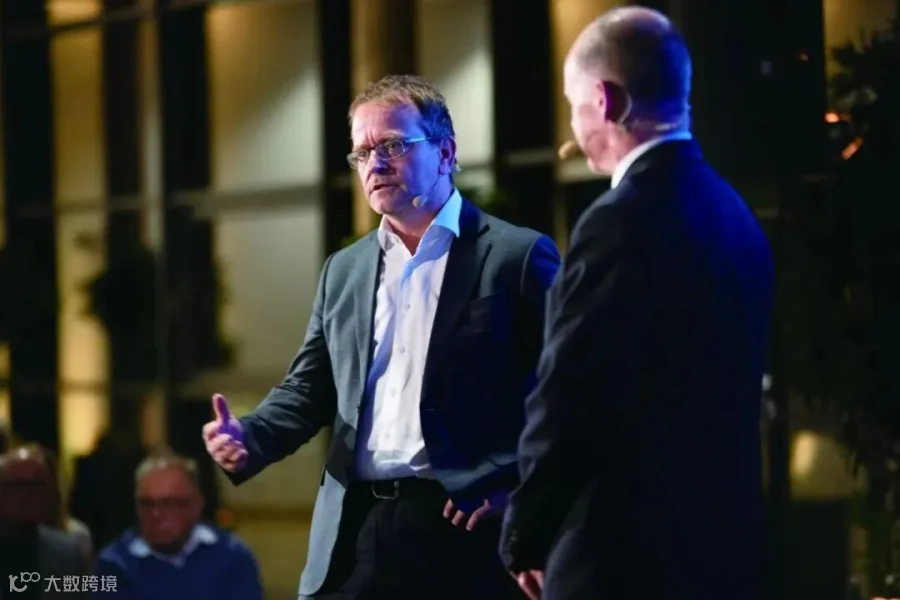
▲ Juergen Haering. (COURTESY PHOTO)
"It was quieter and much smaller," he recalls. "But I immediately felt something very special here: people genuinely wanted to make things happen, and they were able to move quickly."
Although the mature industrial ecosystem seen today did not yet exist, Haering recognized the potential: openness to German companies, pragmatic working styles, and a long-term commitment to building trust.
A Second Home
"To be precise, we have never truly experienced what one would call 'difficult times,'" he said. While growing a manufacturing enterprise from a modest operation is rarely a straight path, with periods of high effort yielding delayed results, he never considered leaving. "What kept me going was, first of all, our people."
Haering has witnessed young employees evolve from apprentices into skilled technicians, engineers, and managers. He has also observed deepening trust among the company, its partners, customers, and the city. For him, manufacturing demands long-term vision. "You cannot allow one or two difficult years to destroy a vision that has taken 10 or 20 years to build."
He notes that while German industry excels in quality, process discipline, and long-term planning, China impresses with its speed of learning and execution. Combining these strengths provides confidence in finding solutions even during challenges. "Taicang has become a place where, after being away, you return and naturally feel: 'I am back,'"
A Platform for Mutual Learning
For Haering, the most significant change is not economic growth, but the evolution of human relationships. Two decades ago, Sino-German cooperation primarily involved German investment in China. Today, it is balanced: Chinese and German engineers work side by side, Chinese companies go global, and German firms learn from China's speed, digitalization, and engineering efficiency.
This shift is evident in vocational training. Haering introduced the German dual education system to Taicang in 2013. He recalls apprentices who initially relied on instructors for every step eventually gaining the ability to analyze problems, adjust machinery, and explain their decisions independently. "That is the moment when you realize that education is really working. You are developing a skilled professional who can think, make judgments and take responsibility."
Seeing these individuals grow into key technicians and managers reinforced his belief: "We are not only manufacturing precision components. We are also developing the future of manufacturing." Taicang has transformed from a mere investment destination into a platform for mutual understanding and growth, which Haering values more than any statistic.
A Shared Future
When advising hesitant German CEOs, Haering offers two key points. First, do not come to China solely for cost reasons. "If your only objective is to find a cheaper production location, your way of thinking may already be outdated." He emphasizes that China is a critical industrial ecosystem with integrated supply chains, engineering talent, and opportunities in electric mobility, intelligent manufacturing, and robotics. Second, visit personally and think long term.
Haering highlights Taicang's unique Sino-German environment, advocating for joint product development, process innovation, and global market expansion. His perspective has shifted from viewing China merely as a manufacturing base to seeing it as an innovation partner. He attributes Chinese manufacturing's strength to its openness, hard work, speed, and exceptional learning ability, enabling rapid transitions from idea to mass production.
"The real question should be: How can we combine our strengths and solve the challenges of the future together?" he asks. Germany brings engineering processes, quality systems, and vocational education, while China offers speed, scale, and execution. After receiving the 2025 Chinese Government Friendship Award, Haering remains committed to fostering dialogue over stereotypes and cooperation over competition. He summarizes the potential of Sino-German collaboration as "German craftsmanship, Chinese speed, global markets and future industries," stressing that the best cooperation combines the strongest capabilities of both sides.
END
Editor | SONG Ziyan
Supervisor| FANG Linlin