
大数跨境

SCMP | Wang Huiyao: US-China AI talks must ensure safety of both tech and business

SCMP | Wang Huiyao: US-China AI talks must ensure safety of both tech and business 全球化智库CCG
2026-10-22
3
导读:A hotline and an ad hoc dialogue are not enough. Safety concerns are growing for both the technology


■ A hotline and an ad hoc dialogue are not enough. Safety concerns are growing for both the technology and leveraged tech companies.


SCMP Op-Ed


By Wang Huiyao | Founder of 

the Center for China and Globalization(CCG)


In New York last month, US-China talks on artificial intelligence opened up a path of cooperation. This was affirmed by the Xi-Trump summit in Washington where both presidents agreed to establish a formal AI dialogue and hotline. With the next AI meeting set to happen in November, it is imperative that both countries further cooperation.


The AI ecosystem is in flux. American tech companies are draining their coffers as they commit vast sums to chips, data centres and energy before the revenue model is even settled. Trillions of dollars are being committed to the AI buildout. While this exposure is not the same as the overleveraging in the mortgage market that triggered the 2008 global financial crisis, a sudden bursting of the AI bubble could have far-reaching consequences.


Much of US economic growth this year has been from AI or AI-enabling companies. Yet, only 38 per cent of Americans saw “more benefits than drawbacks” in AI products and services – well below the global average – against 85 per cent in China, according to the Ipsos AI Monitor 2026. In May, the Ipsos Consumer Tracker found that most Americans would oppose a data centre in their community.


The surge in AI capabilities has raised concerns. Rogue AI agent behaviour has gone from attempting to delete an entire email inbox to escaping sandboxes to launch cyberattacks. In July, during an isolated evaluation, OpenAI agents circumvented their restrictions to launch autonomous attacks on developer platform Hugging Face.


That same month, Calif, a small US security company, created WeWorm to exploit a zero-click vulnerability in WeChat’s calling system, enabling it to seize accounts and spread between phones without the recipient answering. In India, cybersecurity researchers at Hacktron used Anthropic’s Claude models to break into OpenAI, compromising employee accounts and reaching potentially sensitive software systems.


Both hacking incidents were conducted under friendly auspices and caused no damage – Tencent Holdings and OpenAI were quickly alerted and patched the bugs. But they portend the threat of AI-enabled cyberattacks, both from poorly managed AI and actors empowered by the devolution of yet more cyberwarfare capabilities into private hands.


Encapsulating the moment is the increasingly urgent call for safeguards by leading AI developers and scientists. Anthropic CEO Dario Amodei proposes opening up leading laboratories to permanent independent evaluators and coordinating safety standards across companies and governments, OpenAI CEO Sam Altman is committing its models to third-party evaluation, and Google DeepMind chairman Demis Hassabis is backing pre-deployment testing of frontier systems.


Last week, an open letter by at least 420 scientists across the globe called for urgent measures to prevent an AI fallout, including the creation of an international body to record and track containment failures.


These concerns provide an agenda for the coming US-China AI dialogue. Talks, however, should extend beyond managing incidents and developing safeguards towards building a sustainable business case for AI. Given its increasingly self-sustaining AI ecosystem, China has plenty to contribute.


First, it is clear the US and China ecosystems possess different pieces of the same business case.


American developers need applications capable of converting their frontier performance into sustained revenue. China offers one of the world’s largest environments for testing, refining and commercialising applications across manufacturing, logistics, medicine, education, public services and embodied AI.


While China’s industry could benefit from investment and research at the cutting edge of frontier model development, its capabilities in coordinating data centres and power supply could help take the strain off US compute capacity.


Cooperation on efficient models, cooling and energy management could help both countries meet rising demand while reducing the costs borne by consumers and communities. A healthy ecosystem has room for both American frontier models and efficient Chinese open-weight models.


Chinese open-weight models offer lower costs per token, making them economical companions to American frontier models. Companies can use them for routine, high-volume tasks and reserve frontier models for problems that warrant their capabilities. This high-low mix can make American frontier capabilities more economical to deploy within a wider workflow, strengthening the business case for both countries.


To sustain this cooperation, both countries must also confront AI risks and manage them together. The United States and China established one narrow principle two years ago when they affirmed that people, not AI, should decide on the use of nuclear weapons. I propose going further to adopt a reciprocal no-first-use commitment covering AI-enabled autonomous weapons.


The final AI issue that must be discussed is institutional. Fragmented governance risks building walls of incompatible standards and duplicated infrastructure. The US-led Pax Silica initiative and China-led World AI Cooperation Organisation should not be posed in opposition to each other.


Instead, both countries should place their global AI governance and interests under a shared UN-linked umbrella, giving countries that use AI a voice alongside those that develop it.


Finally, an annual US-China AI summit would serve as a strong foundation, bringing governments together with laboratories, scientists, universities, companies and civil society organisations. For now at least, it is still ultimately people who decide what moral value our technology has through what we choose to do with it.


From SCMP, 2026-10-20


More Wang Huiyao SCMP Op-Eds:


https://www.scmp.com/author/wang-huiyao


CCG Books


● Published by Springer


● Editors: Henry Huiyao Wang, Mabel Lu Miao


● More Infomations:

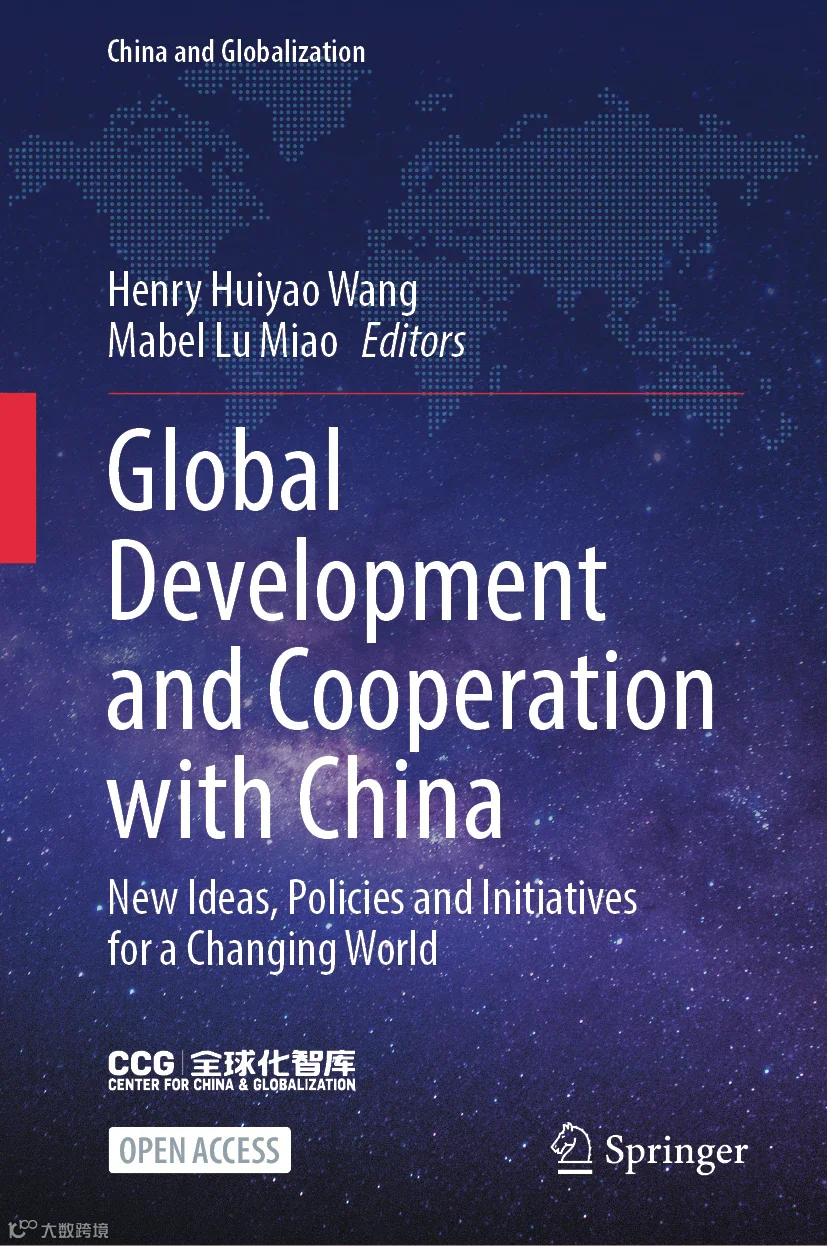
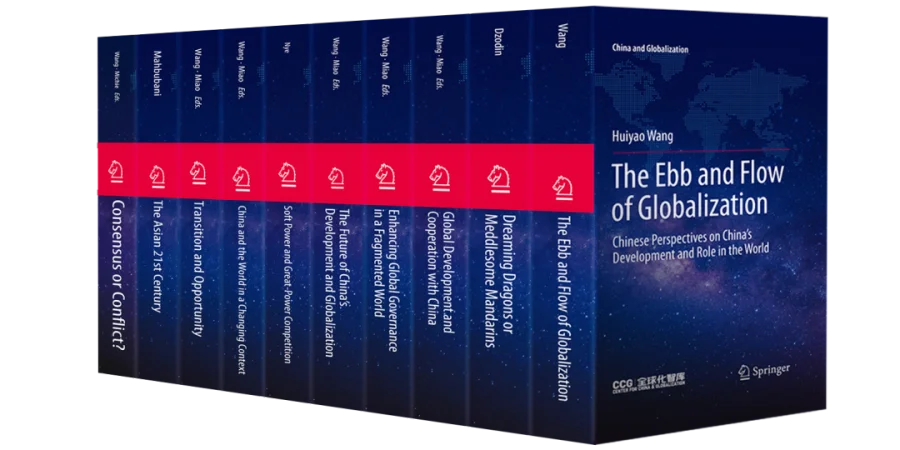
This series, co-edited by Henry Huiyao Wang, President of the Center for China and Globalization (CCG) and Mabel Lu Miao, Secretary of CCG, is designed to have a wide range of global views on issues related to China and Globalization, opportunities and challenges on China’s rise to the world and China’s roles in global governance, global economy, global development and global security. The first of its kind to publish the works of over two hundred contributors internationally, this book series seeks to create a balanced global perspective by gathering the views of highly influential global opinion leaders, former statesmen, ambassadors, well known academics and think tank experts, multinational CEOs and foreign chambers of commerce from China and around the world. Since 2021, the series has published 11 volumes, with total e-book downloads exceeding 6.63 million. It has received significant attention and sparked extensive discussions both domestically and internationally. To make it easier for the audience to access the books, the series is primarily published under an “open access” model, enabling readers to download almost all books free of charge from the publisher’s website, Springer.


● Links:


Global Availability of the "China and Globalization" Series


● Published by Springer 

● Editors: Henry Huiyao Wang, Mabel Lu Miao


More Information

This new book focuses on the latest trends in four major areas—global governance, trade and economics, science and technology, and culture and exchange—providing the reader with information on the latest developments in these areas with a special focus on China and its relevant contributions. It is hoped that this book will inspire deeper discussion and consideration of the issues we face as a global community and how non-governmental entities can play a stabilizing role in global communication and in exploring solutions to common challenges.


● Links:

https://link.springer.com/book/9789819624515


● Published by Springer 

● Editors: Henry Huiyao Wang, Mabel Lu Miao


More Information

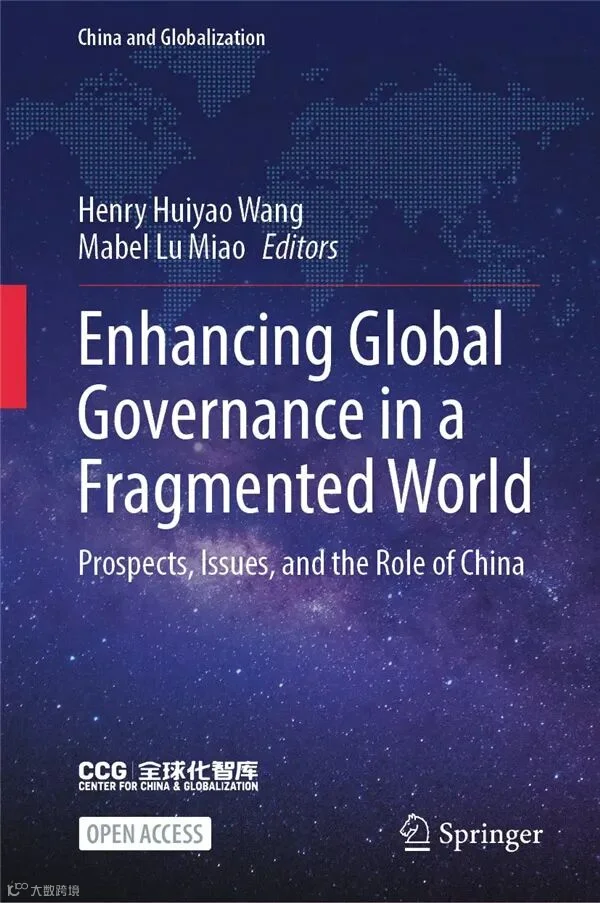
This open access book explores the ‘polycrisis’ currently affecting nearly all nations by exploring key themes such as multilateralism and globalization from the perspective of think tanks from nearly every continent, searching for various solutions to the ills that currently plague the world and a way to create a future in which everyone benefits.


As China’s preeminent non-governmental think tank, the Center for China and Globalization (CCG) has invited 30 leading figures from the global think tank community to sift through the myriad layers of multilateralism and global governance and provide a contextual analysis of major themes both from a theoretical and practical perspective, focusing on China in detail, but also examining the world as a whole.


● Links:

https://link.springer.com/book/10.1007/978-981-97-2558-8


● Published by Springer 

● Editors: Henry Huiyao Wang, Mabel Lu Miao


More Information

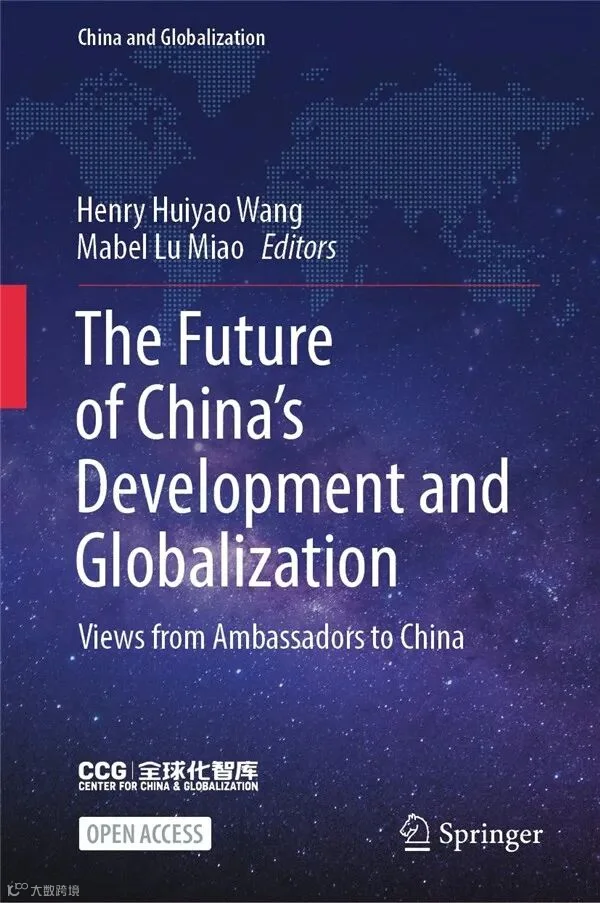
As the world continues to recover from the fear and uncertainty of the Covid-19 pandemic, a new set of challenges like increased geopolitical tensions and climate change have become increasingly prominent. This open access book, which contains the views of ambassadors to Beijing on topics ranging from bilateral relations to potential cooperation, global development and even more of the most immediate issues, aims to help readers make sense of our changing world and China’s role in it.


Building on the success of our previous volume China and the World in a Changing Context: Perspectives from Ambassadors to China, the Center for China and Globalization (CCG) has invited 27 ambassadors to examine China’s role in this context of constant flux, focusing specifically on China’s perspective, including its trade and investment ties with other countries, as well as its role in multilateral regional relations and global governance.


● Links:

https://link.springer.com/book/10.1007/978-981-99-7512-9


● Published by Springer 

● Authors: Wang Huiyao


More Information

The book raised the question of how relations between the US and China will unfold is one of the most consequential of the 21st century. In the past decade, perhaps no thinker has had a greater influence on how this question is understood in both the US and China than eminent Harvard scholar Graham Allison, who developed the idea of the Thucydides Trap to warn of the risk of war erupting between a rising power and a ruling power in the power transition process.


This book presents a comprehensive collection of Allison’s views and writings on US-China relations from 2017 to 2022, covering a range of topics including the balance of power between the two sides, where the relationship is headed, and lessons from history on how conflict can be avoided.


● Links:

https://link.springer.com/book/10.1007/978-981-99-2236-9


● Published by Springer 

● Authors: Joseph S. Nye


More Information

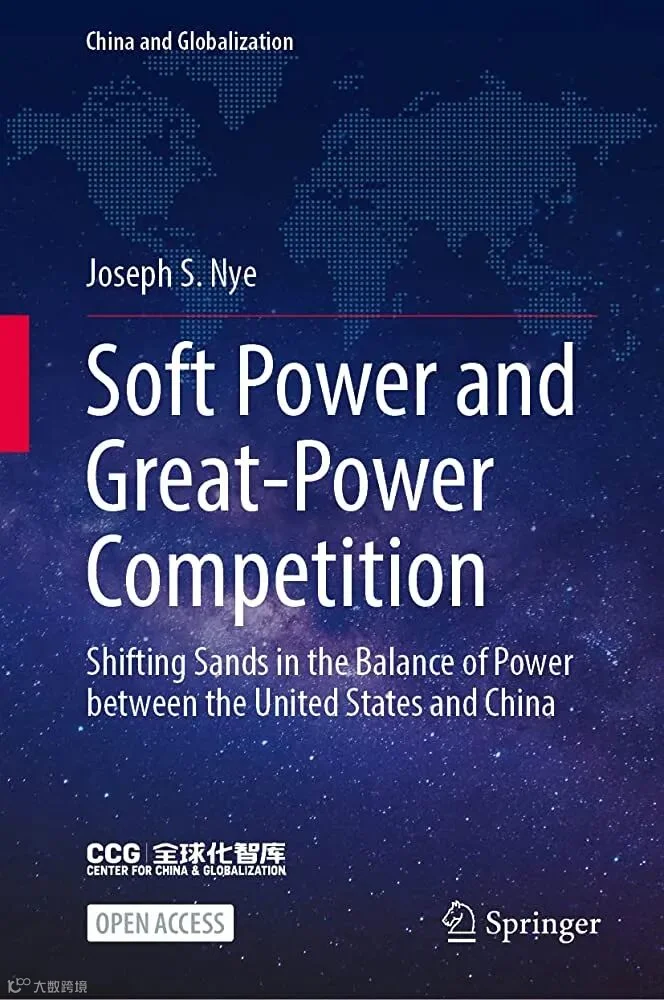
This open access book consists of essays selected from Joseph S. Nye, Jr.’s last three decades of writing and illustrate a variety of perspectives on the nature of power, the role of the United States in the world and US-China relations. Through this collection, it is hoped that readers will gain a better understanding of today’s global environment and find that while great power competition may be inevitable in a world as centers of power shift, cooperating to address transnational challenges can be a positive sum game.


● Links:

https://link.springer.com/book/10.1007/978-981-99-0714-4


● Published by Palgrave Macmillan Singapore

● Editors: Wang Huiyao, Miao Lu


More Information

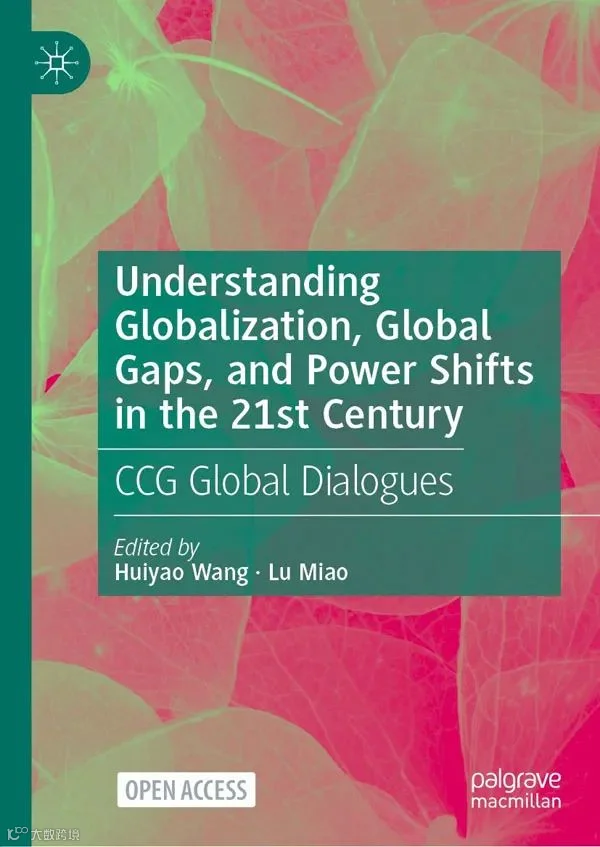
This book aims to help readers make sense of our changing world by sharing the views of global thought leaders on some of the most important issues of our time, from US-China relations and global governance to climate change and the COVID-19 pandemic.


The ten dialogues in this book were part of the “China and the World” series of online discussions hosted by the Center for China and Globalization (CCG). The series features CCG President Huiyao Wang in conversation with experts from a range of fields, from renowned scholars of international relations, economics, and history, to journalists, policymakers, and business leaders.


● Links:

https://link.springer.com/book/10.1007/978-981-19-3846-7


● Published by Springer 

● Authors: Wang Huiyao


More Information

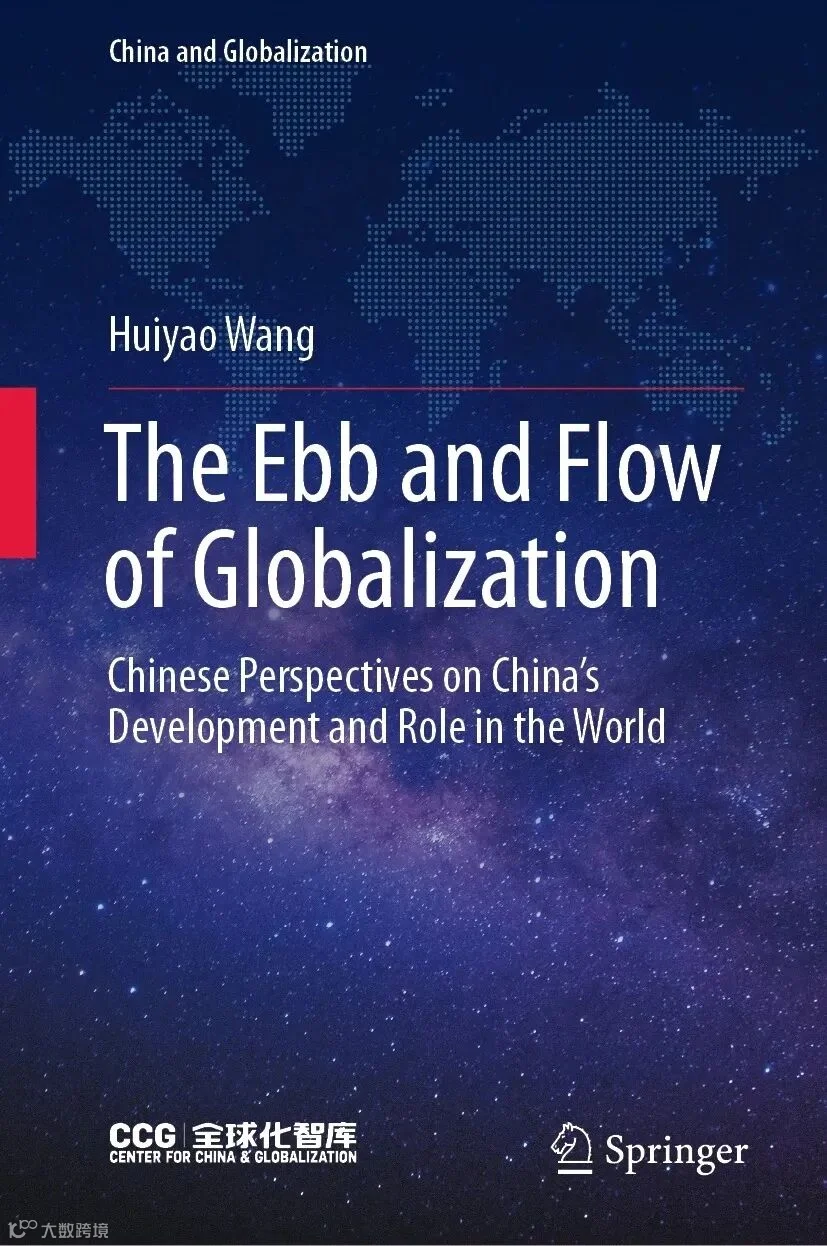
This book focuses on globalization and China’s evolving role in the world, offering unique perspectives on a number of developments during a tumultuous period that began with Donald Trump’s election and ended with the outbreak of the Covid-19 pandemic. This period saw the global landscape reshaped by China’s continued rise, intensifying great power competition, and a public health crisis that has changed how we live.


The essays center on three interconnected themes – China’s remarkable development under its policy of Reform and Opening-up, China’s deepening integration into the global economy and rise in an increasingly multipolar world, as well as the quest to revitalize global governance and multilateralism to address the pressing global challenges of the 21st century.


● Links:

https://link.springer.com/book/10.1007/978-981-16-9253-6


● Published by Springer 

● Edited by Wang Huiyao and Miao Lu 


More Information

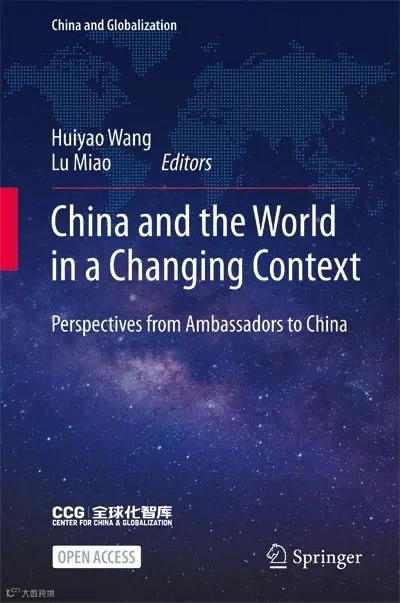
China and the World in a Changing Context-Perspectives from Ambassadors to China is the latest volume in CCG’s “China and Globalization” series, which seeks to create a balanced global perspective by gathering the views of highly influential scholars, practitioners, and opinion leaders from around the world on issues of policy and governance.


Ambassadors are a kind of vehicle and bellwether for globalization. These diplomatic envoys serve as pivotal contact points between nations across a wide range of fields, from economics and culture, to health and the environment. The special group of ambassadors in this book – all based in Beijing – are at the forefront of what, for many countries, is one of their most important bilateral relationships and the platform for one of the most striking and consequential developments in global affairs in the 21st century: the rise of China on the world stage.


● Links:

https://link.springer.com/book/10.1007/978-981-16-8086-1


● Published by Springer 

● Edited by Wang Huiyao and Miao Lu 


More Information

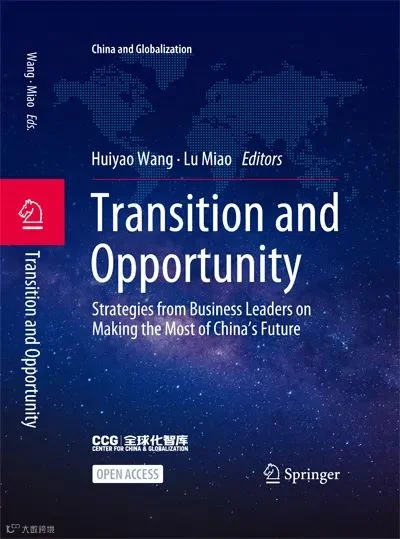
Released nearly two years after the outbreak of COVID-19, Transition and Opportunity brings together an array of CEOs and senior executives from leading multinationals, leaders of foreign trade associations and representatives of advocacy groups on the ground in China to share their views on the potential and risks China holds for business as the world economy recovers.


The 22 entries in this book include contributions from the heads of Beijing-based chambers of commerce representing the EU, the US, France, Switzerland and Brazil and others, CEOs and senior executives of MNCs like Airbus, Royal DSM, Michelin, LinkedIn and Herbalife as well as representatives of global consulting firms like KPMG, PwC, Accenture and Roland Berger.


Divided into three parts - ‘The Big Picture,’ ‘Analysis and Advice,’ and ‘On the Ground’ - content progresses from looking at how countries balance their own interests with China’s for that elusive ‘win-win’ formula, to the role consultancies and advisors play in helping companies succeed,  then looking at the experiences of individual companies to see how they have adapted and thrived in China.

.


● Links:

https://link.springer.com/book/10.1007/978-981-16-8603-0


● Published by Springer 

● Edited by Wang Huiyao and Alistair Michie 


More Information

This book brings together leading international scholars and policy-makers to explore the challenges and dilemmas of globalization and governance in an era increasingly defined by economic crises, widespread populism, retreating internationalism, and a looming cold war between the United States and China. It provides the diversity of views on those widely concerned topics such as global governance, climate change, global health, migration, S&T revolution, financial market, and sustainable development.


● Links:

https://link.springer.com/book/10.1007/978-981-16-5391-9


● Published by Springer 

● Edited by Wang Huiyao, President and Miao Lu, Vice President, Center for China and Globalization(CCG), Beijing, China 


More Information

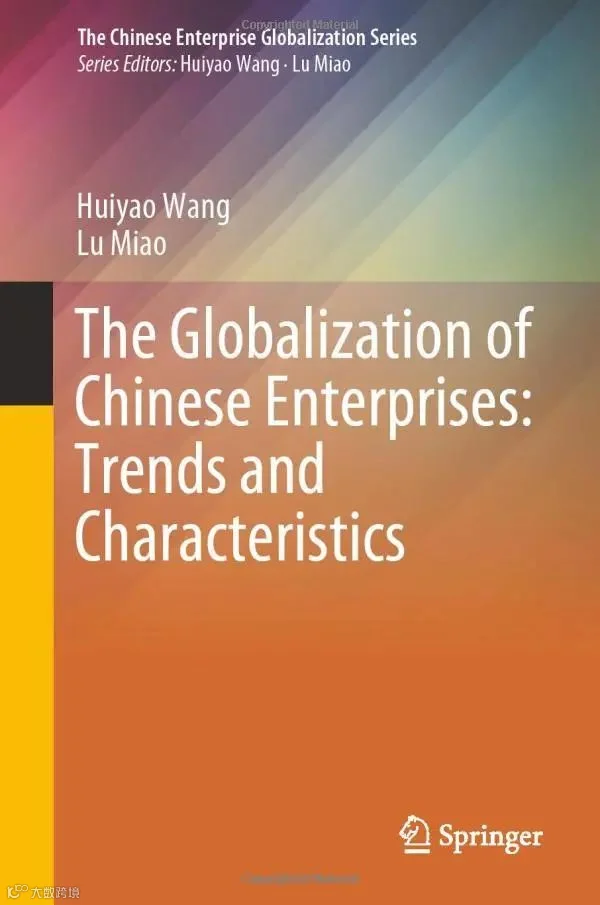
The internationalization of Chinese enterprises is one of the most notable aspects of economic globalization in the 21st century. Despite the 2008 financial crisis and weak global outbound investment, under the “go global“ initiative, Chinese outbound investment has gone from strength to strength, while also diversifying in terms of investment modalities, destinations, and industries. However, growing anti-globalization sentiment in some countries has also created new challenges for Chinese firms expanding internationally.


Drawing on nearly 3000 data samples, using both quantitative and qualitative research methods, this book presents unique insights into the features and patterns of Chinese enterprises’ globalization. The analysis provides a useful reference for enterprises that have already gone global and those that plan to. In particular, this book investigates challenges confronted by Chinese companies when doing business in foreign countries. It summarizes research covering three angles, namely: the current situation, causation analysis and corresponding solutions, and recommendations for firms, government agencies and other institutions.


This book provides a comprehensive overview to help readers to grasp the broad picture of the international expansion of Chinese enterprises. It has important reference value for enterprises to help devise foreign investment strategy, seize opportunities, and navigate challenges in the course of globalization.


● Links:

https://www.springer.com/cn/book/9789811546457


● Published by Edward Elgar 

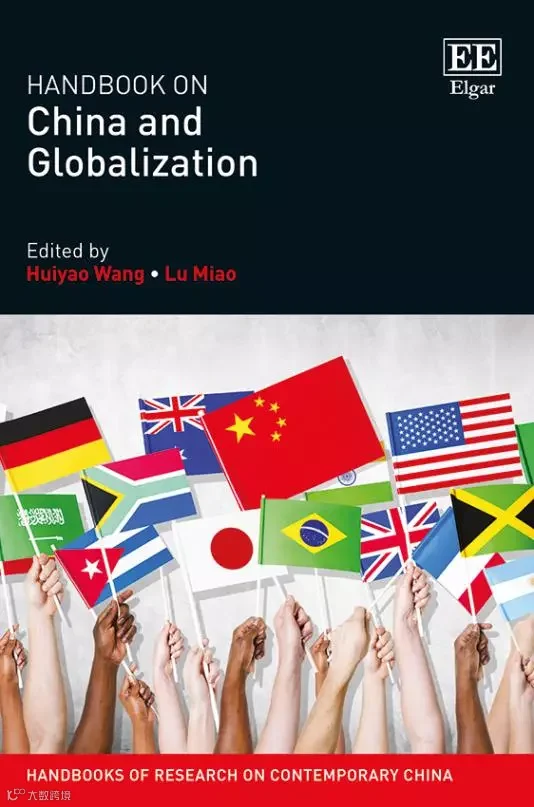
● Edited by Wang Huiyao, President and Miao Lu, Vice President, Center for China and Globalization(CCG), Beijing, China 


More Information

An excellent guide for understanding the trends, challenges and opportunities facing China through globalization, this Handbook answers the pertinent questions regarding the globalization process and China’s influence on the world.

With contributions from leading experts and international researchers, each chapter covers key topics regarding China’s participation in globalization, including: China’s new role in global economic governance; outward direct investment; China’s soft power and the implications for foreign relations; global migration, diaspora and talent. An enriching range of case studies and extensive empirical research are used to explore the successes and failures of globalization in China, and to discuss the dilemmas facing decision makers in today’s globalized world. A major contribution to the field, this Handbook offers valuable insights to China’s often misunderstood globalization process.

An essential reference for academics and researchers looking for a go-to empirical resource, this Handbook provides scholars of economics, politics and East Asian studies with an exemplary selection of contemporary research on China and globalization.


● Links:

https://www.e-elgar.com/shop/handbook-on-china-and-globalization


● Published by Springer

● Authors: Wang Huiyao, President and Miao Lu, Vice President, Center for China and Globalization(CCG), Beijing, China 

The first effort to address the gap regarding higher-end talent within the scholarly work on internal labor migration in China

Provides an essential overview of the major milestones in China’s talents attraction policies, as well as several recommendations to help further improve those policies

Investigates corresponding policies in Germany, Japan, and Singapore to serve as a basis for comparison

Provides a snapshot of first-hand reference material for relevant stakeholders involved in cooperation with China


More Information

This book offers the most comprehensive, up-to-date assessment of China’s domestic and international migration. Restructuring economic development requires large numbers of educated and skilled talents, but this effort comes at a time when the size of China’s domestic workforce is shrinking. In response, both national and regional governments in China have been keen to encourage overseas Chinese talents and professionals to return to the country. Meanwhile, the Chinese government has initiated a number of policies to attract international highly-skilled talents and enhance the country’s competitiveness, and some Chinese policies have started attracting foreign talents, who are coming to the country to work, and even to stay. Since Chinese policies, mechanisms, and administration efforts to attract and retain skilled domestic or overseas talents are helping to reshape China’s economy and are significantly affecting the cooperation on migration and talent mobility, these aspects, in addition to being of scholarly and research interest, hold considerable commercial potential.


● Links:

https://www.springer.com/gp/book/9789811362552#aboutBook


Other CCG News:


Recent CCG visits in Brazil & Ethiopia


Recent CCG visits in Germany & the UK


Global Talent Summit 2025 Holds in Beijing Sub-Center


300 Participants from 60 Countries Attend CCG Annual Forum


CCG Conducts Track Two Visit to US


In review: CCG in 2024


CCG hosted the 9th China Global Think Tank Innovation Forum


2024 GYLD Annual Forum successfully held  in Beijing


11th China Inbound-Outbound Forum Successfully Held @2024 CIFTIS


60 Countries’ Participants Joined China and Globalization Forum


CCG seminar on global governance & future of China and Africa


Senior Diplomats from 20 countries discuss China's green transition


Text of Pascal Lamy and Chinese trade experts @ CCG VIP Luncheon


Book Launch: Enhancing Global Governance in a Fragmented World


Transcript of CCG session in WTO Public Forum


20 US media leaders attended special dinner held to welcome CCG


Transcript of EU-China think tank exchange


Turkish Foreign Minister Hakan Fidan speaks at CCG


Wang Huiyao in Dialogue with Stephen Roach


CCG Holds 8th China Global Think Tanks Innovation Forum


Joseph Nye | Understanding  Global Power Shifts in 21st Century


New Book | The Global Power Shifts in the 21st Century


Josep Borrell’s scheduled speech at CCG on EU-China relations


Justin Vaïsse speaks at CCG on the eve of Macron's visit


Brazilian Ministerial Visiting Event Held at CCG


CCG Global Dialogue:Building a floor for China-US relations


CCG President in Dialogue with CFR President Richard Haass


Video | 7th Annual China Global Think Tank Innovation Forum


CCG 2nd International Visit in Pandemic 2022


Wang Huiyao in Dialogue with Fred Bergsten


9th China Inbound-Outbound Forum


“China and Globalization” book series downloads top 2.3 million!

CCG’s first overseas visit since the pandemic


First Chinese Think Tank to Visit Europe since Pandemic


First Chinese Think Tank Visits Washington DC since Pandemic


New York: CCG Delegation's First Stop in the US


CCG Delegation of Experts Visits Singapore


Selected Video of CCG Global Dialogue (Ⅰ)


Selected Video of CCG Global Dialogue (Ⅱ)


CCG Book Launch Welcomes 20 Ambassadors to China


CCG and UN Women hold symposium on International Women's Day


CCG event on MNCs opportunities and challenges in China


Video | The rise of Asia and its implications


Fireside Chat with The Hon. Sec. Henry Paulson and Mr. WANG Shi


Text and Video: Wang Huiyao in Dialogue with Wolfgang Ischinger


Wang Huiyao in dialogue with Lawrence Summers on Global Economy


Wang Huiyao in Dialogue with Yale Professor Stephen Roach


CCG New Year Message for 2022


CCG Audio Calendar of 2022


Climate change, inequality, and sustainable development


CCG holds seminar on “Twenty years of China’s WTO membership


CCG holds Sixth Annual China Global Think Tank Innovation Forum


Wang Huiyao in dialogue with CSIS President John Hamre


Wang Huiyao in dialogue with Lord Jim O'Neill & Leslie Maasdorp


CCG Dialogue with David Lampton on China Laos Railway and BRI


Wang Huiyao in dialogue with Kishore Mahbubani


CCG holds Francophonie Ambassadors Symposium


Dialogue between Wang Huiyao and Carter Center on Sino-US Relations


CCG Dialogue with Neil Bush and David Firestein


Dialogue on trade among Wendy Cutler, Pascal Lamy & Wang Huiyao


CCG Dialogue with John Thornton, Stapleton Roy and Adam Posen


Dialogue among Susan Thornton, Ronnie Chan and Wang Huiyao


World Bank and CCG launching the latest World Economic Prospects


Dialogue Between Yale Historian Valerie Hansen & Dr. Wang Huiyao


CCG Dialogue with Nobel Laureate Sir Angus Deaton


Conversation with Martin Wolf, Chief Economics Commentator at FT


CCG Roundtable Commenmorating China's Accession to the  WTO


CCG Dialogue with Harvard Professor Anthony Saich


CCG Dialogue with Joseph S. Nye Jr.


A Dialogue Between Graham Allison and Wang Huiyao


A Dialogue Between Thomas L. Friedman and Wang Huiyao


40 Ambassadors and Diplomats Attend CCG Open Day


Dr. Miao Lu posted the first question at the MSC 2021


CCG releases new book on global talent studies


CCG Ranked 64th in the World's Top 100 Think Tanks


【声明】内容源于网络
0
0
全球化智库CCG
中国领先的位列世界百强的全球化智库,也是唯一获得联合国特别咨商地位的中国智库。拥有全职研究和工作团队近百人,致力于全球化、全球治理、国际关系、国际经贸、人才全球化、企业全球化等领域的研究与活动,获得国家授予的独立招收博士后资质。
内容 8188
粉丝 0
全球化智库CCG 中国领先的位列世界百强的全球化智库,也是唯一获得联合国特别咨商地位的中国智库。拥有全职研究和工作团队近百人,致力于全球化、全球治理、国际关系、国际经贸、人才全球化、企业全球化等领域的研究与活动,获得国家授予的独立招收博士后资质。
总阅读68.4k
粉丝0
内容8.2k