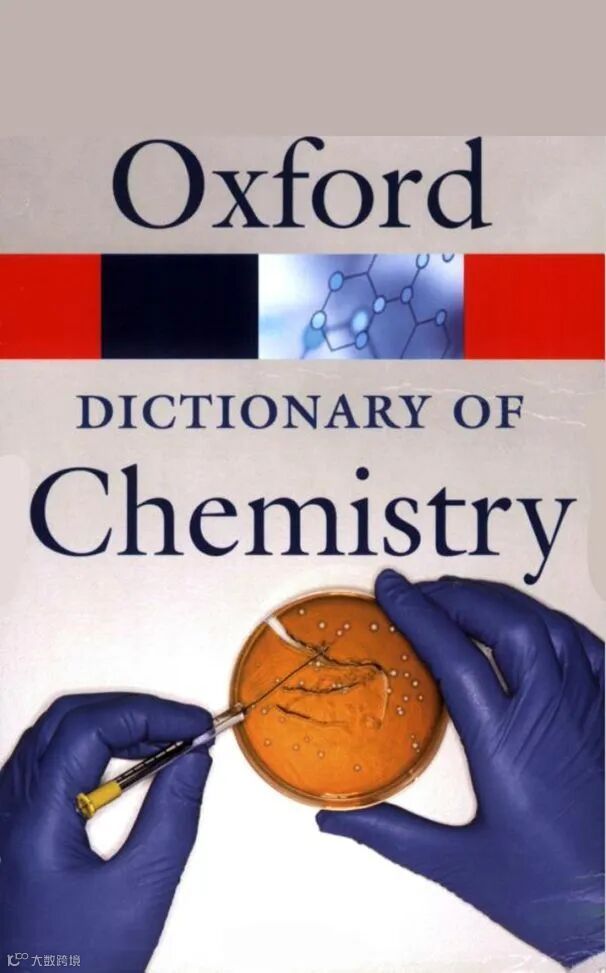
Oxford Dictionary of Chemistry 6e by John Daintith
「Oxford Dictionary of Chemistry, 6th Edition」, edited by 「John Daintith」, is a reference work that stands as a veritable lighthouse in the sometimes foggy seas of chemical terminology 📘🧪. For professionals, researchers, and advanced students in chemistry, biochemistry, materials science, and allied fields, this dictionary offers both breadth and scholarly precision—qualities that often fall victim to oversimplification in shorter glossaries.
Why this book matters
One of the perennial problems in technical disciplines is linguistic drift: terms accrue additional meanings, new subdisciplines arise, and what was once clear to practitioners becomes ambiguous to newcomers. A dictionary like Daintith’s addresses this by stitching together a consistent, up-to-date lexicon. The 6th edition is “fully revised and updated” and broadens its scope to areas that straddle chemistry and neighboring sciences (forensics, metallurgy, materials science, geology).
Compared with previous editions, the 6th includes 「over 4,700 entries」, of which 「more than 200」 are new. If you expect your dictionary to reflect recent advances—from novel nanomaterials to new spectroscopic techniques—this edition makes strides in that direction. It doesn’t merely stop at definitions: you’ll also find 「feature articles」, 「chronologies of key discoveries」, 「biographical entries on major figures」, and 「highlighted entries」 on topics of central interest (e.g. polymers, crystal defects).
For the researcher or professor accustomed to flipping through reference shelves, these extras elevate the work from “just a dictionary” to a compact companion. The appendices—covering, among other things, the Greek alphabet, SI units, the periodic table, chemical elements, Nobel laureates, and useful web links—are more than window-dressing; they serve as reminders and quick lookup tools.
Intended users and value across levels
Though its packaging is often pitched toward university students, the 6th edition also rewards graduate researchers, lecturers, and domain experts. Why? Because its ambition is not to trivialize. It assumes a base level of chemical literacy and builds upward—adding context, cross correlations, historical notes, and biographical depth.
Undergraduates will find a reliable bedrock for definitions; postgraduates will use it to interrogate subtle distinctions; instructors can draw on its chronologies and feature entries to structure lectures or refresh historical context. Professionals working in interdisciplinary settings (e.g. bridging materials science, molecular biology, or geochemistry) will appreciate its effort to link chemistry with neighboring territories.
In addition, the work’s structure encourages serendipity: when you look up “ferroelectricity,” you might drift to “polarization catastrophe,” or hop over to a researcher’s biographical sketch you hadn’t known. That kind of intellectual meandering is a strength, not a weakness.
Strengths, caveats, and suggestions
「Strengths」
-
Thorough revision and updating make it current (or as current as a print dictionary can be) -
Wide disciplinary breadth, with attention to crossroads fields -
Supplementary content (features, chronologies, biographies, appendices) adds richness -
Scholarly tone and precision without overwhelming verbosity
「Caveats」
-
Inevitably, a work of this kind cannot always keep pace with the bleeding edge (e.g. last-minute discoveries, not yet canonical terms) -
Some entries may be terse compared to full textbook treatments -
As a printed reference, it lacks dynamic updating (though companion web links help)
To get the most out of it, I suggest using it not just as a passive reference but as a teaching and research tool: cross-reference with current journal articles, flag entries you believe are out of date, and use the chronologies to anchor lectures or student assignments.
Closing remarks
Introducing 「Oxford Dictionary of Chemistry, 6th Edition」 is not merely promoting a reference book; it’s endorsing a stable pillar of chemical scholarship. In an age where “quick internet lookup” is ubiquitous, a well-curated dictionary brings discipline, rigor, and depth. If you value precision in language as much as in reactions, this volume deserves a prominent place on your shelf—alongside your textbooks, your spectrometer manuals, and your annotated research papers.