


Swipe left for English ▷▷
数据显示,我国物流行业碳排放约占全国总排放的9%,其中运输环节占比高达85%。在“双碳”目标背景下,绿色转型已成为物流行业发展的关键命题。
大洋物流并未止步于简单的车辆电动化或口号宣传,而是从碳核算、标准制定到多式联运体系构建,进行系统化布局。这一路径为物流行业的绿色转型提供了具有参考价值的样本。
PART ONE
算不清碳,就管不好碳
物流减碳的前提是精准核算。以深圳至中亚的货物为例,全程涉及公路短驳、铁路干线、边境换装及末端配送等多个环节,各阶段碳排放因子与核算标准各异。若无法厘清碳足迹,减碳工作便缺乏数据支撑。
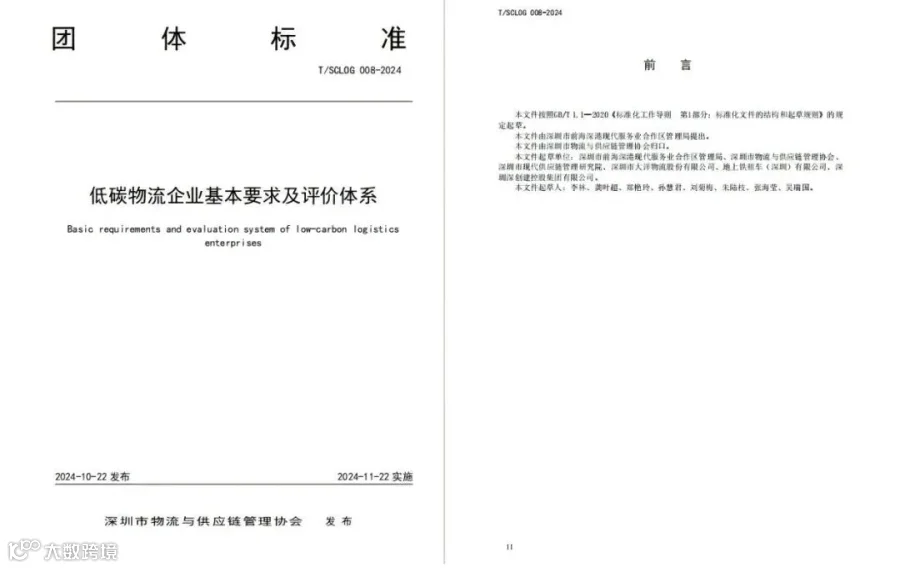
对此,大洋物流引入国际通行标准量化碳排放。由深圳市物流与供应链管理协会、深圳市现代供应链管理研究院及大洋物流等单位共同编制的《低碳物流企业基本要求及评价体系》团体标准正式发布,确立了碳核算、碳足迹管理及低碳合作等评价指标。这标志着深圳绿色物流生态正从“各自探索”迈向“共同规范”。
随着欧盟碳边境调节机制(CBAM)的推进,跨境贸易对碳数据透明度的要求日益严格。大洋物流通过数字化工具提升碳数据透明度,协助客户完成排放监测与报告,实质上是在为客户的出口合规能力做储备。绿色能力,正逐渐转化为物流服务的新竞争力。
PART TWO
少换一次装,就少排一份碳
明确碳排放分布后,运输方式的选择成为减碳关键。数据显示,长途货运由公路转为铁路,同等吨公里能耗可降低75%;相较于空运和卡车,铁路运输分别可减少95%和80%的二氧化碳排放。
大洋物流以中欧班列为核心,自营超5万TEU集装箱,依托阿拉山口、霍尔果斯等五大口岸,构建了覆盖国内外400多个城市的“班列+卡车航班+海铁联运”多式联运体系。
以哈萨克斯坦货物入境为例,全程三千余公里,涉及两国海关及多次装卸。每一次装卸均伴随额外能耗。大洋物流通过打通国际运输与目的地交付的衔接环节,压缩操作节点,以系统性效率提升实现显著减碳。
在末端环节,大洋物流推出“3710”卡航产品:货物在阿拉山口集结后,3天抵达中亚,10天抵达欧洲。这种“铁路干线+卡车短驳”模式并非简单叠加,而是基于路段特征的碳排放优化配置——长距离利用铁路低碳优势,短途接驳发挥公路灵活性,在时效与排放间取得平衡。
PART THREE
在关键节点上做“绿色基建”
若运输结构优化是“做减法”,基础设施低碳化则是源头“做加法”。大洋物流在阿拉山口建设多式联运集结中心,集成智慧仓储、堆场及储能电池仓库等设施。
该中心距阿拉山口站约3公里,距国门约6公里,地处国内国际双循环物流关键节点。其中,储能电池仓库的配置不仅满足货物存储需求,更为新能源运输装备的应用提供了基础条件,助力实现“3天送达中亚、10天送达欧洲”的高效服务承诺。
大洋物流的绿色转型并非运动式变革,而是渗透于日常运营的渐进调整。从线路优化到绿色基建,这些举措正悄然重塑企业运行方式,并为深圳绿色物流生态积累一线实践经验。
物流的本质是连接。当这种连接变得更加低碳,它所连接的不仅是货物的起点与终点,更是一个可持续的未来。
◁◁ 右滑查看中文
The green transition is reshaping the logistics industry. Data shows that China's logistics sector accounts for approximately 9% of the country's total carbon emissions, with transportation contributing around 85% of the sector's emissions. The green transformation of logistics has become a critical part of achieving China's carbon peaking and carbon neutrality goals.
Neptune Logistics is taking practical steps to address this challenge. Its approach extends beyond adopting electric vehicles or making general environmental commitments. Instead, the company is pursuing a systematic strategy encompassing carbon accounting, standard-setting, and multimodal transport. Its experience offers a valuable case study in how logistics companies can advance their green transition.
PART ONE
You Can't Manage What You Can't Measure
For a logistics company to reduce carbon emissions, it must first understand where those emissions occur and how much it generates. While this sounds straightforward, the actual process is considerably more complex.
A shipment traveling from Shenzhen to Central Asia may involve multiple stages, including road feeder transport, long-haul rail freight, border transshipment, and last-mile delivery. Each stage has different emission factors, and accounting methodologies may vary. Without an accurate carbon footprint, effective emissions reduction is difficult to achieve.
Neptune Logistics has taken a concrete step towards addressing this challenge by applying internationally recognized standards to quantify carbon emissions.
The group standard Basic Requirements and Evaluation System for Low-Carbon Logistics Enterprises, jointly developed by the Shenzhen Logistics and Supply Chain Management Association, the Shenzhen Institute of Modern Supply Chain Management, Neptune Logistics, and other organizations, has been officially released. It introduces evaluation criteria covering carbon emissions accounting, carbon footprint management, and low-carbon collaboration.
This initiative reflects a broader shift in Shenzhen's green logistics ecosystem, from individual efforts towards shared standards and coordinated development.
As the EU's Carbon Border Adjustment Mechanism (CBAM) moves forward, carbon data transparency is becoming increasingly important in cross-border trade. Neptune Logistics' early efforts in this area help prepare its customers for evolving export compliance requirements. Through digital tools, the company aims to improve carbon data transparency and support customers in carbon emissions monitoring and reporting.
Green capabilities are becoming a source of competitive advantage in logistics services.
PART TWO
Fewer Transshipment Steps, Lower Carbon Emissions
Once carbon emissions have been mapped across the supply chain, some of the greatest opportunities for reduction lie in the choice of transportation modes.
Data shows that shifting long-distance freight from road to rail can reduce energy consumption per tonne-kilometre by up to 75%. Compared with air freight, rail transportation can reduce carbon dioxide emissions by 95%, while the reduction can reach 80% compared with trucking. Differences on this scale cannot easily be offset by optimizing a single stage of short-haul delivery.
With the CR Express at the core of its business, Neptune Logistics is well positioned to leverage the environmental advantages of rail transportation. The company operates more than 50,000 TEU of containers and works closely with CR Express networks. Imported cargo can enter China through five major border ports, including Alashankou, Khorgos, and Erenhot.
Building on its rail network, Neptune Logistics has developed a multimodal transport system integrating CR Express, Truck Flights, and Sea-Rail Intermodal Services, with a service network covering more than 400 cities in China and overseas markets.
Consider a shipment originating in Kazakhstan and traveling more than 3,000 kilometres. Its journey involves two countries, two customs systems, and at least three loading or unloading operations. Each additional handling step consumes energy and generates emissions.
By improving the connection between international transportation and destination delivery, Neptune Logistics can streamline cargo handling and reduce unnecessary operational steps. A more efficient flow of goods across the supply chain can deliver meaningful emissions reductions beyond improvements made at individual stages.
The final leg of delivery also deserves attention. Neptune Logistics has introduced its innovative 3710 Truck Flights service. After cargo is consolidated at the company's Alashankou warehouse, shipments can reach Central Asia in three days and Europe in ten days.
This combination of rail line-haul and road feeder transport matches each mode to the characteristics of the route. Rail handles long-distance transportation, while road transport provides short-haul connections, balancing delivery speed with carbon efficiency.
PART THREE
Building Green Infrastructure at Strategic Logistics Hubs
While optimizing the transportation mix helps reduce emissions, low-carbon infrastructure addresses energy consumption at its source by increasing the use of cleaner energy and reducing reliance on conventional energy sources.
Neptune Logistics' multimodal transport hub in Alashankou integrates smart warehousing, freight yards, and energy storage battery warehouses, among other facilities. Alashankou is a key overland logistics gateway connecting China with Central Asia, making it a strategically important location for this development.
The hub is located at a critical junction in domestic and international logistics, approximately three kilometres from Alashankou Railway Station and six kilometres from the national border checkpoint.
The inclusion of energy storage battery warehouses is particularly noteworthy. These facilities support cargo storage while also providing infrastructure that can facilitate the wider adoption of new-energy transport equipment.
According to the company's plans, the hub will support efficient logistics services designed to deliver shipments to Central Asia within three days and to major destinations in Europe within ten days.
Neptune Logistics' green transition is a gradual process embedded in day-to-day operations. From optimizing transport routes to developing green infrastructure, these practical measures are reshaping the company's operations and contributing valuable industry experience to Shenzhen's green logistics ecosystem.
At its core, logistics is about creating connections. When these connections become more sustainable, they link not only the origin and destination of goods, but also the logistics industry to a more sustainable future.