

This narrative is quite popular in Western strategic circles, but its description of the early development of China's rare earth industry contains obvious deviations, even simplifying a complex historical process into a binary opposition of "market failure vs. state strategic manipulation." From the perspective of long-term observation of China's rare earth industry evolution, it is necessary to refute and clarify the inappropriate statements and erroneous views therein.
I. Summary of the Original Article's Core Arguments
The article first reviews history: the United States remained a global leader in rare earth production and refining until the late 1980s, but mines and magnet businesses were gradually shut down or sold due to high environmental costs and declining profits. China rapidly gained dominance through state subsidies, tolerance of pollution, and low-price sales. The author emphasizes that rare earths are not an ordinary commodity market but a "geostrategic industry"; China has consciously invested in and controlled [the industry] since the early reform and opening-up period, ultimately forming over 90% of the refining share and controlling nearly 99% of heavy rare earths. The market, with China's low-price supply during peacetime, cannot sustain alternative production capacity, and cannot rapidly rebuild during crises, constituting a typical "market failure." Based on this, the article proposes that the government needs to use special financial instruments to match asymmetric risks.
These arguments capture the reality of current supply chain vulnerability, but their historical explanation of "how it was formed" overemphasizes China's "non-economic motives" and underestimates the role of full market competition in the early stages.
II. Refutation and Clarification: Early Dominance Originated from Market Competition, Not Mere State Manipulation
The original article attributes China's rise mainly to "state subsidies for unprofitable businesses, tolerance of pollution, and strategic acquisitions," implying that it was aimed at controlling the global bottleneck from the very beginning. This does not conform to the facts.
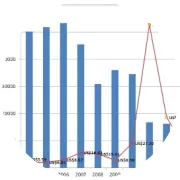
At least before the implementation of export quota management in 1998, China's international position in the rare earth industry was the result of active private enterprise participation in market competition. From the 1980s to the 1990s, with technological breakthroughs, especially the diffusion of cascade extraction technology, local enterprises, township enterprises, and private enterprises flooded in. Academician Xu Guangxian pointed out in retrospect that due to the lack of patent protection awareness at the time, rare earth separation technology rapidly spread to local and private enterprises: "Local and private enterprises across the country saw that rare earth separation was highly profitable and rushed to build factories, reaching over 100, with a production capacity of 150,000 tons, while global demand was only 100,000 tons. Oversupply pushed rare earth prices below the 1985 level." From 1990 to 2005, China's rare earth export volume increased nearly tenfold, while the average price fell to half of the 1990 level. This "blooming everywhere" competitive landscape led to oversupply and price collapses, which precisely shows that the early dominance was achieved relying on full market competition, not organized strategic manipulation.
The state's strategic emphasis on and policy guidance for the rare earth industry did exist. Comrade Deng Xiaoping's famous statement that "the Middle East has oil, China has rare earths," as well as the establishment of institutions such as the Rare Earth Leading Group in 1975, reflected the state's attention to this industry. However, this was more of an orientation of "encouraging development and earning foreign exchange," not direct manipulation of daily operations. Among the export tax rebate policies implemented in 1985, the rebate rate for rare earth metal ores was 13%, and for rare earth metals it was 17%. The main purpose of this policy was very clear—export for foreign exchange earnings. At that time, domestic demand was limited, and the market was mainly abroad. In the early stage of reform and opening up, foreign exchange was in short supply, and rare earths became an important tool for earning foreign exchange. This policy was consistent with other export-oriented policies of the same period, and was not primarily aimed at "monopolizing the global supply chain."
In other words, China's rare earth industry grew up in market competition. Private enterprises were the main body; their active participation and price competition were the key to China's achievement of international status. State policies provided an encouraging framework, but what truly drove the production capacity explosion and market share was competition among enterprises. The original article simply describes this process as "the state bought the industry," ignoring the leading role of the private sector, which is a simplification of history.
After 1998, the introduction of policies such as export quotas, mining controls, and industry consolidation indeed reflected stronger state intervention. The original intention was to protect the environment, regulate export order, and stabilize prices to maintain sustainable industry development. This was a correction to the previous disorderly competition, resource waste, and environmental pollution, and also conformed to the actual needs of the industry development stage at that time. Some policies deviated from purely free market rules, but they were normative measures after the industry had already established its advantages through market competition, not the fundamental reason for its early rise.
III. Institutional Background: Policy Logic and Characteristics of Industrial Governance During the Transition Phase
The original article further completely attributes China's behavior to "pricing for control," ignoring the complex reality of China's transition from a planned economy to a market economy. The transition faced obvious resistance, and the degree of marketization varied significantly across different fields.
China's economy is a mixed model of "the market playing the decisive role in resource allocation while the government better plays its role." In consumer and light industry sectors, market competition is sufficient; but in strategic resource sectors such as rare earths, the state maintains ultimate control through planning, quotas, and state-owned enterprise consolidation. This is not a simple result of "market failure," but the internal logic of the transition path: the market is a means serving national security and long-term development goals. Releasing private vitality to seize the market in the early stage, and strengthening regulations later to prevent "selling resources cheaply" and consolidate advantages, is precisely the embodiment of this logic.
On the U.S. side, private companies' withdrawal due to environmental costs and profit considerations indeed conforms to free market logic. The Mountain Pass mine operated under Unocal until 1998, when chemical processing operations were suspended due to a wastewater pipeline leak. It was completely shut down in 2002 due to low rare earth prices and insufficient tailings processing capacity, and the equipment was subsequently sold. General Motors' Magnequench magnet business was also sold in 1995 to an investment group including two Chinese companies, and the production line was later relocated to China. These exit decisions were commercial choices made by U.S. companies under their own regulatory frameworks and market conditions. However, attributing this entirely to "selling off," while attributing China's success mainly to non-market factors, ignores the real interaction between the two sides: China won in the competition with lower comprehensive costs, while the United States chose to exit due to its own regulatory framework and commercial considerations.
IV. Conclusion
The Lawfare article's warning about current rare earth supply chain risks has its value, and the financing innovation ideas proposed can also be discussed. However, its description of China's early development path contains deviations: it simplifies the fruits of full market competition into "state strategic purchases," and exaggerates the encouragement policy oriented toward foreign exchange earnings into a geopolitical control design from the very beginning. The fact is that before 1998, China's rare earth industry mainly relied on market competition among private enterprises to establish its international status, and state policies were more about encouragement and ex post regulation, in line with the national conditions and transition stage at that time.
Only by accurately restoring history can we better understand today's landscape: China's advantage comes from both early market vitality and subsequent state coordination; the U.S. challenge is both a consequence of its own market choices and the price of long-term neglect of strategic industries. The simple "sold vs. bought" narrative does not help to truly solve the problem.
Disclaimer: This article is an industrial observation and historical analysis, compiled based on publicly available materials and academic discussions. It does not constitute news information service or investment advice. The historical data and transaction information cited in this article are all from publicly verifiable sources and are for reference only.