编者按
继“五感描写”专题后,本期聚焦英语写作中的“比喻句”应用。针对许多学习者情节合理但行文干瘪、缺乏亮点的痛点,我们在概括写和行为写的基础上,补充第三种情绪表达技法——“意象写”。通过借具体事物承载抽象情绪,结合高考真题与迁移例句,助力提升语言表现力。
何为“意象写”:以具象托举抽象
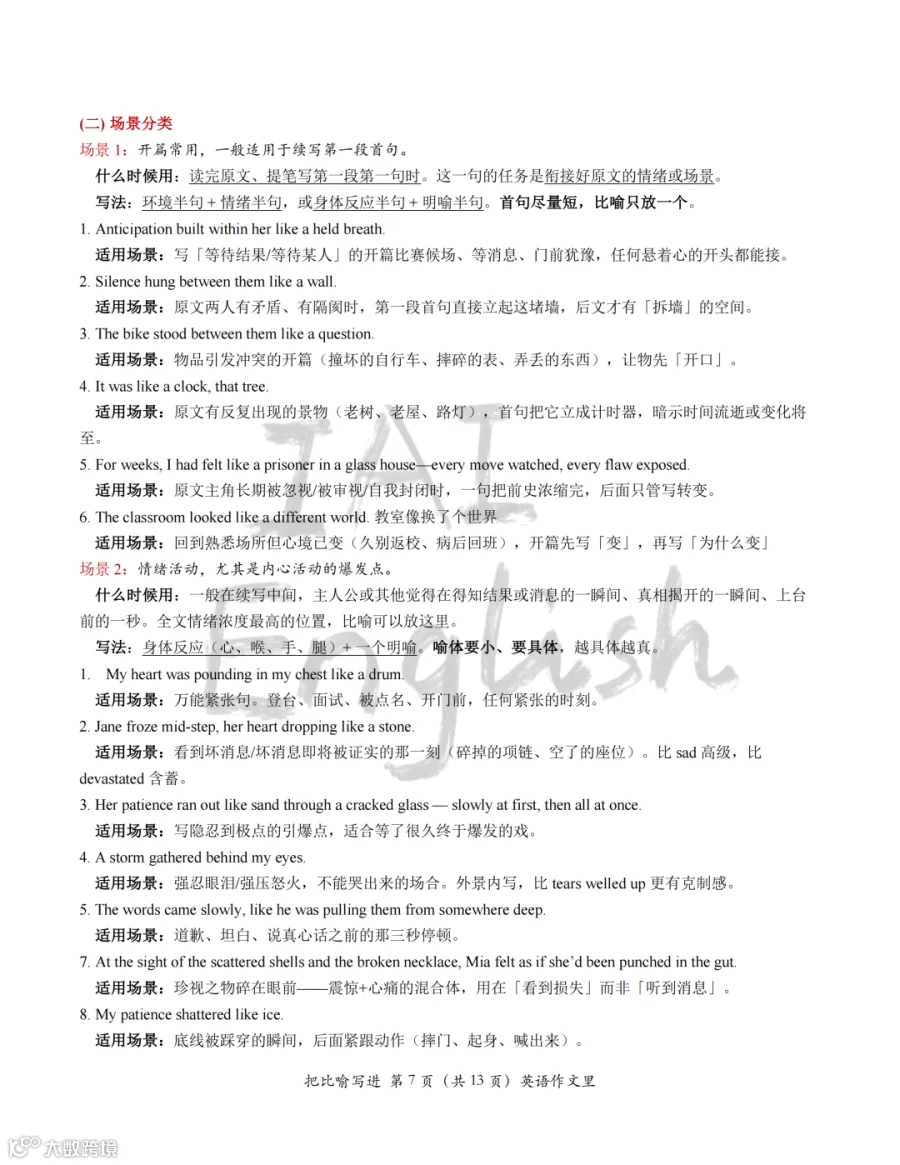
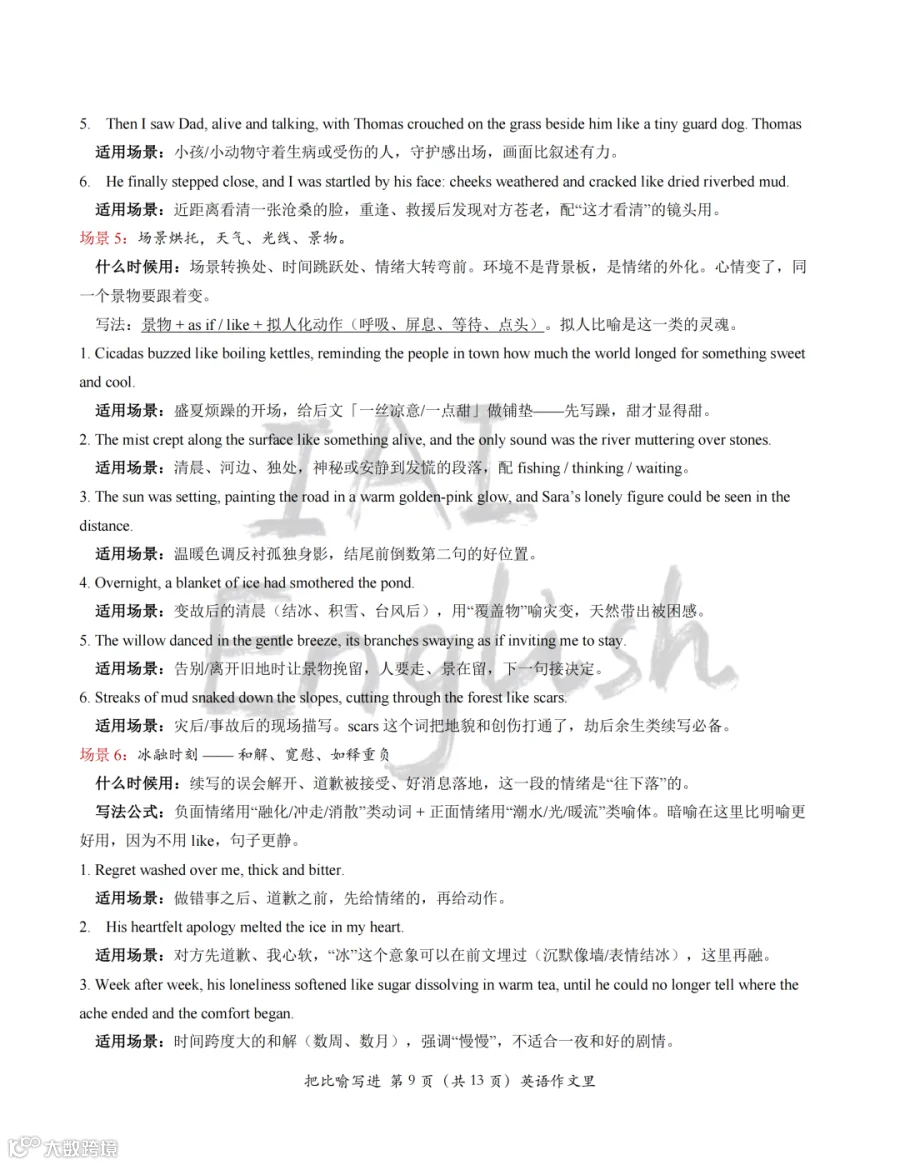
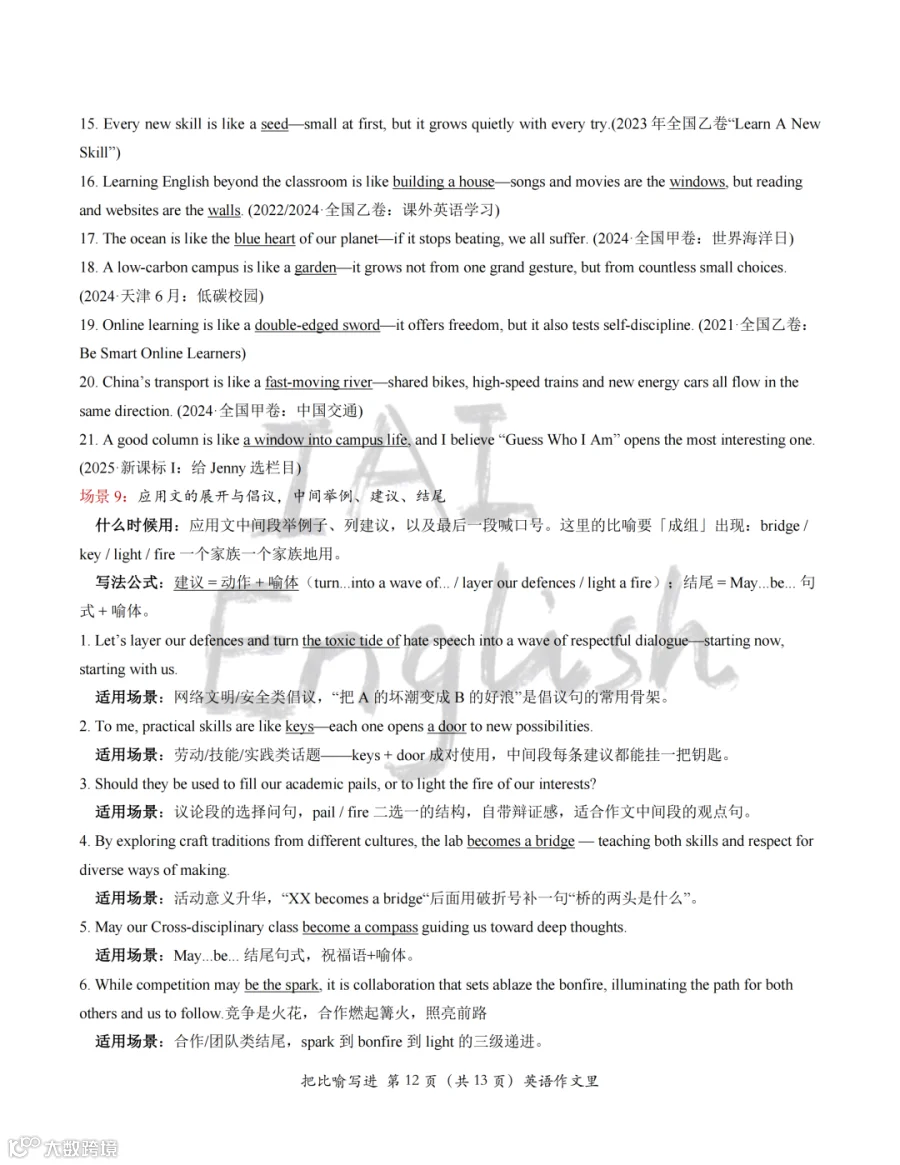
“意象写”是指借助具体事物将抽象情绪具象化,其中比喻句是主要实现手段。相较于直接陈述“I missed him so much”(概括写)或描述翻照片的动作(行为写),意象写更能传达情绪的质感。例如,用“Missing him came in waves, and tonight, I was drowning.”来描绘思念如潮水般涌来的窒息感。
在长期整理中,我们发现某些意象具有特定的情感指向功能:
- 情绪冲击:常用 wave(波浪)、tide(潮汐);
- 安全感:常用 blanket(毯子)、nest(巢穴);
- 关系变化:常用 wall(墙)、bridge(桥)、door(门)。
进阶技巧:以“意象”驱动情节设计
“意象”不仅用于点缀,更可作为续写情节设计的核心线索,实现首尾呼应与人物弧光的构建。以“knot”(结/心结)为例,可分别对应人物的紧张焦虑与释然解脱。
以2025年1月八省联考续写真题为例,展示如何围绕“knot”进行两段式情节搭建:
第一段:铺垫紧张情绪(心中打结)
I sat in the theater, my hands folded tightly in my lap. The biker next to me was huge, his leather jacket creaking every time he shifted. Every laugh from the crowd tightened the knot in my chest. They weren’t laughing at the film. They were laughing at me. At the stupid woman who walked into a theater full of bikers.
第二段:化解冲突(心结解开)
Then the credits rolled, and the biker turned to me. His eyes were wet. “First time?” he asked. I nodded. He smiled—a real smile, the kind that crinkled the corners of his eyes—and suddenly the knot in my chest came undone.
通过上述方式,意象不仅是修辞手法,更成为贯穿故事的情感锚点,使文章结构更加紧凑,情感升华更加自然。