中拓观点
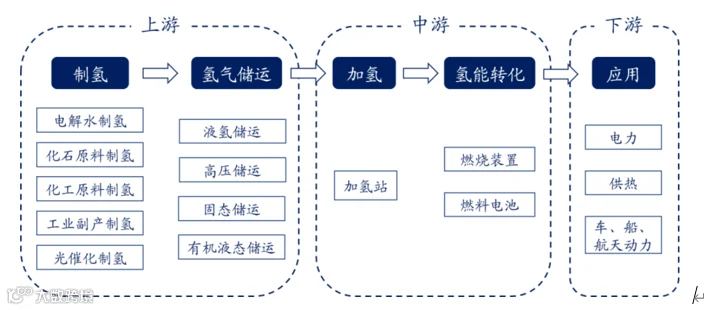

可持续发展是当今社会亟待解决的问题。面对气候变化和空气污染带来的挑战,寻找对环境影响最小的能源方案已成为当务之急。过去几年,一种新的解决方案成为人们关注的焦点,它就是极具潜力的未来可再生能源:氢能。
作为自然界最普遍存在的元素,氢的使用并不是新鲜事,炼油或化肥等诸多工业领域都有它的身影。氢不是一次能源,而是能源载体。我们必须先将其转化为分子形式的氢气(H2),才能加以运输,存储并最终转换为能源。氢能的使用主要有两种方式:一种是将氢气像常规燃料一样在涡轮机中燃烧产能;另一种是利用氢燃料电池产生电能和热能。今天,这种地球上广泛存在的元素,正以它的能源密集性和清洁性优势,快速崛起成为推动传统重工业绿色转型的关键角色。氢能的生产、分销以及应用都是未来创新的重中之重。
2020年7月8日,欧盟委员会制定了一项致力于欧洲能源可持续发展的氢能战略。具体地说,欧盟目标在2050年将氢能在能源结构中的占比提高到12-14%,投资总额达到1800亿-4700亿欧元。
将氢能纳入经济复苏计划,是法国跻身脱碳氢能技术最前沿的良机。法国对氢能在零排放交通,能源储存以及新能源补充方案领域的发展和应用寄予厚望。其对氢能的大量加速投资就是最好的证明。法国计划在2030年前投入70亿欧元,其中包括20亿欧元的工业脱碳复苏计划,以实现2050年前碳中和,在重载交通发展氢能,支持氢能研发和培训。该战略的关键是鼓励氢能的快速工业化生产,以显著降低其生产成本。
氢能产业在巴黎大区蓬勃发展
为促进能源转型,巴黎大区于2018年制定了远大的“能源与气候战略”,目标在2050年前生产37亿千瓦时的可再生能源,其中30%以热能形式传输。
巴黎大区还与法国氢能协会(France Hydrogen)签署协定,致力于该地区的能源和气候转型。为实现目标,巴黎大区为新兴氢能技术提供区域性的全面试验区,并希望在大区内广泛推广。巴黎大区有近600万辆汽车,拥有巨大的可再生能源发展潜力,聚集着众多氢能行业的领军者。在能源转型的关键时期,巴黎大区将成为氢能发展的重要舞台。迄今为止,巴黎大区已有超过150辆氢动力汽车(占法国氢动力汽车的一半),以及7座加氢站。
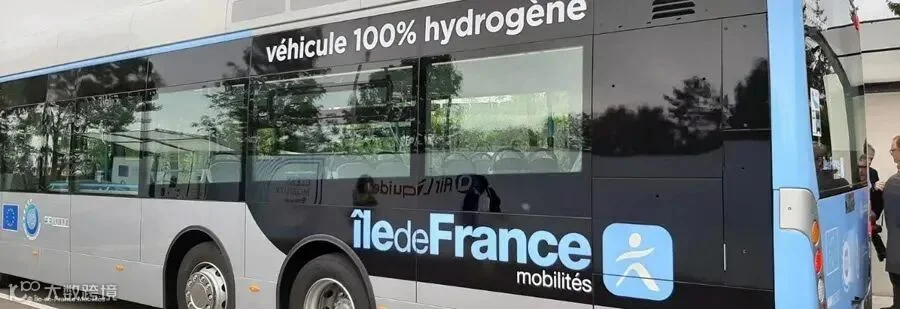
在交通领域,脱碳氢的发展实现了零排放和零噪音,同时氢能汽车具有与燃油汽车相同的便捷性和能量补给速度。因此,氢能汽车、电动汽车和天然气汽车,一起成为巴黎大区能源转型的重要方向。例如,巴黎大区的伊夫林省(Yvelines)已推出首条往返于茹瓦·昂·乔萨斯(Jouy-en-Josas)和凡尔赛(Versailles)之间的氢动力公交车线路。法国气体巨头液化空气集团(Air Liquide)负责其氢气的供给和加注服务。这些公交车将接受为期七年的测试,以评估其能耗,便捷性及运营和维护成本。
此外,巴黎大区专门成立了巴黎大区氢能俱乐部(Club Hydrogène Île-de-France),团结大区内氢能领域的参与者。
© 巴黎大区交通委员会
The Hydrogen Revolution Is Underway in Paris Region
Sustainable development is a crucial issue in our time. Faced with the challenges brought by climate change and air pollution, finding solutions to limit the impact on the environment has become a priority. And it is over the past few years that one solution has been put in the spotlight as tomorrow’s potential sustainable fuel: hydrogen.
Hydrogen is the most abundant atom in the Universe, and its use is not new, as it has been exploited for many industrial processes such as oil refining or fertilizers. Hydrogen is not a primary energy source, but an energy carrier. It must first be transformed into dihydrogen, its molecular form (H2), so that it can then be transported, stored, and finally used to generate energy. There are two main methods of doing this. The first is to burn it in turbines like a conventional fuel. The other method is the use of hydrogen in fuel cells, or hydrogen fuel cells, to produce electricity and heat. Today, this ubiquitous molecule on earth, which is highly energy-intensive and non-polluting, is emerging as the fuel capable of turning heavy industry green. It is therefore a subject of innovation whether for its production, distribution, or usage.
On Wednesday 8th July, the European Commission presented a strategy dedicated to hydrogen to pave the way towards a more sustainable Europe in the energy sector. More precisely, the EU wants to achieve 12-14% hydrogen in its energy mix by 2050, with funding estimated at €180-470bn. On a French scale, the economic recovery is an opportunity for the country to position itself at the forefront of breakthrough technologies by using decarbonated hydrogen. France places great hopes on hydrogen for developing and deploying emission-free mobility solutions and for storing energy and providing complementary responses to the use of renewable energies.
The massive acceleration of investments in hydrogen is proof of this. Indeed, France plans to commit 7 billion euros between now and 2030 including 2 billion euros from the recovery plan for the decarbonization of the industry. The objective is to contribute to the achievement of carbon neutrality by 2050, the development of heavy mobility using hydrogen, and the support for excellent research and the development of training offers. The challenge of this strategy is to encourage a rapid transition to industrial-scale to allow a significant reduction in production costs.
© Airbus
Paris Region, a region where hydrogen is booming
Paris Region has ambitious objectives for the energy transition, notably through its Energy-Climate Strategy adopted in 2018. To achieve this, Paris Region has set itself the target of producing 37 TWh of renewable energy – 30% of which is used for heat via the networks and 100% of the energy consumed by 2050.
Paris Region also signed a charter with France Hydrogen to commit to the energy and climate transition in the region. To achieve this, Paris Region is banking on innovation to offer an area for full-scale experimentation with new emerging technologies and wishes to encourage territories to welcome and promote this type of local initiative. With a fleet of nearly 6 million vehicles, significant potential for the development of renewable energies, and leading hydrogen players, the region is a key territory for the place of hydrogen in the energy transition. To date, there are more than 150 hydrogen vehicles and 7 stations in service.
To learn more on Paris Region’s strategy for Hydrogen, we interviewed Thomas Hemmerdinger, Project Manager of the Energy Transition and Circular Economy for Institute Paris Region. Among his missions, Thomas Hemmerdinger runs the Paris Region Hydrogen Club (Club Hydrogène Île-de-France).
Please could you tell us more about Club Hydrogène Île-de-France (Paris Region), and your role in the organization?
Faced with the rapid development of the hydrogen sector in France and Paris Region as well as the increased demands of the stakeholders, the regional institutions wanted to unify the initiatives and bring the players together around a common object: the Hydrogen Club. My role is to coordinate the Club's activities with partners and to animate the network of members from a wide range of backgrounds (e.g. companies in the industrial sector, mobility, energy, waste, start-ups, local authorities and institutions) in order to create a regional network and help people take ownership of this complex subject.
In your opinion, what are the major advances in the hydrogen sector in the region?
The main advancement would be the growing importance given to hydrogen solutions within the framework of the carbon neutrality objective by major industrial groups, institutions, and intensive transport players. Hydrogen is no longer seen as an anecdotal solution for clean mobility but as an essential element in meeting the challenges of energy transition and air quality. There is an increasing number of projects entering very diverse partnerships and seeking local production from renewable and recovery energies as well as distribution with multi-energy stations shared with captive fleet managers (logistics, passenger transport, etc.) to secure the sale of hydrogen.
According to you, what are the prospects for the development of hydrogen in Paris Region?
It is now a matter of implementing the projects in progress in order to make the status of hydrogen in Paris Region better known among local players and the general public. One of the challenges is also to develop a green hydrogen production chain, based on local renewable energy sources, at a competitive price and with a distribution system that ensures a coherent and secure network throughout the region with clearly identified users. Finally, the major players in the logistics sector seem to be prime targets to accompany them in the hydrogen mobility solutions in the low-emission zones that are currently being deployed in order to ensure the sustainability of clean logistics in the heart of the city.

© Hype
Mobility, a promising sector for hydrogen in Paris Region
Transport is the largest contributor (30%) to greenhouse gas (GHG) emissions, and road transport accounts for 95% of CO2 emissions from transport. In addition, road transport is the leading emitter of nitrogen oxides and emits 31% of fine particles PM10 and 34% of PM2.5. In Paris Region, the "clean vehicles" scheme has enabled the purchase of more than 150 hydrogen vehicles, which accounts for half of the hydrogen vehicles on the road in France.
In the mobility sector, the development of decarbonated hydrogen offers zero-emission mobility without noise pollution, while maintaining autonomy and recharging speed equivalent to those of thermal vehicles. Hydrogen mobility is thus a vector of the energy transition that the Region wishes to accelerate as a complement to electric mobility and NGV. For instance, the Yvelines department has launched the first hydrogen-powered buses between Jouy-en-Josas and Versailles. The gas giant, Air Liquide, is in charge of hydrogen supply and distribution. The buses are tested for a period of seven years to assess their consumption, autonomy, and operating and maintenance costs.
To learn more about the use of hydrogen vehicles in the region we interviewed Mathieu Gardies, founder and president of STEP (Société du Taxi Electrique Parisien).
Could you please tell us more about your company and your role in the organization?
I am the founder and president of STEP (Société du Taxi Electrique Parisien), whose objective is to rapidly deploy efficient solutions that enable essential urban fleets such as taxis to go to zero emissions. Our organization has launched the first fleet of hydrogen taxis in 2015 during COP21 Hype.
What is the current status of your projects? And what are your future development objectives (particularly regarding your last fundraising)?
The development of the project will now accelerate considerably thanks to the acquisition of the Slota group, which was completed at the end of 2020. This will enable us to exceed 700 Hype taxis in Paris by the end of 2021. We have launched the new Hype app, which enables customers to choose a zero-emission taxi for the same price, and we are aiming for 10,000 hydrogen taxis by the 2024 Olympics. At the same time, we are accelerating the deployment of the hydrogen network in Paris Region via the HysetCo structure created by STEP in 2017. And this year, we will begin our deployment in other cities in France and Europe.
What advantages does hydrogen offer over other zero-emission technologies? What is your strategy to encourage taxi drivers to prefer this type of vehicle?
In an intensive and random use such as the Parisian taxi, for drivers who often cannot recharge at night (thanks to collective housing), battery electric vehicles are not suitable. Even with high autonomies, the fact that it is possible to fill up a real tank of more than 500 km in a few minutes makes the hydrogen solution more efficient for this type of activity.
Since 2015, Parisian taxi drivers have seen this solution work with our salaried drivers. And by the end of 2021, the network of stations will be sufficiently developed to offer the solution to all independent drivers. We are also counting on our customers, who will show drivers that they support and accompany this necessary transition to zero-emission by favoring the Hype app.
END
来源 | 法国巴黎大区(ID:parisregion)
作者 | Paris Region
声明:本文已获转载授权,仅供读者学习、交流之目的。版权归原创所有。

长
按
关
注

联系邮箱:
INFO@fr-chinabase.com