


▪
According to the Oxford English Dictionary, "greedy" means having excessive desire for something without considering the effect or damage done.
What is a Greedy Algorithm?
In computer science, a greedy algorithm is an algorithm that finds a solution to problems in the shortest time possible. It picks the path that seems optimal at the moment without regard for the overall optimization of the solution that would be formed.
Edsger Dijkstra, a computer scientist and mathematician who wanted to calculate a minimum spanning tree, introduced the term "Greedy algorithm". Prim and Kruskal came up with optimization techniques for minimizing cost of graphs.
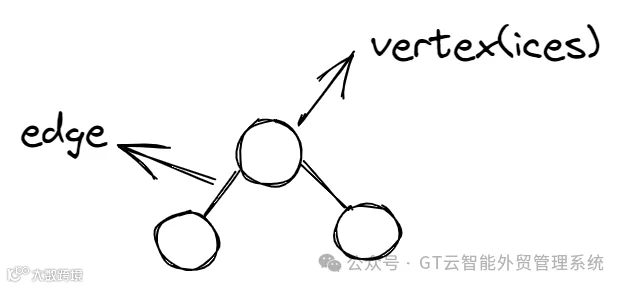
Many Greedy algorithms were developed to solve graph problems. A graph is a structure made up of edges and vertices.
Greedy vs Not Greedy Algorithms
An algorithm is greedy when the path picked is regarded as the best option based on a specific criterion without considering future consequences. But it typically evaluates feasibility before making a final decision. The correctness of the solution depends on the problem and criteria used.
Example:
A graph has various weights and you are to determine the maximum value in the tree. You'd start by searching each node and checking its weight to see if it is the largest value.
Approaches:
There are two approaches to solving this problem: greedy approach or not greedy.
This graph consists of different weights and we need to find the maximum value. We'll apply the two approaches on the graph to get the solution.

Greedy Approach
In the images below, a graph has different numbers in its vertices and the algorithm is meant to select the vertex with the largest number.
Starting from vertex 6, then it's faced with two decisions – which is bigger, 3 or 4? The algorithm picks 4, and then is faced with another decision – which is bigger, 14 or 11. It selects 14, and the algorithm ends.
On the other hand there is a vertex labeled 20 but it is attached to vertex 3 which greedy does not consider as the best choice. It is important to select appropriate criteria for making each immediate decision.

Not Greedy Approach
The “not greedy” approach checks all options before arriving at a final solution, unlike the "greedy approach" which stops once it gets its results.
Starting from vertex 6, then it's faced with two decisions – which is bigger, 3 or 4? The algorithm picks 4, and then is faced with another decision – which is bigger, 14 or 11. It selects 14 and keeps it aside.
Then it runs the process again, starting from vertex 6. It selects the vertex with 3 and checks it. 20 is attached to the vertex 3 and the process stops. Now it compares the two results – 20 and 14. 20 is bigger, so it selects the vertex (3) that carries the largest number and the process ends.
This approach considers many possibilities in finding the better solution.



Characteristics of a Greedy Algorithm
1
The algorithm solves its problem by finding an optimal solution. This solution can be a maximum or minimum value. It makes choices based on the best option available.
2
The algorithm is fast and efficient with time complexity of O(n log n) or O(n). Therefore applied in solving large-scale problems.
3
The search for optimal solution is done without repetition – the algorithm runs once.
Click the blue word to follow us

NEWS
”
Long press scan code to consult more data management issues ~