


▪
In global economic history, the Bretton Woods system is an important topic widely discussed and studied.
It not only shaped the international financial order after World War II, but also had a profound impact on the current world economic landscape.
In this article, we will delve into the origins of the Bretton Woods system and its impact on the global economy.
What Was the Bretton Woods Agreement and System?
The Bretton Woods Agreement was negotiated in July 1944 by delegates from 44 countries at the United Nations Monetary and Financial Conference held in Bretton Woods, New Hampshire. Thus, the name “Bretton Woods Agreement.
Under the Bretton Woods System, gold was the basis for the U.S. dollar and other currencies were pegged to the U.S. dollar’s value. The Bretton Woods System effectively came to an end in the early 1970s when President Richard M. Nixon announced that the U.S. would no longer exchange gold for U.S. currency.
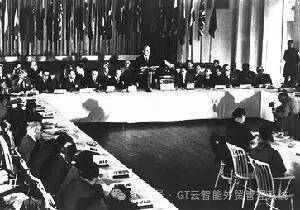
The Bretton Woods Agreement and System Explained
IMF and World Bank
Approximately 730 delegates representing 44 countries met in Bretton Woods in July 1944 with the principal goals of creating an efficient foreign exchange system, preventing competitive devaluations of currencies, and promoting international economic growth.
The Bretton Woods Agreement and System were central to these goals. The Bretton Woods Agreement also created two important organizations—the International Monetary Fund (IMF) and the World Bank. While the Bretton Woods System was dissolved in the 1970s, both the IMF and World Bank have remained strong pillars for the exchange of international currencies.
Became Functional
It wasn't until 1958 that the Bretton Woods System became fully functional. Once implemented, its provisions called for the U.S. dollar to be pegged to the value of gold. Moreover, all other currencies in the system were then pegged to the U.S. dollar’s value. The exchange rate applied at the time set the price of gold at $35 an ounce.
KEY TAKEWASY
1
The Bretton Woods Agreement and System created a collective international currency exchange regime that lasted from the mid-1940s to the early 1970s.
2
The Bretton Woods System required a currency peg to the U.S. dollar which was in turn pegged to the price of gold.
3
The Bretton Woods System collapsed in the 1970s but created a lasting influence on international currency exchange and trade through its development of the IMF and World Bank.
Benefits of Bretton Woods Currency Pegging
The Bretton Woods System included 44 countries. These countries were brought together to help regulate and promote international trade across borders. As with the benefits of all currency pegging regimes, currency pegs are expected to provide currency stabilization for trade of goods and services as well as financing.
minimized international currency exchange
All of the countries in the Bretton Woods System agreed to a fixed peg against the U.S. dollar with diversions of only 1% allowed. Countries were required to monitor and maintain their currency pegs which they achieved primarily by using their currency to buy or sell U.S. dollars as needed.
The Bretton Woods System, therefore, minimized international currency exchange rate volatility which helped international trade relations. More stability in foreign currency exchange was also a factor for the successful support of loans and grants internationally from the World Bank.
The Bretton Woods System’s Collapse
In 1971, concerned that the U.S. gold supply was no longer adequate to cover the number of dollars in circulation, President Richard M. Nixon devalued the U.S. dollar relative to gold. After a run on gold reserve, he declared a temporary suspension of the dollar’s convertibility into gold.
By 1973 the Bretton Woods System had collapsed. Countries were then free to choose any exchange arrangement for their currency, except pegging its value to the price of gold. They could,
for example, link its value to another country's currency, or a basket of currencies, or simply let it float freely and allow market forces to determine its value relative to other countries' currencies.


Although the Bretton Woods system has become history, its influence has been long-lasting and far-reaching.
We should draw lessons from history, continuously improve and adjust the international financial system, promote global economic stability and sustainable development, and create a better future together.
Click the blue word to follow us

NEWS
”
Long press scan code to consult more data management issues ~