


▪
Believe it or not, we can’t always trust what we see or hear. Our memory is influenced by our expectations.
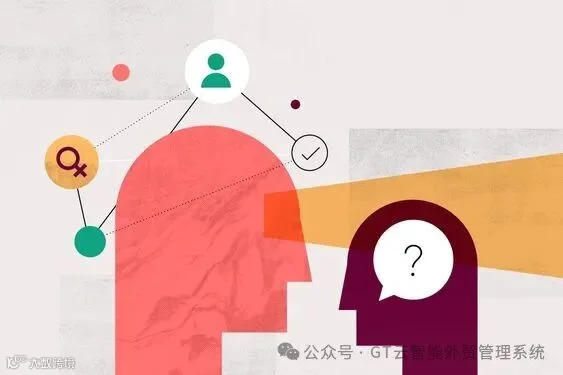
Confirmation bias is a widely recognized phenomenon and refers to our tendency to seek out evidence in line with our current beliefs and stick to ideas even when the data contradicts them.
Evolutionary and cognitive psychologists agree that we naturally tend to be selective and look for information we already know.
This article explores this tendency, how it happens, why it matters, and what we can do to get better at recognizing it and reducing its impact.

Understanding Confirmation Bias
We can understand the confirmation bias definition as the human tendency “to seek out, to interpret, to favor, and to selectively recall information that confirms beliefs they already hold, while avoiding or ignoring information that disconfirms these beliefs”.

History
While it has been known and accepted since at least the 17th century that humans are inclined to form and hold on to ideas and beliefs — often tenaciously — even when faced with contradictory evidence, the term “confirmation bias” only became popular in the 1960s with the work of cognitive psychologist Peter Cathcart Wason.
Wason’s (1960) famous 2–4–6 experiment was devised to investigate the nature of hypothesis testing.
In the decades since, and with developments in cognitive science, we have come to understand that people don’t typically have everything they need, “and even if they did, they would not be able to use all the information due to constraints in the environment, attention, or memory” .

Confirmation bias in context
Confirmation bias is one of several cognitive biases’.
They are important because researchers have recognized that “vulnerability to clinical anxiety and depression depends in part on various cognitive biases” and that mental health treatments such as CBT should support the goals of reducing them.
Cognitive biases include :
Attentional bias
Attending to threat-related stimuli more than neutral stimuli
Interpretive bias
Interpreting ambiguous stimuli, situations, and events as threatening
Explicit memory bias
The likelihood of retrieving mostly unpleasant thoughts rather than positive ones
Implicit memory bias
The tendency to perform better for negative or threatening information on memory tests.
10 Steps to Recognizing and Reducing Confirmation Bias
The following steps and approaches can help identify and reduce the effect of confirmation bias.
▪Recognize that confirmation bias exists and understand its impact on decision-making and how you interpret information.
▪Actively seek out and consider different viewpoints, opinions, and sources of information that challenge your existing beliefs and hypotheses.
▪Develop critical thinking skills that evaluate evidence and arguments objectively without favoring preconceived notions or desired outcomes.
▪Be aware of your biases and open to questioning your beliefs and assumptions.
▪Explore alternative explanations or hypotheses that may contradict your initial beliefs or interpretations.
▪Welcome feedback and criticism from others, even if they challenge your ideas; recognize it as an opportunity to learn and grow.
▪Apply systematic and rigorous methods to gather and analyze data, ensuring your conclusions are evidence-based rather than a result of personal biases.
▪Engage in collaborative discussions and debates with individuals with different perspectives to help see other viewpoints and challenge your biases.
▪Continuously seek new information and update your knowledge base to avoid becoming entrenched and support more-informed decision-making.
▪Practice analytical thinking, questioning assumptions, evaluating evidence objectively, and considering alternate explanations.
10 Reasons We Fall for It
Confirmation bias can significantly impact our own and others’ lives.
For that reason, it is helpful to understand why it happens and the psychological factors involved.

Research confirms that people:
▪Don’t like to let go of their initial hypothesis
▪Prefer to use as much information as is initially available, often resulting in a too specific hypothesis
▪Show confirmation bias more on their hypothesis than others
▪Are more likely to adopt a confirmation bias when under high cognitive load
▪With a lower degree of intelligence are more likely to engage in confirmation bias (most likely due to being less able to manage higher cognitive loads and see the overall picture)
▪With cognitive impairments are more impacted by confirmation bias
▪Are often unable to actively consider and understand all relevant information to challenge the existing hypothesis or make a new one
▪Are influenced by their emotions and motivations and potentially “blinded” to the facts
▪Are biased by existing thoughts and beliefs (sometimes cultural), even if incorrect
▪Are influenced by the beliefs and arguments of those around them
Conclusion
However, most of us can reduce confirmation bias with practice and training. We can become more aware of such inclinations and seek out challenges or alternate explanations for our beliefs.
It matters because confirmation bias can influence how we work, the research we base decisions on, and how our clients manage their relationships with others and their environments.
We hope you enjoyed reading this article.




Click the blue word to follow us

NEWS
”
Long press scan code to consult more data management issues ~