
大数跨境

与艺术家见面:刘旭光谈他的展览——与亚瑟·C·丹托的对话

与艺术家见面:刘旭光谈他的展览——与亚瑟·C·丹托的对话 漫艺术
2023-05-25
1
导读:刘旭光指出,丹托的“艺术的终结”实际上意味着自瓦萨里以来一再被美化为进步史的艺术史的终结。

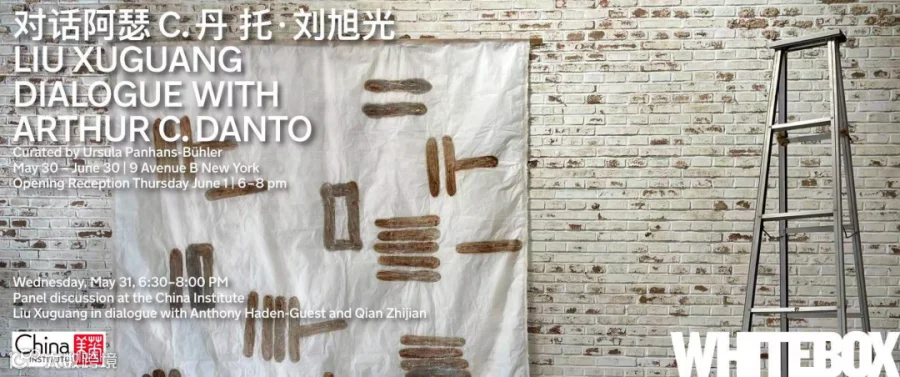
对话阿瑟 C ·丹托·刘旭光


策展人:乌苏拉·潘汉斯-布勒
展览地点:白盒艺术中心 |B大道9号 |纽约, NY 10009
展览时间:2023-5-30——2023-6-30
Dialogue with Arthur C. Danto Liu Xuguang
Curator: Ursula Panhans-Bühler
Exhibition location: WhiteBox Art Center | 9 Avenue B | New York, NY 10009


序


在上个千年之交,美国哲学家阿瑟·C·丹托的《平凡的转变》一书于1981年出版,其本质早已臭名昭著,在中国艺术家和批评家中也引发了激烈的争论。“纽约丹托”成为后现代艺术质疑的缩影。具有讽刺意味的是,正是在这个时候,马塞尔·杜尚的艺术在中国受到了公正、热情和幽默的欢迎,没有任何偶像崇拜的倾向。
刘旭光在北京清华大学以“论质觉”完成了他的博士学位,随后他在日本的艺术考察中阐述了这个概 念。他的研究是基于中国最古老的汉字传统中的一个字,即中国骨文中的“卜”字。在这个字的基础 上,他创作了一些作品,经常使用大张的宣纸,在上面画出密密麻麻的“卜”字,用油性的工作墨和自己制作的铁粉绘制。这些作品在西方观众看来可能是抽象的,但它们根本不是。所有的“卜”标记的生动振动都遵循一个方向,但没有一个是绝对相同的,或服从于一个网格。因此,它们成为一种多声部的文明基础行为的缩影,将直接的语言交流转化为对象化符号的永久性,一种新的、社会形式的记忆。因此,他对“质觉”的寻找并不是对起源的倒退式的渴望,而是将当代文化与它的基础联系起来,仍然在中国流传着。
这些作品是刘旭光在新冠大流行的三年里创作的,标志着他的艺术向一个新的层面过渡。阅读文学、诗歌或哲学文本,人们进入了与作者的内心对话。丹托宣布后现代“通俗艺术”通过“转变”为哲学而结束,这引发了刘旭光将这种内心对话赋予艺术形式的愿望。最终,这变成了一个广泛的绘画系 列。他不仅与西方和东方的理论和诗学哲学家进行了对话,而且还与两位重要的精神分析学家进行了对话:西格蒙德·弗洛伊德,精神分析的创始人,和雅克·拉康。两人都通过理性化的哲学理论使我们更加关注被压抑的东西:即无意识,在所有的诗歌艺术直觉中都有贡献,在刘旭光的对话中 也是如此。
正如他自己解释的那样,他的绘画对话来自于对话伙伴的文本在他身上引发的感受。然而,他基于他们的配置,追溯到中国早期文化的八卦,表示代数,宇宙学,以及世界自然的对立力量。每幅画都显示了不同的数字配置,现在它们就像音乐主题的乐谱。我们用我们的眼睛来感受它们,从而参与到各自对话的敏感层面。
刘旭光正确地指出,丹托的“艺术的终结”实际上意味着自瓦萨里以来一再被美化为进步史的艺术史的终结。在这方面,我建议参考刘旭光的一个对话伙伴,公元前4世纪的墨子,即“帝国争霸的时代”。墨子是这样描述现在与过去的关系的:我们所认为的“过去”在其时代是创新的。我们应将此作为一种鼓励,在我们的时代拥有创新。2000年,意大利艺术家默里奇奥·纳努奇在柏林“老博物馆”的阁楼上安装了一个霓虹灯管铭文,“所有艺术都是当代的”,与这种态度相呼应。
让我们对刘旭光关于感情在任何艺术话语中的作用的评论做最后的补充,这种作用也适用于对感情的合理化抑制:在《易经》中,第36卦被称为“明夷”,即“隐明”。刘旭光的每一个对话配置如何处理宣纸的五彩光芒的空间,难道不应该与这个“明夷”有关?

At the turn of the last millennium, American philosopher Arthur C. Danto’s book “The Transfiguration of the Ordinary”, published in 1981 and long since notorious in its essence, triggered fierce debates among Chinese artists and critics. “New York Danto” became the epitome of postmodern questioning of art. Ironically, it was precisely the time when Marcel Duchamp’s art was welcomed in China with impartiality, enthusiasm and humor, free of any tendency towards iconoclasm.
Liu Xuguang completed his PhD at Beijing’s Tsinghua University with a “Theory of Essence Consciousness”, subsequently he elaborated this concept during art study visits to Japan. His research was based on a single character from the oldest Chinese character tradition, marks of “bu” found on Chinese bone writing. On the basis of this character he created works, often using large sheets of Rice paper, on which he drew a dense web of “bu” marks, drawn with oily earthy work ink and iron dust made himself. These works may seem abstract to Western viewers, but they are not at all. The lively vibration of all the “bu” marks follows a single direction, but none of it is absolutely the same as the other or submits to a grid. Thus they become the epitome of a many-voiced foundational act of civilization that translates direct verbal exchange into the permanence of objectifying signs, a new, social form of memory. His search for the “Essence of Consciousness” is therefore not a regressive longing for the origins, but a link of contemporary culture with its foundations, still handed down in China.
The works, which Liu Xuguang created during the three years of the worldwide Corona pandemic, mark a transition to a new dimension within his art. Reading literary, poetic or philosophical texts, one enters into an inner dialogue with the authors. Danto’s proclamation of the end of postmodern “commonplace art” through its “transfiguration” into philosophy triggered in Liu Xuguang the desire to give this inner dialogue an artistic form. Eventually this came out as an extensive series of drawings. He had dialogues not only with Western and Eastern theoretical and poetic philosophers, but also with two important psychoanalysts: Sigmund Freud, the founder of Psychoanalysis, and Jacques Lacan. Both have sharpened our attention to the repressed by rationalizing philosophical theorizing: namely, the unconscious, contributory in all poetic artistic intuition, and so also in Liu Xuguang’s dialogues.
As he himself explains, his drawing dialogues resulted from the feelings that the texts of the dialogue partners had triggered in him. However, he based their configurations on elements that go back to the 8 trigrams of early Chinese culture, which denote algebraic, cosmological, as well as opposing forces of world’s Nature. Each drawing shows a different numerical configuration, which now act like scores of a musical theme. We feel them with our eyes and thus participate in the sensitive dimension of the respective dialogue.
Liu Xuguang has rightly noted that Danto’s “end of art” actually meant the end of a history of art that since Vasari repeatedly was glorified as a history of progress. In this respect, I recommend a reference to one of Liu Xuguang’s dialogue partners, Mo Zi from the 4th century BCE, the “time of the contending empires”. Mo Zi described the relationship of the present to the past in this way: What we consider as “past” was innovative in its time. We should take this as an encouragement to own innovations in our time. A Neon tube inscription, mounted in 2000 by Italian artist Maurizio Nannucci on the attic of the Berlin “Altes Museum”, “All Art has been contemporary”, corresponds to such an attitude.
Let’s add a final comment on Liu Xuguang’s remark about the role of feelings in any artistic discourse, a role that also applies to their rationalizing suppression: In the Yi Jing, the “Book of Changes”, the 36th hexagram is designated “mingyi”, “hidden brightness”. Shouldn’t the way, how each of Liu Xuguang’s dialogue configurations deal with the space of the rice paper’s iridescent light, be related as well to this “mingyi” ?


刘旭光,艺术家,1958年生于北京,清华大学美术学博士 北京电影学院教授。
刘旭光对世界美术发展的脉络和新媒体艺术有深入的研究。早年留日并接触物派艺术,研究东方思想提出质觉美术理论概念,在当代艺术体系中探索形质与介质的语言在视觉中的可能性;从视觉的物理性媒介到数字媒介表达方式进行了深 入持久的探索。并以质觉理论为基础指导创作;1991年至1996年完成「天地」「大洐」「动静」系列绘画作品,1997年 创作「天眼」绘画装置作品,1998年至2001年创作「悬空界」绘画装置作品;2004年至2015年创作「痕迹」「衍场」 系列绘画作品。以数字媒材做介质2004年创作影像作品「墨滴」,2010年创作「我」数字交互影像作品,2011创作影像 作品「墨核」,2013年创作介质电影「没片」等。
刘旭光的艺术创作在形质和介质概念中创作了中创造出自己独特的视觉语言表达方式。在质觉理念指导下是这一领 域艺术创作的先行者作品极丰是富有影响力的艺术家。在国内外参加重要的主题性双年展,并在中国、日本、美国、芬兰、科摩罗等国家举办以质觉概念为主题的个展。
作品收藏:中国美术馆、湖北美术馆、美国维斯曼博物馆等。
著作:《论质觉》山东美术出版社;《质觉个案研究》河南大学岀版社;《新媒体艺术概论》河北美术出版社等。

Liu Xuguang,artist,Born in Beijing in 1958,Ph.D. in Fine Arts, Tsinghua University, Professor at Beijing Film Academy.
Liu Xuguang has in-depth research on the context of the development of world art and new media art. In his early years, he stayed in Japan and came into contact with materialist art, studied Oriental thought, put forward the theoretical concept of texture art, and explored the possibility of form and medium language in vision in the contemporary art system; From the physical medium of vision to the expression of digital media, there is a deep and lasting exploration. and guide the creation based on the theory of texture; From 1991 to 1996, he completed the series of paintings "Heaven and Earth", "Dahu" and "Movement", in 1997 he created the "Eye of Heaven" painting installation, and from 1998 to 2001, he created the "Hanging World" painting installation; From 2004 to 2015, he created the "Traces" and "Yanchang" series of paintings. Using digital media as a medium, he created the video work "Ink Drop" in 2004, the digital interactive video work "Me" in 2010, the video work "Ink Core" in 2011, and the medium film "No Film" in 2013.
Liu Xuguang's artistic creation creates his own unique visual language expression in the concept of form and medium. Under the guidance of the concept of quality, he is a pioneer in artistic creation in this field, with extremely rich works, and is an influential artist. He has participated in important thematic biennales at home and abroad, and held solo exhibitions on the theme of texture concepts in China, Japan, the United States, Finland, Comoros and other countries.
Collection: National Art Museum of China, Hubei Art Museum, Weisman Museum, etc.
Books: "On Quality" Shandong Fine Arts Publishing House; "Quality Case Study", Henan University; "Introduction to New Media Art", Hebei Art Press, etc.


对话福柯 200×400cm 绘画、宣纸、墨、骨胶、蛋清、矿物质颜料、铁锈 2023
Dialogue with Foucault 200×400cm Painting,Rice paper, ink, bone glue, egg white, mineral pigments, rust 2023


对话阿瑟 C .丹托 300×260cm绘画、宣纸、墨、骨胶、蛋清、矿物质颜料、铁锈 2023
Dialogue with Arthur C. Danto 300×260cm Painting,Rice paper, ink, bone glue, egg white, mineral pigments, rust 2023


天地 380×240cm 绘画、宣纸、墨、骨胶、丙烯、蛋清、矿物质颜料、铁锈 2023
World 380×240cm Painting,Rice paper, ink, bone glue, propylene, egg white, mineral pigments, rust 2023


乌苏拉·潘汉斯-布勒教授
1944年生,毕业于弗莱堡大学与维也纳大学,艺术史专业方向,博士。
曾任汉堡大学、卡塞尔大学、特里尔大学和柏林艺术学院艺术史助理兼客座教授。
1994-2009年任卡塞尔艺术学院艺术史教授。
自1999年起在中国任教并于2011年起任北京航空航天大学新媒体艺术与设计学院客座教授。
自1984年以来,在德国、瑞士及中国艺术杂志上发表多篇关于当代艺术批评与评论的专业文章,并多次策划现当代艺术展览及研讨会,在德国艺术评论界享有极高的声誉。
目前作为自由艺术评论家生活和工作于德国汉堡与中国北京。

Ursula Panhans-Bühler
Jahrgang 1944, Studium in Freiburg und Wien, Assistentin und Zeitprofessorin für
Kunstgeschichte an den Unis Hamburg, Kassel, Trier und an der HdK Berlin
1994-2009 Professorin für Kunstgeschichte an der Kunsthochschule Kassel
Seit 1999 Lehrtätigkeiten an chinesischen Hochschulen, Sichuan Fine Arts Institute Chongqing, CAA Hangzhou, sowie seit 2011 Gastprofessorin am Department of New Media Art & Animation der Beihang University Beijing.
Seit 1984 Essays zur zeitgenössischen Kunst in deutschen, schweizer und chinesischen Kunstzeitschriften, sowie Katalogbeiträge für Künstlerinnen und Künstler im In- und Ausland. Kursorische kuratorische Tätigkeiten, sowie Organisationen von workshops zur zeitgenössischen Kunst im In- und Ausland.
Lebt und arbeitet als Freie Kunstkritikerin in Hamburg, sowie in China.


IN PERSON

Meet the Artist: Xuguang Liu on His Exhibition–Dialogue with Arthur C. Danto

May 31, 2023
6:30 - 8:00 PM EDT

At the turn of the last millennium, American philosopher Arthur C. Danto’s book “The Transfiguration of the Ordinary”, published in 1981 triggered fierce debates among Chinese artists and critics. “New York Danto” became the epitome of postmodern questioning of art. Ironically, it was precisely the time when Marcel Duchamp’s art was welcomed in China with impartiality, enthusiasm and humor, free of any tendency towards iconoclasm.
Xuguang Liu completed his PhD at Beijing’s Tsinghua University with a “Theory of Essence Consciousness”, subsequently he elaborated this concept during art study visits to Japan. His research was based on a single character from the oldest Chinese character tradition, marks of “bu” (卜) found on Chinese bone writing. On the basis of this character he created works, often using large sheets of rice paper, on which he drew a dense web of “bu” (卜) marks, drawn with oily earthy work ink and iron dust made himself. The lively vibration of all the “bu” (卜) marks follows a single direction, but none of them is absolutely the same as the other. Thus they become the epitome of a many-voiced foundational act of civilization that translates direct verbal exchange into the permanence of objectifying signs, a new, social form of memory. His search for the “Essence of Consciousness” is therefore not a regressive longing for the origins, but a link of contemporary culture with its foundations, still handed down in China.
By Ursula Panhans-Bühler,
Curator of Liu Xuguang: Dialogue with Arthur C. Danto
Join China Institute in a thought-provoking discussion between artist Xuguang Liu, art critic Anthony Haden-Guest, and art historian and curator Zhijian Qian on Liu’s upcoming exhibition Dialogue with Arthur C. Danto at the WhiteBox Art Center.


This event is in collaboration with the WhiteBox Art Center.

This program is made possible through the support of the Chinese International Education Foundation, and generous supporters of China Institute.
This program is supported, in part, by public funds from the New York City Department of Cultural Affairs in partnership with the City Council.

Speakers


Xuguang Liu

Xuguang Liu is an influential artist who specializes in the context of the development of world art and new media art. He started his artist's career in the mid-1980s, studied at Universities of the Arts in China and in Japan. With a Ph.D. in Fine Arts from Tsinghua University, Liu is currently the director of the New Media Art Lab at Beijing Film Academy. His artistic creation creates his own unique visual language expression in the concept of form and medium. Under the guidance of the concept of Essence Consciousness, he is a pioneer in artistic creation in this field, with extremely rich works.

In his early years, he stayed in Japan and put forward the theoretical concept of Essence Consciousness, and explored the possibility of form and medium language in vision in the contemporary art system; from the physical medium of vision to the expression of digital media, there is a deep and lasting exploration. Liu has participated in important thematic biennales at home and abroad, and held solo exhibitions on the theme of Essence Consciousness concepts in China, Japan, the United States, Finland, Comoros and other countries.
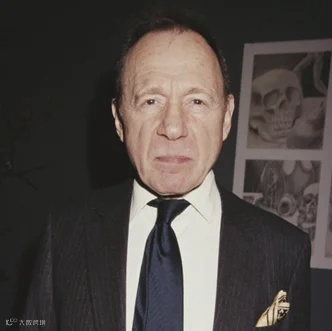
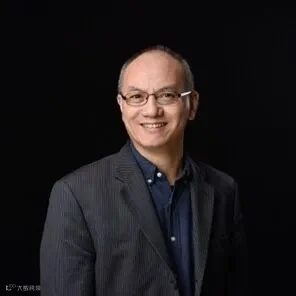


Anthony Haden-Guest
Anthony Haden-Guest is a British writer, reporter, cartoonist, art critic, poet, and socialite who lives in New York City and London. He is a frequent contributor to major magazines and has had several books published including TRUE COLORS: The Real Life of the Art World and The Last Party, Studio 54, Disco and the Culture of the Night. Haden-Guest was educated at Gordonstoun and Cambridge University. After graduation he became a journalist, and by 1964 was drawing the pocket cartoon "This Way Out" for the Sunday Telegraph. In 1979 he won an Emmy Award for writing and narrating the documentary The Affluent Immigrants for PBS television about affluent Europeans in New York. Now he is largely, but not exclusively, focused on the art world. Haden-Guest has shown his work in galleries, including Deitch Projects (New York) and Whitebox Art Center (New York) and Anderson Contemporary, and he contributes regularly to The Daily Beast, Artnet, The New Yorker, Observer, the Spear’s magazine, Avenue and Charles Saatchi’s online magazine.


Zhijian Qian

Zhijian Qian is an art historian, curator, and associate professor at City Tech of CUNY and SVA. He received his doctoral degree in art history from the Institute of Fine Arts of New York University. His research interests include sinicized modernism in twentieth-century Chinese art, issues related to nationalism and globalism in contemporary Chinese art, and the changing role of politics in art and culture of modern and contemporary China. His research and curatorial work extends to issues of cultural identity, ethnicity and transnationalism in the practice of artists in the Chinese diaspora. He is the author of Here + Now: Chinese Artists in New York City.


1安东尼、2贾羽明(艺术家北电教师)3刘旭光、4钱志坚教授,为在纽约中国研究院举办刘旭光演讲和对话嘉宾预备会,19号晚11-次日1点(网上会议)
刘旭光、賈羽明(艺术家、北京电影学院教师)、Thomas Ross(教授、艺术家)
刘茜懿(艺术家、日本城西大学教师)、钱志坚(教授、美术史学家、策展人)、Shenzhan Liao(中国研究院副院长)
Jianqing Zhang(公共社会部负责人)、Juan Puntes(白盒子画廊老板)、陈艺轩(艺术家、青岛电影学院教师)
此次会议是5月19号(晚9-10:30)由中国研究院副院长主持,刘旭光演讲事前预备会


研究院海报
China Institute Mission & History
Founded in 1926 by American educators John Dewey, Paul Monroe, and Chinese diplomats Hu Shi (胡適) and Kuo Ping-Wen (郭秉文), China Institute is the oldest bicultural, non-profit organization in America to focus exclusively on China. 
From ancient art to today’s business landscape and its rapidly shifting culture, our programs, school, and gallery exhibitions bring to life the depth, complexity, and dynamism of China.
Chartered by the Board of Regents of the University of the State of New York in 1944 as a school of continuing education, our language and cultural school is the oldest educational center of its kind in the United States.
中国研究院使命与历史
1926年由美国教育家约翰·杜威、保罗·门罗和中国外交官胡适创立(胡適) 和郭炳文(郭秉文), 中国研究所是美国历史最悠久的专门关注中国的双文化非营利组织。
从古代艺术到今天的商业格局及其快速变化的文化,我们的项目、学校和画廊展览将中国的深度、复杂性和活力带到了生活中。
1944年,我们的语言和文化学校被纽约州立大学董事会特许为继续教育学校,是美国同类学校中最古老的教育中心。


* 图文版权 ©艺术家

▼


【声明】内容源于网络
0
0
漫艺术
1234
内容 0
粉丝 0
漫艺术 1234
总阅读0
粉丝0
内容0