


The rapid evolution of AI computing has positioned NVIDIA at the forefront of GPU innovation, but this dominance faces multifaceted challenges across technological, infrastructural, and market dimensions. Below is a structured analysis of key hurdles:
AI计算的快速演进将英伟达推至GPU创新前沿,但其主导地位正面临技术、基础设施与市场的多维挑战
以下是关键障碍的结构化分析:

1. Hardware Innovation Pressures
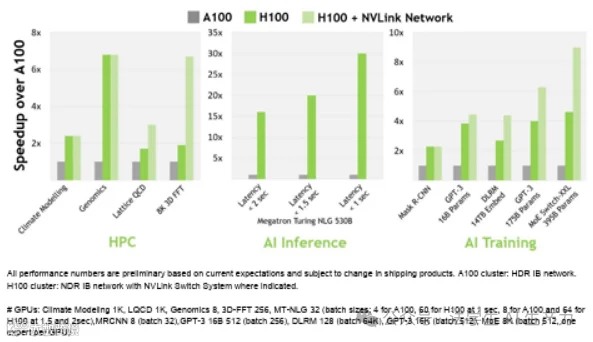
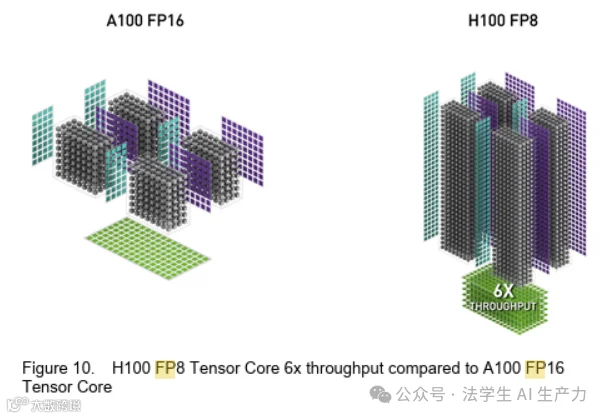
GPU Architecture: While Hopper’s Transformer Engine and FP8 precision deliver 6× performance gains over previous architectures ), the shift to Blackwell GPUs in 2025 intensifies power demands, with rack densities increasing "dramatically" (up to 50 kW/rack) in AI-optimized data centers.
Interconnect Limitations:
NVLink: Despite 4th-gen NVLink’s 900 GB/s bandwidth带宽, scaling to 256-GPU clusters requires hypercube topologies超立方拓扑 to maintain 91.7% linear scaling线性扩展 efficiency.
Thermal Constraints: High-density GPU deployments (e.g., 8x H100 SXM5 modules) generate 10.2 kW of heat, pushing liquid-cooling adoption to 40% of new data centers by 2025.


2. Software Ecosystem Complexity
Optimization Demands:
CUDA-X libraries reduce ResNet-50 training times to 15 minutes for 256-GPU clusters, but require 40% more memory optimization for large language models (LLMs).
Triton Inference Server’s dynamic batching动态批处理 improves LLM throughput吞吐量 but introduces 15-25% latency variability延迟波动 in real-time applications.
Fragmentation Risks:
NVIDIA’s "AI Factory" concept demands tight integration of DGX systems, NVSwitch fabrics架构, and CUDA software, creating vendor lock-in concerns as competitors like AMD and Intel expand open-source alternatives.

3. Infrastructure Scalability Challenges
Power Consumption:
Blackwell GPUs consume 1,200W each, driving data center power budgets from 20 MW to 50+ MW for AI clusters.
Vertiv projects a 300% increase in high-density UPS systems by 2025 to handle 48V/800A power distribution.
Cooling Costs:
Liquid cooling adoption adds $200-$400/kW in CapEx, raising total cost of ownership (TCO) by 18% for 30 MW facilities.
4. Market Dynamics and Demand Shifts
Revenue Risks:
Analysts project a 2026 revenue decline due to tapering AI training demand, with inference workloads expected to dominate 60% of AI compute by 2027.
Double-ordering by hyperscalers (e.g., 2/5 top NVIDIA customers) artificially inflates 2024-2025 sales figures by ~15%.
Competitive Pressures:
Custom AI chips from Google (TPU v5), Amazon (Trainium2), and Meta (MTIA) threaten NVIDIA’s 80% data center GPU market share, targeting 30% cost savings for inference workloads.
5. Architectural Tradeoffs
Precision Limitations:
FP8 adoption in H100 improves AI training efficiency but restricts scientific computing workloads requiring FP64, forcing hybrid CPU/GPU deployments (+22% latency).
Modularity vs. Performance:
NVIDIA’s integrated "AI Factory" approach complicates partial upgrades, as Blackwell’s NVLink 5.0 is incompatible with Hopper-era NVSwitches, necessitating full cluster replacements.

Strategic Outlook
NVIDIA’s vertical integration (chips-to-software) provides short-term advantages, but long-term success hinges on:
Reducing power-per-TFLOPS by 50% before 2027 to meet EU/US sustainability mandates可持续性要求.
Balancing proprietary NVLink ecosystems with open standards like UCIe for hybrid deployments混合部署.
Pivoting software tools to optimize inference workloads, which will comprise 70% of AI compute by 2026.
While technological leadership remains strong, macroeconomic factors (chip cycles) and customer diversification strategies will determine NVIDIA’s ability to sustain its AI dominance post-2025.