<ytd-transcript-section-header-renderer style="background-color: rgb(255, 255, 255);color: rgb(0, 0, 0);font-family: Roboto, Arial, sans-serif;font-size: 10px;font-style: normal;font-variant-ligatures: normal;font-variant-caps: normal;font-weight: 400;letter-spacing: normal;orphans: 2;text-align: start;text-indent: 0px;text-transform: none;widows: 2;word-spacing: 0px;-webkit-text-stroke-width: 0px;white-space: normal;text-decoration-thickness: initial;text-decoration-style: initial;text-decoration-color: initial;" data-pm-slice="0 0 []">
Intro
</ytd-transcript-section-header-renderer>
0:00
The joke people have about Instagram
0:01
is the ads are better than the content.
0:02
As someone who bought, like, 25 umbrellas
0:05
that change color in the rain off of a ad-
0:06
Do they work? They do.
0:08
They are a source of real delight.
0:10
Headcount's really easy to account for
0:11
because you have org chart.
0:12
GPUs don't have that property.
0:13
In fact, you often wanna build out your infrastructure...
0:16
You have no shenanigans. ...for it to be very fungible.
0:20
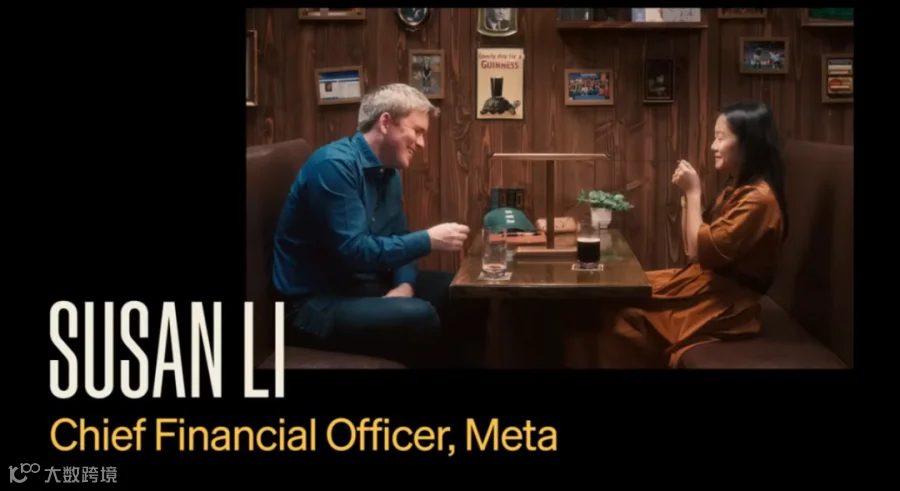
Susan Li joined Facebook in 2008.
0:22
She became CFO in 2022.
0:25
It's a really interesting time for this discussion
0:26
because Meta has a core business
0:27
that's firing on all cylinders
0:29
and Susan's had a front row seat
0:31
for the growth of the company.
0:33
Cheers. Cheers.
0:36
You went to high school at 11, college at 15,
0:40
Morgan Stanley at 19,
0:42
and you're now the youngest CFO of Fortune 100 company.
0:46
So just, what's... Was this you?
0:49
Was this your parents?
0:51
What's going on there?
0:52
Well, you know, some might say,
0:53
because I started kindergarten when I was four
0:55
and I graduated from college when I was 19,
0:58
that having 15 years of formal education is... you know,
1:03
I'm woefully undereducated as it were,
1:05
so I'm really just having to make up
1:07
for, you know, that rough start.
1:08
But if I remember right, you were also
1:09
done with formal education at the age of 19, 20?
1:17
That's because I dropped out.
1:18
I wasn't early in progressing through the milestones,
<ytd-transcript-section-header-renderer style="background-color: rgb(255, 255, 255);color: rgb(0, 0, 0);font-family: Roboto, Arial, sans-serif;font-size: 10px;font-style: normal;font-variant-ligatures: normal;font-variant-caps: normal;font-weight: 400;letter-spacing: normal;orphans: 2;text-align: start;text-indent: 0px;text-transform: none;widows: 2;word-spacing: 0px;-webkit-text-stroke-width: 0px;white-space: normal;text-decoration-thickness: initial;text-decoration-style: initial;text-decoration-color: initial;">
Early education and career
</ytd-transcript-section-header-renderer>
1:20
I just quit, whereas you actually got your bachelor's.
1:22
Well, it seems like we shared the same disdain
1:24
for sort of getting out of the schooling system
1:25
as soon as possible.
1:26
Hang on, this is your interview, not mine.
1:30
I was in a school system that identified
1:32
when kids were bored in school,
1:33
and then just gave you opportunities to keep moving ahead
1:36
and my parents always took them.
1:39
When I showed up at Morgan Stanley for my first day,
1:41
I was on the trading floor
1:42
in the big Broadway headquarters at 1585.
1:46
And the equivalent of an HRBP basically got the attention
1:51
of everyone on the trading floor.
1:52
They were like- Right 'cause this is
1:53
investment banking, which is known
1:54
for being an inclusive and nurturing culture.
1:57
Very, very much so.
1:58
And so she wanted everyone on the floor to stop
2:00
and look at me and know that no one was to serve me
2:03
any alcohol at any company gathering.
2:05
So it was exactly the way you think about
2:07
sort of beginning your career on Wall Street,
2:09
you know, by being mortified.
2:13
But it improved from there.
2:14
Yes.
<ytd-transcript-section-header-renderer style="background-color: rgb(255, 255, 255);color: rgb(0, 0, 0);font-family: Roboto, Arial, sans-serif;font-size: 10px;font-style: normal;font-variant-ligatures: normal;font-variant-caps: normal;font-weight: 400;letter-spacing: normal;orphans: 2;text-align: start;text-indent: 0px;text-transform: none;widows: 2;word-spacing: 0px;-webkit-text-stroke-width: 0px;white-space: normal;text-decoration-thickness: initial;text-decoration-style: initial;text-decoration-color: initial;">
Lessons from Michael Grimes at Morgan Stanley
</ytd-transcript-section-header-renderer>
2:16
You worked under Michael Grimes at Morgan Stanley.
2:20
He, for people who don't know,
2:22
he's been leading tech investment banking at Morgan Stanley
2:25
for 20 years and he's just a phenom,
2:28
like, I don't know how to describe him.
2:29
He's just one of the most energetic people I've ever met.
2:33
What did you learn from working with Michael?
2:35
Grimes is extraordinarily sort of, like you said,
2:40
very high-energy, applies that to a whole host of things.
2:43
You go talk to Michael about tech companies, about banking,
2:47
about parenting,
2:48
about why there should be more undergraduate sales programs
2:53
and colleges in the country.
2:54
He's got a point of view on everything
2:57
and he's endlessly curious.
2:59
He is going to outwork you and outlearn you.
3:02
It's actually a pretty spectacular thing
3:06
as a young person starting in your career
3:08
to see what excellence at this looks like.
<ytd-transcript-section-header-renderer style="background-color: rgb(255, 255, 255);color: rgb(0, 0, 0);font-family: Roboto, Arial, sans-serif;font-size: 10px;font-style: normal;font-variant-ligatures: normal;font-variant-caps: normal;font-weight: 400;letter-spacing: normal;orphans: 2;text-align: start;text-indent: 0px;text-transform: none;widows: 2;word-spacing: 0px;-webkit-text-stroke-width: 0px;white-space: normal;text-decoration-thickness: initial;text-decoration-style: initial;text-decoration-color: initial;">
Leadership traits and succession planning at Meta
</ytd-transcript-section-header-renderer>
3:13
You've been at Meta for a very long time.
3:17
April 2008.
3:18
So, you joined in 2008.
3:21
And one thing I've observed before is the
3:22
senior leadership at Meta are all very tenured
3:27
and often have done multiple things around the company
3:29
or grown up around the company.
3:31
What traits do the successful leaders at Meta
3:33
have in common?
3:36
Oh, that's a good question.
3:39
Infinite patience.
3:40
No, it's more than that.
3:42
So, I joined as an IC4 and in finance,
3:47
so actually pretty far away from the center of the-
3:50
A few rungs down from the CFO.
3:51
Yes, and also far away from the core of engineers
3:54
building News Feed, right? Yes.
3:55
I mean when you kind of talk to some of the folks now,
3:59
they've always been at the sort of very heart
4:01
of what the product was, you know, building or doing.
4:05
But what I think is unique about Meta
4:09
is we have a pretty strong culture
4:11
of internal succession planning
4:13
and trying to identify people who are talented
4:17
quite early in their careers, actually,
4:20
and think about a many-year runway
4:22
in which you're going to grow and develop them.
4:25
How did Meta succession-plan you?
4:27
I started off my career
4:29
doing mostly revenue forecasting,
4:31
which was kind of like the mathiest part of finance.
4:36
At some point,
4:37
I had done that probably for about five-ish years,
4:40
and I was trying to figure out what to do next.
4:42
And the two kind of paths in front of me were,
4:47
I was talking to some folks in News Feed
4:49
about whether I should just go
4:50
do something totally different and go be a PM in News Feed.
4:54
Or the other option was to broaden my scope in finance,
4:58
to take on sort of more traditional finance responsibilities
5:01
that I really had not had that much exposure to.
5:04
I remember sitting down with David Ebersman,
5:06
who was our CFO at the time. He looked at me and said,
5:10
"Look, I know you're considering these options,
5:12
and I can tell you I think doing
5:14
that News Feed PM job would be really fun
5:16
and I think it'd be a great learning experience for you.
5:19
I totally get it.
5:20
But I also want you to know that I think you could be,
5:23
you know, a CFO of this company someday."
5:25
And to have someone who I admired as much as David Ebersman
5:28
say that about me was an extraordinarily
5:32
confidence building thing,
5:34
and I will remember that conversation forever,
5:35
very viscerally.
5:38
So, I've had managers who I think have really invested in me
5:43
by pushing me to take on things that I wouldn't have said,
5:50
hey, can I please go do this thing next?
5:51
It wouldn't have made obvious intuitive sense to me,
5:54
but I think they thought it would be a good opportunity
5:56
and that I was ready for it.
5:57
And you know, and I think they were right.
6:01
That's really cool.
6:03
In the 17 years you've been at Meta,
<ytd-transcript-section-header-renderer style="background-color: rgb(255, 255, 255);color: rgb(0, 0, 0);font-family: Roboto, Arial, sans-serif;font-size: 10px;font-style: normal;font-variant-ligatures: normal;font-variant-caps: normal;font-weight: 400;letter-spacing: normal;orphans: 2;text-align: start;text-indent: 0px;text-transform: none;widows: 2;word-spacing: 0px;-webkit-text-stroke-width: 0px;white-space: normal;text-decoration-thickness: initial;text-decoration-style: initial;text-decoration-color: initial;">
Mark Zuckerberg’s leadership and culture of feedback
</ytd-transcript-section-header-renderer>
6:07
how has Mark changed as a leader?
6:09
There are ways in which you clearly see someone
6:12
evolve over 17 years.
6:13
You know, Mark has done all-hands for all of those 17 years,
6:16
and he clearly has become now
6:18
a truly excellent public speaker.
6:21
Mark is really good at giving feedback,
6:22
like really world class at it.
6:27
Maybe you should try to get yourself into a position
6:29
where you can get some feedback...
6:30
I'm sure Mark already has feedback for me.
6:33
...so you can experience it, but it's very timely,
6:38
it's very direct, it's very respectful.
6:42
But the sort of direct and respectful... It's never mean,
6:45
it's never like belaboring some point,
6:46
but you cannot be mistaken
6:48
after you have received the feedback.
6:49
He's really good at it.
6:53
He kind of walks that line between being direct but kind
6:57
in an extremely good way.
6:59
One of the things people will often ask me
7:01
is, "What kind of skills do you need
7:05
to stay at a company for 17 years?" Or whatever it is.
7:07
And when I think about it, I go back to...
7:13
When I was IC4 and I joined in 2008,
7:14
I'm building these first revenue models.
7:17
I'd gone from banking, which is super organized,
7:19
super structured, they don't even need to know your name,
7:20
they just train you to immediately figure out
7:23
how to find the backup to everything,
7:25
so that two years later someone else can do this
7:27
and so on and so forth,
7:29
to, there was no infrastructure, right?
7:31
So I'm hunting down the exact engineer
7:33
who has built some ad server
7:35
so that he can tell me what the parameters mean.
7:38
And of course, the next time he changes them,
7:39
he's not gonna tell me, and I have to go find him again,
7:41
and he's like, "Oh, she's coming. Don't look her way."
7:45
A few months in, I got a meeting invite
7:49
for power users of SQL.
7:51
And I thought, "My gosh." I'd been getting,
7:52
a good amount of feedback
7:54
about how things could be better,
7:56
and here was finally this moment of recognition
7:58
that... I didn't even know how to write queries in SQL
8:01
when I started.
8:02
And I show up to this meeting
8:03
and there are five other people
8:04
and the meeting organizer tells us that we have been called
8:07
because we are the five users of SQL
8:10
who consume too much power.
8:13
And we have just been churning
8:15
with our massive joint, tables through the-
8:19
I love that you were all called
8:20
to the principal's office.
8:22
Basically, yes.
8:23
But I often think back to this
8:25
because this was was a data analyst
8:28
who didn't know any of us that well,
8:30
but had just generated his reports
8:32
of who's using the most infrastructure
8:34
and looked at the top people on the list
8:36
and you know, thought, "Okay, this person in finance,
8:38
it doesn't make sense why she's the third highest person
8:41
on the list," and called us in
8:43
and then taught us to write better queries.
8:45
And like no one I think specifically told him to do that.
8:48
And I think it's a little awkward
8:50
when you call people in to do this,
8:52
but he did it because it would make us
8:53
all better at our jobs.
8:54
And I think, for 17 years, I have been the beneficiary
8:58
of a lot of feedback that has made me better along the way.
9:01
So when people ask me this question, I always say,
9:03
"Just be a person who's good at receiving feedback."
<ytd-transcript-section-header-renderer style="background-color: rgb(255, 255, 255);color: rgb(0, 0, 0);font-family: Roboto, Arial, sans-serif;font-size: 10px;font-style: normal;font-variant-ligatures: normal;font-variant-caps: normal;font-weight: 400;letter-spacing: normal;orphans: 2;text-align: start;text-indent: 0px;text-transform: none;widows: 2;word-spacing: 0px;-webkit-text-stroke-width: 0px;white-space: normal;text-decoration-thickness: initial;text-decoration-style: initial;text-decoration-color: initial;">
Financial forecasting and capital allocation
</ytd-transcript-section-header-renderer>
9:07
You've mentioned your experience in forecasting.
9:11
And what I think is the central challenge
9:13
of a CFO in a large tech company is
9:17
it's so hard to put numbers around the core thing we do.
9:19
And what I mean by that is like if you're Boeing
9:21
and you're producing the 787,
9:23
you can have a very clear model that we're gonna spend
9:24
this much, you know, manufacturing the 787,
9:27
and then each one,
9:28
we're gonna make this much gross profit on.
9:29
And then at the like component-by-component level, you know,
9:32
we're gonna change from hydraulic brakes to electric brakes,
9:34
and it'll add this much cost, but it'll save this much fuel.
9:36
It's all extremely quantified as a domain.
9:38
Now you're dragging me into the
9:39
resource allocation questions.
9:40
Yes. Okay. Here we go.
9:45
We really think about it as,
9:47
there's stuff that we can rigorously measure.
9:49
So that's a lot of the, you know, core family of apps
9:53
work in terms of the impact on engagement,
9:55
the impact on monetization.
9:56
There's a lot of that stuff
9:57
that is really finely tuned.
9:59
And that really does seem extremely finely tuned.
10:01
I was looking at the numbers
10:02
and you doubled ARPU between 2015 and 2020,
10:06
and then you doubled it again between 2020 and 2025.
10:09
But like Meta wasn't bad at monetization in 2020,
10:14
and it's doubled over that five-year period.
10:16
No, and you know what?
10:18
I just, you know, did earnings three weeks ago now.
10:19
I was doing all my investor callbacks,
10:24
and one of our largest investors on the call,
10:28
one of the portfolio managers, said, "feeling pretty good."
10:31
He goes, "The ads are so good."
10:35
And you know what?
10:36
Five years ago, I would've told you
10:38
that the ads were really good,
10:39
and that there was not really room
10:41
for the ads to get better. But here we are,
10:43
five years later, and the ads are even better.
10:49
The joke people have about Instagram
10:50
is the ads are better than the content.
10:52
Well, I have to tell you,
10:54
as someone who bought, like, 25 umbrellas
10:57
that changed color in the rain off of a ad,
10:59
that was not something I knew that I...
11:01
Not that I needed, but that my children
11:03
and all their friends needed...
11:04
Do they work?
11:05
They do. They are a source of real delight.
11:07
So when the ads can be that good,
11:08
that is a extraordinary thing.
11:09
But getting back to your question.
11:11
So, there's this very measurable part of the company
11:14
and we generally try to trade those things
11:17
off against each other, you know,
11:18
when we are thinking of, when we're evaluating things
11:20
within that bucket and we generally try to fund the things
11:22
that are positive ROI.
11:25
And I'm usually the person who's, you know,
11:27
trying to just make sure we understand, like,
11:29
yes, for every individual experiment,
11:31
the expected return is something,
11:32
but that's where we are on the curve today,
11:34
but what about 50 experiments later?
11:36
Does the curve still have the same slope?
11:38
And then there's a set of things, right,
11:40
which we constrain more in terms of, you know,
11:45
there's some envelope of investment
11:48
that we're willing to make
11:50
that's not in this really ROI-driven bucket.
11:53
It is very difficult to pencil out
11:54
what the annual revenue forecast
11:56
for Reality Labs is gonna look like over the next 20 years.
12:01
And so for bets like that, we sort of invert the problem.
12:06
But when we talk about the return on the investment,
12:11
the question, you know,
12:12
that we pose as a finance organization to Mark,
12:17
and make sure that Mark
12:18
and the board understand, is
12:19
what does this have to be worth to pencil out at the end?
12:23
And does that pass sort of the sanity check,
12:27
the intuition about what building,
12:30
about what the size of these markets can be
12:31
based on maybe some comparisons
12:33
to, you know, markets that exist today,
12:34
but of course, you know, in another 10, 20 years,
12:37
you expect that the world will look different
12:39
and maybe those markets should be bigger or smaller
12:41
for, you know, whatever reason.
12:43
And that's kind of the guide which is like,
12:47
hey, for this thing to succeed
12:49
at the rate at which we're investing,
12:50
it needs to be worth this at the end.
12:52
And does that make sense?
12:54
So in a way, investors may underestimate your ambition
13:00
in some of these new areas,
13:01
where it's like, this is not a hobby,
13:02
this is us investing in markets
13:05
that are worth a huge amount of money,
13:07
if we create a new platform here.
13:09
But the thing people may miss is that
13:12
the upside case you're considering is really serious.
13:15
Yes, and we're only building
13:17
because we think that that sort of, it not only exists,
13:20
but it's compelling
13:21
and it's compelling for financial reasons,
13:24
but also strategic reasons
13:25
why we want that version of the world to exist.
13:29
This is a place where I've gotta be honest with you.
13:32
Like I was one of the last people at the company
13:34
to hand my Blackberry over for an iPhone.
13:36
So you're maybe not the-
13:39
I am not a tech visionary.
13:43
You know, there are many things I'm good at,
13:45
but envisioning the future of the world
13:47
and what I want it to be like is not one of them.
13:49
I'm a very happy beneficiary of the technology
13:53
built by the world around me.
13:55
But Mark very much has a vision
13:56
for what he wants that world to be.
14:00
And for him, I think the sort of strategic imperative
14:04
is that we have to be building
14:05
these next states of the world, you know,
14:08
for us to again, be a good business,
14:10
but also just be a compelling company
14:13
that builds technology and puts it out in the world
14:15
and, you know, builds incredible experiences for people.
<ytd-transcript-section-header-renderer style="background-color: rgb(255, 255, 255);color: rgb(0, 0, 0);font-family: Roboto, Arial, sans-serif;font-size: 10px;font-style: normal;font-variant-ligatures: normal;font-variant-caps: normal;font-weight: 400;letter-spacing: normal;orphans: 2;text-align: start;text-indent: 0px;text-transform: none;widows: 2;word-spacing: 0px;-webkit-text-stroke-width: 0px;white-space: normal;text-decoration-thickness: initial;text-decoration-style: initial;text-decoration-color: initial;">
ROI on Meta’s portfolio of bets
</ytd-transcript-section-header-renderer>
14:18
I remind people in the finance organization all the time,
14:19
we are very good
14:24
at skeptically evaluating each bet, right?
14:28
But the point is not that we have to look at every bet
14:31
and be like, "This bet is going to work."
14:33
The point is there is a portfolio of bets, right?
14:35
And some of them are going to pay off
14:38
massively beyond, in fact what the case on paper
14:42
looks like when you make the bet,
14:43
and many of them are going to not work out,
14:46
but the ones that pay off are gonna more than
14:48
sort of justify the overall investment strategy
14:51
or the overall sort of roadmap that you're building toward.
14:54
And if we just allowed ourselves to nix everything
14:56
that sort of, you know, the paper case
14:58
didn't seem high-confidence,
14:59
then we would never make a lot of the important bets
15:01
that have been really important
15:03
over the history of the company.
<ytd-transcript-section-header-renderer style="background-color: rgb(255, 255, 255);color: rgb(0, 0, 0);font-family: Roboto, Arial, sans-serif;font-size: 10px;font-style: normal;font-variant-ligatures: normal;font-variant-caps: normal;font-weight: 400;letter-spacing: normal;orphans: 2;text-align: start;text-indent: 0px;text-transform: none;widows: 2;word-spacing: 0px;-webkit-text-stroke-width: 0px;white-space: normal;text-decoration-thickness: initial;text-decoration-style: initial;text-decoration-color: initial;">
Investor sentiment in 2022
</ytd-transcript-section-header-renderer>
15:05
When did you take over?
15:06
November 1, 2022.
15:08
Okay. Yeah, so I think the- Good timing.
15:11
...the day you took over,
15:13
the market cap troughed as $230-ish billion dollars?
15:17
A real sign of market confidence in me, as you can tell.
15:21
You probably remember what the number was,
15:22
but I think it was around $230 billion dollars.
15:24
And so that means the day that you took over as CFO,
15:28
one could have bought Facebook, sorry, Meta,
15:29
excuse me-
15:31
as an investor for three times 2025 net income.
15:35
And that's like coal plant territory.
15:38
A very easy way to make money is to buy
15:41
good and growing businesses for three times net income.
15:46
Well, I hope you did.
15:47
I did not, and this is why-
15:50
I'm not in the investing business.
15:53
There was something that people deeply misunderstood
15:57
at that point about Meta.
16:00
What did they misunderstand so much?
16:02
Well, there's a bit here, by the way... someday
16:03
I'm gonna ask you, you know, how you feel
16:06
about having public market investors
16:08
someday and when will that day be?
16:10
This is my interview.
16:13
But more to the point.
16:14
You know, that sort of October 2022 moment happened
16:17
at a, like there were multiple things going on,
16:20
if you kind of rewind the clock.
16:22
There were two big revenue headwinds.
16:24
One was that the platform changes with AT&T
16:28
had kind of rolled through from 2021,
16:31
which was when it plunged. This was Apple changing
16:32
their policies around what tracking was permissible
16:36
inside of apps. Yes, exactly.
16:38
So that was one thing.
16:39
And then the second thing
16:40
was just this sort of COVID fueled e-commerce avalanche
16:45
was pulling back, and both of those things very-
16:47
People were buying fewer color-changing umbrellas.
16:50
Sadly for the children of the world, yes.
16:52
And so both of those things had the effect
16:54
of unfortunately having for us at the same time.
16:56
So we really went from this
16:57
e-commerce fueled heyday in 2021
17:01
to now like negative year-over-year growth
17:03
for the first time, which is obviously very alarming.
17:05
Right.
17:06
And so, you know, those stars kind of aligned
17:09
in that stock-price-low kind of way in October, 2022.
17:16
And I think what you've seen since then is a few things.
17:19
One is that yes, there are these two exogenous factors
17:22
that happened that were bad for revenue at the time.
17:24
But the fundamental sort of underlying like business,
17:29
which is can we show the best possible ads
17:32
to the right people at the right time across, you know,
17:34
the surface of consumer experiences that we are building,
17:38
That continued to be very strong.
17:40
And then the second thing is I think we demonstrated
17:42
as a company that we are in fact able to turn the ship
17:44
on costs in a, you know, very meaningful and very quick way.
<ytd-transcript-section-header-renderer style="background-color: rgb(255, 255, 255);color: rgb(0, 0, 0);font-family: Roboto, Arial, sans-serif;font-size: 10px;font-style: normal;font-variant-ligatures: normal;font-variant-caps: normal;font-weight: 400;letter-spacing: normal;orphans: 2;text-align: start;text-indent: 0px;text-transform: none;widows: 2;word-spacing: 0px;-webkit-text-stroke-width: 0px;white-space: normal;text-decoration-thickness: initial;text-decoration-style: initial;text-decoration-color: initial;">
The story behind the “free cash flow” hats
</ytd-transcript-section-header-renderer>
17:49
Speaking of that, you have to explain
17:51
the free cash flow hat.
17:51
Thank you for the hat, by the way.
17:53
Oh, yes.
17:54
You're welcome. Everyone really should have one.
17:57
I think they are underworn out in the world.
18:00
The joke of the story is that Mark at one point,
18:04
gave me an EBITDA hat,
18:07
which was a very kind gift from him to help me-
18:10
It really sent a message,
18:11
I hope you went and prominently wore it
18:14
in many of the budgetary review meetings that you were in.
18:16
I did.
18:17
This is the EBITDA hat that Mark gave me.
18:18
Yes.
18:20
And I had it in my background,
18:22
like, you know, my Zoom background for a long time.
18:24
But I realized pretty quickly
18:27
that we actually as a company, should be wearing
18:28
free cashflow hats instead,
18:32
because of course, the D of EBITDA
18:35
is a number of growing importance
18:40
through our financials,
18:41
and I didn't want Mark to misinterpret and feel like,
18:44
you know, EBITDA was gonna be
18:45
the end-all-be-all financial metric for us.
18:48
So there's only one EBITDA hat.
18:50
There are many free cashflow hats,
18:52
I give them out like candy,
18:54
and try to make sure that people really understand
18:56
that this is the hat that matters.
<ytd-transcript-section-header-renderer style="background-color: rgb(255, 255, 255);color: rgb(0, 0, 0);font-family: Roboto, Arial, sans-serif;font-size: 10px;font-style: normal;font-variant-ligatures: normal;font-variant-caps: normal;font-weight: 400;letter-spacing: normal;orphans: 2;text-align: start;text-indent: 0px;text-transform: none;widows: 2;word-spacing: 0px;-webkit-text-stroke-width: 0px;white-space: normal;text-decoration-thickness: initial;text-decoration-style: initial;text-decoration-color: initial;">
CapEx trends in the AI era
</ytd-transcript-section-header-renderer>
18:58
Charlie Munger had the joke
19:00
that anytime you hear "EBITDA,"
19:01
you should substitute it with "bullshit earnings."
19:03
And so you, similarly for a CapEx-intensive business,
19:05
you wanna make sure people are not forgetting
19:06
about the CapEx. Yes, exactly.
19:08
Where does CapEx go for not just Meta,
19:10
but the tech industry broadly?
19:12
Because all of Microsoft, Google and Meta
19:17
have gotten more CapEx intensive over the past few years
19:20
compared to their prior steady states.
19:23
Like just do we continue spending this fraction of revenues
19:26
on CapEx over a 5 or 10-year period?
19:29
Do we somehow get some kind of amazing compute gains?
19:32
Are we ultimately bottlenecked on power,
19:34
and so you just can't keep growing CapEx at this rate
19:37
because you can't plug the data centers into anything?
19:39
Where does CapEx go in an industry-wide level?
19:42
That is the question that I assume
19:44
that all of my counterparts at these companies and I
19:48
are all thinking about.
19:49
For us, there are the drivers
19:52
of the way we're investing in CapEx today.
19:54
Of course, we have, first of all,
19:56
just a massively-scaled consumer business and core,
20:01
you know, AI infrastructure that powers all the ranking
20:04
and recommendations work and so on and so forth.
20:05
So that's always been a reasonably big number for us,
20:08
but also one because it was getting more mature
20:09
that we were driving to be more efficient over time.
20:13
And then now you have,
20:14
among many of our peers and ourselves, this big investment
20:18
to train what we all aspire to be, frontier models.
20:22
And if you use those models to build
20:25
great and scaled consumer experiences,
20:27
then how much inference, you know,
20:29
compute you're gonna need on top of that?
20:31
If compute required
20:33
continues to scale up in this way forever,
20:34
then you're gonna run into some true problems of physics.
20:37
But hopefully, there will be different kinds
20:40
of research innovations along the way
20:42
that will unlock things
20:43
like being able to distribute the training so you don't need
20:45
sort of one extremely large cluster somewhere
20:47
and that will help with a lot of the energy
20:49
and other challenges.
20:51
So there's some question
20:52
about what that looks like over time.
20:54
And then there's this question about, you know,
20:55
great, you can build all this capacity,
20:58
and what do you do with them if it turns out
20:59
you don't need as much compute
21:01
for either training or inference as you thought?
21:03
I think a lot of us
21:05
have different backup use cases.
21:06
So, up to some point, we would use a lot of compute
21:09
very happily still, you know, in the core business
21:12
and what we expect the core business to be
21:14
three years from today.
21:16
But frankly, we'd use more compute in the core business.
21:18
Now, that doesn't scale forever, right?
21:20
So the real question is what happens in like two years
21:22
if you've built so much compute that you cannot envision
21:25
a reasonable ROI on the backup use case
21:29
if what you're building doesn't come to fruition.
21:32
And that's something I think we're all gonna learn
21:35
in the next few years.
21:36
When you say the primary versus backup use case is
21:39
new products like Llama and stuff,
21:42
and the backup use case is ads optimization?
21:45
Yes, exactly.
21:46
You mentioned just doing earnings.
21:47
Is there a specific anecdote
<ytd-transcript-section-header-renderer style="background-color: rgb(255, 255, 255);color: rgb(0, 0, 0);font-family: Roboto, Arial, sans-serif;font-size: 10px;font-style: normal;font-variant-ligatures: normal;font-variant-caps: normal;font-weight: 400;letter-spacing: normal;orphans: 2;text-align: start;text-indent: 0px;text-transform: none;widows: 2;word-spacing: 0px;-webkit-text-stroke-width: 0px;white-space: normal;text-decoration-thickness: initial;text-decoration-style: initial;text-decoration-color: initial;">
A memorable earnings call
</ytd-transcript-section-header-renderer>
21:49
that you can or want to discuss?
21:54
In the October 2022 period, so we had an earnings call
21:56
at the end of October,
21:58
and as usual, I'm doing investor callbacks.
22:00
And the investors were not shy about their feedback.
22:07
And in fact, one of the calls- Investor callbacks,
22:10
I don't know what this is.
22:11
This is where you call the...
22:13
This is like one one-on-ones, basically.
22:14
Yes. It's pretty standard after earnings calls,
22:17
where you touch base
22:18
with some number of your largest investors.
22:20
Sadly, it is not one-on-one.
22:21
It's, you know, one of you
22:23
and many, many people from their teams.
22:26
And most of the time,
22:27
they just ask you to clarify things.
22:29
Obviously, everything is, you know, Reg FD compliant,
22:33
but it mostly takes the form of questions.
22:35
And you know, in October, 2022 for the first time,
22:38
there were sometimes no questions.
22:40
I mean, there was a call where basically
22:42
one of the portfolio managers said,
22:43
"We actually don't have any questions for you today.
22:45
We just want you to hear, you know, feedback from us."
22:48
Wow. More of a comment than a question.
22:50
Yes, it was actually very memorable.
22:53
And it was blunt feedback, I presume.
22:55
Yes.
22:55
And one of the things that really stuck with me
22:57
from one of those conversations is someone said,
23:02
"Look, I get that you're building the next,
23:05
you know, the future of computing
23:07
and the next mobile platform and all that.
23:08
And that is great and I am glad someone wants to do it
23:11
and I am rooting for you,
23:14
but why should I invest in your stock today?
23:16
Why don't I just wait for your phone equivalent,
23:21
your scaled consumer product to come out,
23:24
you know, and invest in you then,
23:25
and you tell me that that's going to be years away?"
23:29
And the way that question was framed actually
23:34
really stuck with me.
23:35
And, you know, is the way that frankly,
23:38
now Mark and I think about this, which is like great,
23:40
we've got a lot of these bets and you know,
23:43
the bets are technologically exciting,
23:45
people can get excited about them
23:46
and the vision of the world.
23:48
But as investors, they're like,
23:50
"Cool, why don't I just wait for your bets to be ready,
23:54
you know, be ready to succeed before I come?"
23:56
We need people to invest with us along the way.
24:00
When we think about the financial outlook
24:02
of the company, you know, a large part of it
24:05
is not just okay, cool, you're building the next,
24:07
you know, massive platform out here in some decades,
24:11
it's, why would you hold our shares until then?
24:13
What do we need to keep delivering
24:15
in terms of consolidated results?
<ytd-transcript-section-header-renderer style="background-color: rgb(255, 255, 255);color: rgb(0, 0, 0);font-family: Roboto, Arial, sans-serif;font-size: 10px;font-style: normal;font-variant-ligatures: normal;font-variant-caps: normal;font-weight: 400;letter-spacing: normal;orphans: 2;text-align: start;text-indent: 0px;text-transform: none;widows: 2;word-spacing: 0px;-webkit-text-stroke-width: 0px;white-space: normal;text-decoration-thickness: initial;text-decoration-style: initial;text-decoration-color: initial;">
Challenges of allocating compute vs headcount budgets
</ytd-transcript-section-header-renderer>
24:16
I found it really interesting
24:18
how when the AI revolution started really ramping up,
24:24
people realized, "Oh, we need a ton of GPUs
24:27
to train leading-edge foundation models."
24:30
You guys had done a huge GPU scale-up
24:35
because you're doing a lot of AI in the core feed.
24:39
And so I think there's some interesting optionality
24:41
in being a scaled infra and AI player
24:45
where we are very good at putting GPUs
24:50
towards their highest and best use,
24:52
and you have seen that we're very good
24:56
at allocating compute, and that is why you should invest?
24:59
That's quite different from the pitch maybe 10 years ago
25:01
where it's "We're good at scaling social products."
25:04
Yes.
25:05
I think there's definitely an interesting point there.
25:07
You know, as part of not wanting to miss the boat, you know,
25:09
we built out, you know, enough capacity
25:12
for Reels but also for future things,
25:14
and we found that we were in fact
25:16
able to put that capacity
25:18
towards very good use, exactly as you said.
25:21
So I do think an interesting question in the future will be
25:24
allocating compute as a resource,
25:28
It's a muscle we've built later as a company,
25:30
because we, you know, had gotten very good
25:33
at allocating headcount as a resource,
25:35
and head count's really easy to account for
25:37
because you have org charts, so you know exactly,
25:39
this person reports to this person, to this person,
25:39
this person is incontrovertibly working
25:43
on Facebook Marketplace, for example.
25:45
GPUs don't have that property.
25:47
In fact, you often want to build out your infrastructure...
25:49
You have no shenanigans. ...for it to be very fungible.
25:50
Because you need to divert capacity to where...
25:51
Suddenly something has happened
25:55
in India and you want a lot of compute to be available
25:58
to be used there. So it's not all like
26:00
this GPU is labeled for Facebook Marketplace,
26:02
and this is labeled for...
26:04
So it's actually quite a bit more difficult
26:06
to account for where the capacity is being used
26:10
at any given point in time.
26:11
And that means it's harder to manage,
26:13
and it's harder to create the incentives
26:15
around like are you using GPUs efficiently?
26:18
You allow people to trade between people and GPUs, right?
26:22
In the budgeting process, we have allowed people to trade.
26:28
And not too surprisingly, even though
26:31
you'll find that groups are often asking for compute,
26:35
when that particular trade is on offer,
26:39
people almost never trade for compute
26:41
for exactly the reason I described,
26:43
which is that if they get allocated
26:45
100 new head count, there is no chance
26:48
that 26 of those head count
26:49
will accidentally be working for something else.
26:52
Yes, I see.
26:53
So again, it's harder to account for.
<ytd-transcript-section-header-renderer style="background-color: rgb(255, 255, 255);color: rgb(0, 0, 0);font-family: Roboto, Arial, sans-serif;font-size: 10px;font-style: normal;font-variant-ligatures: normal;font-variant-caps: normal;font-weight: 400;letter-spacing: normal;orphans: 2;text-align: start;text-indent: 0px;text-transform: none;widows: 2;word-spacing: 0px;-webkit-text-stroke-width: 0px;white-space: normal;text-decoration-thickness: initial;text-decoration-style: initial;text-decoration-color: initial;">
AI’s impact on productivity and operations
</ytd-transcript-section-header-renderer>
26:55
But you could joke that AI has shown up everywhere
26:59
except in the large company hiring plans.
27:01
When I talk to startups sometimes,
27:03
they are actually delivering,
27:05
they're having a huge amount of impact
27:08
with a very small number of people
27:11
and they plan to grow headcount slower
27:13
than maybe the generation of startups that came before them.
27:14
How do you think AI productivity actually shows up
27:19
as more established companies, like a Stripe or like a Meta
27:22
that just have a larger installed base?
27:25
Yes.
27:26
When we think about AI for productivity at Meta,
27:29
I think there are two dimensions.
27:30
One is how do you make
27:32
the most operational parts of people's jobs
27:34
less so and more interesting?
27:36
And I say that as a person who is like
27:38
a very expensive machine learning model
27:40
for approving expenses.
27:43
I'm not certain that when I approve expenses,
27:44
I'm really adding a lot of deep human intelligence
27:47
to this process, I'm scanning
27:48
for a fairly checklistlist-able set of things.
27:51
And yet I get multiple expenses every day.
27:54
So how do you take that part of people's jobs...
27:55
Do you ever get really funny ones?
27:57
Those are concerning,
27:58
yes, some of them have taken me down
28:00
some really interesting rat holes.
28:02
So, how do you basically
28:06
make those parts of people's jobs
28:07
automated so they can do more interesting things?
28:09
And the second thing is, you know, there are actually things
28:12
we don't do enough of today because right now,
28:14
they're pretty low-ROI to do.
28:16
The canonical example is,
28:20
everyone knows someone who has gotten locked out
28:22
of their Facebook or Instagram account.
28:23
It is a pain to get back in.
28:25
We know it is a pain to get back in.
28:27
But it's super laborious,
28:28
the process of like verifying that you're a real person,
28:31
you have real friends in the platform.
28:32
It's a hard problem, yeah. It's a hard problem.
28:35
If we could actually make that more efficient
28:39
and more productive and enable
28:41
a currently a human reviewer
28:44
or customer service agent to go from, you know, reviewing-
28:49
I'm making up these numbers, but five a day to 50 a day,
28:52
unlocking 50 accounts a day,
28:54
you can actually make this a pretty high-ROI thing to do
28:57
that you would invest in on an ROI basis alone.
29:00
So I think there is a bit where...
29:02
I think everyone is worried
29:03
about the world where like the machines
29:05
have come for all of our jobs,
29:06
definitely my expense approval job, and maybe more.
29:10
But I think there's actually a window before that
29:14
where I think it's really about making humans
29:17
substantially more productive than they are today.
29:18
And makes new kinds of things possible
29:20
that weren't economic or just not possible before.
29:23
Yeah.
29:24
I've kept you for way too long. Thank you.
29:26
Thank you so much for having me.
29:27
I really look forward to seeing that free cashflow hat
29:29
everywhere in the wild.
29:31
It is the perfect photo accessory.
29:33
There we go.
29:34
It's a good look. And it's green.
29:35
And it's green, exactly.
29:36
Thank you, it's very culturally on brand.
29:37
Yes.
29:38
Alrighty. Thank you.