


by Bill Russo and Jackie Tang
September 24, 2026

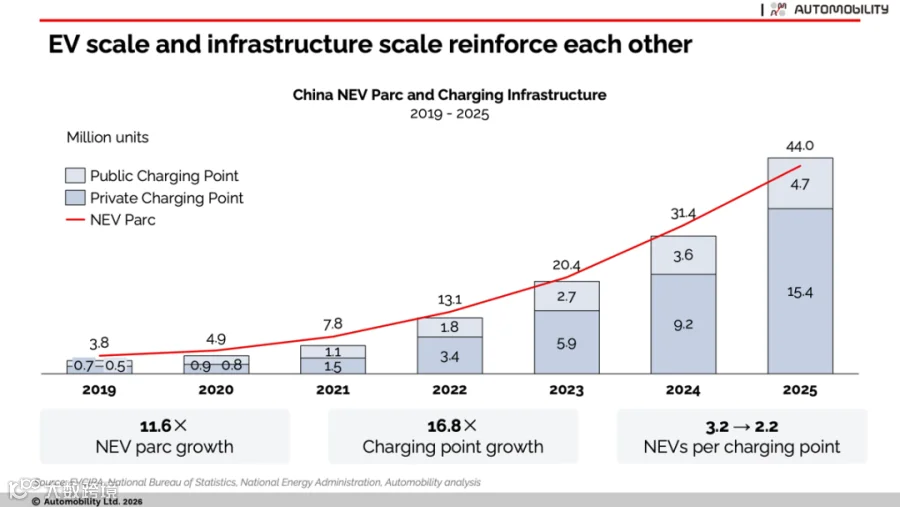
Figure 1 | China NEV Parc and Charging Infrastructure, 2019-2025
This scale changes the strategic question. The challenge is no longer simply how to build enough infrastructure to support EV adoption. Increasingly, it is what becomes possible once millions of vehicles, batteries and grid connections are already in place.
Our perspective is that the EV revolution is fundamentally an energy revolution. Electrification does more than change how vehicles are powered. It connects vehicles, batteries and infrastructure into a broader energy system and creates new opportunities to manage, aggregate and ultimately orchestrate these assets.
China’s push into electrification was never simply about replacing the internal combustion engine with an electric motor. Energy security was a fundamental motivation, alongside the ambition to build competitive capabilities in batteries, electronics and software and to address environmental challenges. Electrification was therefore part of a broader industrial and energy strategy from the outset.
At the most basic level, the relationship between an EV and the electricity system is one-way: electricity flows into the vehicle. Smart charging begins to change that relationship by introducing flexibility into when and how electricity is consumed.
Consider a vehicle plugged in at 6 p.m. that does not need to leave until 7 the following morning. The battery does not necessarily need to begin charging immediately. Its charging can instead be shifted according to electricity prices, grid demand and the driver’s mobility requirements. The EV therefore becomes a flexible load rather than a fixed source of electricity demand.
Bidirectional charging expands this flexibility further. Vehicle-to-load allows the battery to power external equipment, vehicle-to-home can provide power to a household, and vehicle-to-grid (V2G) can potentially return electricity to the electricity system.
The significance of this transition is broader than V2G itself. The more fundamental change is that the vehicle becomes a controllable energy asset. Even without exporting electricity to the grid, an EV whose charging can be shifted or coordinated is already different from a conventional load. Bidirectional capability simply expands the range of services that asset can provide.
The EV is therefore evolving from an energy consumer into a distributed energy resource. At sufficient scale, the car is no longer simply a transportation product that consumes energy; it begins to function as part of the energy system.
From Node to Hub to Network
The value of this flexibility, however, is limited at the level of an individual vehicle. A single EV may contain a substantial battery, but its availability depends on when and where the owner needs to use the vehicle. The larger opportunity emerges when many distributed assets can be aggregated and managed collectively.
We see this development occurring across three levels: Node, Hub and Network. (See Figure 2)

Figure 2 | The Node, Hub, and Network Framework
At the Node level sits the individual energy asset: an EV, a stationary battery, distributed solar generation or another controllable load. Each asset contains some degree of flexibility, but individually that flexibility is relatively small and uncertain.
At the Hub level, multiple assets are brought together and managed as a portfolio. A hub could take the form of a fleet depot coordinating hundreds of electric vehicles, a charging site combining chargers with stationary storage, or a battery-swap station managing a pool of batteries. At this level, the question changes from what one battery can provide to what hundreds of batteries can provide collectively.
The Network level connects multiple hubs and different types of assets across locations. This is where mechanisms such as virtual power plants become increasingly relevant. Digital platforms can aggregate distributed resources, understand their availability and coordinate their response to the needs of the broader electricity system.
Physical connectivity alone, however, does not create this value. The system must also understand what energy is available, where it is needed, what constraints each asset faces and how the portfolio should respond.
The progression can therefore be summarized simply: hardware creates capacity, aggregation creates scale, and orchestration turns flexibility into value.
As this occurs, the unit of opportunity begins to move from the individual asset, to the portfolio, and ultimately to the network.
Different Pathways into the Emerging Ecosystem
Companies are entering this emerging ecosystem from very different starting points. NIO, CATL and BYD illustrate three distinct pathways: aggregation, standardization, and vehicle-and-infrastructure scale.


Figure 3 | NIO's Pathway: From Battery Swapping to Energy Aggregation
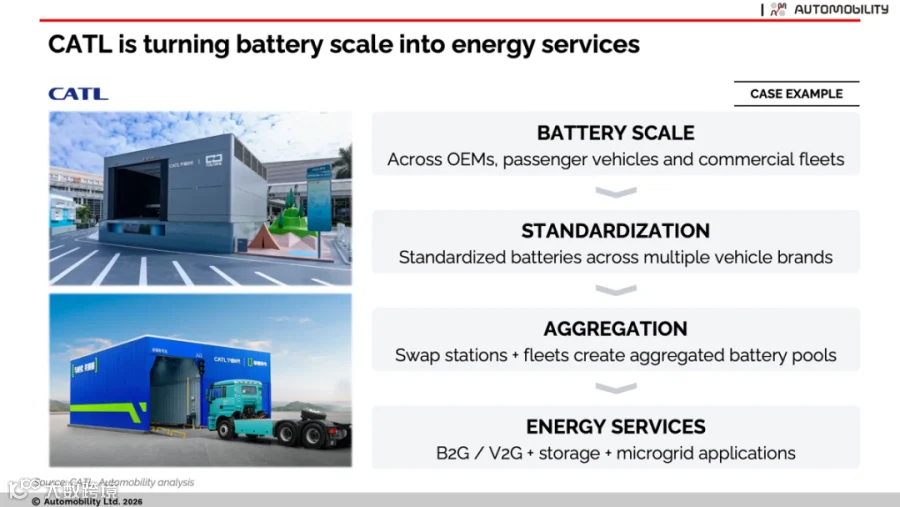
Figure 4 | CATL's Pathway: From Battery Scale to Cross-Brand Standardization
CATL approaches the same opportunity from a different position: battery scale and standardization (See Figure 4). Its batteries are deployed across multiple OEMs, vehicle types and fleets, but that scale remains fragmented across different brands and applications. Fragmentation limits the ability to aggregate and coordinate those assets.
Initiatives such as Choco-Swap for passenger vehicles and Qiji Swap for commercial vehicles seek to create more standardized battery architectures across multiple brands. From an energy perspective, standardization matters because it can make aggregation easier. CATL’s experimentation with battery-to-grid, energy storage and microgrid applications suggests a potential progression from battery manufacturing toward a broader role in energy services.
The logic is cumulative: scale can enable standardization; standardization can make aggregation easier; and aggregation can open the door to new energy services.

Figure 5 | BYD Example
BYD enters from another form of scale: the vehicle itself and the infrastructure required to support it (See Figure 5). By July 2026, BYD had produced more than 17 million NEVs and deployed more than 10,000 Flash Charging stations in China.
Its experience also illustrates how the role of infrastructure changes as an EV market matures. At an earlier stage, charging infrastructure primarily removes a barrier to EV adoption. As vehicle penetration increases and thousands of charging locations are deployed, however, that infrastructure can begin to serve a broader purpose. When combined with stationary storage and digital energy-management capabilities, charging sites can potentially become part of a wider distributed energy network.
The role of infrastructure is different in earlier-stage overseas markets. There, charging investment is still primarily about enabling EV adoption and creating the conditions for the vehicle ecosystem to scale. In China, by contrast, the question is increasingly what additional value can be created from infrastructure once that scale already exists.
China therefore provides a preview of what becomes possible at scale, but not necessarily the sequence or timing that other markets will follow.
When Mobility Orchestration Meets Energy Orchestration
Automobility has long described China’s mobility transformation through its Three Waves of Disruption framework (See Figure 6). China is now moving from the Automobility 2.0 era—defined by electric, intelligent and connected vehicles—toward Automobility 3.0, or autonomous mobility on demand. As this transition progresses, the unit of optimization begins to shift from the individual vehicle to the fleet.

Figure 6 | Three Waves of Automobility Disruption
This has an important implication for energy.
An autonomous electric fleet must solve two optimization problems simultaneously. The first is mobility orchestration: which vehicle should go where, at what time and to serve which passenger or goods movement. The second is energy orchestration: which vehicle should charge, where and when it should do so, how much energy it requires for its next trip and when its flexibility can potentially serve the broader energy system.
These two optimization problems cannot ultimately be treated in isolation. A vehicle cannot participate in an energy service if doing so compromises its next mobility assignment. Equally, fleet economics may improve if charging and energy use can be optimized around both mobility demand and electricity-system conditions.
Over time, mobility orchestration and energy orchestration may therefore begin to converge.
An autonomous electric fleet could ultimately function not only as an autonomous mobility network, but also as an autonomous energy network.
This represents an important extension of the Internet of Energy concept we explored two years ago. The opportunity is no longer simply about connecting the Smart EV to the Smart Grid. It is increasingly about coordinating mobility and energy as two interconnected systems.
As mobility and energy optimization converge—and as companies pursue different pathways to enter this emerging ecosystem—a critical question emerges: where will the value created by these systems actually be captured? The answer depends not only on technical capabilities, but on the structure of the ecosystem, the economics of each use case, and the strategic choices different participants make about where to compete.
Where Will Value Be Created—and Captured?
As these systems converge, the economic boundary around the vehicle also expands. Value creation is no longer limited to the sale, financing and servicing of the vehicle itself. It can potentially extend into charging, storage, energy management, aggregation, data and fleet-level optimization.
No single participant is likely to control the entire opportunity.
Automakers bring vehicles, software integration and customer relationships. Battery companies bring energy-storage technology and scale. Charging operators bring physical infrastructure. Utilities and energy companies connect distributed resources to the electricity system. Technology platforms can provide the digital capabilities needed to aggregate and orchestrate increasingly complex networks.
The strategic question is therefore not simply who owns the ecosystem. It is how value will be created and captured across the ecosystem—and where each participant chooses to play.
The direction toward a more orchestrated energy-and-mobility ecosystem is becoming clearer, but the pathway remains dependent on several conditions.
Technical standards and interoperability must continue to develop if assets from different manufacturers and operators are to work together at scale. Electricity markets and grid operators need mechanisms to identify, trust and compensate distributed flexibility. And technical feasibility does not automatically translate into attractive economics. Infrastructure investment, battery degradation, utilization, customer behavior and compensation mechanisms will ultimately determine which use cases can become commercially sustainable.
These conditions will evolve differently across markets. China’s combination of EV scale, infrastructure density and industrial ecosystem makes it an important laboratory for what comes next. Europe, the United States and other markets have different electricity systems, regulatory structures, infrastructure maturity and market economics, and are therefore unlikely to follow exactly the same development path.
China should consequently be viewed as a preview, not a timeline.
The vehicle is no longer simply a transportation product. As energy orchestration becomes central to the EV ecosystem—and as different companies pursue different pathways to capture that opportunity—the traditional boundaries between cars, energy and infrastructure will continue to dissolve. Companies that understand where these boundaries are shifting, and that can adapt their capabilities and strategies accordingly, will be positioned to create and capture value in this fundamentally transformed landscape.
About the Authors
Bill Russo is the Founder and CEO of Automobility Ltd , and is currently serving as the Chairman of the Automotive Committee at the American Chamber of Commerce in Shanghai. His over 40 years of experience includes 15 years as an automotive executive with Chrysler, including 22 years of experience in China and Asia. He has also worked nearly 12 years in the electronics and information technology industries with IBM and Harman. He has worked as an advisor and consultant for numerous multinational and local Chinese firms in the formulation and implementation of their global market and product strategies. Bill is a contributing author to the book Selling to China: Stories of Success, Failure, and Constant Change (2023), where he describes how China has become the most commercially innovative place to do business in the world’s auto industry - and why those hoping to compete globally must continue to be in the market.
Contact Bill by email at bill.russo@automobility.io
Jackie Tang is the Regional Director, Asia Operations at Automobility Limited. Her experience spans strategic consulting, mobility, digital platforms and autonomous-driving technologies, with a particular focus on China’s automotive transformation and the globalization of Chinese automotive companies. She has advised multinational and Chinese firms on market strategy, business development and new business models across the shared, electrified, connected and autonomous mobility sectors. Jackie has also led several pioneering initiatives from concept development through commercialization and implementation.
Contact Jackie by email at jackie.tang@automobility.io
About Automobility
Automobility Limited is global Strategy & Investment Advisory firm based in Shanghai that is focused on helping its clients to Build and Profit from the Future of Mobility. We help our clients address and solve their toughest business and management issues that arise in midst of fast changing, complicated and ambiguous operating environment. We commit to helping our clients to not only “design” the solutions but also raise or deploy capital and assist in implementation, often together with our clients.
Contact us by email at info@automobility.io
PLEASE NOTE: The information and analysis shared in this article, including the charts and style of materials presented, is the intellectual property of Automobility Ltd. While we share it as a way to serve our existing and new clients, it is not to be used without our express consent and then only with attribution. Any publication, reproduction or other use of this material without the express written consent of Automobility Ltd is prohibited.