National Treatment and Stronger Protection/Reassurance:
As of January 1st, 2020, foreign-invested enterprises (“FIEs”) in China have come into a new era due to the implementation of a number of laws and regulations on foreign investment; these include the Foreign Investment Law, Implementing Regulations of the Foreign Investment Law, Measures for Reporting of Information on Foreign Investment, Circular of the State Administration for Market Regulation on Effective Work on Registration of Foreign-invested Enterprises for the Implementation of the Foreign Investment Law, and Interpretations of the Supreme People's Court on Several Issues Concerning the Application of the Foreign Investment Law of the People's Republic of China (the above will be referred to below as the new Foreign Investment Law).
Some highlights/take-aways of this new regulatory regime:
—

Originally, FIEs (foreign-invested entities) were treated differently from domestic companies (i.e., companies incorporated by Chinese citizens) under the three separately promulgated “FIE Laws” (i.e., Wholly Foreign-owned Enterprise Law, Sino-Foreign Equity Joint Venture Law, and Sino-Foreign Cooperative Joint Venture Law) and their relevant implementation regulations. These FIE Laws were enacted several decades ago, and were more restrictive in nature compared to the Company Law enacted more recently, regulating domestic companies. Take a Sino-Foreign JV for instance: under the three FIE Laws, (a) the highest authority of a Sino-Foreign JV was its board, and certain matters needed a unanimous consent of all the directors, which could easily trigger a dilemma between the foreign and the Chinese JV partners in practice; (b) the share transfer of the equity interest in the Sino-Foreign JV required the other non-transferring shareholder’s approval, which created difficulties for M&A transactions ora foreign partner’s exit; (c) the distribution of profits could only be inproportion to the shareholder’s actual capital contribution, which made it impossible to agree upon a more innovative profit-sharing mechanism between the shareholders to address their commercial needs. With the repealing of the three old “FIE Laws,” FIEs now will be regulated in the same manner as domestic companies under the unified Company Law, and FIEs will now be able to enjoy a more liberal and commercially oriented legal regime in terms of corporate governance.

—
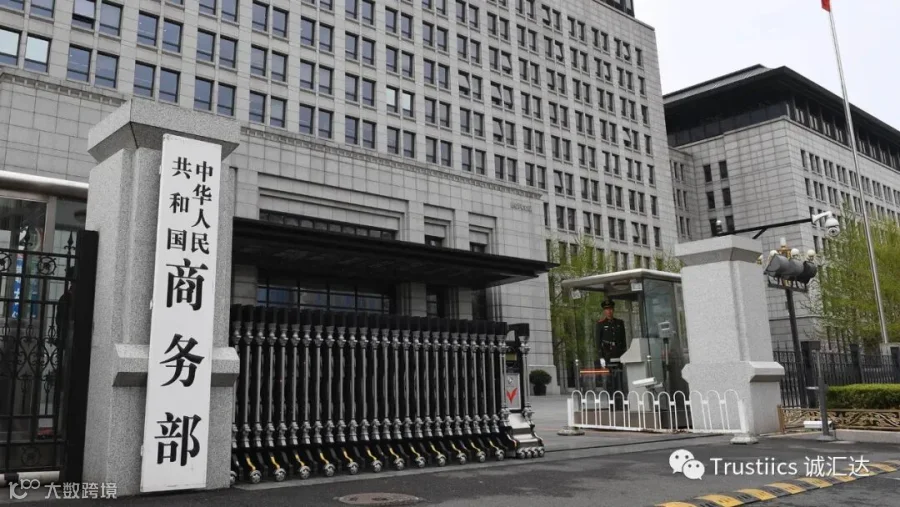
Prior to the Foreign Investment Law, setting up an FIE engaging in “restricted business” as set forth in the “Negative List” promulgated by the commerce department of the PRC (i.e., the MOFCOM) would be closely examined by MOFCOM before an approval would begranted. In order to receive such approval, all the required constitutional documents were put under strict scrutiny by local offices of MOFCOM where the FIE would be set up, and in practice, a different local office of MOFCOM might hold its own discretional view when granting the approval, which created practical issues or difficulties for foreign investors. FIEs not engaging in the restricted business in the Negative List would also be required to file a registration with MOFCOM post-establishment.
Unlike under the old approval regime, FIEs are now regulated via clearly defined and more comprehensive and market-oriented disclosure requirements. FIEs shall submit certain required corporate information, including some basic information about the corporation and its shareholders, corporate investments, and certain operating and financial information. This information will be submitted to MOFCOM via an “enterprise registration system” and “enterprise credit information disclosure system,” and will be made publicly available.

03
—

In addition to the “Negative List” setting forth what can and can not be invested in by foreign investors, the new Foreign Investment Law also introduced a national security review regime to review foreign investments in order to protect national security. However, the law omits the details of how this review regime will be established; comprehensive regulations may be issued in due course. What is clear is that China’s National Development and Reform Commission (NDRC) announced that it will take over responsibility from MOFCOM for the conduct of the review process.

—

Despite the above, there are still certain unresolved issues lingering in the new Foreign Investment Law that will either need to be further supplemented by implementation rules (such as point #4 above), or be further addressed. One of the questions that stands out the most is what the authorities are going to do about the so-called “VIE” structure (or “contractual arrangements” in lieu of equity control), commonly used by companies in restricted businesses aiming for offshore listing. In particular, the issue is whether an investment using a VIE structure shall be deemed as a foreign investment and therefore one that should be regulated by the Negative List, and how to deal with those companies using this structure that have already been listed in the offshore securities market, etc. Although an attempt has been made to address this issue in an earlier draft of this law (which caused tremendous attention from both the business and legal communities), the final Foreign Investment Law chose to be silent on this issue due to its complexity and the profound and far-reaching implications for the business world not only domestically but also globally. Before any concrete conclusion is made, the use of an VIE structure for IPO purpose will still be risky and challenging.
This article simply functions as a very brief introduction to the new Foreign Investment Law which came into effect January 1, 2020. If you have any specific issues or questions, you can ask Daniel directly on www.Trustiics.com or drop him an email at li.zhuoru@jingtian.com.

Daniel Lee
Partner of Jingtian & Gongcheng, Shanghai Office
Registered Counsel and Member of Quality Assurance Panel on Trustiics
Mr. Daniel Lee obtained an LL.M. degree from Harvard Law School in 2001. He has worked at Jingtian & Gongcheng Shanghai Office since 2012 as a partner. Prior to joining Jingtian & Gongcheng, Mr. Lee worked at Lee and Li, a leading firm in Taiwan, as well as at the U.S. elite firms Davis Polk & Wardwell, Morrison & Foerster and Weil, Gotshal & Manges for over a decade.
Mr. Lee specializes in securities law and capital markets, cross-border M&A, foreign direct investments and general corporate counseling, etc. Mr. Lee is a qualified lawyer in the following legal jurisdictions: mainland China, State of New York, the U.S., and Taiwan.

商业转载请联系Trustiics获得授权,未经书面许可任何机构和个人不得以任何形式修改、使用、复制或传播;非商业转载请注明出处。感谢配合。