


Prologue
An MOU, or a very simple ambiguous “contract” with a Chinese counterparties could lead to potential risks, such as difficulties with dispute resolution. Why is this important to your business?
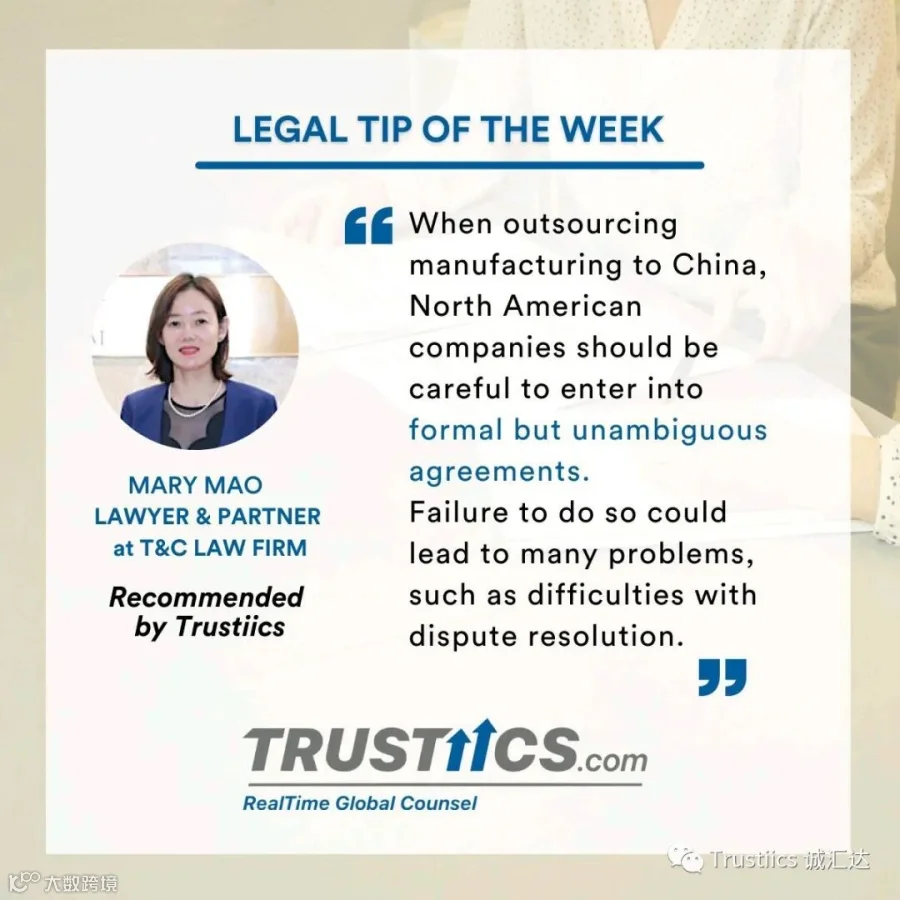
Here is our tip of the week for doing business in China.

Part 1
The nature and scope of cooperation
It is very common for North American companies to outsource manufacturing to China. However, it is also common to sign only a framework agreement, an MOU, or a very simple ambiguous “contract” with their Chinese counterparties.
This loose contractual relationship will put the North American company at a disadvantage when there are disputes.
Such documents often fail to address some basic but important matters. First and foremost, I would suggest making crystal clear, in any outsource manufacturing agreement, the exact nature and the scope of the cooperation.
It is important to specify in the agreement whether the Chinese party is a seller, an OEM manufacturer, or an agent of procurement.
When a dispute ends in the courtroom, a loose contract can even make it hard for a judge to correctly understand the legal relationship between two parties or the intention of the contracting parties.
end


Doing Business in China?

Access vetted and English-speaking Chinese lawyers on your personal dashboard in just a few clicks and get your legal questions answered anytime, anywhere. Visit us at Trustiics.com or send us an email at support@trustiics.com
"China Legal Tips" is Trustiics's weekly post on LinkedIn. The content gives practical tips given by leading business lawyers to international businesses navigating through China's complicated and ever-changing legal, regulatory and business environment. Follow Trustiics on LinkedIn and share your comments with us.