


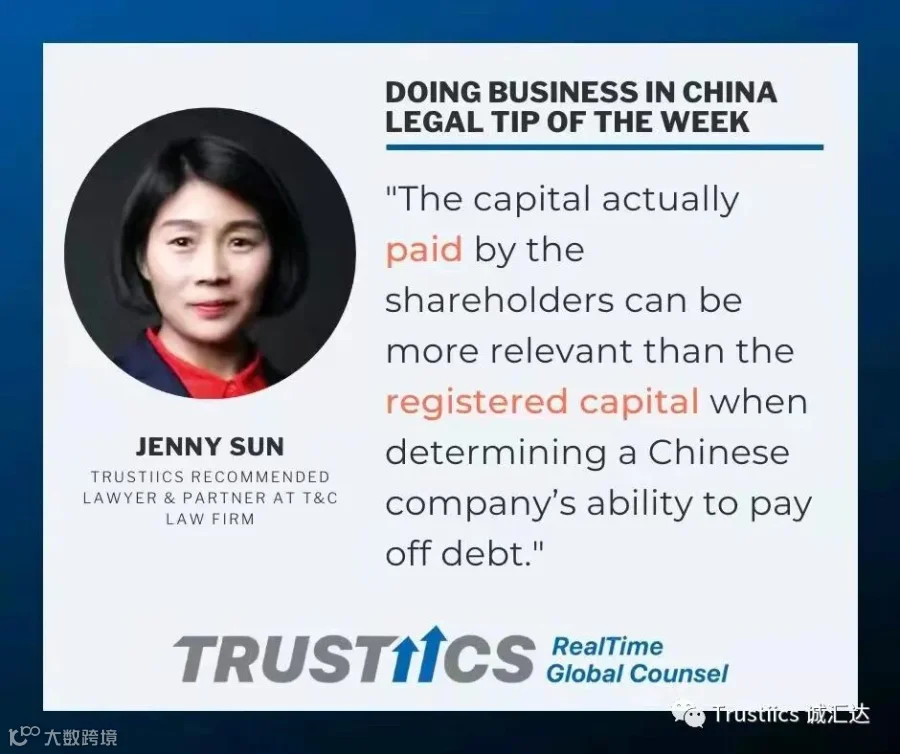
Paid-In Capital, on the other hand, is the amount of capital actually contributed to the company by shareholders.
Under Chinese corporate law, companies use a subscription system for each shareholder’s capital contribution. It is legal for shareholders to pay the committed capital long after the company’s formation, sometimes even decades after incorporation, as long as it is allowed under the company’s Articles.
As a result, it is possible for a shell company without any assets to have USD $5 million in registered capital but $0 in paid-in capital.
This should be a red flag to North American companies, as it indicates that the company may not be able to meet its financial obligations, pay for its order of products, or deliver on its supply contracts.
What does this mean for North American companies doing business in China?
end


Doing Business in China?

Access vetted and English-speaking Chinese lawyers on your personal dashboard in just a few clicks and get your legal questions answered anytime, anywhere. Visit us at Trustiics.com.
China Legal Tips - Trustiics's weekly posts on LinkedIn, provides practical tips given by leading business lawyers to international businesses navigating through China's complicated and ever-changing legal, regulatory and business environment.