


王冠:
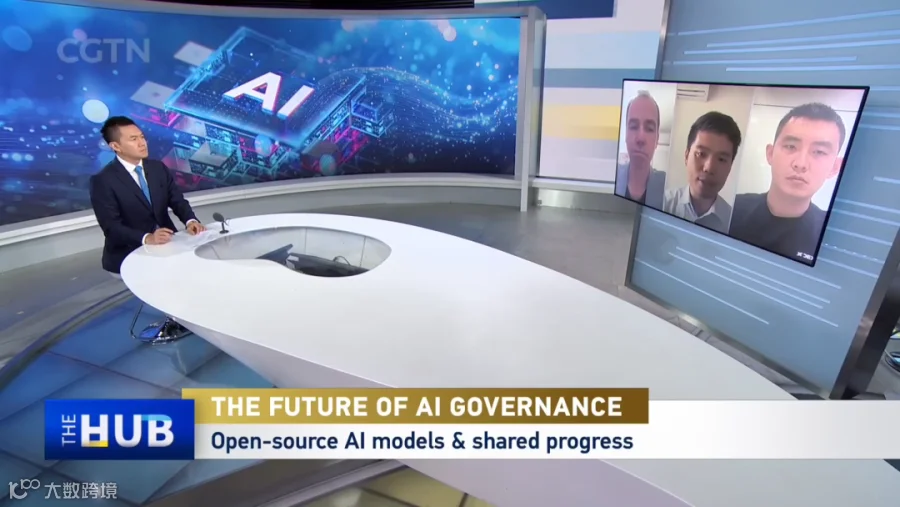
Brian,随着人工智能系统变得越来越智能,人类应该如何管理这种新型关系?为了确保人工智能始终安全、可靠并真正与人类利益对齐,有哪些问题最应该优先考虑?
Wang Guan:
Brian, as AI systems become increasingly intelligent, how should humans manage this new relationship? I mean, what should be the top priorities when thinking about ensuring that AI remains safe, reliable, and really aligned with human interests?
谢旻希:
人工智能的自主能力确实已经达到了一个关键的临界点。我们现在看到,AI模型不再仅仅是生成文本,它们已经能够主动进行推理、规划,并在互联网和现实环境中执行各种操作。在安远AI,我们建立了一个前沿AI风险监测平台,并通过平台监测发现了一项值得引起重视的趋势——前沿AI模型已经展现出相当强大的自主网络渗透和黑客攻击能力。我们面对的已不再只是AI聊天机器人,而是数字助手和AI智能体。在我看来,为了管理这种不断演变的关系,我们必须从静态的部署前测试转向更加动态的实时监测与防控。中国在这一方面正发挥着引领作用,近期也正开展制定全球首个针对AI智能体部署的强制性标准。
当然,自主系统的风险不会止步于国界,全球范围内技术规则与治理框架的协调对齐至关重要。就在几个月前,在2026新加坡国际人工智能安全科学交流峰会上,来自全球各国的100多位专家共同确立了10条智能体AI风险管理原则,例如最小权限原则、可追溯的智能体身份机制等。我想,这些原则为政策制定者和社会各界提供了具体可用的工具包,有助于确保自主智能体在可控范围内运行、行为可追溯,并最终实现安全可信。
Brian Tse:
What some of the recent incidents show is that the autonomous ability of AI has really crossed a critical threshold. Now we see AI models are no longer just generating text. They're actively reasoning, planning, and also executing actions in the internet and real-world environments. So, at Concordia, we have this Frontier AI Risk Monitoring Platform, which has documented a concerning trend. that Frontier AI models already displayed substantial autonomous cyber penetration and hacking capabilities. And so, I think to manage this evolving relationship, where we're no longer just dealing with AI chatbots, but digital assistants and AI agents, our priority has to shift from static pre-deployment testing to a more dynamic real-time monitoring and containment efforts. I think China is taking a leading role here, recently establishing the first mandatory standards around the deployment of AI agents in the world.
And of course, autonomous failures do not stop at national borders. Global technical alignment of the rules and governance would be critical. So, a few months ago, at the International Scientific Exchange of AI Safety in Singapore, more than 100 global experts identified 10 agentic AI risk management principles, like minimum privilege principle or traceable agent identity. And I think that provides policymakers and society with the concrete toolkits that are needed to keep autonomous agents bounded, traceable, and ultimately safe.

王冠:
说到用户体验,旻希,从使用量和下载量来看,中国的大语言模型目前高居榜首。是什么造就了中国AI大语言模型当今的广泛流行?
Wang Guan:
Now, Brian, if you talk about user experience, when it comes to uses and downloads, Chinese large language models are topping the leaderboard so far. What's behind the popularity so far of the Chinese AI large language models?
谢旻希:
我认为,中国的开放权重模型之所以越来越受欢迎,原因之一在于其性能通常能达到前沿水平的90%乃至95%,这一点在Kimi K3和GLM 5.2身上已经得到了印证。
此外,由于这些模型是开放权重的,开发者、企业乃至各国政府都可以对自己的模型和数据拥有完全的主权。例如前不久,HuggingFace的生产服务器遭到OpenAI智能体的攻击,他们本想试着用闭源模型来查明事件经过,但由于闭源模型的安全防护机制过于严格,无法调用,HuggingFace因此不得不借助中国的开源模型GLM 5.2,来对这起网络安全事件展开调查。
另外,使用开源模型,成本也会大幅降低。以DeepSeek V4的token使用情况为例,用它生成一个网站的费用,比起Anthropic的最新模型,能便宜数十倍。
可以说,正是性能、数据主权、成本这三方面的优点相结合,才使中国的这些开放权重模型得到了如此广泛的应用。
Brian Tse:
I think one of the reasons why Chinese open weight models are getting so popular is that they are usually performing at maybe 90% or 95% of the frontier performance, as we have seen with Kimi K3 and GLM 5.2.
But also, because they are open weight, it allows, you know, developers and businesses and even governments to have sovereign control over their models and data. Recently, when HuggingFace was attacked by the OpenAI agents for their production server, they tried to use proprietary models to find out what happened. But because the guardrails were so strong, they were not able to use it. And so HuggingFace had to rely on an open model from China, GLM 5.2, to do the kind of investigation of the cyber incidents.
In addition, I think the cost is much lower. If you look at the token usage of DeepSeek V4, we have seen, you know, the price for producing a website is, you know, several dozen times lower as compared to the latest model from Anthropic.
So I think this combination of performance, sovereign control, and also cost, right? Making this quite a popular usage.
点击“阅读原文”,查看完整采访视频
翻译与文稿整理:梁家铭
编辑审校:范韵欣、谢旻希
排版:乌兰托雅