



CSCMP的朋友们大家好
今天为大家推荐一篇关于美国新关税对采购国际半成品的美国制造商影响的文章,作者是圣路易斯联邦储备银行的经济学家Fernando Leibovici。分别从新关税影响下进口产品性质分析和对美国制造商影响的分析两个角度,分析的结构很有趣,那么我们就开始欣赏全文吧!

美国新关税对主要采购国际半成品的美国制造商造成沉重的打击
令人惊讶的是却有很少的关税是针对来自中国消费品的

大多数人都知道,美国针对从中国进口的各种产品发布了新的关税政策,这些产品每年进口额约500亿美元。上周,美国宣布对中国进口商品上调新一轮的关税。
圣路易斯联邦储备银行的经济学家Fernando Leibovici最近公布了一些关于在新关税影响下的进口产品性质分析及其对美国制造商的影响的分析,至少结果看起来很有趣。
CSCMP供应链通讯提到:美国制造业中的机动车辆、拖车和半拖车以及计算机、电子和光学设备行业从国外购买了大约30%的半成品。
Leibovici的分析看起来仅关注在第一轮关税上调过程中从中国进口的商品。
设想一下,在一直在中国购买的消费品,认为关税下降主要是由于过去20年里美国零售商和消费者一直在消费的中国消费品吗?再想想。
主要有三种进口商品:
(1)消费品;(2)固定设备;(3)中间投入。
第三个类别代表组件和材料——例如汽车零部件——用于制造其他最终产品,比如一辆完整的汽车。
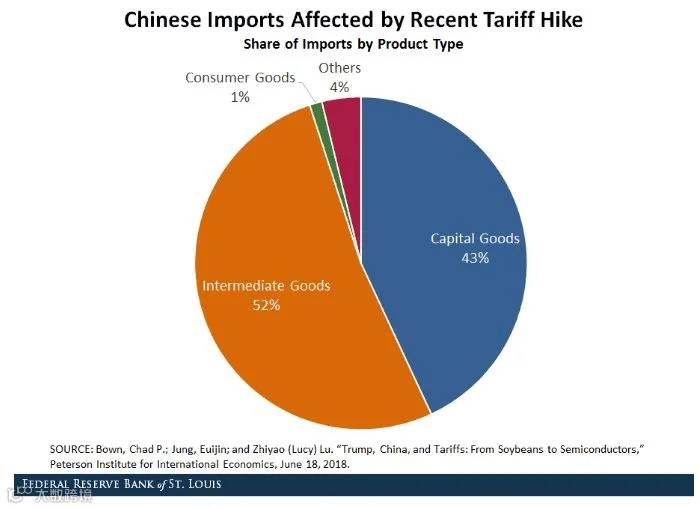
下面的图表显示,进口的生产投入(固定设备和中间投入)几乎占了受关税上调影响的商品的全部进口价值。消费品仅占总量的1%。
Leibovici指出:尽管提高关税“可能会使一些国内企业受益,因为可以提高它们在世界其他地区的竞争力,但他们也会在提高生产投入的关税可能最终会通过提高生产成本方面受损。”
他的研究发现,美国制造业的中间投入非常密集,而半成品的支出占总生产总值的64%。其中,22%的半成品支出是从国外购买的。
Leibovici表示:“通过上面的数据可以看出,提高中间投入的关税可能会对美国制造商的生产带来重大的负面影响,近期的关税上调,迫使中间投入的价格提高,导致美国制造商提高产品价格,从而损害消费者利益,并导致减产。
在研究中进一步发现,一些美国大型制造业中,半成品占成品总价值的份额特别高。例如:汽车、拖车和半挂车行业占84%(是美国制造业总产值的8.2%),而食品、饮料和烟草行业占75%(占美国制造业总产值的15%)。
但是这些半成品不仅来自国内供应商,还有很大一部分来自海外。一方面,汽车,拖车和半拖车以及计算机,电子和光学设备行业从国外购买约30%的半成品。另一方面,食品,饮料和烟草以及纸浆,纸张,纸制品,印刷和出版业只在全球范围内采购了约10%的半成品。当然这些半成品不仅仅都来自中国,但是无论如何或多或少都会感受到新的关税的影响。
Leibovici总结道:“总而言之,有一件事情是清楚的,那就是美国制造业中各行各业都在大量使用中间投入,至少10%。在此情况下,国内同类产品很难替代这些进口的半成品,因此它们很可能对美国的制造商带来重大的影响,”
以上的文章已经全部结束,如果您有更好的想法或者建议,您可以在下方留言区与会员或专家们进行探讨沟通。

英
文
原
文
以下是英文原文
如果中文翻译不准确,请指出哦。
原汁原味读着更过瘾
New US Tariffs will Hit Many US Manufacturers Hard because of Focus on Intermediate Goods
Surprisingly Few Tariffs on Imports of Consumer Goods from China

Most everyone knows that new US tariffs were announced on imports of a variety of products from China that collectively represent about $50 billion in annual imports into the US. The US last week then announced an additional round of tariff hikes on imports from China.
Economist Fernando Leibovici of the Federal Reserve Bank in St. Louis recently published some analysis on the nature of the imported products subject to the tariffs and how that might impact manufacturers in the US, and the results are interesting to say the least.
Supply Chain Digest Says... The motor vehicles, trailers and semi-trailers and the computer, electronic and optical equipment industries purchase around 30% of their intermediates from abroad.
Leibovici's analysis looks only at imports from China raised in the first round of tariffs.
Think the tariffs fall largely on the consumer goods that US retailers and consumers have been buying from China in droves for two decades? Think again.
There are basically three types of imported goods: (1) consumer goods; (2) capital equipment; (3) intermediate inputs.
That third category represents components and materials – auto parts, for example – that are used to make other final products, like a finished car.
The graphic below shows that imports of production inputs (capital equipment and intermediate inputs) account for nearly all of the total import value among the goods affected by the tariff hike. Consumer goods comprise a mere 1% of the total.
While higher tariffs "could benefit some domestic firms by improving their competitiveness vis-à-vis the rest of the world, raising tariffs on production inputs may end up hurting them by raising their costs of production," Leibovici notes.

His research found that US manufacturing industries use intermediate inputs very intensively, with expenditures on intermediates accounting for 64% of the total value of production on average. Of that, 22% of the total expenditure on intermediates is purchased from abroad.
"This evidence suggests that raising tariffs on intermediate inputs may have a significant negative impact on US manufacturers," Leibovici says. "By raising the price of intermediates, the recent tariff hike may force US manufacturers to raise prices, thus hurting consumers and leading to cuts in production."
He further found the share of share of intermediates to total value of the finished good was particularly high in some of the US' largest industries. For instance, it was 84% in the motor vehicles, trailers and semi-trailers industry (8.2% of total U.S. manufacturing output) and 75% in the food products, beverages and tobacco industry (15.0% of total U.S. manufacturing output).
But the intermediate goods can come from offshore or domestic suppliers. On one end, the motor vehicles, trailers and semi-trailers and the computer, electronic and optical equipment industries purchase around 30% of their intermediates from abroad. On the other end, the food products, beverages and tobacco and the pulp, paper, paper products, printing and publishing industries only source around 10% of their intermediates internationally – and of course not all from China – but regardless should feel a modest impact from the new tariffs as a result.
Netting it all out, "One thing is clear," Leibovici concludes. "All industries within the US manufacturing sector make intensive use of intermediate inputs and source at least 10% of these internationally. Insofar these imported intermediates are hard to substitute with domestic counterparts, then they are likely to have a significant impact on the functioning of US manufacturers."


CSCMP中国
高管内参
教育和连接全世界供应链管理者
· 高管内参
· 认证培训
· 专业活动