
大数跨境

Wang Huiyao: Asia Will Make the Difference

Wang Huiyao: Asia Will Make the Difference 全球化智库CCG
2026-07-30
3
导读:On 8 July 2026, Henry Huiyao Wang, founder and president of the Center for China and Globalization (

CCG President, attending the 2026 Horasis Asia Meeting, spoke on Asia’s economic rise, regional integration, and responsibility for sustaining an open global trading system.


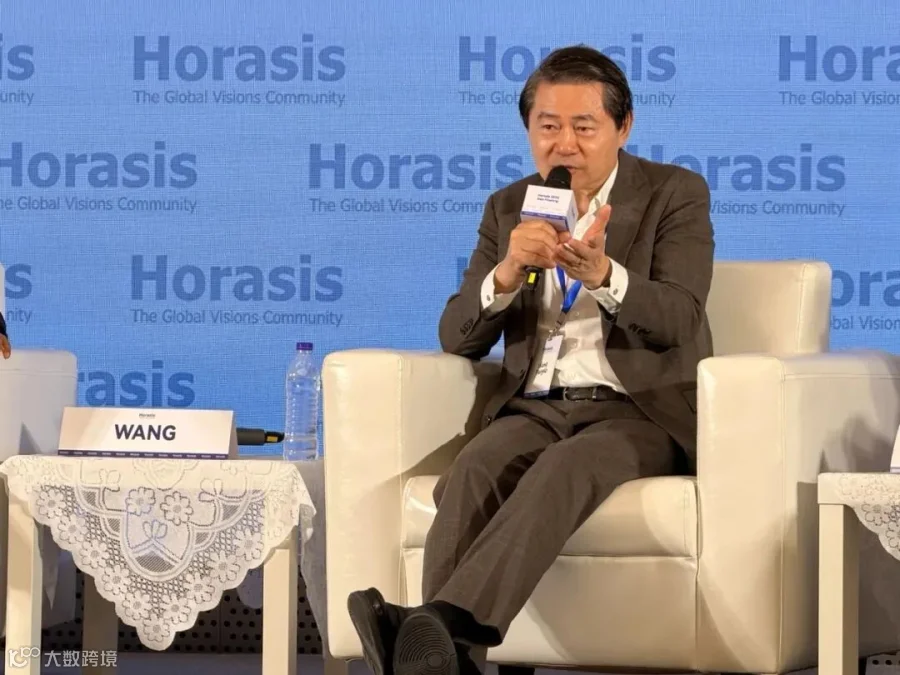
On 8 July 2026, Henry Huiyao Wang, founder and president of the Center for China and Globalization (CCG), participated in a plenary session at the 2026 Horasis Asia Meeting in Hengqin and Macau.


▲Video| Reimagining Globalization: Asia's Vision for an Open World@ 2026 Horasis Asia Meeting


Titled “Reimagining Globalization: Asia’s Vision for an Open World,” the session was chaired by Jake Yu, Global Managing Partner of Peregrine Ventures, USA.
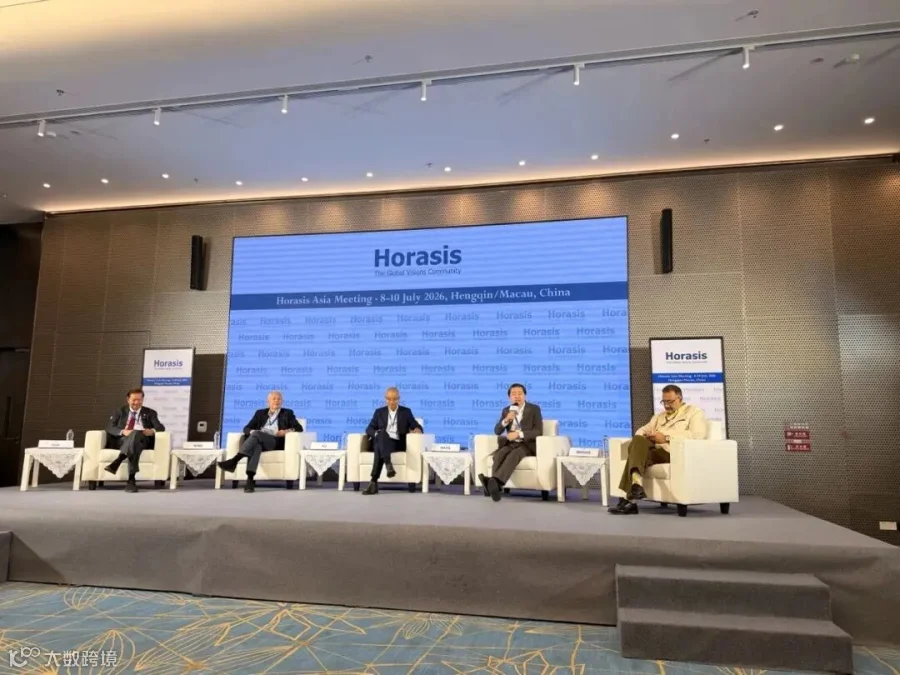


Other panellists included Roger King, Founder and Chairman of ODS Holdings Inc., Hong Kong; Vinod Sekhar, Chairman of Petra Group, Malaysia; and Michael Yeoh, President of the KSI Strategic Institute for Asia Pacific, Malaysia.


Wang observed that China’s growing economic weight gives it both the opportunity and the responsibility to help sustain a rules-based global trading order — one reshaped for a more multipolar world rather than built around a single centre.


Mabel Lu Miao, co-founder and secretary-general of CCG, was also invited to attend the forum and speak at the session “Asia 2076: Eastern Wisdom, New Productive Forces,” held on the afternoon of 9 July.
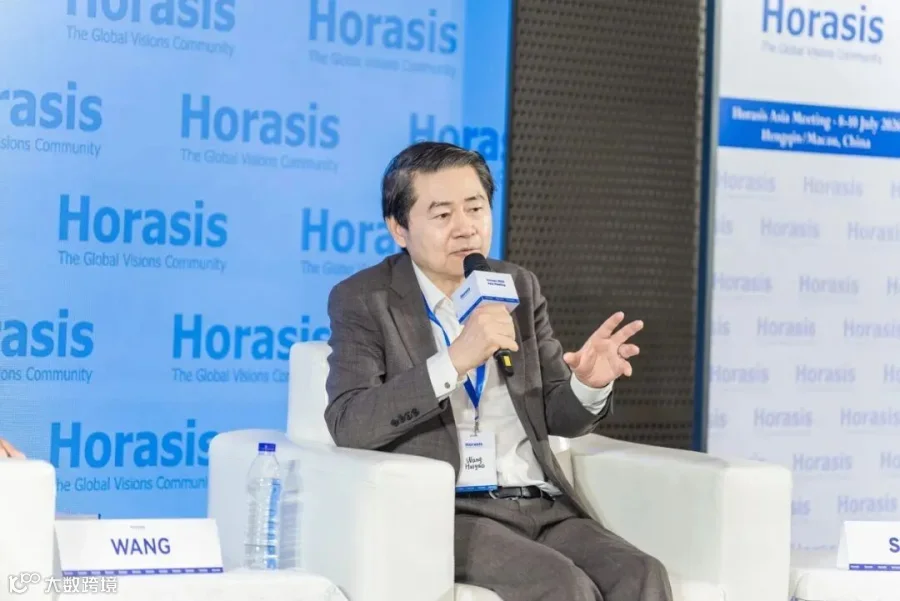


The following article has been compiled from Wang’s remarks during the panel discussion and lightly edited and connected for clarity.


I want to thank Frank for inviting me and congratulate Horasis on the tenth anniversary of the Horasis Asia Meeting. This is great. We have all the Asian leaders and Asian elites sitting in this room, and I have really enjoyed the discussion we have had so far.


The topic is globalisation. I think globalisation itself, as a system for the greater good over the last 81 years, needs to be upgraded, improved and enhanced. I am not saying globalisation is dead. I think we need to reform the system. That is probably what we need to do.


I would like to share a few of my thoughts about the megatrends that we are going to see.


Asia’s emerging role


First of all, Asia is going to become the biggest leading economy in the world. We already have over half of the world’s population. We are already getting close to 50 per cent of global GDP. Most of all, we have no wars right now here in the Far East. I mean, it is incredible.


China is still growing, maintaining around 5 per cent GDP growth and contributing over 30 per cent of global GDP growth.


I think Asia is going to become an anchor of the world economy for the foreseeable future — the next 25 or even 50 years. I think that trend is a megatrend that will continue. That is the number one trend I am seeing.


The second trend I am seeing is that Asia is also going to be a new saviour of globalisation. We see that globalisation has had all the bumps and setbacks, as well as deglobalisation.


The WTO is under enormous threat. The United States has pulled out of the WTO Appellate Body, and we also see the United States pulling out of 66 international organisations.


But in Asia, regional governance and multilateralism remain very strong.


Michael just mentioned RCEP, the largest free trade agreement in the world. We also talk about the CPTPP. Japan and Australia are really making the CPTPP more attractive. China wants to join it, and the UK has just joined it as well.


As a new set of rules and a new trade scheme for the world, Asia is really providing a lot for the people in this partnership. In that sense, Asia is setting a new trend for the future of the trading system.


Trade is still the most booming and active area of Asia. ASEAN is China’s largest trading partner. It used to be the United States, but ASEAN has since taken over. You can see how strong this area is.


That is my second trend: Asia is making new schemes, conducting new experiments and pursuing new reforms to really push for globalisation.


Number three is that Asia is also a major source of support and a main component of the BRICS countries. China and India are the two largest Global South countries and are enormously important.


The GDP of the BRICS countries is already larger than that of the G7. Newly thriving nations such as the BRICS countries are taking new shapes and forms, and China and India are really making a huge contribution there.


I would say that this is also, again, coming out of Asia.


The fourth megatrend I can see concerns the Asia-Pacific. Shenzhen is going to host the APEC summit this year. President Trump is coming. He will show off his new Air Force One. He said he is going to fly it to Shenzhen. We will see what comes out of that.


What I am saying is that the Asia-Pacific will probably become more stable. I see China–US relations moving from strategic rivalry under Trump 1.0 to strategic stability under Trump 2.0. That is going to move the Asia-Pacific towards greater strategic stability. I think that is great.


Number five is that the United States is actually pulling back quite a bit. The United States is pivoting towards Latin America and really concentrating on the Western Hemisphere.


In the Asia-Pacific, and Asia in particular, I see more room for movement. China will play a more active role. The Pacific is big enough to accommodate both United States and China.


You talked about global governance. China is proposing a lot of new schemes, such as the recent establishment of the international mediation centre in Hong Kong. China will host an AI summit next month in Shanghai. I am going to propose setting up an international AI organization. China has also just set up an international World Data Organization, or WDO.


I think there are a lot of new reforms coming up to really push globalisation forward.


The final trend I can predict is that the integration of Asia is going to be central to this new globalisation.


ASEAN, as Michael mentioned, is such a great model. It is a little bit different from the European Union. In the European Union, all 27 members have a veto. You cannot just do things. But ASEAN works by consensus, which is really great.


Can we really start from ASEAN? Can we have an Asian Union? Mahathir Mohamad and Lee Kuan Yew mentioned this many years ago. Let us get China into this. Let us get India, Japan and South Korea into this. I see Asia gradually becoming an economic magnet.


Basically, these are two different philosophies that China and the United States are pursuing. The United States really has securitization, with 800 military bases around the world. China does not really have many military bases—basically none. But China is developing economically based organizations, starting from Asia.


We have the China–Africa Summit, the China–Latin America Summit, the China–Central Asia Summit, the China–Arab States Summit and the China–Europe Summit. There is a lot of collaboration that China can pursue to push for economic globalisation.


Asia itself is going to be a big magnet and a big driving force for globalisation over the next quarter-century.


In that sense, China has proposed more economically centred global governance.


As the United States pulls out of the WHO, China has announced that it will donate US$500 million to the WHO. China also supports the United Nations. Twenty per cent of its budget comes from China, while the United States has not paid on time.


China has almost become the largest contributor. China is also the largest peacekeeping-contributing country among the five permanent members of the UN Security Council.


I can see China and Asia also pivoting towards the wider world. Things are really becoming very significant. We need new global governance to reform the existing system.


I really appreciate President Trump’s visit and the movement in China–US relations from strategic rivalry to strategic stability.


We will probably have two major powers, but all the other countries do not have to pick sides now. They will just choose on the merits. Who is going to provide benefits? Who is going to bring more economic benefits?


We are entering a very interesting world, and Asia will make the difference.


A proposal for an Asia summit


In terms of the most important thing to do over the next 12 months, I would like to make a proposal out of this meeting.


We are having the 2026 Horasis Asia Meeting. In the next 12 months, we should have an Asia summit.


We have an African summit involving 54 countries. We have a Latin American summit. We have an EU summit. We do not have an Asia summit.


Let us get all the Asian leaders together. Let us come to Hong Kong or go somewhere else. Let us have an Asia summit.


That will probably be the most important thing, at least for Asian leaders to build up trust, have face-to-face dialogue and really come to the table—to have a big round table of all the Asian leaders.


Asia is the engine. It is the future growth of the world. It also needs to work with all the other continents.


I think we really need some critical new thinking over the next 12 months. I think it is clear.


A proposal for an “AI20”


I also have a proposal concerning artificial intelligence.


We are going to have a G20 summit in Miami in December this year. But we see that the world is becoming more and more dangerous.


Why can we not have an “AI20”?


Let us get the 20 largest AI companies to sit together and talk about the pros and cons, the dangers, the risks that we may face, and how we can work together.


Rather than remaining divided and having an AI arms race, we need to recognize that we could be creating a disaster. AI could be more dangerous than nuclear bombs. Humanity could be wiped out by AI.


Alongside the G20, let us have the AI20. Let us get the 20 largest AI companies in the world to sit together and talk about how we can really build a better world and how AI can serve humanity.


The balance between the market and government


There is always a swing back and forth. We talk about small government and a big market. The Third Plenum document of the Communist Party of China also said that the market should play a decisive role.


But as the world becomes more complicated and globalisation deepens, I think there needs to be a balance between the market and government.


For example, we saw the financial crisis. It was all left to the market, and then the market crashed.


China combined the market reforms introduced by Deng Xiaoping with government planning, including five-year plans. That produced the miracle.


I think the United States is actually learning some of that. The CHIPS Act and other government interventions are examples. Government intervention in Europe has also been speeded up.


The way forward is to strike the right balance, as China is trying to do.


For example, China’s private sector contributes more than 50 per cent of tax revenue, more than 60 per cent of GDP, 70 per cent of innovation, 80 per cent of employment and 90 per cent of enterprises.


Then another part of the economy consists of SOEs, which do all the difficult jobs in key sectors, including disaster relief, earthquake relief and high-speed railways. These can be losing businesses, but they provide public goods.


Then there are multinational companies. They employ 40 million Chinese employees and account for 40 per cent of China’s exports.


We all talk about the overcapacity of China’s electric vehicles, but 20 per cent of those vehicles are made by multinational companies, including Tesla, BMW and many others.


This hybrid system that China has right now has supported the fastest-growing economy over the last four decades. That is probably the right balance.


You have a large private sector. You have some multinational companies. You have some SOEs.


Government and market forces have to really find a compromise. That right balance is something everybody is in search of, and I think China is conducting a big experiment.


Note: The above text is the output of transcribing from an audio recording. It is posted as a reference for the discussion.


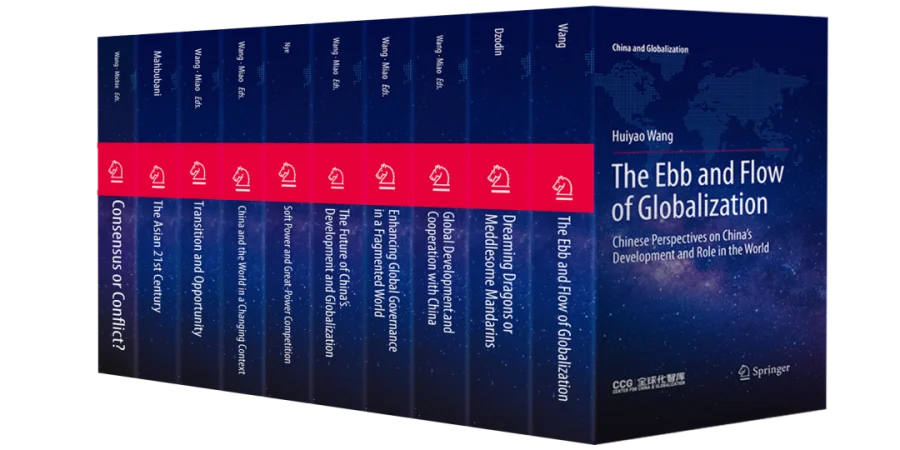
CCG Books


● Published by Springer


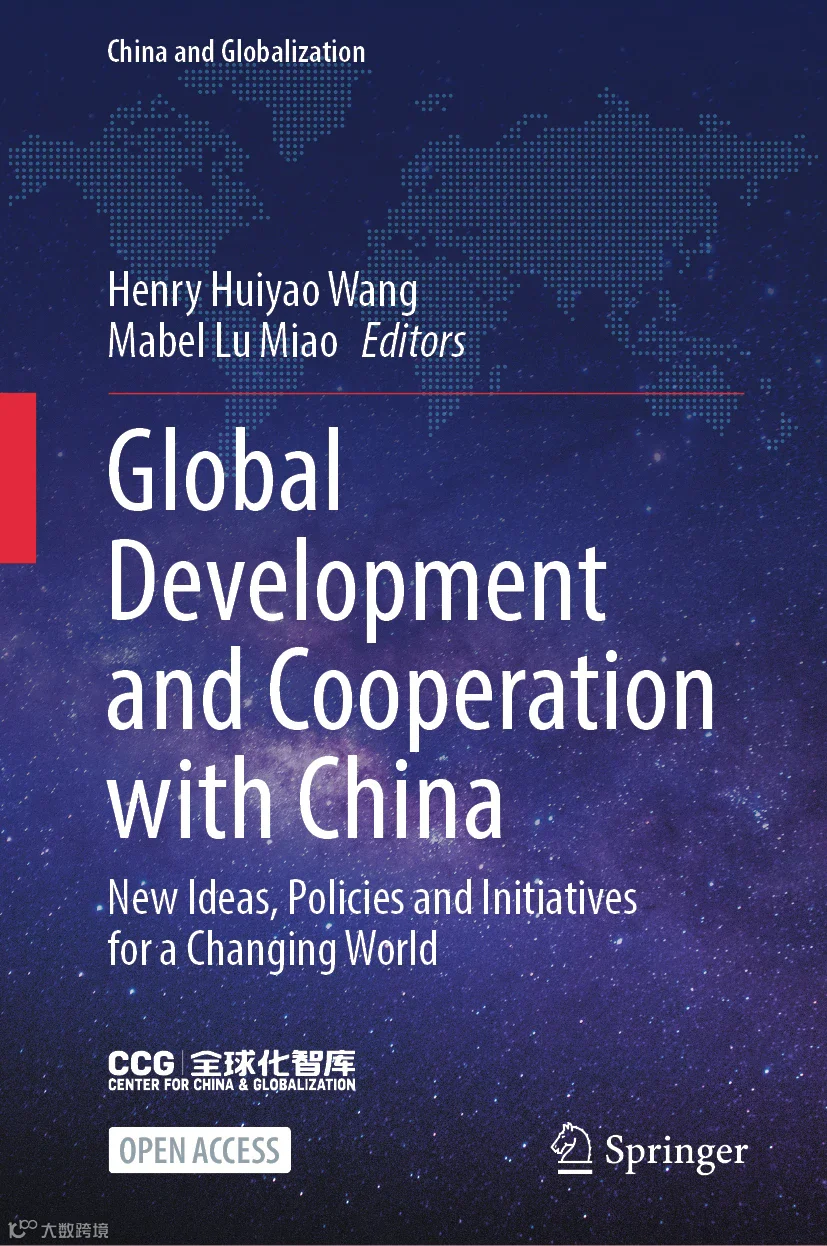
● Editors: Henry Huiyao Wang, Mabel Lu Miao


● More Infomations:

This series, co-edited by Henry Huiyao Wang, President of the Center for China and Globalization (CCG) and Mabel Lu Miao, Secretary of CCG, is designed to have a wide range of global views on issues related to China and Globalization, opportunities and challenges on China’s rise to the world and China’s roles in global governance, global economy, global development and global security. The first of its kind to publish the works of over two hundred contributors internationally, this book series seeks to create a balanced global perspective by gathering the views of highly influential global opinion leaders, former statesmen, ambassadors, well known academics and think tank experts, multinational CEOs and foreign chambers of commerce from China and around the world. Since 2021, the series has published 11 volumes, with total e-book downloads exceeding 6.63 million. It has received significant attention and sparked extensive discussions both domestically and internationally. To make it easier for the audience to access the books, the series is primarily published under an “open access” model, enabling readers to download almost all books free of charge from the publisher’s website, Springer.


● Links:


Global Availability of the "China and Globalization" Series


● Published by Springer 

● Editors: Henry Huiyao Wang, Mabel Lu Miao


More Information

This new book focuses on the latest trends in four major areas—global governance, trade and economics, science and technology, and culture and exchange—providing the reader with information on the latest developments in these areas with a special focus on China and its relevant contributions. It is hoped that this book will inspire deeper discussion and consideration of the issues we face as a global community and how non-governmental entities can play a stabilizing role in global communication and in exploring solutions to common challenges.


● Links:

https://link.springer.com/book/9789819624515


● Published by Springer 

● Editors: Henry Huiyao Wang, Mabel Lu Miao


More Information

This open access book explores the ‘polycrisis’ currently affecting nearly all nations by exploring key themes such as multilateralism and globalization from the perspective of think tanks from nearly every continent, searching for various solutions to the ills that currently plague the world and a way to create a future in which everyone benefits.


As China’s preeminent non-governmental think tank, the Center for China and Globalization (CCG) has invited 30 leading figures from the global think tank community to sift through the myriad layers of multilateralism and global governance and provide a contextual analysis of major themes both from a theoretical and practical perspective, focusing on China in detail, but also examining the world as a whole.


● Links:

https://link.springer.com/book/10.1007/978-981-97-2558-8


● Published by Springer 

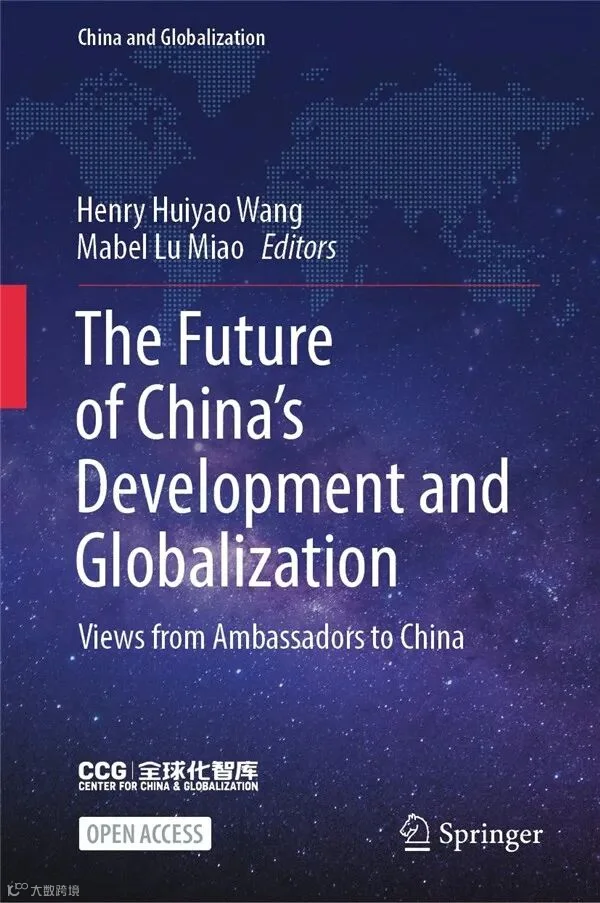
● Editors: Henry Huiyao Wang, Mabel Lu Miao


More Information

As the world continues to recover from the fear and uncertainty of the Covid-19 pandemic, a new set of challenges like increased geopolitical tensions and climate change have become increasingly prominent. This open access book, which contains the views of ambassadors to Beijing on topics ranging from bilateral relations to potential cooperation, global development and even more of the most immediate issues, aims to help readers make sense of our changing world and China’s role in it.


Building on the success of our previous volume China and the World in a Changing Context: Perspectives from Ambassadors to China, the Center for China and Globalization (CCG) has invited 27 ambassadors to examine China’s role in this context of constant flux, focusing specifically on China’s perspective, including its trade and investment ties with other countries, as well as its role in multilateral regional relations and global governance.


● Links:

https://link.springer.com/book/10.1007/978-981-99-7512-9


● Published by Springer 

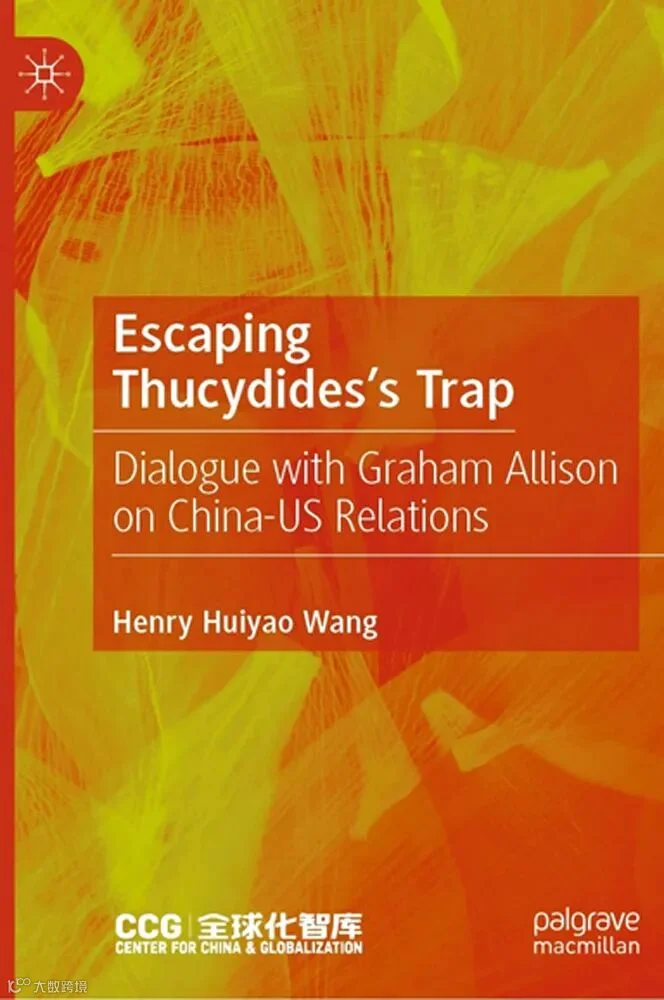
● Authors: Wang Huiyao


More Information

The book raised the question of how relations between the US and China will unfold is one of the most consequential of the 21st century. In the past decade, perhaps no thinker has had a greater influence on how this question is understood in both the US and China than eminent Harvard scholar Graham Allison, who developed the idea of the Thucydides Trap to warn of the risk of war erupting between a rising power and a ruling power in the power transition process.


This book presents a comprehensive collection of Allison’s views and writings on US-China relations from 2017 to 2022, covering a range of topics including the balance of power between the two sides, where the relationship is headed, and lessons from history on how conflict can be avoided.


● Links:

https://link.springer.com/book/10.1007/978-981-99-2236-9


● Published by Springer 

● Authors: Joseph S. Nye


More Information

This open access book consists of essays selected from Joseph S. Nye, Jr.’s last three decades of writing and illustrate a variety of perspectives on the nature of power, the role of the United States in the world and US-China relations. Through this collection, it is hoped that readers will gain a better understanding of today’s global environment and find that while great power competition may be inevitable in a world as centers of power shift, cooperating to address transnational challenges can be a positive sum game.


● Links:

https://link.springer.com/book/10.1007/978-981-99-0714-4


● Published by Palgrave Macmillan Singapore

● Editors: Wang Huiyao, Miao Lu


More Information

This book aims to help readers make sense of our changing world by sharing the views of global thought leaders on some of the most important issues of our time, from US-China relations and global governance to climate change and the COVID-19 pandemic.


The ten dialogues in this book were part of the “China and the World” series of online discussions hosted by the Center for China and Globalization (CCG). The series features CCG President Huiyao Wang in conversation with experts from a range of fields, from renowned scholars of international relations, economics, and history, to journalists, policymakers, and business leaders.


● Links:

https://link.springer.com/book/10.1007/978-981-19-3846-7


● Published by Springer 

● Authors: Wang Huiyao


More Information

This book focuses on globalization and China’s evolving role in the world, offering unique perspectives on a number of developments during a tumultuous period that began with Donald Trump’s election and ended with the outbreak of the Covid-19 pandemic. This period saw the global landscape reshaped by China’s continued rise, intensifying great power competition, and a public health crisis that has changed how we live.


The essays center on three interconnected themes – China’s remarkable development under its policy of Reform and Opening-up, China’s deepening integration into the global economy and rise in an increasingly multipolar world, as well as the quest to revitalize global governance and multilateralism to address the pressing global challenges of the 21st century.


● Links:

https://link.springer.com/book/10.1007/978-981-16-9253-6


● Published by Springer 

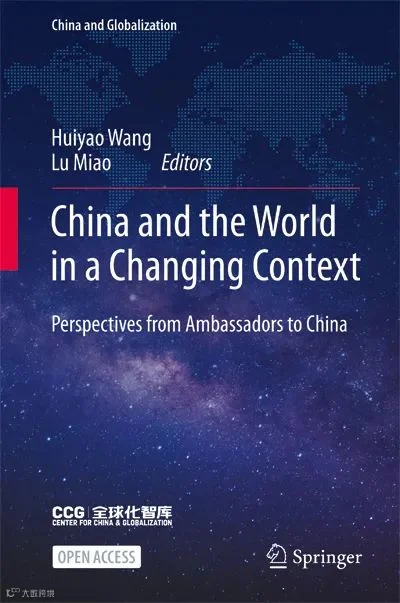
● Edited by Wang Huiyao and Miao Lu 


More Information

China and the World in a Changing Context-Perspectives from Ambassadors to China is the latest volume in CCG’s “China and Globalization” series, which seeks to create a balanced global perspective by gathering the views of highly influential scholars, practitioners, and opinion leaders from around the world on issues of policy and governance.


Ambassadors are a kind of vehicle and bellwether for globalization. These diplomatic envoys serve as pivotal contact points between nations across a wide range of fields, from economics and culture, to health and the environment. The special group of ambassadors in this book – all based in Beijing – are at the forefront of what, for many countries, is one of their most important bilateral relationships and the platform for one of the most striking and consequential developments in global affairs in the 21st century: the rise of China on the world stage.


● Links:

https://link.springer.com/book/10.1007/978-981-16-8086-1


● Published by Springer 

● Edited by Wang Huiyao and Miao Lu 


More Information

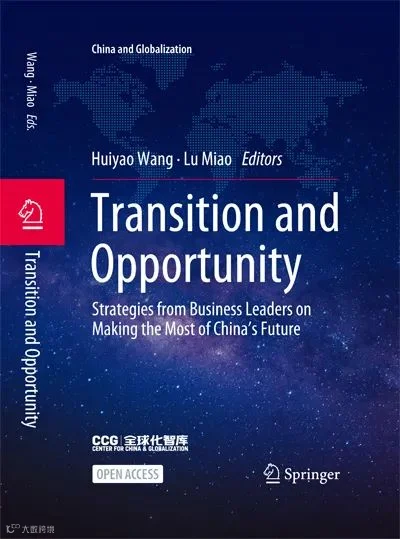
Released nearly two years after the outbreak of COVID-19, Transition and Opportunity brings together an array of CEOs and senior executives from leading multinationals, leaders of foreign trade associations and representatives of advocacy groups on the ground in China to share their views on the potential and risks China holds for business as the world economy recovers.


The 22 entries in this book include contributions from the heads of Beijing-based chambers of commerce representing the EU, the US, France, Switzerland and Brazil and others, CEOs and senior executives of MNCs like Airbus, Royal DSM, Michelin, LinkedIn and Herbalife as well as representatives of global consulting firms like KPMG, PwC, Accenture and Roland Berger.


Divided into three parts - ‘The Big Picture,’ ‘Analysis and Advice,’ and ‘On the Ground’ - content progresses from looking at how countries balance their own interests with China’s for that elusive ‘win-win’ formula, to the role consultancies and advisors play in helping companies succeed,  then looking at the experiences of individual companies to see how they have adapted and thrived in China.

.


● Links:

https://link.springer.com/book/10.1007/978-981-16-8603-0


● Published by Springer 

● Edited by Wang Huiyao and Alistair Michie 


More Information

This book brings together leading international scholars and policy-makers to explore the challenges and dilemmas of globalization and governance in an era increasingly defined by economic crises, widespread populism, retreating internationalism, and a looming cold war between the United States and China. It provides the diversity of views on those widely concerned topics such as global governance, climate change, global health, migration, S&T revolution, financial market, and sustainable development.


● Links:

https://link.springer.com/book/10.1007/978-981-16-5391-9


● Published by Springer 

● Edited by Wang Huiyao, President and Miao Lu, Vice President, Center for China and Globalization(CCG), Beijing, China 


More Information

The internationalization of Chinese enterprises is one of the most notable aspects of economic globalization in the 21st century. Despite the 2008 financial crisis and weak global outbound investment, under the “go global“ initiative, Chinese outbound investment has gone from strength to strength, while also diversifying in terms of investment modalities, destinations, and industries. However, growing anti-globalization sentiment in some countries has also created new challenges for Chinese firms expanding internationally.


Drawing on nearly 3000 data samples, using both quantitative and qualitative research methods, this book presents unique insights into the features and patterns of Chinese enterprises’ globalization. The analysis provides a useful reference for enterprises that have already gone global and those that plan to. In particular, this book investigates challenges confronted by Chinese companies when doing business in foreign countries. It summarizes research covering three angles, namely: the current situation, causation analysis and corresponding solutions, and recommendations for firms, government agencies and other institutions.


This book provides a comprehensive overview to help readers to grasp the broad picture of the international expansion of Chinese enterprises. It has important reference value for enterprises to help devise foreign investment strategy, seize opportunities, and navigate challenges in the course of globalization.


● Links:

https://www.springer.com/cn/book/9789811546457


● Published by Edward Elgar 

● Edited by Wang Huiyao, President and Miao Lu, Vice President, Center for China and Globalization(CCG), Beijing, China 


More Information

An excellent guide for understanding the trends, challenges and opportunities facing China through globalization, this Handbook answers the pertinent questions regarding the globalization process and China’s influence on the world.

With contributions from leading experts and international researchers, each chapter covers key topics regarding China’s participation in globalization, including: China’s new role in global economic governance; outward direct investment; China’s soft power and the implications for foreign relations; global migration, diaspora and talent. An enriching range of case studies and extensive empirical research are used to explore the successes and failures of globalization in China, and to discuss the dilemmas facing decision makers in today’s globalized world. A major contribution to the field, this Handbook offers valuable insights to China’s often misunderstood globalization process.

An essential reference for academics and researchers looking for a go-to empirical resource, this Handbook provides scholars of economics, politics and East Asian studies with an exemplary selection of contemporary research on China and globalization.


● Links:

https://www.e-elgar.com/shop/handbook-on-china-and-globalization


● Published by Springer

● Authors: Wang Huiyao, President and Miao Lu, Vice President, Center for China and Globalization(CCG), Beijing, China 

The first effort to address the gap regarding higher-end talent within the scholarly work on internal labor migration in China

Provides an essential overview of the major milestones in China’s talents attraction policies, as well as several recommendations to help further improve those policies

Investigates corresponding policies in Germany, Japan, and Singapore to serve as a basis for comparison

Provides a snapshot of first-hand reference material for relevant stakeholders involved in cooperation with China


More Information

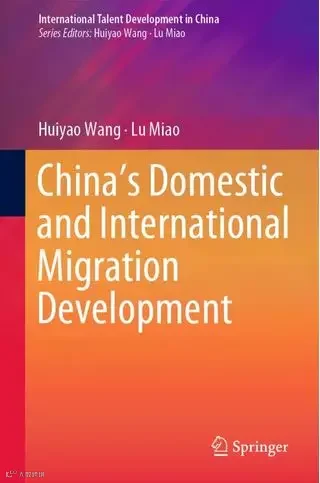
This book offers the most comprehensive, up-to-date assessment of China’s domestic and international migration. Restructuring economic development requires large numbers of educated and skilled talents, but this effort comes at a time when the size of China’s domestic workforce is shrinking. In response, both national and regional governments in China have been keen to encourage overseas Chinese talents and professionals to return to the country. Meanwhile, the Chinese government has initiated a number of policies to attract international highly-skilled talents and enhance the country’s competitiveness, and some Chinese policies have started attracting foreign talents, who are coming to the country to work, and even to stay. Since Chinese policies, mechanisms, and administration efforts to attract and retain skilled domestic or overseas talents are helping to reshape China’s economy and are significantly affecting the cooperation on migration and talent mobility, these aspects, in addition to being of scholarly and research interest, hold considerable commercial potential.


● Links:

https://www.springer.com/gp/book/9789811362552#aboutBook


Other CCG News:


CCG’s 12th China and Globalization Forum Held in Beijing

CCG concludes side event within Munich Security Conference 2026

CCG Marks 150th Book Milestone with Seminar on Its Publishing Journey

New Year Message 2026: Reflecting on a Year of Global Dialogue and Growth

Experts call for strategic stability in U.S.-China ties

CCG, Indonesian Embassy Mark 75 Years of China–Indonesia Ties

CCG, Belgian Embassy hold seminar on future of multilateralism

CCG holds the 10th China Global Think Tank Innovation Forum in Beijing

Recent CCG visits in Brazil & Ethiopia

Recent CCG visits in Germany & the UK

Global Talent Summit 2025 Holds in Beijing Sub-Center

300 Participants from 60 Countries Attend CCG Annual Forum

CCG Conducts Track Two Visit to US

CCG hosted the 9th China Global Think Tank Innovation Forum

2024 GYLD Annual Forum successfully held  in Beijing

11th China Inbound-Outbound Forum Successfully Held @2024 CIFTIS

60 Countries’ Participants Joined China and Globalization Forum

CCG seminar on global governance & future of China and Africa

Senior Diplomats from 20 countries discuss China's green transition

Text of Pascal Lamy and Chinese trade experts @ CCG VIP Luncheon

Book Launch: Enhancing Global Governance in a Fragmented World

Transcript of CCG session in WTO Public Forum

20 US media leaders attended special dinner held to welcome CCG

Transcript of EU-China think tank exchange

Turkish Foreign Minister Hakan Fidan speaks at CCG

CCG Ranked 64th in the World's Top 100 Think Tanks


【声明】内容源于网络
0
0
全球化智库CCG
中国领先的位列世界百强的全球化智库,也是唯一获得联合国特别咨商地位的中国智库。拥有全职研究和工作团队近百人,致力于全球化、全球治理、国际关系、国际经贸、人才全球化、企业全球化等领域的研究与活动,获得国家授予的独立招收博士后资质。
内容 8175
粉丝 0
全球化智库CCG 中国领先的位列世界百强的全球化智库,也是唯一获得联合国特别咨商地位的中国智库。拥有全职研究和工作团队近百人,致力于全球化、全球治理、国际关系、国际经贸、人才全球化、企业全球化等领域的研究与活动,获得国家授予的独立招收博士后资质。
总阅读51.6k
粉丝0
内容8.2k