

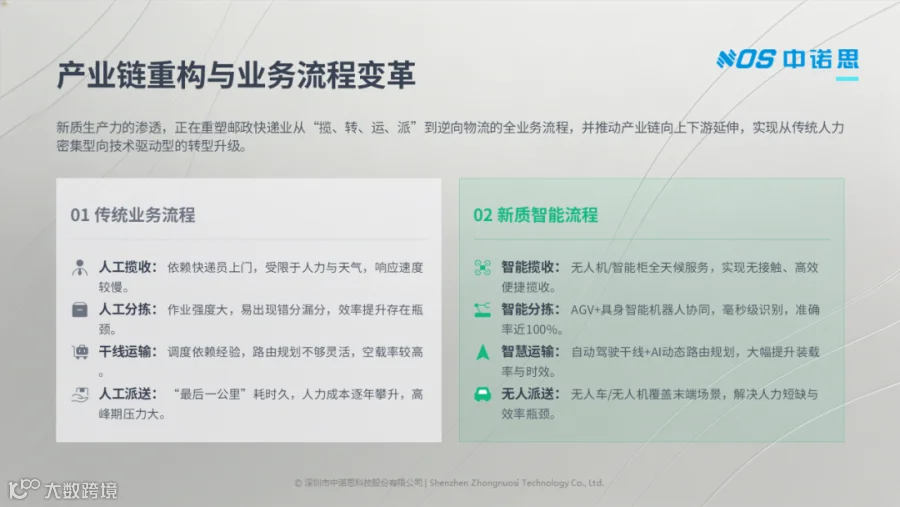
今天,中国邮政快递业持续稳居全球领先地位,业务规模、网络覆盖密度、数字技术应用及产业融合发展水平稳步提升。与此同时,行业深度转型过程中,劳动力结构性短缺、末端运营成本攀升、绿色低碳与安全监管常态化趋严等深层次挑战日益凸显。以具身智能、低空经济、大数据、人工智能为核心的新质生产力技术,已从试点示范阶段迈入规模化落地部署阶段,驱动行业由传统劳动密集型业态,加速向技术技能密集、创新驱动的现代化业态迭代,岗位结构迎来系统性重构。
Today, China's postal and express delivery industry has maintained a leading global position with steady improvements in business scale, network density, technology application and industrial integration. Meanwhile, the industry faces in-depth challenges during its high-quality transformation, including structural labor shortages, rising terminal operation costs, and increasingly stringent norms for green development and safety supervision. New quality productivity technologies represented by embodied intelligence, low-altitude economy, big data and artificial intelligence have advanced from pilot demonstration to large-scale deployment, driving the industry’s accelerated transformation from labor-intensive to technology-skill-intensive and innovation-driven development, with a systematic restructuring of job structures.
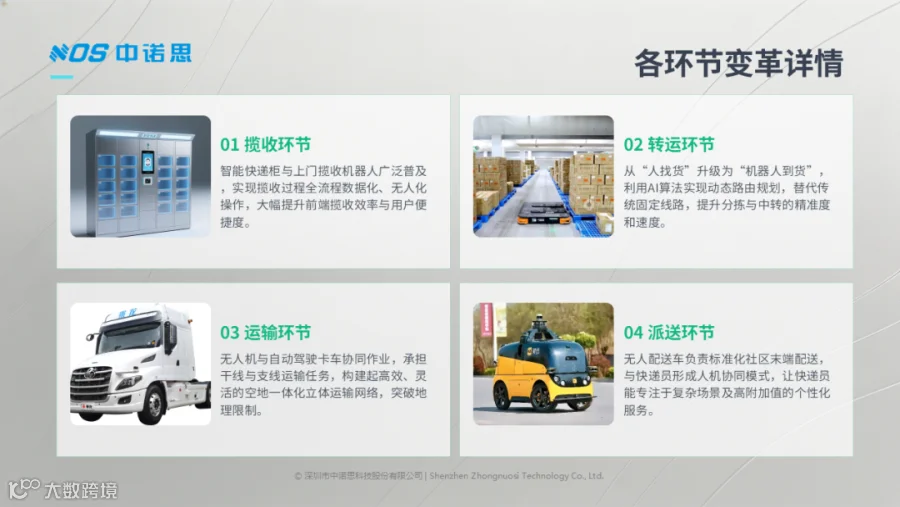
2026年作为中国“十五五”规划开局之年,《邮政业发展“十五五”规划》明确了2030年行业发展宏伟目标:邮政行业业务收入突破2.4万亿元,快递业务收入达2万亿元,快递业务量增至2700亿件。“人工智能+邮政快递”正式成为行业未来五年高质量发展的核心主线,具身智能分拣机器人、低空寄递物流系统等新技术场景全面普及,推动行业完成从劳动密集型向技术密集型的根本性转型,人才需求结构随之发生颠覆性变革,行业人才培养正式从单一操作型人才培育,转向数据、算法、系统运维兼备的复合型新质人才培育新阶段。
As the starting year of China's 15th Five-Year Plan, 2026 marks a new chapter for the industry. The 15th Five-Year Plan for the Development of the Postal Industry has set ambitious development goals for 2030: the operating income of the postal industry will exceed 2.4 trillion yuan, the express delivery business income will reach 2 trillion yuan, and the express delivery business volume will hit 270 billion pieces. The "Artificial Intelligence + Postal Express Delivery" model has become the core development theme of the industry in the next five years. The widespread application of embodied intelligent sorting robots and low-altitude logistics delivery systems has promoted the fundamental transformation of the industry from labor-intensive to technology-intensive, bringing disruptive changes to the talent demand structure. The industry’s talent cultivation focus has shifted from single skilled operational talents to compound new-quality talents proficient in data analysis, algorithms and system operation and maintenance.
本报告以国家部委顶层政策为指引,以2026年8月为核心时间节点,立足邮政快递业高质量转型发展实况,聚焦具身智能、低空经济两大核心新质赛道,构建多维权威研究体系。研究依托国家发展改革委、交通运输部、国家邮政局最新政策文件,对标国家新职业技能标准与教育部“中-高-本”贯通高技能人才集群培养教学标准,综合智联招聘、猎聘等主流平台人才大数据及国内外权威行业研究最新成果,并借鉴发达国家邮政物流人才培养成熟模式,运用大数据计量分析、多情景预测等科学研究方法。
Centered on August 2026 and guided by top-level national policies, this report focuses on the high-quality transformation of the postal and express delivery industry, targeting two core new-quality tracks: embodied intelligence and low-altitude economy. It adopts a multi-dimensional and authoritative research framework, drawing on the latest policy documents issued by the National Development and Reform Commission, the Ministry of Transport and the State Post Bureau. Aligned with national vocational skill standards and the integrated teaching standards for postal majors covering secondary vocational, higher vocational and applied undergraduate education issued by the Ministry of Education, the report integrates talent big data from mainstream recruitment platforms and authoritative domestic and foreign industry research achievements. It also learns from mature talent cultivation models in developed countries including Germany, the United States and Japan, and adopts scientific research methods such as big data econometric analysis and multi-scenario prediction.
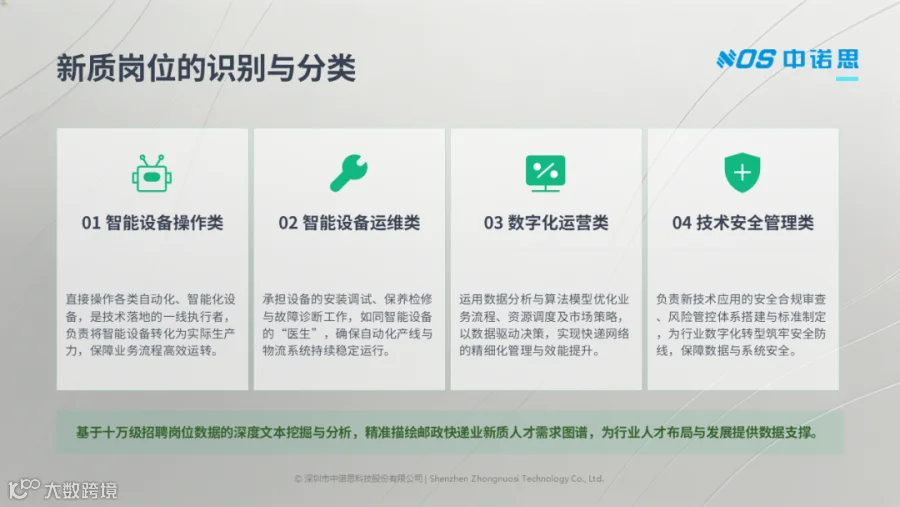
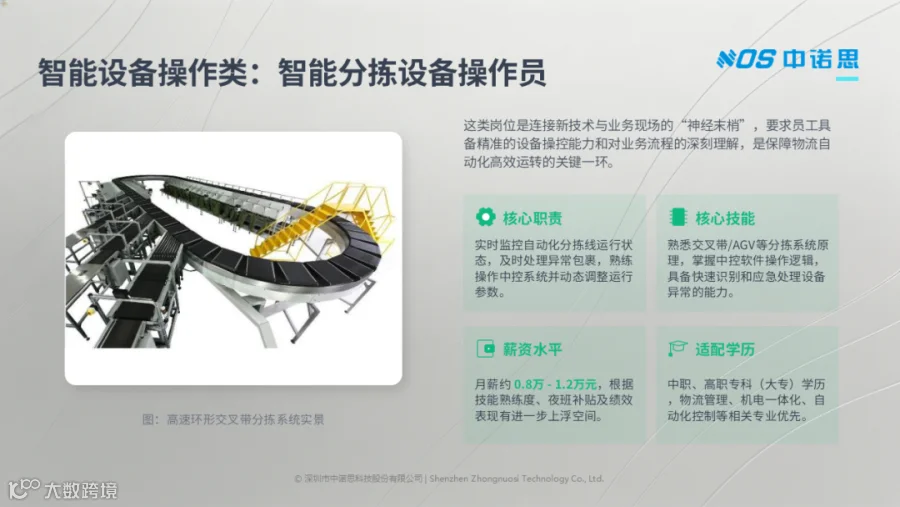
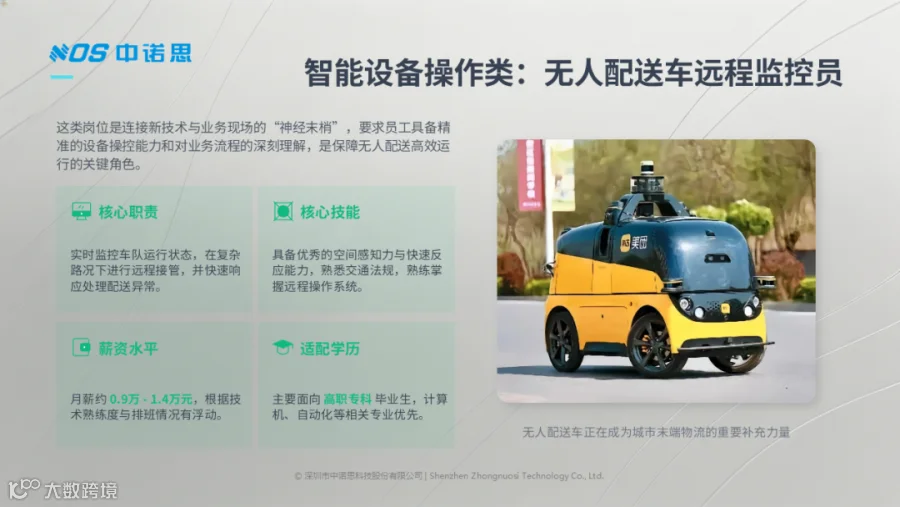
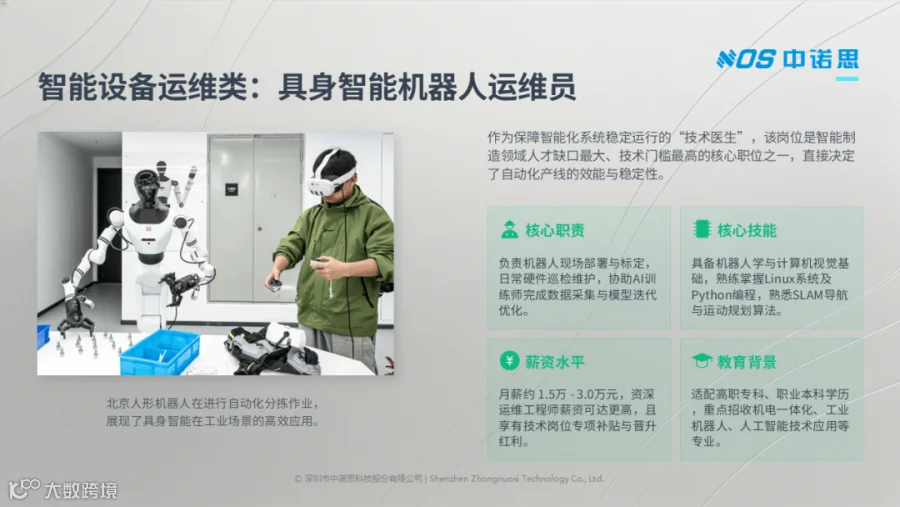
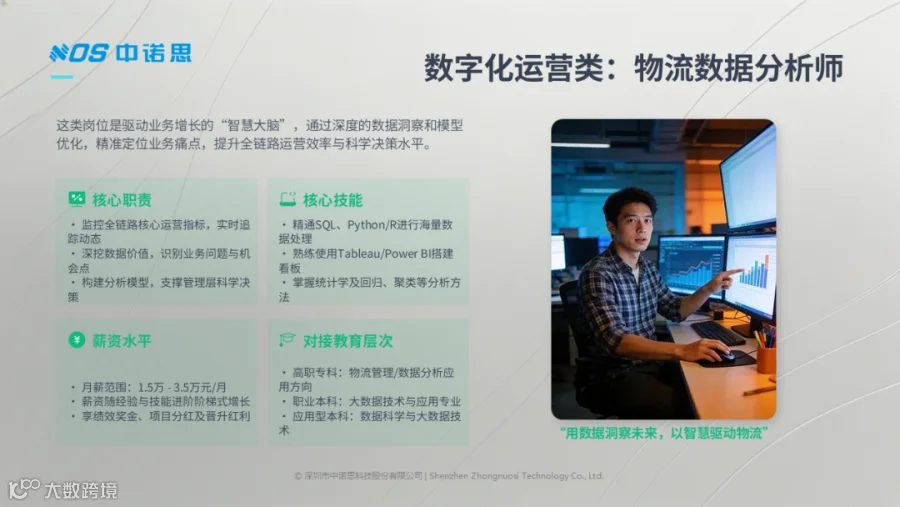
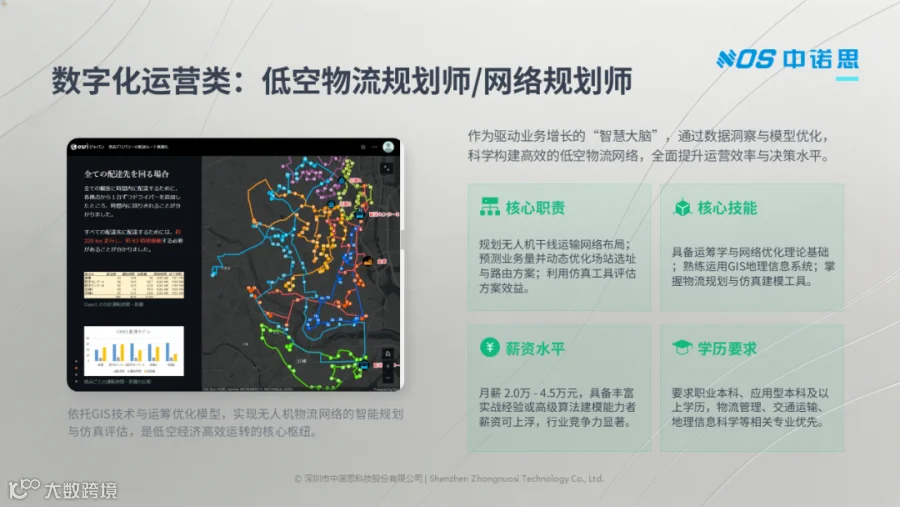
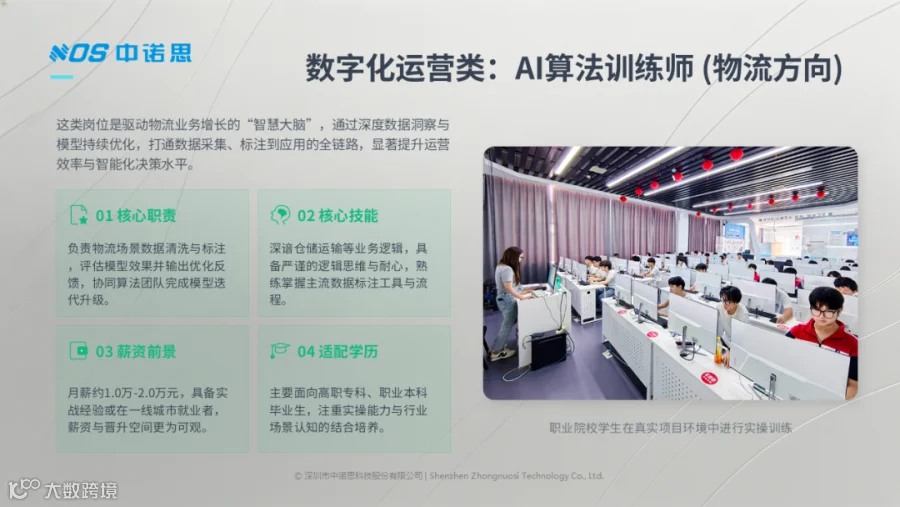
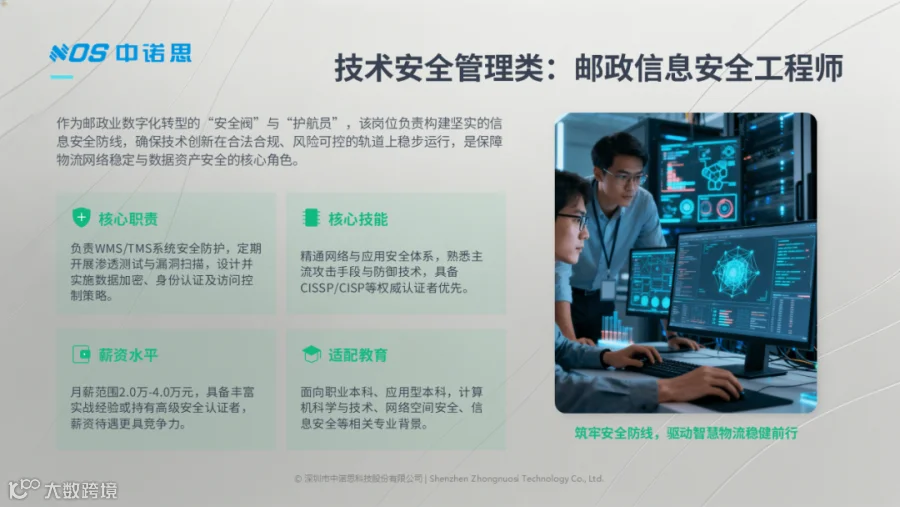
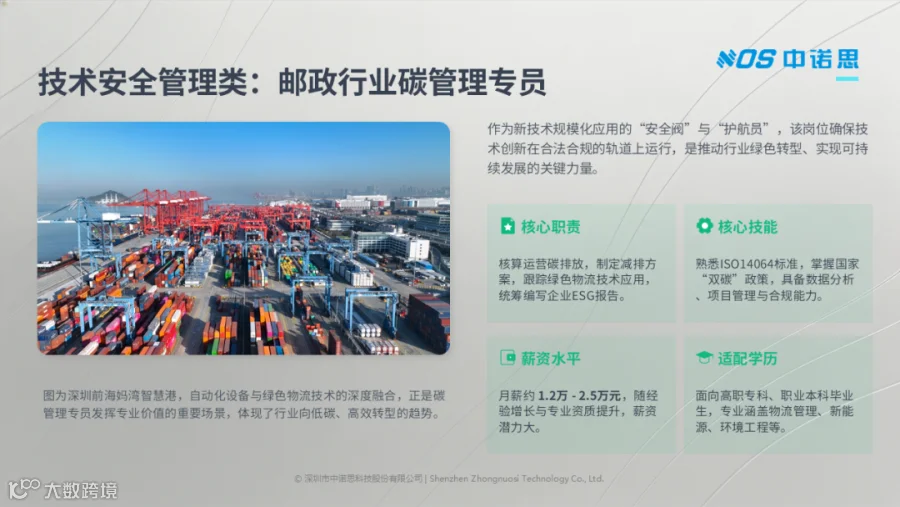
报告覆盖运营操作层、技术技能层、管理协调层、创新研发层的四层行业岗位图谱,精准识别智能设备运维、无人机物流运营、具身智能训练、低空物流规划、供应链数据分析等新兴岗位簇群,系统剖析传统岗位转型路径与新质岗位核心能力要求。研究证实,行业人才需求已形成“高端研发管理人才、智能技术运维应用人才、复合型一线服务人才”的三元结构,整体呈现从体力密集型向技术技能密集型、人机协同型加速升级的鲜明特征。
The report innovatively constructs a four-tier industry job spectrum covering operational staff, technical and skilled personnel, management and coordination personnel, and innovative R&D personnel. It accurately identifies emerging job clusters such as intelligent equipment operation and maintenance, UAV logistics operation, embodied intelligence training, low-altitude logistics planning and supply chain data analysis, and systematically analyzes the transformation path of traditional jobs and the core competency requirements of new-quality jobs. The research confirms that the industry’s talent demand has formed a ternary structure of high-end R&D and management talents, intelligent technology operation and maintenance talents, and compound front-line service talents, showing an accelerated upgrading trend from labor-intensive to technology-skill-intensive and human-machine collaborative development.
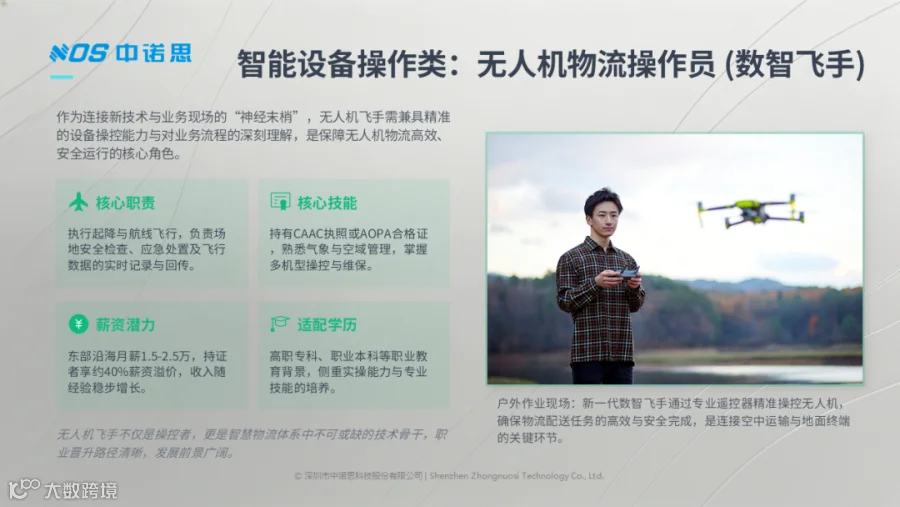
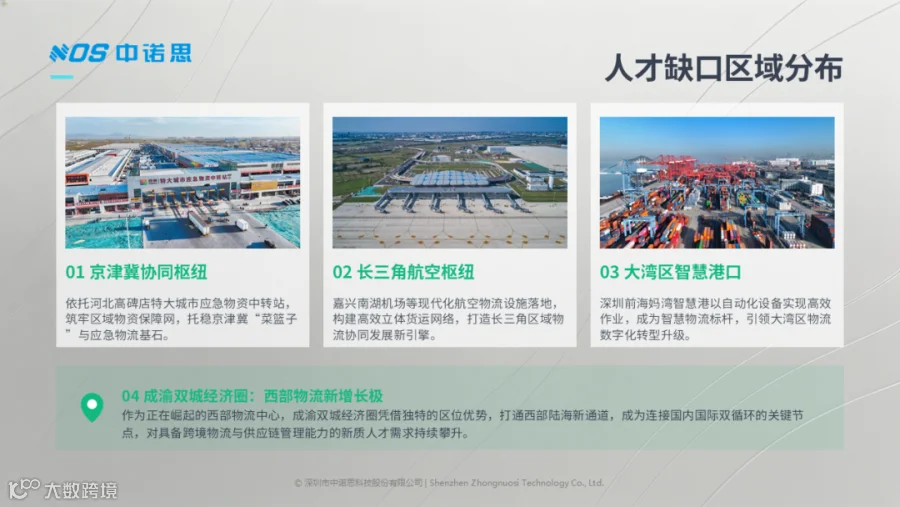
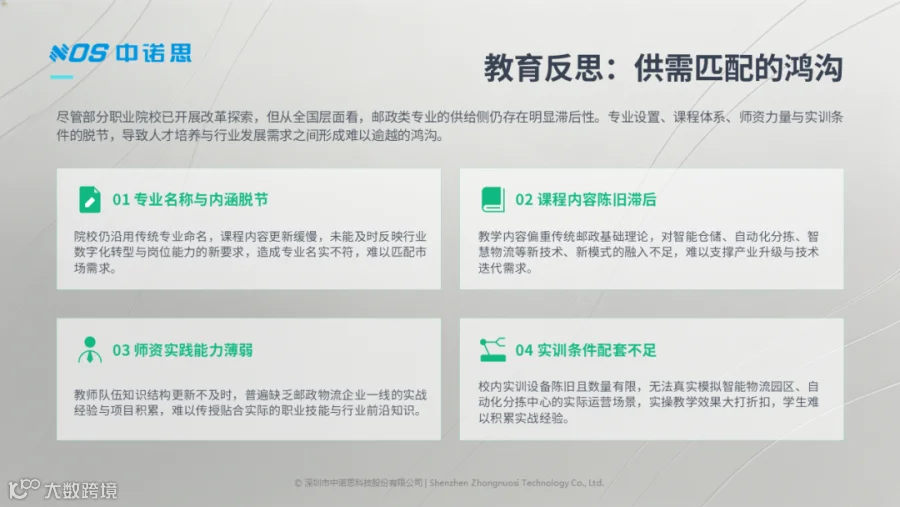
当前行业人才供给存在突出结构性矛盾:传统基础操作岗位供给过剩,新质技术岗位人才缺口持续扩大,2026年行业技术技能人才缺口达35万至50万人,其中65%以上集中于新质岗位领域,持证无人机飞手、智能机器人运维工程师等高端技能人才供需失衡问题尤为突出。同时,国内邮政类职业教育体系存在明显供需错配问题,课程内容滞后产业技术迭代、实训场景与企业真实生产环境脱节、各学段人才培养定位模糊、产教融合深度不足,新质岗位核心技能人才供需匹配度处于严重失配区间,难以支撑行业规模化、智能化升级发展需求。
At present, there is a prominent structural imbalance in the industry’s talent supply. Traditional basic operational posts face oversupply, while the talent gap for new-quality technical posts continues to expand. In 2026, the industry’s shortage of technical and skilled talents ranges from 350,000 to 500,000, of which more than 65% is concentrated in new-quality posts. The supply-demand mismatch of high-end skilled talents such as certified UAV operators and intelligent robot operation and maintenance engineers is particularly severe. In addition, China’s vocational education system for postal majors has obvious supply-demand mismatches, including outdated curriculum content lagging behind industrial technological iteration, disconnection between training scenarios and enterprise real production environments, ambiguous talent cultivation positioning at different educational levels, and insufficient in-depth integration of industry and education. The matching degree between vocational education training and core skill requirements of new-quality posts is at a serious mismatch level, failing to support the large-scale and intelligent upgrading of the industry.
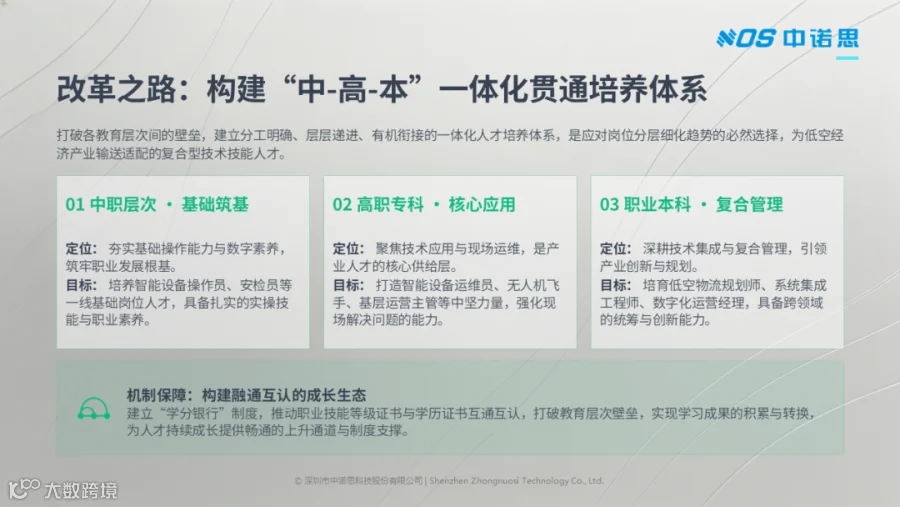
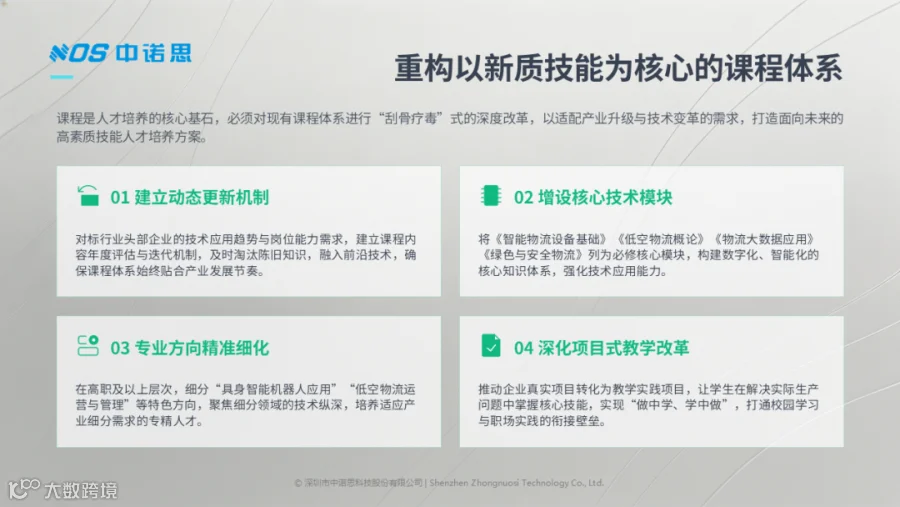
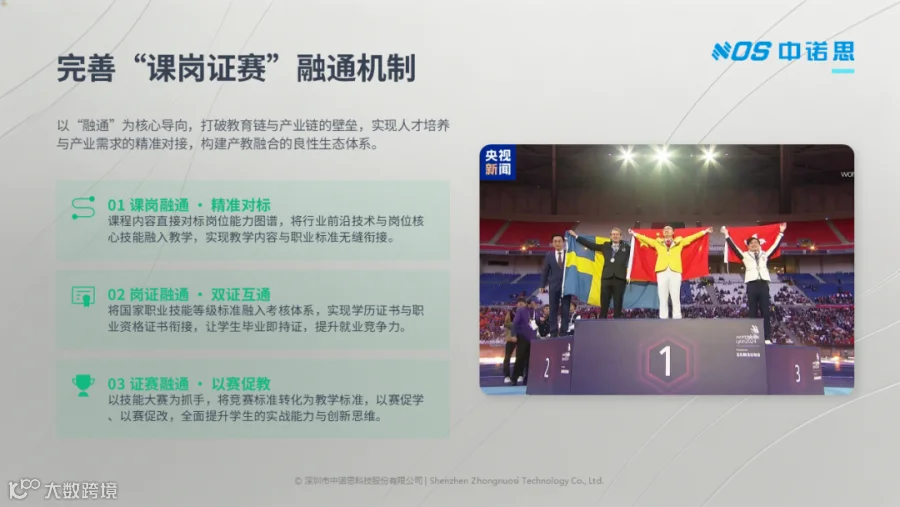
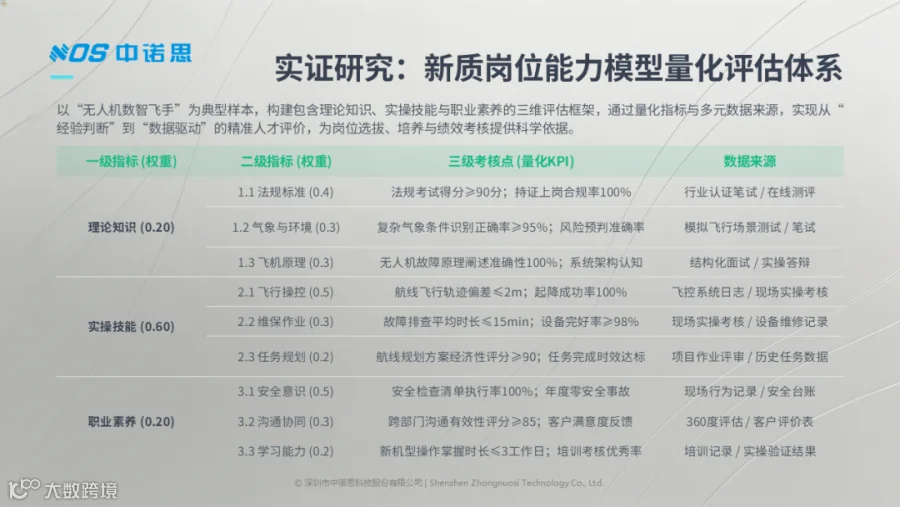
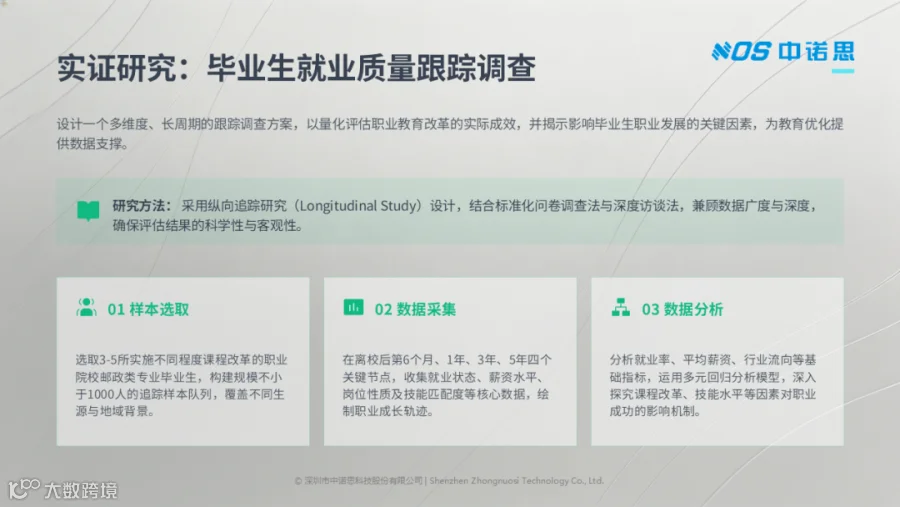
基于实证研究与国际经验借鉴,报告构建了“技术场景-岗位技能-专业课程-职业证书”一体化人才培养匹配体系,量化研判2026—2030年行业新质人才需求趋势,精准查摆邮政类职业教育新质人才培养短板。从政府、院校、企业三方维度,提出课岗证赛深度对接、产教双向赋能、分层递进式人才培养体系搭建、数字化实训基地建设等一系列前瞻性、可落地的优化方案,创新设计新质岗位能力量化评估体系与毕业生就业质量追踪体系,旨在打通行业技术迭代、岗位重构与人才供给的适配通道,完善邮政快递业高质量新质人才自主培养体系,为行业转型升级、职业教育改革、企业人才储备提供科学实证支撑与战略决策参考。
Based on empirical research and international experience, this report constructs an integrated talent cultivation matching system covering "technical scenarios, job skills, professional curriculums and vocational certificates", quantitatively predicts the industry’s new-quality talent demand trend from 2026 to 2030, and accurately identifies the shortcomings of vocational education talent cultivation. From the three dimensions of government, colleges and enterprises, it puts forward a series of forward-looking and implementable optimization schemes, including in-depth integration of curriculum, posts, certificates and competitions, two-way empowerment of industry and education, construction of a hierarchical and progressive talent cultivation system, and development of digital training bases. It innovatively designs a quantitative evaluation system for new-quality post competencies and a graduate employment quality tracking system. This report aims to smooth the matching channel for industrial technological iteration, job restructuring and talent supply, improve the independent cultivation system for high-quality new-quality talents in the postal and express delivery industry, and provide authoritative empirical support and strategic decision-making reference for industrial transformation and upgrading, vocational education reform and enterprise talent reserve.
















★ 报告说明
1.本报告所有数据均来自公开权威渠道,参考资料来源可通过公开渠道核验溯源;
2.本报告的分析结论,基于公开的行业数据、企业岗位招聘信息,主要反映行业头部企业、重点区域的实际需求现状,部分中小微企业的差异化用人需求未完全覆盖;
3.本报告中涉及的企业商标、品牌名称,均为对应企业的合法注册商标,本报告引用仅为行业案例分析,不涉及商业宣传用途;
4.本报告的所有内容、结论均为行业公共政策研究、市场分析结论,不构成任何企业的用人招聘标准、行业发展的政策依据;
5.本报告为非商业性行业公共研究项目成果,版权归©“中诺思”智蓝研究团队所有,引用时请注明出处。