


点击蓝字关注雨生

听全文可以让雨生音色为您播报
**头条:斯坦福AI Index 2025报告出炉!AI效率暴增、中美差距缩小...但这些真相,你未必敢听!**
**副标题:出海人必看!别再盲目烧钱,这份报告教你用AI弯道超车,还能省下几个亿!**
**(雨生视角,接地气开喷)**

先说一句大实话:我最讨厌的就是那种“AI赋能,颠覆一切”的营销话术。听多了,耳朵都起茧子!
但是,这份斯坦福的AI Index报告,那可不是啥“皇帝的新装”。人家是实打实的数据,用冰冷的数字告诉你,AI现在到底发展到啥程度了,哪些地方是真牛*,哪些地方还在吹牛*。
别跟我说你没时间看!这份报告里藏着无数个“血淋淋”的教训和“金灿灿”的机会,错过一个,损失的可都是真金白银啊!
**(深度解读:AI趋势,一网打尽)**
Okay,废话不多说,直接上干货!这份报告里,雨生觉得最值得关注的有这么几点:
1. **AI越来越猛,但没你想象的那么神!**
没错,AI在各种benchmark上的表现确实突飞猛进。但!是!注意这个“但是”!AI在复杂推理方面仍然是个渣渣!别指望它能像人一样思考,更多时候,它只是在“死记硬背”!
*英文原文:AI models excel at tasks like International Mathematical Olympiad problems but still struggle with complex reasoning benchmarks like PlanBench.*
*中文翻译:AI模型擅长解决国际数学奥林匹克竞赛等问题,但在PlanBench等复杂推理基准测试中仍然表现不佳。*
2. **AI渗透日常,但别过度依赖!**
AI医疗设备、自动驾驶汽车...AI正在入侵我们生活的方方面面。但是!注意这个“但是”!过度依赖AI,可能会让你失去独立思考的能力,变成一个只会听机器指挥的“傀儡”!
*英文原文:From healthcare to transportation, AI is rapidly moving from the lab to daily life.*
*中文翻译:从医疗保健到交通运输,人工智能正迅速从实验室走向日常生活。*
3. **美国仍然领先,但中国正在追赶!**
美国在AI模型产出方面仍然遥遥领先,但中国模型在质量上正在迅速逼近!而且,中国在AI论文和专利数量上仍然保持领先!
*英文原文:The U.S. still leads in producing top AI models—but China is closing the performance gap.*
*中文翻译:美国仍然在顶级AI模型的生产方面处于领先地位,但中国正在缩小性能差距。*
4. **AI成本暴降,但别盲目烧钱!**
AI推理成本大幅下降,硬件成本也在持续降低。但是!注意这个“但是”!别以为有了AI,就能躺着赚钱!AI只是工具,能不能用好,还得看你的商业模式和运营能力!
*英文原文:AI becomes more efficient, affordable and accessible.*
*中文翻译:人工智能变得更加高效、经济和易于使用。*
5. **监管力度加强,但别心存侥幸!**
各国政府都在加强对AI的监管。但是!注意这个“但是”!别以为监管是闹着玩的!合规是底线,千万别踩红线!
*英文原文:Governments are stepping up on AI—with regulation and investment.*
*中文翻译:各国政府正在加强对人工智能的监管和投资。*
**(行动指南:出海企业如何用AI弯道超车?)**

So,问题来了,对于咱们这些在海外摸爬滚打的出海人来说,这份报告到底意味着什么?雨生给大家几点建议:
* **别迷信大模型,小模型也有春天!** 报告显示,小模型在效率和成本方面更有优势。出海企业可以考虑用小模型解决特定问题,没必要一味追求大而全。
* **别只盯着欧美,新兴市场也有机会!** 报告显示,新兴市场对AI的接受度更高。出海企业可以考虑在新兴市场试水AI产品,也许会有意想不到的收获。
* **别忽视合规,数据安全是生命线!** 报告显示,各国政府都在加强对AI的监管。出海企业一定要重视数据安全和隐私保护,避免触碰法律红线。
**(互动环节:说出你的AI困惑!)**
看完这份报告,你对AI还有哪些疑问?欢迎在评论区留言,雨生会尽力解答!如果你有更独到的见解,也欢迎分享,让我们一起交流学习!
**(重磅!雨生知识星球,带你玩转出海!)**
想要了解更多关于AI和出海的干货?想要和更多出海精英交流学习?那就加入雨生的知识星球吧!
在这里,你可以:
* **获取独家报告:** 雨生会定期发布关于AI和出海的深度报告,让你掌握最新的行业动态。
* **参与专家问答:** 遇到问题,可以直接向雨生提问,我会尽力解答。
* **加入社群交流:** 和其他出海精英交流经验,拓展人脉。
现在加入,还有限时优惠哦!

**(金句海报)**
(以下是海报文案,请自行设计海报)
* “别跟我说AI赋能,先告诉我怎么省钱!”
* “AI不是万能的,但没有AI是万万不能的!”
* “出海企业,别只顾埋头拉磨,抬头看看AI风向!”
**(话题标签)**
#雨生云计算 #出海必读 #知识星球 #AI #人工智能 #出海 #海外营销
**(邀请关注有礼活动方案)**
邀请3位好友关注“雨生云计算”公众号,即可获得知识星球3天免费体验券。

**(朋友圈文案模板)**
1. 雨生大佬的最新AI报告解读,出海人必看!强烈推荐加入知识星球,干货满满![文章链接]
2. 别再被AI忽悠了!雨生这篇报告,让你看清AI的真面目![文章链接]
3. 出海企业如何用AI弯道超车?雨生给你支招![文章链接]
**(新闻原文中英文对照)**
The 2025 AI Index Report
2025年人工智能指数报告
Read the 2025 AI Index Report
阅读2025年人工智能指数报告
Watch Seminar
观看研讨会
AI’s influence on society has never been more pronounced.
人工智能对社会的影响从未像现在这样显著。
At Stanford HAI, we believe AI is poised to be the most transformative technology of the 21st century. But its benefits won’t be evenly distributed unless we guide its development thoughtfully. The AI Index offers one of the most comprehensive, data-driven views of artificial intelligence. Recognized as a trusted resource by global media, governments, and leading companies, the AI Index equips policymakers, business leaders, and the public with rigorous, objective insights into AI’s technical progress, economic influence, and societal impact.
在斯坦福HAI,我们认为人工智能有望成为21世纪最具变革性的技术。但是,除非我们认真引导其发展,否则其好处将不会得到平均分配。人工智能指数提供了最全面、数据驱动的人工智能观点之一。人工智能指数被全球媒体、政府和领先公司公认为值得信赖的资源,它为政策制定者、商业领袖和公众提供了对人工智能技术进步、经济影响和社会影响的严格、客观的见解。
New this Year: The Official Chinese Version of the 2025 AI Index Report
今年新增:2025年人工智能指数报告的官方中文版
Read the translation
阅读译文
Top Takeaways
主要结论
1. AI performance on demanding benchmarks continues to improve.
1. 人工智能在要求苛刻的基准测试中的性能持续提高。
In 2023, researchers introduced new benchmarks—MMMU, GPQA, and SWE-bench—to test the limits of advanced AI systems. Just a year later, performance sharply increased: scores rose by 18.8, 48.9, and 67.3 percentage points on MMMU, GPQA, and SWE-bench, respectively. Beyond benchmarks, AI systems made major strides in generating high-quality video, and in some settings, language model agents even outperformed humans in programming tasks with limited time budgets.
2023年,研究人员引入了新的基准测试——MMMU、GPQA和SWE-bench——以测试高级人工智能系统的极限。仅仅一年后,性能大幅提高:MMMU、GPQA和SWE-bench上的分数分别上升了18.8、48.9和67.3个百分点。除了基准测试之外,人工智能系统在生成高质量视频方面取得了重大进展,并且在某些情况下,语言模型代理甚至在预算有限的编程任务中表现优于人类。
2. AI is increasingly embedded in everyday life.
2. 人工智能日益嵌入到日常生活中。
From healthcare to transportation, AI is rapidly moving from the lab to daily life. In 2023, the FDA approved 223 AI-enabled medical devices, up from just six in 2015. On the roads, self-driving cars are no longer experimental: Waymo, one of the largest U.S. operators, provides over 150,000 autonomous rides each week, while Baidu’s affordable Apollo Go robotaxi fleet now serves numerous cities across China.
从医疗保健到交通运输,人工智能正迅速从实验室走向日常生活。2023年,FDA批准了223个支持人工智能的医疗设备,而2015年仅为6个。在道路上,自动驾驶汽车不再是实验性的:Waymo是美国最大的运营商之一,每周提供超过150,000次自动驾驶服务,而百度的经济型Apollo Go robotaxi车队现在服务于中国众多城市。
3. Business is all in on AI, fueling record investment and usage, as research continues to show strong productivity impacts.
3. 商业全面投入人工智能,推动了创纪录的投资和使用,因为研究继续显示出强大的生产力影响。
In 2024, U.S. private AI investment grew to $109.1 billion—nearly 12 times China’s $9.3 billion and 24 times the U.K.’s $4.5 billion. Generative AI saw particularly strong momentum, attracting $33.9 billion globally in private investment—an 18.7% increase from 2023. AI business usage is also accelerating: 78% of organizations reported using AI in 2024, up from 55% the year before. Meanwhile, a growing body of research confirms that AI boosts productivity and, in most cases, helps narrow skill gaps across the workforce.
2024年,美国私人人工智能投资增长至1091亿美元,几乎是中国93亿美元的12倍,英国45亿美元的24倍。生成式人工智能看到了特别强劲的势头,在全球范围内吸引了339亿美元的私人投资,比2023年增长了18.7%。人工智能的商业用途也在加速:78%的组织报告说在2024年使用了人工智能,高于前一年的55%。与此同时,越来越多的研究证实,人工智能可以提高生产力,并且在大多数情况下,有助于缩小整个劳动力队伍中的技能差距。
4. The U.S. still leads in producing top AI models—but China is closing the performance gap.
4. 美国仍然在顶级AI模型的生产方面处于领先地位,但中国正在缩小性能差距。
In 2024, U.S.-based institutions produced 40 notable AI models, significantly outpacing China’s 15 and Europe’s three. While the U.S. maintains its lead in quantity, Chinese models have rapidly closed the quality gap: performance differences on major benchmarks such as MMLU and HumanEval shrank from double digits in 2023 to near parity in 2024. Meanwhile, China continues to lead in AI publications and patents. At the same time, model development is increasingly global, with notable launches from regions such as the Middle East, Latin America, and Southeast Asia.
2024年,位于美国的机构生产了40个著名的人工智能模型,大大超过了中国的15个和欧洲的3个。虽然美国在数量上保持领先地位,但中国模型迅速缩小了质量差距:在MMLU和HumanEval等主要基准测试上的性能差异从2023年的两位数缩小到2024年的接近相等。与此同时,中国继续在人工智能出版物和专利方面保持领先地位。与此同时,模型开发越来越全球化,中东、拉丁美洲和东南亚等地区也推出了值得注意的发布。
5. The responsible AI ecosystem evolves—unevenly.
5. 负责任的人工智能生态系统发展不平衡。
AI-related incidents are rising sharply, yet standardized RAI evaluations remain rare among major industrial model developers. However, new benchmarks like HELM Safety, AIR-Bench, and FACTS offer promising tools for assessing factuality and safety. Among companies, a gap persists between recognizing RAI risks and taking meaningful action. In contrast, governments are showing increased urgency: In 2024, global cooperation on AI governance intensified, with organizations including the OECD, EU, U.N., and African Union releasing frameworks focused on transparency, trustworthiness, and other core responsible AI principles.
与人工智能相关的事件正在急剧增加,但标准化的人工智能评估在主要的工业模型开发商中仍然很少见。然而,诸如HELM Safety、AIR-Bench和FACTS之类的新基准测试为评估事实性和安全性提供了有希望的工具。在公司中,仍然存在着认识到RAI风险和采取有意义的行动之间的差距。相比之下,各国政府显示出越来越紧迫的态势:2024年,关于人工智能治理的全球合作得到加强,包括经合组织、欧盟、联合国和非洲联盟在内的组织发布了侧重于透明度、可信赖性和其他核心责任人工智能原则的框架。
6. Global AI optimism is rising—but deep regional divides remain.
6. 全球对人工智能的乐观情绪正在上升,但仍然存在着深刻的区域分歧。
In countries like China (83%), Indonesia (80%), and Thailand (77%), strong majorities see AI products and services as more beneficial than harmful. In contrast, optimism remains far lower in places like Canada (40%), the United States (39%), and the Netherlands (36%). Still, sentiment is shifting: since 2022, optimism has grown significantly in several previously skeptical countries—including Germany (+10%), France (+10%), Canada (+8%), Great Britain (+8%), and the United States (+4%).
在中国(83%)、印度尼西亚(80%)和泰国(77%)等国家,绝大多数人认为人工智能产品和服务比有害更有益。相比之下,在加拿大(40%)、美国(39%)和荷兰(36%)等地的乐观情绪仍然要低得多。不过,情绪正在发生变化:自2022年以来,在一些以前持怀疑态度的国家,乐观情绪已显著增长,包括德国(+10%)、法国(+10%)、加拿大(+8%)、英国(+8%)和美国(+4%)。
7. AI becomes more efficient, affordable and accessible.
7. 人工智能变得更加高效、经济和易于使用。
Driven by increasingly capable small models, the inference cost for a system performing at the level of GPT-3.5 dropped over 280-fold between November 2022 and October 2024. At the hardware level, costs have declined by 30% annually, while energy efficiency has improved by 40% each year. Open-weight models are also closing the gap with closed models, reducing the performance difference from 8% to just 1.7% on some benchmarks in a single year. Together, these trends are rapidly lowering the barriers to advanced AI.
在能力越来越强的小型模型的推动下,在2022年11月至2024年10月期间,以GPT-3.5水平运行的系统的推理成本下降了280多倍。在硬件层面,成本每年下降30%,而能源效率每年提高40%。开放权重模型也在缩小与封闭模型的差距,在某些基准测试中,性能差异在一年内从8%降至仅1.7%。总之,这些趋势正在迅速降低高级人工智能的门槛。
8. Governments are stepping up on AI—with regulation and investment.
8. 各国政府正在加强对人工智能的监管和投资。
In 2024, U.S. federal agencies introduced 59 AI-related regulations—more than double the number in 2023—and issued by twice as many agencies. Globally, legislative mentions of AI rose 21.3% across 75 countries since 2023, marking a ninefold increase since 2016. Alongside growing attention, governments are investing at scale: Canada pledged $2.4 billion, China launched a $47.5 billion semiconductor fund, France committed €109 billion, India pledged $1.25 billion, and Saudi Arabia’s Project Transcendence represents a $100 billion initiative.
2024年,美国联邦机构出台了59项与人工智能相关的法规,是2023年的两倍多,而且发布的机构数量也是原来的两倍。在全球范围内,自2023年以来,75个国家/地区的立法中提到人工智能的次数增加了21.3%,与2016年相比增长了9倍。在日益受到关注的同时,各国政府也在大规模投资:加拿大承诺投资24亿美元,中国启动了一项475亿美元的半导体基金,法国承诺投资1090亿欧元,印度承诺投资12.5亿美元,沙特阿拉伯的“超越计划”代表了一项1000亿美元的计划。
9. AI and computer science education is expanding—but gaps in access and readiness persist.
9. 人工智能和计算机科学教育正在扩展,但仍然存在着访问和准备方面的差距。
Two-thirds of countries now offer or plan to offer K–12 CS education—twice as many as in 2019—with Africa and Latin America making the most progress. In the U.S., the number of graduates with bachelor’s degrees in computing has increased 22% over the last 10 years. Yet access remains limited in many African countries due to basic infrastructure gaps like electricity. In the U.S., 81% of K–12 CS teachers say AI should be part of foundational CS education, but less than half feel equipped to teach it.
现在,三分之二的国家提供或计划提供K-12计算机科学教育,是2019年的两倍,非洲和拉丁美洲取得了最大的进展。在美国,在过去10年中,获得计算学士学位的毕业生人数增加了22%。然而,由于电力等基本基础设施差距,许多非洲国家的访问仍然受到限制。在美国,81%的K-12计算机科学教师表示,人工智能应成为基础计算机科学教育的一部分,但只有不到一半的人觉得自己有能力教授它。
10. Industry is racing ahead in AI—but the frontier is tightening.
10. 行业正在人工智能领域飞速发展,但前沿领域正在收紧。
Nearly 90% of notable AI models in 2024 came from industry, up from 60% in 2023, while academia remains the top source of highly cited research. Model scale continues to grow rapidly—training compute doubles every five months, datasets every eight, and power use annually. Yet performance gaps are shrinking: the score difference between the top and 10th-ranked models fell from 11.9% to 5.4% in a year, and the top two are now separated by just 0.7%. The frontier is increasingly competitive—and increasingly crowded.
2024年,近90%的著名人工智能模型来自行业,高于2023年的60%,而学术界仍然是高被引研究的主要来源。模型规模继续快速增长,训练计算每五个月翻一番,数据集每八个月翻一番,功耗每年翻一番。然而,性能差距正在缩小:排名第一和第十的模型之间的分数差异在一年内从11.9%降至5.4%,前两名现在的差距仅为0.7%。前沿领域越来越具有竞争力,也越来越拥挤。
11. AI earns top honors for its impact on science.
11. 人工智能因其对科学的影响而获得最高荣誉。
AI’s growing importance is reflected in major scientific awards: two Nobel Prizes recognized work that led to deep learning (physics), and to its application to protein folding (chemistry), while the Turing Award honored groundbreaking contributions to reinforcement learning.
人工智能日益增长的重要性体现在主要的科学奖项中:两项诺贝尔奖表彰了导致深度学习(物理学)和将其应用于蛋白质折叠(化学)的工作,而图灵奖则表彰了对强化学习的开创性贡献。
12. Complex reasoning remains a challenge.
12. 复杂推理仍然是一个挑战。
AI models excel at tasks like International Mathematical Olympiad problems but still struggle with complex reasoning benchmarks like PlanBench. They often fail to reliably solve logic tasks even when provably correct solutions exist, limiting their effectiveness in high-stakes settings where precision is critical.
人工智能模型擅长解决国际数学奥林匹克竞赛等问题,但在PlanBench等复杂推理基准测试中仍然表现不佳。即使存在可证明的正确解决方案,它们也常常无法可靠地解决逻辑任务,这限制了它们在高风险环境中的有效性,在这些环境中,精度至关重要。
Link to the original news: [https://share.google/e/Gv5i9U]
雨生课程
现在单一云增长乏力,想实战的。《多云价值管理与增长》新课程出炉,雨生和SRE刘老师联袂授课,欢迎学友们关注!
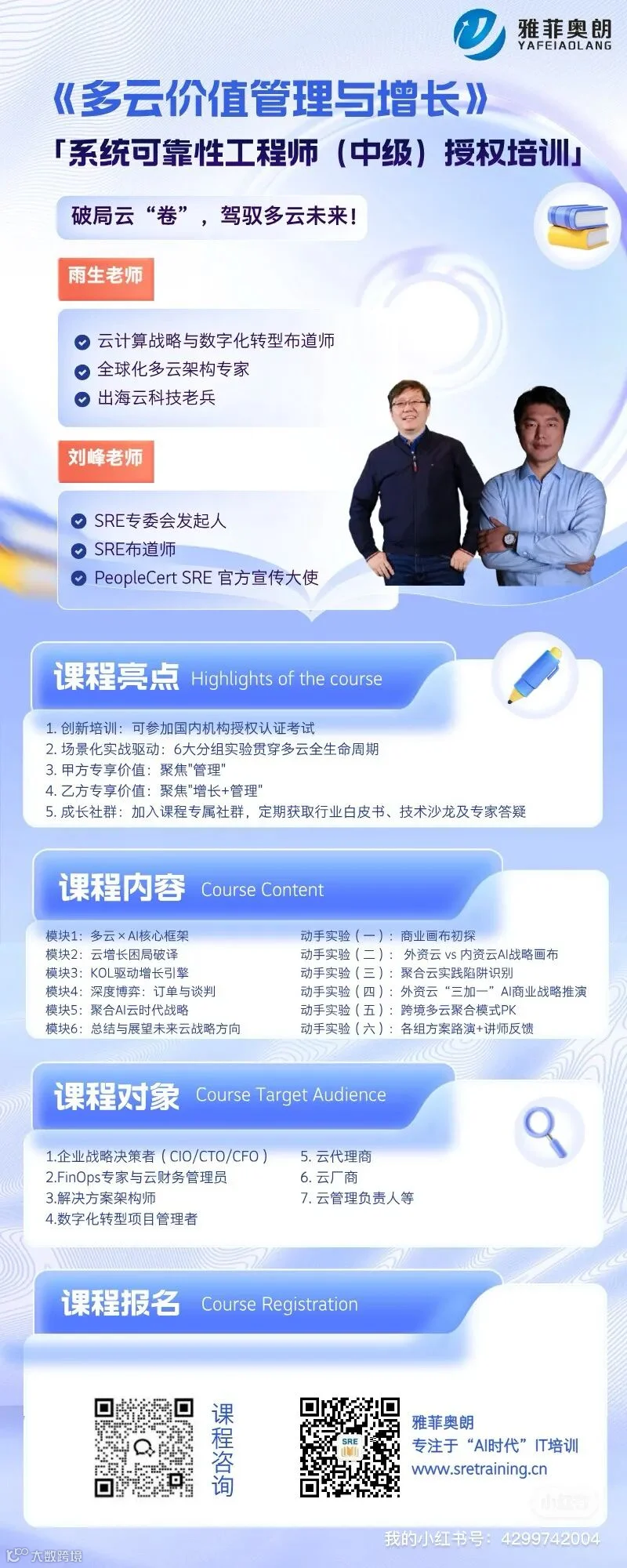
报名链接见二维码
