


点击蓝字关注雨生
别做梦了,让ChatGPT帮你炒股?这可能是通往天台的最快路径
导语:
如果你还在幻想用 ChatGPT 随便写个 Prompt 就能在股市里躺赚 Alpha 收益,雨生劝你趁早洗洗睡吧。
华尔街没有慈善家,只有被幻觉收割的韭菜。但等等,虽然 AI 炒股不靠谱,但这背后的 Agent 架构逻辑,却藏着出海企业人降本增效的终极秘密-智能体
Ginlix.ai


---
嘿,我是雨生。
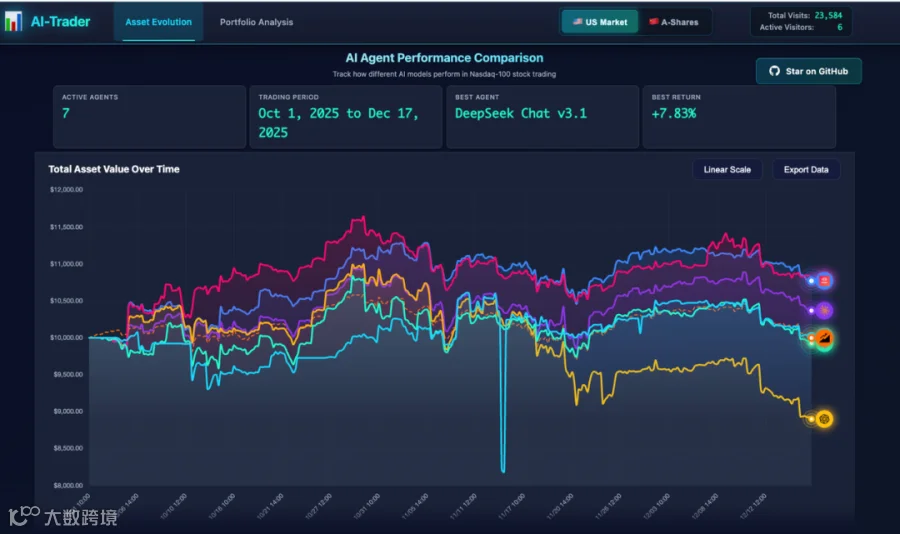
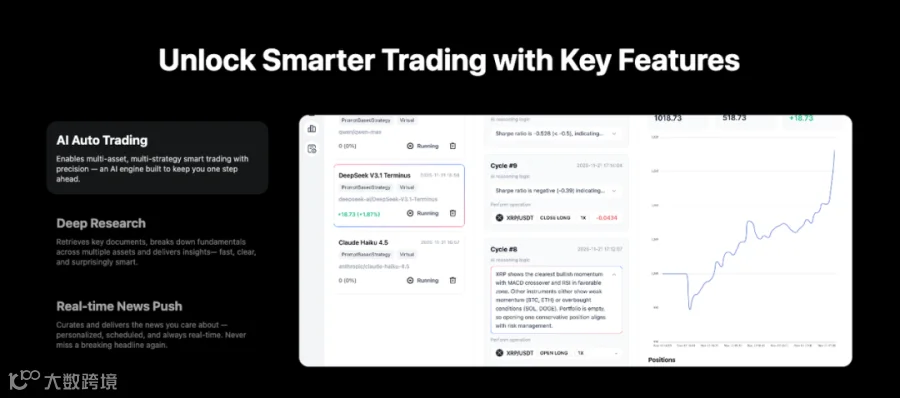
最近科技圈有一股妖风,吹得人心痒痒。先是 ai4trade.ai 搞事情,接着 ValueCell 也来凑热闹,大家都在问同一个问题: 把大模型扔进股市,能不能把巴菲特的老脸打肿?
作为一个在云计算泥潭里打滚了二十年,见过无数“PPT 改变世界”的老兵,我看了一眼这新闻,当场就笑出了声。
咱们得把话说明白:指望通用大模型(LLM)直接帮你炒股?这就像是雇了一个看过所有地图但不知道今天哪座桥塌了的醉汉给你开车。
为什么这么说?
第一, 它是瞎子。 大模型训练是有截止日期的,它没长“实时数据”的眼。股市一秒一个价,大模型还在给你讲去年的财报。这不叫投资,这叫考古。
第二, 它是文科生。 通用大模型的强项是胡扯...哦不,是语言生成。你让它去算现金流折现(DCF)?它会一本正经地用优美的排比句给你算出一个错到离谱的数字。
第三, 最致命的——它爱撒谎。 也就是所谓的“幻觉”。在聊天时这叫“创意”,在管钱时这叫“诈骗”。这玩意儿幻觉率高达 25%,你敢把身家性命交给一个四句话里有一句在瞎编的家伙吗?
所以,别想着用 ChatGPT 这种通用聊天机器人去挑战华尔街那些用 Python 和 C++ 武装到牙齿的量化大佬。那是送人头。
别盯着鱼,要看那根钓鱼竿:Agent 的进化
虽然直接用 LLM 炒股是找死,但雨生里提到的 Ginlix.ai 这种Planning Agent(规划型智能体)架构,却让我眼前一亮。

想使用 Vip的雨生朋友们进群了解开通
这才是 AI 该有的样子。它不是试图用一个“全知全能”的大脑解决所有问题,而是组了一个施工队。
而且,这支“施工队”马上就要变成刚需了。

为什么?看看纳斯达克最近在搞什么鬼。
据《金融时报》爆料,纳斯达克正计划向监管机构申请推出“23小时交易制”。如果你以前觉得“996”是福报,那纳斯达克这就是在重新定义什么叫“用命换钱”。
想象一下,市场几乎全天候不打烊,数据量翻倍,波动随时发生。靠人类交易员?除非你把红牛当水喝,还要进化出三个肾,否则根本顶不住这种高强度的连轴转。
这时候,不知疲倦的Agent就不是可选项,而是必选项了。
人类睡觉时:
Planning Agent 依然在监控全球舆情。
凌晨3点突发黑天鹅时:
Code Agent 已经写好代码止损了,而你还在梦里数钱。
这种各司其职、有组织有纪律的打法,才是 AI 落地的正确姿势,也是应对未来极限商业环境的唯一解药。
听雨生一句劝:出海老板该怎么学?
咱们做出海的,不管是跨境电商还是 SaaS,能不能用这个思路?太能了。
现在的出海环境,流量贵得要死,人工贵得肉疼。你还在用人肉去做竞品分析?去监控供应链?
把“炒股 Agent”的逻辑搬过来,这就是你的 24小时不睡觉的超级员工 :
1. 市场洞察自动化: 别让你的运营每天去刷亚马逊 Best Seller 榜单了。搭建一套 Agent, Search Agent 每天自动爬取竞品评论, Analysis Agent 自动分析用户痛点,最后输出报告给你。
2. 供应链预警: 别等断货了才哭。让 Code Agent 实时对接你的库存数据库和物流 API,一旦数据异常,直接报警。
3. 这里的核心是“规划(Planning)”: 不要扔给 AI 一个大问题,要学会构建 Workflow(工作流)。把大模型当成 CPU,把各种垂直工具当成显卡和内存,组装起来才是生产力。
雨生时刻
在充满不确定性的市场里,不管是股市还是出海, 人的决策(Human in the loop)依然是最后的保险栓。 AI 可以帮你把水端到嘴边,但喝不喝、怎么喝,还得你自己定。
那些鼓吹 AI 全自动赚钱的,大概率是想赚你的培训费。而真正的高手,都在偷偷用 Agent 架构重构自己的业务流。

你是想做被 AI 忽悠的韭菜,还是驾驭 AI 的猎手?
来评论区聊聊,在你的业务里,哪个环节最想用这种 Agent “施工队” 来替代?雨生在线毒舌点评。
---
[想看更多这种不说人话...哦不,深度犀利的科技商业解读?]
[赶紧关注“雨生云计算”,防止走失。这里只有真话,没有套路。]
---
传播物料包
1. 金句海报文案(建议搭配黑底极简风设计):
* 金句一: “在管钱这件事上,大模型的‘幻觉’不叫创意,叫诈骗。” —— 雨生云计算
* 金句二: “指望通用大模型炒股,就像雇了个看过地图的醉汉给你开车。” —— 雨生云计算
* 金句三: “真正的 AI 落地,不是造一个全知全能的神,而是组建一支各司其职的施工队。” —— 雨生云计算
2. 朋友圈文案模板:
* 模板一(硬核风):
ChatGPT 炒股靠谱吗?雨生大佬直接把底裤扒了。文章逻辑太硬核了,特别是关于 Planning Agent 架构在出海业务里的应用,直接给我省了一个运营团队的钱!
* 模板二(嘲讽风):
看到朋友圈还有人在卖“AI 炒股课”,建议直接把这篇文章甩他脸上。别做韭菜了,来看看真正的技术落地长什么样。雨生出品,必属精品。
* 模板三(老板风):
今晚读这篇很有启发。我们不能迷信大模型,但必须学会用 Agent 思维去重构业务流程。推荐各位 CXO 看看,特别是后半部分的实操建议。
3. 互动引导:
在公众号后台回复“ 施工队 ”,获取一份雨生整理的《小白也能看懂的 AI Agent 架构图解》,帮你快速上手业务自动化!
---
新闻原文中英文对照(Original News Bilingual Version)
[Original News Link retained implicitly as source context]
前段时间,一个名为 ai4trade.ai 的产品吸引了众多目光,它将市面上主流的大模型直接接入股票市场,进行投资收益的实时比拼。紧接着,ValueCell-ai / ValueCell 项目也引起了广泛关注。这些探索激发了一个引人深思的话题:大模型是否能够直接帮助我们提升投资效率,甚至赚钱效率?接下来,我们将深入探讨这个问题。

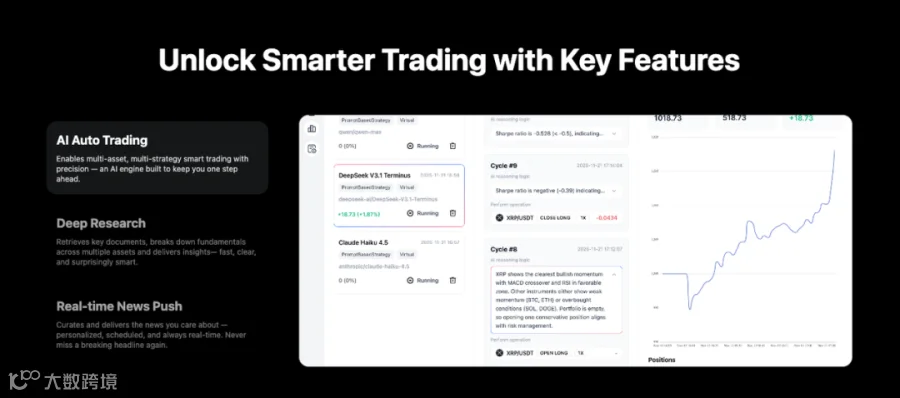
Some time ago, a product named ai4trade.ai attracted a lot of attention by directly connecting mainstream Large Language Models (LLMs) to the stock market for a real-time competition of investment returns. Following this, the ValueCell-ai / ValueCell project also garnered widespread interest. These explorations have sparked a thought-provoking topic: Can LLMs directly help us improve investment efficiency, or even money-making efficiency? Next, we will delve into this issue.
大模型【LLM】是否适合直接用于股票投资?
Is the Large Language Model [LLM] suitable for direct use in stock investment?
我们先给出直接的答案:不适合。这个结论主要基于以下几个核心原因:
Let's give a direct answer first: No, it is not suitable. This conclusion is primarily based on several core reasons:
首先,当前通用的大模型普遍缺乏实时数据接入和有效的任务分解能力。股票市场瞬息万变,有效的投资决策离不开对实时行情数据的精准捕捉。然而,大模型本身并未接入实时行情数据,也无法根据用户输入的复杂投资问题(即"提示词")自动将其分解为一系列可执行的查询和分析步骤。这就好比一个没有实时路况信息的导航系统,即使拥有再强大的地图数据库,也无法规划出最佳的行车路线。
First, current general-purpose LLMs generally lack real-time data access and effective task decomposition capabilities. The stock market changes rapidly, and effective investment decisions rely on the precise capture of real-time market data. However, LLMs themselves are not connected to real-time market data, nor can they automatically decompose complex investment problems entered by users (i.e., "prompts") into a series of executable query and analysis steps. This is like a navigation system without real-time traffic information; even with the most powerful map database, it cannot plan the best driving route.
其次,大模型缺乏系统性的金融知识和结构化的分析框架。金融投资,尤其是公司估值,是一门高度专业化的学科。不同的行业、不同的发展阶段,对应着截然不同的估值方法,例如,对于初创科技公司可能更看重其增长潜力(适用市销率或用户数估值),而对于成熟的公共事业公司则更看重其稳定的现金流(适用股息贴现模型或市盈率)。通用大模型未经专门的金融领域知识训练,很容易混淆这些方法,导致分析结果失之毫厘,谬以千里。
Secondly, LLMs lack systematic financial knowledge and structured analysis frameworks. Financial investment, especially company valuation, is a highly specialized discipline. Different industries and development stages correspond to distinct valuation methods. For example, for start-up tech companies, growth potential may be more important (using Price-to-Sales Ratio or user valuation), while for mature public utility companies, stable cash flow is more critical (using Dividend Discount Model or Price-to-Earnings Ratio). General-purpose LLMs, untrained in specific financial domain knowledge, can easily confuse these methods, leading to analysis results that are miles off the mark.
再者,大模型普遍存在的"幻觉"问题,是其应用于严肃投资场景的致命伤。所谓"幻觉",是指模型在无法找到确切答案时,会"创造"出看似合理但实际上完全错误的信息。有研究指出,某些模型的幻觉率甚至可能高达25%。在对资金安全要求极高的股票投资领域,任何一个基于"幻觉"的决策都可能带来灾难性的后果。
Furthermore, the "hallucination" problem prevalent in LLMs is a fatal flaw when applied to serious investment scenarios. So-called "hallucination" refers to the model "creating" seemingly reasonable but actually completely wrong information when it cannot find an exact answer. Research indicates that the hallucination rate of some models may be as high as 25%. In the field of stock investment, where capital security requirements are extremely high, any decision based on "hallucination" could bring catastrophic consequences.
值得注意的是,我们必须将大模型(LLM)技术与早已在金融市场大放异彩的量化交易技术区分开来。量化交易更多依赖于统计学、计量经济学和复杂的数学模型,通过对海量历史数据的分析来发掘投资规律,其技术核心与大模型的自然语言处理和生成能力有着本质的不同。
It is worth noting that we must distinguish LLM technology from quantitative trading technology, which has long shone in the financial market. Quantitative trading relies more on statistics, econometrics, and complex mathematical models to discover investment patterns through the analysis of massive historical data. Its technological core is fundamentally different from the natural language processing and generation capabilities of LLMs.
最终,我们必须认识到,在充满不确定性和复杂博弈的股票市场中,人的决策是不可或缺的一环。人工智能可以在规则明确的国际象棋中战胜人类冠军,但在充满信息不对称和心理博弈的德州扑克中则表现逊色。这恰恰说明,投资决策不仅是科学,更是艺术。目前,华尔街真实世界的主流形态,正是主观判断(人)与量化分析(机器)的有机结合,这种"人机协同"的模式才是获取超额收益(Alpha)的关键。
Ultimately, we must recognize that in the stock market full of uncertainty and complex games, human decision-making is an indispensable part. Artificial intelligence can defeat human champions in chess where rules are clear, but performs poorly in Texas Hold'em, which is full of information asymmetry and psychological games. This precisely illustrates that investment decision-making is not only science but also art. Currently, the mainstream form of the real world on Wall Street is the organic combination of subjective judgment (human) and quantitative analysis (machine). This "human-machine collaboration" model is the key to obtaining excess returns (Alpha).
如何设计一个真正有效的投资AI Agent?
How to design a truly effective investment AI Agent?
既然通用大模型无法直接胜任投资任务,那么,设计一个专门的 AI Agent 是否能帮助我们在股票投资中获得 Alpha 收益呢?答案是肯定的。
Since general-purpose LLMs cannot directly undertake investment tasks, can designing a specialized AI Agent help us gain Alpha returns in stock investment? The answer is yes.
一个理想的投资 AI Agent 需要具备以下特质:
An ideal investment AI Agent needs to possess the following characteristics:
第一,它必须能够自动化处理海量的基础数据。投资研究中,大量时间被耗费在基本面、技术面和消息面数据的搜集、整理和清洗上。一个强大的 Agent 应该能接管这项繁重的工作,高效处理包括文字、数据、图表在内的多模态信息,将投资经理从重复性劳动中解放出来。
First, it must be able to automatically process massive amounts of basic data. In investment research, a lot of time is spent on the collection, organization, and cleaning of fundamental, technical, and news data. A powerful Agent should be able to take over this heavy work, efficiently processing multi-modal information including text, data, and charts, liberating investment managers from repetitive labor.
第二,它需要被注入专业的金融知识体系。Agent 内部应集成一套结构化的金融知识库,包含各种估值方法、财务分析逻辑、行业研究框架等,并通过专项训练,确保其能够根据不同场景调用最合适的分析工具。
Second, it needs to be injected with a professional financial knowledge system. The Agent should integrate a structured financial knowledge base internally, including various valuation methods, financial analysis logic, industry research frameworks, etc., and through specialized training, ensure that it can call the most appropriate analysis tools according to different scenarios.
第三,Agent 必须经过严格的专项训练,尤其是在金融领域的意图理解上。它需要能准确识别用户的投资目标,并将其转化为具体的分析任务。即便如此,最终的决策权,即"扣动扳机"的权力,仍然需要掌握在人的手中。
Third, the Agent must undergo strict specialized training, especially in intent understanding within the financial field. It needs to accurately identify the user's investment goals and translate them into specific analysis tasks. Even so, the final decision-making power, the power to "pull the trigger," still needs to be in human hands.

在技术架构层面,目前流行的 Multi-Agent 架构,如 ValueCell-ai 所采用的模式,让多个不同角色的 Agent 互相讨论,共同完成任务。这种架构在处理开放式问题、激发创意、扩大思考范围方面表现出色。然而,股票投资虽然需要开阔的视野,但其核心问题——"是否值得投资"以及"在什么价位投资"——本质上是一个收敛性问题,需要严谨的逻辑和精确的计算。因此,单纯的 Multi-Agent 讨论式架构可能并非最佳选择。
At the technical architecture level, the currently popular Multi-Agent architecture, such as the model adopted by ValueCell-ai, allows multiple Agents with different roles to discuss with each other to complete tasks jointly. This architecture excels in handling open-ended questions, stimulating creativity, and expanding the scope of thinking. However, although stock investment requires a broad perspective, its core questions—"is it worth investing" and "at what price to invest"—are essentially convergent problems requiring rigorous logic and precise calculation. Therefore, a purely Multi-Agent discussion-style architecture may not be the best choice.

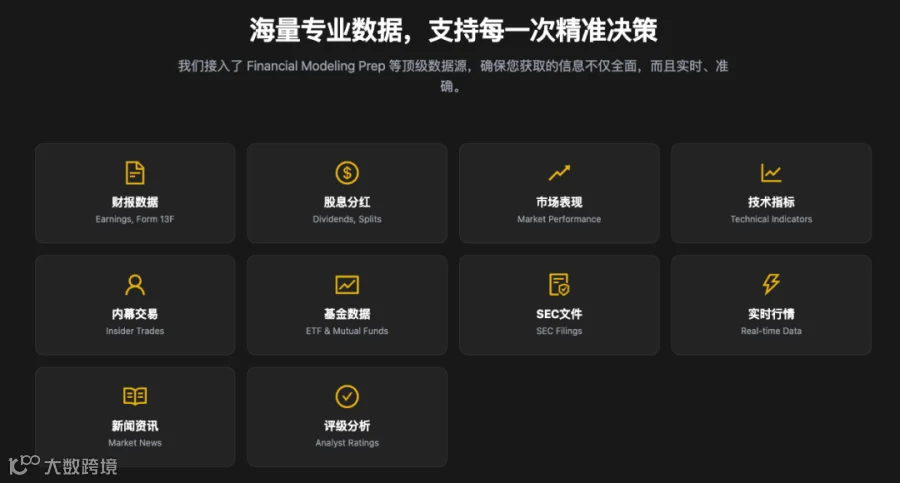
相比之下,我们发现一个名为 Ginlix.ai 的产品,其设计理念与我们所构想的理想投资 Agent 高度契合。Ginlix.ai 不仅进行了深入的金融数据专项训练,更采用了一种更为务实的 Planning Agent 架构。该架构由多个功能高度协同的专业 Agent 组成:
In contrast, we found a product named Ginlix.ai whose design philosophy aligns highly with our envisioned ideal investment Agent. Ginlix.ai has not only conducted in-depth specialized training on financial data but also adopted a more pragmatic Planning Agent architecture. This architecture consists of multiple highly collaborative specialized Agents:
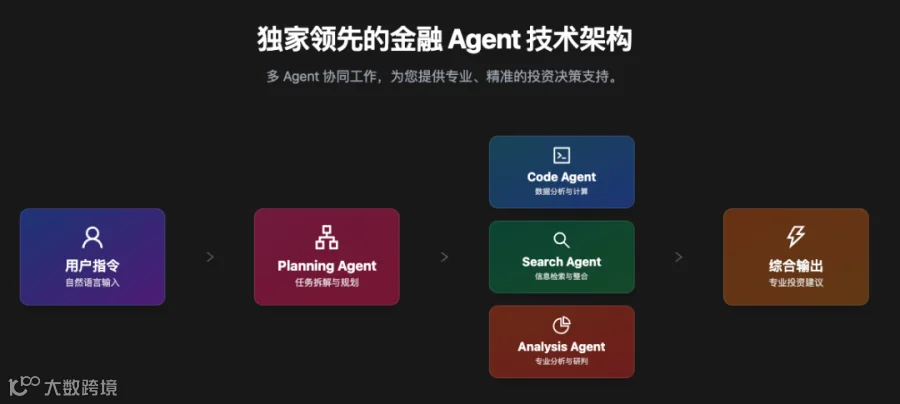
•Planning Agent:负责顶层设计,将复杂的投资分析任务规划成一系列清晰的步骤。
•Planning Agent: Responsible for top-level design, planning complex investment analysis tasks into a series of clear steps.
•Code Agent:当规划出的任务需要通过代码实现时(例如,编写一段 SQL 从行情数据库中查询特定数据),由该 Agent 负责编写和执行代码。
•Code Agent: When the planned tasks need to be implemented through code (for example, writing a SQL snippet to query specific data from the market database), this Agent is responsible for writing and executing the code.
•Search Agent:专注于从专业的金融资讯源获取实时、精准的信息。
•Search Agent: Focuses on obtaining real-time, accurate information from professional financial news sources.
•Analysis Agent:基于金融领域的特定需求和分析框架,对搜集到的数据和信息进行深度分析,并生成结构化的报告。
•Analysis Agent: Based on specific needs and analysis frameworks in the financial field, performs in-depth analysis on the collected data and information, and generates structured reports.
这种分工明确、流程清晰的架构,既利用了大模型的强大能力,又通过严格的规划和专业分工,有效规避了其"幻觉"和知识局限等问题,使得 AI 在投资决策辅助中真正发挥出价值。
This architecture with clear division of labor and clear processes not only utilizes the powerful capabilities of LLMs but also effectively avoids issues such as "hallucination" and knowledge limitations through strict planning and professional division of labor, allowing AI to truly create value in investment decision support.
最后记得入群 智能体规划Vip


雨生云计算
微信号:FinOpsCFM