
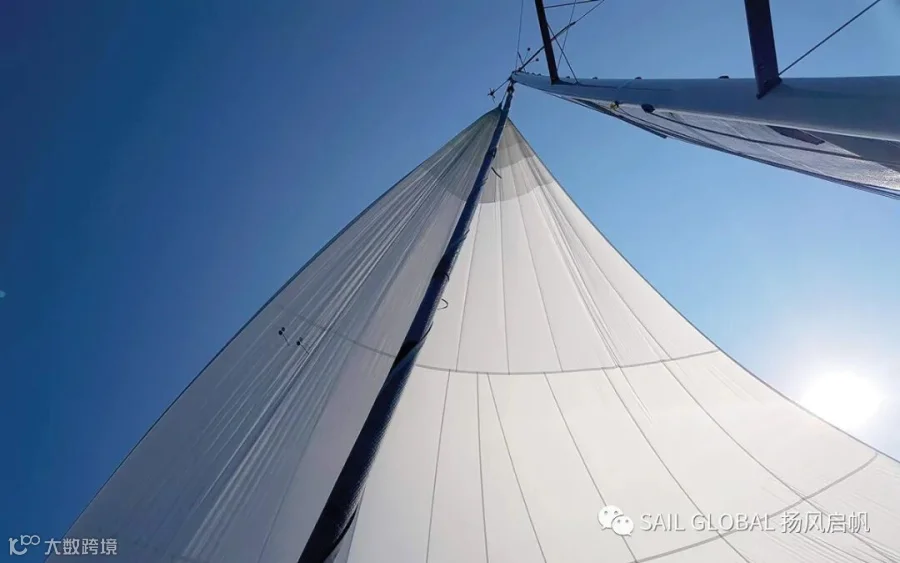
Sailors love the sun – but it doesn’t always love us back. On a boat, water and fiberglass decks reflect and amplify the sun’s strength. That’s why sun protection for sailors is really important.The good news is that there are lots of ways sailors can mitigate sun exposure. Read on for ways to help you enjoy the sun safely.

You see it on your weather app every day, but do you really pay attention to the UV Index? You should, because it tells you the intensity of UV radiation produced by the sun. The higher the UV Index, the greater the dose rate of skin-damaging UV radiation – and the less time it takes before skin damage occurs.
SUMMER
Cover/Up
UPF50
Once you know the UV forecast, sun protection for sailors begins with clothing. Cover up as much as possible with sun-protective gear. A physical barrier against the sun is your strongest defense.
UPF (Ultraviolet Protection Factor) is the sun protection rating system used for apparel. It’s similar to SPF (Sun Protection Factor), the rating system used for sunscreen products. The UPF rating indicates how much of the sun’s UV radiation is absorbed by the fabric.

A garment rated UPF 50 permits only 1/50th (roughly 2%) UV transmission. In comparison, a plain white t-shirt has a UPF of around 5, which means around 20% of UV radiation passes through it. Factors that contribute to the UPF rating are a tighter weave of the fabric, darker colors, and added finishes that block sun penetration.
Advances in fabric technology mean that we now have fabrics with a high UPF factor that are also lightweight and breathable; you can cover up without getting overheated.
SUMMER
Use/Sunscreen
SPF30
Another no-brainer is wearing sunscreen. Here’s what to look for when choosing a sunscreen.
First off, you’ll want a full-spectrum sunscreen that blocks both UVA and UVB rays, with a minimum of SPF 30. SPF is a measure of how well a sunscreen will protect skin from UVB rays, the kind of radiation that causes sunburn, damages skin, and can contribute to skin cancer.
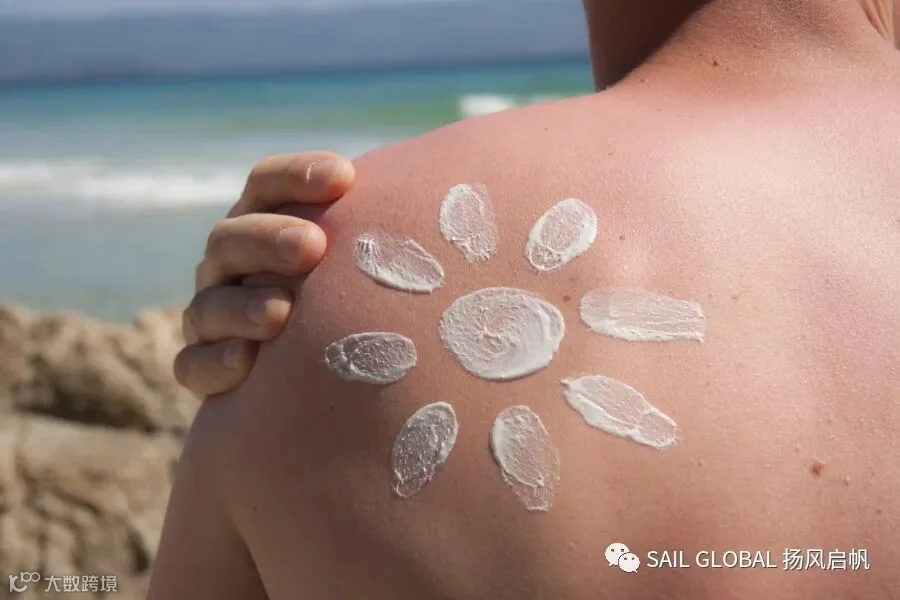
Put another way – SPF is a gauge of how much time a person can be exposed to the sun before getting burned. Here’s how it works: if you start getting sunburned after five minutes in the sun without any sunscreen, applying a liberal dose of sunscreen with an SPF of 30 would (theoretically) protect you for 30 x five minutes (or 150 minutes) before you begin to burn.
Another important thing to know about SPF is that it’s not linear. SPF 50 does not give you twice as much protection as SPF 25. It only increases the amount of time you can be in the sun without burning.

Besides choosing a sunscreen that is broad spectrum and SPF 30 or greater, dermatologists also recommend that you look for the words “water resistant.” This tells you that the sunscreen will stay on wet or sweaty skin for a while before you need to reapply. Water resistance lasts either 40 or 80 minutes – check the label to be sure.
There are essentially two kinds of sunscreens: chemical (using ingredients like avobenzone, oxybenzone and octinoxate) or mineral (titanium dioxide or zinc oxide). There are pros and cons to both, but we strongly prefer mineral sunscreens.
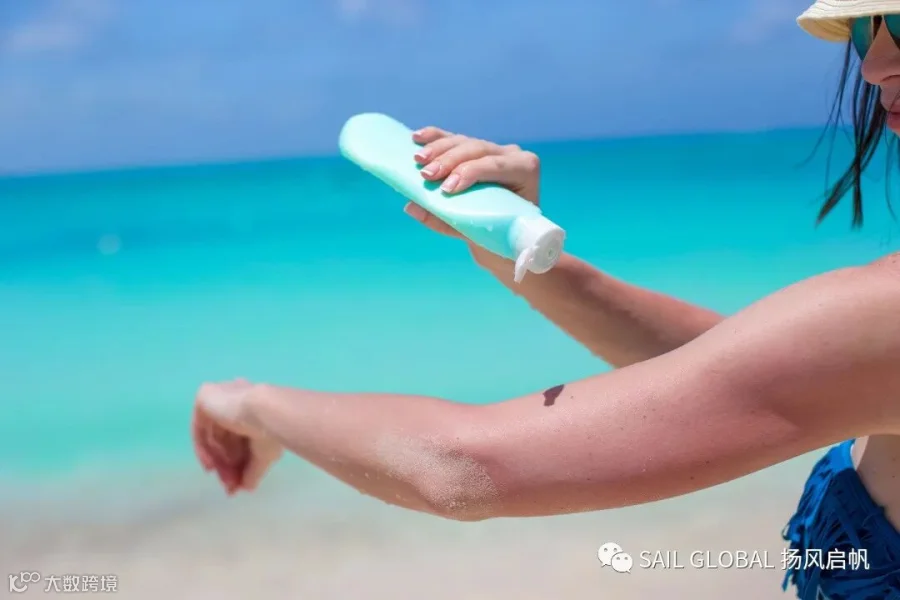
Mineral sunscreens have more natural ingredients vs. chemicals, are less likely to irritate sensitive skin, won’t stain your clothes like some chemicals can, and are safe for reefs and oceans. All the better to go ahead and skip the chemicals by making the switch to mineral sunscreens.
Whichever you choose, apply early and often. Even on cloudy days, apply sunscreen to all skin not covered by clothing. Keep sunscreen handy on deck (but out of the sun, as it can break down the formula) so you’ll reapply. Always reapply after swimming or excessive sweating, and at a minimum every 2 hours (regardless of SPF). Set a timer if you have to!
Pro tip: avoid spray sunscreen on a boat – it can make the deck dangerously slippy, and possibly stain your gelcoat. Plus, the aerosol isn’t great for the environment.
It’s not enough just to use sunscreen – you have to use enough of it to be effective. The American Academy of Dermatology estimates that most people only apply 25-50% of the recommended amount of sunscreen. You should apply enough sunscreen to cover all exposed skin. Most adults need about 1 ounce — or enough to fill a shot glass — to fully cover their body.

Too often, people forget to protect sensitive spots like the tops of the ears, hairline, the “V” of the chest, nose and hands. Also, wearing sailing gloves not only helps with your grip on the lines, but protects the skin on the back of your hands .
And don’t forget your lips! The skin there is thinner, more delicate, and can burn easily. There are several good lip balms on the market that offer SPF 15-30.
It’s important to remember that no sunscreen offers 100% protection from sun exposure. If you rely only on sunscreen, you’re not doing all you can to mitigate your risk from damaging UV rays.
SUMMER
Wear/a/Hat
3 Inches
A hat will not only help keep you cool, it protects from sun exposure to the sensitive skin on your ears, eyes, forehead, nose, and scalp. Dermatologists recommend a wide brim hat of at least 3 inches. A 3 inch brim can block the direct UV rays to the sides of the face and ears.
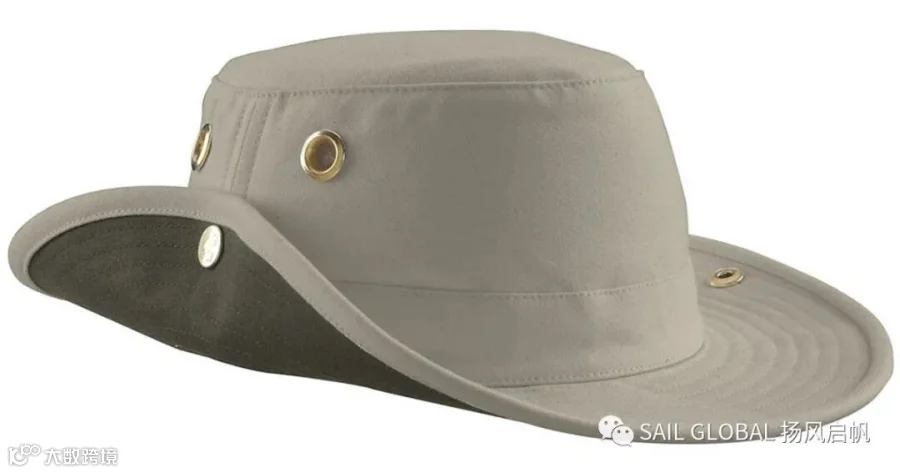
Another important factor in hat choice is the color under the brim. Darker colors will absorb rather than bounce the UV rays back to your face and eyes. Also, a hat with a dark color under the brim is generally cooler than light colors.

If you’re not comfortable in a wide brim hat, consider using a neck buff or gaiter to keep the sun off your ears and neck.
Last but not least, don’t forget to look for a chin strap or hat leash to keep your hat on when the wind kicks up.
SUMMER
Protect/Your/Peepers
UV400
High quality sunglasses are a critical part of sun protection for sailors. Sun damage to your eyes can cause cataracts and other eye diseases. UV-blocking sunglasses are important for protecting the delicate skin around the eyes, as well as the eyes themselves.

Look for sunglasses that block 99-100% of both UVA and UVB rays. Check the label: it should say “UV absorption up to 400 nm,” “UV400 (or higher) rating,” or “Meets ANSI UV Requirements.” These designations mean the glasses block at least 99% of UV rays. When it comes to frame shape, bigger is better. Large-framed and wraparound sunglasses are more likely to protect your eyes from light coming in from different angles.
We tend to prefer lightweight glasses that are comfortable to wear all day. And for sailing, always choose polarized lenses. Polarized sunglasses cut down glare from other surfaces like water, and make it easier to see current or wind puffs.
Your glasses don’t have to be expensive, but do get the best ones you can afford. It’s a great investment in your long term eye health. And use a sunglass lanyard so you don’t lose them overboard (trust us on this one).
SUMMER
Be/Sun/Smart
10am-4pm
In addition to sun protective clothing, using sunscreen, and wearing a hat and sunglasses, some sun protection for sailors is just common sense.
One obvious way to limit your sun exposure is to stay out of the direct sun when possible. This is particularly important between the hours of 10 am and 4 pm, when UV light is strongest. If you’re unsure about the sun’s intensity, take the shadow test: if your shadow is shorter than you, the sun’s rays are the day’s strongest.

During peak sun hours, try to avoid direct sun exposure and seek out shade. Granted, finding shade can be difficult on a boat, but take advantage of your dodger, bimini, and even the sails to find spots out of the direct sun.
Take care even on cool, cloudy days. Damaging rays aren’t inhibited by clouds, and you can still get burned because ultraviolet light can penetrate cloud cover. You’ll still need to cover up and apply sunscreen.
Many common medications can increase your sensitivity to sun. If you’re taking antibiotics, tricyclic antidepressants, antihistamines or acne medication, be aware of your increased risk and take extra precautions.
SUMMER
Slip/Slop/Slap
SUMMER TIME
Sun protection for sailors is important, but it doesn’t have to be difficult to remember. In the 1980’s, Australia’s Cancer Council Victoria launched the iconic “Slip! Slop! Slap!” campaign to educate Australians about protecting themselves from sun exposure. It featured Sid the Seagull, singing and dancing to remind people to slip on a shirt, slop on sunscreen, and slap on a hat when they go outside.

More recently the campaign was updated to add two more suggestions: seek out shade, and slide on sunglasses for even better sun protection.
Maybe Sid’s catchy little tune will help you remember these important elements of sun protection for sailors. Here’s to enjoying the sun more safely this season. Happy sailing!


REVIEWS