


· LIFELESS SISTERS ·
//
I was amazed by the appearance of the “sisters” on the show. Whether they were 25 or 50, they all looked so lifeless, with pale faces, limp hair down past their shoulders, almost no waists to speak of, and (the most distressing part) virtually undistinguishable one from the other. Most of the time, I honestly couldn’t tell which sister was which.

Recently, as I was watching the second season of the highly popular reality/variety program, Sisters Riding the Wind and Waves , I was amazed by the appearance of the “sisters” on the show. Whether they were 25 or 50, they all looked so lifeless, with pale faces, limp hair down past their shoulders, almost no waists to speak of, and (the most distressing part) virtually undistinguishable one from the other. Most of the time, I honestly couldn’t tell which sister was which.
A friend told me that this is the new fashionable look for all women ages 20 to 50, and they all seem to love it. Actress Yi Nengjing, who is over 50, but who looks as though she could plausibly pass for half her age, can be regarded as typifying the look. No wonder I can't tell the difference between online superstars Zhang Dayi and Weiya half the time.
They all have the same tiny waists, the same chopstick legs, the same boyish hindquarters and, especially, the same cold pale skin. The women trying to fit themselves into the mold seem to have forgotten that the world is colorful and there are many kinds of beauty. What leads women of all shapes and sizes to strive to become thin and pale?
It is not an exaggeration to say that these days, women have been led to it by web celebrity culture, and now the predominant type (in fact, it seems to me to be the only type) is pale, young and thin. Women watching these online superstars make them into false gods and seek to emulate them in everything from the makeup they sell to the often non-traditional values they espouse in life.
Web celebrity, as the name suggests, is an Internet construct. And, unlike most male web celebrities, most female Internet celebrities get noticed for their appearance. That, in turn, teaches women the shallow lesson that your looks can change your life.

/
It all started almost as a joke
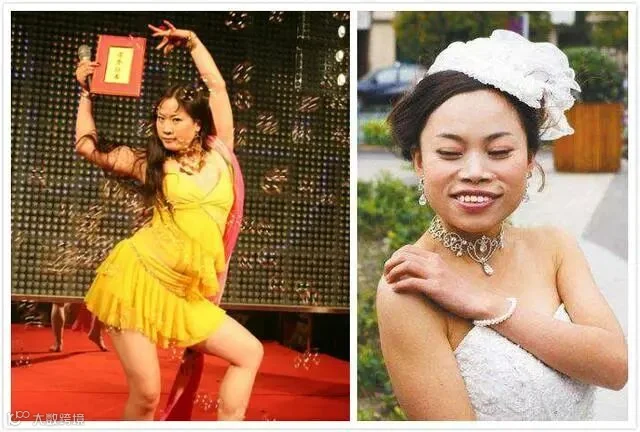
Came to the concept of web celebrity not long after the new millennium broke. The emergence soon thereafter, first of so-called Sister Lotus (Sister Furong), and then of Sister Phoenix (Sister Feng) as internet superstars blazed the trail that is being followed, in their own ways, by today’s Zhang Dayi, Papi Jiang and Li Ziqi.
In the early years of the century, Sina Blog, Tianya, Xici Hutong, Baidu Post Bar, and Renren were the social media platforms of choice on an internet that was still learning to spread its wings. Various grassroots cultures swept across cyberspace, creating huge traffic that surpassed even that of Weibo, Zhihu and Douyin (TikTok) today.
This was the environment into which Sister Lotus and Sister Phoenix inserted themselves and became the two legends that laid the groundwork for female web celebrity. In their heyday, even the old grandparents knew who Sister Lotus and Sister Phoenix were.
The first to catapult herself to fame was Sister Lotus. Shi Hengxia (her real name) was born in 1977 and dreamed of graduate work at Tsinghua University or Peking University. However, she failed the college entrance exam three times before she could even get into any school. Since she wasn’t going to get into Tsinghua or Peking based on her academic merits, she then embarked on a campaign of shameless self-promotion on the internet bulletin boards of the two prestigious universities. For some reason, her story and her determination struck a chord, and she responded to the attention by using her posts to find a boyfriend as well. Her self-descriptions were nothing if not narcissistic, and, more than making her the object of universal admiration, they made her into the butt of jokes and controversy alike. But they did get her noticed.
Importantly in terms of what would come later, Sister Lotus was the first in a line of Chinese female internet figures who became famous for talking openly about sex and relationships in a culture that was still somewhat sexually repressive. Moreover, Sister Lotus didn’t only talk about sex: she paraded her own sexuality in public. She considered herself a dancer among her other many accomplishments, and appeared on numerous TV shows. Her signature pose was the so-called “S” figure, in which she bent her knees back and thrust out her breasts provocatively.
In 2004, her article “Peking University, You Are the Deepest and Most Beautiful Pain in My Life”, illustrated with photographs of her writhing limbs, became a nationwide sensation. “I am God's favorite, young, beautiful and sexy,” she wrote. “All positive words are interpreted more vividly because of me."
As for Sister Phoenix (recte Luo Yufeng; the Sister Feng nickname being a pun on her first name), she emerged a few years after Sister Lotus, and was an even more improbable superstar. She was a primary school teacher in a small town in the provinces, but, dissatisfied with that, she moved to Shanghai and worked as a cashier in a supermarket with a salary of only ¥1000 ($154) per week. Although anything but a great beauty (Sister Lotus was at least an attractive woman), she nevertheless issued a flyer listing her requirements for a boyfriend, which she passed out on the streets of Shanghai. She wrote that she was looking for a man who was handsome, six feet tall, with a masters degree in economics, aged 25 to 28, hukou on the East Coast. When she appeared on a satellite TV show, she defended her criteria by saying, “I read a lot when I was a girl – serious literature, not women’s magazines like Bosom Friend that the silly girls read – and at 20 I was the brightest human being in the world. In the previous three hundred years and in the three hundred years to come, no one will surpass me intellectually.”
After the broadcast of the program, this unmitigated chutzpah shocked society and set off a media and internet storm. People couldn't understand why this plain country girl, who wasn’t even five feet tall, had the nerve to promote herself so shamelessly. She nevertheless became popular, with netizens giving her the Sister Phoenix nickname and coining the slogan trust Sister Phoenix – be confident.
In their day, Sister Furong and Sister Feng caused a sensation. Many TV stations had programs that invited experts and scholars to analyze the two phenomena, their personalities and the influence of internet grassroots culture. Although most of the coverage was negative, that didn’t stop Sister Lotus and Sister Phoenix from becoming household names.
Like America’s Kardashians, Sister Lotus did more than just become famous despite the lack of any real talent. When actor Wang Baoqiang divorced in 2016, she announced that she wanted to marry him and give him all her property. She then posted the deeds to four houses, a stack of credit cards and a luxury car key, and the world discovered that her net worth was ¥65 million ($10 million). At the time, people thought she was crazy, but she was crazy like a fox. She knew exactly what she was doing, and used the profits from her web celebrity to start her own media company. She even gave generously to charity. Originally viewed as a somewhat ridiculous aberration, Sister Lotus came to seem a perfectly acceptable part of the Chinese internet landscape.
As for Sister Phoenix, she eventually left China and moved to the United States, where she worked as a manicurist and passed out English versions of her flyers on the campuses of Harvard and Columbia. Many people still admire her for her independence and perceived wisdom. They’ve come to think that, beneath her unprepossessing appearance, she’s actually very clever, if not quite as intelligent as she said she was. Moreover, after ten years of societal change, China has become more tolerant of women who thrust themselves into the limelight the way Sister Lotus and Sister Phoenix did.
Today we know that Sister Lotus and Sister Phoenix are actually the result of professional marketing and manipulation. Network marketing wizard Chen Mo was the driving force behind Sister Lotus’ popularity. He once said a widely circulated quote, “If a pretty girl makes a post, it can get maybe 50,000 clicks in three days. Please introduce her to me, so that I can let five million people find out who she is.”
/
A Billionaire Cinderella
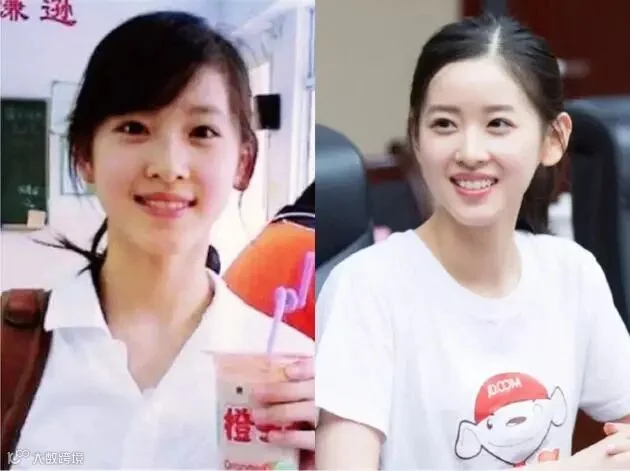
Another web celebrity “sister” is known as “Sister Milk Tea”, a beauty who catapulted to fame when an innocent picture of her holding a cup of (iced) milk tea for some reason went viral. A good picture changed her life more than anyone could possibly have imagined.
Her real name is Zhang Zetian, and there can be little doubt that, unlike her predecessor sisters, she is a great beauty who famously turned down director Zhang Yimou's invitation to appear in his movie The Flowers of War. She attended Tsinghua University and, for a period, Barnard College in New York, where she met and fell in love with "the Jeff Bezos of China”, Liu Qiangdong, founder and CEO of ecommerce giant JD.com. Every step of Sister Milk Tea’s progress took place under the eyes of a fascinated public.
She graduated from college, married and became a mother all in the space of a year. Since then, she’s actively helped her husband’s company to grow by energizing its fashion and luxury holdings, and made some major and wise investments of her own. She is no longer the innocent little girl next door holding her cup of milk tea; she is, according to New Fortune magazine, China’s youngest female billionaire.
Sister Milk Tea differs significantly from Sister Lotus and Sister Phoenix. She seemed not to court the limelight the way they did; she succeeded, not only because of her looks, but because she had brains as well. She married at 22, became a mother at 23 and became a billionaire at 24. While her peers were still struggling to get their careers started, she seemed to be a modern-day Cinderella, but there was no Fairy Godmother in the story of Sister Milk Tea: she played a major role in making her made her own fate happen and continues to use her internet followers to promote her image, and, not coincidentally, her business holdings as well.
/
Web royalty & e commerce success
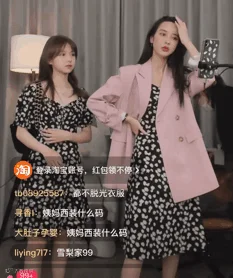
In 2010, Sina Weibo (the Chinese answer to Twitter) went online, and more ordinary people were able to participate in the internet discourse and make their voices heard. Taking full advantage of that, in an ascent perhaps even more dazzling than the progress of Sister Milk Tea, was Zhang Dayi, whose online chats garner up to nine million viewers, and who posted an annual income in 2016 of ¥300 million ($46.1 million, more than Kim Kardashian made that same year.)
Zhang Dayi is Chinese web royalty and has managed to bridge Weibo, Tmall…and Nasdaq. She began as a moderately successful fashion model in 2009 and signed up for Weibo in 2010, where she quickly developed a following. In 2011, serial entrepreneur Feng Min and his wife Chen Sijia entered the women's clothing industry, and signed a sweetly smiling Zhang Dayi to become their exclusive model. In 2014, Zhang's own Taobao shop The Wardrobe I Like was established in partnership with Feng Min. It became the first women’s clothing retailer whose sales volume broke ¥100 million ($15.3 million) on Taobao.
Subsequently, Zhang Dayi served as Chief Marketing Officer of Ruhan Holdings, the largest internet key opinion leader (KOL) facilitator in China. On April 3, 2019, Ruhan Holdings went public in the United States and Zhang Dayi became the first Chinese web celebrity to ring the Nasdaq bell.
Around that time, Zhang gave an interview to Women’s Wear Daily in which she admitted:
I always tell my fans that if I were you, I would be very happy because when I was young, if I really wanted a piece of clothing that the model was wearing, I had no idea where to buy them. Today, let’s say I am your idol. You like me, you like what I am wearing, and you can buy it in my store — so the fans are really happy. They have more options than what the big brands can provide them. They can buy a personalized dress in my store. Internet celebrity is better because of its authenticity.
She also gave a few tips on her success in harnessing social media to fuel her business model:
The most commented posts are interactive posts. You have to bring questions into it so you can interact with people. For example, if I say “This is such a pretty outfit!” If people think it looks ugly, then they won’t reply, but if you ask “What do you think of this dress?” it’s different.
Another example, a sentence like, “I think this lipstick is beautiful,” versus, “Which color of lipstick do you like?” One is a statement, one is a question. The latter is more interactive. That way they know you are looking, and you can even reply to them. Fans like that.
And when WWD asked Zhang why she thinks people like her, she replied, “I think it’s because I’m outgoing, relatable and sweet-looking. The biggest market in China is the sweet-looking style dresses. There is no single reason; I matched the market.”
Zhang Dayi is China’s leading web celebrity. She’s a modern woman living an open life that appears very free and easy and seems to reject traditional cultural norms. She has success, she has money, and doesn’t need to rely on anyone else. Nonetheless, she says she is still looking for love, if not a husband. Her modern love and marriage values influence her fans and are part of an internet-fueled movement towards societal change.
She has inspired a number of imitators, like Zhou Yangqing and Weiya, the queen of live-streaming ecommerce, and every step these icons take is made with their fingers firmly planted on the pulse of the times. They all followed the same formula: start your shop on Taobao, put yourself on Weibo, accumulate fans, and then watch the sales of your store increase exponentially, and your web celebrity explode. It may not sound like a catchy name in English, but Zhang Dayi’s second Taobao venture was named “The Lipsticks have Sold Out”. It lived up to its name: she cleaned our her inventory of 20,000 lipsticks in under two hours.
What is her secret? How can female web celebrities so influence female fans?
First, by sharing their daily lives and the contents of their closets on social media platforms, they are constantly putting themselves into the public arena. When you’re ubiquitous, you can easily increase the way your fans identify with you, which leads to imitation, and, as fans are ultimately customers, to increased sales.
Second, the frequent interaction with fans creates an easy-going image, thereby shortening the distance between fans and celebrity. Women watching these megastars on their computers and phones feel as though they’re talking to their girlfriends.
Third, the product development stage lets fans participate through social media. The celebrities listen to their fans’ feedback, which lets them actually create the brand with help from fans. This not only increases fan loyalty and satisfies the fans’ desire to participate, but also breaks the traditional top-down vertical model of e-commerce, which in turn shortens the response cycle of the supply chain in a highly lucrative fashion.
/
Light up the web with a short video
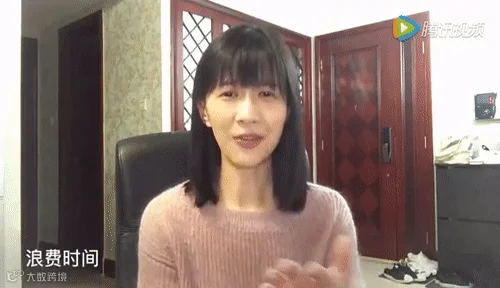
Not all of China’s female web megastars made their way to the top through ecommerce. The year 2016 saw a boom in the live-streaming industry: Douyin (TikTok) entered the picture, mobile live-streaming short-video platforms exploded, and web celebrities entered an era of mass production.
One night in November 2015, a young unknown actress named Jiang Yilei, who would come to be known as Papi Jiang, uploaded the short video Shanghainese + English to Weibo. In the video, she satirizes “sophisticated” Shanghai women who speak a mixture of Shanghai dialect and English (with a few Japanese words thrown in for good measure) as they talk about men and their romantic problems. She had posted some short videos before that, but the results were disappointing and few people followed her. She wasn’t expecting for the “Shanghaispeak” video to transform her life, but, within a few hours, the video had garnered 1.7 million views.
By the next year, seemingly everyone knew this intelligent, clever and very funny woman who appeared on camera without makeup. Her performances are brilliantly exaggerated nonsense that poke fun at everyday life and get her audiences to laugh at themselves. One of her most popular videos shows her skewering people for public displays of affection. Another shows her parodying women in an office who gossip bitchily (and raucously) about sleeping with the boss. She was dubbed the number one web celebrity of 2016, and used her fame to found the company Papitube. There, she not only produces her own content, but also contracts with artist bloggers and helps nurture and develop other short video performers. In June 2018, Papi Jiang became chief content officer of Baidu, a Chinese multinational that it one of the largest AI and internet companies in the world.
/
Light up the web with a long video
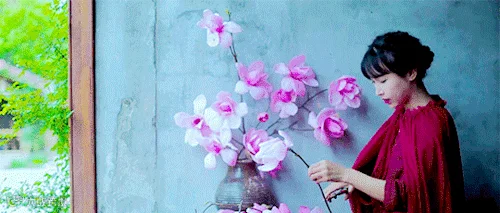
A very different – but scarcely less successful – case is that of Li Ziqi, who lives the opposite of the urban life satirized by Papi Jiang. Li Ziqi can cook, raise silkworms, embroider, do calligraphy, and make exquisite traditional handcrafts. She can seemingly do anything with her hands, including making a dress out of grape skins, the subject of one of her most popular videos. As her videos contain almost no dialogue, only music and sound effects like the sound of a sizzling wok or the thud of her clever against the cutting board, they are accessible to anyone, not only Chinese speakers. As a result, she has acquired an international reputation unlike someone like Papi Jiang, who depends on dialogue to reach her viewers. Li Ziqi’s YouTube channel has more than 2 billion views and is popular to the extent that she has the most subscribers of any Chinese-language channel on the platform.
Born in Sichuan, she was orphaned at a very early age and was raised by her grandparents. (She still lives with her grandmother, who occasionally appears in her videos.) After her grandfather’s death, she had to drop out of school when she was fourteen and move to the city to do odd jobs. In 2012, she moved back to the country to take care of her grandmother, where, through her own diligence and hard work, she learned to make videos.
For the era of Douyin (TikTok), her videos are long, often running past the 20 minute mark. They ramble peacefully and mesmerizingly as we follow her documenting the life cycle of ginger or the process of brewing soy sauce, starting from the sowing of the soybeans themselves. Li Ziqi’s videos are actually more like short films, with considerable sophistication in the photography and music.
The web celebrity image of Li Ziqi is one of emphasizing positive energy (there is something feel-good about her videos), and promoting traditional Chinese culture. She appeals strongly to an urban nostalgia for the traditional way of doing things, even if one can hardly expect that modern Chinese women will go back to the time-consuming and difficult traditional ways in which Li Ziqi does things. Still, she serves as a reminder of the old ways as her videos play out in a world without time.
/
The perfect in the virtual
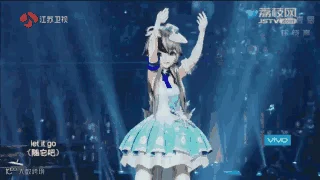
However perfect Li Ziqi’s handcrafts may appear, no human web celebrity can lay claim to the perfection of Luo Tianyi, China’s first – and incredibly successful – virtual singer. By using Vocaloid (voice-synthesizing) technology, her creators have invented an inhumanly perfect singer who can do just about anything you can imagine the human voice doing: hitting any high note, reaching any low note, and sustaining a tone beyond the capacity of human lungs. Moreover, a virtual diva has one further enormous advantage over a mere human singer: her image is far more controllable, and she cannot generate negative publicity for poor life choices.
Luo Tianyi has tens of millions of teenage fans and has produced more than ten thousand original songs. Her appearance is a combination of the sweet girl-next-door, an anime drawing, and (especially in her high hair style) traditional Chinese opera characters. She has thin eyebrows, a slight shadow on the tip of her nose, and green eyes that take up half of her face. She was “born” on the date of her debut, March 22, 2012, when she appeared dressed in a Republic of China schoolgirl dress, with a pair of long legs under the miniskirt. Since then, she has acquired a virtual wardrobe of thousands of different looks; at her concerts (yes, she gives “live” concerts to live audiences) she often changes dresses several times during the same song.
Her youthful fans regard her as their beloved sister, “Whatever you want to say in your heart, she will sing it for you,” one teenage admirer said. “She can express your emotions; if you want to shout, she can do it for you.”
One of her fan groups includes a middle school boy who goes by the online moniker of Hearing Voice. He regularly sends out red envelopes, which are traditional at weddings as well as on the new year, containing a few yuan. The greeting on the envelope is always the same: congratulations to Hearing Voice and Luo Tianyi on the occasion of their marriage.
Unlike a human idol, who has an independent personality, or an anime avatar, whose personality belongs to its creator, Luo Tianyi belongs to her fans. They employ her to sing their own story (and, frequently, their songs) in order to hear themselves reflected back. This kind of self-image mapping is typical of generation Z everywhere, but Luo gives China’s zoomers a holographic mirror to hold up to themselves. Statistics show that 50 percent of Luo's fans are from Beijing and Shanghai, and more than 76 percent of them are young people born in the 1990s or early 2000s.
Obviously, I don’t like it that this self-referential diva powered by her fans’ emotional narcissism is becoming the spiritual idol of young people, but her countless admirers clearly think of Luo in a different light. Moreover, this virtual internet celebrity will never grow old and never die, at least until people lose interest in her when the next thing comes along. In the meantime, the secret to Luo’s success is that she can be anything her fans want her to be.
To date, Luo Tianyi hasn’t opened her own clothing store on Taobao, but her creators are making a lot of money from her endorsements of such products as KFC and Vitasoy. She can also be seen as the reductio ad absurdum of the cookie-cutter sisters on Sisters Riding the Wind and Waves: although her hair is less lank, she has the same figure and skin tone, now exaggerated as there are no human limitations put on her appearance. Of course, Luo Tianyi was also created in imitation of the type: part of her success is that she resembles the other web celebrities from whom her creators drew inspiration. The phenomenon becomes circular and self-pollinating.
And it is affecting Chinese women, not necessarily for the better. If women are already straining themselves to resemble Zhang Dayi, what is going to happen if they adopt even more inhuman models like Luo Tianyi? What’s to be the next wave? I can only hope against hope that it will be a real down-to-earth woman to whose real image the majority of real Chinese women can aspire.
Editor's Comments

————————————————
Mark Guenette is a freelance writer based in Los Angeles. A self-confessed polyglot, he holds a Ph.D. in Comparative Literature from Columbia and has written books on subjects as varied as cigars and cryptocurrency. He is also responsible for the fictitious adventures of alter ego Hunter Block at hunterblocksblog.com.
Working on this article, I consulted YouTube to see what Li Ziqi’s videos might be like. I have to admit that I, like the 8.3 viewers before me, was captivated by her preparation of decorations and sweetmeats for the new year (https://www.youtube.com/watch?v=sGOTCCVDLtQ&t=339s.) If readers have perhaps been imagining Li to be a domestic goddess à la Martha Stewart, guess again. I don’t think we’ll be seeing Martha Stewart anytime soon candying loquats from her own tree over a wood fire behind her house.
I also watched a few videos by Luo Tianyi, and have to admit that I’m as puzzled as I thought I’d be, at least by the voice, a quavery soprano not suited to Western ears. The holographic stagecraft at the one of her “live” concerts I watched (https://www.youtube.com/watch?v=veE60xqE0DI) was impressive, though, and had me wondering when will she begin appearing at Epcot’s China pavilion at Walt Disney World in Florida. She’d no doubt feel right at home.
1
END
1
Ajyaguru(Seacliff USA)
Founded in 2013,we specialize in e commerce and digital marketing in China and U.S.

AGG
Ecommerce|
Content Marketing
Shanghai|L.A.