

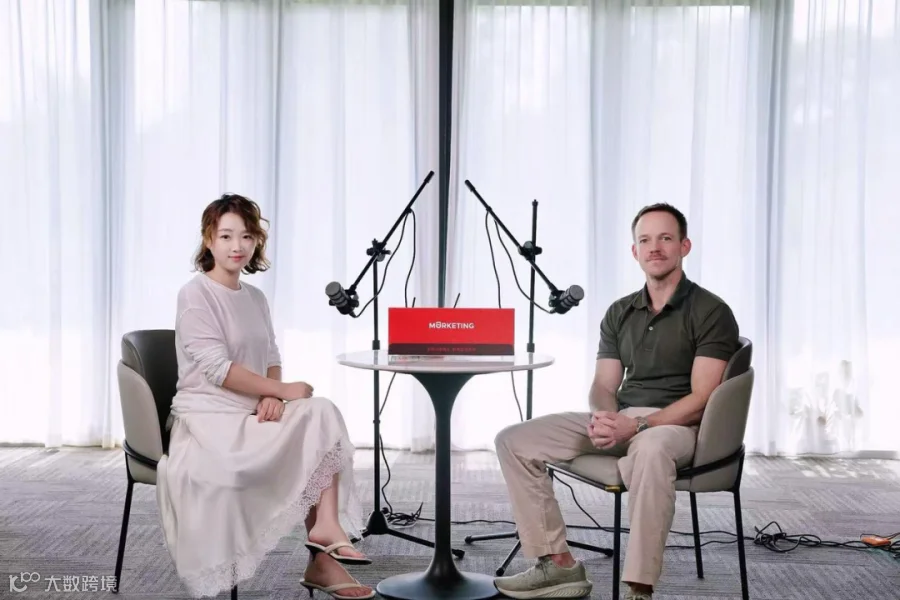
Morketing 创始人兼 CEO Ivy 对话 LoopMe 企业发展策略高级副总裁 Adam Parker
本文另附英文版本,可按需阅读。
距离上一次 Adam Parker 接受 Morketing 专访已过去整整一年。彼时,他刚离开任职 15 年的投行加入 LoopMe。如今,他再次分享 LoopMe 如何通过 AI 重构品牌营销逻辑,并推出新产品 Chartboost Direct,旨在成为连接品牌广告主与移动应用生态的关键基础设施。
2025 年,LoopMe 净收入超 1 亿美元,EBITDA 利润率达 30%。其核心使命始终未变:利用 AI 帮助品牌在应用环境中精准触达用户,并实现广告效果的可量化。

AI 重塑广告交易底层结构
Ivy:欢迎回来。请先简要介绍您自己及 LoopMe 的现状。
Adam Parker:我负责 LoopMe 的战略与企业发展。LoopMe 成立于 2012 年,是一家 AI 原生公司,致力于将品牌广告引入应用生态。目前公司在全球拥有 400 名员工,持有 7 项授权专利及 11 项申请中专利。自 2018 年以来,公司净收入年复合增长率达 30%。
Ivy:2026 年移动广告最根本的结构性变化是什么?
Adam Parker:核心在于 AI,尤其是智能体(Agentic AI)正在重塑媒体基础设施。许多公司仅是在旧架构上叠加 AI 功能,而 LoopMe 从创立之初便基于计算型 AI 构建平台。过去两年,我们加大生成式 AI 投入,开发者效率提升高达 6 倍。此外,我们正在探索买方与卖方智能体及小语言模型的应用。
Ivy:AI 搜索是否会改变传统数字广告生态?
Adam Parker:这不仅是趋势,更将加速发展。消费者通过 AI 获取信息的方式正在发生结构性变化,广告交易正演变为“智能体对智能体”的程序化交易。品牌不仅要说服消费者,更要说服消费者的 AI 智能体。线上发现正变成机器间的协商。
Ivy:面对这一变化,LoopMe 做了哪些产品调整?
Adam Parker:我们致力于打通从认知、注意力到转化的全链路。通过自有 AI 智能体(包括效果、优化、出价及供给智能体),我们在投放过程中持续优化,确保品牌获得可衡量的实际效果。

预算向 App 与移动游戏迁移
若 AI 改变交易方式,消费者注意力的分布则决定预算流向。LoopMe 坚定押注应用环境。
Ivy:品牌预算正流向哪些新场景?
Adam Parker:传统线性电视观看量下降,AI 冲击搜索导致点击减少。LoopMe 过去 14 年专注于将品牌带入应用环境。移动端和联网电视(CTV)覆盖了大量传统渠道无法触达的深度用户,品牌预算正加速向此迁移。
Ivy:品牌如何看待移动游戏场景?
Adam Parker:移动游戏是应用生态中规模最大的场景之一。仅美国就有约 1.84 亿手游玩家。玩家群体平均年龄 36 岁,近半数为女性,多为职场人士和高学历人群,正是品牌渴望触达的核心受众。基于庞大的用户规模和高时长,大量品牌预算将涌入游戏场景。

Chartboost Direct:无需更换 SDK 的增量收入路径
预算进入应用生态后,高效的交易链路至关重要。Chartboost Direct 应运而生。
Ivy:Chartboost Direct 是如何诞生的?
Adam Parker:这是收购 Chartboost 后最令人兴奋的产品发布。它沿用经过验证的 SDK 基础设施,让头部 DSP 和 SSP 能与优质开发者建立直接结算关系,减少中间环节,降低摩擦,为双方创造更大价值。
Ivy:它如何为开发者带来增量收入?
Adam Parker:开发者无需进行新的技术开发或更换 SDK。以往部分库存可能在供应路径优化(SPO)中被过滤,Chartboost Direct 能将这部分供给识别为直接供给,使其通过 SPO 筛选,从而释放原本无法进入的广告预算。简言之,我们在现有技术对接上增加了新的流量路由和商业关系。
Ivy:LoopMe 如何定义自己在产业中的新位置?
Adam Parker:LoopMe 已发展为面向品牌效果广告的端到端 AI 平台。我们通过 DSP、广告交易平台、SSP 和 SDK 提供全漏斗解决方案,所有能力运行在统一的 AI 主干之上,持续提升交易效率与客户回报。

协同效应构建核心壁垒
单独拥有 AI、数据或 SDK 不足以构成壁垒,真正的优势在于它们的协同工作。
Ivy:LoopMe 最大的竞争优势是什么?
Adam Parker:真正的价值来自各项资产的组合与协同。历经 14 年建设,我们的平台完全模块化。客户可根据需求灵活选择单一模块或整套技术栈。这种灵活性是我们区别于竞争对手的关键。
Ivy:近期在美国增加多位高管背后的战略考量是什么?
Adam Parker:这是为了扩大北美商业团队和智能交易平台管理。品牌急需将上层投入与下层结果连接,我们需要加快响应速度。这些任命覆盖代理商合作、直客销售及营收运营等职能,旨在推动公司向 10 亿美元营收规模迈进的同时保持可持续增长。

以客户结果为核的“梦之队”
Ivy:您心目中的“梦之队”具备何种 DNA?
Adam Parker:我们称之为“客户痴迷”(Customer Obsession),即对客户结果极度执着。团队成员无论职位高低,都愿为客户走出舒适区,持续创新并热爱工作。
Ivy:如果能对 20 年前的自己说一句话,您会说什么?
Adam Parker:数字环境永远在变,且创新速度只会更快。不要只是跟随变化,要走在变化前面,并学会拥抱变化。
Adam Parker 人物介绍
Adam Parker 现任 LoopMe 企业发展策略高级副总裁,在企业发展、私募股权和投资银行领域拥有深厚经验。他曾任职于 Jefferies 和 Nomura 等机构,长期专注于科技、媒体和电信领域的并购咨询与融资。他拥有伦敦商学院 MBA 等多个学位,擅长项目融资和结构性融资。
In Conversation with LoopMe's Adam Parker: As AI Rewrites Ad Buying, Why Are Brand Budgets Moving Into Apps?
It has been exactly 12 months since Adam Parker last sat down with Morketing. At this point last year, he had just left investment banking after 15 years and had been at LoopMe for only a little over a year. A lot of people did not understand the move: Why would a career investment banker join a London-based ad tech company? Parker had his reasons.
"Over 15 years in investment banking, I focused mainly on M&A in technology, media, and telecom. I watched a lot of ad tech companies rise and fall. But LoopMe stood out. It made solving one of the industry's biggest problems — whether the impact of brand advertising can be measured — its core mission. After speaking with the founder Stephen Upstone, I realized they were not building just another ad platform. They wanted to use AI to rethink how brand marketing works," Parker recalls.
One year later, he is back in the same seat. This time, the story is not just about whether the impact of brand advertising can be measured. It is about Chartboost Direct, a new product designed to create incremental revenue for mobile app developers, and LoopMe's effort to become the key infrastructure connecting brand advertisers with the mobile app ecosystem.
In 2025, LoopMe generated more than $100 million in net revenue with a 30% EBITDA margin. The company is growing quickly, but its core mission has not changed: use AI to help brand advertisers find the right people in app environments — and make the results measurable.
1. AI Is Not Just Another Feature. It Is Rewiring the Infrastructure Behind Ad Buying
Ivy: Welcome back, Adam. We spoke here last year, just after LoopMe acquired Chartboost. A year later, some of our audience may still be getting to know you and LoopMe. Could you start by reintroducing yourself and the company?
Adam Parker: It's great to be back. I'm part of LoopMe's senior leadership team, where I oversee strategy and corporate development, including M&A. Put simply, my job is to help decide where the company goes next and how we can get there faster.
LoopMe was founded in 2012 around a simple idea: use AI to bring brand advertising into the app ecosystem. Fourteen years later, that idea has not changed. We started using AI in brand advertising very early on because we wanted brand campaigns to do more than generate impressions. We wanted them to deliver better outcomes and solve industry problems that had never really been solved.
LoopMe is an AI-native company. We have seven granted patents and another 11 pending. The company was founded in London, but today we have 400 employees and offices across the U.S., Europe, and Asia-Pacific, including China. We talked last year about how important China is to LoopMe. That remains true today.
At the end of the day, whether advertisers value what we do is reflected in the business results. Since 2018, LoopMe has grown net revenue at a 30% compound annual rate. In 2025, net revenue topped $100 million, with a 30% EBITDA margin.
Ivy: That's a very clear growth curve. Here we are midway through 2026. If you had to sum up the biggest structural change in mobile advertising this year in one sentence, what would it be?
Adam Parker: You can't get around AI. It's affecting almost every industry, and ad tech is no exception. More specifically, agentic AI is reshaping media infrastructure and having a major impact on companies across the media ecosystem.
AI is quickly becoming a basic requirement for any company in the digital ecosystem. The problem is that many companies are simply adding an AI feature to an existing platform or trying to bolt AI onto legacy architecture. That may work in the short term, but it is difficult to sustain.
The real difference is whether the platform was built around AI from the start. With an AI-native platform like LoopMe, the advantages compound over time. Since our founding in 2012, we've built the platform around computational AI. Over the past two years, we've also stepped up our investment in generative AI for software development. Today, each of our developers can produce up to six times as many lines of code as before.
But this isn't just about making developers more efficient. As the ecosystem changes, we're also working on more advanced generative AI projects, including buyer and seller agents and small language models. Our work with small language models, in particular, is quite distinctive.
Ivy: You mentioned generative AI. LoopMe's recent research also found that more people are using AI to get information. Is this a short-term wave, or will it fundamentally change the traditional digital advertising ecosystem?
Adam Parker: This isn't a fad. It's going to accelerate.
Traditional search once changed how brands were discovered online. Now AI is changing search itself — how consumers look for information, enter the digital ecosystem, and discover brands. That shift is already making its way into ad transactions. We're beginning to see AI agents trade programmatically with one another — agent-to-agent transactions.
Here is a simple example. A consumer might tell an AI assistant, "Find me the most sustainable pair of running shoes under $120, then buy them for me." At that point, a brand's website and ad infrastructure are no longer trying to persuade only the consumer. They also have to persuade the consumer's AI agent that the product truly meets those requirements.
In other words, online discovery — and brand discovery — is becoming a machine-to-machine negotiation.
Ivy: As the main gateway shifts from keyword search to AI-driven negotiation, brands are going to ask: How will people keep finding us? As a platform built for brands, what product changes has LoopMe made?
Adam Parker: One of the biggest problems in brand advertising has always been the gap between upper-funnel investment and lower-funnel results. Advertisers know they bought awareness, attention, and intent, but it has often been hard to show how those signals ultimately turned into a sale.
LoopMe helps brands understand that path: how awareness, attention, and intent move step by step toward lower-funnel conversion. We use our proprietary AI agents to keep optimizing campaigns while they are live, maximize return on investment, and prove the outcomes that matter to brands.
From a product standpoint, we've built a collaborative multi-agent system. It includes an outcomes agent, a bidding agent, a supply agent, and a model ecosystem agent that supports them. They all work toward one goal: helping brands continue to deliver measurable results in a new advertising environment. We could spend hours on the technical details, but for brands, that's what matters most.
2. Budgets Are Moving Into Apps—and Mobile Gaming Is No Longer a Niche Channel
If AI is changing how ads are bought and sold, consumer attention determines where brand budgets go. LoopMe's bet is on app environments.
Ivy: The product changes also point to a broader reallocation of brand budgets. Based on what you're seeing from LoopMe's global brand clients, which new digital environments are attracting more spend?
Adam Parker: Consumer behavior is changing very quickly. Linear TV viewing has fallen significantly. At the same time, AI is disrupting search, and most interactions on Google now end without a click.
LoopMe, meanwhile, has spent the past 14 years doing the same thing: bringing brands into app environments. Mobile and connected TV, or CTV, apps reach a large number of incremental users that traditional channels do not. Brands can find people who are deeply engaged in these environments and use our full-funnel brand performance capabilities to reach the right person with the right message at the right time.
Advertisers increasingly understand the value of app inventory. LoopMe is also benefiting as budgets move into this channel. We expect more brand spend to flow into the app ecosystem because we've shown that we can deliver the outcomes brands actually need.
Ivy: Brands need incremental audiences, and they are also looking for new sources of inventory. Mobile gaming looks like a gold mine that has been undervalued for a long time. How do brands see that environment today? Do you expect more budget to move into mobile games?
Adam Parker: Mobile gaming is one of the largest parts of the app ecosystem. eMarketer estimates that about 184 million people in the U.S. play games on their phones. That gives brands significant incremental reach beyond the traditional web, streaming, and social platforms.
More importantly, advertisers are rethinking who a "gamer" actually is. The average gamer is 36 years old, and nearly half are women. Many are working professionals and college graduates — the same people brands want to reach.
Mobile gaming has both enormous audience scale and high time spent. For those two reasons, we believe a significant amount of brand budget will move into gaming environments.
3. Chartboost Direct: A New Revenue Path Without a New SDK
Brand budgets are moving into the app ecosystem. But whether that money reaches developers efficiently still depends on how direct the ad transaction path is. That is the problem Chartboost Direct is designed to solve.
Ivy: Now that we've covered the trend, let's talk about execution. Last year, you said the deeper rationale for LoopMe's acquisition of Chartboost was to build an end-to-end platform. This year, LoopMe launched Chartboost Direct. How did the product come together?
Adam Parker: Chartboost Direct is the most exciting product launch we've had since acquiring Chartboost.
It builds on Chartboost's proven, trusted SDK infrastructure and allows leading DSPs and SSPs to establish direct payment relationships with premium mobile app developers. That removes intermediaries from the traditional value chain, reduces friction in media buying, and creates more value for both advertisers and developers.
Ivy: For mobile app and game developers, the most important question is very practical: How exactly does Chartboost Direct create incremental revenue?
Adam Parker: First, developers don't have to build anything new. We've already built the technology, and it connects directly through the existing infrastructure.
Historically, a developer's ad inventory would pass through an ad exchange and a mediation layer. Along the way, some inventory could be filtered out by supply-path optimization, or SPO. Chartboost Direct identifies that inventory as direct supply for demand partners, allowing it to pass SPO filters and unlock ad spend that could not reach it before.
In plain English, we're adding a new routing and commercial layer on top of the existing technical integration. Developers don't need to replace their SDK or change their setup to benefit.
Ivy: That also means LoopMe's role has changed. The industry used to see LoopMe mainly as a brand-focused DSP or an ad tech platform. With Chartboost Direct, how do you define the company's position in the digital advertising industry today?
Adam Parker: LoopMe today is an end-to-end AI platform for brand performance advertising, helping brands drive results across mobile and CTV apps.
We started as a brand DSP for mobile advertising. Today, we can deliver a full-funnel solution through our DSP, ad exchange, SSP, and SDK, backed by a powerful DMP — all running on one unified AI spine.
Chartboost Direct is another example of how we continue to find new ways to make transactions more efficient and create value for customers. For advertisers, that means greater efficiency and better results. For developers, it means maximizing returns.
4. The Real Moat Is Not Any One Capability. It Is How They Work Together
From brand budgets and ad transactions to developer monetization, LoopMe now operates across multiple parts of the advertising value chain. But in Parker's view, AI, data, or SDK access alone is not enough to create a real moat.
Ivy: LoopMe now has an end-to-end platform, AI capabilities, proprietary data at scale, and SDK connectivity. If you had to choose one, what would you call the company's biggest competitive advantage?
Adam Parker: Each capability is valuable, but LoopMe's real value comes from the combination of these assets and the way they work together.
We've spent 14 years building this technology into a truly defensible, future-ready platform for brand advertising. No single piece fully explains what makes LoopMe different. The real distinction is that all of them work together in one system.
To answer even more directly, our platform is fully modular. An agency or platform can choose one module or use the entire technology stack, depending on the outcome it wants.
We leave that choice to the customer. Customers can mix and match based on their own needs, whether they're an agency, a brand buying directly, or a DSP or SSP platform partner.
Ivy: Beyond the product, LoopMe has also added several senior leaders in the U.S., covering regional sales and the smart trading platform. What's the strategy behind those hires?
Adam Parker: These appointments are part of the expansion of LoopMe's commercial team in North America and the leadership team for our smart trading platform.
Brands and agencies increasingly need to connect upper-funnel brand investment with lower-funnel business outcomes. LoopMe is moving faster to meet that demand.
As we scale toward $1 billion in revenue, these appointments span the entire commercial function, including agency partnerships, platform partnerships, direct sales, and revenue operations. The goal is to scale quickly in this fast-growing market while keeping that growth sustainable.
5. A"Dream Team"Is Obsessed With Customer Outcomes
Ivy: What does the DNA of your ideal"dream team"look like?
Adam Parker: At LoopMe, we call it"customer obsession."Put more simply, it means being relentlessly focused on customer outcomes. The team has to keep asking one question: What value are we actually creating for the customer?
That mindset has a few parts: keep innovating, do the right thing, and genuinely love the work you do.
People with that DNA are willing to step outside their comfort zones for the customer. That customer might be an agency, a brand buying directly, a platform, or a publisher. The standard applies to everyone — from someone on their first day, to me, to the chairman of the company.
Ivy: One last, lighter question. If you had a time machine and could say one thing to Adam Parker who was just entering the industry 20 years ago, what would it be?
Adam Parker: I began my career in investment banking nearly 20 years ago. I didn't move into ad tech until I joined LoopMe in January 2024.
The world was completely different 20 years ago. Mobile advertising was still in its very early stages, and neither the iPhone nor the app ecosystem even existed. Looking back, one thing is obvious: the digital environment never stops changing, and the pace of innovation only gets faster.
So if I could tell my 20-year-younger self one thing, it would be this: Do not just keep up with change. Try to stay ahead of it. More importantly, learn to embrace it.
About Adam Parker
Adam Parker is Senior Vice President of Corporate Development and Strategy at LoopMe. He brings extensive experience in corporate development, private equity, and investment banking. He has worked at LoopMe, Jefferies, and Nomura, focusing for many years on M&A advisory and financing in technology, media, and telecommunications. He holds several degrees, including an MBA from London Business School, and has expertise in project finance and structured finance.