

By Matteo Giovannini, a non-resident associate fellow at the Center for China and Globalization(CCG).
As global markets continue to navigate geopolitical tensions, slower economic growth and persistent trade uncertainty, China's newly released foreign trade data for the first half of 2026 sends an important message that extends well beyond its borders. According to the General Administration of Customs, China's total goods trade reached a record 25.47 trillion yuan (about $3.75 trillion) in this period, up 16.9% year on year. Exports rose 13.4%, while imports increased an even stronger 22.1%, demonstrating that China's trade momentum remains resilient despite a more challenging international environment.
These figures are significant not simply because they exceeded expectations. Rather, they illustrate a broader reality that is sometimes overlooked in international discussions. China continues to act as one of the world's principal anchors of economic stability at a time when many economies face slowing investment, weakening consumer confidence and growing uncertainty over global trade rules.
For an economy that contributes roughly one-third of global growth, resilient trade performance carries global consequences. China's exports support industrial production across continents, while its expanding imports provide demand that benefits commodity producers, manufacturers and exporters around the world. The latest trade data therefore reflects not only the health of China's economy but also the resilience of global supply chains.
Particularly encouraging is the composition of China's exports. Electromechanical products and new energy technologies continue to play an increasingly important role in driving export growth. This represents far more than a shift in China's own industrial structure. It reflects China's growing contribution to the technological upgrading and green transformation of the global economy.
Chinese electric vehicles, lithium batteries, photovoltaic products and advanced manufacturing equipment are becoming indispensable components of worldwide decarbonization efforts. As governments seek to achieve ambitious climate objectives while managing fiscal pressures, competitively priced clean-energy technologies help reduce the overall cost of the energy transition, making low-carbon development more accessible to developed and developing economies alike.
The same is true for electromechanical exports. From industrial machinery to electronic components and automation systems, Chinese manufacturers supply critical inputs that enable factories, infrastructure projects and digital industries across numerous markets to expand productivity and modernize production. In an increasingly interconnected manufacturing ecosystem, these exports strengthen the resilience of global industrial networks.
Equally noteworthy is the strength of China's imports. While export performance often dominates headlines, the 22.1% increase in imports deserves equal attention. It demonstrates that domestic demand remains an important source of support for the global economy.
China continues to import energy resources, industrial raw materials, agricultural products and intermediate manufactured goods that feed into its extensive production ecosystem. As investment advances in advanced manufacturing, digital infrastructure, artificial intelligence (AI) and green industries, demand for sophisticated equipment and industrial inputs continues to expand.
This benefits trading partners across Asia, Africa, Latin America, the Middle East and Oceania. Stable Chinese demand supports commodity exporters, manufacturing suppliers and logistics networks, creating positive spillover effects well beyond China's borders. At a time when many economies are experiencing weaker consumption and slower investment, China's market provides an important source of certainty for international businesses planning long-term investment.
The trade figures also challenge persistent narratives portraying China's economy as entering a prolonged period of structural decline. Although China certainly faces genuine challenges, including demographic change, property market adjustment and a more complex external environment shaped by protectionism and geopolitical fragmentation, focusing exclusively on these issues overlooks equally important structural strengths.
China has steadily moved beyond the traditional model of low-cost manufacturing toward one driven by technological innovation, industrial upgrading and higher value-added production. Investment in research and development, AI, advanced manufacturing and green technologies is generating new drivers of long-term growth. Strong exports increasingly reflect technological competitiveness rather than labor cost advantages alone, while rising imports indicate that domestic demand continues to underpin regional and global trade.
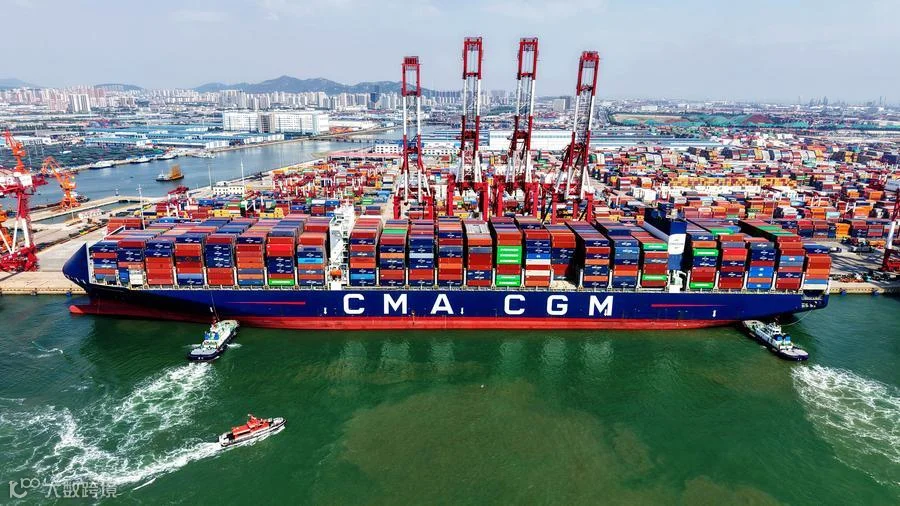
A cargo ship berthed at Qingdao Port in Qingdao, Shandong Province in east China, June 9, 2026. /Xinhua
Perhaps the greatest significance of China's trade resilience lies in the confidence it provides during an unusually uncertain period for the global economy. Businesses value predictability, investors seek stable markets and manufacturers require reliable supply chains. China's continued commitment to high-standard opening up and its ability to maintain robust trade flows contribute to all three.
At a time when economic fragmentation has become a recurring concern, the data demonstrates that China remains deeply integrated into global production networks and continues to serve as one of the world's most important trading partners.
Ultimately, these figures should be viewed not simply as another statistical release, but as evidence that one of the world's largest engines of growth continues to provide stability precisely when the global economy needs it most. Amid slowing global growth and persistent geopolitical uncertainty, China's resilient trade performance is helping strengthen supply chains, sustain international demand and reinforce confidence in the global recovery. In an era where certainty has become an increasingly scarce commodity, that may be China's most valuable contribution.
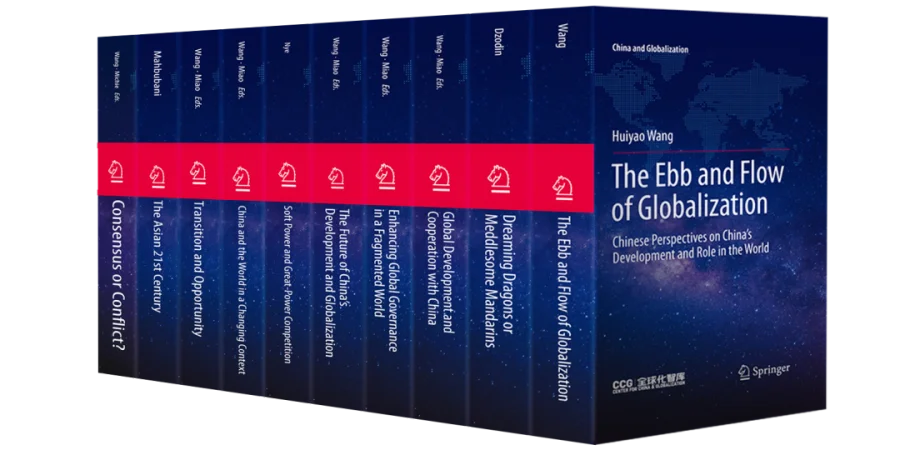
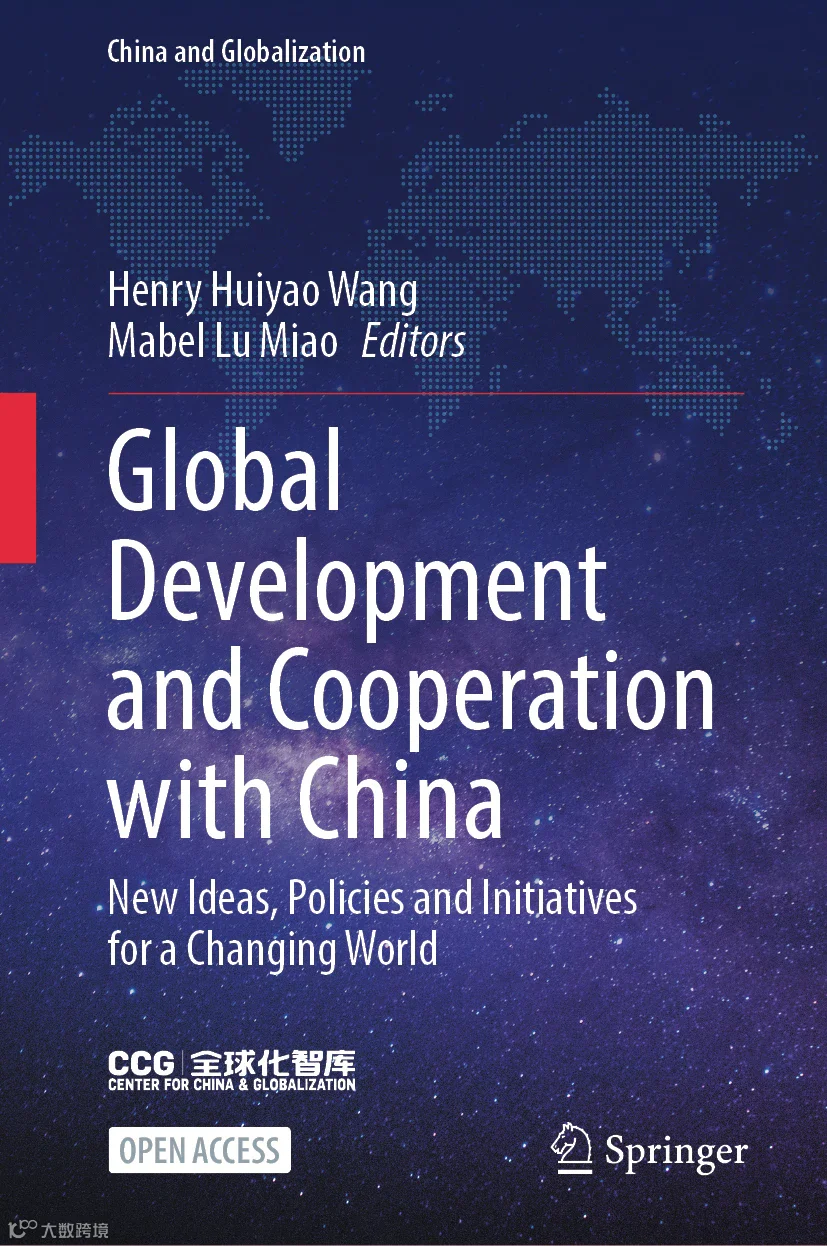
CCG Books


Other CCG News:
CCG’s 12th China and Globalization Forum Held in Beijing
CCG concludes side event within Munich Security Conference 2026
CCG Marks 150th Book Milestone with Seminar on Its Publishing Journey
New Year Message 2026: Reflecting on a Year of Global Dialogue and Growth
Experts call for strategic stability in U.S.-China ties
CCG, Indonesian Embassy Mark 75 Years of China–Indonesia Ties
CCG, Belgian Embassy hold seminar on future of multilateralism
CCG holds the 10th China Global Think Tank Innovation Forum in Beijing
Recent CCG visits in Brazil & Ethiopia
Recent CCG visits in Germany & the UK
Global Talent Summit 2025 Holds in Beijing Sub-Center
300 Participants from 60 Countries Attend CCG Annual Forum
CCG Conducts Track Two Visit to US
CCG hosted the 9th China Global Think Tank Innovation Forum
2024 GYLD Annual Forum successfully held in Beijing
11th China Inbound-Outbound Forum Successfully Held @2024 CIFTIS
60 Countries’ Participants Joined China and Globalization Forum
CCG seminar on global governance & future of China and Africa
Senior Diplomats from 20 countries discuss China's green transition
Text of Pascal Lamy and Chinese trade experts @ CCG VIP Luncheon
Book Launch: Enhancing Global Governance in a Fragmented World
Transcript of CCG session in WTO Public Forum
20 US media leaders attended special dinner held to welcome CCG