



In this excerpt from his new Springer open-access book, China and the Next Global Order, CCG President focuses on how clean energy leadership could become a new basis for international cooperation.
Green Power Leadership: Why China Can Lead the Climate Revolution
As green transition becomes one of the defining technological trends of the 21st century, the question is not whether China is leading the world but whether it can sell its climate leadership fast enough to build a better future for all.
The New York Times columnist Thomas Friedman wrote in 2007 that “green is the new red, white and blue,” arguing it the United States could cement its tech leadership through clean technology. However, the ensuing decades have seen US political dysfunction turn that on its head. Now in 2025, he argues that US President Donald Trump's “big, beautiful bill” will only “make China great again.”
It's not hard to see why he might think that. There is an intimate connection between generation capacity and national economic output. In a world driven by increasingly energy-hungry AI models, large digital infrastructure outlays, and traditional industrial processes, abandoning the cheapest form of energy generation yet discovered to defend legacy interests in fossil fuels seems foolish.
It has been a truism since the beginning of the 2020s that, per dollar spent on capacity, renewables now beat fossil fuels on price, and renewables are not dependent on a continuous stream of outside fuel at fluctuating prices.
In that challenge lies opportunity. In a world plagued by climate instability, energy insecurity, and economic uncertainty, the next global leader will be crowned not by war or wealth but by capability and capacity. Delivering on clean energy at scale will be the leading edge upon which these are determined, and China is positioning itself at the center of this transformation. It is becoming the world's largest producer of solar panels and electric vehicles and underwriting a green revolution that could redefine global governance.
As economic historian Adam Tooze recently pointed out during a dialogue at the Center for China and Globalization, China has effectively ignited a green energy revolution, forging capacity where there was once only framework and far-off dreams of substitution. In 2023 alone, China installed more solar capacity than the entire world did the previous year, and it’s driving down the prices of installations elsewhere.
The cost of solar has dropped to just 11 cents per watt of capacity in 2024. As Tooze said, “Because that dominance – and it is dominance – of so many areas of production, very high quality, very high flexibility, and integration across the entire supply chain and reasonable cost, means that it’s difficult for other people to imagine their economic future.”
Just as steam power helped usher in the British Empire and the transistor catalyzed American technological leadership, today green power is laying the groundwork for China to contribute to the next phase of global leadership. Unlike earlier industrial revolutions, the green transition, by its nature must be collaborative, inclusive, and global in scope.
Climate change is, after all, a problem that threatens us all regardless of borders, especially in the world’s least developed regions. In these places, new installations will build out capacity that previously never existed.
Global governance must evolve to reflect this shared future. If China can help lead the world to curb climate change, we will not only contribute to stabilizing the planet but also help write a new chapter in the architecture of international cooperation.
The transition is already bearing domestic fruit. China is moving from a state-led, subsidy-heavy model to a more efficient, market-driven green economy. Photovoltaic subsidies were phased out as the industry matured, allowing technological improvements and economies of scale to drive solar adoption on merit alone. Electric vehicle (EV) subsidies are being phased out, pushing domestic carmakers toward a renewed focus on innovation, quality and global competitiveness.
Yet China’s competitiveness also poses a problem. To fight climate change, we must overcome a growing trust gap. China’s rise up the value chain has already begun to displace incumbents in developed economies in areas such as automotive manufacturing, but displacement need not be the logic of China’s rise.
To anchor itself and support the green transition, China must build trust through action and do so in a way that does not deprive local economies of opportunity. It will need to continually embrace a global “going out” strategy, one that is “in the world, for the world” by tangibly investing in foreign markets to expand the capability of Chinese business and spread the rewards of economic integration.
The world can benefit from endeavors such as LONGi Green Energy's joint venture in solar manufacturing in Ohio and BYD’s first EV plant in Thailand. Chinese-built transmission lines, for example, can bridge solar farms in North Africa to power grids in Europe.
Of course, there will be resistance from entrenched interests and legacy industries. But for ordinary people around the world and governments seeking affordable power, the sooner the world’s green transition, the better.
If the nineteenth century belonged to steam and the twentieth to silicon, the twenty-first will belong to those who master the green transition. The question is not whether China is leading this revolution. The real question is whether China can sell the world on its climate leadership fast enough to build a better, more sustainable future for all.
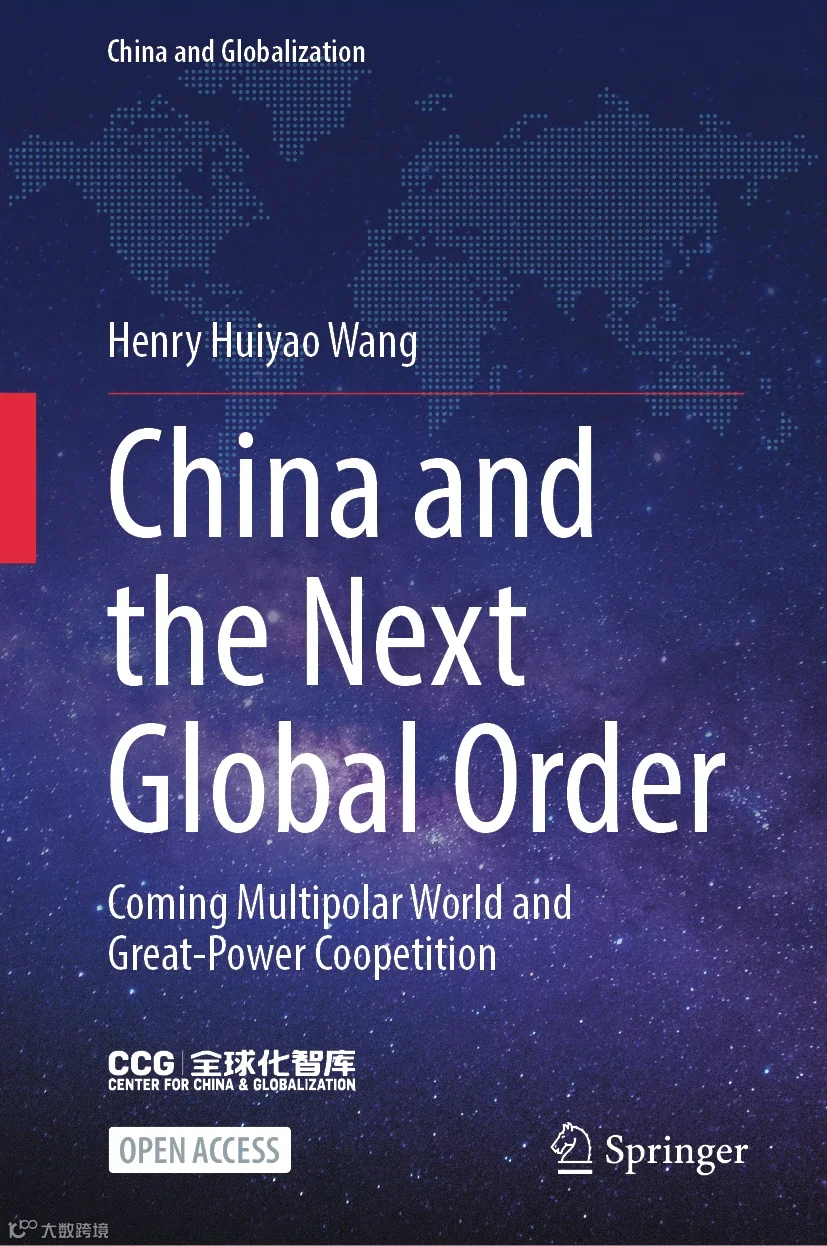
China and the Next Global Order: Coming Multipolar World and Great-Power Coopetition
Author: Henry Huiyao WangISBN:978-981-95-5369-3Publish in August, 2026Publisher: Springer Nature

Green Power Leadership: Why China Can Lead the Climate Revolution
As green transition becomes one of the defining technological trends of the 21st century, the question is not whether China is leading the world but whether it can sell its climate leadership fast enough to build a better future for all.
The New York Times columnist Thomas Friedman wrote in 2007 that “green is the new red, white and blue,” arguing it the United States could cement its tech leadership through clean technology. However, the ensuing decades have seen US political dysfunction turn that on its head. Now in 2025, he argues that US President Donald Trump's “big, beautiful bill” will only “make China great again.”
It's not hard to see why he might think that. There is an intimate connection between generation capacity and national economic output. In a world driven by increasingly energy-hungry AI models, large digital infrastructure outlays, and traditional industrial processes, abandoning the cheapest form of energy generation yet discovered to defend legacy interests in fossil fuels seems foolish.
It has been a truism since the beginning of the 2020s that, per dollar spent on capacity, renewables now beat fossil fuels on price, and renewables are not dependent on a continuous stream of outside fuel at fluctuating prices.
In that challenge lies opportunity. In a world plagued by climate instability, energy insecurity, and economic uncertainty, the next global leader will be crowned not by war or wealth but by capability and capacity. Delivering on clean energy at scale will be the leading edge upon which these are determined, and China is positioning itself at the center of this transformation. It is becoming the world's largest producer of solar panels and electric vehicles and underwriting a green revolution that could redefine global governance.
As economic historian Adam Tooze recently pointed out during a dialogue at the Center for China and Globalization, China has effectively ignited a green energy revolution, forging capacity where there was once only framework and far-off dreams of substitution. In 2023 alone, China installed more solar capacity than the entire world did the previous year, and it’s driving down the prices of installations elsewhere.
The cost of solar has dropped to just 11 cents per watt of capacity in 2024. As Tooze said, “Because that dominance – and it is dominance – of so many areas of production, very high quality, very high flexibility, and integration across the entire supply chain and reasonable cost, means that it’s difficult for other people to imagine their economic future.”
Just as steam power helped usher in the British Empire and the transistor catalyzed American technological leadership, today green power is laying the groundwork for China to contribute to the next phase of global leadership. Unlike earlier industrial revolutions, the green transition, by its nature must be collaborative, inclusive, and global in scope.
Climate change is, after all, a problem that threatens us all regardless of borders, especially in the world’s least developed regions. In these places, new installations will build out capacity that previously never existed.
Global governance must evolve to reflect this shared future. If China can help lead the world to curb climate change, we will not only contribute to stabilizing the planet but also help write a new chapter in the architecture of international cooperation.
The transition is already bearing domestic fruit. China is moving from a state-led, subsidy-heavy model to a more efficient, market-driven green economy. Photovoltaic subsidies were phased out as the industry matured, allowing technological improvements and economies of scale to drive solar adoption on merit alone. Electric vehicle (EV) subsidies are being phased out, pushing domestic carmakers toward a renewed focus on innovation, quality and global competitiveness.
Yet China’s competitiveness also poses a problem. To fight climate change, we must overcome a growing trust gap. China’s rise up the value chain has already begun to displace incumbents in developed economies in areas such as automotive manufacturing, but displacement need not be the logic of China’s rise.
To anchor itself and support the green transition, China must build trust through action and do so in a way that does not deprive local economies of opportunity. It will need to continually embrace a global “going out” strategy, one that is “in the world, for the world” by tangibly investing in foreign markets to expand the capability of Chinese business and spread the rewards of economic integration.
The world can benefit from endeavors such as LONGi Green Energy's joint venture in solar manufacturing in Ohio and BYD’s first EV plant in Thailand. Chinese-built transmission lines, for example, can bridge solar farms in North Africa to power grids in Europe.
Of course, there will be resistance from entrenched interests and legacy industries. But for ordinary people around the world and governments seeking affordable power, the sooner the world’s green transition, the better.
If the nineteenth century belonged to steam and the twentieth to silicon, the twenty-first will belong to those who master the green transition. The question is not whether China is leading this revolution. The real question is whether China can sell the world on its climate leadership fast enough to build a better, more sustainable future for all.
Author: Henry Huiyao WangISBN:978-981-95-5369-3Publish in August, 2026Publisher: Springer Nature
About this book
This open-access book presents a curated look into Dr. Henry Huiyao Wang’s latest writings concerning the changing world order, a change widely characterized as one of “world disorder”. A quarter of the way into the 21st century, the world is now witnessing the definitive end of the post-Cold War unipolar moment and the beginning of a new multipolar world order.
Together, these writings explore the key questions facing the global community: How will the world navigate this structural shift defined not by a single hegemon, but by a complex web of competing power centers? How will major powers such as the US and China coexist in an era defined by both competition and cooperation? What role can China play as a new pole of influence emerges? And how can the international system adapt to reflect shifting economic weight, geopolitical realities, and the aspirations of countries across the global south?
Throughout, Dr. Wang offers forward-looking insights for policymakers, scholars, and practitioners. Equally, he highlights the indispensable role of international institutions—especially the revitalization and reform of the United Nations—in shaping a new era of globalization and multilateral systems, as the world moves toward the next global order and a new equilibrium where we must coexist, cooperate and compete at the same time.
Providing a panoramic view of today’s fragmented yet interconnected world and presenting insightful policy ideas from a Chinese perspective, this book calls on readers to reflect on how the next global order can serve all nations—large or small, North or South.
The three core themes of this book are as follows: first, the shifting nature in global interactions; second, perspectives on the pursuit of genuine multilateralism, and efforts to establish a new global equilibrium; and third, an exploration of the symbiotic relationship between globalization and economics. At the heart of these themes lies China’s evolving role in global governance and world affairs, particularly in responding to a series of systemic transformations, including the shifting center of global power, climate change and the green transition, and the emerging domain of AI governance, while also helping to shape the forthcoming global order.
About the author
Dr. Henry Huiyao Wang is the founder and president of Center for China and Globalization (CCG). He had been appointed as Counselor to China’s State Council (China’s Cabinet ) by Chinese Premier. He is now a distinguished Professor of China University of Foreign Affairs and was a Dean of Institute of Development Research of Southwestern University of Finance and Economics. Professor Wang is a global thought leader on globalization,global governance and China international relations
Dr. Wang has published over 100 Chinese and English books and hundreds of articles and papers related to globalization, global governance, global migration, China’s international relations, China’s migrations, China’s outbound investments. He is the Chief Editor of Springer Nature’s “China and Globalization Book Series”. His latest English books include: “Escaping Thucydides’s Trap: Dialogue with Graham Allison on China–US Relations” (Palgrave Macmillan 2023); “The Ebb and Flow of Globalization: Chinese Perspectives on China’s Development and Role in the World (Springer, 2022); Award winning bookConsensus or Conflict: China and Globalization in the 21st Century (Springer, 2021); The Globalization of Chinese Enterprises: Trends and Characteristics (Springer, 2020); and China’s Domestic and International Migration Development (Springer, 2019),”Handbook of China and Globalization” (Edward Elgar 2019). Dr. Wang has pursued PhD studies at University of Western Ontario and Manchester University and obtained his PhD degree in international management. He was a Senior Fellow at Harvard Kennedy School and a Senior Fellow at Asia Pacific Foundation of Canada and Brookings Institution.
He used to sit on the Advisory Board of International Organization of Migration (IOM) of the UN In addition, Dr. Wang is Paris Peace Forum Steering Committee Member, Duke Kunshan University Advisory Board Member and Ivey Business School Asia Advisory Board Member.
Springer Linkage:
https://link.springer.com/book/9789819553693
Click↙【read more】for PDF