


Over the past few years, many factories and trading companies involved in international business have shared the same feeling:
Despite challenges, activity in the supply chain continues. However, by the time each shipment reaches the later stages, unexpected changes often occur.
Sometimes the vessel schedule changes.Occasionally additional documents are required.Sometimes the ocean leg goes smoothly, but the shipment gets delayed at destination booking, container pickup, or final delivery.
And at times, everything seems fine at the beginning, but the shipment becomes difficult to manage in the end because of lead-time issues, cost changes, or unclear exception communication.
In international logistics, many problems do not arise from a single stage being out of control. More often, they occur because a step in the preparation process was missed earlier, leading to a series of avoidable difficulties later on.
So rather than speaking in overly broad terms, this article focuses on practical points that are often overlooked — the kind of details that, if considered early on, make international logistics operations run much more smoothly.
When these points are handled well from the start, foreign trade processes generally proceed with far fewer issues.
Price is no longer the main
standard for judging
a freight forwarder
When asking for a quote, most factories and trading companies usually ask three questions first:
· How much does it cost?
· Which route is the cheapest?
· Is there an even lower-priced option?
There is nothing wrong with that. Cost always matters in business.
But from a freight forwarder's perspective, what really determines whether a shipment runs smoothly is often not how much was saved upfront on freight, but rather:
· How bad could the delay be in the worst case?
· How much additional cost could arise in the worst case?
· If something changes, can the plan still hold up?
In some cases, a shipment may look USD 100 or 200 cheaper on paper, but just one sailing change, one port delay, or one temporary switch in transport mode can easily wipe out that saving — and sometimes much more.
That is why it is generally recommended that factories and trading companies clarify the following points before comparing options:
· What is the acceptable delay for this shipment?
· What additional cost can this shipment reasonably incur?
· For this order, which aspect matters most: price, lead time, or stability?
Once these questions are clear, logistics decisions become much easier, and the focus shifts away from "cheaper at all costs."
Shipments should not
rely on only one route
Many shipments look smooth at the beginning:
· space has been secured;
· documents are complete;
· the vessel schedule looks normal;
· the delivery date has already been set.
But the biggest challenge in international logistics is exactly this situation: everything looks fine at first, and then one unexpected change appears in the middle.
Maybe the vessel schedule is postponed.
Maybe transshipment slows down.Maybe destination resources become tight.
Maybe the final delivery appointment cannot be secured on time.
If there is only one way to move a shipment, the more smoothly things appear at the start, the harder it becomes to respond if something goes wrong.
That is why, from a freight forwarder's perspective, it is essential to ensure that multiple solutions are available for each shipments.Even if the backup plan is never used, it is still worth working out in advance:
· What is the second option if the main plan fails?
· How much more will it cost if the route changes?
· How much impact will it have on timing?
· By what point does a final decision need to be made?
In many cases, a shipment remains stable not because nothing ever goes wrong, but because a workable alternative is already in place when issues arise.
Lead times should not
be promised only on the
best-case scenario

This is something both traders and factories encounter very often in daily business.
To ensure the shipment, or simply to reassure the buyer, lead times are often communicated based on the most ideal scenario.
But under today's supply chain conditions, it is very difficult for every shipment to move exactly according to the most ideal timing.
The point is not that commitments should not be made.Rather, when a commitment is set with little flexibility, even a small change later can leave very limited room to adjust.
From the perspective of logistics professionals, a more practical way to manage delivery expectations is usually not to provide one "perfect-looking date," but to give a more realistic range:
· the earliest possible timing;
· the most likely timing under normal conditions;
· and the latest likely timing if something changes along the way.
This helps in two ways.
First, factories can plan production and scheduling earlier.
Second, trading companies can communicate more confidently, without ending up in a passive position later because the initial commitment was insufficiently flexible.
At the end of the day, the main challenge is not being two days late — it is having expectations set one way at the start and then seeing something completely different happen later.
Documentation and
compliance issues should
never be left until right
before shipment

From a freight forwarder's point of view, many so-called "shipping problems" are not really transport issues at all.
They are often related to documentation.
The most common examples include:
· inconsistent product descriptions;
· HS logic not confirmed in advance;
· packing lists, invoices, and declaration documents using different wording;
· packaging, labels, and instructions not aligned with destination-country requirements;
· shipper and consignee information being changed at the last minute.
Most of the time, these issues do not look serious at first.But once inspection, supplementary filing, or stricter system requirements come into play, the entire execution rhythm can quickly fall apart.
That is why it is strongly recommend advancing documentation and compliance preparation, especially for companies planning to operate long-term in relatively mature markets such as Europe or the Americas.
Before shipment, it is worth confirming at least the following:
· Is the product information stable?
· Are the product description and HS logic consistent?
· Are labels, instructions, and shipping documents aligned?
· Are there any destination-country-specific requirements?
· If the products involve furniture, consumer goods, wood products, or similar categories, have the relevant documents already been checked?
When additional documents are requested, it is often not a matter of excessive caution. Rather, a missing confirmation earlier in the process can create a chain of complications later.
Freight cost alone should
not be compared —
total delivery cost
should be compared
In general one important point to consider is that success in logistics often depends less on the freight rate itself and more on the accumulation of many small details that may seem insignificant individually but collectively make a difference.
For example:
· sailing change fees;
· rebooking costs;
· storage, port, detention, or demurrage charges;
· expenses from changing transport modes at short notice;
· extra costs caused by destination-side appointment changes;
· losses tied to missed sales windows because of delivery delays.
That is why, from a logistics perspective, the most important comparison is not simply "which quote is the lowest," but:
· Which solution is more stable in actual execution?
· Which solution is less likely to generate extra charges later?
· Which one can recover faster when something goes wrong?
· Which one offers better control over the total landed cost?
Low price does not always mean better value.
Sometimes the cheaper option at the beginning turns out to be the more expensive one by the time the shipment is completed.
A smooth ocean leg
does not mean
the entire shipment is safe
Many factories and trading companies naturally focus on the first half of the process:
· Has the cargo been loaded?
· Has the vessel departed on time?
· Is the ocean freight leg moving normally?
But from the front line of logistics operations, many shipments that encounter challenges do so later in the process:
· destination appointments may take extra coordination;
· container pickup can take longer than expected;
· warehouse coordination requires careful planning;
· delivery resources become tight;
· customs clearance and final delivery information need to be aligned.
In other words, if the ocean leg goes smoothly, that only means the first half is in good shape. It does not automatically mean the shipment will land safely from beginning to end.
For critical shipments, it is generally recommended to plan for the 'last mile' much earlier, rather than waiting until the cargo has already arrived.
If something can be confirmed in advance, it is usually better to do so early:
· Is destination warehousing available?
· Does destination booking require advance queuing?
· Are delivery resources sufficient?
· Once the cargo arrives, who will receive it, how, and when?
Many shipments become passive later on not because of one major problem, but because these downstream details were not followed up early enough.
In exception communication
the biggest problem
is not delay —
it is lack of clarity

There will never be a logistics process with absolutely no exceptions.What makes factories and trading companies most uncomfortable is often not the exception itself, but this:
· the information arrives too late;
· the explanation is too vague;
· there is only "we're following up," but no clear sense of what happens next.
From a freight forwarder's point of view, effective exception communication is not about giving a long process update. It is about making a few key points very clear:
· Where exactly is the shipment stuck?
· How large is the impact likely to be?
· What has already been done?
· What support is still needed?
· What alternative options are available?
· When will the next update be provided?
What factories and trading companies really need is not to hear "we've already pushed it again" over and over.
What they need is to know:
What can still be done now, and what should happen next?
When an exception occurs, whoever can explain the situation clearly is usually the one most likely to retain control of it.
Treating a logistics partner
as a long-term collaborator
usually makes
everything smoother
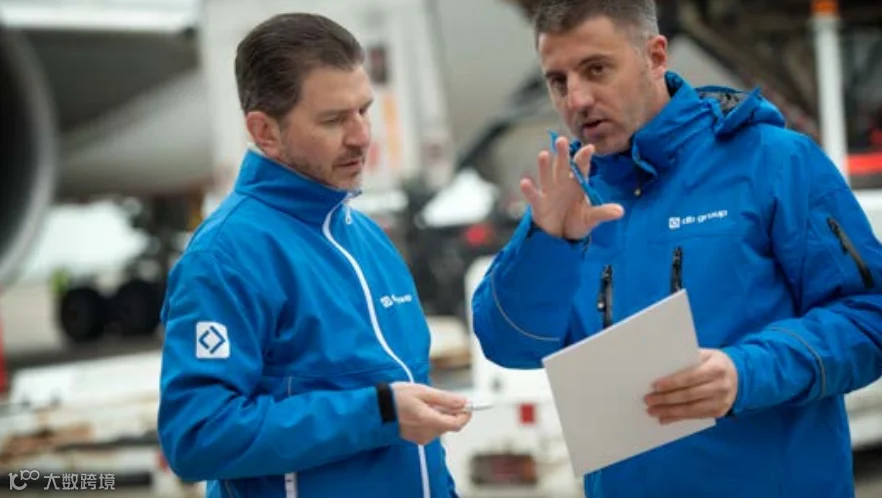
This is something that becomes clearer the longer a company stays in foreign trade.
If every shipment is handled only by comparing price — simply choosing whoever is cheaper this time — it may seem flexible in the short term, but over time many problems repeat themselves:
· no one proactively flags risks;
· documents are prepared from scratch every time;
· logistics solutions are designed only for the current order, not the broader relationship;
· once a problem happens, no one is particularly willing to go one extra step.
But if the logistics relationship is built on long-term collaboration, many things become easier.
The freight forwarder gradually understands:
· the factory's production rhythm;
· whether the trading company prioritizes timing or cost;
· which types of orders are most sensitive to disruption;
· which markets and products require extra caution.
From the perspective of international logistics professionals, valuable cooperation has never been only about "moving the cargo."
It is also about:
· identifying risks earlier;
· building thicker and more resilient plans in advance;
· being able to absorb change when it arrives;
· making each shipment run more smoothly than the last, instead of starting from zero every time.

Conclusion

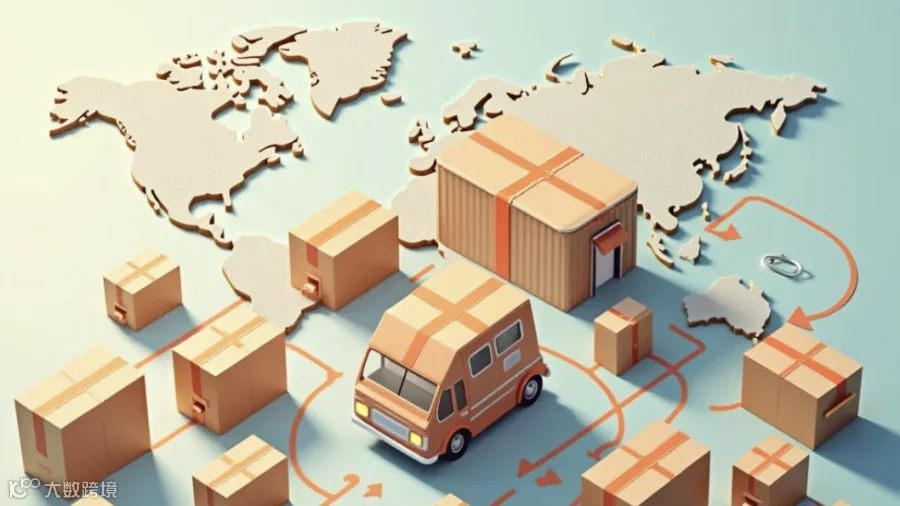
Supply chain uncertainty is no longer an occasional issue. Over the past few years, it has increasingly become part of the normal background of international trade.
For factories and trading companies, the capability that matters most is no longer just how to react after something goes wrong, but how to reduce passivity by preparing earlier in the first place:
· define the delivery baseline first;
· keep backup options for critical orders;
· avoid making lead-time promises only on the best-case scenario;
· prepare documentation and compliance earlier;
· evaluate total cost, not only freight;
· plan destination-side and last-mile resources sooner;
· make exception communication decision-oriented;
· and place greater value on long-term logistics collaboration.
Exporters who are more resilient in the long run are not necessarily those who never encounter problems, but those that have completed more preparation before issues arise.

About D.B. Group


As a long-term logistics partner serving international supply chains, D.B. Group focuses not only on moving cargo into Europe, but also on helping clients ensure smoother coordination across the key stages after entry into Europe, including customs clearance, transshipment, warehousing, and final destination delivery. Against the backdrop of a constantly evolving supply chain environment, D.B. Group aims to support clients in achieving more stable and efficient business execution in the European market through steady operational capability and clearer solution coordination.