D.B. Group
From factory departure to final delivery: how many operational points can potentially go wrong along the way?
For many factories and trading companies, the process of one shipment often seems fairly straightforward:
The goods are ready, trucking is arranged, customs declaration is completed, the cargo is loaded, transported, arrives at destination, and is finally delivered to the recipient.
On the surface, each step appears clear enough, and it may seem that as long as the process moves forward as planned, the shipment should be completed smoothly.
But from the perspective of day-to-day international logistics operations, what usually makes a shipment become complicated is not one single major issue.
More often, it is the accumulation of many small issues that seem manageable on their own, but gradually, together, disrupt the rhythm of the whole shipment.
In other words, from the moment cargo leaves the factory to the moment it is signed for by the final recipient, the process is not a straight line. It is a chain of stages that constantly require coordination, confirmation, and adjustment.
In many cases, a shipment does not go out of control because "the vessel never sailed" or "the cargo never arrived," but rather due to issues such as:
•the factory shipment date changes
•one piece of documentation does not match
•container loading needs to be adjusted at the last minute
•transshipment takes longer than expected
•pickup, appointment, or delivery after arrival is not properly connected
•or no one is following the final stage closely enough
Taken individually, none of these may seem dramatic.
But anyone who has worked in international logistics long enough knows that a shipment rarely "fails because of one big event." It is much more often delayed little by little by a series of small changes.
I.
Why do so many shipments
look smooth at the beginning
but still run into problems later?
Because a shipment is not truly complete simply when "the goods have left the factory," nor even when "the vessel has arrived."
A shipment is only truly complete when the goods have moved all the way to final delivery, in line with the planned timing, the expected rhythm, and an outcome that remains acceptable to the recipient.

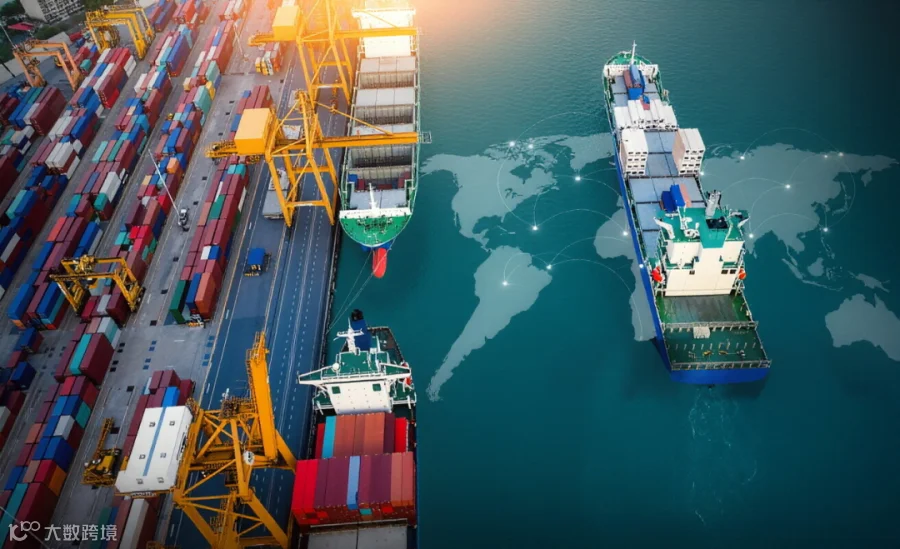
From factory dispatch to final consignee receipt, one shipment usually goes through at least the following stages:
Factory preparation → cargo release arrangement → trucking / warehouse entry → customs declaration / documentation → container loading / vessel loading → ocean / air / rail transport → transshipment → arrival at destination → customs clearance → cargo pickup → warehousing / transfer → final delivery →consignee receipt
On paper, all of these are "normal stages."
In practice, however, each one of them can become a point of deviation.
The challenge is that many factories and trading companies tend to focus mainly on:
•when the cargo will be shipped
•which route it will take
•how much the freight will cost
•how long it will take to arrive
The individual operational stages in between often do not receive the same level of attention until a problem actually arises.
II.
The 8 operational points most
likely to go out of control between factory departure and final delivery
1
Factory readiness
Just because the cargo is
"supposed to be ready" does not
mean it can actually move on time
This is one of the earliest stages, and it is also the one most easily assumed to be fully controllable internally.
In reality, it is very common to see situations such as:
•the goods are not fully completed yet
•packaging is still unfinished
•quantities change at the last minute
•marks, model numbers, or carton labels are modified again
•the cargo is said to be ready, but the loading site is not actually prepared
From a freight forwarder's point of view, the problem is not simply that "something needs to be adjusted." The real issue is that this directly affects subsequent trucking, warehouse entry, customs declaration, and vessel schedule arrangements.
A small delay at the beginning often does not just shift the timeline slightly. In many cases, it forces the whole sequence to be rearranged.
2
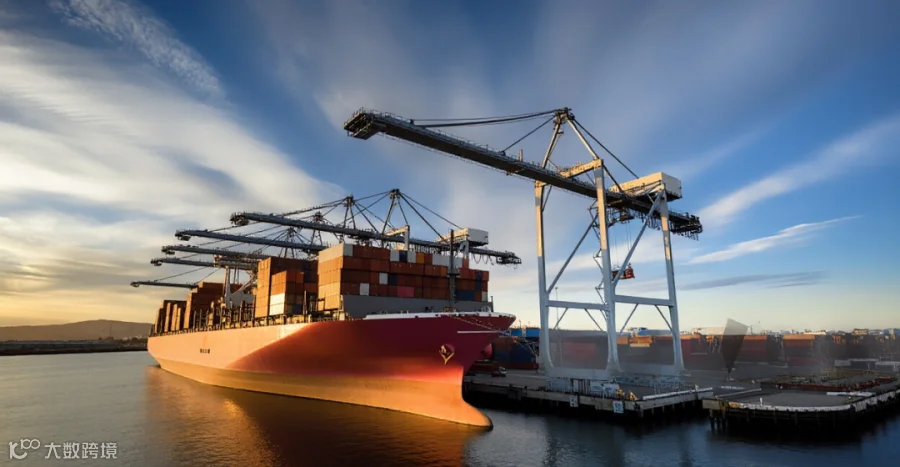
Booking and sailing schedule confirmation
Having a vessel does not necessarily mean the shipment is secure
Many people treat "a vessel schedule has been received" or "space has been booked" as a sign that the shipment is basically secure.
But in actual logistics operations, what really needs to be confirmed at this stage goes far beyond simply "there is a vessel":
•Has the space actually been secured?
•Is there any risk of schedule fluctuation?
•Is transshipment involved?
•If the main sailing changes, is there an alternative plan?
•Is the quote based on real access to resources, or is it only a chance-based offer?
Many shipments look fine in the beginning, and then later start drifting off rhythm precisely because the uncertainty at this stage was underestimated.
3
Trucking / warehouse entry
The underestimated part is often
not thejourney itself, but what happens on site
Factories and trading companies sometimes think of trucking as just an execution step.
In practice, however, this stage often runs into issues such as:
•the truck arrives but the cargo is not ready
•warehouse queuing time is longer than expected
•on-site loading moves too slowly
•the factory says some pieces are still not ready
•the actual loading situation is different from the original plan
These may not look like major issues, but if they happen on the day of departure, they can immediately affect terminal entry, customs declaration, or even cut-off timing.
Many shipments do not become problematic because "transport went wrong," but because the front-end site coordination was never fully aligned.
4
Customs declaration and documentation
What most often disrupts the rhythm is still the paperwork
This is one of the most typical problem areas, and it appears across almost all industries.
Common examples include:
•inconsistent product descriptions
•mismatched wording between packing list, invoice, and declaration data
•quantities, weights, or volumes that do not match the actual cargo
•HS classification logic not confirmed in advance
•last-minute changes to consignee information, product description, or declared value
These issues may not look serious in isolation, but once they appear during customs declaration and departure preparation, they can easily disrupt the entire process.
From a freight forwarder's perspective, many so-called "logistics problems" actually do not begin with transport at all. They begin with documentation and data alignment.

5
Container loading
Many later cargo damage issues and delivery problems actually begin here
Container stuffing is one of the most underestimated stages, while at the same time being one of the most important.
This is particularly true for goods such as:
•furniture
•sanitary ware
•glass products
•slab or stone-related products
•oversized, irregular, or fragile cargo
If loading is done without enough attention to:
•weight distribution
•loading sequence inside the container
•separation and protection between cargo pieces
•the arrangement of heavy versus light cargo
•how the cargo will actually be unloaded later
then later problems become much more likely:
•cargo damage
•cargo shifting inside the container
•more difficult pickup and unloading after arrival
•additional replacement, compensation, or after-sales costs
In other words, many "delivery failures" may appear to occur at a later stage, but in reality, their route cause can often be traced back to container loading.
6
In-transit transport and transshipment
The biggest risk is often not delay itself, but lack of information synchronization
During the ocean, rail, or air transport stage, what recipients usually care about most is naturally the transit time.
But from a freight forwarder's perspective, the more difficult part is often not simply that "it became slightly slower," but that:
•the sailing schedule changed
•transshipment took longer
•the port became congested
•yet the downstream receiving rhythm was not updated accordingly
If transport changes occur but the front-end and back-end information are not synchronized in time, what initially looks like "a small delay in the middle" can quickly turn into:
•the warehouse not being ready
•the consignee not adjusting
•the delivery appointment not being rescheduled
•the entire downstream stage becoming passive
At this stage, the problem is not only the change itself, but also the fact that the rest of the chain may not be adjusted together once that change happens.

7
Arrival, customs clearance,
and pickup
Arrival is only one stage, not the end
This is one of the most common misunderstandings in international logistics.
Many people assume that once the vessel has arrived, the shipment is basically done.
In reality, arrival at destination is often just the beginning of the second half of the process.
What follows still includes:
•customs clearance
•cargo pickup
•appointment coordination
•warehousing connection
•final delivery arrangements
Different countries, different ports, and different recipient types often have very different requirements for these downstream stages.
So when shipments become complicated after arrival, the reason is often not that something went wrong at sea, but that questions such as the following were never clearly prepared in advance:
•who will pick up the cargo after arrival
•when it will be picked up
•where it will go after pickup
•who will receive it
•what delivery window is actually available
These issues often become problematic simply because they were not fully aligned earlier.
8
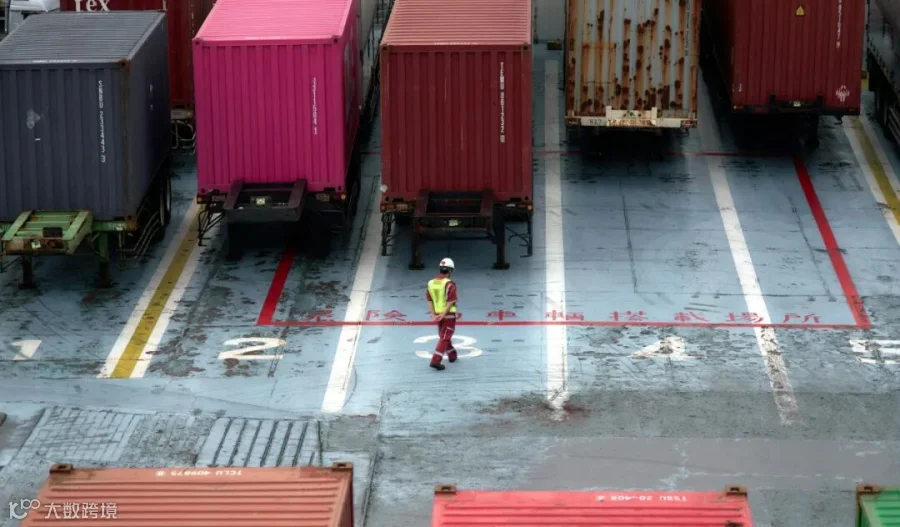
Final delivery and receipt
The last mile is the stage most likely to disrupt everything that came before
This is the part that people tend to underestimate the most.
In many people's minds, once the cargo reaches the destination, "it only needs to be delivered."
But in actual operations, the last mile is often the stage that is:
•most time-sensitive
•most coordination-heavy
•most subject to repeated change
•and most likely to affect recipient satisfaction
For example:
•the consignee's warehouse may only accept cargo at fixed times
•an appointment may be required
•a specific type of vehicle may be needed
•unloading assistance may be required on site
•the address details or receiving instructions may change
Even if everything before this stage went smoothly, if the final stage is not properly connected, the shipment will still be seen by the recipient as "not delivered well."
From a delivery perspective, the true finishing point is never "arrival at port."
It is always "the consignee has received the cargo smoothly."
III.
Why do these nodes keep going out of control even though everyone knows they exist?
The reason is actually quite simple.
Most projects focus in the early stage on whether the cargo "can move," rather than how the entire chain will be completed from beginning to end.
At the beginning, the main focus is usually on:
•the vessel schedule
•the freight cost
•the estimated arrival time

But what really determines the final outcome is often much more detailed:
•who is following each stage
•whether the information is aligned across all parties
•who makes the decision when something changes
•whether a backup plan exists
•whether warehousing, pickup, and delivery after arrival have been arranged in advance
So when a shipment eventually runs into trouble, it is often not because one stage was dramatically mismanaged. It is because:
No one treated the entire shipment as one complete project from start to finish.
IV.
From a freight forwarder's perspective, how can the entire delivery chain be managed more smoothly?
Based on industry experience in international logistics, the more stable projects usually share several common features:
1. They monitor not only the departure stage, but also the downstream delivery stages
That means not only watching when the cargo is loaded, but also when customs clearance, pickup, and final delivery will actually take place.
2. Documentation and on-site execution are confirmed together
The paperwork is not treated separately from the physical operation. Documents, factory timing, warehouse readiness, and transport rhythm all need to match.
3. Critical shipments have backup options prepared in advance
Orders do not rely only on the primary plan. They also prepare for what happens if changes occur along the way.
4. Exception communication is built around "what happens next"
The point is not only to explain what happened, but to clarify where the delay is, how serious it is, and what action comes next.
5. Final receipt is treated as the true end point
As long as the recipient has not successfully received the cargo, the shipment is still in the delivery chain.

Conclusion
From factory departure to recipient delivery, how many operational points can potentially go wrong along the way?

If the full process is broken down carefully, the answer is: far more than one.
And many of the issues are not dramatic accidents at all. They are details that could have been confirmed earlier, but were instead left until later.
From a freight forwarder's point of view, what really makes delivery more stable is not waiting until problems happen and then reacting. It is:
•breaking down the nodes clearly at the beginning
•keeping the information connected in the middle
•arranging the resources properly in the later stages
•and treating the whole shipment as one complete project
In the end, many factories and trading companies realize that the hardest part of international logistics has never been only "shipping the cargo out."
It is getting the cargo all the way into the recipient’s hands smoothly.
About D.B. Group

As a long-term logistics partner serving international supply chains, D.B. Group focuses not only on transportation itself, but also on helping clients connect the entire chain from factory dispatch to final receipt more smoothly. Whether at the front end — booking, trucking, and customs declaration — or in the later stages such as customs clearance, warehousing, transshipment, and destination delivery, D.B. Group places greater emphasis on overall process planning and node coordination.

Against the backdrop of a constantly changing supply chain environment, D.B. Group aims to support clients in making each shipment more stable and more controllable through steady execution and clearer process alignment.