

What exporters
serving the European
market should
pay closer attention
to at this stage

When many companies think about the European market, their first impressions are often the same:
a mature and highly reliable market, with stable customers relationships, transparent rules, and well-established payment practices.
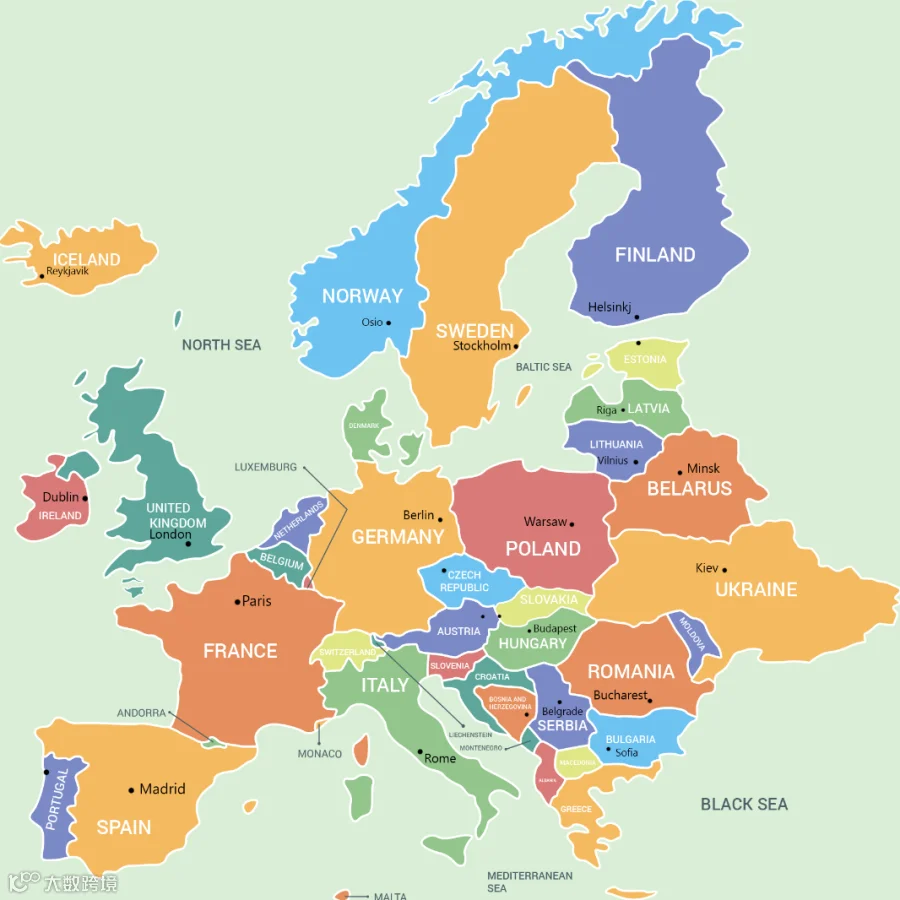
From a market perspective, the European Union consists of 27 member states and operates as a unified customs union.
Once goods are imported, they can circulate freely within the EU. It remains an important market with more than 400 million consumers.
The European market continues to be a valuable destination for long-term investment. At the same time, it provides increasingly clear guidance on compliance, transparency, and delivery reliability, helping companies plan ahead and gain a competitive edge.
For exporters serving Europe, success increasingly depends not only on securing orders, but also on proactive preparation in delivery planning, documentation quality, compliance alignment, and meeting customer expectations.
01

Europe is a unified customs market, and a layered understanding of practical operations helps companies navigate it more effectively
From a customs and tariff perspective, the EU is clearly a unified market.
However, in practical business operations, requirements can vary across different countries, sales channels, and customer types — particularly in relation to product documentation, labeling, delivery arrangements, and service responsiveness, reflecting the sophistication of the European market.
It is therefore useful to view the European market through three layers:
· first, identify the specific target country;
· second, define the customer type;
· third, clarify the sales channel and delivery model.
Only when these three layers are clearly defined can logistics planning, delivery commitments, and documentation preparation remain aligned.
02

Earlier compliance
preparation supports
smoother and more
predictable operations
in the European market
Preparing for compliance earlier in the process is increasingly valuable, helping operations run more smoothly and predictably.
Consumer product safety requirements need to be confirmed earlier
The EU's General Product Safety Regulation (GPSR) has applied since 13 December 2024. Official EU guidance makes clear that the regulation applies to consumer products; products originally designed for professional use may also need to comply if they ultimately enter the consumer market. In addition, relevant products must have an EU-based "responsible economic operator," such as an EU manufacturer, importer, authorized representative, or fulfillment service provider.
This means that, for consumer-facing products, questions such as who will act as the responsible EU entity, who will manage safety documentation, and who will assume traceability responsibilities are increasingly better clarified at an earlier stage of the business process.
Pre-arrival data quality requirements are
becoming more important
The EU's Import Control System 2 (ICS2) requires the relevant entry safety and security data to be submitted before goods destined for or moving through the EU arrive. The European Commission has confirmed that ICS2 has covered all transport modes since 1 September 2025, and that the new v3 messages apply from 3 February 2026.
In practical terms, this means that the European market is placing greater emphasis on consistency in product descriptions, HS code logic, declared value, and shipper/consignee information. For the relevant supply chains, the more complete and consistent the documentation is, the smoother and more efficient subsequent execution is likely to be.
New rules for certain sectors
have already entered the implementation phase
For businesses involving sectors covered by CBAM — such as steel, aluminum, cement, fertilizers, and hydrogen — special attention is required. The European Commission has confirmed that the definitive phase of CBAM started on 1 January 2026, and that the relevant importers, or their indirect customs representatives where applicable, must apply for authorization as CBAM declarants once the relevant conditions are met.
For businesses involving timber, wood products, furniture, and related supply chains, attention should also be paid to the preparation timeline for the EUDR (EU Deforestation Regulation).
According to the European Commission, furniture is included within the scope of wood-derived products. The current implementation timeline is: 30 December 2026 for medium and large operators, and 30 June 2027 for micro and small operators.
These developments do not mean that every company will face exactly the same requirements at the same time. They do indicate, however, that advance planning of products, supply chains, and documentation is becoming increasingly valuable, enabling smoother and more efficient operations rather than concentrating preparation immediately before shipment.
03

In the European market,
delivery reliability and
total cost are increasingly
valued alongside price
While price competitiveness has traditionally been important in the European market, customers are increasingly placing value on two additional factors:
· whether delivery is reliable;
· whether total cost remains controllable.
This means that the solution which ultimately wins business is not necessarily the one with the lowest initial freight rate, but the one that delivers the best balance of reliability, stability, and overall cost efficiency.
Key elements that support this balance include:
· greater stability;
· fewer exceptions;
· stronger recoverability when circumstances change;
· fewer additional costs arising during later stages of execution.
Under the current environment, part of the freight savings on paper may later translate into additional operational costs, such as:
· rebooking or sailing change costs;
· storage, port charges, detention, or demurrage;
· extra expenses caused by switching transport modes at short notice;
· indirect losses related to changes in the sales window.
In the European market, the greatest value often comes from optimizing overall delivery cost and ensuring reliable execution, rather than focusing solely on the freight cost of a single shipment.

04

The longer a business
operates in Europe,
the more it requires
systematic preparation
rather than temporary reactions
When many companies first enter the European market, they tend to rely primarily on experience, relationships, and execution capability.
As the business develops over time, however, it often becomes clear that the real challenge is not only how effectively issues can be solved, but also how proactively they can be minimized through better planning.
Several practices are therefore worth turning into standard procedures:
Confirm the market before confirming the logistics
Rather than asking first, "How should this shipment move?", it is often more useful to confirm:
· which country the goods are entering;
· what type of customer is involved;
· whether final delivery is to port, warehouse, or door.
Build the compliance
checklist before arranging shipment
For categories such as consumer products, furniture, wood products, and metal building materials, it is advisable to confirm before shipment:
· whether product descriptions and HS logic are stable;
· whether labeling, manuals, and documentation use consistent wording;
· whether GPSR, CBAM, EUDR, or similar requirements may apply;
· whether the responsible EU entity and import declaration entity are clearly identified.
Define the worst-case scenario before making delivery commitments
For high-value and time-sensitive orders, it is advisable to calculate at least two things in advance:
· how much delay could arise in the worst case;
· how much additional cost the worst case could generate.
Prepare alternatives before
making commitments
For important orders, it is advisable to ensure there is:
· a primary solution;
· a backup sailing or alternative route;
· a communication mechanism for exceptions;
· clear allocation of decision-making and update responsibilities.
05

Four key words that deserve greater attention in the
European market
Condensed into one sentence, the key point is this:
Long-term success in the European market is depends not only the market opportunity itself, but also on compliance, delivery, responsiveness, and continuity.
More specifically:
Front-loaded compliance
Compliance preparation is most effective when incorporated early in the business process, enabling smoother and more reliable operations.
Stable delivery management
Delivery commitments are increasingly better managed through ranges and minimum delivery baselines, rather than ideal-case timelines alone.
Multiple options
Important orders benefit from having multiple routes or operational paths, enhancing flexibility and resilience.
Long-term coordination
Each shipment is most successful when viewed within the context of a longer-term business relationship, rather than as an isolated single transaction.
06

Conclusion
The European market remains an important market for long-term investment. That has not changed.
What has evolved is that the expectations for exporters are becoming clearer: alongside competitive products and pricing there is increasing emphasis on stable documentation systems, consistent execution, and better upfront preparation.
Creating opportunities for well-prepared companies to differentiate themselves through strong compliance, consistency, and operational excellence.
Companies most likely to grow steadily in the European market are those that integrate early compliance preparation, clearly define their delivery approach, and establish alternative options in advance.
As a long-term logistics partner serving international supply chains, D.B. Group focuses not only on moving cargo into Europe, but also on helping clients ensure smoother coordination across the key stages after entry into Europe, including customs clearance, transshipment, warehousing, and final destination delivery. Against the backdrop of a constantly evolving supply chain environment, D.B. Group supports clients in achieving more stable and efficient business execution in the European market through steady operational capability and clearer solution coordination.