
The Cargo has already arrived at the port — so why isn't delivery finished yet?
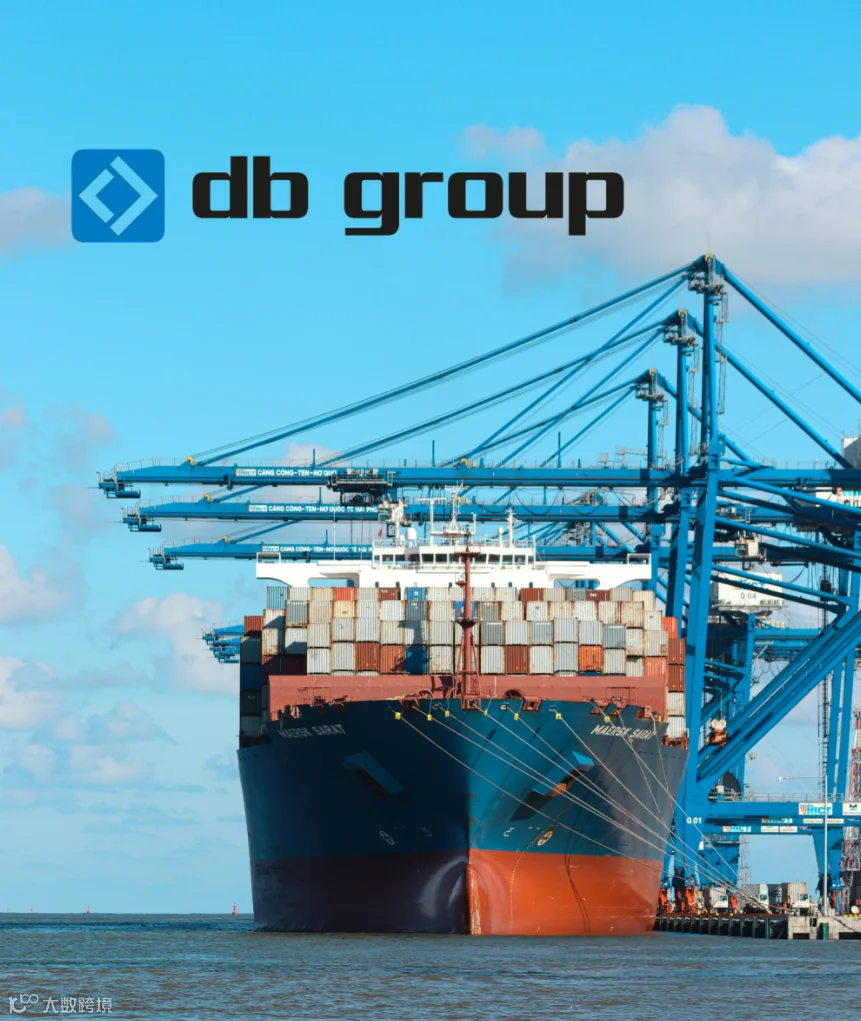

"The vessel has already arrived, hasn't it?"
"The cargo has already reached the port, hasn't it?"
"So why are there still delays, extra costs, or even delivery issues?"
This is a very common misunderstanding in international logistics.
For many factories and trading companies, the process of one shipment often looks something like this:
Cargo is shipped out, loaded onto the vessel, the vessel sails, the cargo arrives at port — and then the job is basically done.
But from the perspective of day-to-day logistics operations, that is usually not how it works.
Arrival at port does not mean delivery has been completed.
In many cases, the shipment actually starts becoming more complicated after the cargo reaches the port.
Because the end of the ocean leg does not mean the end of delivery.
A shipment is only truly completed when the cargo has gone through customs clearance, container pickup, warehousing coordination, and final delivery as planned, and is ultimately received by the consignee.
That is exactly why many shipments that look like they are "almost done" begin to encounter problems in the second half of the process.
If the full process of a shipment is broken down, it usually looks like this:
Factory dispatch → trucking → customs declaration → loading → ocean freight → arrival at port → customs clearance → container pickup → warehousing / transshipment → final delivery → signed receipt
Looking at the process this way, it becomes clear that:
Arrival at port simply means the first half of transportation has been completed — delivery has entered its second half.
The first half is mainly about getting the cargo to the destination port.
The second half is about getting the cargo to the consignee.
And the second half usually has several characteristics:
•more parties are involved;
•information coordination becomes more complex;
•local resource booking plays a bigger role;
•many issues are no longer about whether something can be done, but about when it can be done and whether all the steps can be connected in time.
So in international logistics, port arrival is only one milestone, not the finish line.
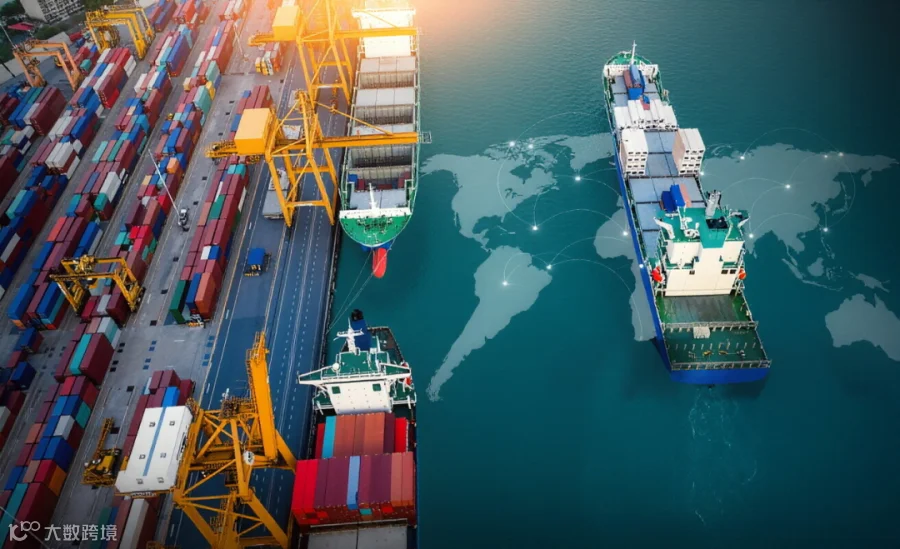
Many shipment issues do not arise during the ocean leg. They build up during the post-arrival process.
Customs clearance
Complete documents do not always mean fast clearance
Many factories and trading companies assume that once documents are prepared, customs clearance should move quickly.
In practice, however, customs clearance is not only about whether the documents exist. It also depends on:
•whether the document wording is fully consistent;
•the pace of local customs review;
•whether the shipment is selected for inspection;
•whether supplementary explanations are required;
•and whether there are operational differences between countries and ports.
In other words, customs clearance is not simply a matter of being "prepared" or "unprepared”. It is a process influenced at the same time by documentation quality, declaration logic, and local execution pace.
Some shipments do not run into a major problem at all — they may simply be asked to provide one more clarification.
But once that happens in the latter part of the process, even a smooth ocean schedule can lose its rhythm.
Container pickup and appointments
Arrival does not mean immediate pickup
This is another stage that is often underestimated.
At many destination ports, container pickup is not a matter of “the vessel has arrived, so the container can be collected right away.” It often depends on:
• whether the terminal has released the container;
• whether pickup requires advance appointment;
• how tight the pickup slots are;
• and whether holidays, peak seasons, or terminal efficiency are causing queues.
So in real execution, there is often no seamless transition between "arrival at port" and "container pickup".
Some shipments move perfectly well on the water, but because the pickup and appointment stage takes two or three days longer than expected, the warehousing and delivery plan afterward is pushed back entirely.
Warehousing and handover
The biggest problem is often not a lack of resources, but misaligned information
Many downstream problems are not caused by a lack of resources, but by misaligned information.
A very typical situation looks like this:
•the warehouse is unclear about when the cargo will actually arrive;
•the pickup party arrives, but the receiving arrangement has not been confirmed;
•documents have been updated, but the execution side is still working with an older version;
•delivery time has been adjusted, but not all relevant parties have been informed.
The result is:
•the driver is waiting;
•the warehouse is waiting;
•the recipient is asking;
•and time keeps moving.
On the surface, no single party appears to have "done anything wrong," but the shipment still gets delayed.
This kind of issue is not uncommon in international logistics, and the further a shipment progresses into the post-arrival stage, the more likely it is that small information gaps become amplified.
Final delivery
The last mile is often the most unstable part
Many shipments move smoothly through the first half, only to get delayed at the point that is most often underestimated:
•delivery appointment could not be secured;
•receiving hours are limited;
•the recipient’s warehouse cannot receive cargo that day;
•address details or site requirements have changed;
•local delivery resources are temporarily tight.
A common assumption is:
"The cargo has already arrived here — it just needs to be delivered."
But from front-line experience,
the last mile is often the most unstable segment of the whole chain.
That is because it depends directly on local destination resources, operational rhythms, and the consignee’s own receiving arrangements.
If none of the earlier stages fully took this into account, then the final stage often becomes a sequence of repeated explanations, repeated coordination, and repeated adjustments.
The reason is actually quite simple.
When managing a shipment, factories and trading companies naturally focus more on the ocean leg:
•Has the cargo been loaded?
•Has the vessel departed?
•Has the sailing schedule changed?
This part feels the most visible, and it is often seen as "the core of logistics."
In reality, the second half of the shipment has a different nature:
•there are more operational nodes;
•more parties are involved;
•each step depends more heavily on prior coordination;
•and many resources cannot be arranged instantly at the last minute.
In other words:
The first half is more about transportation,while the second half is more about coordination.
And the biggest characteristic of coordination-related issues is that they often remain invisible until something fails to connect — at which point they all show up at the end.
So when a shipment suddenly "seems to run into trouble," it is often not because a major event appeared out of nowhere. It is because the second half was never treated as a key part of delivery management in the first place.

From front-line operational experience, the shipments that remain stable after arrival are usually not the ones with one particularly strong stage. They are the ones where several key preparations were made properly in advance.
Think through the post-arrival
stage before the cargo arrives
Do not wait until the cargo arrives to start confirming:
•who is handling customs clearance;
•who is arranging container pickup;
•how the warehouse handover will work;
•when final delivery will be scheduled;
•who is coordinating the process after arrival.
These questions are much better answered before the shipment is on the way.
Secure key resources as early
as possible
Especially for:
•pickup appointments;
•warehouse time slots;
•delivery windows;
•destination receiving arrangements.
The more mature the market, the less practical it is to rely on last-minute resource allocation.
Many post-arrival disruptions are not caused by absence of resources, but by confirming them too late.
Make sure there is one clear
information lead
The biggest risk in post-arrival operations is often not that no one is working on it, but that each party only knows part of the picture.
That is why one very important step is this:
someone needs to follow the shipment end to end and make sure the information flows all the way through.
The clearer it is who coordinates, who updates, and who confirms the key milestones, the less likely the process is to become chaotic later.
Treat "signed receipt,"
not "port arrival,"
as the true delivery milestone
This mindset matters a great deal.
If port arrival is treated as the end point, then the latter stages tend to be underestimated.
But if consignee receipt is treated as the real end point, many key actions naturally move earlier:
•downstream resources are arranged earlier;
•stage-to-stage coordination becomes more detailed;
•risk assessment becomes more complete.
From a freight forwarder's point of view, the most stable shipments are not simply the ones where "the cargo was transported there," but the ones where "the cargo was successfully delivered."
○ Conclusion ○
From front-line international logistics experience, many shipments become complicated later not because the vessel did not sail or the cargo did not arrive, but because:
•downstream coordination was not arranged early enough;
•destination resources were not confirmed in advance;
•information was not synchronized in time;
•and there was no one following the rhythm closely after arrival.
So ultimately,
logistics is never just about "moving cargo to the destination port." It is about delivering the cargo to the recipient as agreed.
Arrival at port simply means transportation has reached one milestone.
True delivery completion is always measured by the consignee successfully receiving the cargo.

As a long-term logistics partner serving international supply chains, D.B. Group focuses not only on moving cargo into Europe, but also on helping clients ensure smoother coordination across the key stages after entry into Europe, including customs clearance, transshipment, warehousing, and final destination delivery.

Against the backdrop of a constantly evolving supply chain environment, D.B. Group aims to support clients in achieving more stable and efficient business execution in the European market through steady operational capability and clearer solution coordination.