







Introduction
When people think about importing furniture into China, the process often sounds quite straightforward:
Booking, shipping, arrival, customs clearance, pickup, and delivery.
At first glance, it may seem that as long as the vessel schedule is normal and the documents are complete, the rest should move forward without too many issues.
However, from the perspective of day-to-day logistics operations, the aspects that most often create problems in furniture imports are usually not the ocean freight itself, but the details that seem minor at the beginning and later end up disrupting the entire flow.
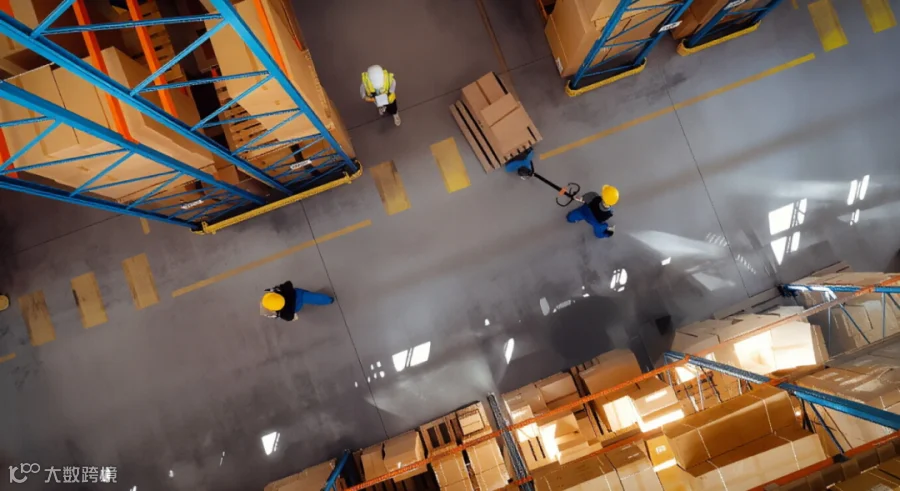
Furniture cargo comes with several very typical characteristics:
•large volume
•complex materials
•high packaging requirements
•greater difficulty in handling pickup, warehousing, and final delivery compared with ordinary cargo
For that reason, the real issue in furniture imports into China is often not whether the shipment can be handled, but whether the parts most likely to create problems have been identified early enough.
In this article, D.B. Group provides an overview of key considerations in furniture imports into China from a practical operational perspective.
01
The most underestimated question is not the freight cost, but "What exactly is this cargo?"
At the beginning of a furniture import project, most companies focus first on:
•which route to use
•how much the freight will cost
•how long the shipment will take
But from a logistic perspective, the first question that usually needs to be clarified is actually this:
What exactly is this cargo?
Because products that are all simply called "furniture" can differ quite significantly in actual operations.
For example:
•Is it pure wooden furniture, or a combination of wood, metal, and glass?
•Is it household furniture, office furniture, or commercial display furniture?
•Is it a finished product, a semi-finished item, or a set of components?
•Does it contain motors, lighting, lifting systems, or other electrical functions?



These differences directly affect:
•product description and classification
•declaration logic
•document preparation
•inspection and quarantine attention points
•and in some cases, product compliance considerations once the goods enter the Chinese market
That is why, in furniture imports into China, the first risk is often not transportation itself, but an overly broad understanding of the cargo in the early stage.
If the cargo definition is not broken down clearly from the beginning, the process often becomes one of revising and supplementing while the shipment is already moving.
02
If the material involves endangered species,
it needs to be confirmed before shipment — not after arrival
This is a particularly important point, and one that deserves to be highlighted.
Not all furniture materials can simply be treated as ordinary wood-based products.
If a furniture or home furnishing product involves materials listed under CITES appendices or China's regulated import/export wildlife product catalogues, the importer should first confirm whether an import permit or related species-related documentation is required before shipment. China's National Forestry and Grassland Administration has made clear that regulated wildlife and plant products are subject to certificate-based import and export control, and the relevant permits are issued by the competent endangered species management authorities.
This means that for certain products containing special timber, animal-derived components, or other regulated materials, the key questions are no longer only about transport and customs documentation. They also include:
•whether the material itself is subject to endangered-species control;
•whether a permit or certificate needs to be obtained in advance;
•whether enough time has been reserved for the application process;
•whether the commercial contract, material declaration, and product composition information are already properly prepared.
The biggest risk here is not that the process is necessarily complicated.
The bigger risk is when nobody takes it seriously in the early stage, and the issue only comes up when the shipment is close to arrival or has already arrived at the port.
Once a permit becomes necessary at that point, customs clearance, container pickup, warehousing, and delivery timing may all be disrupted.
From an operational standpoint, whenever the material composition is even slightly complex, or the recipient is not entirely certain whether sensitive materials are involved, it is much better to clarify the issue upfront.
Spending more time on confirmation early on usually saves far more time later.
03
Documents that "look more or less the same" are often the first things to go wrong
In furniture import operations, documentation issues are one of the most common sources of risk.
This is not usually because companies do not care. It is because furniture products themselves often create the following situations:
•product descriptions that are too broad
•material descriptions that are not specific enough
•model numbers, specifications, and quantities written differently across documents
•package counts, gross/net weight, and volume that do not match exactly
•English commercial documents and Chinese declaration wording that were never aligned properly in advance
Once those inconsistencies are left unresolved, they affect not only customs clearance efficiency, but also:
•whether supplementary documents are requested;
•whether the shipment is more likely to attract inspection attention;
•whether the rhythm of clearance and pickup gets delayed after arrival.
In import operations, documentation being complete and consistent is not simply "administrative preparation." It is part of execution quality itself.
Many projects appear to slow down only after arrival, but if traced back carefully, the real source of delay is often already embedded in the documentation stage.



04
Wood packaging should not be evaluated only by whether it exists, but by whether it is compliant
Besides the material of the furniture itself, the packaging is another area that is often underestimated.
Attention is usually placed on the furniture product, while the following questions are sometimes overlooked:
•Is wooden packaging being used, such as pallets, wooden frames, or support blocks?
•Has the wood packaging been properly treated?
•Does it carry the appropriate IPPC marking?
•Has it been properly declared and confirmed in advance?
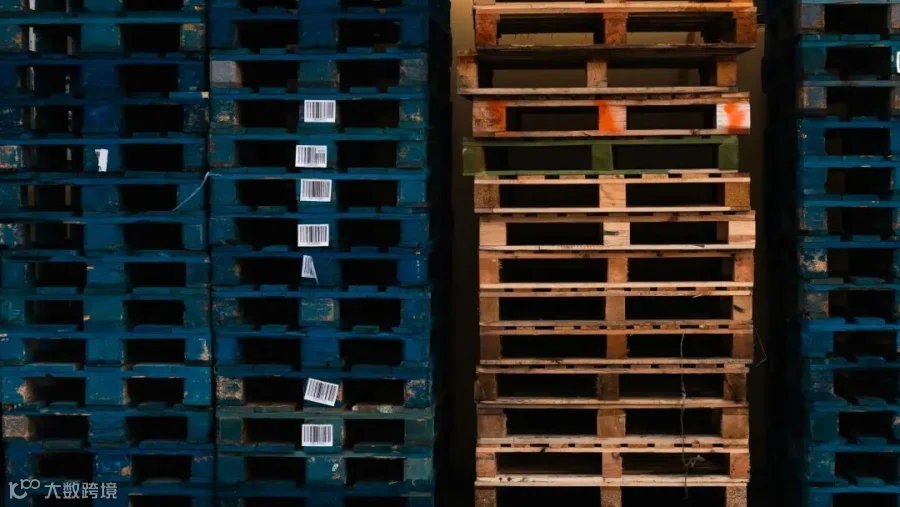
Chinese Customs has publicly stated that wood packaging materials used in inbound cargo must be declared to Customs by the consignee or its agent. For wood packaging materials carrying a valid IPPC mark, Customs may still conduct inspection checks according to regulations.
In other words, packaging-related compliance is something better handled in advance, rather than something to "see later at the port."
In actual operations, the consequence is often not that the goods become impossible to import, but that:
•the timeline gets interrupted;
•port handling time becomes longer;
•extra inspection, repositioning, or storage fees arise;
•the onward pickup and delivery schedule is pushed back.
What makes this especially frustrating is that these issues are usually very suitable for early confirmation, yet in many projects they are only noticed at the last moment.
05
Furniture imports are not only sensitive to freight cost — they are highly sensitive to damage rates
This is another very practical point.
When companies compare logistics options for furniture imports, they often look first at the ocean freight.
But for furniture cargo, the factor that often has a much greater impact on the final result is this:
Will the goods arrive intact, and if not, how much damage will occur and who will bear it?
Furniture imports differ from ordinary cargo because they place much higher demands on packaging, stuffing, loading, unloading, and cargo arrangement inside the container.
This is especially true for:
•glass items
•mirrored products
•stone or slab countertops
•sanitary ware items
•furniture structures that are particularly easy to scratch, dent, or crack
If the packaging and stuffing logic are not right from the start, then even a very smooth sailing schedule will not solve the problem later.
In real operations, a large proportion of furniture damage does not actually happen at sea. It happens during:
•improper cargo placement during stuffing;
•uneven load distribution inside the container;
•lack of adequate separation between pieces;
•unsuitable handling methods during unloading;
•final delivery arrangements that were not made with furniture-specific handling in mind.
So for furniture imports, the real comparison should not be limited to whether the freight cost is slightly cheaper. What matters more is:
•whether the packaging has been designed according to the product characteristics;
•whether the container loading plan considers weight distribution, support points, and center of gravity;
•whether loading and unloading methods reflect the fragility of the goods;
•whether fragile categories such as glass, sanitary ware, or stone components have been reinforced properly from the beginning.
Many companies start by looking only at freight cost, then discover later that the real expense was not freight at all, but replacement costs, claims, after-sales issues, and lost time caused by damage.
06
The most underestimated part is often not the ocean transit — It is everything after arrival
Many companies naturally assume that once the vessel arrives, the hard part is over.
In reality, for furniture imports, the more complex stage often begins after arrival:
•customs clearance
•pickup
•warehousing coordination
•trucking arrangements
•final delivery
•and in some cases, upstairs delivery, warehouse receiving slots, special unloading requirements, or appointment-based receiving conditions

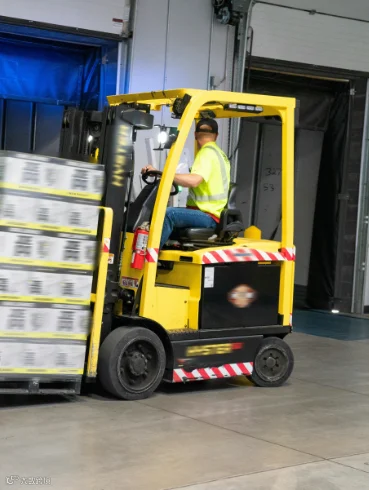
Furniture cargo usually involves:
•larger volume
•higher container usage
•more difficult handling
•greater sensitivity to site conditions at delivery
So in many projects, the problem is not that something went wrong at sea. It is that the later stages were not connected properly:
•the cargo has arrived, but the warehouse is not ready;
•pickup is possible, but trucking has not been scheduled;
•the truck arrives, but the receiving site is not actually prepared;
•delivery instructions changed, but not everyone was updated.
Taken one by one, none of these issues necessarily looks serious.
But when several of them happen together, a shipment that "arrived normally" quickly turns into a project that requires ongoing coordination.
For furniture imports, arrival at port is only a milestone, not the end point.
The shipment is only truly complete when the goods have been delivered into the warehouse, store, showroom, or project site and have been received smoothly.
07
For furniture imports into China, the real comparison is total cost, not just freight
If only ocean freight is compared, many quotations may appear relatively close.
But in actual execution, the gap between different logistics solutions is often created not by the initial freight rate, but by the many additional costs that follow:
•port storage and delay-related costs
•warehouse charges
•waiting time and pickup-related inefficiencies
•secondary delivery arrangements
•rescheduling costs after missed appointments
•additional handling caused by packaging or unloading mismatch
•replacement and after-sales costs linked to cargo damage
That is why, in furniture imports into China, the most meaningful comparison is not only "which quote is cheaper," but rather:
•which plan runs more smoothly in actual execution;
•which plan generates fewer additional costs later;
•which plan is more stable after arrival;
•which plan provides better control over the total cost of the shipment.
This is also why furniture cargo is generally not well suited to decisions based only on "the cheaper option."
Because in many cases, the lower price upfront ends up becoming the more expensive choice by the time the shipment is fully completed.
Conclusion
Importing furniture into China may look like a standard, process-based business.
But anyone who has operated in this area knows that, compared with ordinary cargo, it demands much more from both upfront preparation and downstream coordination.

From a logistics perspective, the most common issues in furniture imports are usually not major problems.
More often, they are details that could have been confirmed earlier, but were instead left until later:
•what the goods actually are;
•whether the materials involve endangered-species controls;
•whether wood packaging and quarantine-related requirements were confirmed in advance;
•whether the documents are fully aligned;
•whether damage risk has been considered early enough;
•whether stuffing, loading, unloading, and internal container arrangement reflect the actual nature of furniture cargo;
•who will pick up the goods, receive them, and deliver them after arrival;
•whether the total cost of the shipment is truly under control.
When these questions are clarified earlier, many later-stage problems can be avoided.


About D.B. Group
In furniture import operations into China, D.B. Group focuses not only on the international transport itself, but also on helping clients coordinate the key stages after arrival in China more smoothly, including customs clearance, cargo pickup, warehousing connection, and final destination delivery.
For furniture cargo — where volume is large, materials are more complex, and downstream coordination requirements are higher — D.B. Group places greater emphasis on aligning documentation, material declarations, quarantine-related considerations, and destination delivery planning in advance, with the goal of helping each shipment enter the Chinese market in a more stable and efficient way.