


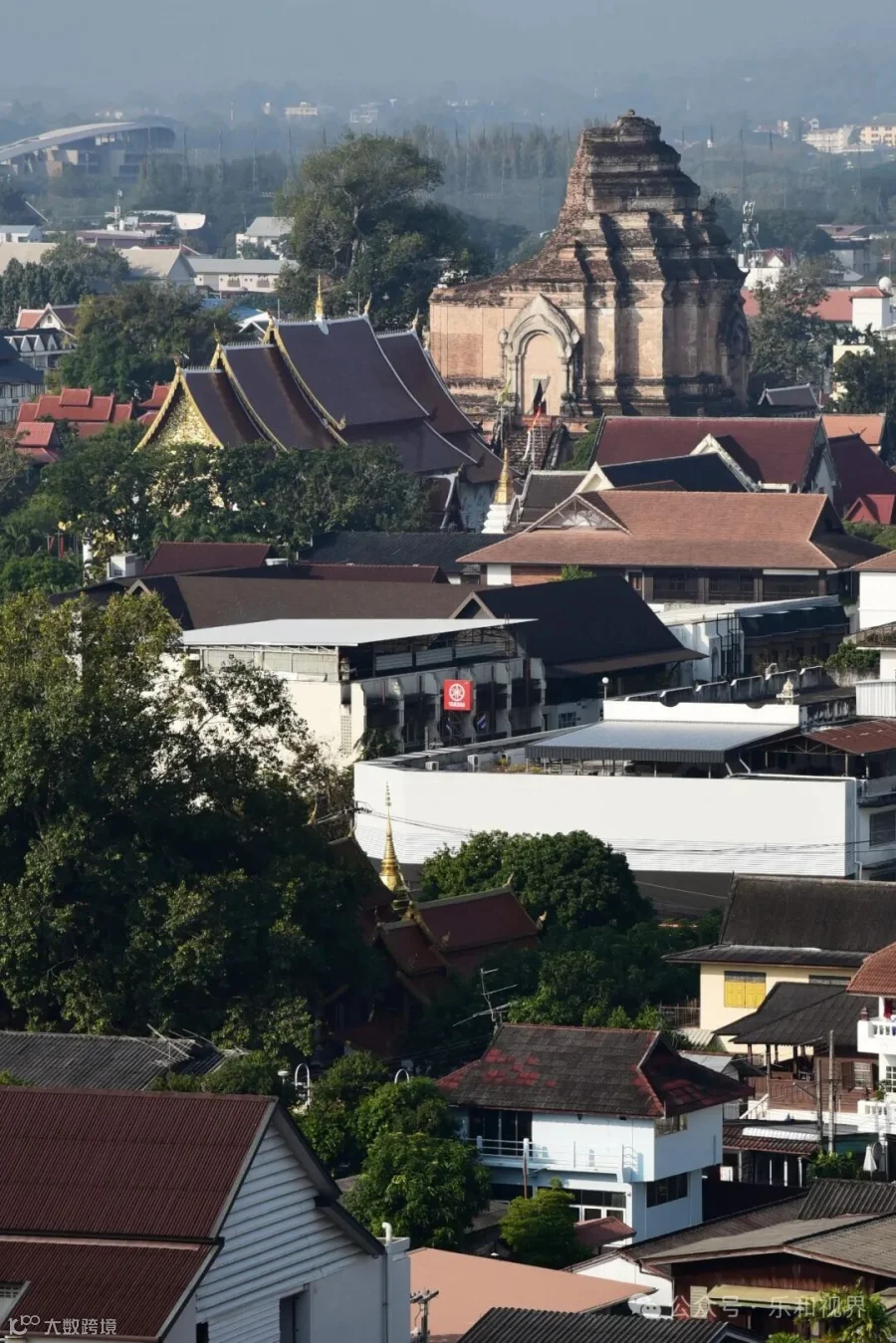
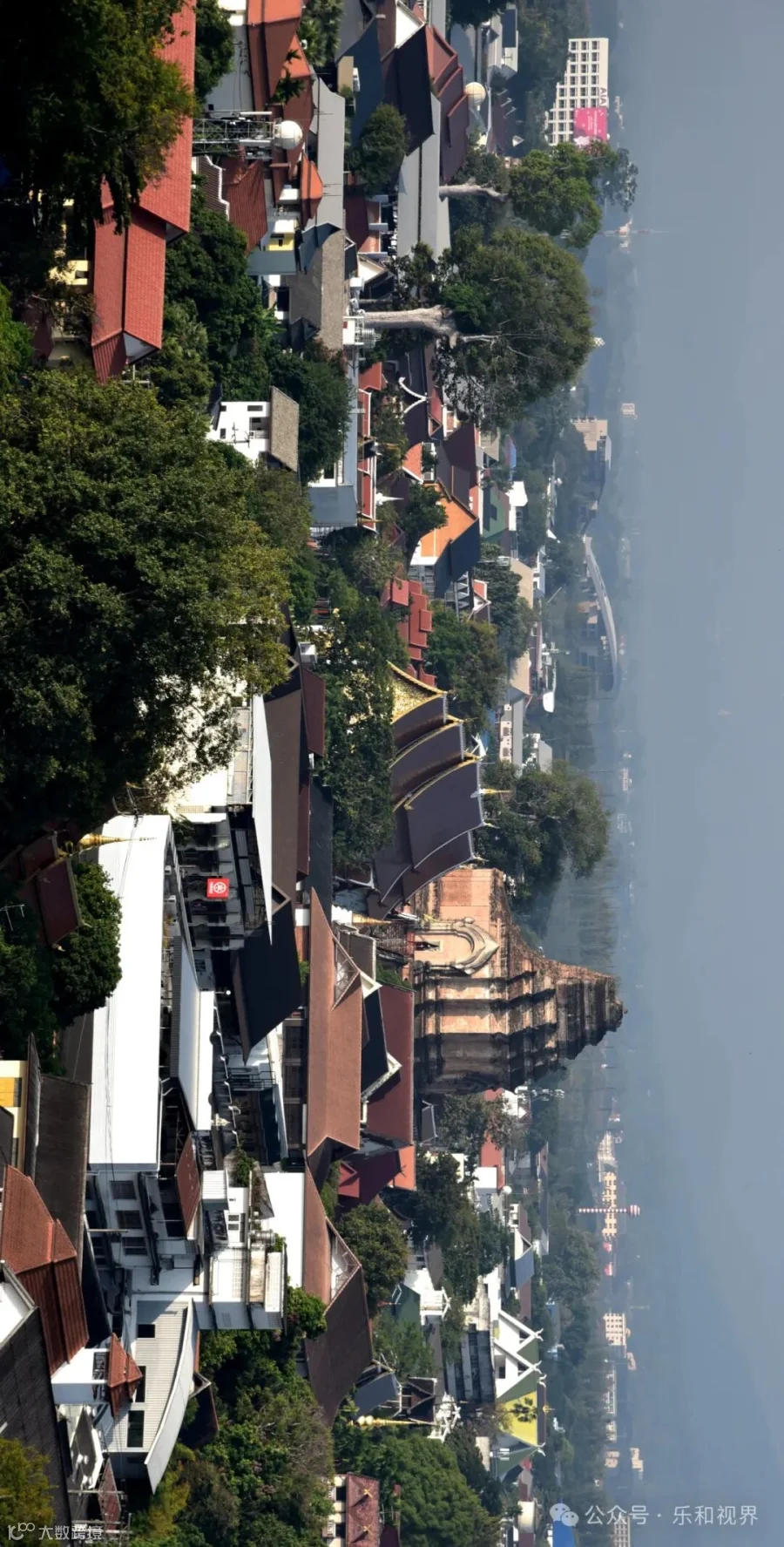
In the early 1990s the chedi was reconstructed, financed by UNESCO and the Japanese government. However the result is somewhat controversial, as some claim the new elements are in Central Thai style, not Lanna style.
Phra Viharn Luang
Phra Viharn Luang or "the Large Viharn" houses the much revered standing Buddha. It has been rebuilt several times but the current building dates from 1929 and was constructed by Phra Ubali. It sits on the site of the original viharn built in 1412 by the Queen Mother of King Sam Fang Kaen who also cast the standing Buddha image.
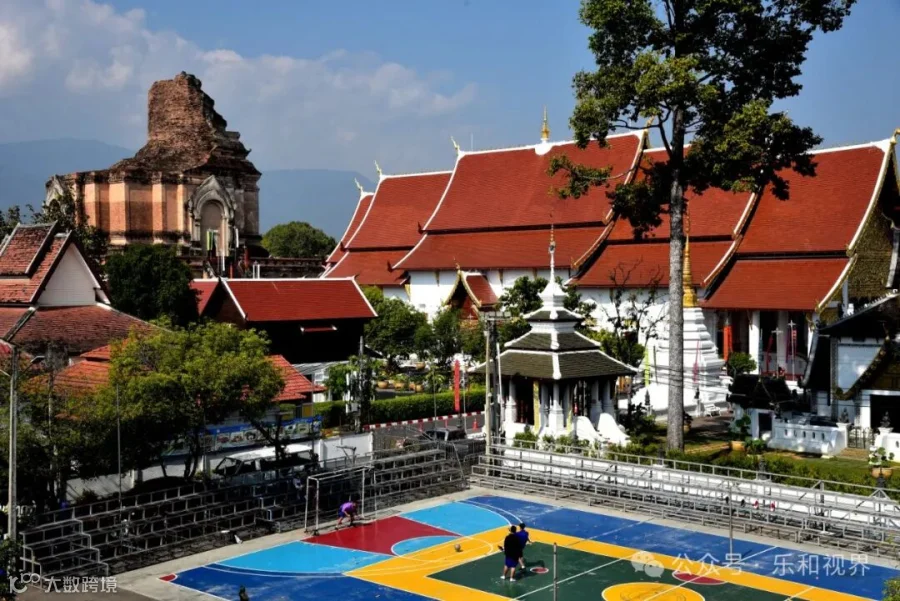
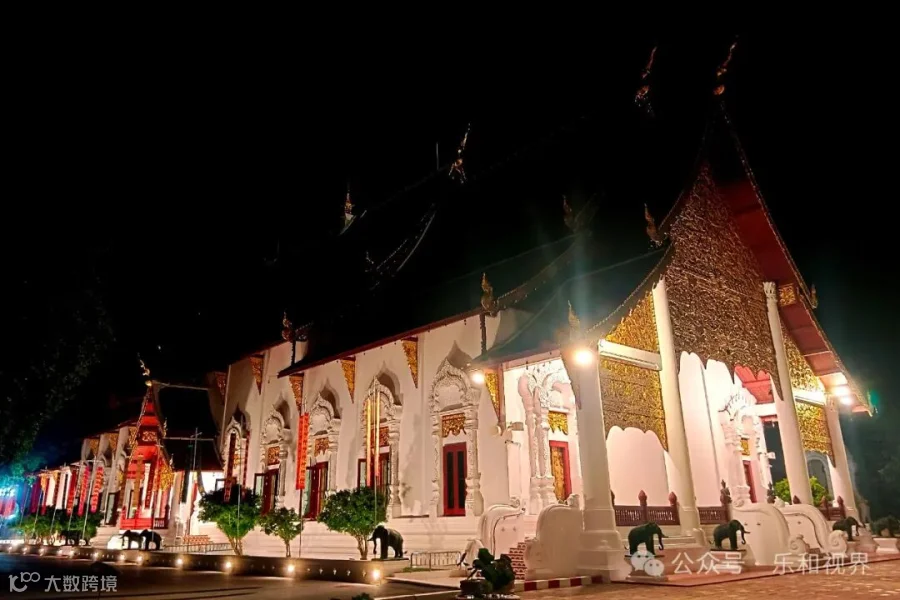
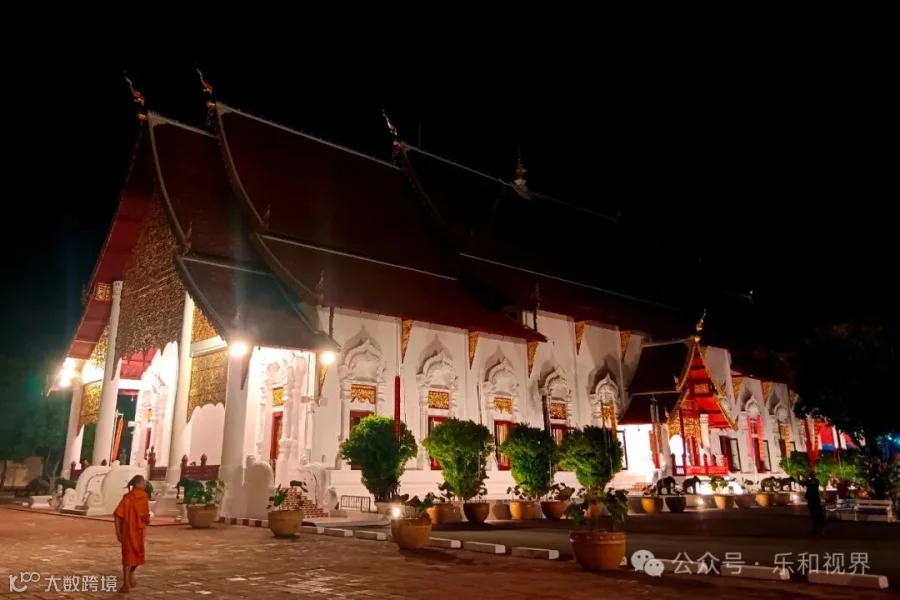
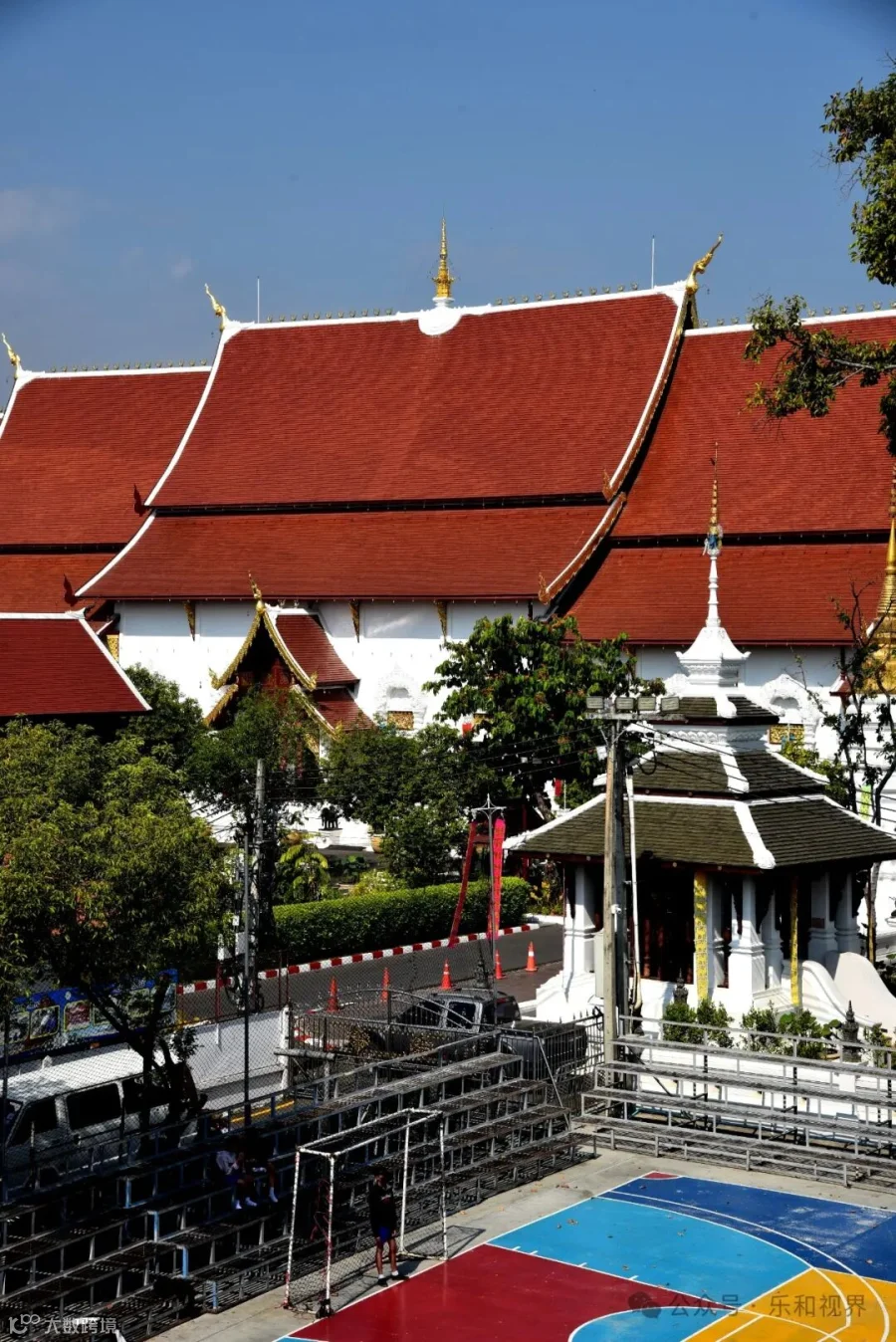
The roof is triple-tiered and overlapping with a median horizontal split as usual and the bargeboards are decorated with nagas running along the edges and slender chofa finials are set at the apexes. In the middle is a gilt umbrella finial and all along the ridge of the roof are hamsa figures in gilt.
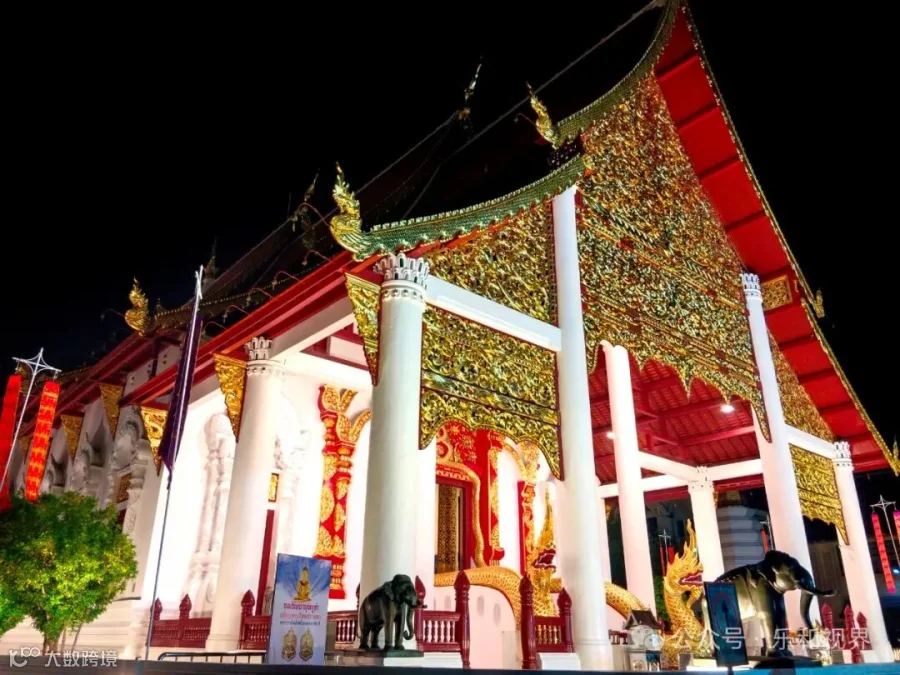
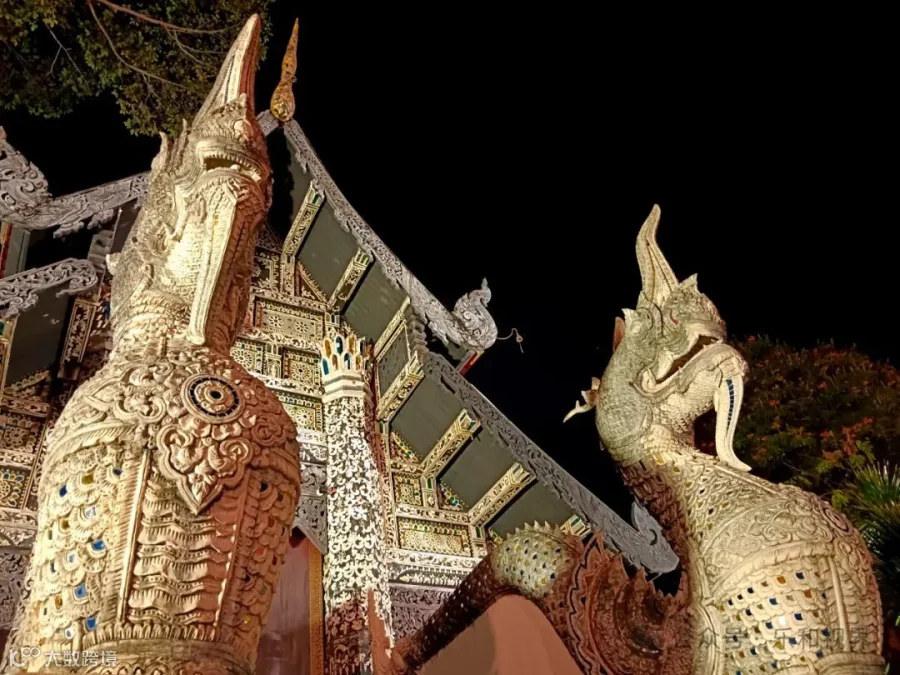
The building has a very striking facade which is the first thing you notice when you enter the temple grounds. The gable end is highly decorated with exquisitely carved foliate and floral patterns in gilt on a sparkling silver mosaic base and highlighted by different coloured glass pieces. Unusually there are no figures of animals, angels or Buddha figures on the facade.
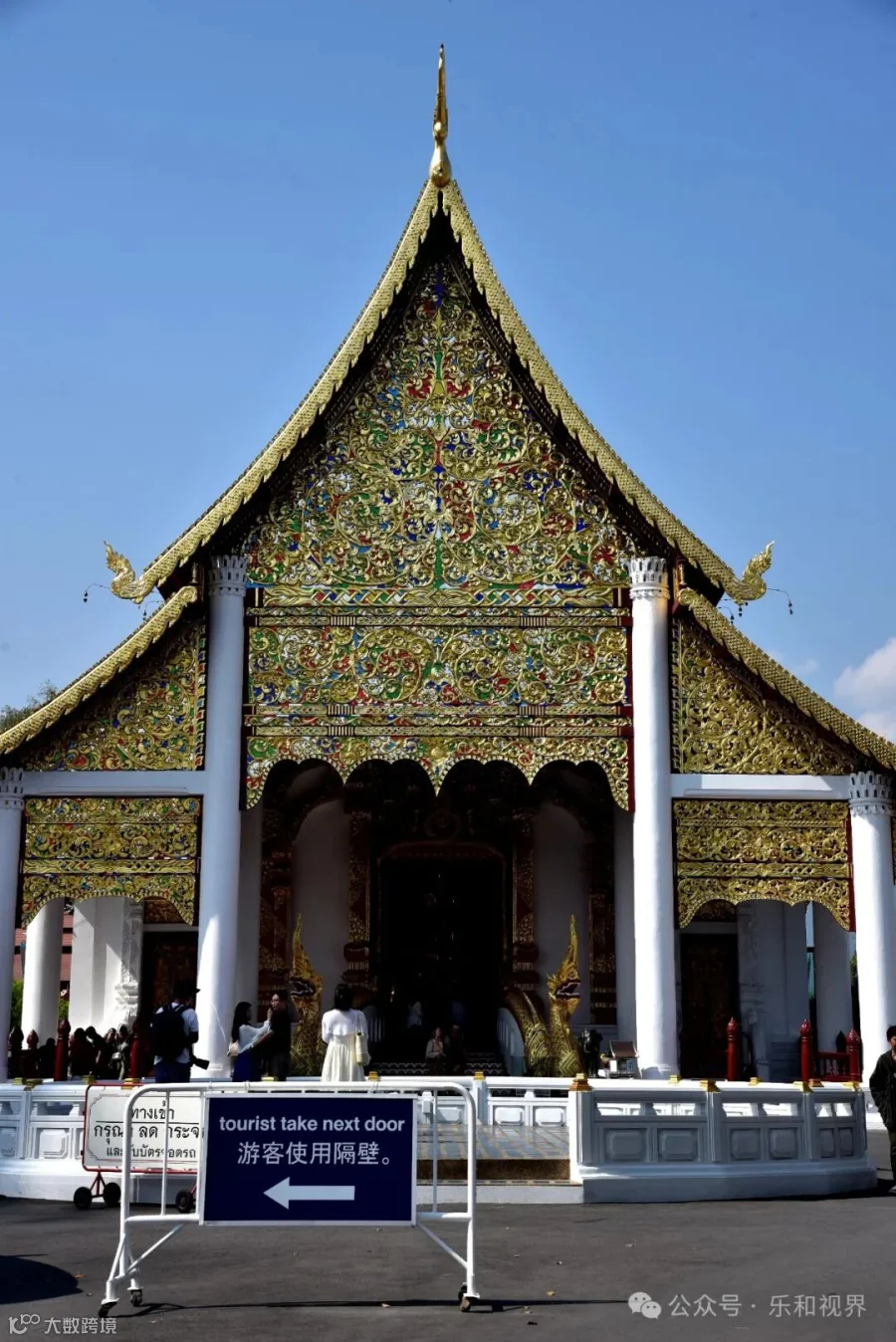
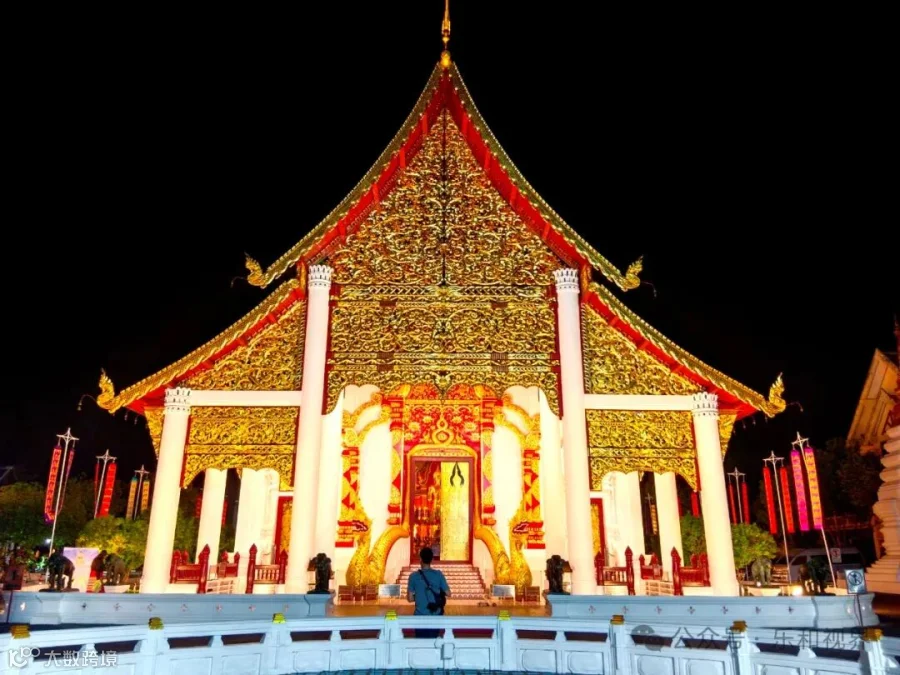
The entrance is guarded by a pair of fierce looking nagas set along the balustrade and the porch has carvings of Devata figures either side of the door and ornate carved work in stucco above the lintel.
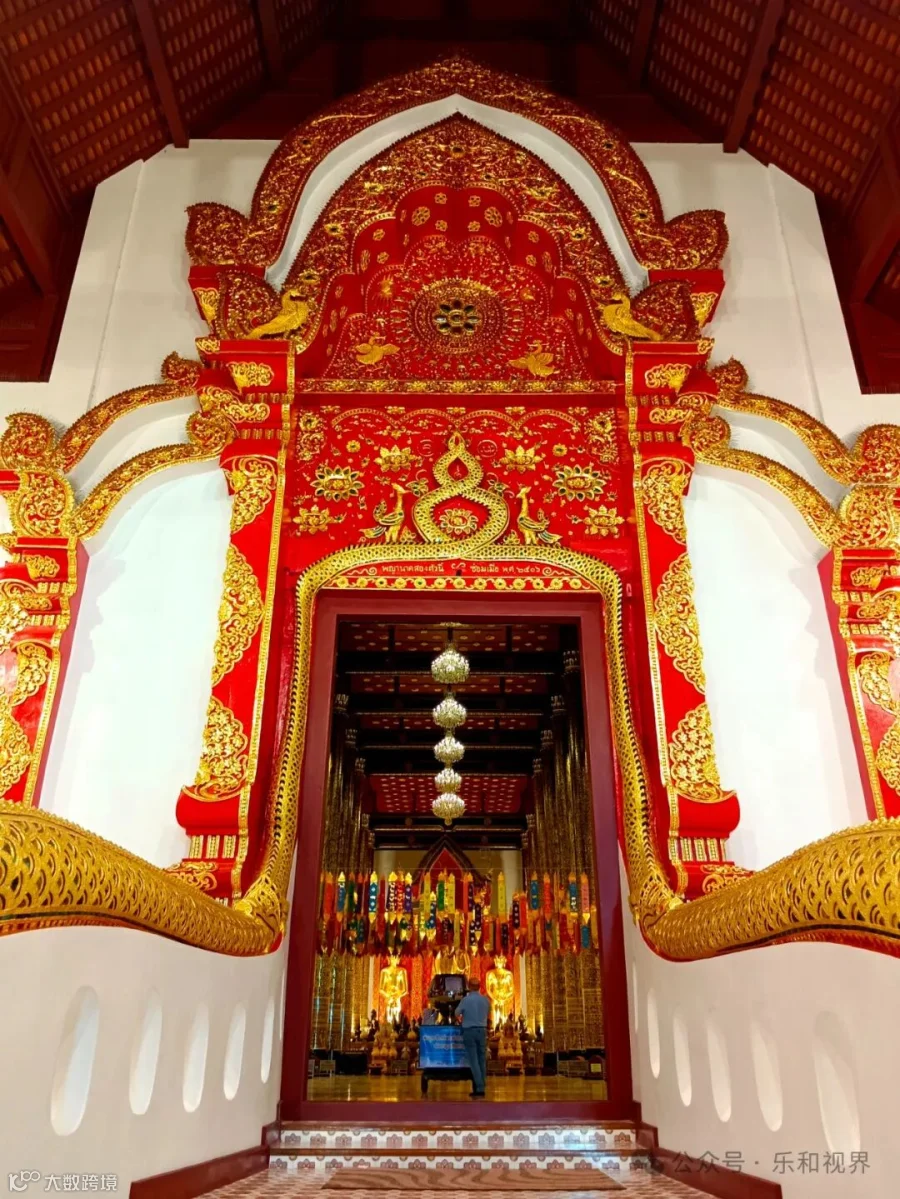
The interior of the building is quite plain with whitewashed walls characteristic of the 20th century viharns. The massive columns which are covered with attractive gilt patterns on a dark background and whilst numerous do not obscure the view of the main altar. Large chandeliers hang from the roof to add to the limited natural lighting which comes in through the small windows.
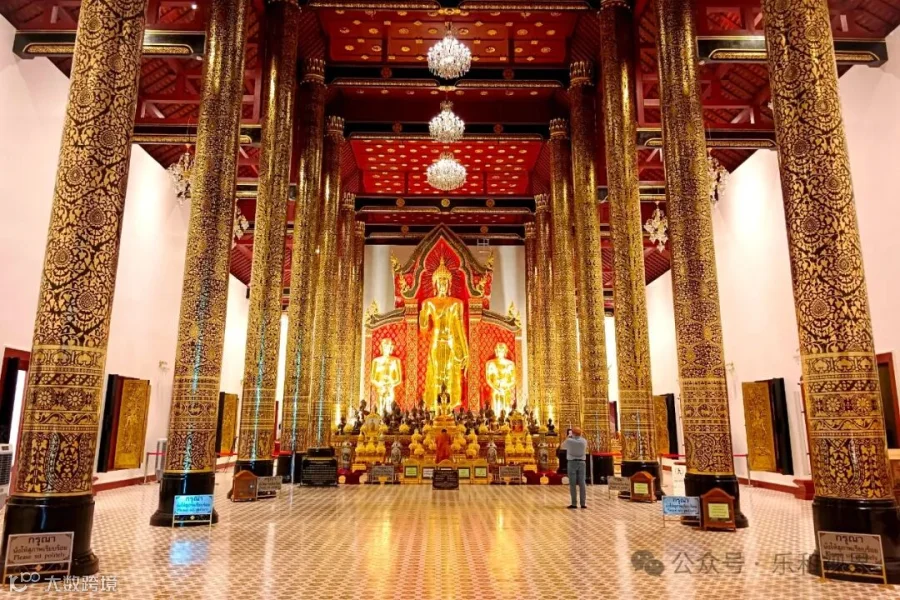
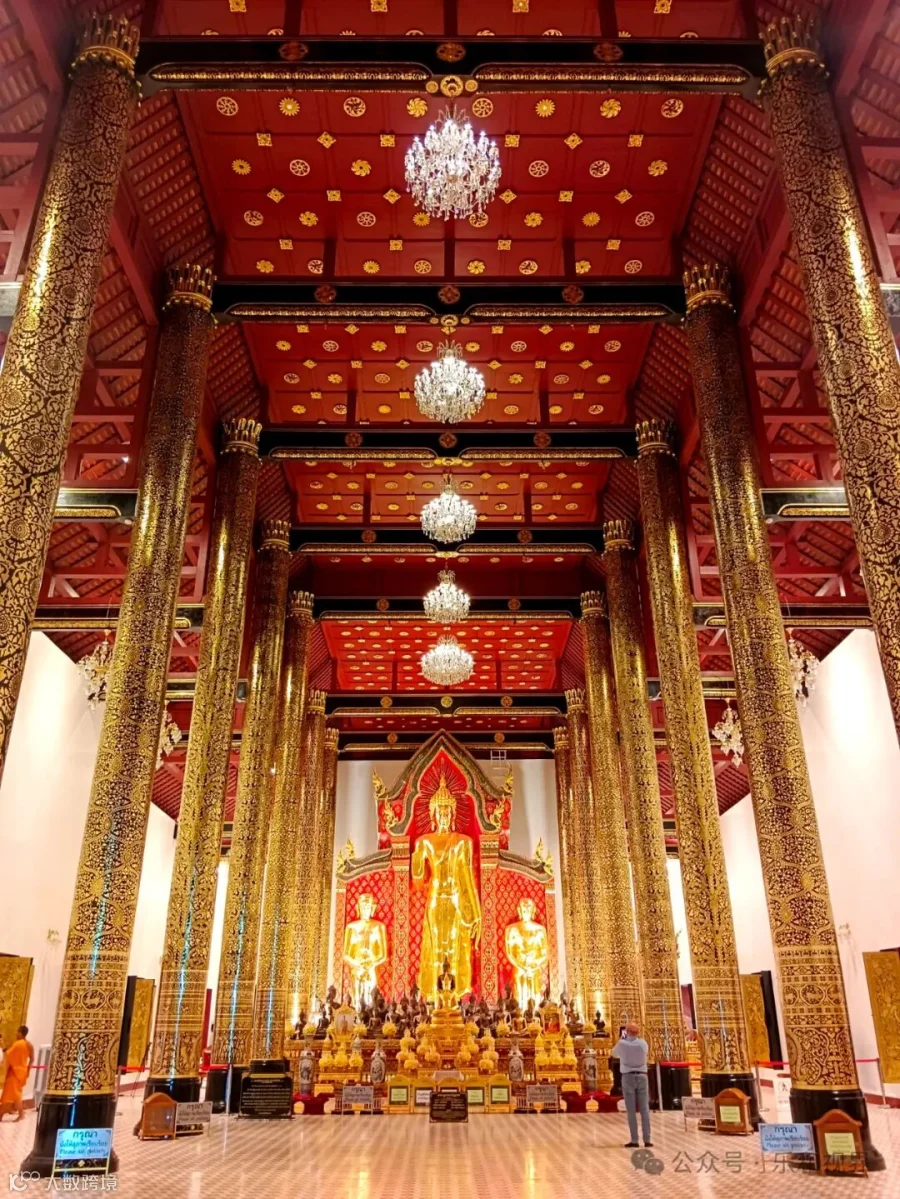
With such a plain interior there is nothing to distract the focus from the main altar. The standing Buddha image which the building was constructed to house was cast in the 14th century and is called "Phra Chat Attarat" or "the Eighteen-cubit Buddha". It is made of bronze and was cast at the request of King Sam Fang Kaen upon the wishes of his mother, Phra Nang Tilok Jutha Mahadhevi.
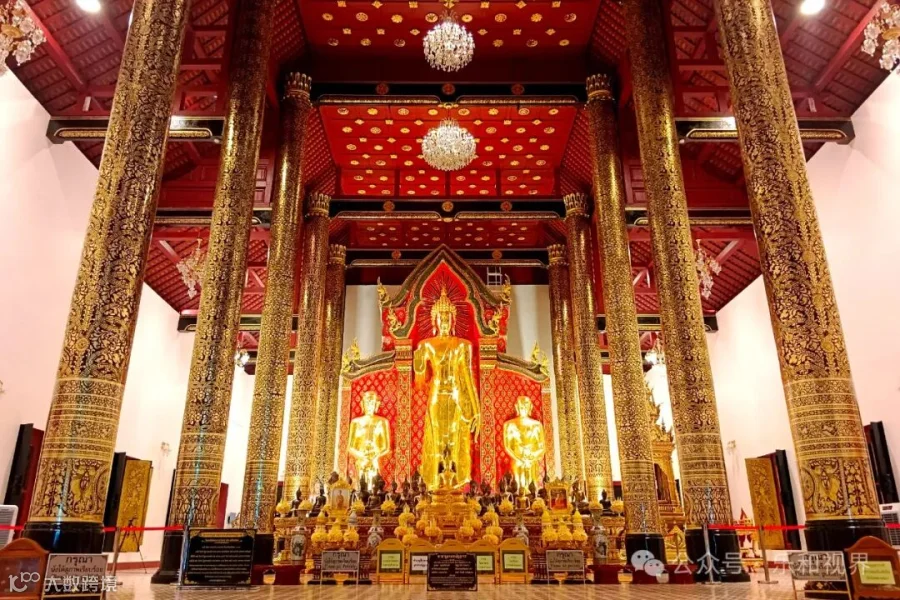
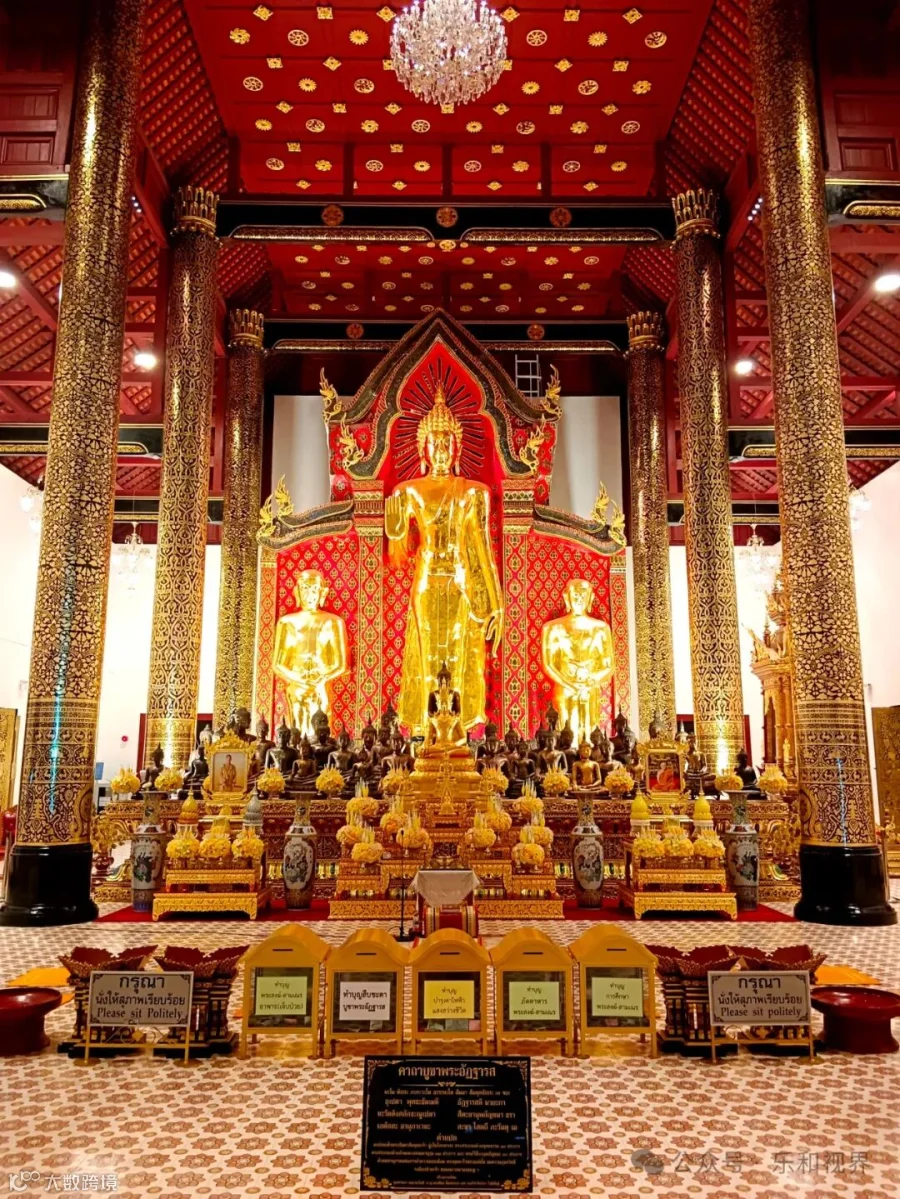
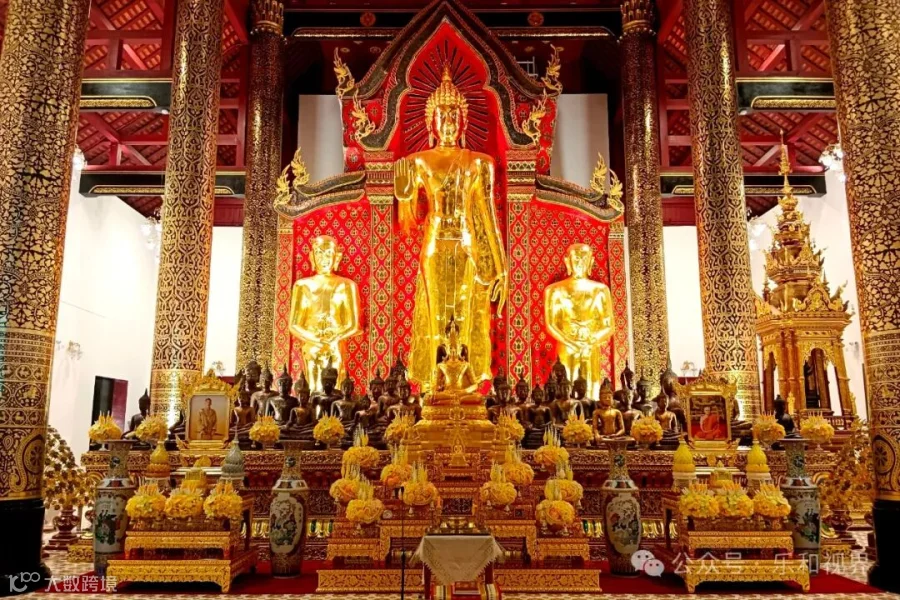
This is the most beautiful Buddha image in the Lanna Kingdom. The face looks gentle and all shape is balanced. This amazing Buddha statue is made with the art of Lanna and Pala, India. The image is certainly imposing being nine metres high and in the mudra known as "persuading the relatives not to quarrel" or "Giving Pardon".
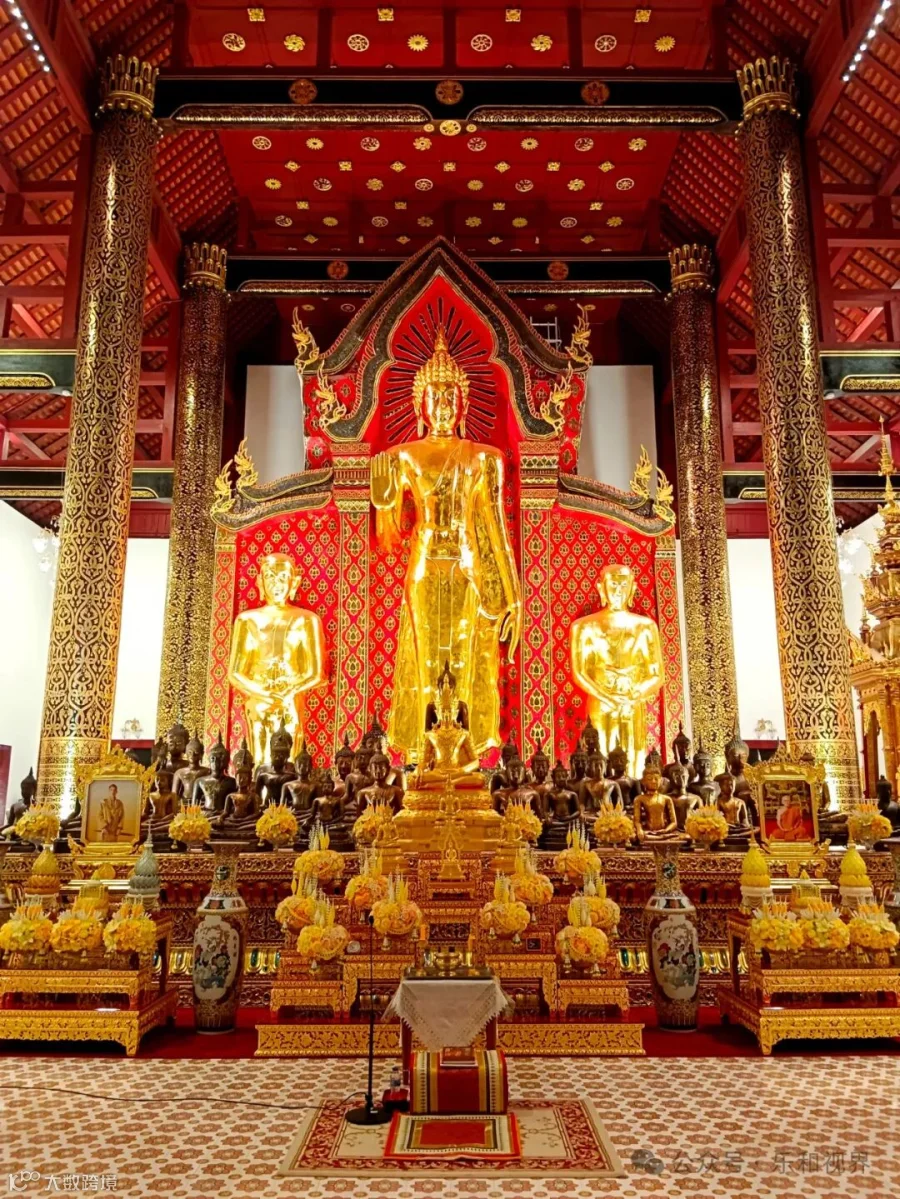
The Buddha is flanked by two of his eminent disciples: Moggallana and Sariputta.
And in front there are numerous other Buddha images made from bronze and of a similar age.
Phra That Chedi Luang
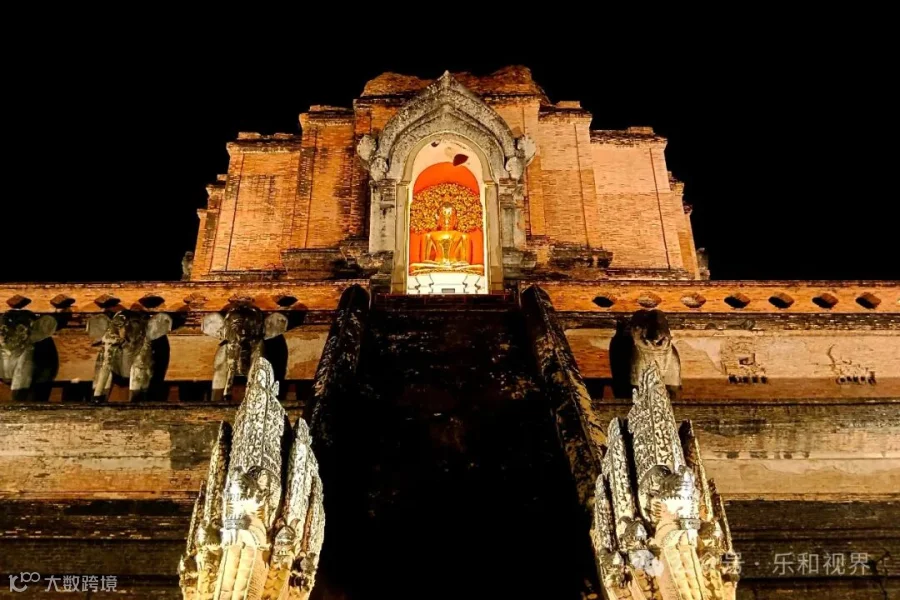
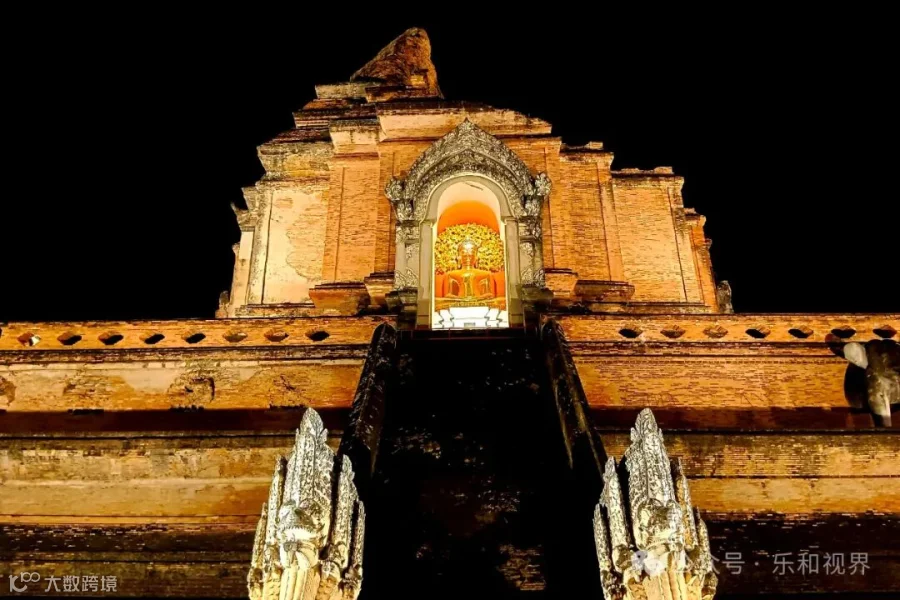
The famous chedi known as "Phra That Chedi Luang" was built in 1391 by King Saen Muang Ma ruler of the Lanna Kingdom to hold his father’s ashes and was finally completed in 1475 during the reign of King Tilokarat who also enlarged it to create the largest chedi in the Lanna kingdom.
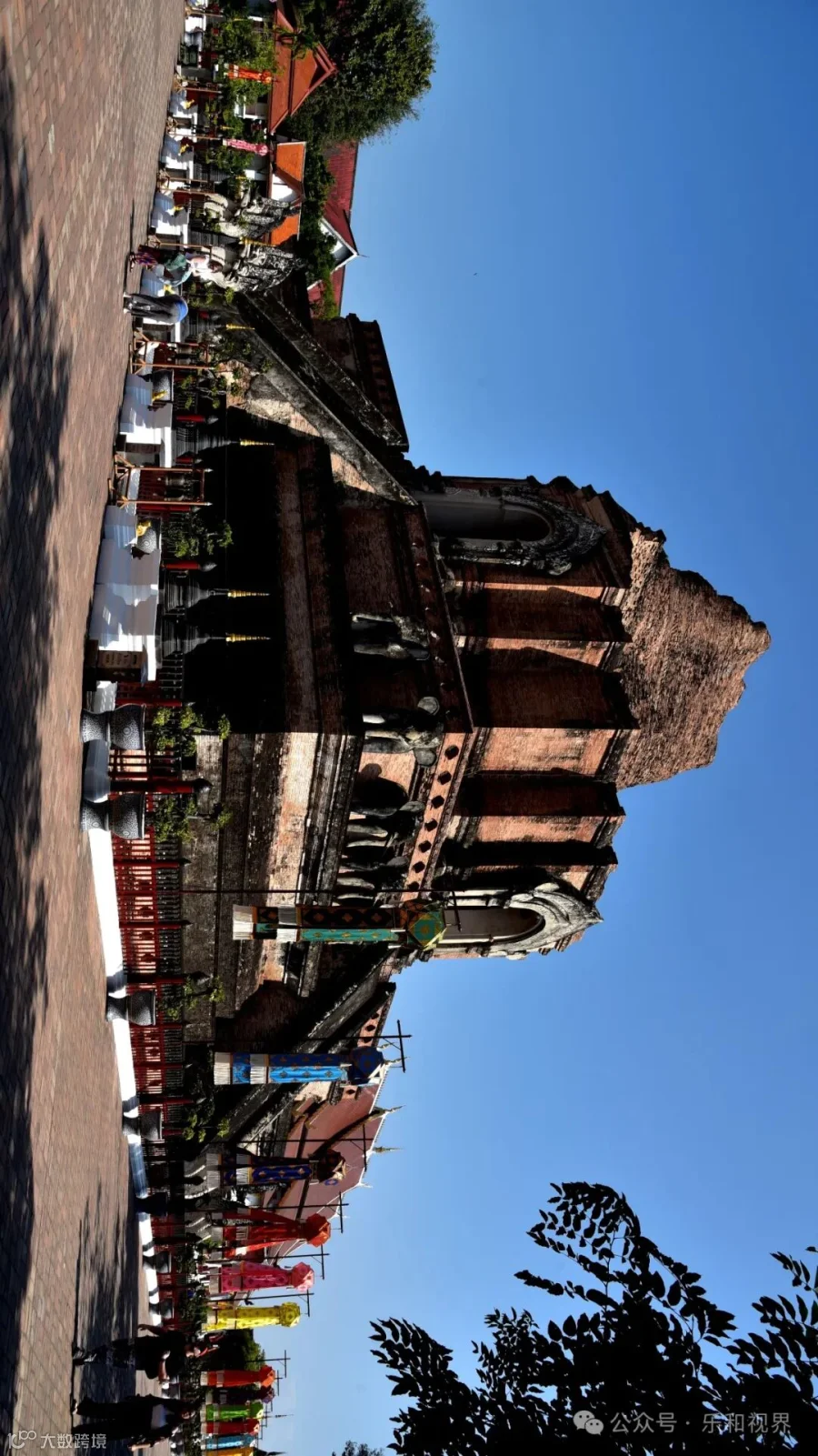
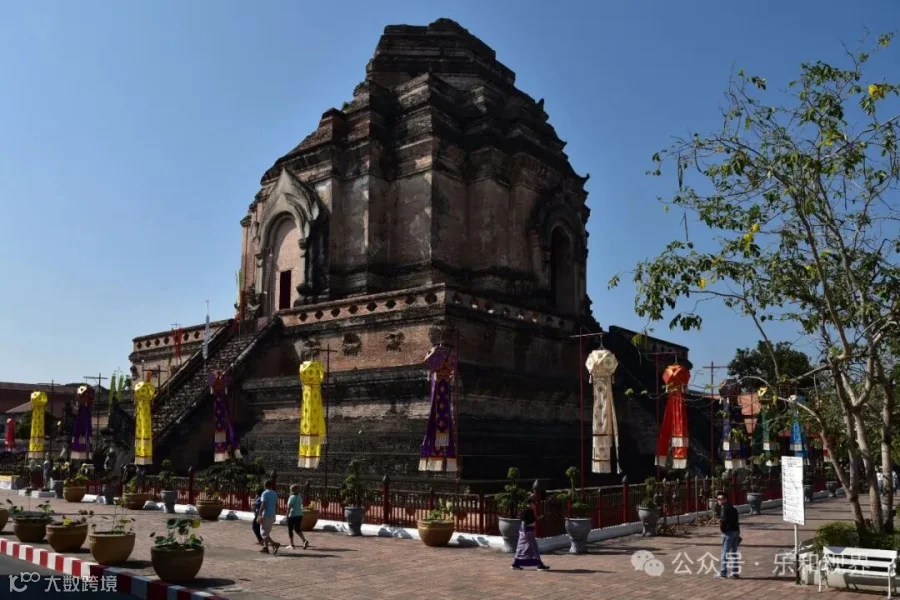
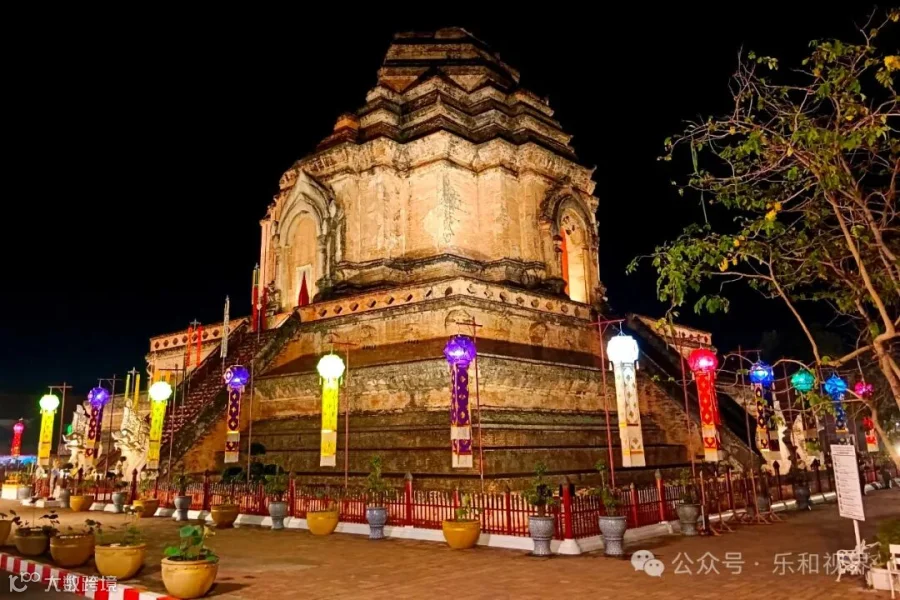
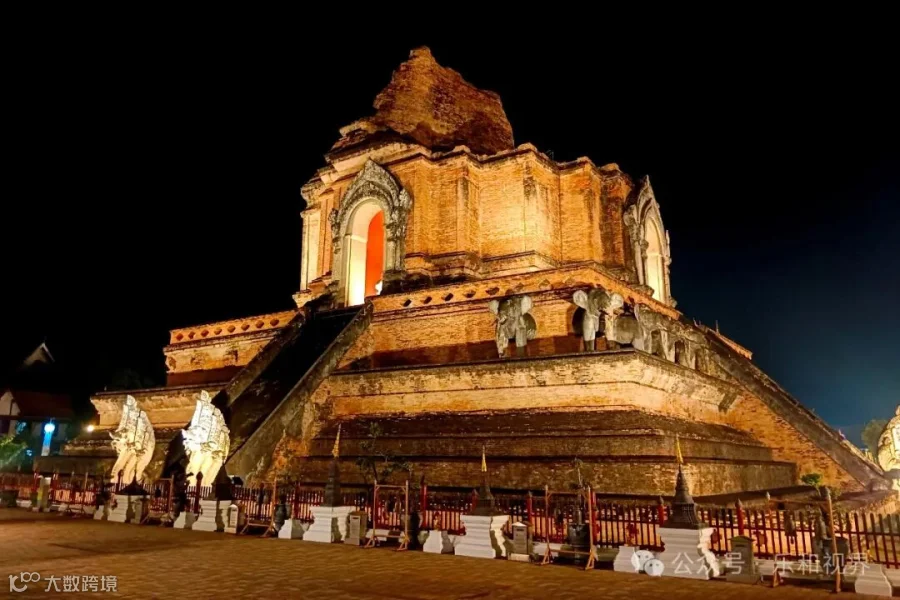
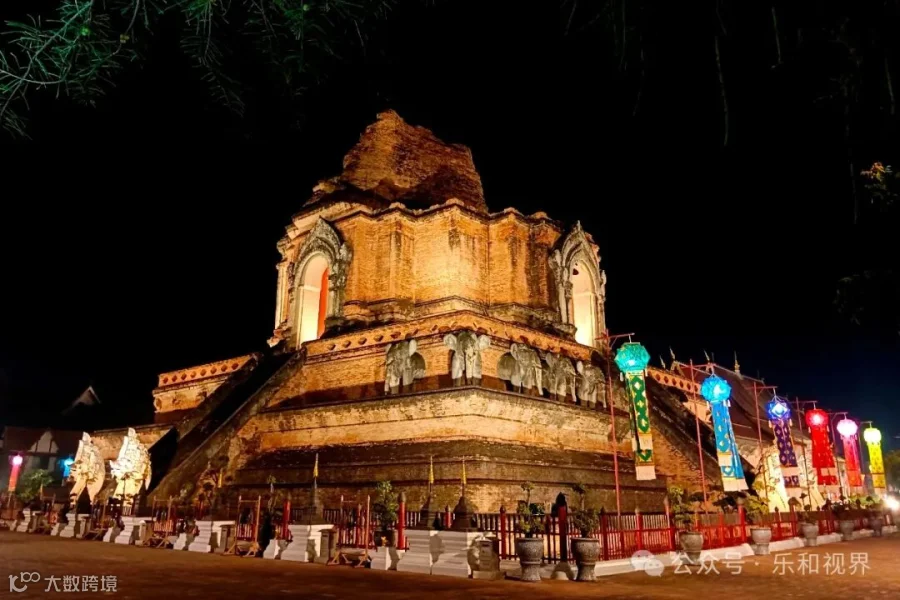
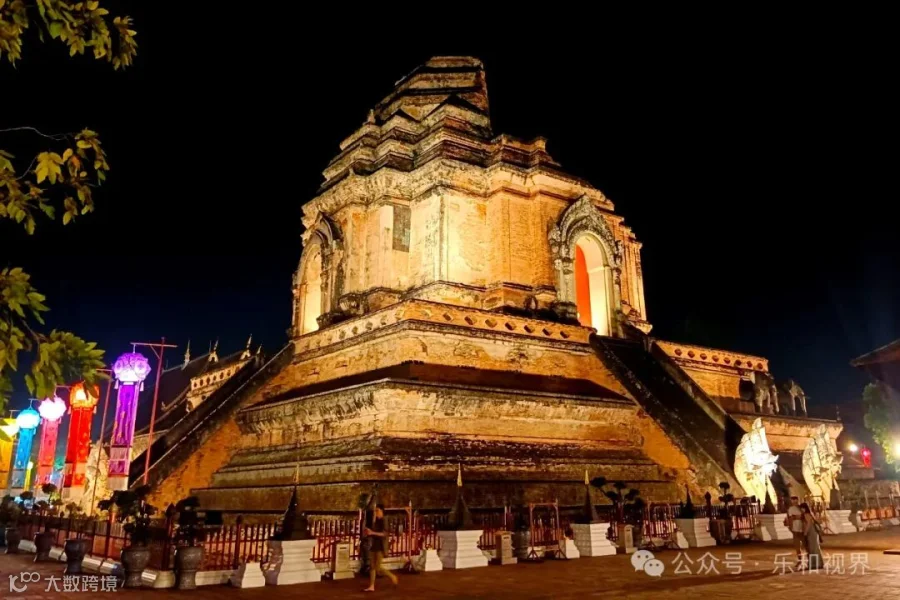
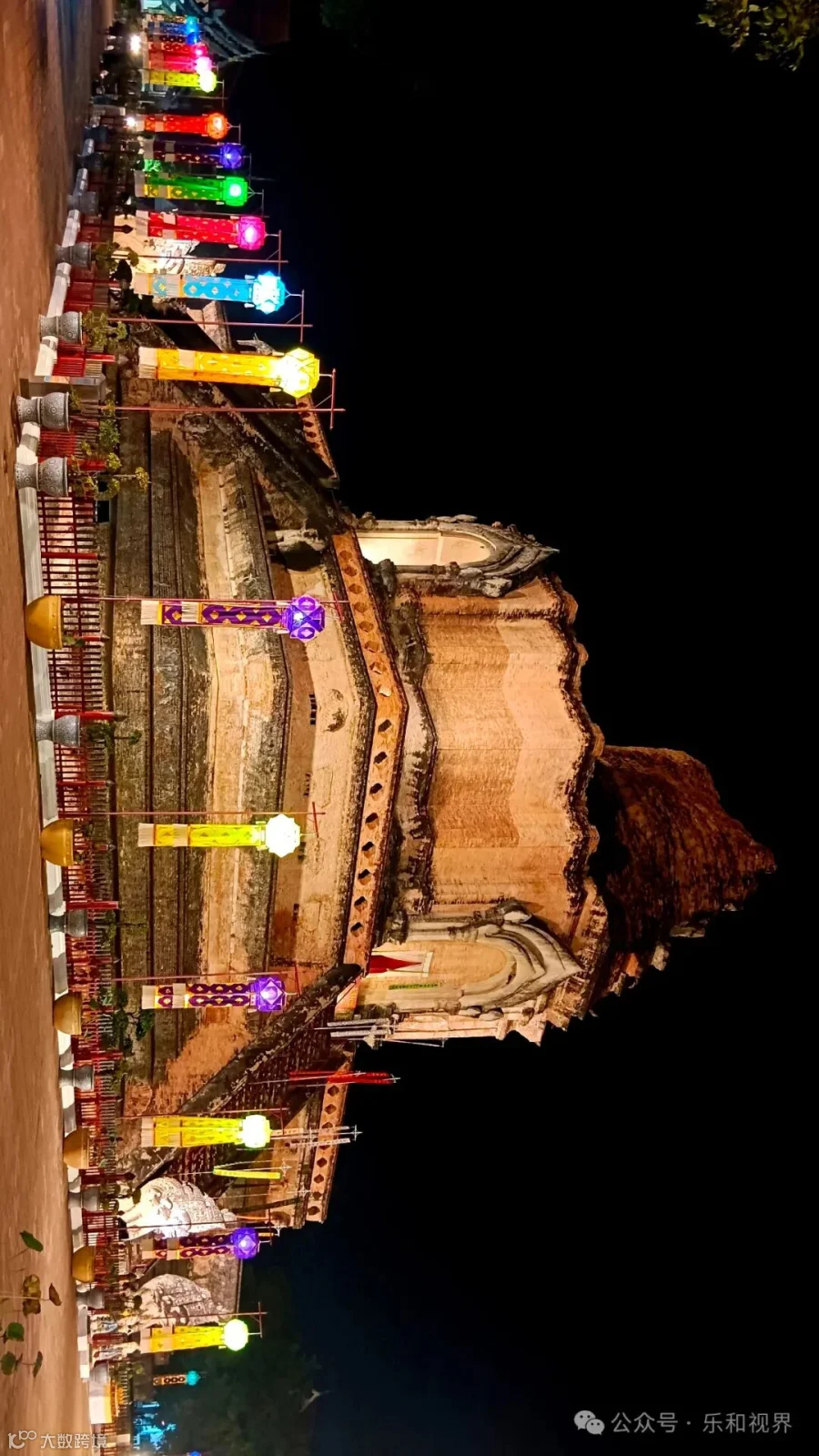
In 1545 , during the reign of Queen Chira Prapha, a severe earthquake shook Northern Thailand and the upper 30 metres of the 80 metre high chedi collapsed. Since then there have been many restorations with the last in the 1990s which received some criticism as some of the additions reflected the style of Central Thailand and not the Lanna style.
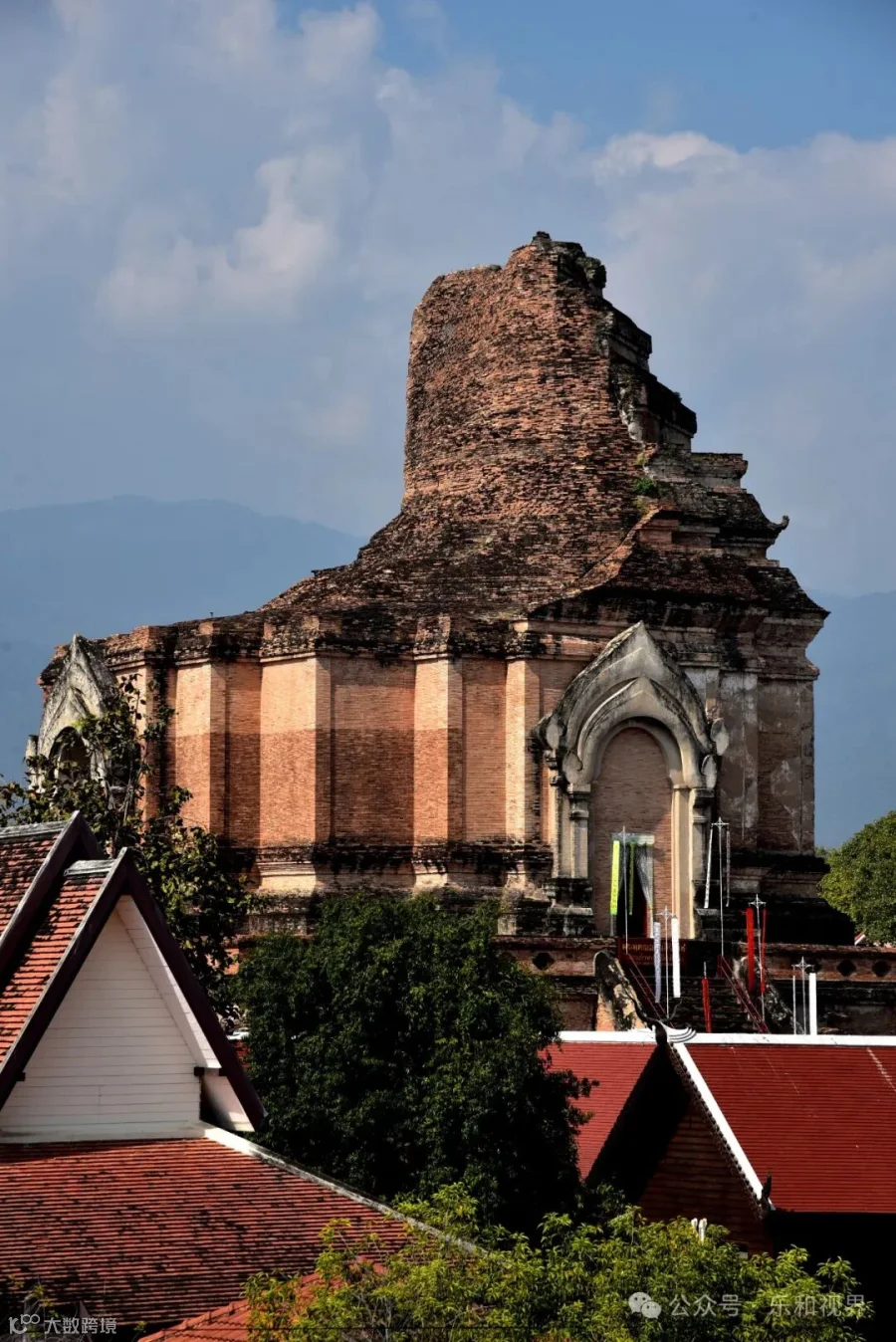
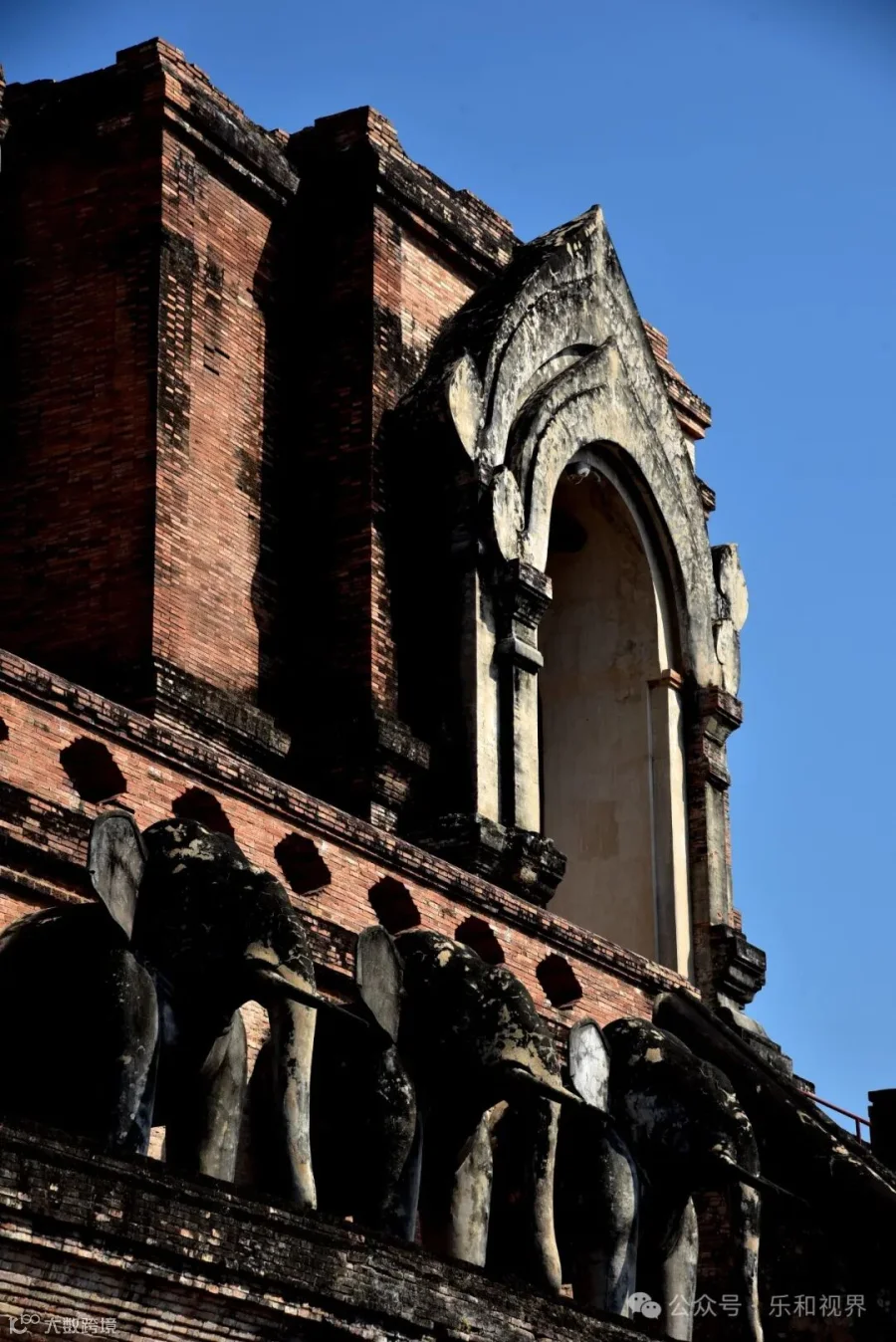
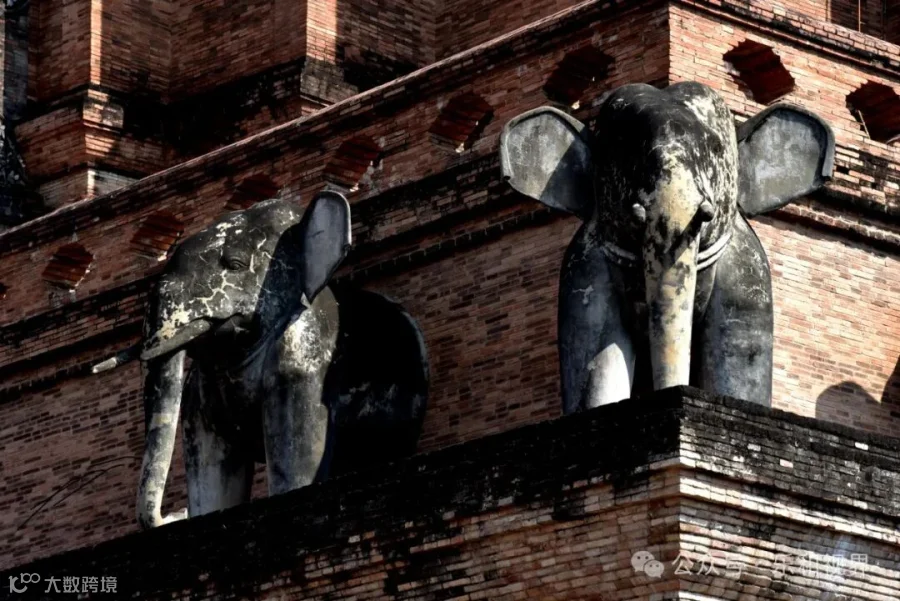
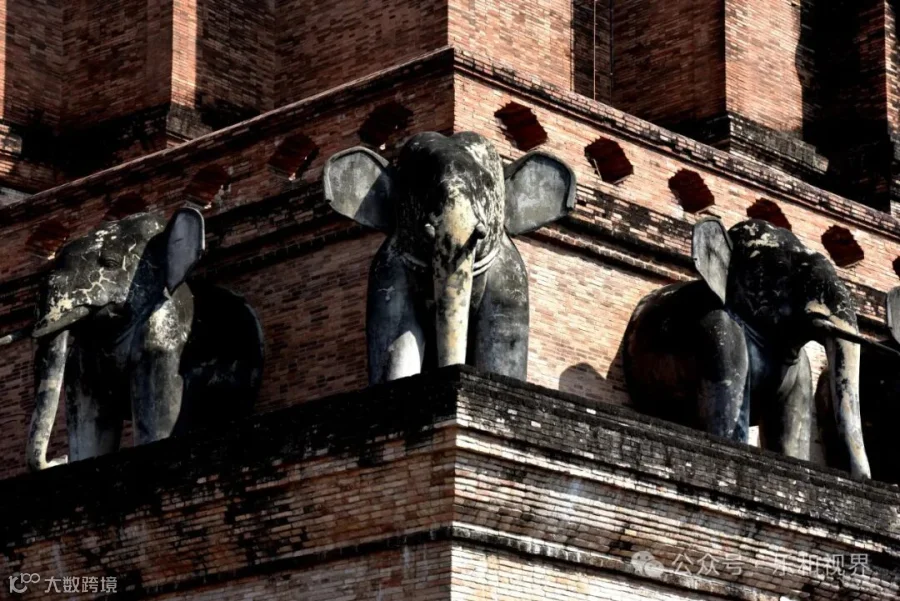
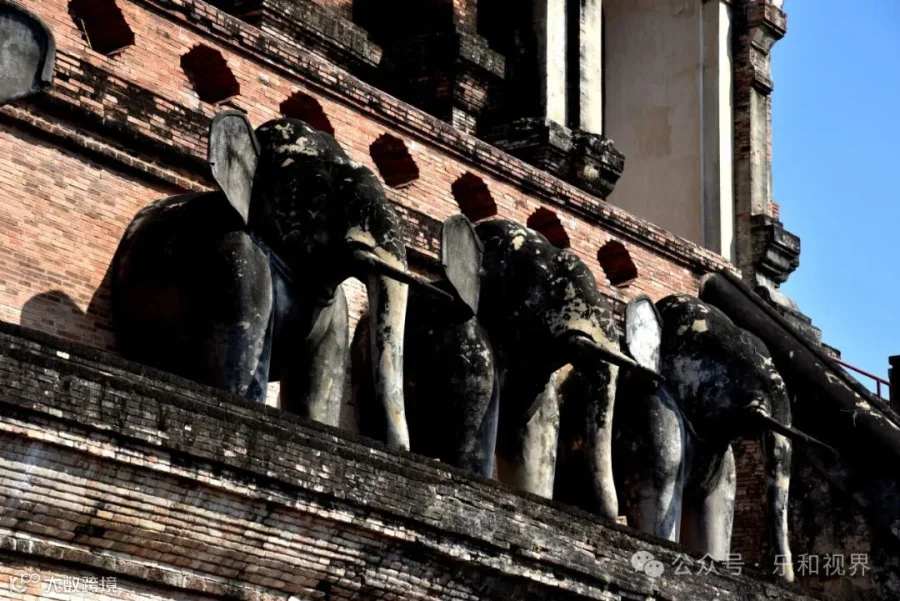
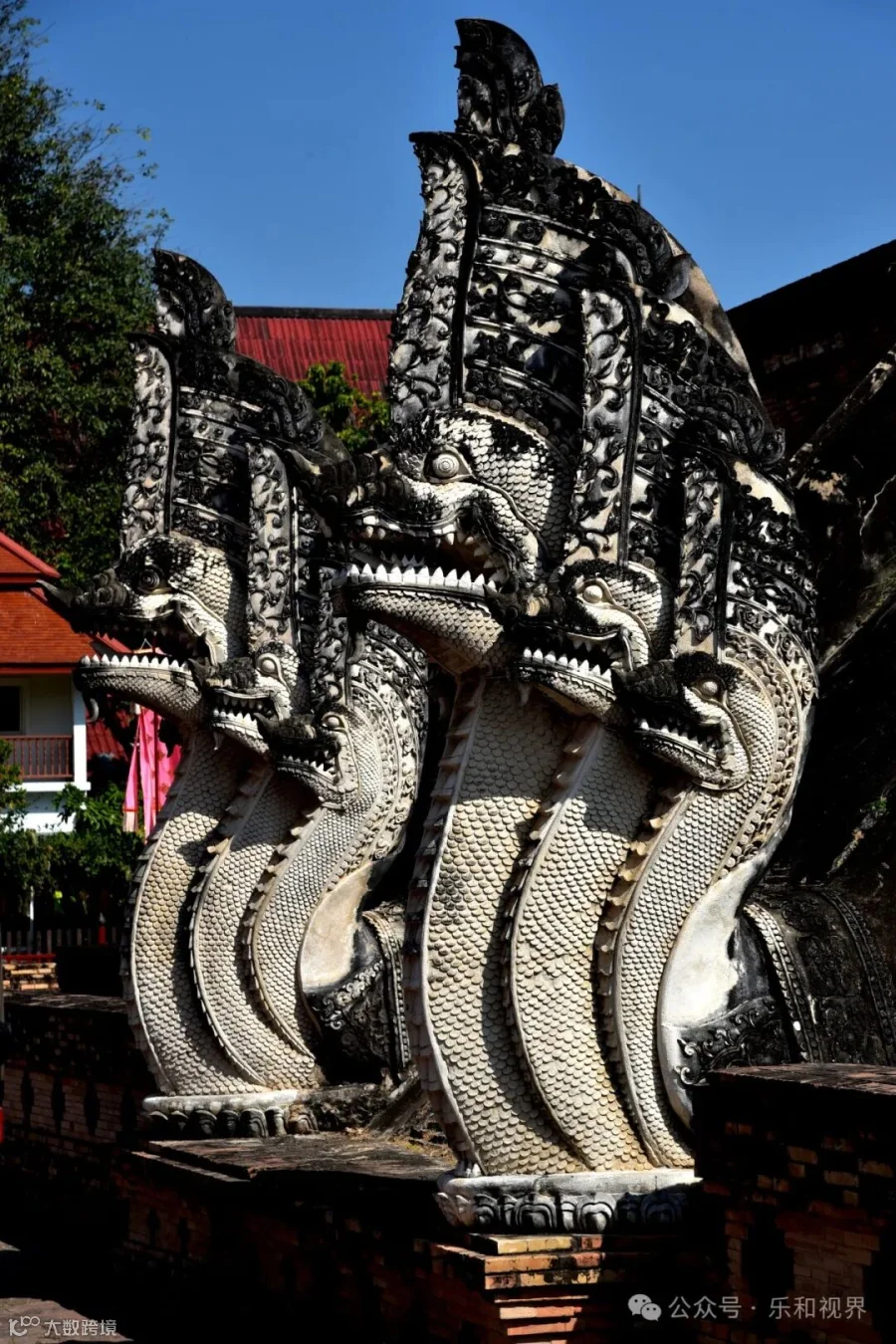
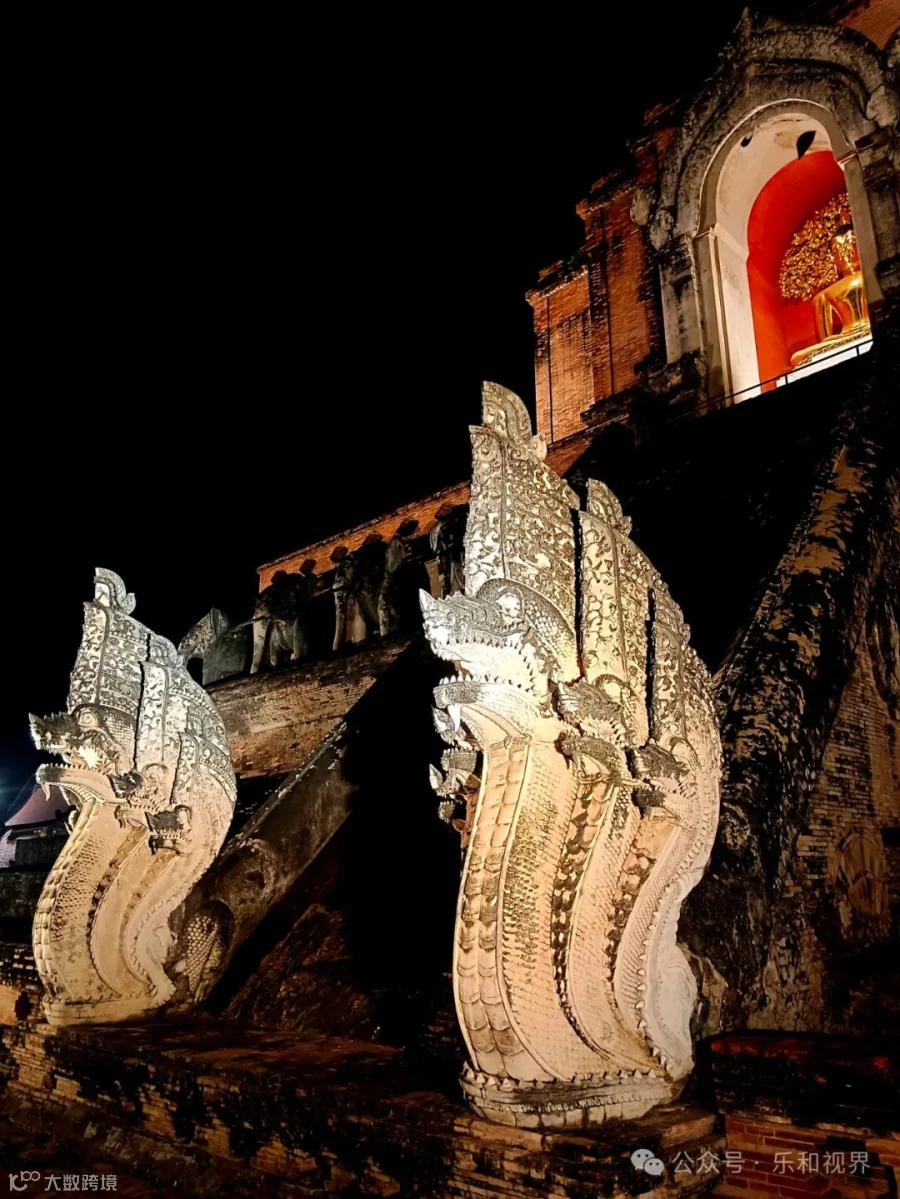
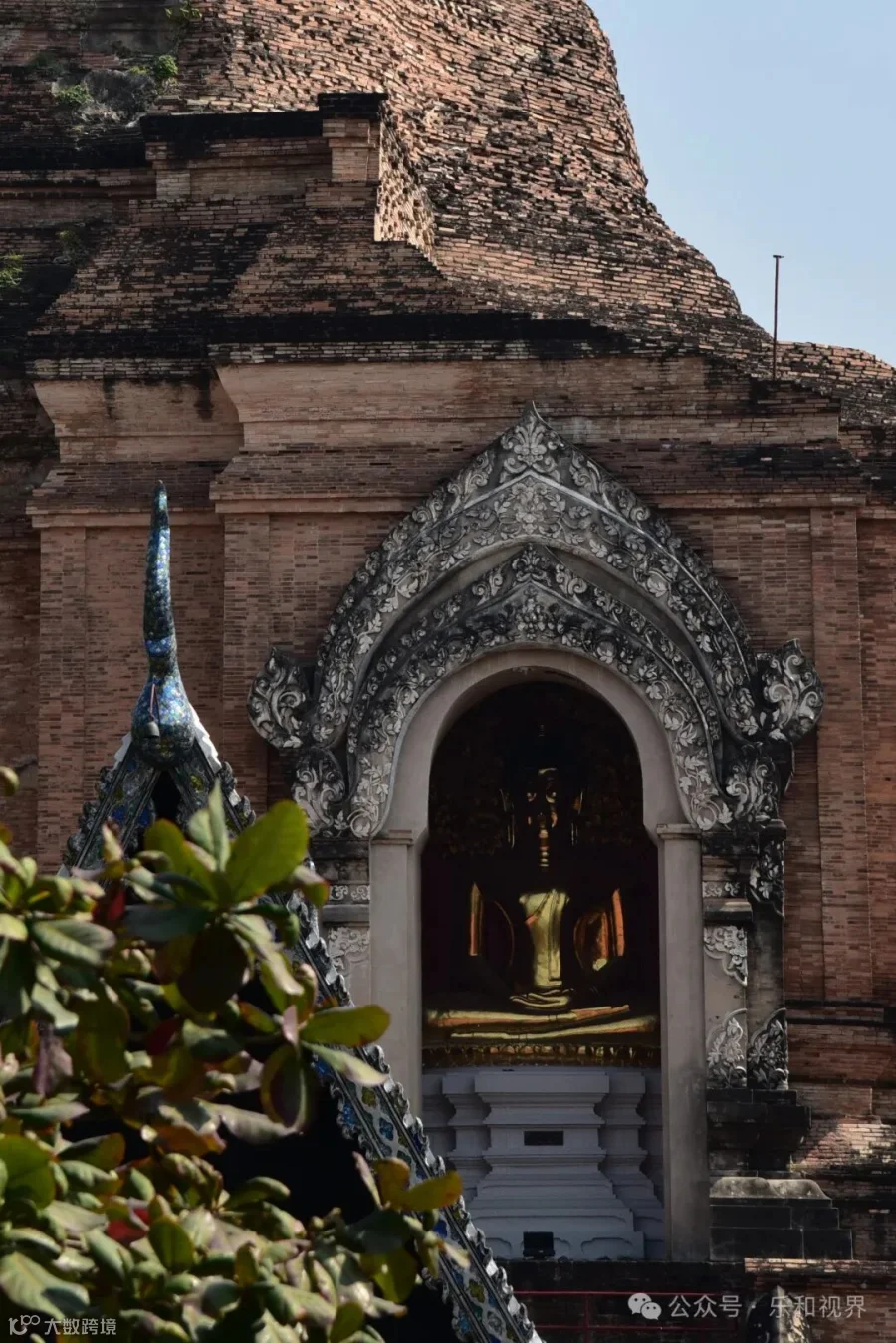
Wat Chedi Luang is also famous for housing the national treasure——Emerald Buddha. It was installed in the eastern niche of the chedi in 1468 and remained there until the earthquake occurred 77 years later when it was moved to Luang Prabang in 1551 and later to the Royal Palace in Bangkok.
For the 600th anniversary of the chedi in 1995, a copy of the Emerald Buddha made from black jade was placed in the reconstructed eastern niche. The icon is named official Phra Phuttha Chalerm Sirirat, but is commonly known as Phra Yok.
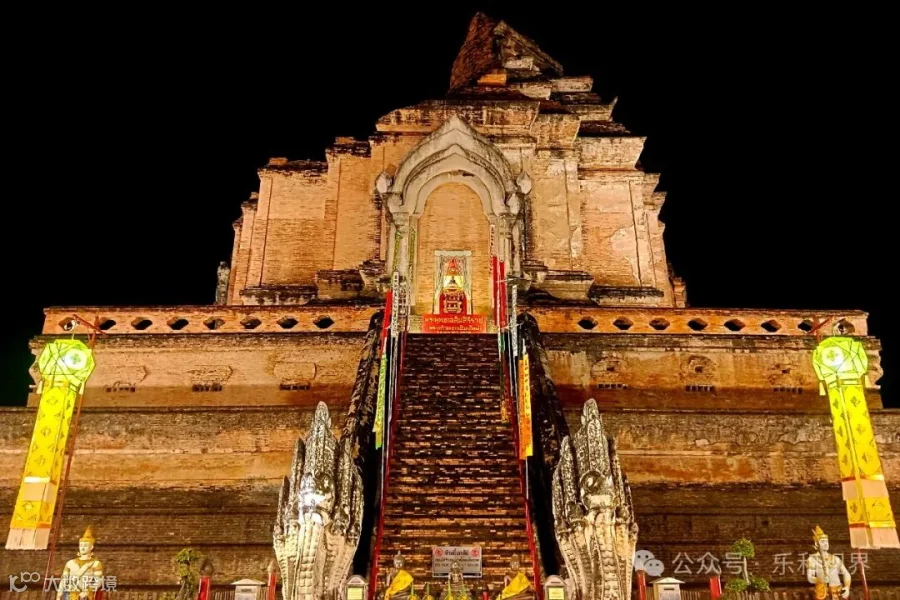
It was carved to celebrate three auspicious occasions:- the 600th anniversary of the temple; the 700th anniversary of Chiang Mai, and the 50th anniversary of the King’s accession to the throne. There is a seated Buddha in each of the remaining three niches.
The Bhuridatto Viharn
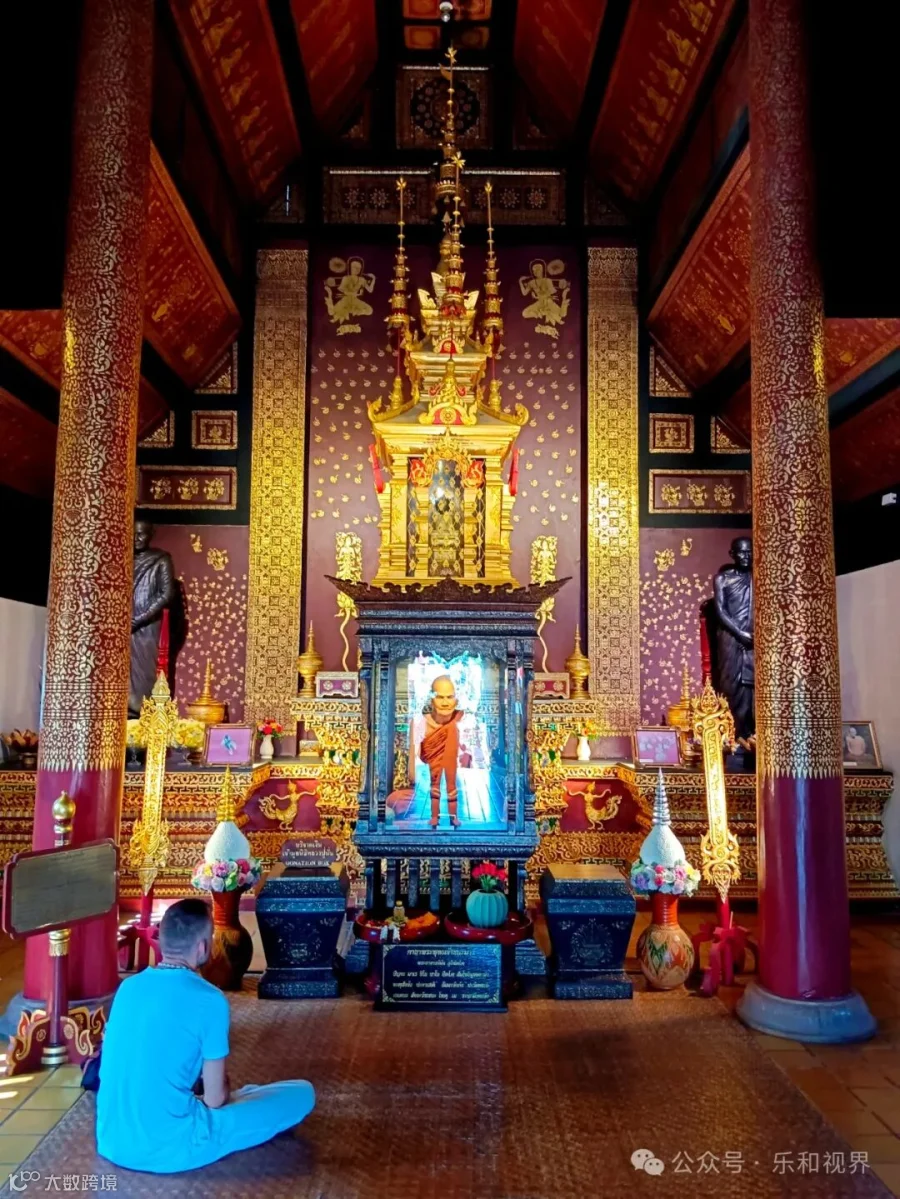
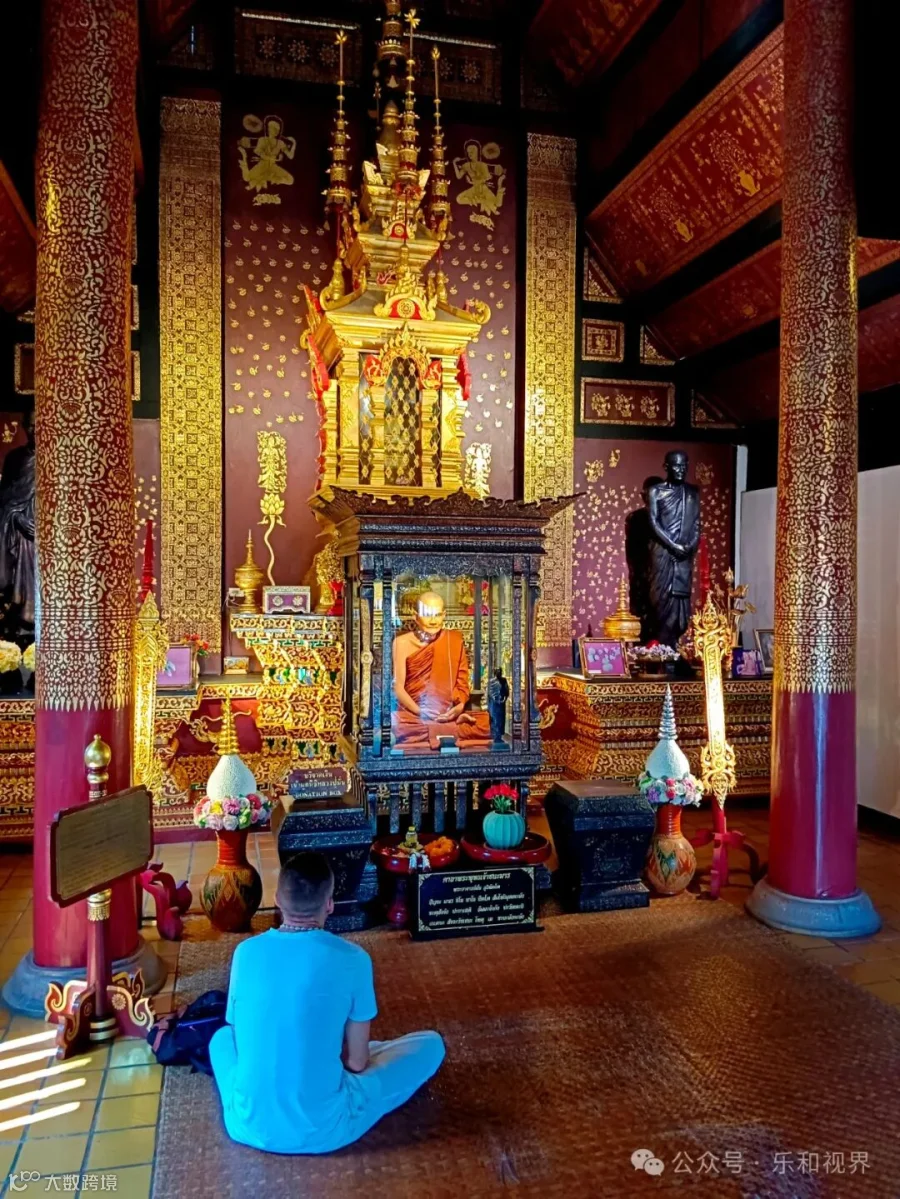
The Bhuridatto Viharn, or to give it its full title the "Viharn Luangpu Mun Bhuridatto", is named after a much revered acharn or monk and houses a number of important Buddha relics, in particular a molar tooth, as well as a statue of Luangpu. It was built in 1858 during the reign of Prince Chao Kawirorotsuriyawong of the Thip Chang dynasty.
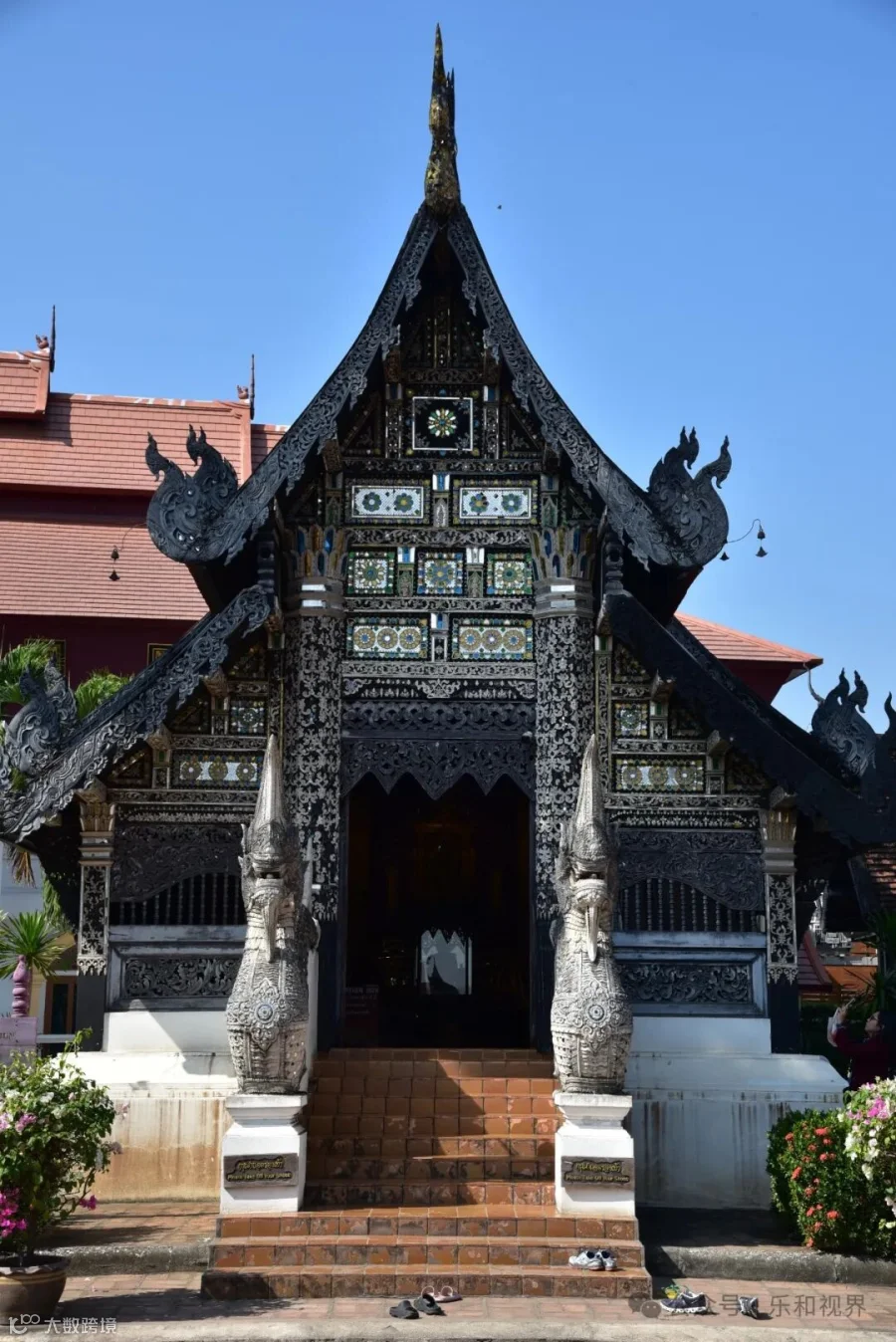
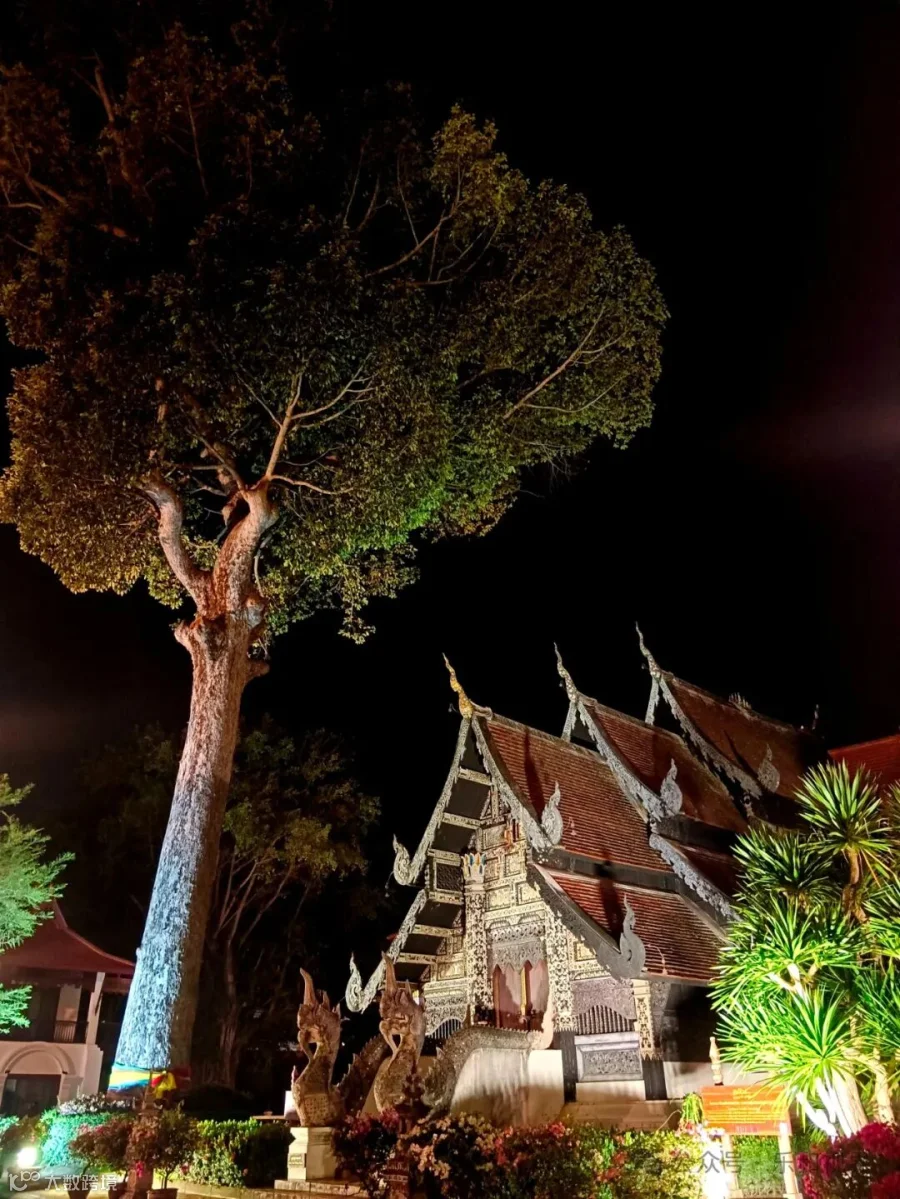
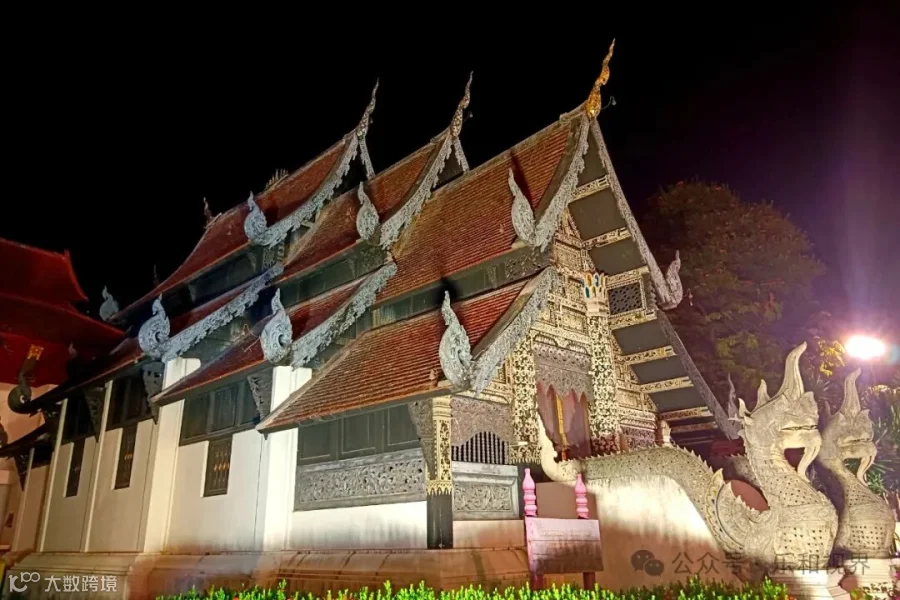
The design is exquisite and in the pure Lanna style. The triple-tiered overlapping roof is steeply pitched and descends close to the ground as it’s said, like the wings of a protective bird.
Extensive use is made of teak and is a prominent feature as in all the Lanna buildings with its dark lacquer gloss on which are set panels containing intricately carved foliate work and floral motifs highlighted by different coloured pieces of glass. The gilt ornamentation is restrained and the nagas running along the bargeboards are ungilded as are the chofa finials except one.
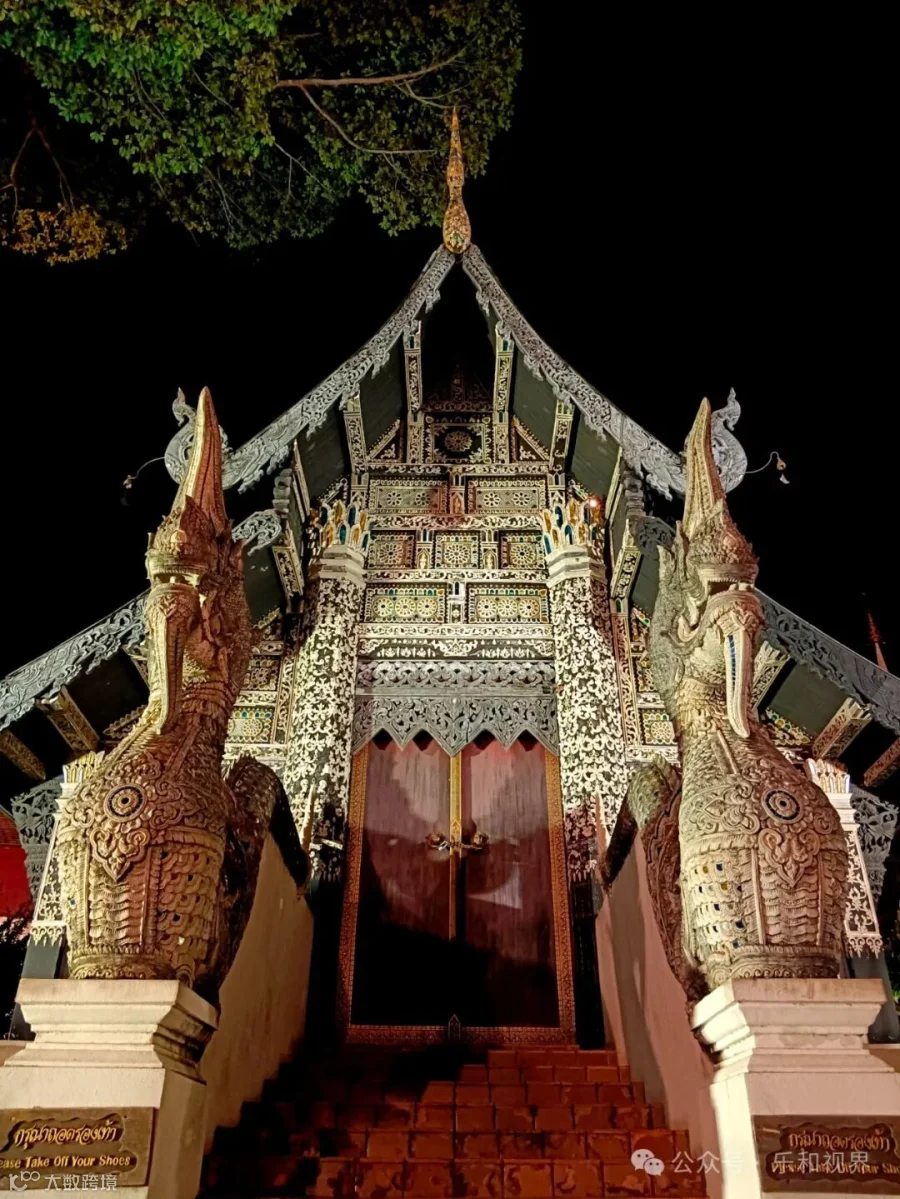
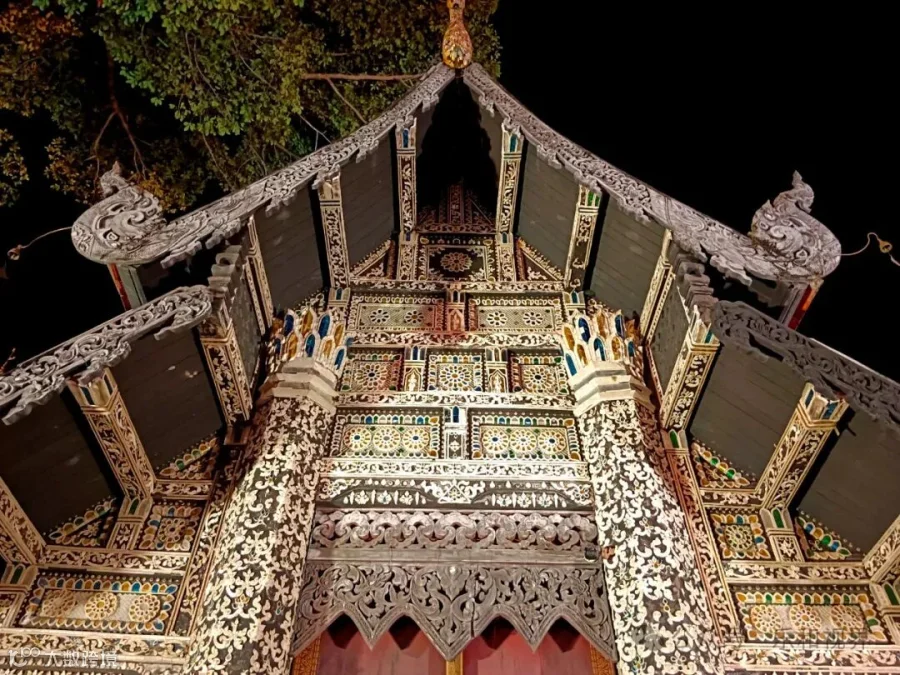
Inside there are no surprises. The walls are plain and the teak columns are inscribed with surface pattern work but otherwise the room is simple with nothing to distract the adherent. The shrine is made up of a gilt mondop tower and in the middle, behind a grill, is metal urn which contains the molar tooth relic.
The Viharn Chaturmuk
(Burapachaan)
Next to tha Lanna viharn is another viharn built to house numerous Buddha relics and the remains of venerable monks. The style is very different from its neighbour having been built, we’re told, in the traditional Lampang Folk style and copied from the building at Wat Pong Sanuk Tai in Lampang.
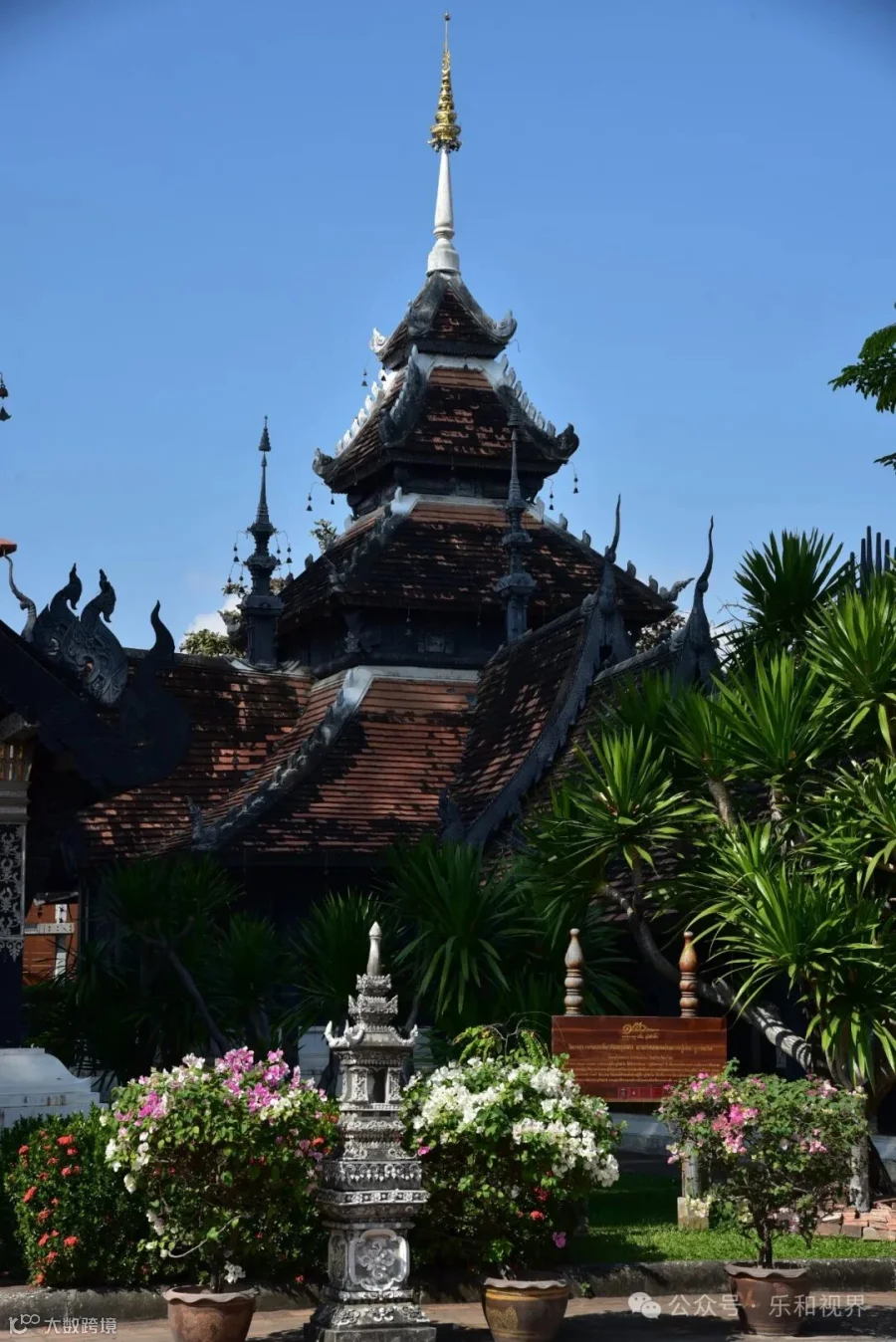
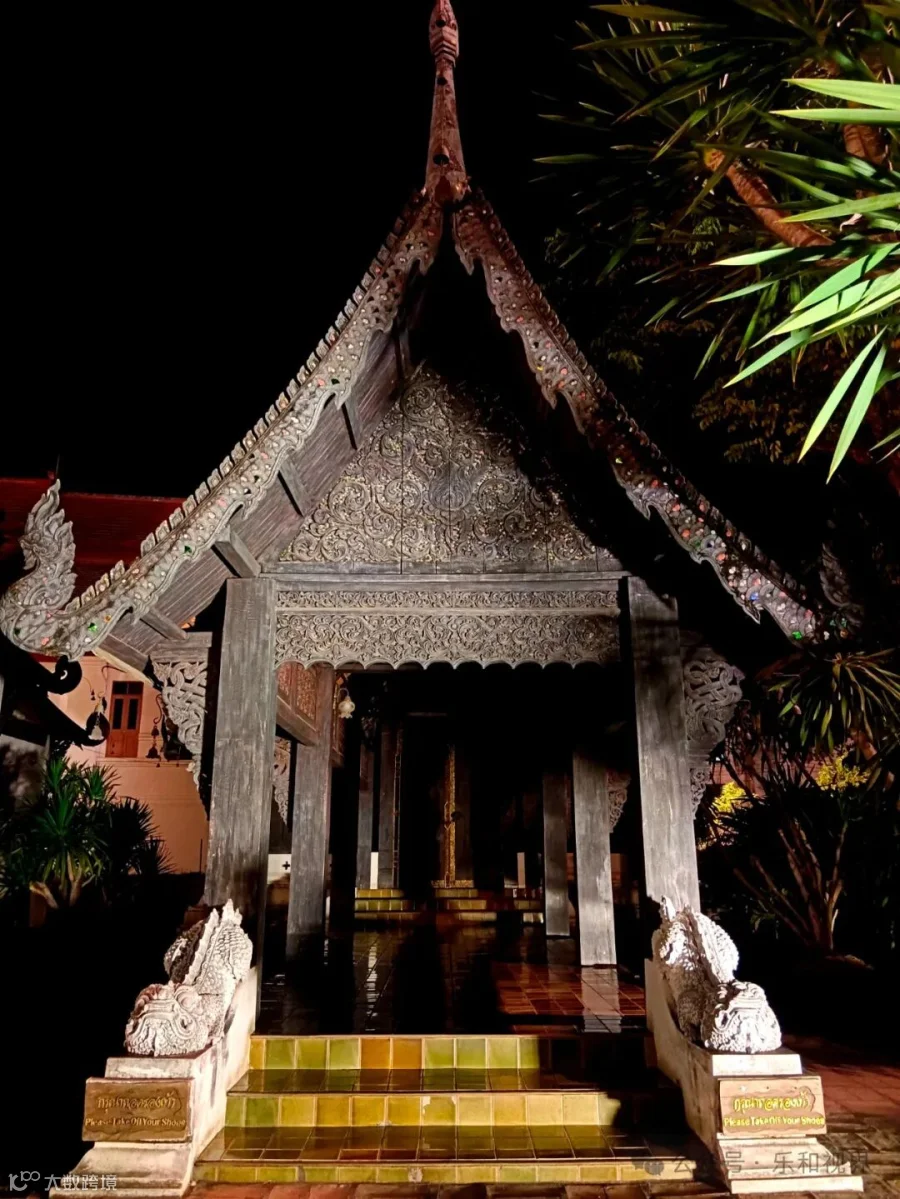
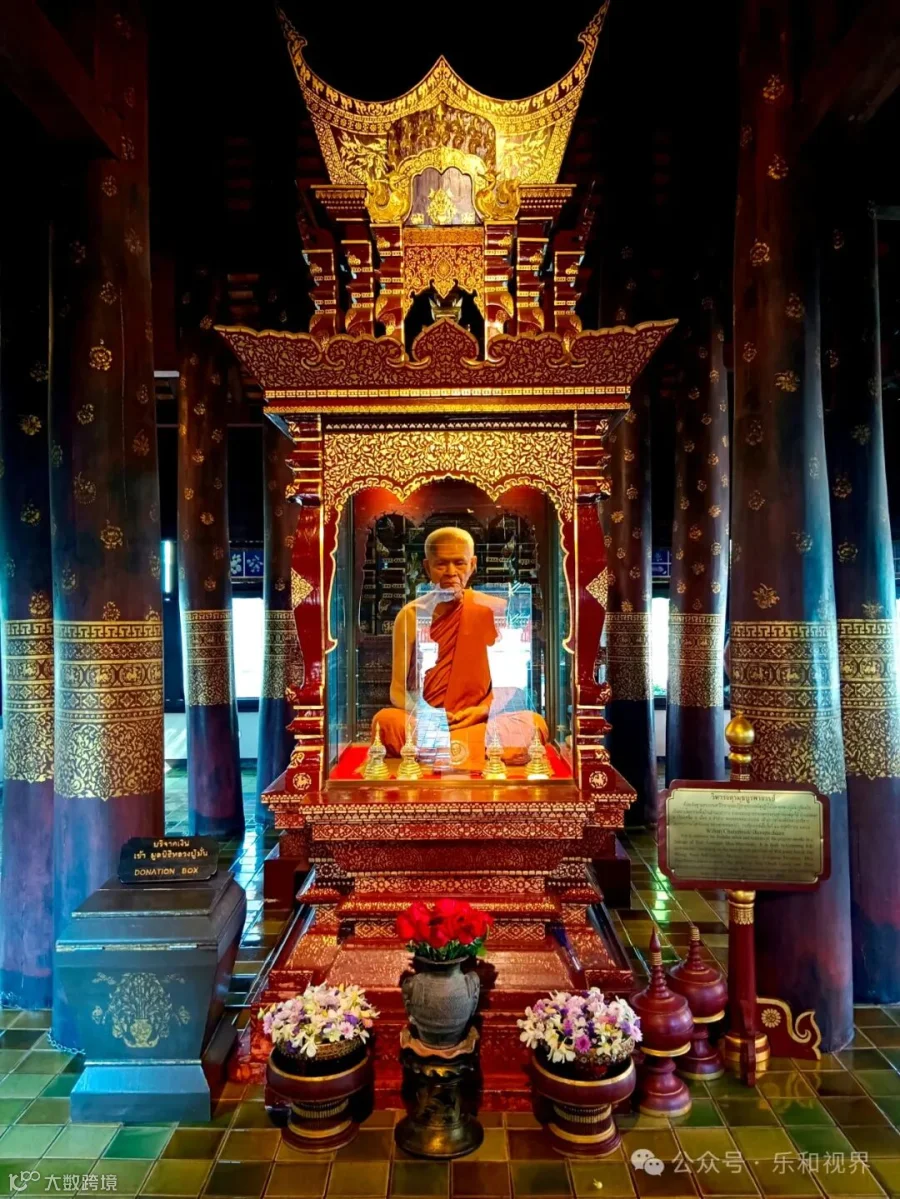
The construction is mostly teak with an impressive tiered roof tower in the middle, and contains an image of a famous monk in wax in a glass display, as well as numerous Buddha relics and remains of revered monks in a mondop tower and in glass cases.
The Reclining Buddha pavilion
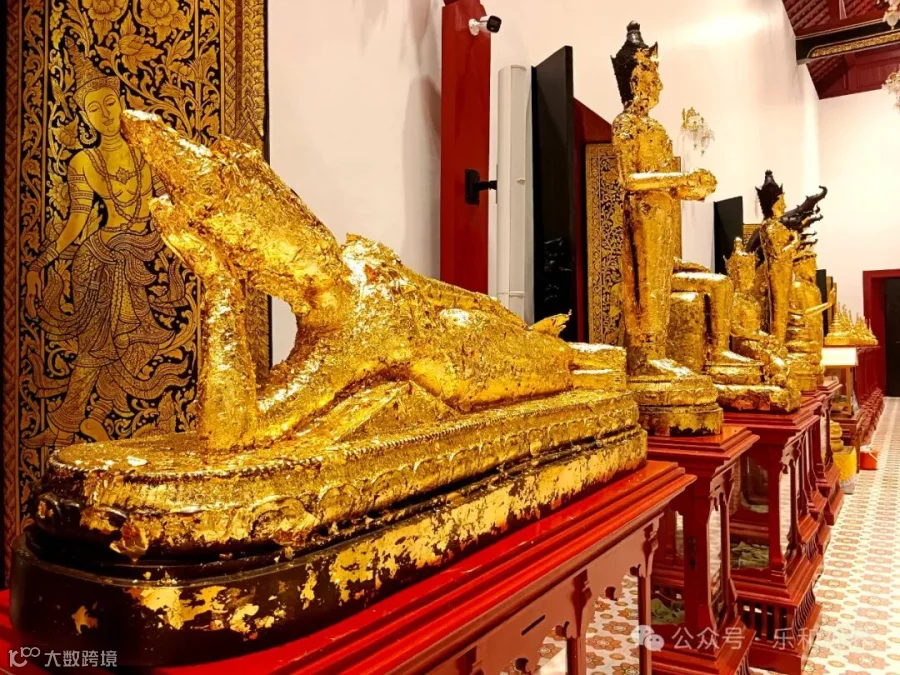
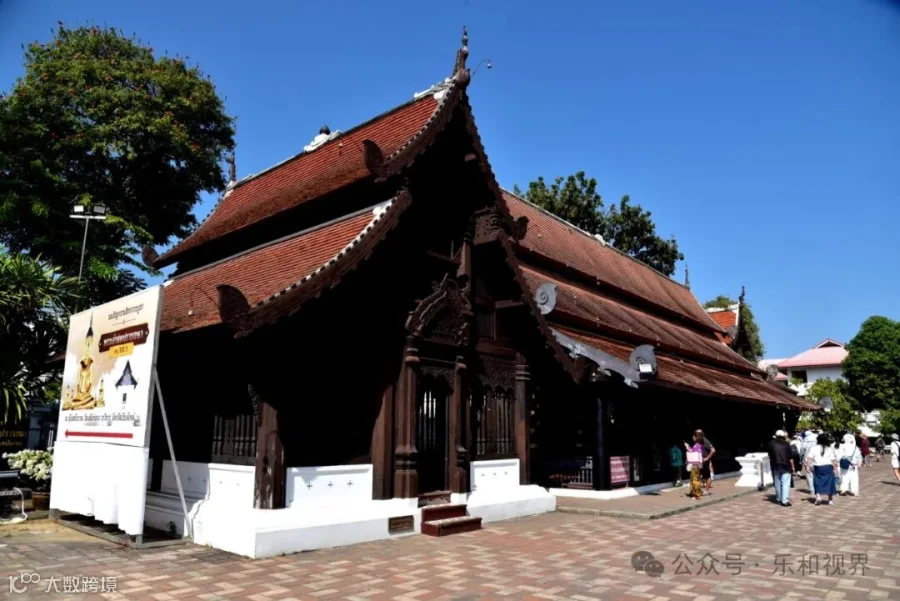
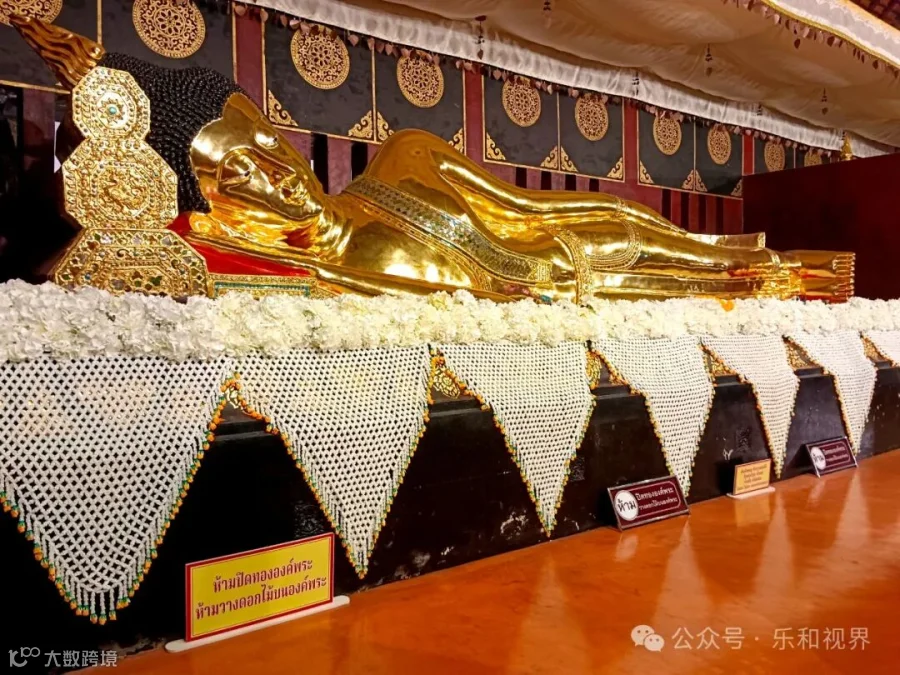
Next to the viharns is a large pavilion built in 1955 by the residing abbot at the time, the Ven. Phra Buddhisophon, which houses a reclining Buddha and a statue of the "Fat Buddha".
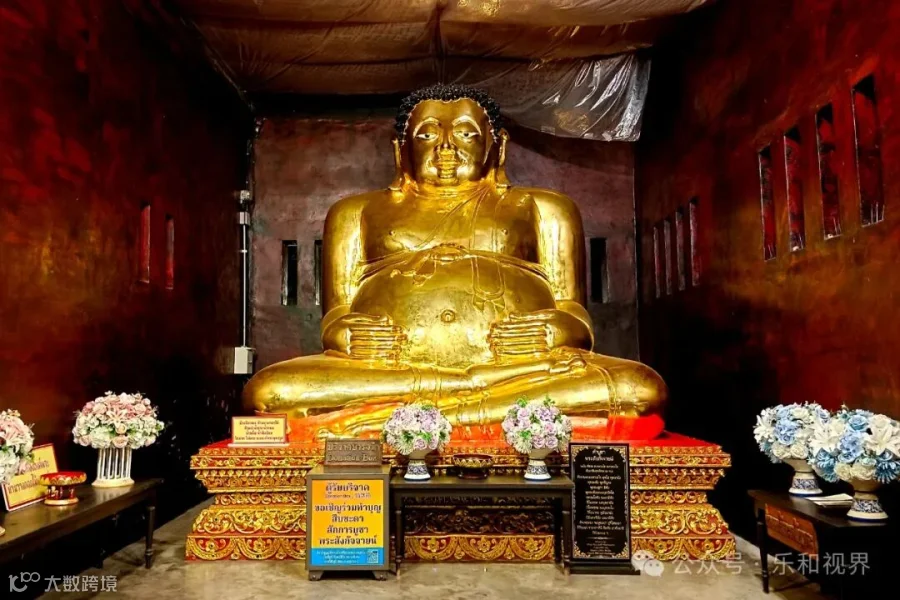
The image of the "Fat Buddha" is often seen in the temples in Chiang Mai although this image is the most grand. His large swollen belly is believed to contain wisdom and adherents visit the image and make offerings in the hope that they will also gain wisdom.
The "Fat Buddha" is not only locally called "Phra Katchayana". Its correct name is Phra Maha Kham Chayana. It represents one of the 10 most intimate disciple of Buddha. The original Sanskrit name is translitered as Kātyāyana or Mahākātyāyana. In Thailand he is also called Phra Sangkachai. He was considered a witty and intellectual interpreter of the Buddha’s teachings.
Legend has it that he was initially particularly attractive. To avoid the advances of male and female admirers of his beauty, he put on weight until they left him alone. Sometimes this disciple of Buddha is also equated with the Indian grammarian and mathematician Kātyāyana, who lived long before Buddha. It is then claimed that Buddha’s disciple wrote the first grammar of Pali. This cannot be the case, because Pali was not established as the "lingua franca" of the Buddhist communities until about a hundred years after Buddha’s death.
The Reclining Buddha is 8.70 metres long and is over 500 years old having been made during the reign of King Muang Kaeo who ruled Lanna from 1487 to 1517.
There are several reclining Buddha images in Chiang Mai but this is the finest. It has a very serene face with eyes half closed and covered with a gold cloth.
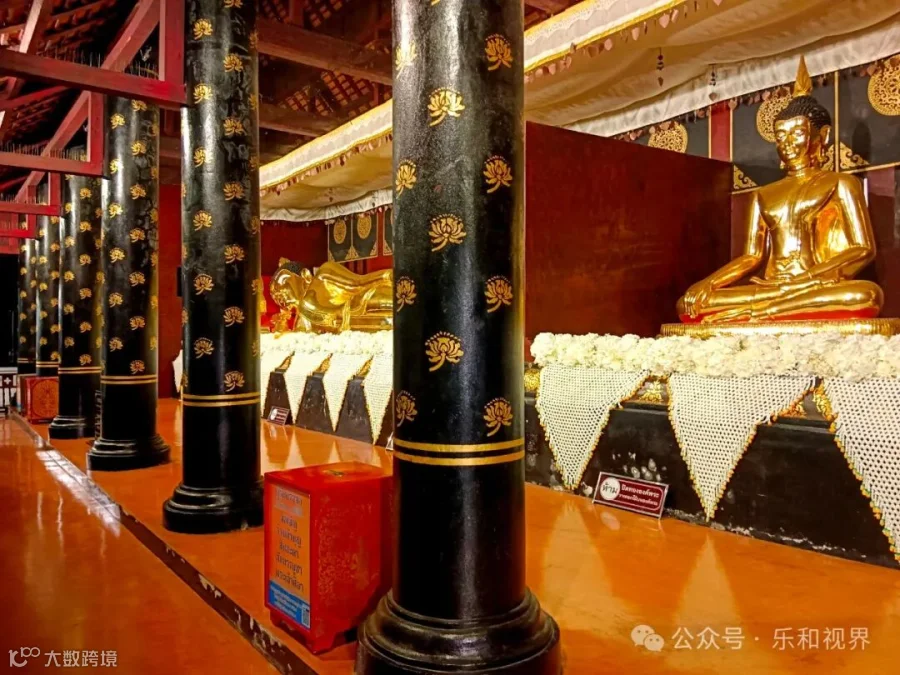
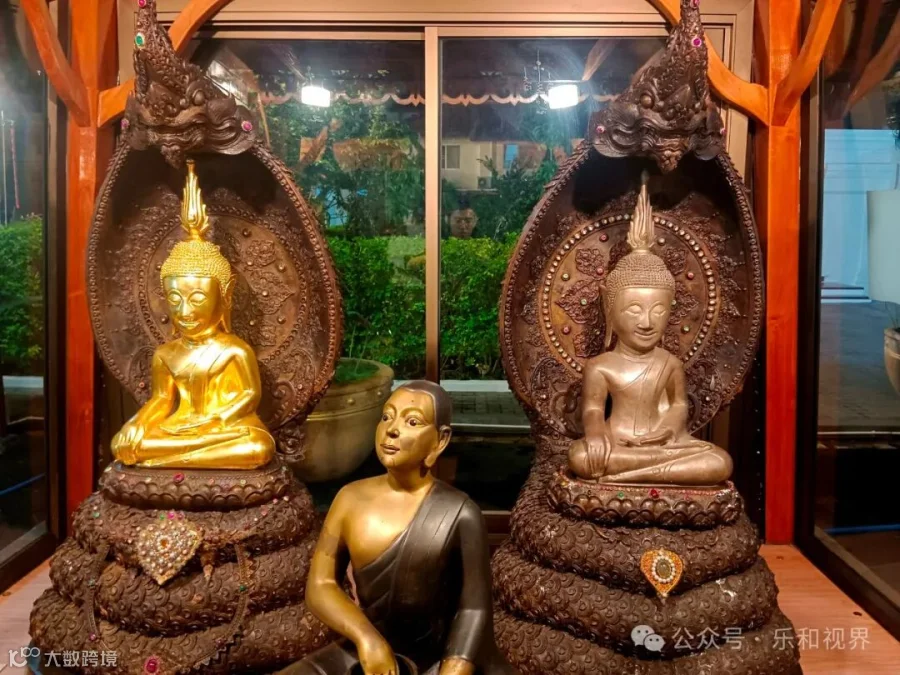
Next to Reclining Buddha pavilion there are two other small pavilions each housing impressive Buddha statues.
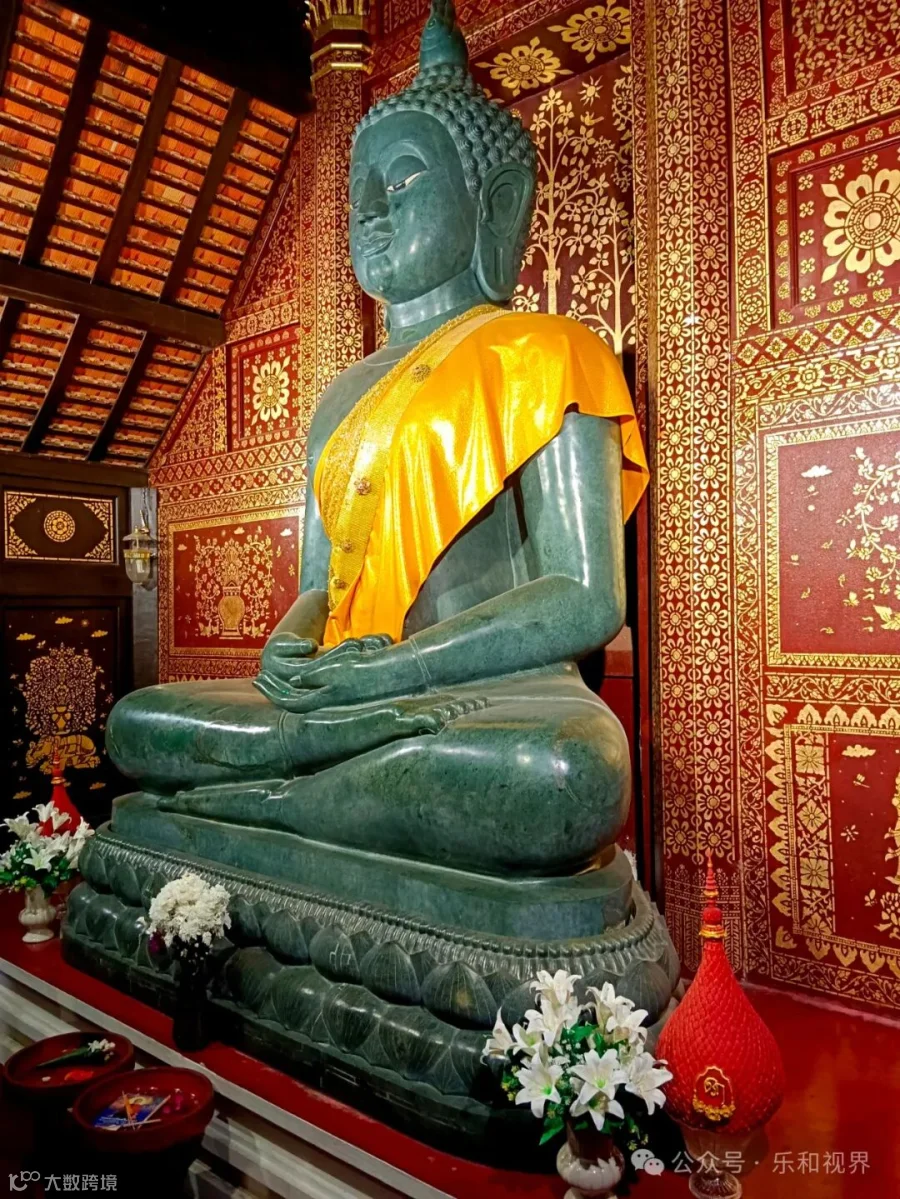
The first pavilion——This contains the Srilanna Buddha image. It’s said to made in the Singsuang style, in the meditation mudra, and is nearly 4 metres high and weighs over 10 tons.
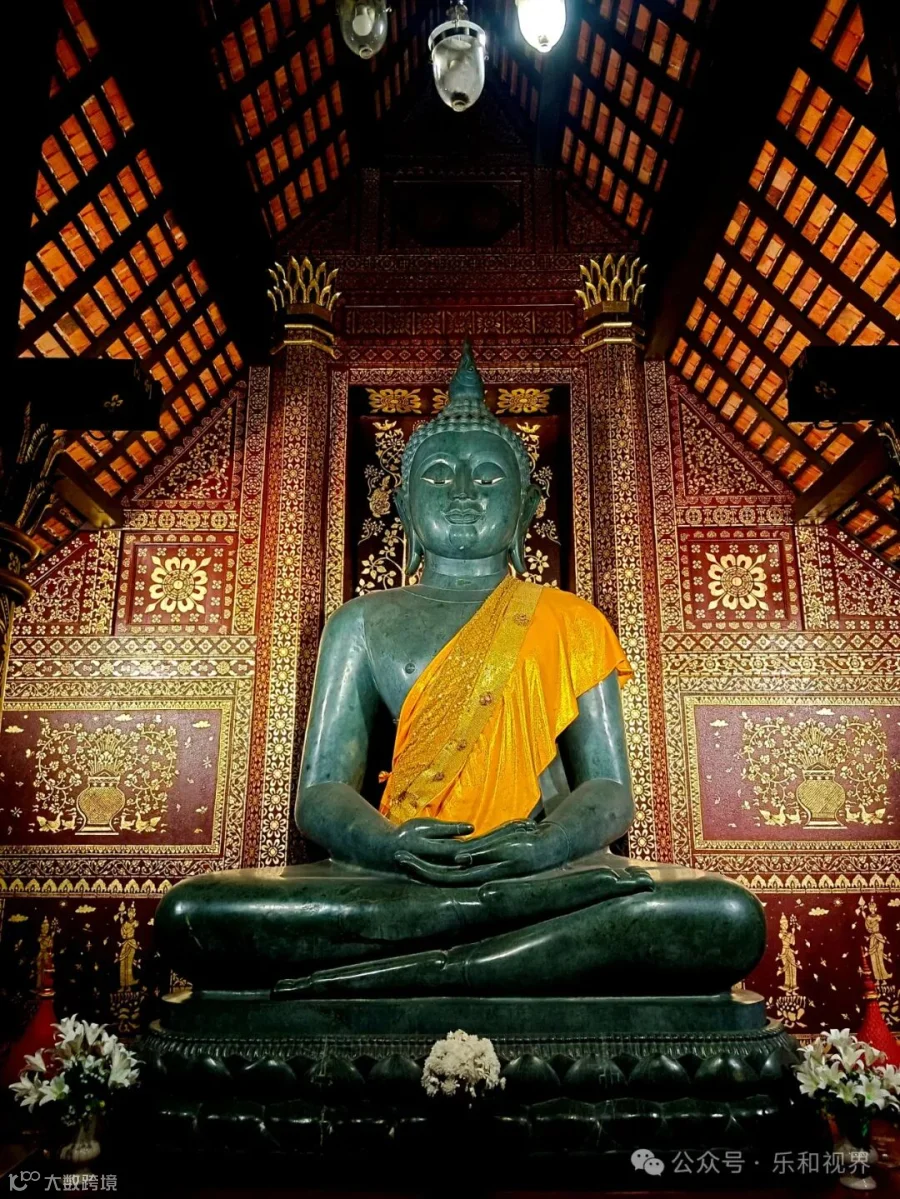
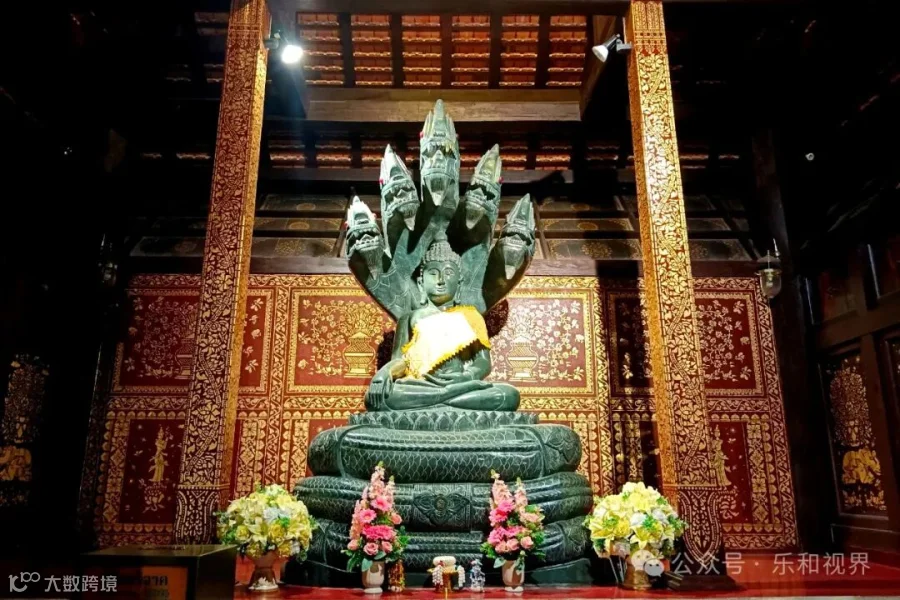
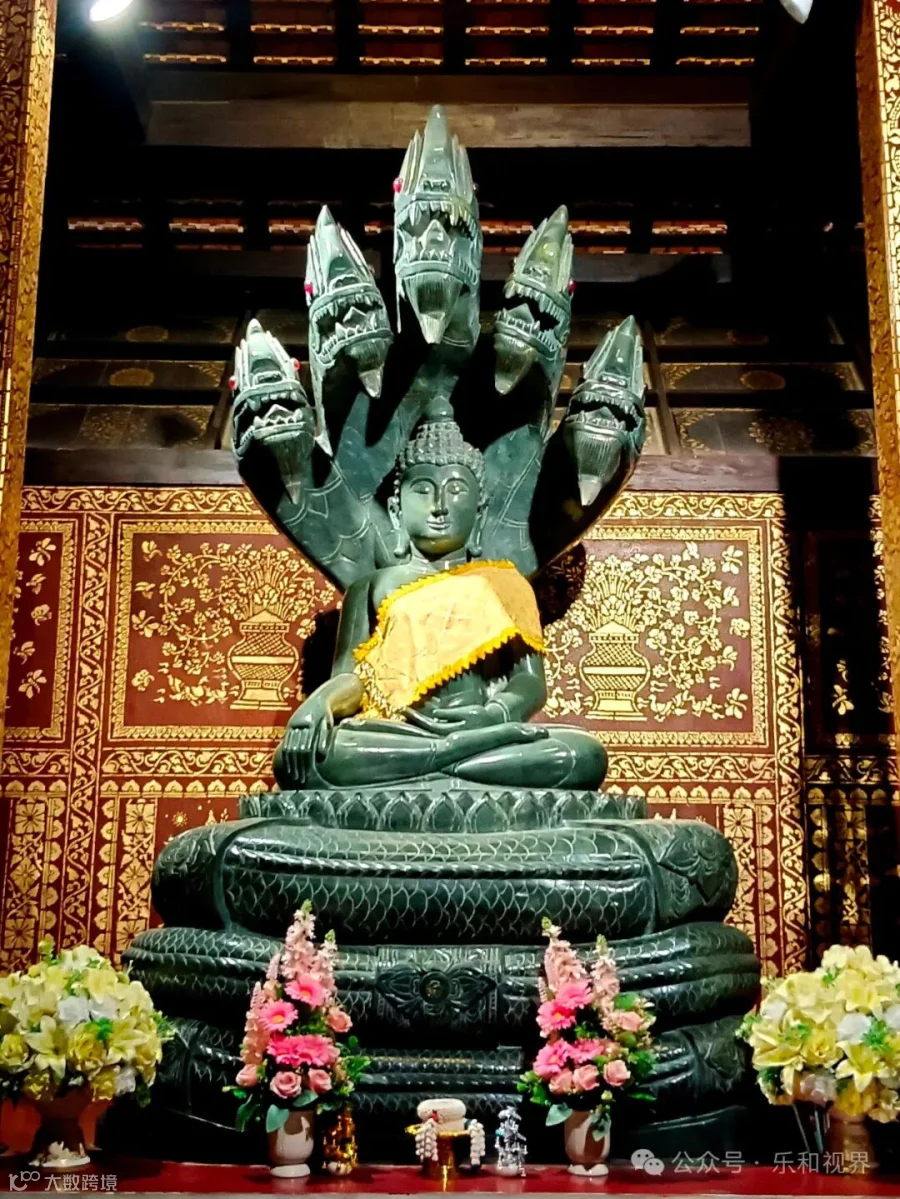
The second pavilion——Nearby houses the Naganaphisi Buddha image. It’s three and a half metres high, weighs 15 tons, and is protected by the five-headed naga serpent.
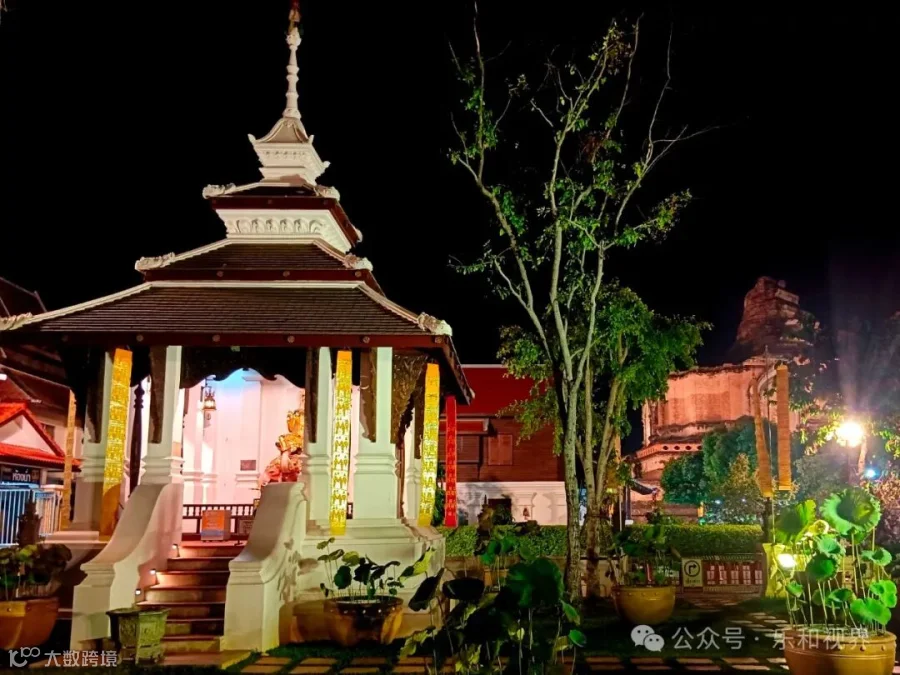
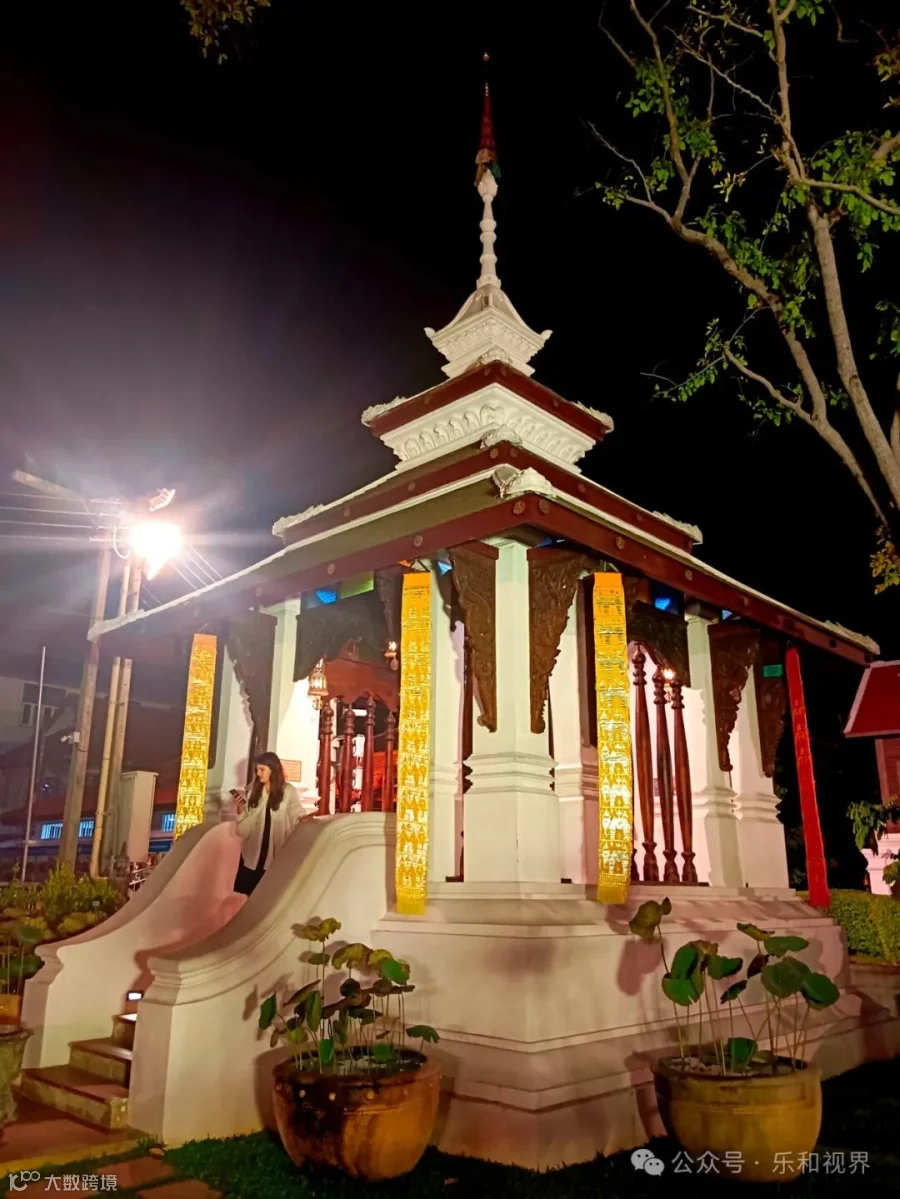
The Sao Inthakin
(city pillar pavilion)
The Sao Inthakin, or Chiang Mai city pillar, dates from pre-Lanna kingdom times and was built by the people to protect the city and has been venerated ever since. Once a year the Inthakin Festival takes place at which offerings are made to the city pillar and during which time there is much celebration as well as respect paid to the various famous Buddha images in Chiang Mai which always feature in the festival.
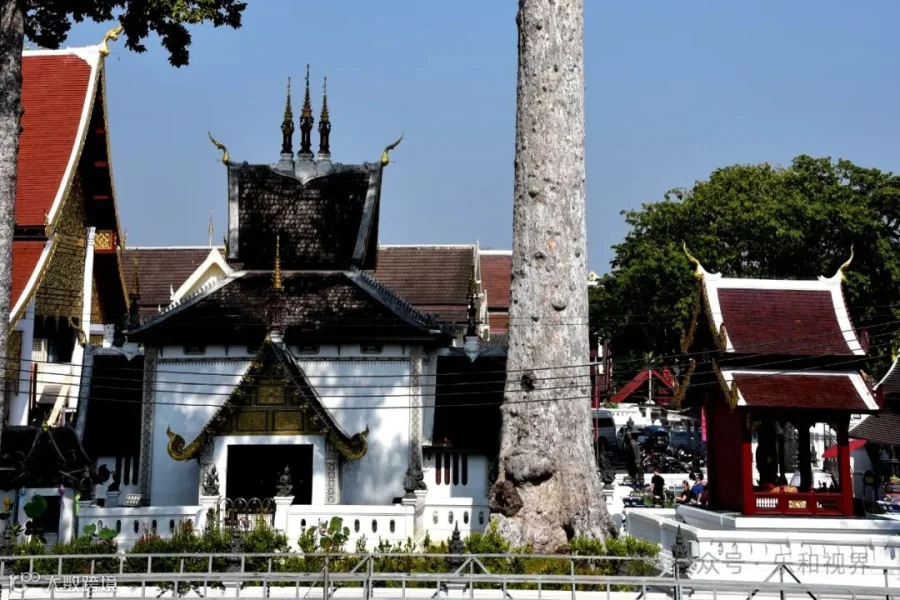
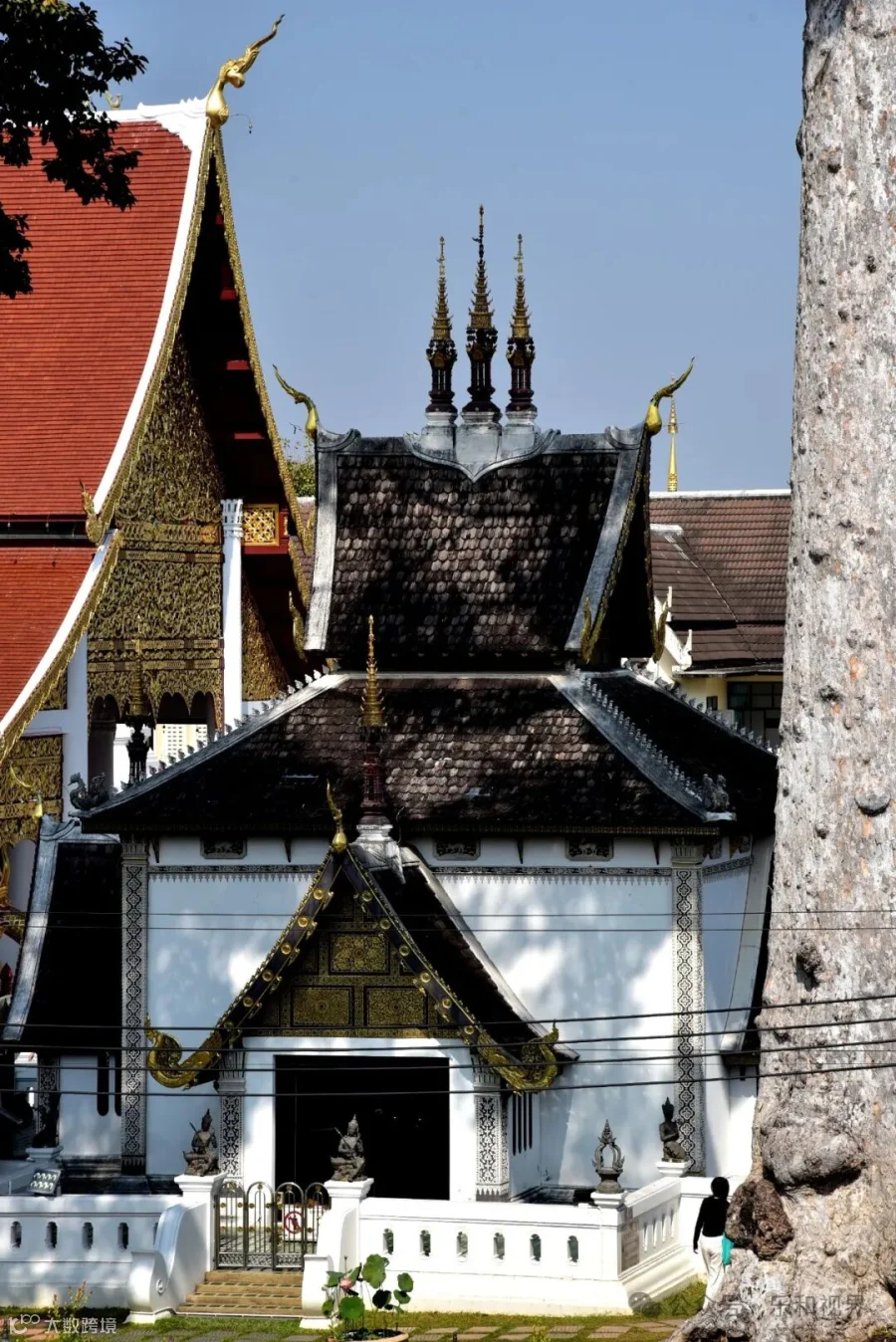
The building itself was specially constructed to house the pillar which was moved from Wat Sadeu Muang in the Three King’s square in 1800, and the room is very colourful with wall-to-wall murals of scenes from the life of the Buddha and a central mondop tower housing a standing Buddha image. Women are not permitted to enter the hall.
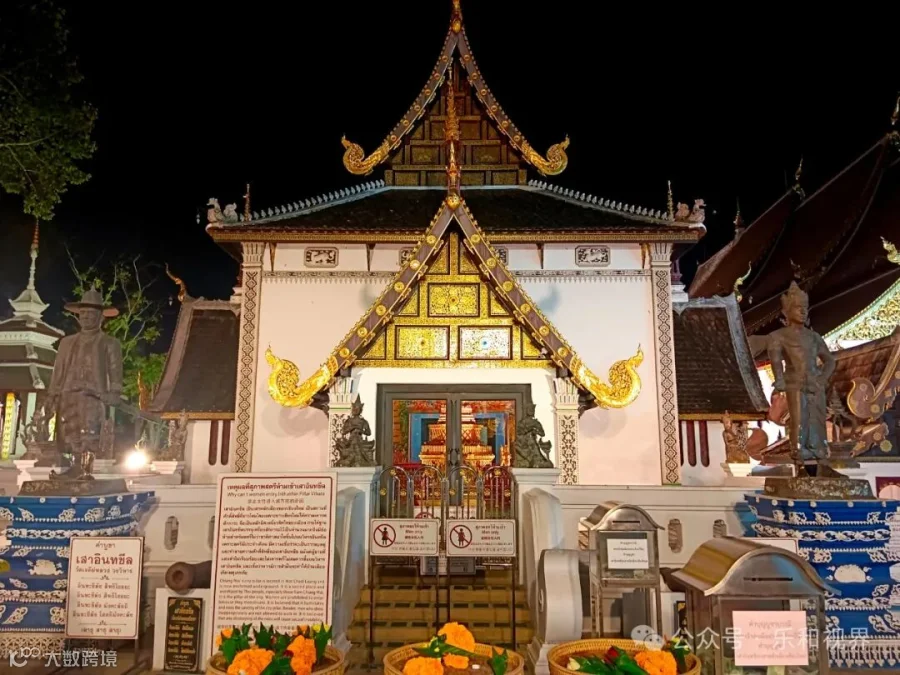
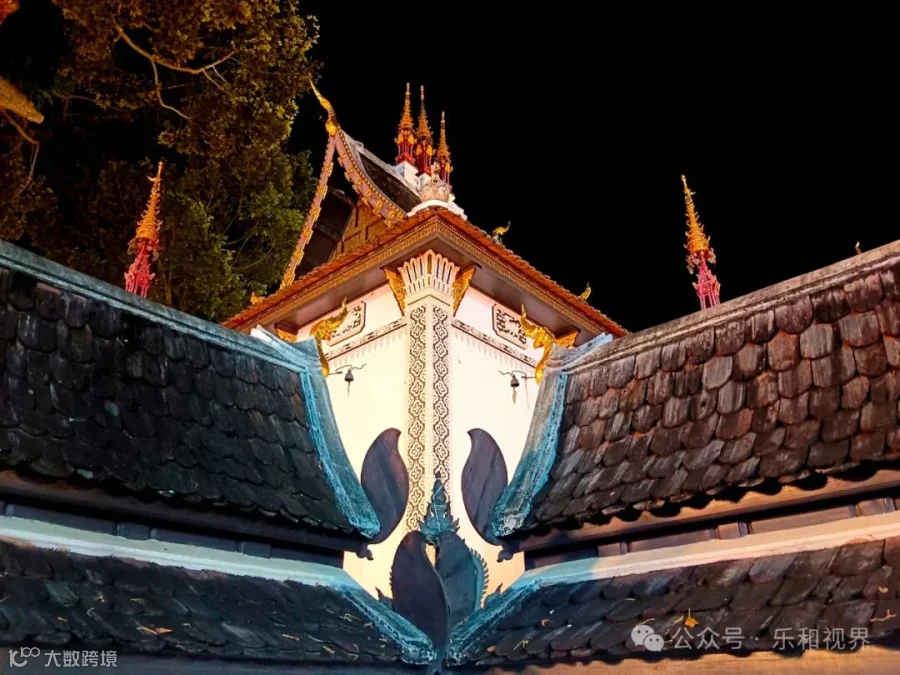
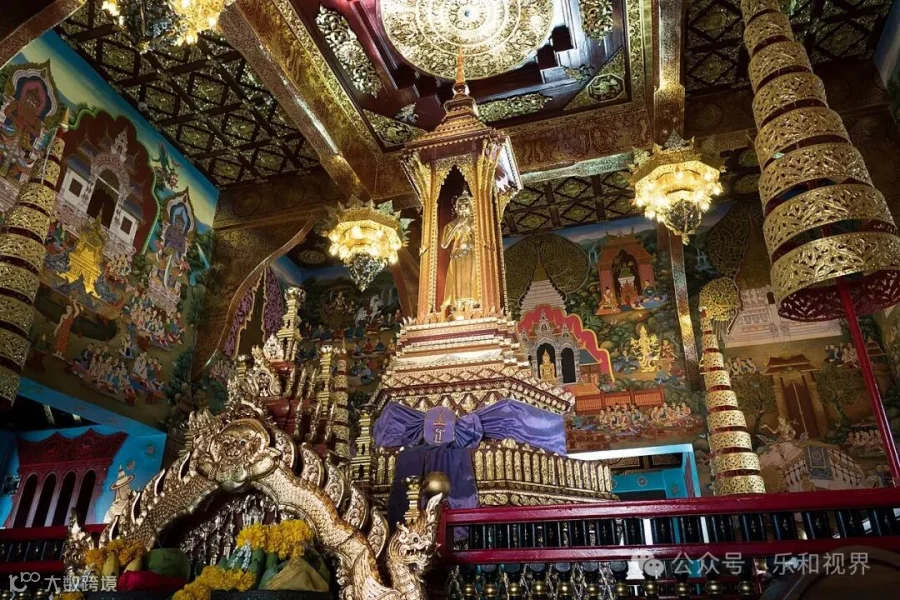
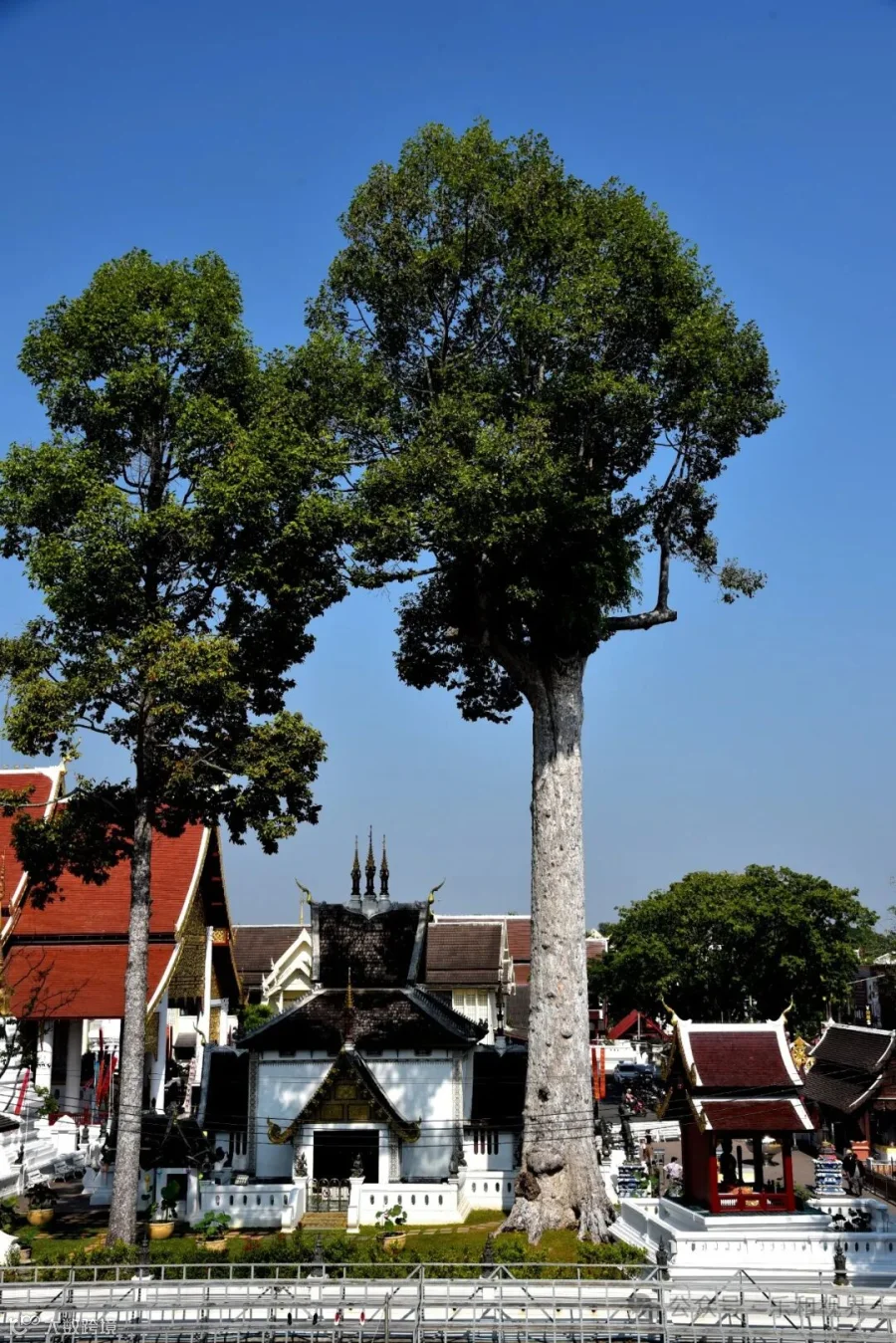
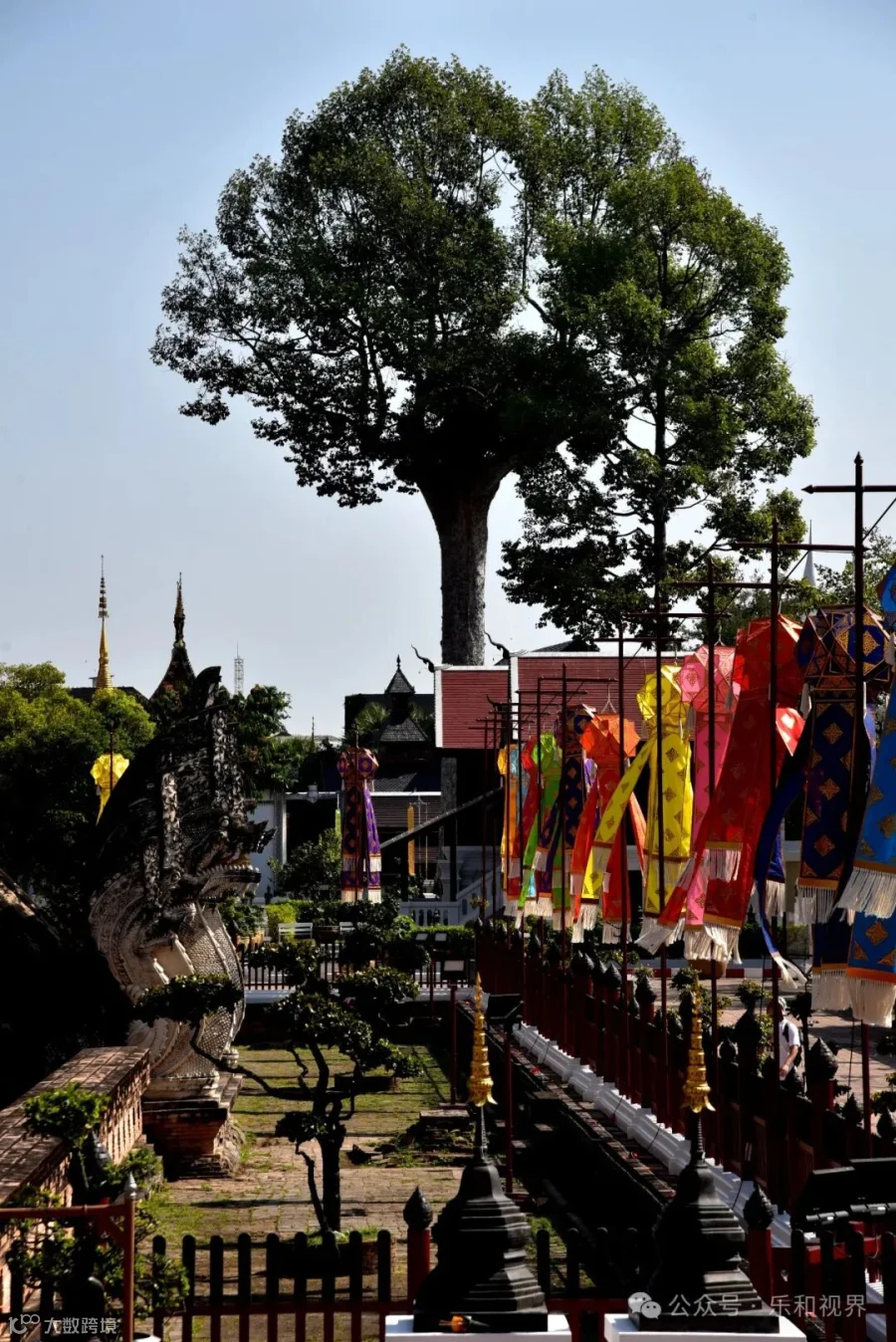
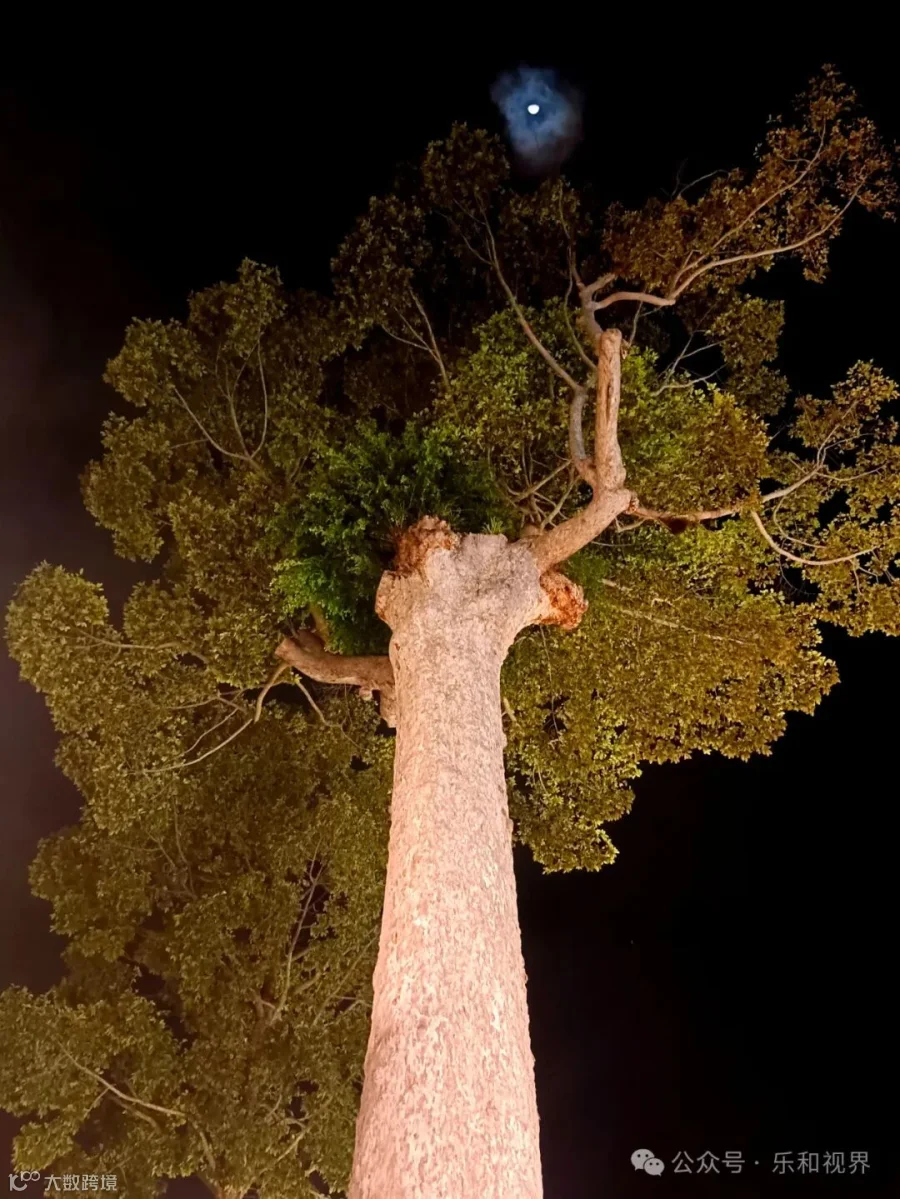
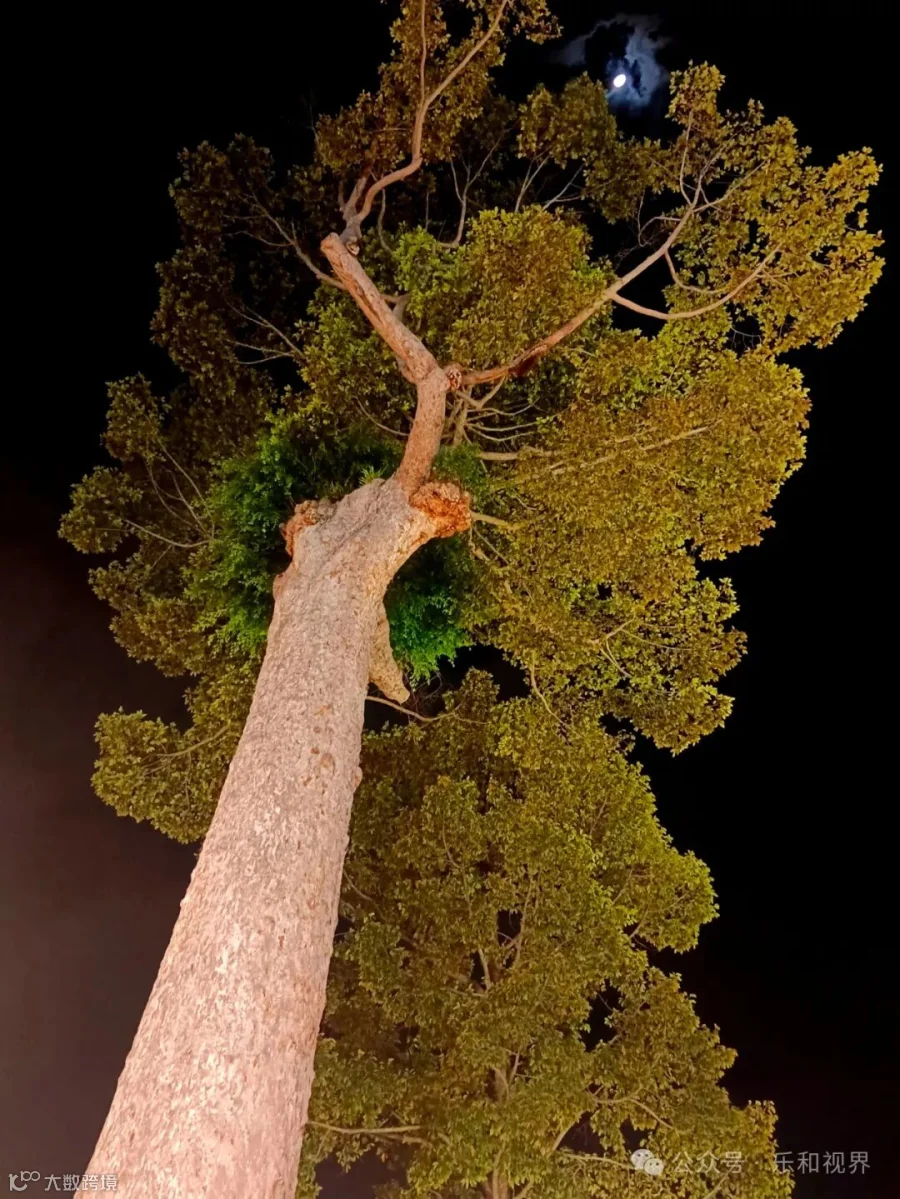
Next to the City Pillar Pavilion is an enormous Dipterocarp alatus tree(Dryobalanops aromatica), one of three in the grounds, planted around 1800 by King Kawila. It’s believed if one of these trees are felled a great catastrophe in Chiang Mai will follow.
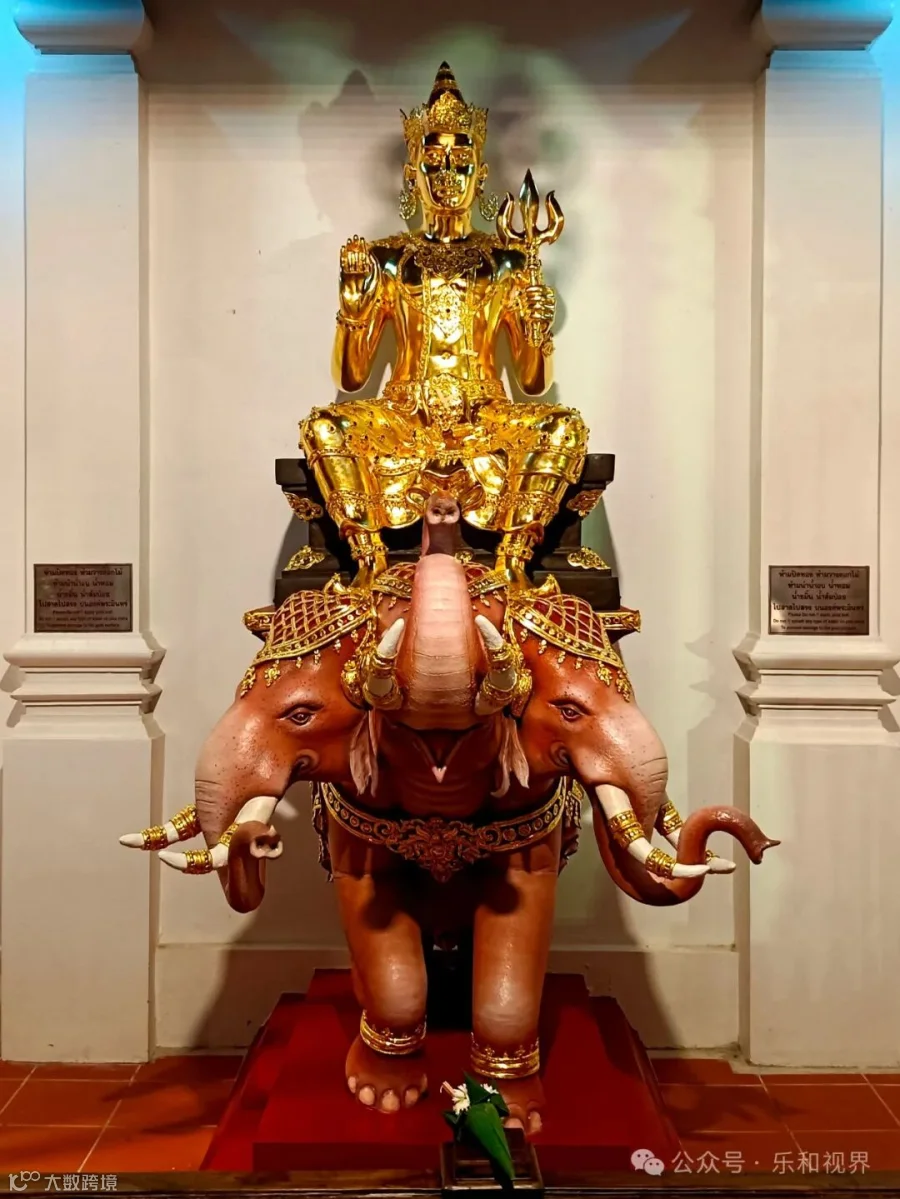
In a wihan near the entrance to the temple is the Buddha statue named Phra Chao Attarot(Eighteen-cubit Buddha), which was cast in the late 14th century. On the other side of the chedi is another pavilion housing a reclining Buddha statue.
The ho trai and museum
The museum in the ho trai depository building is easy to miss but is well worth a look if you’re interested in the history of Wat Chedi Luang. The museum has received royal patronage and shows photographs of their visits. As a result the museum is very well curated, unlike others, with detailed labeling of exhibits in Thai and English.
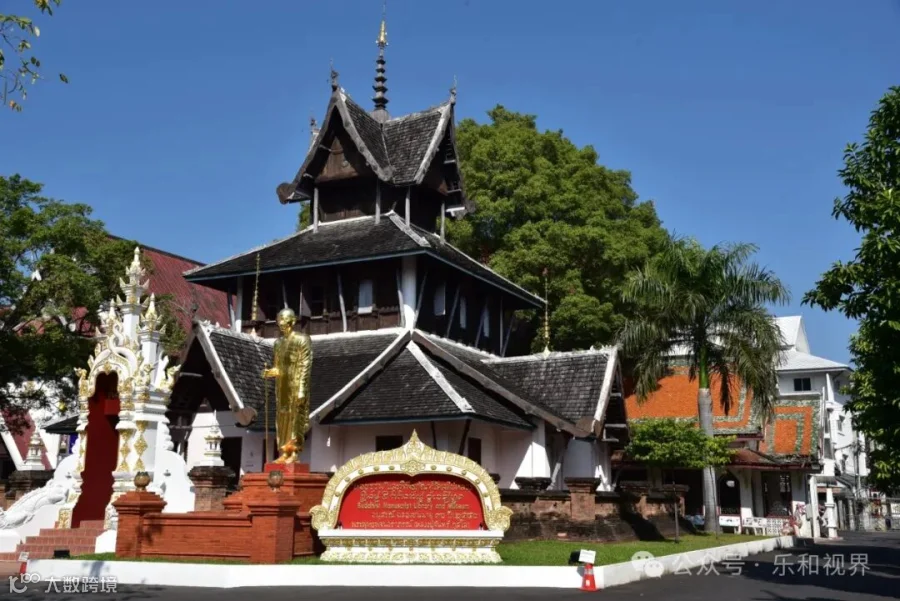
It includes various artifacts from the temple including carvings and figures from the old buildings and from the chedi such as a large wooden elephant carving which used to grace the facade of the viharn. It also gives an explanation of the various buildings in the viharn and its history.
Upstairs there is an interesting display about the how the palm leaves on which the Buddhist texts are inscribed are made. Here on display are numerous old scripture boxes which are used to store the precious palm leaves after they have been cut and treated before being inscribed, as well as some of the actual palm leaves.
Kuti Keo Nawarat
(old kuti building)
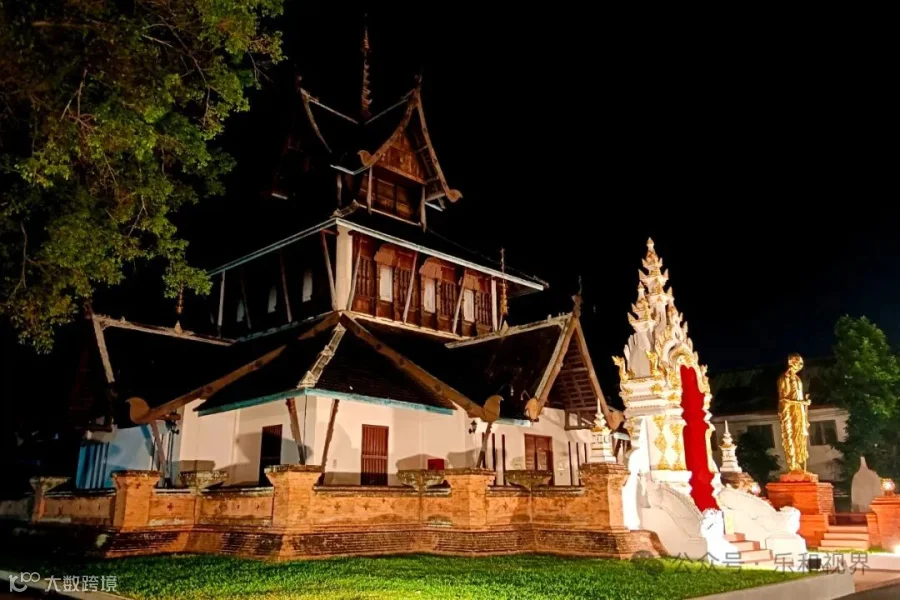
On the south side is an interesting kuti building made of teak which was used to house the monks. These two-storied kuti buildings were built by Chao Keo Nawarat, the last viceroy of Chiang Mai, in 1928 and are now used by the monks as offices.
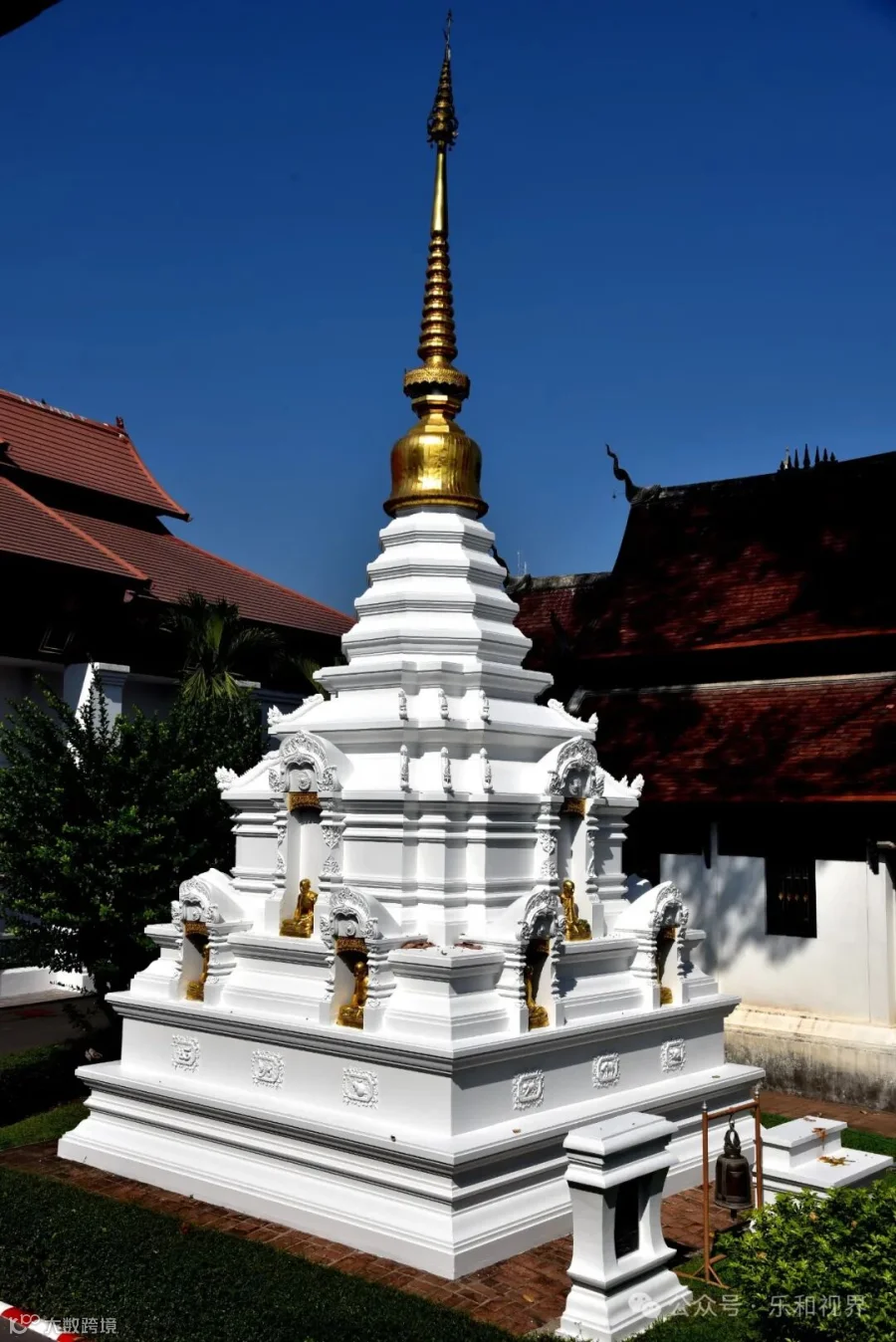
There is a pure white pagoda across from the kuti building.
The End