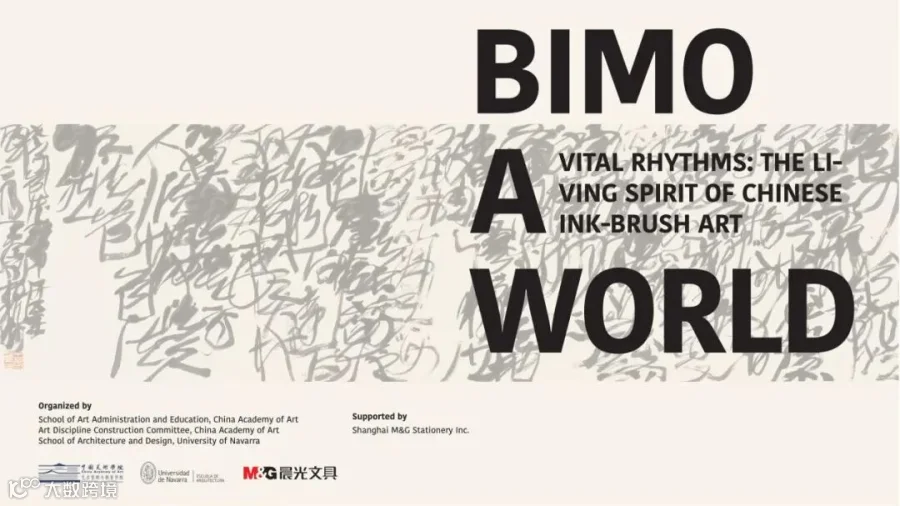
「笔墨世界·西班牙 BIMO A World·Spain」项目海报
西班牙·潘普洛纳
“笔墨世界”文化项目
Pamplona,Spain
"BIMO A World" Cultural Project
2026.5.26
活动地点Venue
西班牙潘普洛纳纳瓦拉大学
University of Navarra, Pamplona, Spain
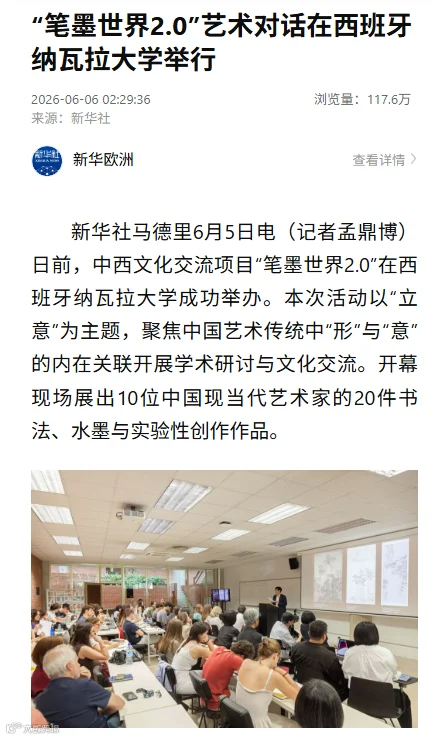
此前,“笔墨世界BIMO A World 2.0”文化项目于西班牙纳瓦拉大学启幕。该项目由中国美术学院艺术管理与教育学院、中国美术学院艺术学学科建设委员会、西班牙纳瓦拉大学建筑与设计学院联合主办,纳瓦拉大学图书馆承办。本次活动以“立意”为主题,聚焦中国艺术传统中“形”与“意”的内在关联开展学术研讨与文化交流,涵盖学术出版、主题论坛、作品鉴赏以及合作提案四个部分。
本次交流活动集中呈现了朱颖人、吴永良、吴山明、王冬龄、闵学林、徐默、黄骏、陈磊、林海钟、沈乐平十位艺术家的书法、水墨及实验性创作作品。不同于将水墨视为一种传统技法或文化符号,“笔墨世界2.0”更关注“笔墨”作为一种感知、思考与经验世界的方式,试图提出的问题是:在当代世界中,笔墨如何不仅被观看,更被重新理解。
The event featured calligraphy, ink art, and experimental works by ten artists: Zhu Yingren, Wu Yongliang, Wu Shanming, Wang Dongling, Min Xuelin, Xu Mo, Huang Jun, Chen Lei, Lin Haizhong, and Shen Leping. Rather than approaching ink art as a traditional technique or a fixed cultural symbol, the project considers brush and ink as a way of perceiving, thinking, and experiencing the world. BIMO A WORLD 2.0 ultimately asks: in today’s global context, how can BIMO be not only viewed, but truly understood?
启幕仪式与学术出版物发布会
Launch Event for the Opening Ceremony & Project Academic Publication
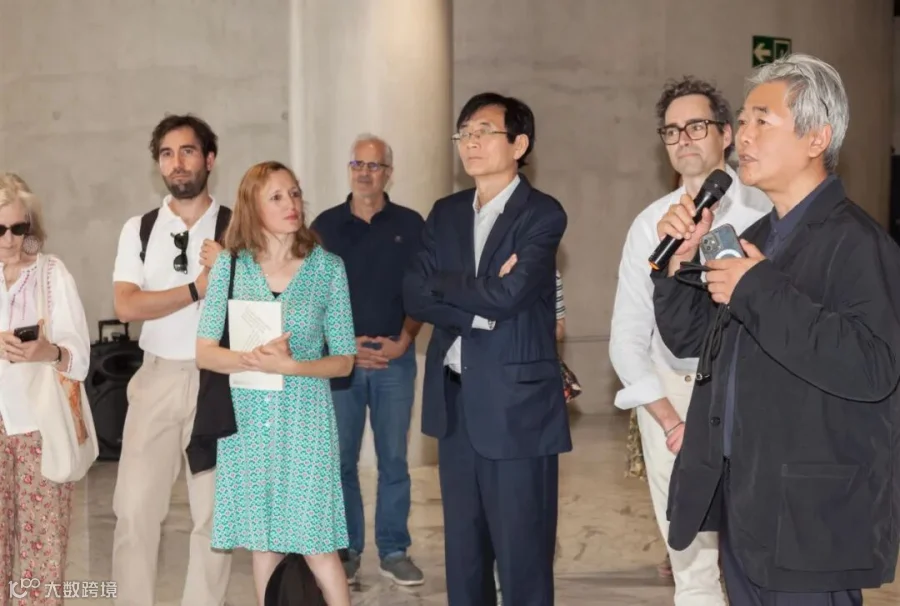
艺术管理与教育学院院长孔令伟教授在开幕仪式上致辞
项目团队为当地师生导览作品(点击播放更多)
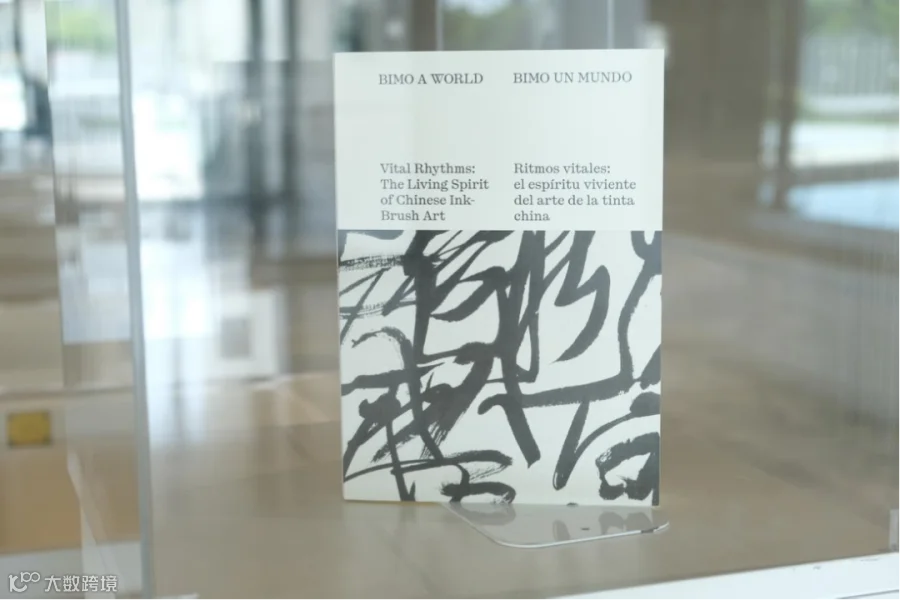
现场展示的英西双语出版物《BIMO A WORLD/BIMO UN MUNDO》
主题论坛
Roundtable Forum
启幕仪式后,“气韵生动 ——中国水墨画的生命精神”主题论坛顺利举行。著名艺术史学者、中国美术学院教授曹意强,中国美术学院艺术管理与教育学院院长、教授孔令伟,中国美术学院艺术学学科建设委员会秘书长、潘天寿纪念馆馆长、教授陈永怡以及纳瓦拉大学教授玛丽亚·安赫莉卡等中西学者围绕水墨精神内核、当代转化与跨文化传播展开研讨。
After the opening ceremony, the forum "Vivid Rhythm: The Living Spirit of Chinese Ink Painting" got underway. Chinese and Western scholars, including art historian Professor Cao Yiqiang, Professor Kong Lingwei, Dean of the School of Art Administration and Education at the China Academy of Art, Professor Chen Yongyi, Director of the Pan Tianshou Memorial Museum, and Professor María Angélica from the University of Navarra, held in-depth discussions on the spiritual core of ink painting, its contemporary transformation, and cross-cultural dialogue.
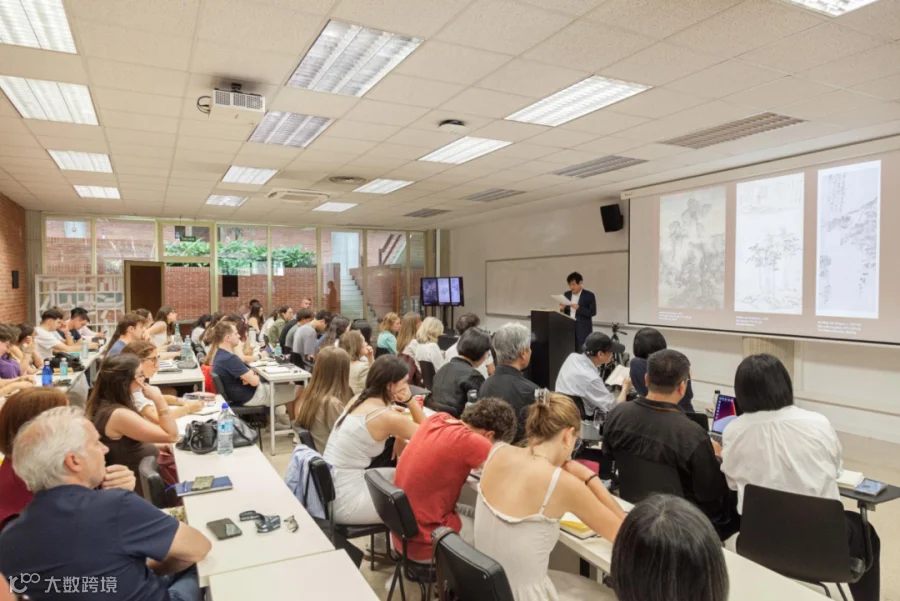
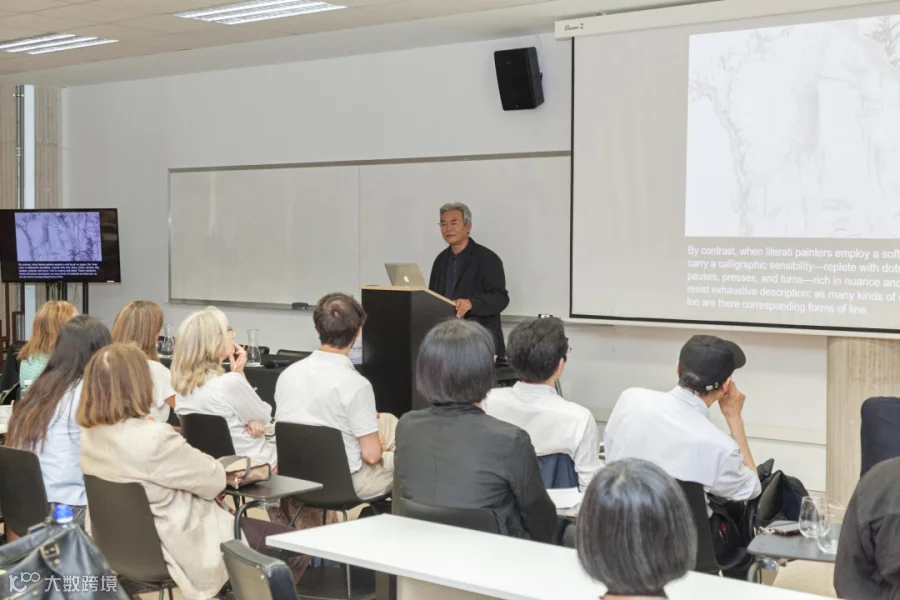
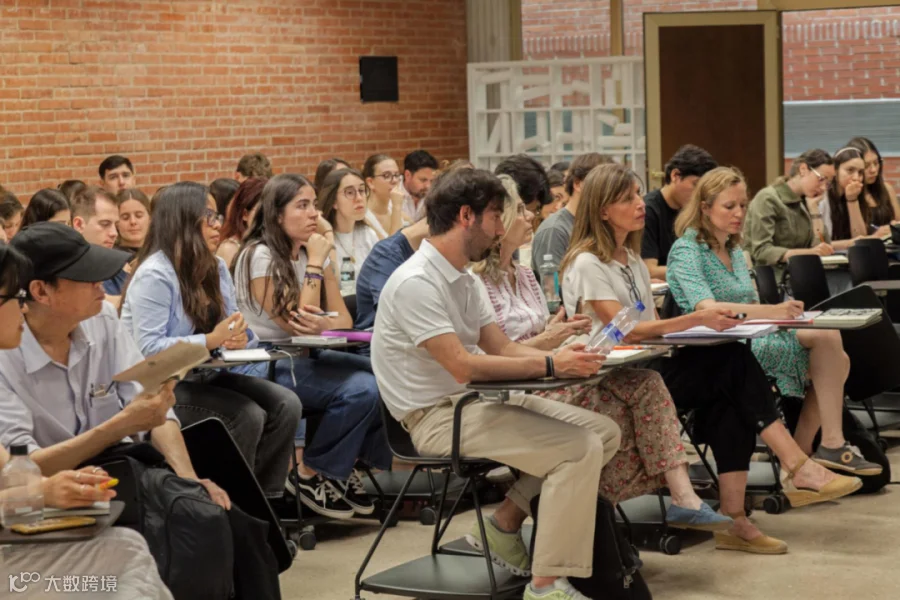
“气韵生动 ——中国水墨画的生命精神”主题论坛现场
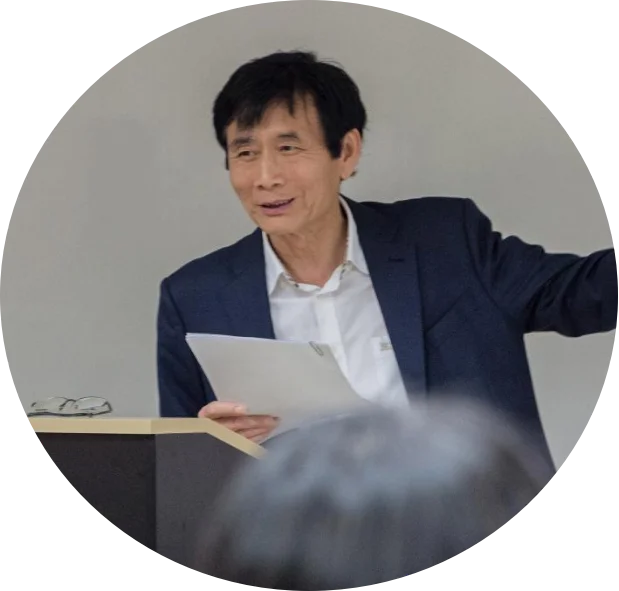
著名艺术史学者、中国美术学院教授曹意强在主题论坛上致辞
艺术的传承张力与肌肉记忆
——“笔墨世界”论坛致辞
曹意强
艺术始终在过去与当下、传统与个人创新之间的张力中展开实验。毕加索曾说:“好的艺术家模仿,伟大的艺术家偷窃。”这句话一语道破了艺术发展的轨迹:没有传统,创新便失去根基;没有创新,传统则沦为重复性的模仿。艺术家如何在承继数百年传统的基础上,真正成为自己?如同在生活里一样,要想对艺术精通,不仅有赖于心灵,更需要深植于身体:每一笔、每一个动作、每一次呼吸,都潜藏着等待被唤醒的力量。这种张力,在中国绘画中的体现,或许比其他文明的艺术传统更为深沉。相较于欧洲艺术史中不断显现的风格断裂与形式革命,中国绘画史似乎呈现出一种更为稳定而连续的结构。尤其就我们今天所讨论的笔墨语言而言,对于不熟悉中国传统艺术的人来说,从古至今仿佛变化不大。然而,在更深层的脉络中,中国绘画与不断求变的欧洲艺术一样,同样高度重视这种艺术内部恒久存在的张力。
真正的艺术创新,并不在于消解或战胜这种冲撞力量,而恰恰奠基于其上,因为它正是艺术得以不断更新的动力来源。艺术的更新从来不是抽象的观念运动,而是每一位艺术家在这种张力之中,以个人性的表达不断试探边界、重塑感知,以开辟新的可能性。新的个体表达由此扩展了既有的卓越标准,并重新定义技巧、形式与审美价值;而它最终又会沉淀为新的传统,成为下一代艺术家必须面对的新挑战。
几个月前,我曾在这里做过一次讲座,尝试通过欧洲——尤其是以委拉斯开兹为代表的西班牙绘画传统——与中国宋代至明代山水画之间的比较,来阐明这种碰撞如何转化为创造性的动力。我当时谈到了“趣味”与“气韵”或“协调力” (coordinated energy)的问题,但由于时间所限,未能进一步讨论一个更核心的问题:个体艺术家如何在传统与创新这一悖论之中获得个性创造的自由。这也正是毕加索命题的关键所在:艺术家如何通过模仿大师,最终“偷窃”其精神实质,并将之转化成“为我所用”的创造性力量。这是一个极其古老的命题。中国西晋的陆机在《文赋》中便已触及类似思想;此后历代不断加以申说,而中国绘画“六法”中的“传移模写”,正是对此最精炼的概括之一。
有趣的是,贾克梅蒂曾对毕加索这句话深恶痛绝,甚至斥责毕加索是个“盗贼”,不值一文。然而事实上,贾克梅蒂并未真正理解毕加索的意思;在创作实践中,他自己同样也是一个“盗贼”。他不仅“偷取”了古代岩画、埃及雕刻以及文艺复兴艺术中的比例规范,同时也吸收了与毕加索相近的资源——例如埃尔·格列柯(毕加索称他是“第一位现代画家”)以及非洲雕刻艺术。这种讽刺恰恰揭示了艺术中的一个普遍真理:所有真正的创造者,在某种意义上都必须“窃取”。世上并不存在全然无源的创新,任何创造都产生于和既有传统之间持续的对话与张力。因此,毕加索并非在提倡剽窃,而是在强调“掌握”与“转化”的能力。模仿的意义,在于确保技艺和精神传统的延续,而不只是复制既成形式;所谓“窃取”,则意味着吸收其内在理念,将之重新塑造,并最终转化为自身创造的一部分。伟大的艺术家不仅重视那些激发其灵感的对象,更重要的是,他们能够将后者内化、重新诠释,并由此孕育出新的原创性。真正对传统的精通,不在于表面的相似,而在于将继承得来的形式,转化成独一无二且充满生命力的创造。唐代韩愈所谓的“师其意不师其辞”,正说明了这一点:不徒袭古人之形,而重在得古人之意。
如果你去参观达利在故乡亲自设计的博物馆(The Dali Theatre-Museum), 就会明白其整个展示空间仿佛都在以他一生的创作,反复印证毕加索那句话的深意。那么,问题就在于:我们如何通过模仿成为一位优秀的画家,又如何在这一过程中实现创造性的个性转化?
古希腊以来,人们对此提出过种种理论。从柏拉图的“灵感”说,到文艺复兴时期围绕和谐、比例与 disegno(即作为美之理念的“设计/素描”)展开的讨论;再到近现代关于个性表达、“主义”与“流派”的观念,以及当代围绕凝视、性别、身体等展开的理论,人们不断试图从精神、社会、历史、心理、性别、材料等不同维度,解释传统与创新之间的问题,并由此为艺术提供多重理解路径。然而,这些理论在某种意义上仍未真正触及这一张力最深处的问题:一个人如何成为优秀的艺术家?更进一步,又如何成为伟大的艺术家?我认为,在毕加索这一命题的深层逻辑中,隐含着一种我称之为“肌肉记忆”的训练与升华。这是一种极难用语言准确描述的、介于模仿与创造之间的过程。
对此,请允许我谈一点自己的经验。
我是一个失败的画家,也是一个失败的艺术史家。当然,我所说的“失败”,并非世俗意义上相对于“成功”的失败。事实上,从社会评价或学术意义上来说,我似乎并不能算失败者。我所谓的失败,是指自己始终未能真正理解:传统模仿如何能够转化为个人创造?这种转化的内在机制究竟是什么?直到今天,我仍只能暂且以“肌肉记忆”来描述它。所谓“肌肉记忆”,并非机械的重复,而是感知、判断、节奏与动作经由长期实践化入身心,最终达到心、手、意浑然相契的状态。
1977 至 1982 年,我在浙江美术学院(现为中国美术学院)学习绘画。当时我一直困惑于一个问题:应该模仿谁?又如何在模仿中成为“自己”?毕业之后,我最终放弃了绘画,转向艺术史与理论研究,希望能够从理论上理解这一问题。
2014 年初,我前往里斯本拜访阿尔瓦罗·西扎(Álvaro Siza)。当时,他正在为我的母校设计“中国国际设计博物馆”。我曾希望他能够进一步设计一座“教育博物馆”。当我提出这个想法时,他说自己年事已高,不愿再接受新的任务。于是,我向他解释:我之所以希望建立这样一座博物馆,是因为我相信,艺术教育的真正意义,在于展示人类创造力如何生成。听到这里,他开始有些动心。那时,他提到自己刚刚观看了列奥纳多·达·芬奇的素描展,深受震撼。说话间,他随手默画了一位骑士。我则拿起桌上的铅笔,迅速画下了他吸烟瞬间的神态。他看后似乎颇受触动,认为我捕捉到了他的精神状态。而我自己也感到惊讶。因为那时,我已经整整三十年没有画画了,却似乎并未真正失去绘画能力。这是理论的问题吗?是观察的问题吗?是技巧的问题吗?我感觉似乎都不是。仿佛有某种东西始终储存于身体深处,在某个瞬间被重新唤醒。我只能将其称为“肌肉记忆”。于是,我和西扎开始讨论这个问题。我们仿佛忽然拥有了一种共同语言。随后,他当场画出了那座教育博物馆的理念草图。
中国传统绘画与书法尤其强调执笔、临摹经典以及笔墨训练,而这一切显然都与“肌肉记忆”的形成有关。用今天的话来说,它实际上是在试图将那些无法完全用语言描述的微妙感知——关于线条、力度、节奏、气息与结构的经验——像编码一样,沉积于人的身体和肌肉系统之中。一旦受到某种触发,它便会自然地作出反应,甚至产生所谓“神来之笔”。记得曾有一位诺贝尔奖获得者说过,马可·波罗在他的游记里漏提了中国两项极其重要的发明:一是筷子,二是烧水泡茶。他是从人类卫生文明的角度来强调这两项发明之重要性的。然而他或许并未意识到,它们其实也与中国艺术的特质有着深刻关联。我小时候,外公曾严格训练我使用筷子的姿势。他告诉我:“执筷不正,就写不好书法;写不好书法,也就画不好画。”当然,他所说的是我们这里讨论的笔墨传统。在他这一代人看来,我书法上的问题,首先并非出在技巧,而是出在缺乏一种由臂到腕再到手指的姿势的训练,而中正的执筷方式则是这种训练的最便捷途径——也就是日常身体习惯所形成的“肌肉记忆”。而当时我把它看成了严苛的说教,以至于最终放弃了对书法的进一步学习。
中国绘画中的“墨”是材质,而“水”则近乎灵魂。一个真正优秀的画家,往往无需刻意思索,便能在笔锋之间自然控制水与墨的比例:一笔落下,纸上即呈现出极其微妙而丰富的韵味。而我们之所以反复临习古人经典,正是为了训练身体、呼吸与手部动作去记住这种难以言说的微妙性。无论我们将其称为“灵感”、“气韵”,还是“骨法”,它本质上都并非纯粹观念性的东西,而是一种经过长期训练后沉积于身体深处的感知系统。一旦这种记忆真正形成,它便会储存在生命之中。在某个瞬间,当心手相应之时,它便能够自然流露,信手拈来,如出天然。我此前因自己在艺术与研究上的“失败”所发出的感叹,其实正源于对传统与个人创造之间那种深刻张力的长期困惑和痛苦体验。
早在一千七百多年前,陆机便在《文赋》开篇感叹:每当提笔写作时, “恒患意不称物,文不逮意”。而他进一步解释,这并非因为“不知其理”,而是因为真正困难的地方在于:“非知之难,能之难也。”中国传统绘画——亦即今天所谓的中国画——历来与诗歌、书法并称“三绝”,彼此相通,三位一体。因此,陆机的文论某种意义上也为后世画论奠定了基础。“非知之难,能之难也”,恰恰点明了艺术并不仅仅是知识的问题,而是一种如同呼吸与触觉的奥秘,一种需要内在力量协调与深层肌肉记忆共同完成的生命活动。其精洁微妙,变化多奇,并非语言、逻辑或理论所能毕宣。韩愈说:“当其取于心而注于手也,汩汩然来矣。”这种“得心应手”之乐,父不能传之子,师不能传之徒,口不能言,唯心身手可得而知。此之所谓“巧”,所谓“灵感”,并不是抽象概念,而是一种身体最终获得的能力。换言之,艺术最终必须厚积内化于肌肉记忆,才能薄发神来之笔。也正因此,《文心雕龙》才会将其概括为:“笔固知之。”毕加索所谓“偷窃“与刘勰所言“笔固知之”,虽若相去甚远,其理则一:传统唯有化入身心,成为生命觉悟,方能生发创造。
我想,这也正是我们举办“生命韵律:中国笔墨艺术的精神”所希望传达的核心信息。
2026年5月25日于Pamplona
The Inherited Tension and Embodied Mastery of Art— Address to the “Brush and Ink: A World” Forum
Cao Yiqiang
Art has always evolved through experimentation within the tension between past and present, between tradition and individual innovation. Pablo Picasso once remarked: “Good artists copy; great artists steal.” The saying captures, with remarkable precision, the trajectory of artistic development: without tradition, innovation loses its foundation; without innovation, tradition declines into repetition.
How does an artist become truly himself while standing on the shoulders of centuries of tradition? In art, as in life, mastery is not learned by the mind alone. It settles gradually into the body — into gesture, rhythm, breath, and touch — waiting to be awakened and externalised.
This tension perhaps finds a deeper expression in Chinese painting than in many other artistic traditions. Unlike the constantly stylistic ruptures that characterise the history of European art, Chinese painting appears to possess a more continuous structure. To those unfamiliar with the tradition, the language of brush and ink may seem to have changed little across the centuries. Yet beneath this apparent continuity lies an equally powerful internal tension between inheritance and transformation.
True artistic innovation does not overcome this tension; it arises from it. Art renews itself when artists reshape inherited forms through personal perception and experience. Over time, these new forms themselves become tradition, forming the challenge that later generations must confront.
Several months ago, I delivered a lecture here comparing European painting — particularly the Spanish tradition represented by Diego Velázquez — with Chinese landscape painting from the Song to the Ming dynasties. I attempted to explain how artistic collisions become creative force. At the time, I spoke about “taste” and “spirit resonance”, or what I called “coordinated energy”. Yet because of time constraints, I could not pursue what is perhaps the deeper question: how does an artist attain personal freedom within the paradox of tradition and innovation?
This, indeed, is the true significance of Picasso’s proposition: how an artist, through imitating the masters, eventually transforms what is inherited into something wholly one’s own.
It is an ancient question. Similar ideas appear already in the earliest Chinese Essay on Literature, to which I shall return later, and were further elaborated throughout successive dynasties. Among the principles of the “Six Canons”, the notion of chuanyi moxie — “transmission through copying” — remains one of its most concise formulations.
Interestingly, Alberto Giacometti deeply detested Picasso’s remark, even denouncing him as little more than a “thief”. Yet in truth, Giacometti himself was equally a “thief”. He drew upon prehistoric cave painting, Egyptian sculpture, Renaissance proportional systems, and many of the same sources that inspired Picasso — among them El Greco, whom Picasso called “the first modern painter”, as well as African sculpture.
This irony reveals something universal within art: there is no innovation without origins. Every act of creation emerges from an ongoing dialogue, and often conflict, with inherited traditions.
Picasso was therefore not advocating plagiarism, but transformation. The purpose of imitation is not the reproduction of forms, but the absorption of inner principles. Great artists inherit traditions by reshaping them into something inseparable from their own perception and experience. As the Chinese saying has it: one should “learn the spirit rather than merely imitate the wording”.
If you visit the museum designed by Salvador Dalí in his hometown — the Dalí Theatre-Museum — you realise that the entire space seems to reaffirm the profound truth contained within Picasso’s remark.
The question, then, becomes this: how does imitation become creation? How does one inherit tradition without becoming imprisoned by it?
Since ancient Greece, countless theories have attempted to answer this question — from Plato’s notion of inspiration to Renaissance ideas of harmony and disegno, and later modern theories of expression, history, and the body. Yet these approaches still leave unresolved a deeper problem: how does an artist transform inherited knowledge into living creation?
I believe the deeper logic of Picasso’s proposition lies in what might be called the cultivation of “muscle memory”. Artistic mastery is not transmitted through theory alone. It is gradually sedimented into the body itself — into movement, rhythm, pressure, breath, and touch — until tradition becomes instinctive enough to be transformed into personal creation.
Allow me, therefore, to speak briefly from personal experience, modestia aparte.
I am a failed painter and a failed art historian. Of course, by “failure” I do not mean failure in the ordinary worldly sense. What I mean is that I have never fully understood how traditional imitation transforms into personal creation. Even today, I can only describe this process provisionally as “muscle memory”. Here, by“muscle memory”, I do not mean merely mechanical repetition, but the gradual embodiment of perception, judgement, rhythm, and movement, until they become inseparable.
From 1977 to 1982, I studied painting at the Zhejiang Academy of Fine Art (now the China Academy of Art). At the time, I was continually troubled by one question: whom should one imitate, and how does one become oneself through imitation? After graduation, I eventually abandoned painting and turned instead towards art history and theory, hoping to understand the problem intellectually.
At the beginning of 2014, I travelled to Lisbon to visit Álvaro Siza, who was then designing a museum for the China Academy of Art. I hoped he might also design an “education museum”. When I raised the idea, he replied that he was already advanced in age and unwilling to undertake further commissions. I explained that our desire to establish such a museum came from a belief that the true significance of artistic education lies in demonstrating how human creativity comes into being.
At this point, he became interested.
He mentioned that he had recently visited an exhibition of Leonardo da Vinci’s drawings and had been deeply moved by them. As we spoke, he casually sketched a horse in a distinctly Leonardesque manner. I picked up a pencil and quickly drew him while he was smoking. He seemed startled by the result, believing that I had captured something of his inner state.
I was equally astonished.
By then, I had not painted for thirty years, yet it seemed I had never truly lost the ability to draw.
It was as though something had remained stored deep within the body, waiting to be awakened.
Was this theory? Observation? Technique?
I felt it was none of these entirely.
Soon afterwards, Siza drew, on the spot, a conceptual sketch for the education museum. It seemed as though we had suddenly discovered a shared language.
Traditional Chinese painting and calligraphy place particular emphasis upon brush handling, copying the classics, and brush-and-ink discipline — all of which relate closely to the cultivation of this bodily memory.
In contemporary terms, one might say that these practices attempt to encode within the body forms of perception that language alone cannot fully describe: experiences of line, force, rhythm, breath, and structure. Once triggered, the hand responds naturally, sometimes even producing what is called the “divinely inspired stroke”.
I recall a Nobel Prize laureate once remarking that Marco Polo overlooked two immensely important Chinese inventions: chopsticks and the practice of boiling water for tea. He was speaking from the perspective of hygiene and civilisation. Yet perhaps he did not realise that both are also profoundly connected to the nature of Chinese art itself.
When I was a child, my grandfather trained me rigorously in the correct way to hold chopsticks. He would tell me: “If your chopsticks are not properly held, your calligraphy will never be good; and if your calligraphy is poor, your painting will never succeed.” Naturally, he was speaking within the brush-and-ink tradition we are discussing today.
For people of his generation, the problem with my calligraphy did not initially lie in technique, but in the bodily habits formed through the way I held chopsticks — that is, in “muscle memory”. Eventually, I even abandoned calligraphy because of it.
In Chinese painting, ink is the material, while water is almost the soul itself. A truly accomplished painter does not consciously calculate the balance between water and ink; the proportions emerge naturally through the movement of the brush. With a single stroke, the paper reveals extraordinarily subtle tonalities.
The reason we repeatedly copy the masterpieces of the ancients is precisely to train the body — the hand, the breath, the movement of the wrist — to remember these subtleties. Whether we call it “inspiration”, “spirit resonance”, or “bone method”, it is not fundamentally conceptual, but something cultivated through prolonged bodily discipline.
Once such memory is truly formed, it settles into life itself. At a certain moment, when mind and hand respond perfectly to one another, it emerges naturally, almost as though born of nature itself.
The sense of “failure” I described earlier arises precisely from a long confusion concerning the tension between inheritance and personal creation.
More than seventeen hundred years ago, Lu Ji lamented at the opening of his Essay on Literature that whenever he took up the brush to write, he feared that “the idea fails to match the object, and the writing falls short of the idea”. Yet he also explained that this was not because one “does not understand the principle”, but because “it is not understanding that is difficult, but the ability to realise it”.
Traditional Chinese painting — what we now call ink painting — has historically been regarded together with poetry and calligraphy as the “Three Perfections”, each inseparable from the others. In this sense, Lu Ji’s literary theory also laid foundations for later theories of painting.
“It is not understanding that is difficult, but the ability to realise it” points directly to the fact that art is not merely a matter of knowledge, but a living activity requiring the coordination of inner force and deep muscular memory. Its subtleties cannot be exhausted through theory alone.
As Han Yu once wrote: “When it is taken from the heart and poured into the hand, it flows forth unceasingly.”
This joy of perfect accord between mind and hand cannot truly be transmitted in words. It must be grasped through body, mind, and hand together.
This is what we call skill, and at its highest level, what we call inspiration. It is not an abstract idea, but an ability ultimately acquired by the body itself.
In other words, art must ultimately enter the body.
For this reason, one of the great ancient critical texts of China after Lu Ji, The Literary Mind and the Carving of Dragons, could summarise the matter in a single phrase:
“The brush itself knows.”
Picasso’s “stealing” and the ancient Chinese belief that “the brush itself knows” may appear distant from one another. Yet both point toward the same truth: tradition becomes creative only when it is fully absorbed into the body and transformed into living experience.
I believe this is also the essential message we hope to convey through Vital Rhythms: the Spirit of Chinese Ink-Brush Art.
25 May 2026, Pamplona, Spain
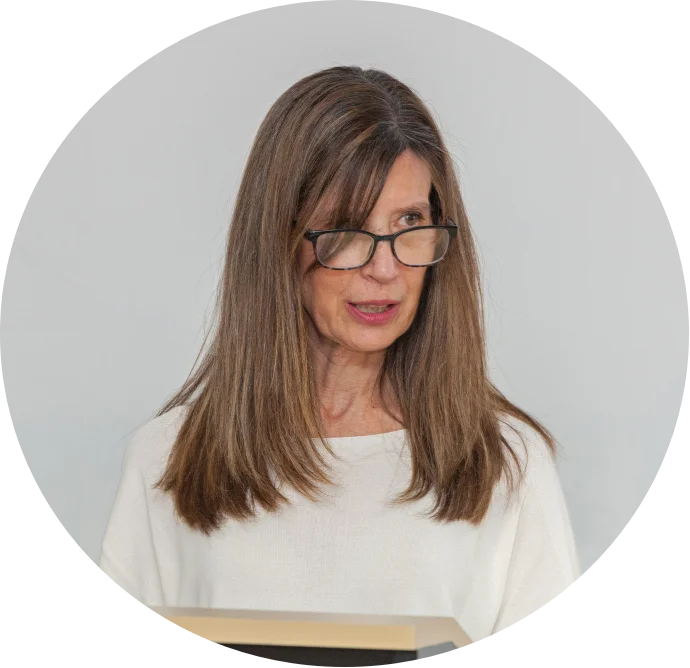
纳瓦拉大学教授María Angélica发表主旨演讲
中国绘画与书法作为西方建筑与艺术的参照体系
玛丽亚·安赫丽卡
我们非常欢迎曹意强教授、孔令伟教授、陈永怡教授、林海钟教授和闵学林教授的到来。
我不禁想起促成“笔墨世界(BIMO A World 2.0)”系列活动的那段幸运机缘。其起点源于两项平行展开的编辑计划:一是华金·洛尔达(Joaquín Lorda)教授著作《贡布里希:一种艺术理论》(Gombrich, una teoría del arte)西班牙文第二版的出版,二是其英文译本《贡布里希:一种艺术理论》(Gombrich, A Theory of Art)的翻译工作。这一过程中,我们与列奥妮·贡布里希(Leonie Gombrich)展开交流,也由此促成了我与曹意强教授的相识。此外,曹教授还邀请我参加其著作《贡布里希之后的全球文化》(Global Culture after Gombrich)在瓦尔堡研究院(Warburg Institute)的发布会。正是在这些交流之中,许多合作的可能性逐渐显现,而“笔墨世界”系列正是一个极佳的起点。同时,我也要感谢莱娅·马诺内列斯(Laia Manonelles)教授与我们分享她的研究成果。
由于时间有限,我仅想简要谈几点关于“中国绘画与书法作为西方建筑与艺术参照体系”的思考。
中国艺术,尤其是绘画与书法,通过将哲学思考与审美观念融入空间组织原则之中,为建筑与设计提供了极具价值的参照范式。中国文化对于自然世界的尊崇,深刻塑造了视觉艺术、园林设计以及建筑空间的构成方式。
山水画与园林艺术之间始终存在着密切的互动关系:画家为园林提供了视觉与审美的范式,而园林则反过来为画家提供了空间结构、构图方式以及象征意涵的灵感来源。正如沈复所言:“于大中见小,于小中见大,于虚中有实,于实中有虚。”中国园林被构想为一种可被亲身体验的环境,在其中,建筑、水体、山石与植物彼此交融,共同调动人的感官,引导观者在行走与沉思中不断发现新的景观层次。
欧洲人并未对这种空间观念无动于衷。十八世纪,法国耶稣会士王致诚(Jean Denis Attiret)曾描述圆明园的景观布局:其自然之态仿佛未经人工雕琢,但实际上却蕴含着如凡尔赛宫般精密的设计。这一描述激发了英国知识界对于中国园林模式的浓厚兴趣。在此之前,威廉·坦普尔爵士(Sir William Temple)、斯蒂芬·斯威策(Stephen Switzer)、亚历山大·蒲柏(Alexander Pope)以及威廉·钱伯斯爵士(Sir William Chambers)等人已经为更加自然化的园林观念奠定了基础。蒲柏甚至明确指出:“一切园林艺术,本质上都是山水画艺术。”
基于这一认识,我希望特别指出五个对于建筑学尤具启发意义的绘画特征。
首先,水墨单色绘画重新定义了人们对于景观的感知方式。它将注意力从色彩转向光影、运动与结构。墨法不仅表现山石的形态,也表现其风化过程与物质属性。道家有言:“五色令人目盲,五味令人口爽。”这恰好揭示了中国艺术对于视觉本质的理解。
其次,横卷形式赋予静态图像以时间维度。手卷由右向左徐徐展开,每一段画面既相对独立,又通过流水、云雾或气氛的连续性彼此关联。这一原则同样体现在中国园林中:白墙围合的空间犹如云雾间隔,游人在园中穿行的过程,正如观看手卷时的视觉移动。这种体验可以被视为一种“中国式建筑漫游”(architectural promenade)。
第三,“气韵”(qi yun)的概念强调艺术对于自然生命力的传达能力。艺术作品应当使观者感受到力量、流动与生机。而在这一体系中,“空白”并非缺失,而是一种重要的结构性元素,它强化并扩展了气韵的表达。
第四,中国园林通过亭台、山石与连廊组织空间。与强调秩序和等级的儒家住宅不同,道家园林更倾向于不对称和流动性的布局。其中,“亭”(ting)作为独立的观景建筑,是一种“借景”的装置。狭窄入口与开阔空间、幽暗室内与明亮庭院、漏窗与局部景观之间形成精心设计的对比,从而构成连续展开的空间体验。
第五,在中国艺术中,建筑往往具有视觉与象征的双重意义。月洞门、船形亭以及仿若碎冰的栏杆等元素,不仅成为园林设计中的经典形式,也不断出现在绘画作品之中,形成稳定而丰富的象征体系。
关于书法,书法研究本身就是一门极具价值的设计学课程。西方文化中并不存在与之完全对应的艺术实践。书法植根于绵延数千年的传统之中,同时又成功地进入了现代化语境。
贡布里希(E. H. Gombrich)在《秩序感》(The Sense of Order)中指出:“中国书法最具特色的贡献,并不在于将文字符号形式化,而在于使其服从于执笔之手自由运动的冲动。”他进一步指出:“中国鉴赏家所欣赏的,正是这种生命力的注入;他们判断一个字的优劣,依据的不是几何法则,而是运动的秩序。”
许多欧洲艺术家都从书法中获得了启发。爱德华多·奇利达(Eduardo Chillida)的作品便与中国书法在表现性与观念层面存在明显共鸣。他的纸上作品常使用中国墨和宣纸,使平面构图呈现出接近雕塑的空间维度。
巴勃罗·帕拉苏埃洛(Pablo Palazuelo)则曾谈到其创作核心中的某种“秘密”,这一秘密与他1953年接触到的一部中国哲学文本有关。该文本促使他形成了一种强调不对称、运动以及螺旋结构的几何观念。
与此同时,在亚洲,书法仍在不断发展,并持续开辟新的现代形态。书法中所蕴含的抽象性、表现力以及运动感,为学生们提供了一个广阔的创造性宇宙。更深入地理解东方艺术,不仅有助于我们更充分地欣赏中国艺术的独特审美品质——正如图书馆展览中所呈现的那样——同时也能够通过艺术这一普遍语言,促进不同文化之间更深层次的交流与理解。
Chinese Painting and Calligraphy as Reference Systems for Western Architecture and Art — Address to the “Brush and Ink: A World” Forum
María Angélica
We are truly delighted to welcome Professor Cao Yiqiang, Professor Kong Lingwei, Chen Yongyi, Professor Lin Haizhong, and Professor Min Xuelin.
I cannot help but recall the fortunate encounter that made possible the BIMO A World 2.0 series. The starting point was two parallel editorial projects: the second Spanish edition of Gombrich, una teoría del arte, by Professor Joaquín Lorda, and its English translation Gombrich, A Theory of Art, which led to conversations with Leonie Gombrich and brought Professor Cao Yiqiang and myself into contact. To this was added Professor Cao’s invitation to attend the presentation of his book Global Culture after Gombrich at the Warburg Institute. From these encounters, numerous possibilities for collaboration have emerged, and the BIMO A World 2.0 series represents an excellent point of departure. I would also like to thank Professor Laia Manonelles for sharing her research with us.
My intervention must necessarily be brief. I would simply like to point out a few ideas concerning Chinese Painting and Calligraphy as Reference Systems for Western Architecture and Art.
Chinese art, particularly painting and calligraphy, offers a valuable model for Architecture and Design by integrating philosophical and aesthetic reflection with principles of spatial organization. Reverence for the natural world has left a profound imprint on the visual arts and on the design of gardens and architectural spaces. There exists a close interweaving between landscape painting and the art of gardening: painters provided visual and aesthetic conventions through which gardens were appreciated, while gardens offered painters spatial, compositional, and symbolic models. Shen Fu stated: “the aim is to see the small in the large and the large in the small, to see the real in the illusory and the illusory in the real.” The Chinese garden was conceived as an experience to be lived, a dynamic environment in which architecture, water, rocks, and vegetation interact, engaging all the senses and encouraging movement and reflection.
Europeans did not remain indifferent to this conception. In the eighteenth century, Jean Denis Attiret described the imperial gardens of Yuan Ming Yuan as arranged with such naturalness that they seemed to escape human intervention, yet behind this appearance lay an elaboration as careful as that of Versailles. His description contributed to the interest aroused by the Chinese landscape model in England, where writers such as Sir William Temple, Stephen Switzer, Alexander Pope, and Sir William Chambers had already prepared the ground for a more natural conception of the garden. Pope declared that “all landscape gardening is landscape painting.”
From this idea, I would like to highlight five aspects of painting especially revealing for architecture:
Monochromatic painting redefined the perception of landscape by shifting attention toward light, shadow, and movement. Ink techniques represent the structure, erosion, and material qualities of rock formations. A Taoist sentence summarizes this: “The five colours dazzle the eye, The five tastes confuse the tongue.”
The horizontal scroll format, unrolled from right to left, introduces a temporal dimension into an apparently static work. Each fragment appears autonomous yet linked through water, mist, or atmospheric continuity. This same principle is reflected in the Chinese garden, where cellular spaces delimited by white walls evoke mist, and the visitor experiences a three-dimensional journey comparable to the visual movement along a painted scroll—a Chinese architectural promenade.
The concept of vital spirit (qi yun) refers to the capacity to evoke a direct experience of nature, transmitting force, dynamism, and vitality. Emptiness becomes a key structural element that enhances the expression of qi yun.
Gardens are articulated through pavilions, rocks, and interconnected galleries. In contrast to the Confucian house—characterized by symmetry and hierarchical order— the Taoist garden is defined by an asymmetrical and fluid arrangement. The t’ing, or isolated pavilion, constitutes the foundational element as a device for contemplation that “borrows” the landscape. Carefully studied contrasts emerge: narrow entrances opening onto broad areas, dark rooms leading into luminous zones, latticework offering partial views, generating a sequential spatial experience.
Architecture often functions as a visual and symbolic metaphor. Moon gates, pavilions resembling boats, and balustrades evoking broken ice became established conventions both in garden design and in painting.
Regarding Calligraphy:
The study of calligraphy reveals itself as a valuable lesson in design. Western culture possesses no exact equivalent to this practice, deeply rooted in a millenary tradition that has succeeded in projecting itself into contemporaneity. E. H. Gombrich observed in The Sense of Order that “the most characteristic contribution of Chinese calligraphy does not so much formalize the sign as make it yield to the free impulses of the hand wielding the brush,” and that “it is this infusion of life which is appreciated by the Chinese connoisseur, who makes a sign respond to the order of movement rather than to the laws of geometry.”
Numerous European artists found inspiration in this art. Eduardo Chillida’s work reveals significant affinities with Chinese calligraphy through its expressive and conceptual dimension. His graphic works incorporate Chinese ink on rice paper, creating compositions that acquire a spatial dimension close to sculpture. Pablo Palazuelo referred to a “secret” at the core of his work, linked to a Chinese philosophical text he encountered in 1953, which inspired a geometric vision emphasizing asymmetry, movement, and dynamic spiral structures.
In Asia, calligraphy has continued to evolve toward new forms of modernity. The exploration of abstraction, expressive potential, and movement inherent in this art can open for students an immense universe of creative possibilities. A deeper knowledge of Eastern artistic expressions allows us to appreciate more fully the aesthetic qualities of Chinese art, such as those showcased in the exhibition displayed in our library, while fostering a deeper connection between cultures through the universal language of art.
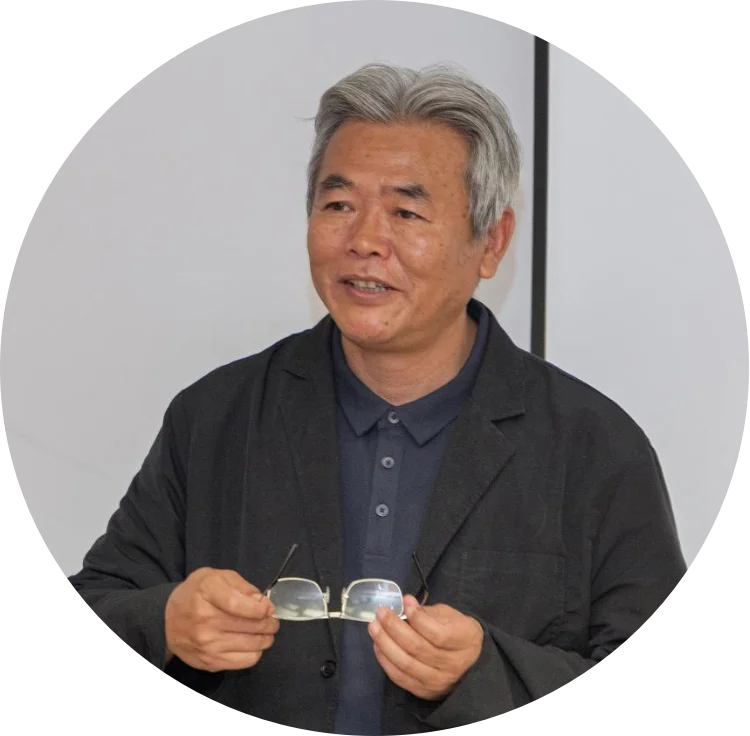
中国美术学院艺术管理与教育学院院长、教授孔令伟发表主旨演讲
中国画“笔法”的起源
孔令伟
在所有绘画手段中,线的运用最为自由灵活,变化也最为丰富。工具材料不同,线的形态、质感也会出现差异。在甲骨、金属、石材等硬质材料上刻划,其线条锐利、明晰,所表达的图像都有着清晰的边界;文人画家喜欢用软毛笔在纸面上作画,其线条又饶有书法之趣味,点挑勾剔、提顿蹲折,充满了细节。这些变化无法一一描述,有多少种作画材料,就会有多少种线条形态。
甲骨文字、玉器纹样孕育了中国线性艺术的古老传统。甲骨文字以阴刻线条为主,玉器纹样则包含阴刻和阳刻两种类型。凸起的、减地阳刻线条制作复杂,趣味也更为精致。但不管阳刻还是阴刻,其观看主体都是线条,要通过线条来辨识物象,这是甲骨和玉器的经典“语言”。
来自硬质材料的“铭刻”风格一直被视为中国艺术史的正统——即所谓的“古意”。后世的艺术家也都在有意无意中信守着这一准则。战国帛画、东汉晚期的画像石(如临沂北寨汉墓)、南北朝时期的石棺线刻都得益于这一传统,它们给人的视觉感受即所谓“清劲”、“细劲”、“劲利如锥刀焉”、“紧劲连绵、超乎循环”,而这也恰恰就是画史中记载的是顾恺之、陆探微的笔法。
除了甲骨和玉器,青铜礼器上的金属熔铸、刻划痕迹也同样具有重要。这一类线条锐利、凝重、坚实,气息朴厚,具有强烈的情感表现力,构成了甲骨、玉器纹样之外的全新趣味。
秦汉以降,铁器普及,石刻艺术数量激增。书法艺术在碑碣、摩崖、墓志等刻石材料中达到了新的高峰。与此同时,绘画艺术的面貌也日趋复杂多样。宫殿建筑壁画、地下墓葬绘画、漆、木器绘画、画像石、画像砖、帛画等都大量使用线条承载物象。其中以壁画成就最为突出,从出土的汉代墓室壁画材料来看,其线条特征是疏放豪纵,与紧劲连绵的古玉线条和缣帛绘画恰好形成了一个反差。
可见,中国画中的“笔法”是一种在硬质材料,如甲骨刻划、玉器雕琢、青铜器熔铸与凿刻过程中培养出的趣味,之后又向山崖、岩石、墙壁,以及纸绢等软质材料转移,进而形成了丰富多彩的技术手段和品评标准。
从玉器纹样中,我们可以确认精致的风格,从青铜器铭文中,我们可以确认雄健的风格,这或许是中国画笔法最古老起源。最初,技术的发明离不开物质载体,但风格与趣味一旦形成,一切都在朝相反的方向发展。我们在石头上看到了丝绸般柔顺的质感,又在纸面上感受到岩石、金属的品质。中国画的“笔法”就是在这样一个自由空间中反复跳跃,成就了中国艺术独特的传统。
The Origins of “BIFA” in Chinese Painting
Kong Lingwei
Among all pictorial means, the use of line is the most flexible and variable, capable of the richest transformations. Differences in tools and materials inevitably produce variations in the form and texture of lines. When incised on hard materials such as oracle bones, metal, or stone, lines appear sharp and clearly defined, and the images they articulate possess distinct boundaries. By contrast, when literati painters employ a soft brush on paper, the resulting lines carry a calligraphic sensibility—replete with dots, flicks, hooks, strokes, lifts, pauses, presses, and turns—rich in nuance and detail. These variations resist exhaustive description: as many kinds of materials as there are, so too are there corresponding forms of line.
Oracle bone inscriptions and jade ornamentation nurtured the ancient tradition of Chinese linear art. Oracle bone script primarily employs incised (intaglio) lines, while jade patterns include both intaglio and relief (raised) carving. Relief lines, produced by carving away the surrounding ground, are technically more complex and often display greater refinement. Yet whether in relief or intaglio, line remains the principal visual agent; it is through line that forms are recognized and articulated. This constitutes the classical “language” of oracle bones and jade artifacts.
The “inscriptive” style derived from hard materials has long been regarded as an orthodox current in the history of Chinese art—what is often termed gu yi (archaic spirit). Later artists, whether consciously or not, continued to adhere to this principle. The silk paintings of the Warring States period, the late Eastern Han stone reliefs (such as those from the Beizhai tomb in Linyi), and the line engravings on stone sarcophagi from the Northern and Southern dynasties all benefited from this tradition. Their visual character has been described as “clear and tensile,” “fine and forceful,” “keen as if incised by a knife,” and “tight and continuous, surpassing cyclical flow”—qualities that art-historical records likewise attribute to the brush methods of Gu Kaizhi and Lu Tanwei.
Beyond oracle bones and jade, the casting and incised traces on bronze ritual vessels are equally significant. The lines produced through metal casting and engraving are sharp, weighty, and solid, imbued with a robust and archaic vigor and a strong expressive power. They constitute a distinct aesthetic sensibility alongside that of oracle bone inscriptions and jade ornamentation.
Following the Qin and Han periods, the widespread adoption of iron tools led to a dramatic increase in stone carving. Calligraphy attained new heights in inscriptions on steles, cliff engravings, and funerary epitaphs. Meanwhile, painting developed an increasingly complex and diversified visual character. Palace murals, tomb paintings, lacquerware and woodcraft decorations, stone and brick relief images, and silk paintings all relied extensively on lines to articulate form.
Among these, mural painting achieved particularly notable accomplishments. Judging from excavated Han-dynasty tomb murals, their linear quality is marked by looseness and bold freedom—forming a striking contrast to the tightly tensile lines of ancient jade carving and silk painting traditions.
It can thus be seen that the “brush method” (bifa) in Chinese painting derives from aesthetic sensibilities cultivated through work on hard materials—such as the incising of oracle bones, the carving of jade, and the casting and chiseling of bronze vessels. These sensibilities were subsequently transferred to cliffs, rocks, and walls, and eventually to softer supports such as paper and silk, giving rise to a wide range of technical practices and evaluative criteria.
From jade ornamentation, we may discern a refined and intricate mode; from bronze inscriptions, a robust and vigorous one. These likely constitute the most ancient origins of the brush method in Chinese painting. At the outset, technical invention was inseparable from its material substrate. Yet once style and aesthetic disposition were formed, development often proceeded in the opposite direction: on stone, one perceives a texture as supple as silk; on paper, one senses the qualities of rock and metal. It is precisely through such continual shifts across material and sensibility that Chinese painting’s “brush method” moves freely, forging the distinctive tradition of Chinese art.
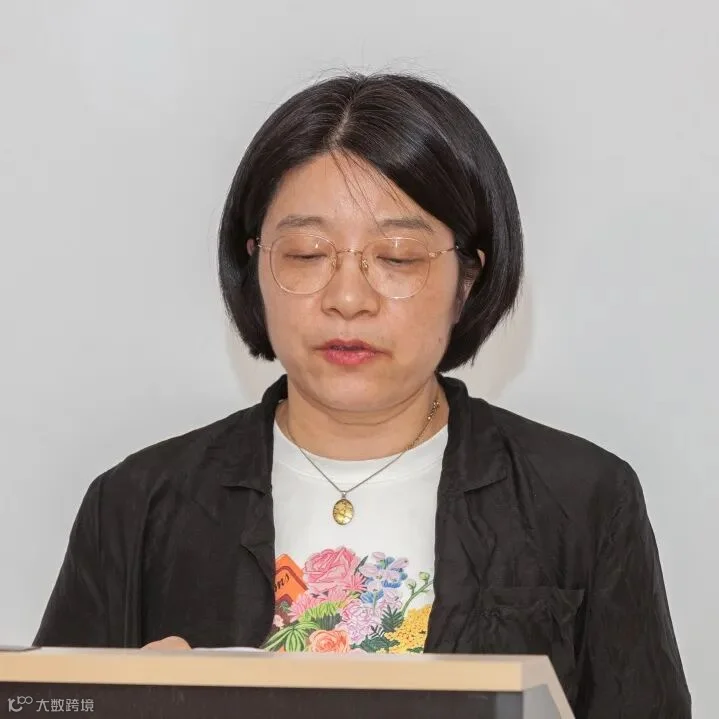
中国美术学院艺术学学科建设委员会秘书长、潘天寿纪念馆馆长、教授陈永怡发表主旨演讲
骨架、骨力、骨气
——吴永良的意笔线描
陈永怡
尊敬的各位教授、同学们,我将结合参展画家吴永良先生的作品,阐述现当代中国人物画的传承与突破。
中国画用笔既是应物象形的手段,也是立骨存质的方法。线条的轻重缓急、粗细转折,与书法变化大体同步。中唐以后,水墨晕章大兴,用墨与用笔齐头并进,使笔墨的变化性、丰富性和审美性大大增强。至今,植根传统的画家们,仍将用笔写形作为中国画最核心的特质加以坚守。
吴永良1957年至1962年就读于浙江美术学院(现为中国美术学院)中国画系,深受潘天寿先生教学体系的熏陶。新中国成立后,中国画教学曾以西方写实素描为基础。而潘天寿主张立足传统,发扬以线写形的特质,适度吸收西画造型方法。笔墨是一个与工具、技法、形式和意境乃至画家学养人格密切相关的系统,潘天寿等试图建立的正是以笔墨为核心的教学体系。从吴永良学生时代的作品看,当时教学极重传统笔墨的临摹与化用。这件《焚香告天·临伯年笔》便是一丝不苟的对临作业,旨在体会原作的笔墨特征。那些六十多年前的写生作业,运用花卉画笔法,以黑白虚实替代明暗,靠线条和水墨晕染表现人物神态、结构与衣物,这正是浙派人物画最典型的画法。
吴永良求学时便对白描情有独钟,李公麟、陈老莲、任熊的线描都是他反复摹习的对象。他领悟到线条不仅能描形,更能传达个性、神态、骨气与境界。他的毕业创作《鲁迅肖像》纯以白描出之,线条劲健而疏密有致,两株枣树与鲁迅的身形合一,脚下小草簌簌有声,象征那个动荡彷徨的年代。另一件《水乡集市》为群像作品,借线条的穿插组织景物与人物动态,略施淡彩,尽显功力。
吴永良留校任教后,率先发现从专业素描过渡到水墨写意人物存在技法缺环。虽然中国画专业素描已由明暗转向结构,但铅笔或炭笔与毛笔之间仍难贯通。为此,他教授意笔线描课程,要求学生直接以笔墨纸砚,用简练的写意方式勾勒对象,力求通过严格的线描写生,在提升造型能力的同时,夯实线条组织与运笔基础,实现向水墨写意的顺利过渡。意笔线描融入了速写的快速捉形与书法的运笔动势,本质上是毛笔速写。它不只讲究书写性,更注重线条组织的空间性及其与书法结体间架的共通。吴永良每以不同笔墨表现不同对象:中锋圆中带方写冬衣之厚实,方笔出之显青年之刚毅,渴墨颤笔状粗布之质朴。无深厚书法功底,断不能有如此丰富多变的笔墨效果。
他毕生重视书法,既为强画之骨,也为求题款与画面浑然天成。他认为画家书法更重结体变化和运笔节奏,因而更具个性与画意,便于与笔墨协调。如他的《神畅》,画中铁拐李倚葫芦而眠,上部“神畅”二字的结体完全依从构图需要,“神”的末竖如金刚杵直下,一气呵成,令观者酣畅淋漓。画中铁拐李为道教八仙之首,蓬头跛足,持铁杖,负药葫芦,以医术济世,正与画面超逸之气相合。
中国画用色循“随类赋彩”,不求外光下的色彩变幻,却在搭配中追求整体格调与境界。吴永良晚年旅居新加坡,若仅以惯熟的水墨写意表现南洋,难免有形与质的隔阂。于是他提炼色彩印象,充分发挥留白与虚实相生的画理。如《伫》,前景以水墨为主,背景仅以蓝黄轻染烘托主题;至《感恩盛典》等巨制,则直接以色为墨,用跌宕跳荡的色笔写身体衣纹,令南洋风情浓郁响亮。设色时,他灵活取用花卉画的点厾法、山水画的点苔皴法和书法用笔八法,从而保证色笔的骨力与笔法。唯其守住艳而不俗、亮而不躁的高格调,方能在拓宽题材的同时,保持中国画的笔墨韵味。
吴永良说:“意笔线描如一面明镜,最能映照出人们表面的形态容貌和内在的性格心灵。”它以书入画,本于“人书统一”的审美规范。他笃信“画如其人”,并提炼出意笔线描的“三骨”:画面的骨架、笔墨的骨力、作品的骨气。他创作了大量以历史忠烈、时代英雄和艺术大师为对象的人物画,充分发挥线描的写意性,将对象人格与自我精神追求合一,写人亦即写心。他是一位真诚坦荡的艺术家,我们可以从他的笔墨中看到他的全人格与真精神。
意笔线描既是一门基础课程,又是一种创作路径。它体现着当代中国画家如何继承传统笔墨线条,并使之适应现代中国画的表现需求。吴永良先生的作品便是极好的范例。
今天虽然只带来了他的一幅意笔线描作品,但我们同样能从其他参展艺术家的创作中感受到这一精神内核。
Structure, Force, and Spirit of the Line: Wu Yongliang’s Freehand Line Drawing
Chen Yongyi
Dear professors and fellow students, it's my great pleasure to share my thoughts at the University of Navarra. Combining the works of exhibited artist Wu Yongliang, I will elaborate on the inheritance and innovation of modern Chinese figure painting.
In Chinese painting, brushwork serves as a means of rendering form and establishing structural integrity. Variations in the pressure, tempo, thickness, and turning of lines correspond to transformations in calligraphy. After the mid-Tang dynasty, ink and brushwork developed in tandem, greatly enhancing the variability and aesthetic resonance of brush-and-ink. To this day, artists rooted in tradition uphold brush-based figuration as the core of Chinese painting.
Wu Yongliang studied at the China Academy of Art from 1957 to 1962, deeply influenced by Pan Tianshou's pedagogical system. After 1949, Chinese painting teaching was largely based on Western realist sketching. Pan, however, advocated grounding practice in tradition, emphasizing rendering form through line while selectively incorporating Western structural methods. The resulting work uses traditional brush lines without reliance on light and shade, deriving its techniques from literati painting.
From Wu's student works, it's evident that instruction emphasized copying and assimilating traditional techniques. This painting was a copying assignment done with meticulous fidelity to internalize brush-and-ink characteristics. These life-drawing exercises from over sixty years ago employed flower-painting brush methods, handling black-white contrast and solid-void interplay, reducing chiaroscuro while articulating expression, structure, and drapery through line and ink wash.
One of his graduation works, Portrait of Lu Xun, is rendered in pure line drawing, with firm, rhythmic lines. The grasses at Lu Xun's feet undulate as if rustling, evoking the era's turbulence and helplessness.
Wu later joined the faculty and identified a gap in transitioning from pencil or charcoal sketching to brush-and-ink figure painting.He therefore taught the course Freehand Line Drawing, requiring students to work with brush, ink, and xuan paper, using concise strokes to capture the essential character of their subjects.The aim was to strengthen modeling ability while building a foundation in line organization and brush movement, enabling a smooth transition to expressive ink painting.
Freehand line drawing combines calligraphic line with the observational methods of sketching. It is, in essence, brush-based sketching, incorporating Chinese brushwork into structural sketching. Beyond calligraphic brush movement, it demands attention to the spatial organization of lines and their shared principles with calligraphic composition.
Each subject receives a distinct brush-and-ink treatment: centered brush with roundness and angularity for winter garments; angular strokes for a young man's features; dry, trembling brush for coarse cloth. Without profound calligraphy, such varied effects are impossible.
Wu devoted himself to calligraphy to strengthen the structural "bone" of his paintings and to integrate inscription and image. Painters' calligraphy emphasizes structural variation and rhythmic brush movement, resulting in stronger individuality and pictorial sensibility that harmonizes with the overall effect.
In his 1989 work, Iron-Crutch Li reclines against his gourd while two large characters dominate the upper section. Their structure responds entirely to compositional needs; the final vertical stroke descends like a vajra pestle in a single movement, producing a sense of vigorous release. Iron-Crutch Li, foremost among the Eight Immortals, is depicted with unkempt hair, a limp, iron staff, and medicine gourd, renowned for healing.
When using color, Chinese painting follows the principle of assigning color according to category, seeking correspondence with objects rather than shifting light effects. Great attention is paid to chromatic harmony and overall aesthetic realm. Wu, translating his later years' Singapore experiences into brush and ink, recognized that familiar ink-wash freehand alone would create a discrepancy with Southeast Asian content. He therefore distilled chromatic impressions, activating blank space and solid-void interplay. In one painting, the foreground figure is mainly ink while the background is modulated with blue and yellow washes. In his grand ceremonial work, he used color as ink with leaping, rhythmic strokes, intensifying regional atmosphere. When applying color, he drew upon dotting techniques of flower painting, moss-dot and texture-stroke methods of landscape painting, and the Eight Methods of calligraphic brushwork to ensure structural force. Only with such elevated taste could he broaden subject matter while preserving brush-and-ink resonance.
Wu believed freehand line drawing is a mirror reflecting both outward appearance and inner character. Integrating calligraphy into painting, it adheres to the unity of person and writing. He spoke of "three bones": the structural framework, the strength of brush and ink, and the moral spirit of the work. His thematic paintings of martyrs, heroes, and masters activate the expressive potential of freehand line drawing, uniting the subjects' moral qualities with his own spiritual aspirations.
Freehand line drawing is both a course and a creative approach, embodying how contemporary Chinese painters inherit traditional techniques while adapting them to modern expressive needs. Mr. Wu's works are an excellent example. Though we have brought only one of his freehand line drawing works today, this essence can equally be perceived through pieces by other participating artists. Thank you.
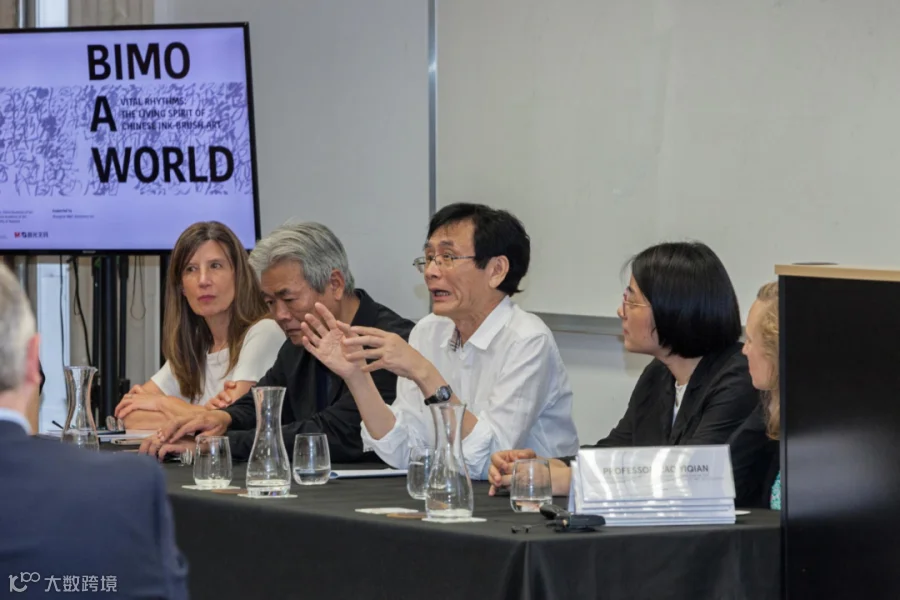
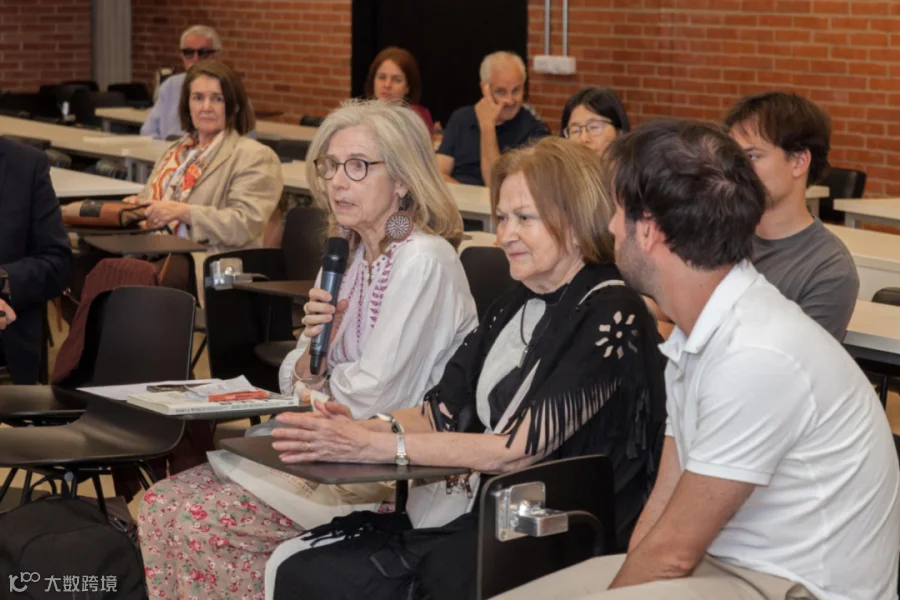
“气韵生动 ——中国水墨画的生命精神”主题论坛与谈现场
合作提案
Collaborate Proposal
活动期间,项目团队先后走访中国驻西班牙使馆、马德里中国文化中心,介绍中国美术学院学科特色、教学理念与创作实践。中国驻西班牙使馆公使衔参赞龚佳佳表示,期待校方将更多优质艺术项目带到西班牙。马德里中国文化中心主任杨长青表示,愿双方加强合作,持续深化中西文化艺术交流,开展更多中国画课程推广。
During the event, the project team visited the Chinese Embassy in Spain and the China Cultural Center in Madrid, where they presented the China Academy of Art's academic strengths, educational philosophy, and creative practices. Gong Jiajia, Minister Counselor of the Chinese Embassy in Spain, expressed the hope that the Academy would bring more high-quality art programs to Spain. Yang Changqing, Director of the China Cultural Center in Madrid, voiced a commitment to further deepening cultural and artistic exchanges between China and Spain and to expanding the offering of Chinese painting courses.
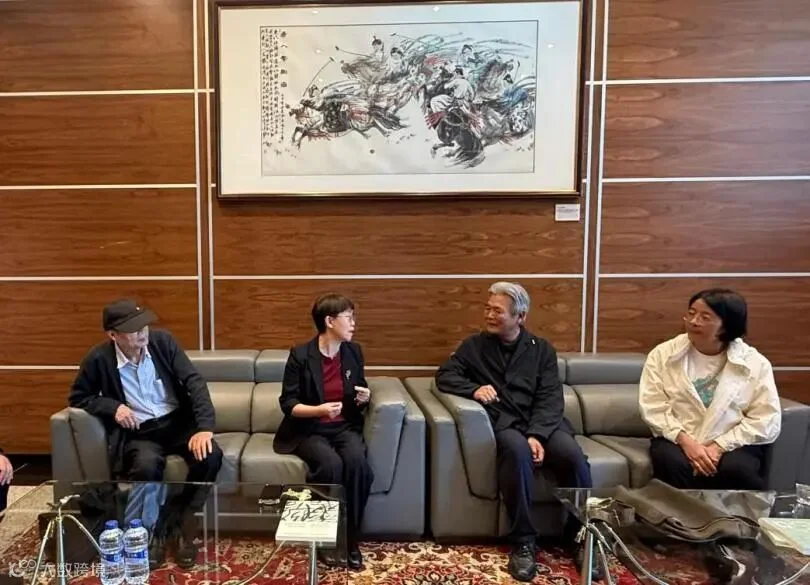
中国驻西班牙使馆会谈现场
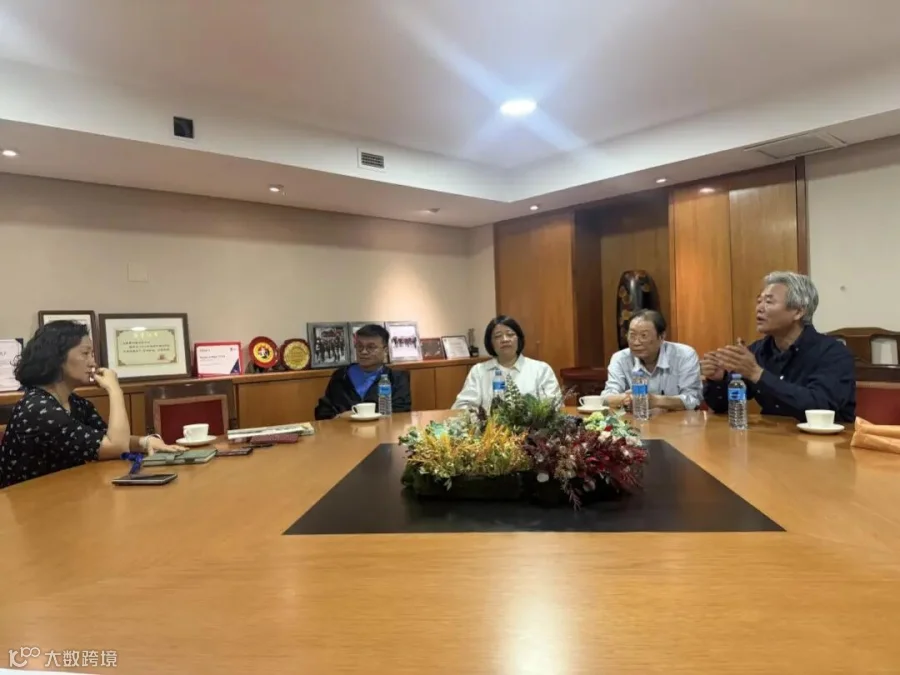
马德里中国文化中心会谈现场
项目团队与纳瓦拉大学建筑与设计学院院长卡洛斯·纳亚、纳瓦拉大学博物馆馆长海梅·加西亚及相关代表等就线上课程(工作坊)合作、人才以及交换生培养、“中国艺术周”等项目合作等展开深入探讨并达成合作意向。
The project team also held in-depth discussions with Carlos Naya Villaverde, Dean of the School of Architecture and Design at the University of Navarra, Jaime García del Barrio, Director of the University of Navarra Museum, and other representatives. Talks covered cooperation on online courses and workshops, talent development and student exchange programs, as well as the "China Art Week" initiative, with both sides reaching a preliminary agreement on collaboration.
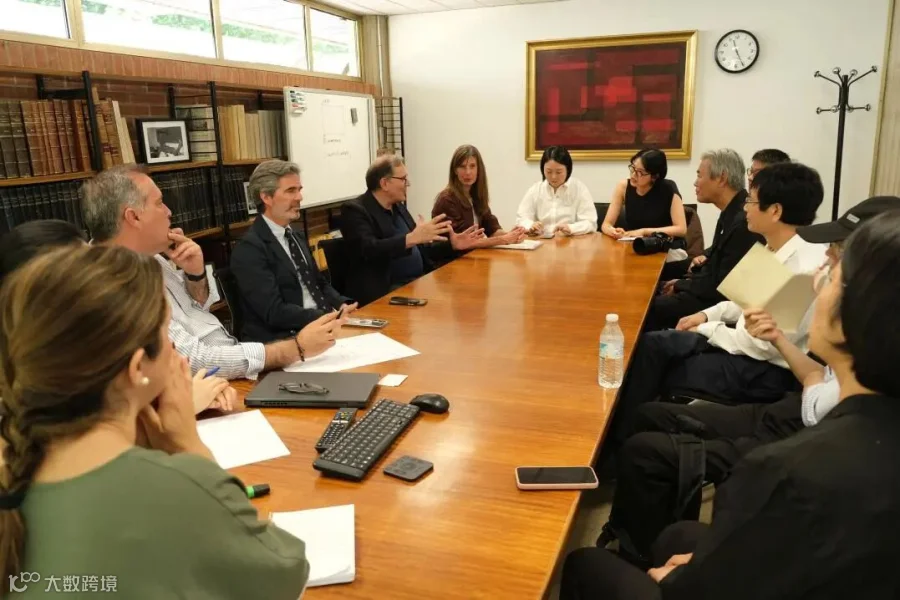
纳瓦拉大学合作洽谈现场
工作坊与文化传播
Workshop & Cultural Transmission
5月27日,项目团队为纳瓦拉大学建筑与设计学生开展专题工作坊,现场约50余名学生、教师参与,气氛热烈。中国美术学院教授林海钟通过山石笔法与画面构图,表现了笔墨中的“以小见大”“以大见小”巧思。中国美术学院教授闵学林则通过书法以及兰花、竹叶小品的现场示范,在线条的提按顿挫与墨色的浓淡枯湿之间,将笔墨的生动气韵与蓬勃生命力充分展现。
On May 27, the project team held a special workshop for students in architecture and design at the University of Navarra, drawing around 50 students and faculty members to a lively and engaging session. Professor Lin Haizhong demonstrated the interplay of BIMO and compositional structure in landscape painting, illustrating the subtle interplay of "seeing the large within the small" and "seeing the small within the large" through his rendering of rocks and mountains. Professor Min Xuelin, through live demonstrations of calligraphy and sketches of orchids and bamboo leaves, brought the vivid rhythm and vibrant vitality of BIMO to life with masterful control of lifting, pressing, pausing, and turning strokes, as well as the interplay of ink density, wetness, and dryness.
BIMO工作坊现场(点击播放更多)
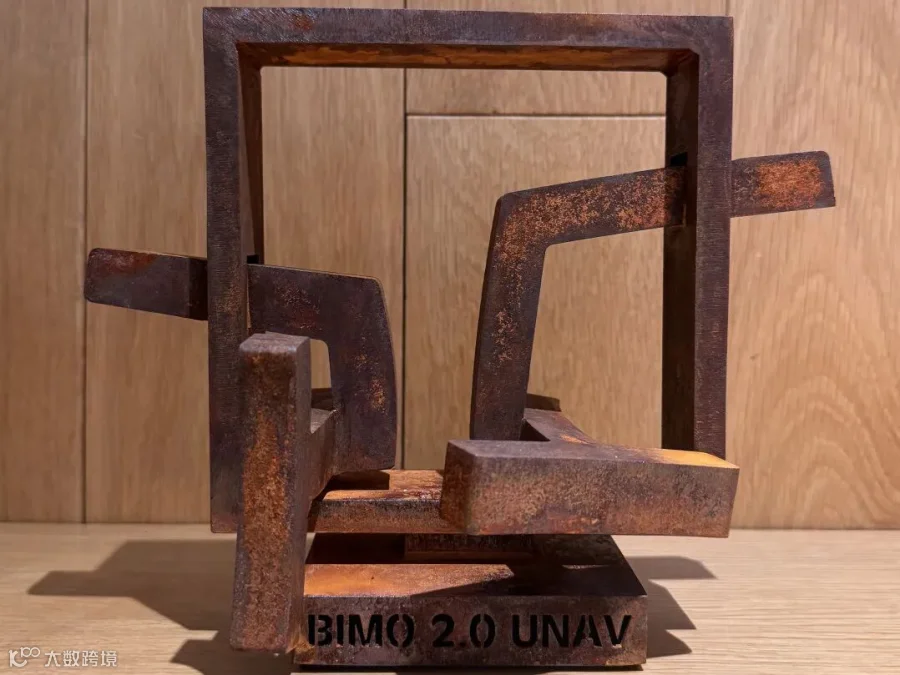
西班牙纳瓦拉雕塑艺术家福斯蒂诺·艾兹科尔贝为此次“笔墨世界”文化交流项目捐献定制雕塑作品
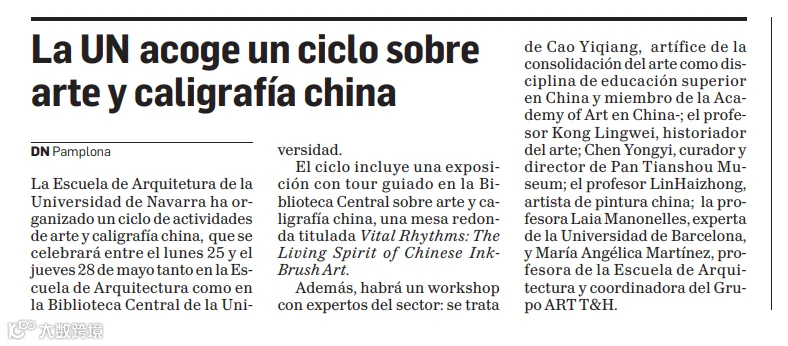
西班牙当地纸媒DIARIO DE NAVARRA关于本次活动的报道
新华社“新华欧洲”报道:https://h.xinhuaxmt.com/vh512/share/13137913?docid=13137913&newstype=1001&d=13526fe&channel=weixin&time=1780887762273
本次“笔墨世界BIMO A World 2.0”文化项目,是中国美术学院助力中华优秀传统文化走向世界、深化中西文明交流互鉴的一次具体实践。活动项目以多元形式搭建起艺术沟通的桥梁,不仅充分展现中国传统书画的独特魅力,也持续深化了中欧艺术领域的对话交流,拓展了校际合作与学术往来的空间。
The "BIMO World 2.0" cultural project stands as a concrete effort by the Academy to bring China's fine traditional culture to the global stage and deepen mutual learning between Chinese and Western civilizations. Through a diverse array of activities, the project built a bridge for artistic dialogue, showcasing the distinctive allure of traditional Chinese painting and calligraphy, while further deepening conversations between Chinese and European art communities and opening new avenues for institutional collaboration and academic exchange.
来 源 |艺术与管理教育学院
文 字 |邱 爽 谢 媛
编 辑 |李思言 顾旖恒
责 编 |童戈辛 冯 逾
审 核 |徐 元 孔令伟
中国美术学院官方微信号
投稿邮箱:caanews@caa.edu.cn
“国美学术通讯”官方微信号
投稿邮箱:caarmt@caa.edu.cn
出品:
中国美术学院党委宣传部
PUBLICITY OFFICE OF THE CPC CAA COMMITTEE
CAA融媒体中心
CAA MEDIA CONVERGENCE CENTER