


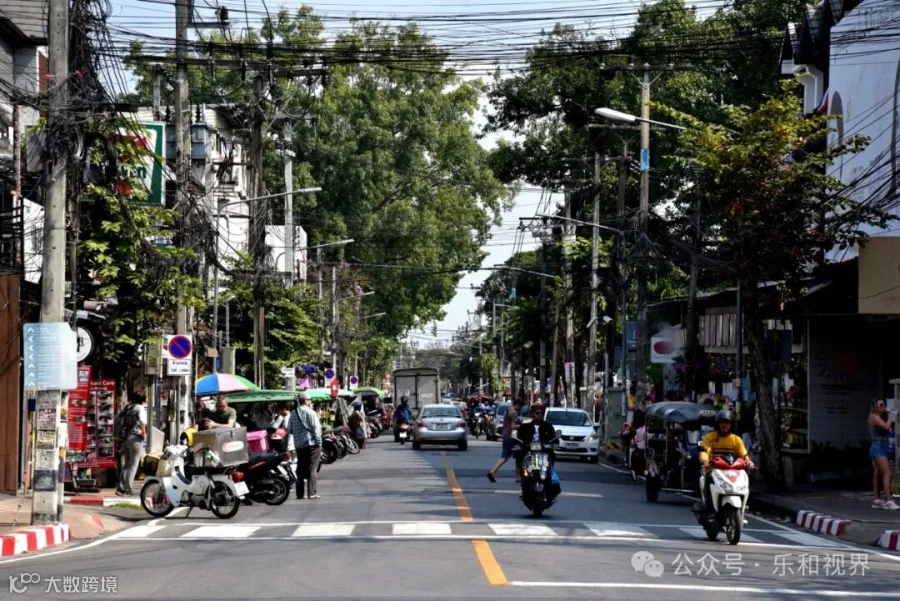
Wat Phra Singh is located in the western part of the old city centre of Chiang Mai, which is contained within the city walls and moat. Wat Pra Singh is situated at the end of the main street(Rachadamnoen road)of Chiang Mai. The road runs east from the temple, via Tapae Gate, to the Ping River.
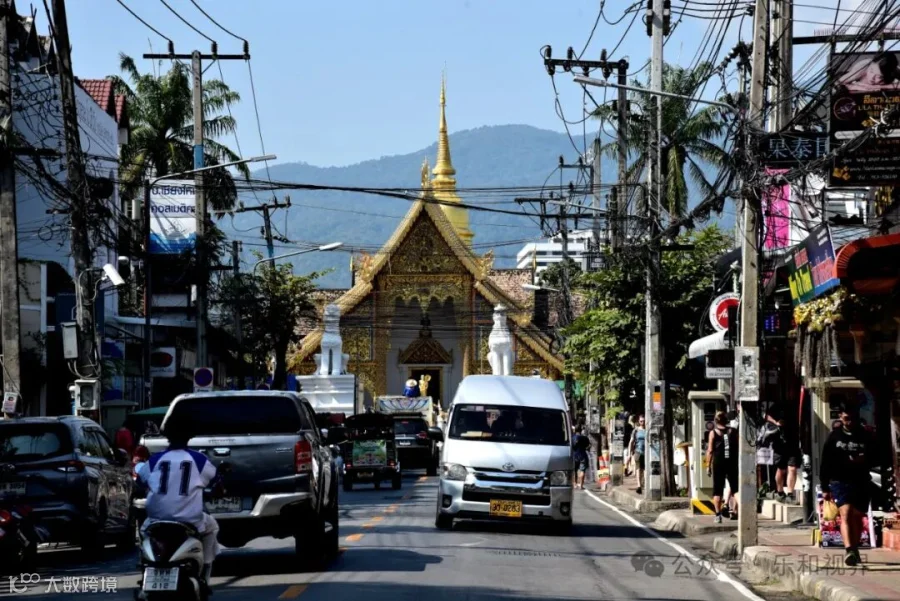
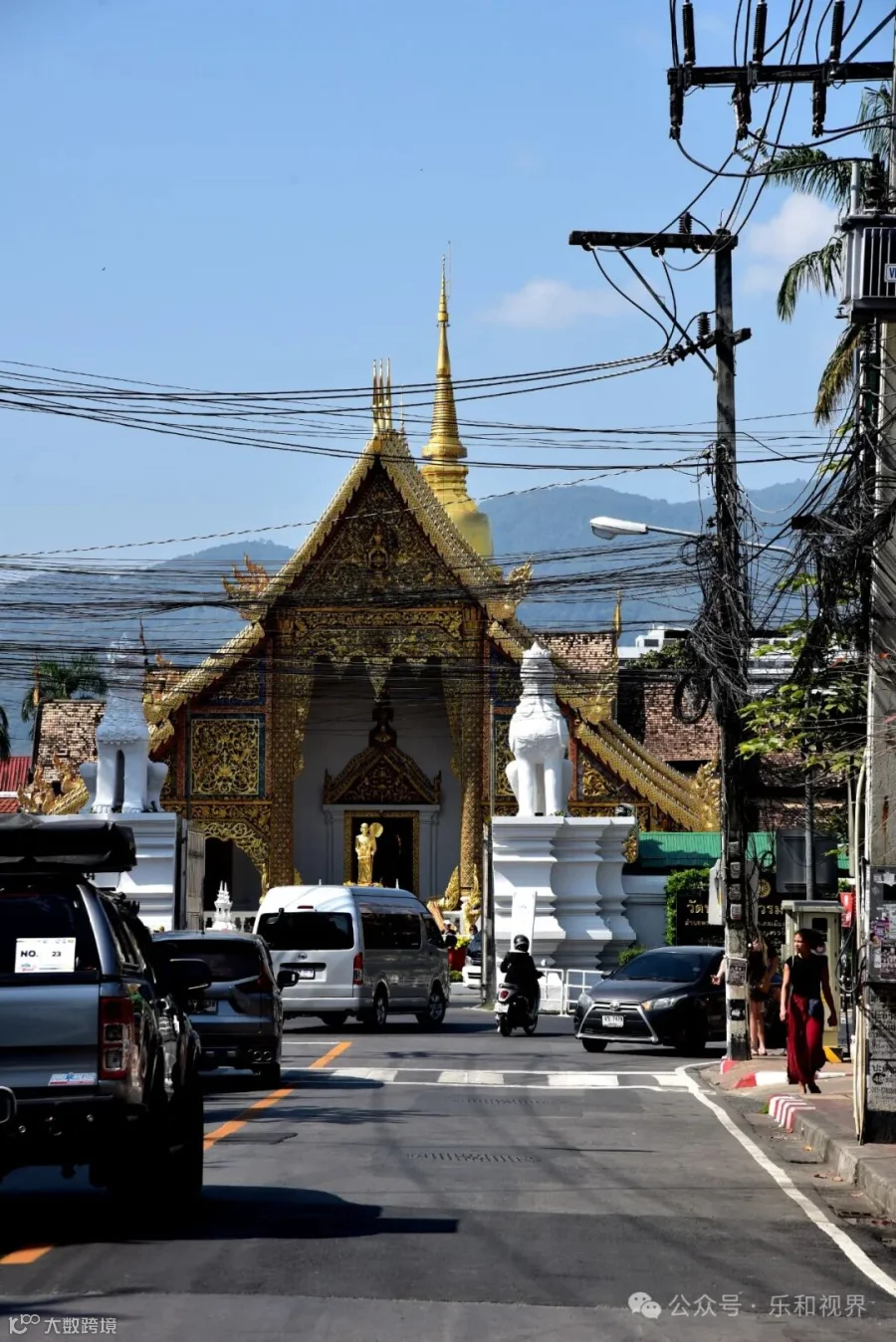
Phra Singh is an abbreviated form of Phra-Put-Tha-Shi-Hing and does not refer to the word Singh("lion"). The main entrance is guarded by Singhs(lions).
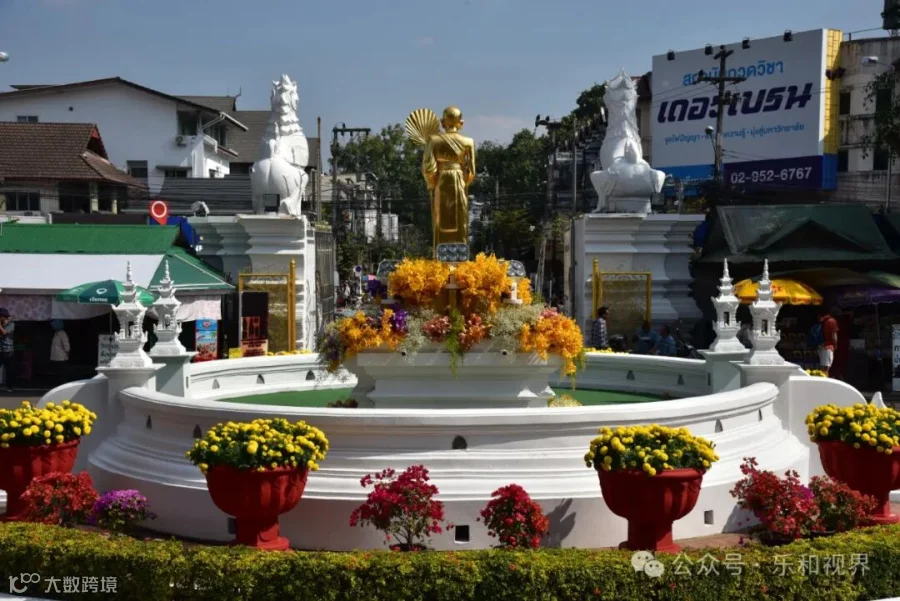
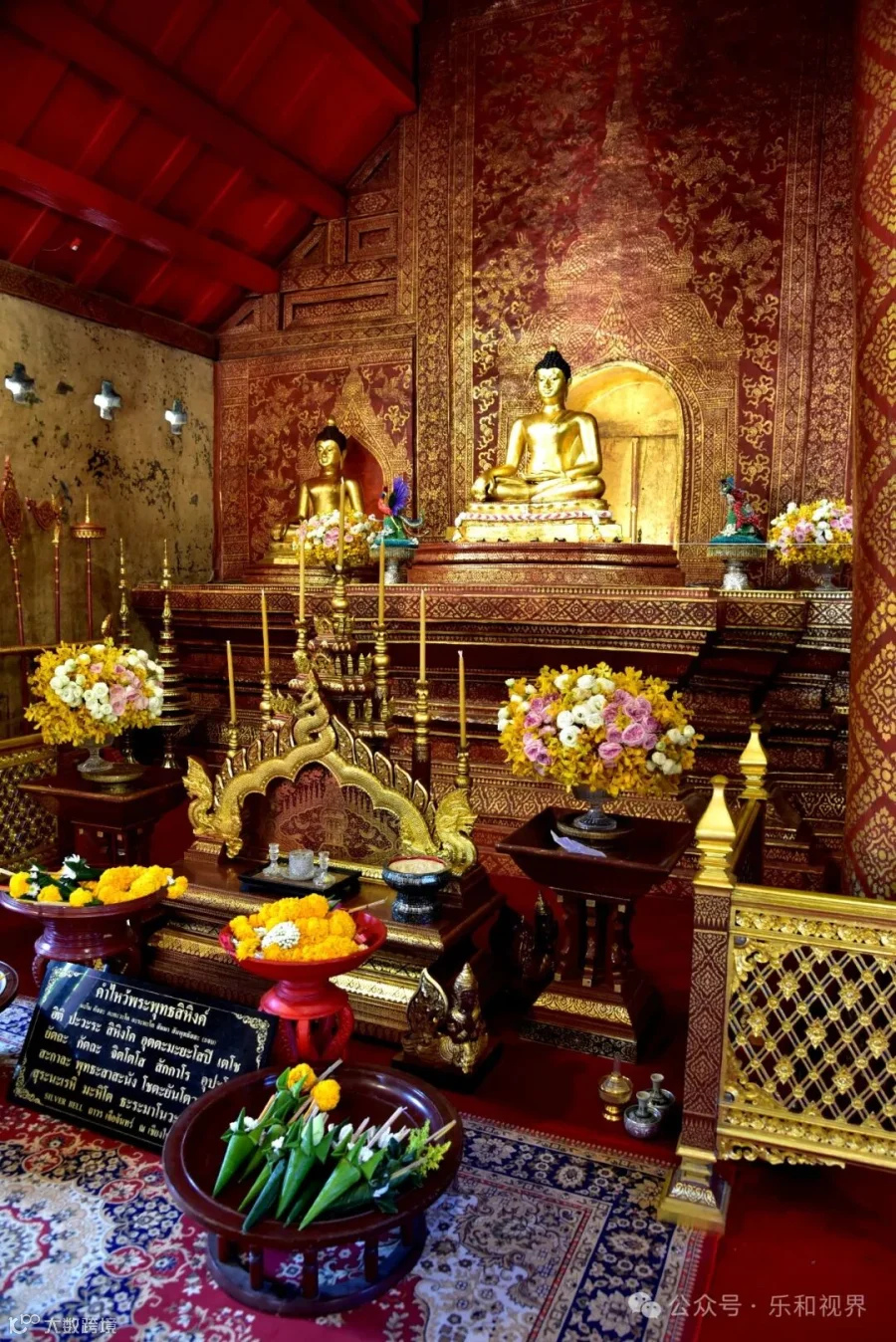
The temple houses an important buddha statue: the Phra Buddha Sihing which gives the temple its name. The origins of this statue are unknown but, according to legend, it was based on the lion of Shakya, a statue since lost which used to be housed in the Mahabodhi Temple of Bodh Gaya(India). The Phra Buddha Sihing statue is supposed to have been brought, via Ceylon(present day Sri Lanka), to Ligor(present day Nakhon Si Thammarat)and, from there, via Ayutthaya, to Chiang Mai.
Constructionon Wat Phra Singh began in 1345 when King Phayu, the fifth king of the Mangrai dynasty, who ruled the Lanna kingdom from 1336 to 1355, had a chedi built to house the ashes of his father King Kham Fu.
A Viharn and several other buildings were added a few years later and the resulting complex was named Wat Lichiang Phra. When, in 1367, the statue of Phra Buddha Singh was brought to the temple, the temple complex received its present name. During restoration works in 1925, three funerary urns were discovered inside a small chedi. It was assumed that these contained royal ashes. The urns have since been lost.
From 1578 to 1774 the Burmese ruled Lanna and in this period the temple was abandoned and came under serious disrepair. It was only when King Kawila assumed the throne as King of Chiang Mai in 1782, that the temple was restored. King Kawila had the ubosot built and the chedi enlarged. Later successors restored the Viharn Lai Kham and the elegant Ho Trai(temple library).
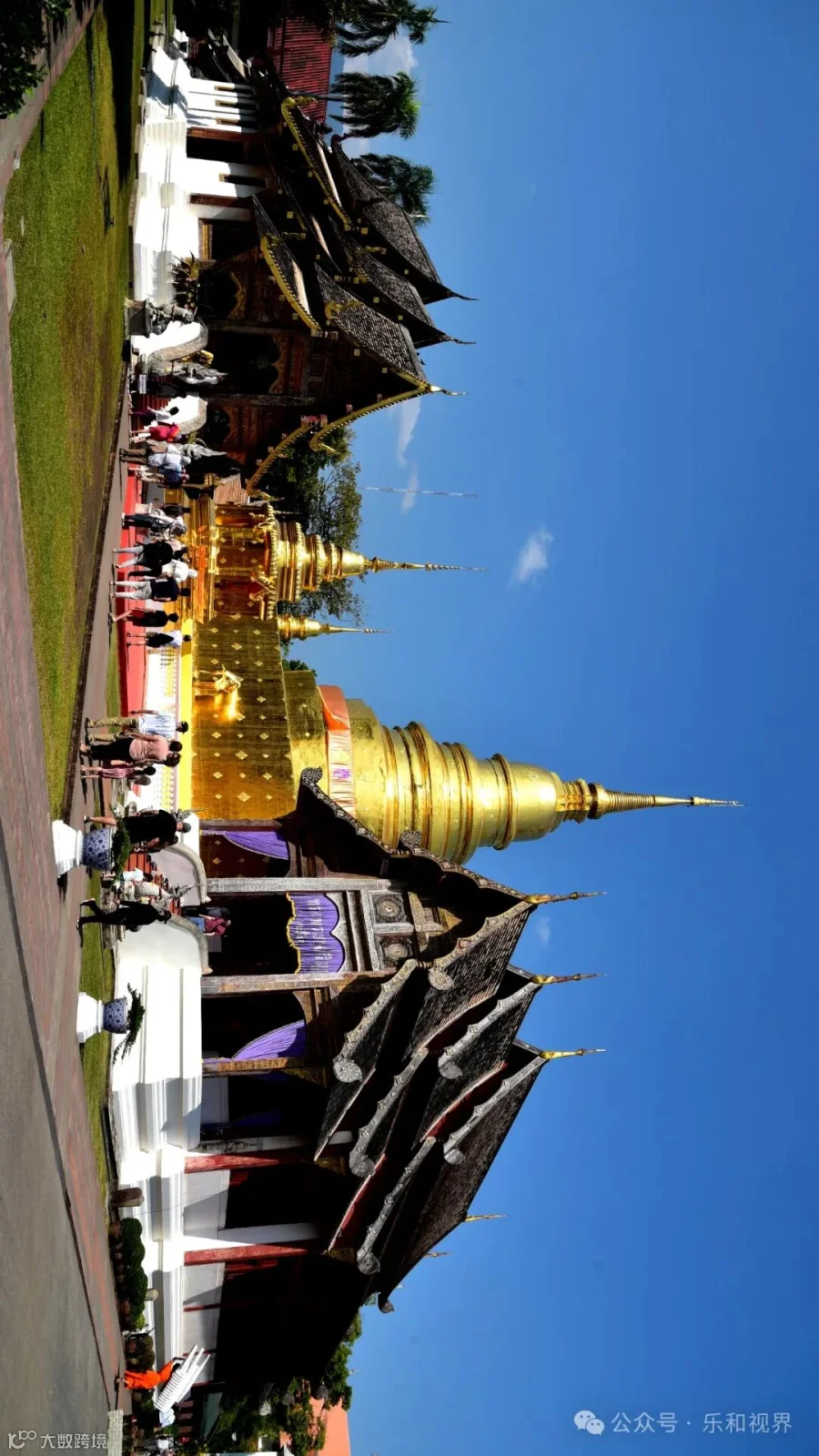
The whole temple complex underwent extensive renovations under the famous monk Khru Ba Srivichai during the 1920s. Many of the buildings were again restored in 2002.
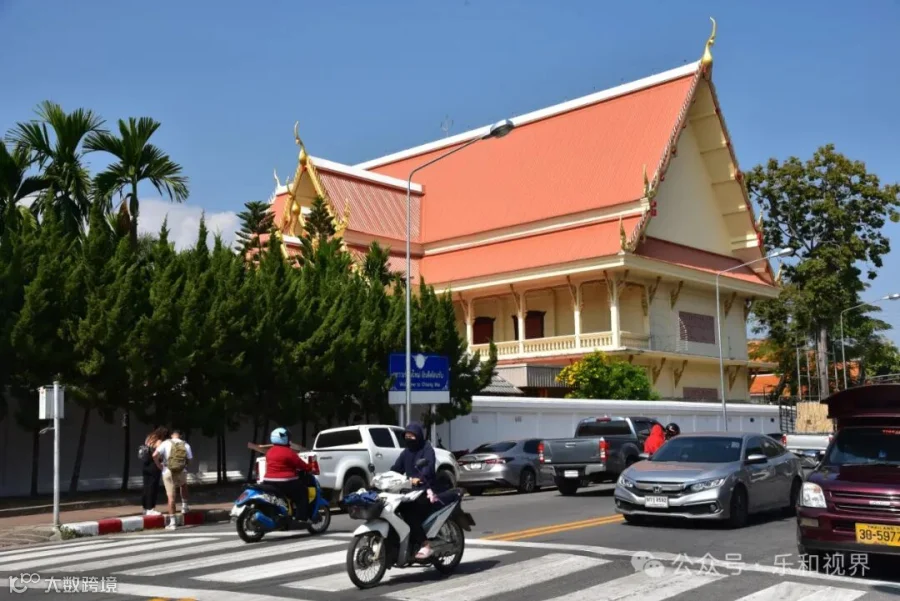
The temple contains some classical Lanna architecture including the old viharn and the beautiful scripture depository as well as several impressive chedis.
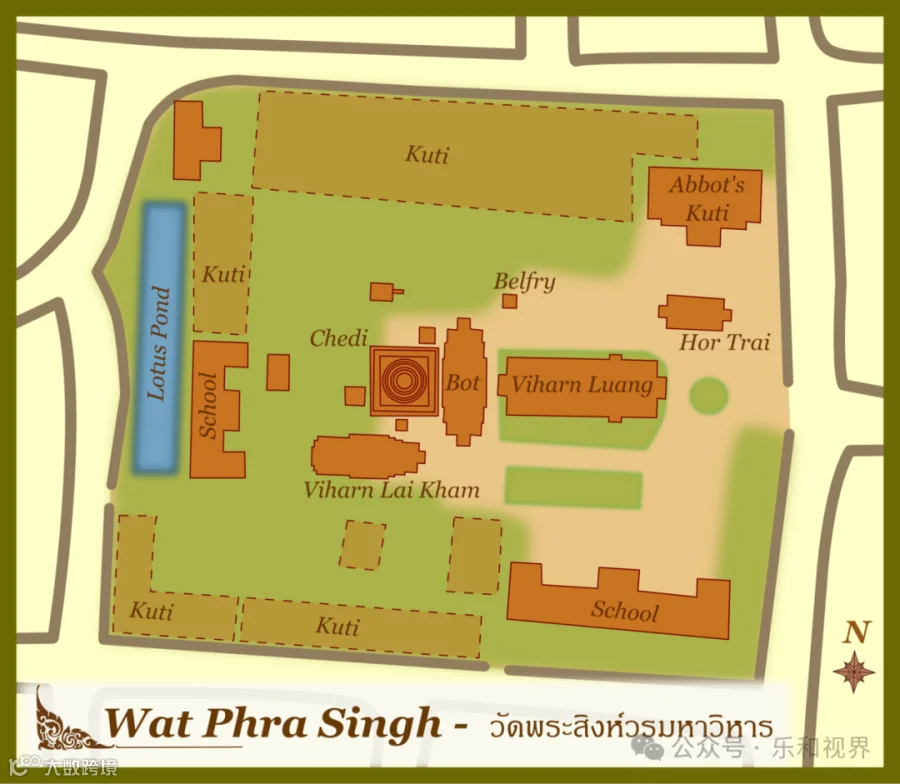
Viharn Lai Kham
The Viharn Lai Kham is one of the most interesting buildings in Chiang Mai. It was originally built in 1345 and was restored in 1772, after the Burmese left, by King Kawila. It has a famous Buddha image from which the temple gets its name as well as some fascinating murals from the 1820s.
The style of the building is pure Lanna with its multi-tiered, split roof sweeping low to the ground. Nagas are set along the bargeboards and chofa finials are set at the apexes.
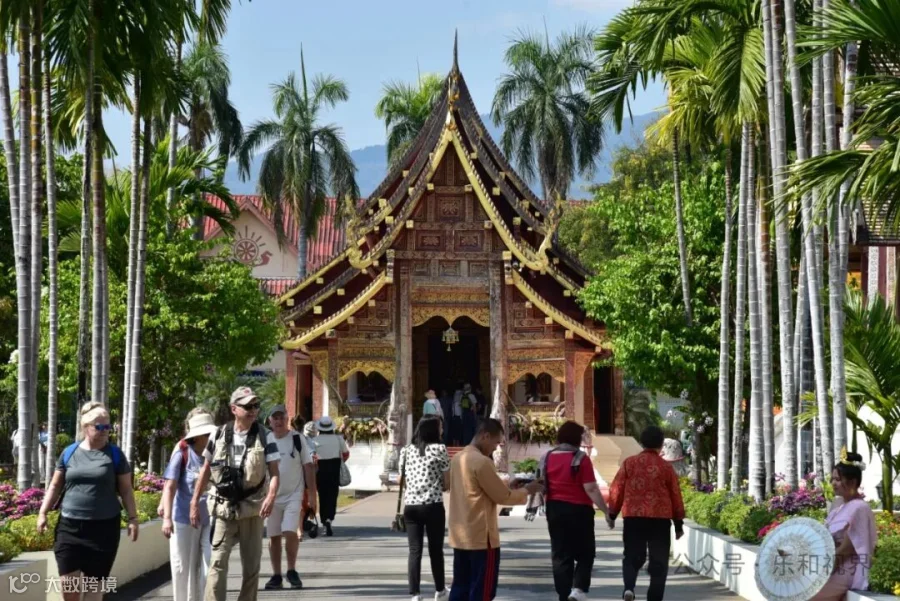
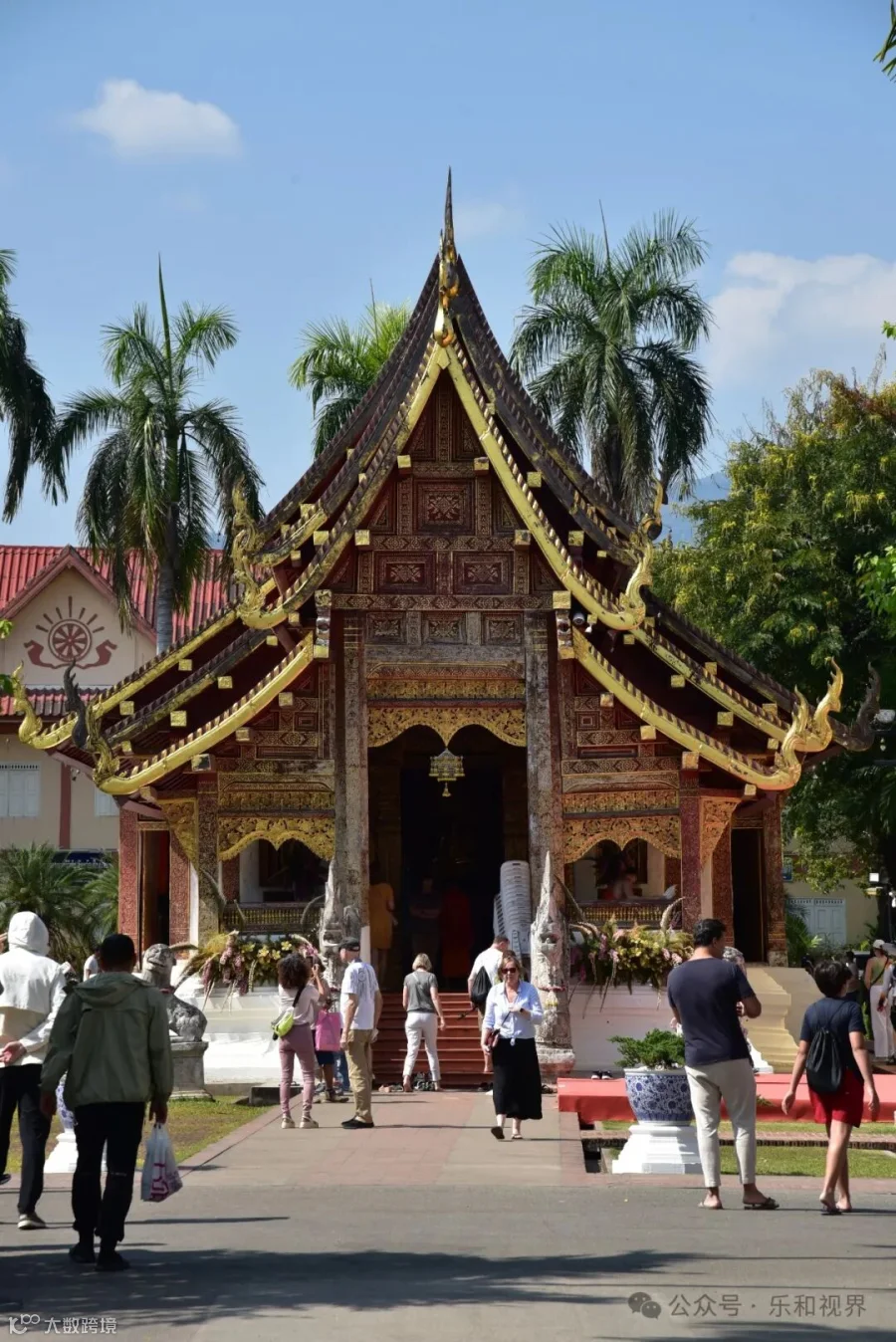
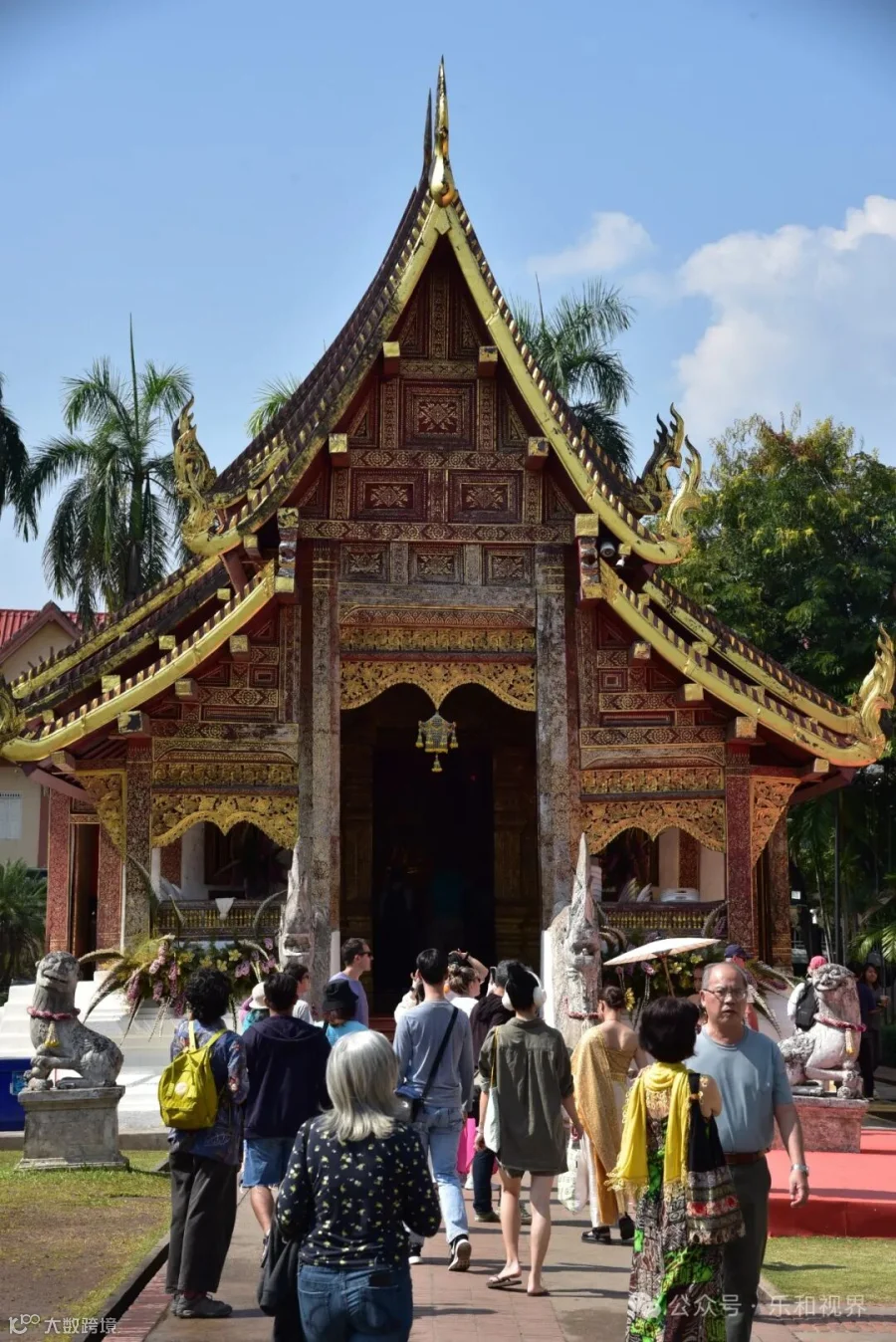
The colours and shades of the building are also distinctively Lanna with the predominance of wood or teak colours accentuated by lacquer finish and gilt carved pattern work set in panels. The facade is simple and classical with intricate carvings of floral motifs along the "eye-brow" pelmet and on the columns supporting the portico. There are none of the usual animal or angel figures on the facade.
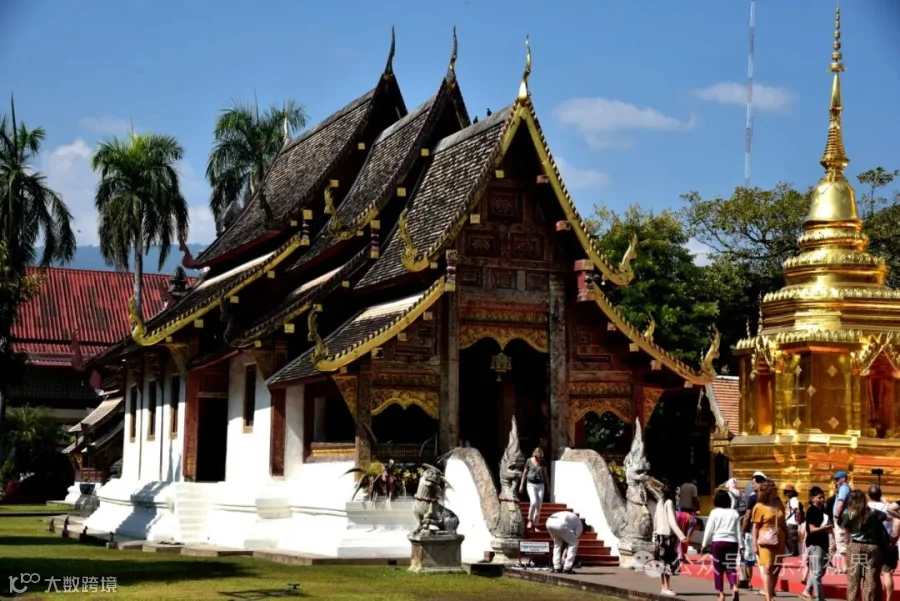
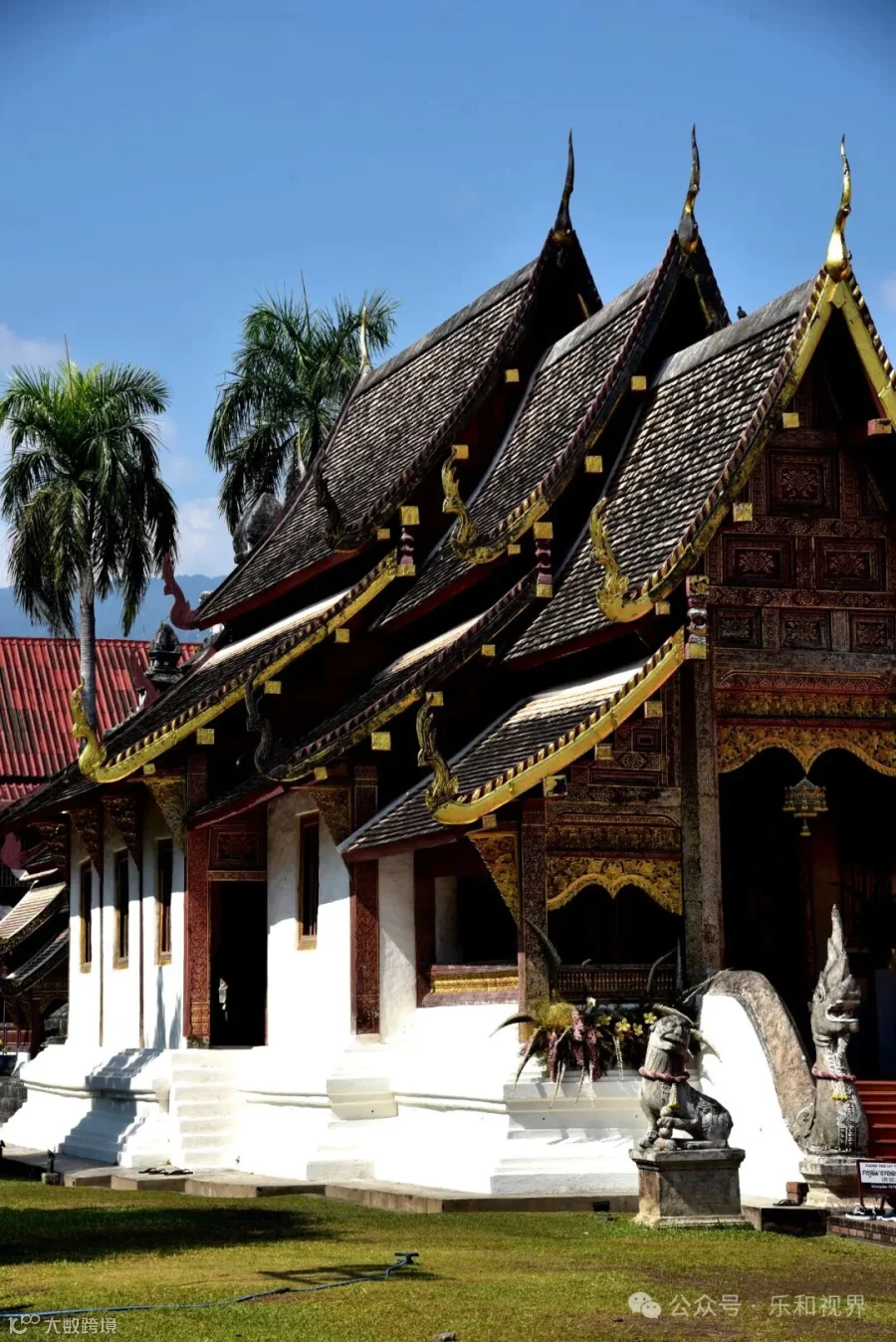
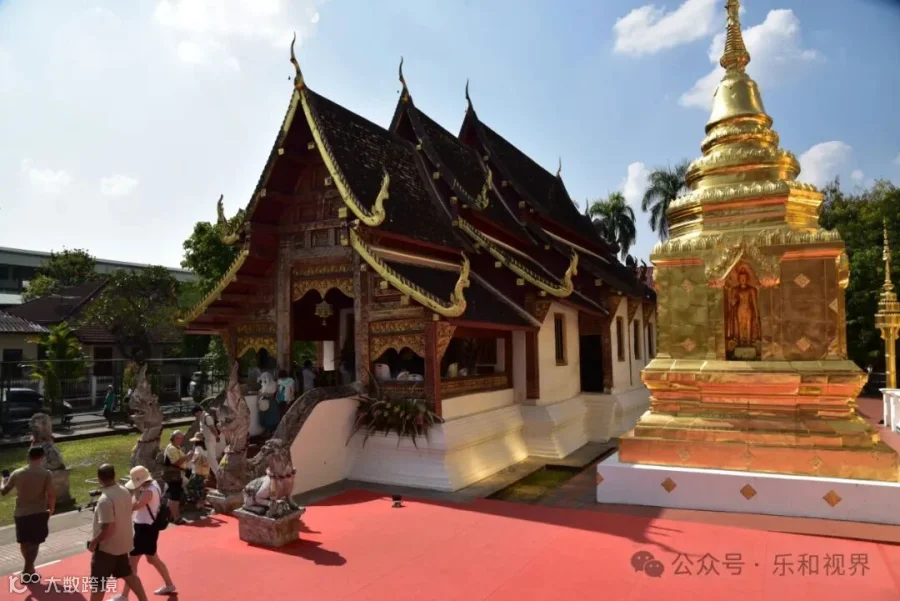
The entrance is guarded by a pair of nagas and a lion figure in plain style. The porch has two windows with teak bars and a door with ornamented moldings above the lintel and on each side.
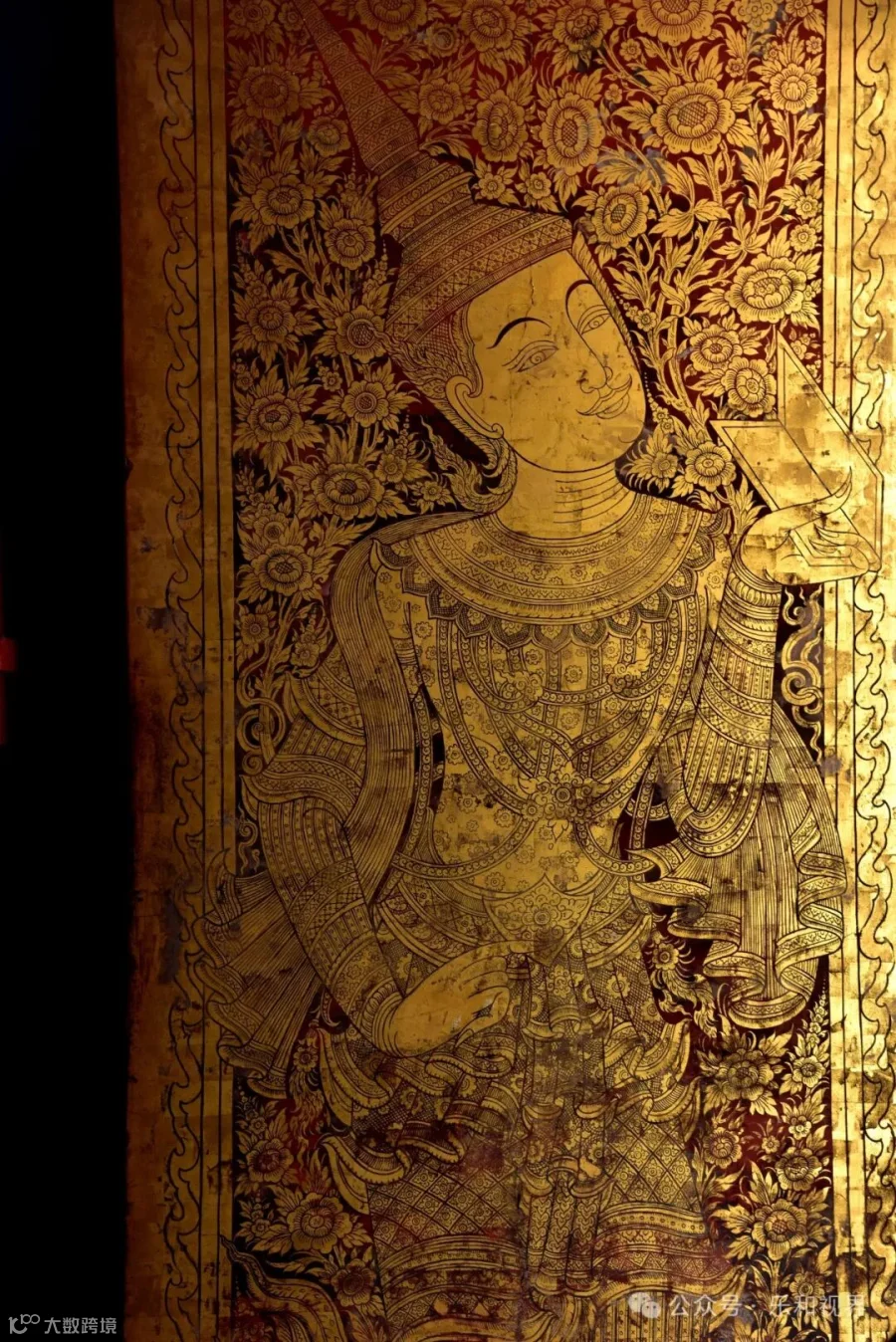
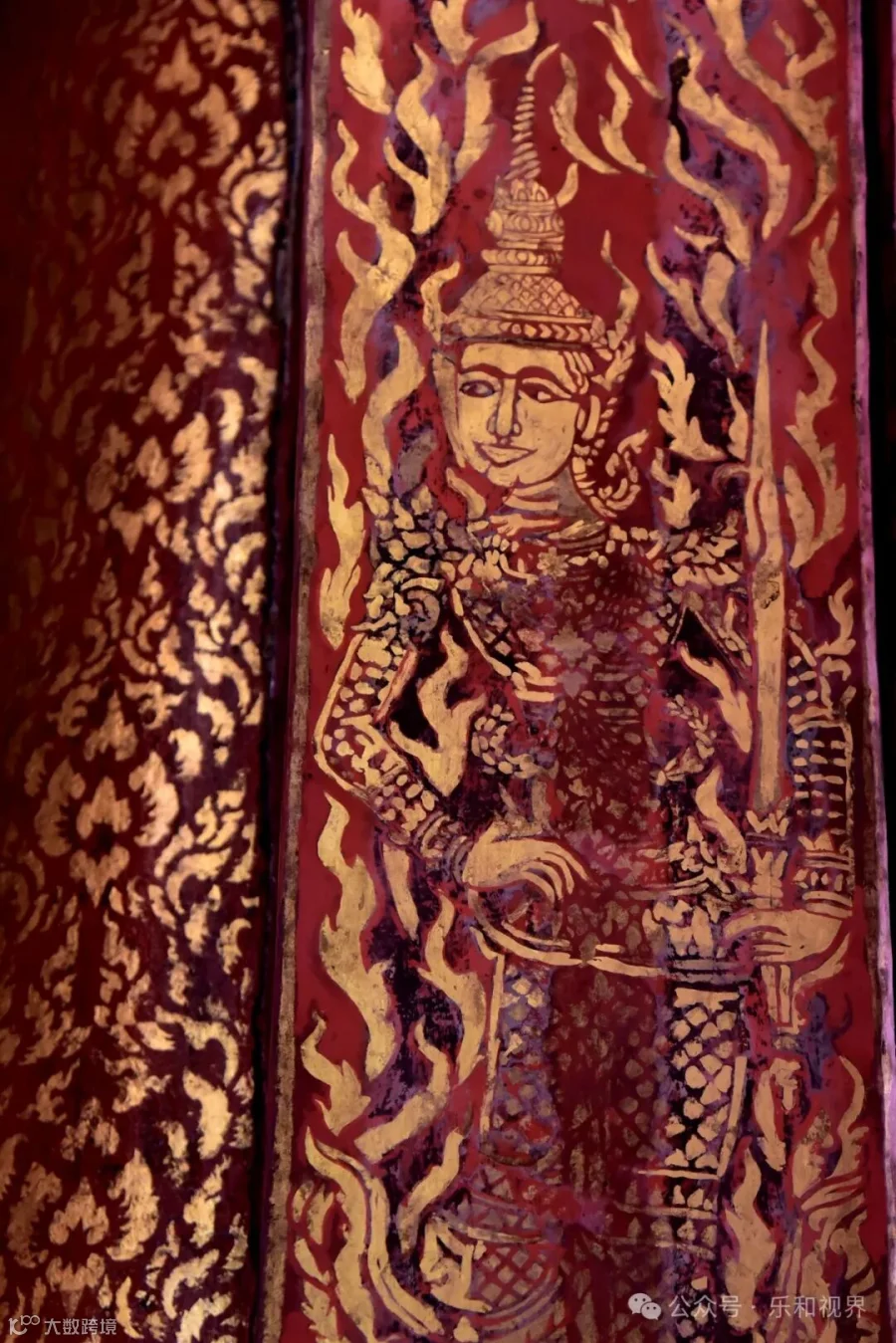
The interior is uniformly decorated with gilt patterns inscribed on the red lacquer surfaces including the teak columns and especially on the back wall behind the alter which has representation of a temple.
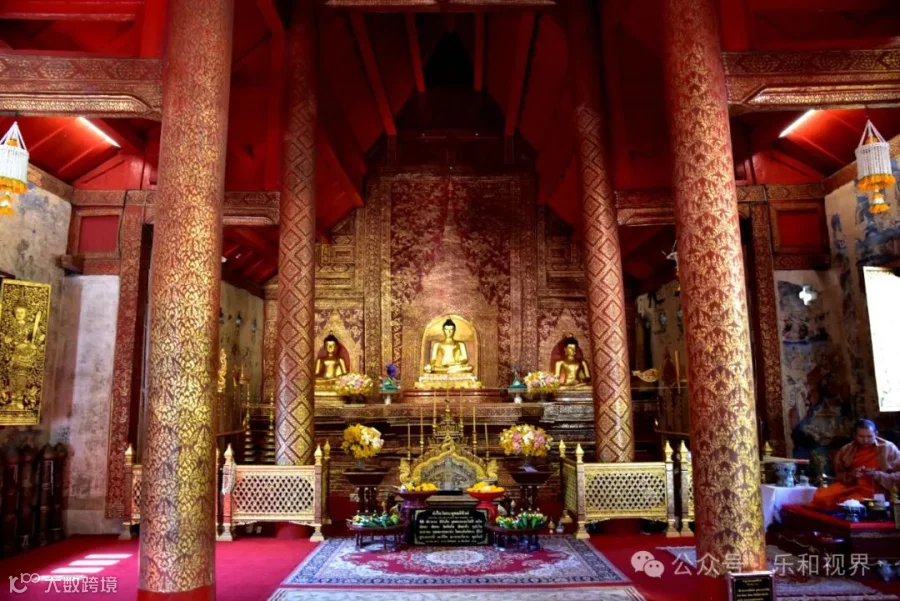
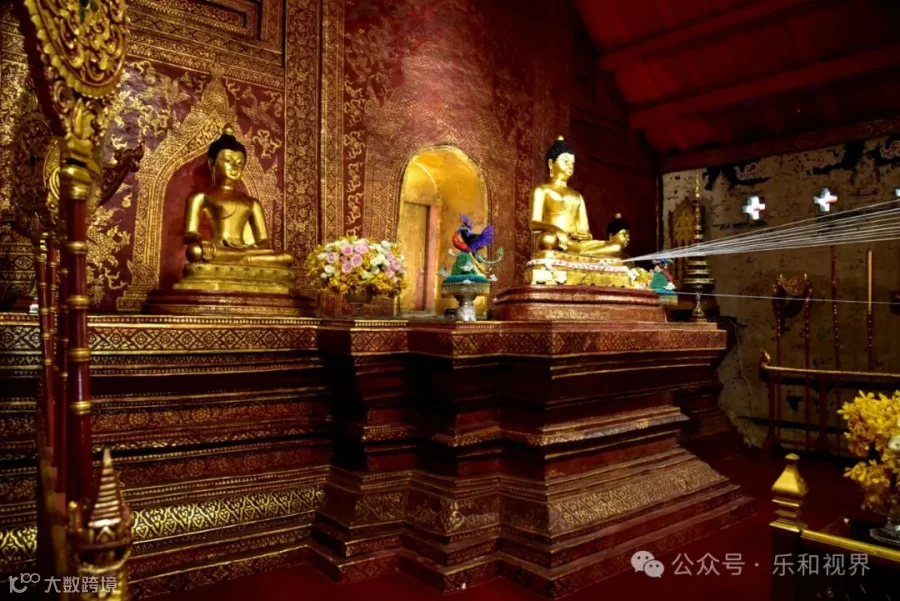
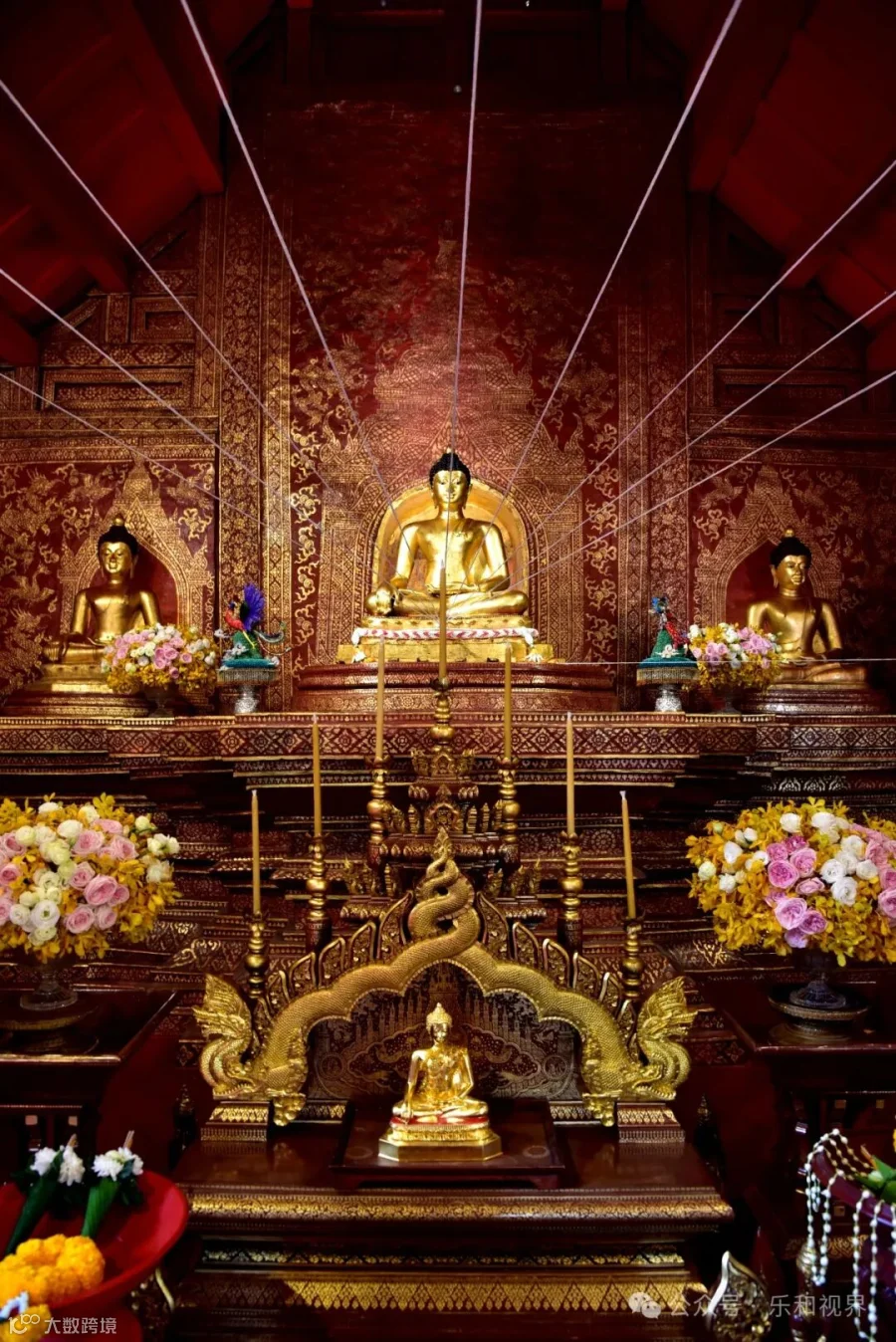
However, the main point of focus is the famous Buddha image for which the building was originally constructed to house——the Phra Buddha Sihing statue from which the temple takes its name. The 14th century image had its head stolen in 1922 and has been replaced by a copy.
The image is in the classical Chiang Saen or Lanna style with fingers each of different lengths. On either side are two other Buddha images in similar style. Behind the principal image is an alcove which leads to a small tunnel to the Kulai Chedi.
Murals in Viharn Lai Kham
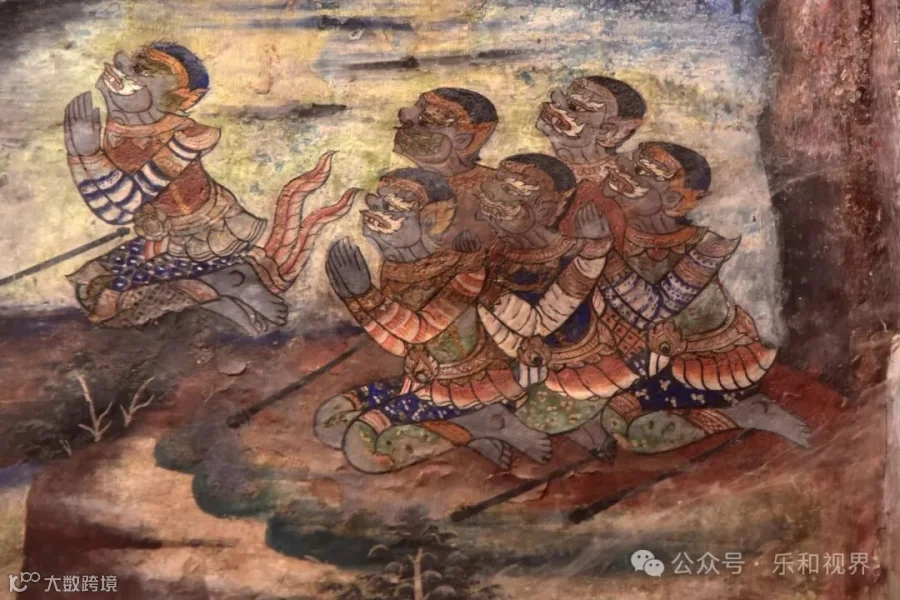
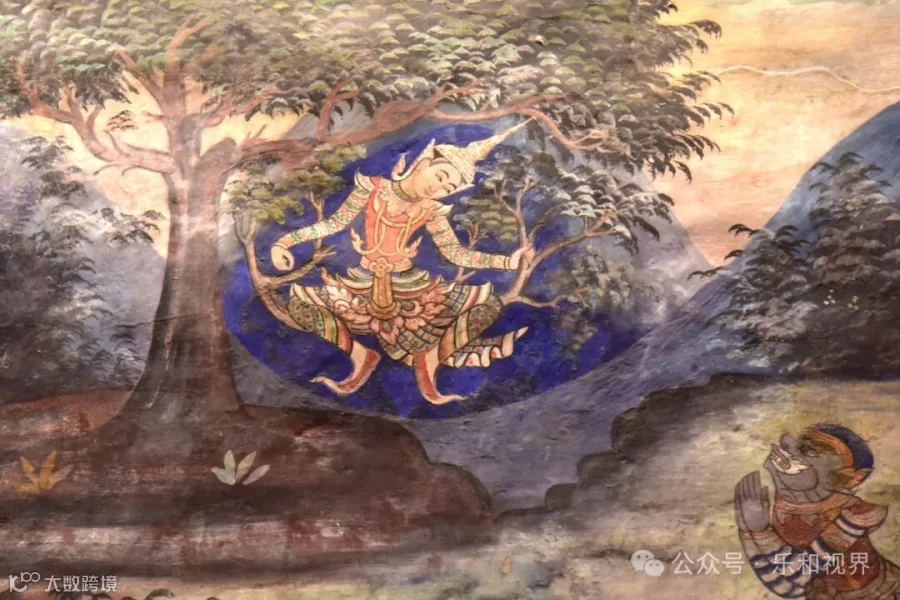
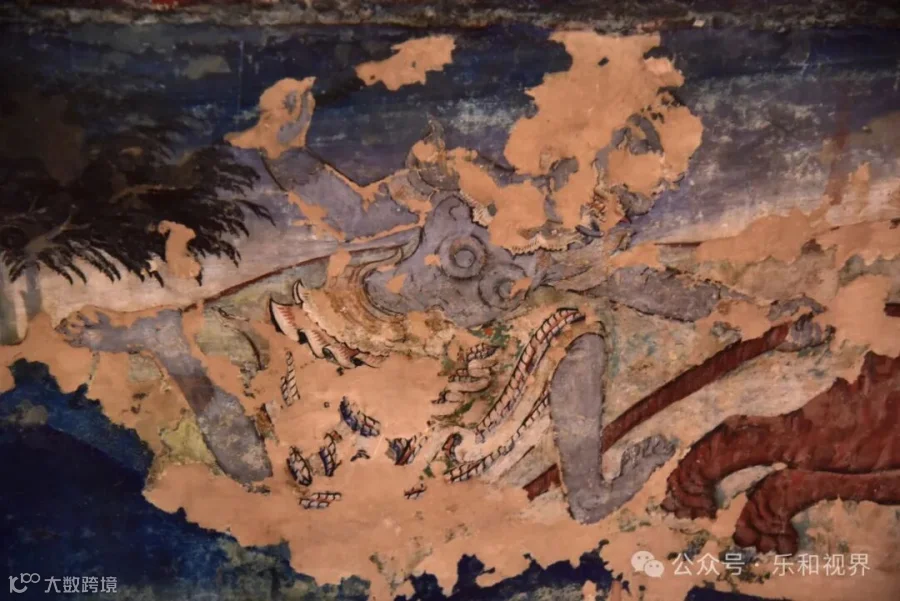
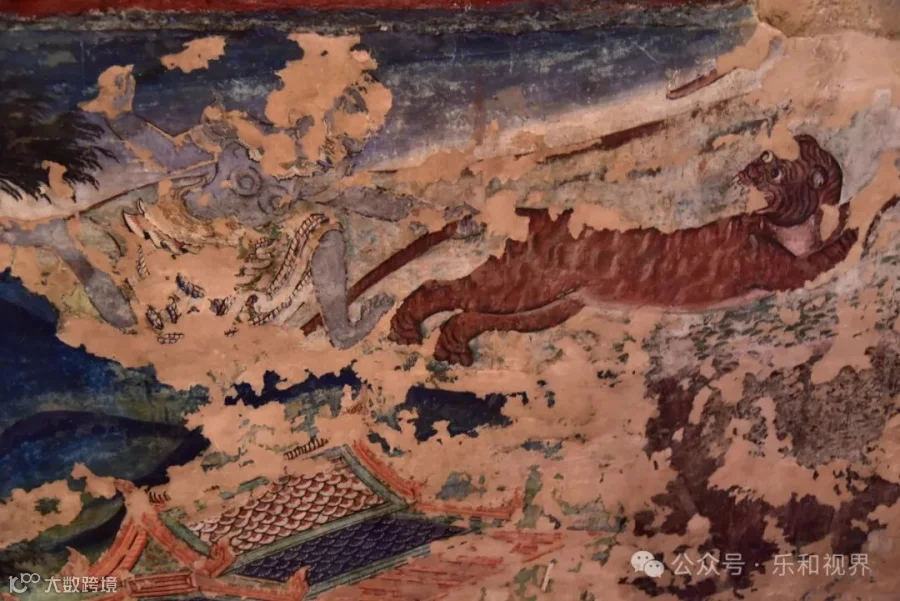
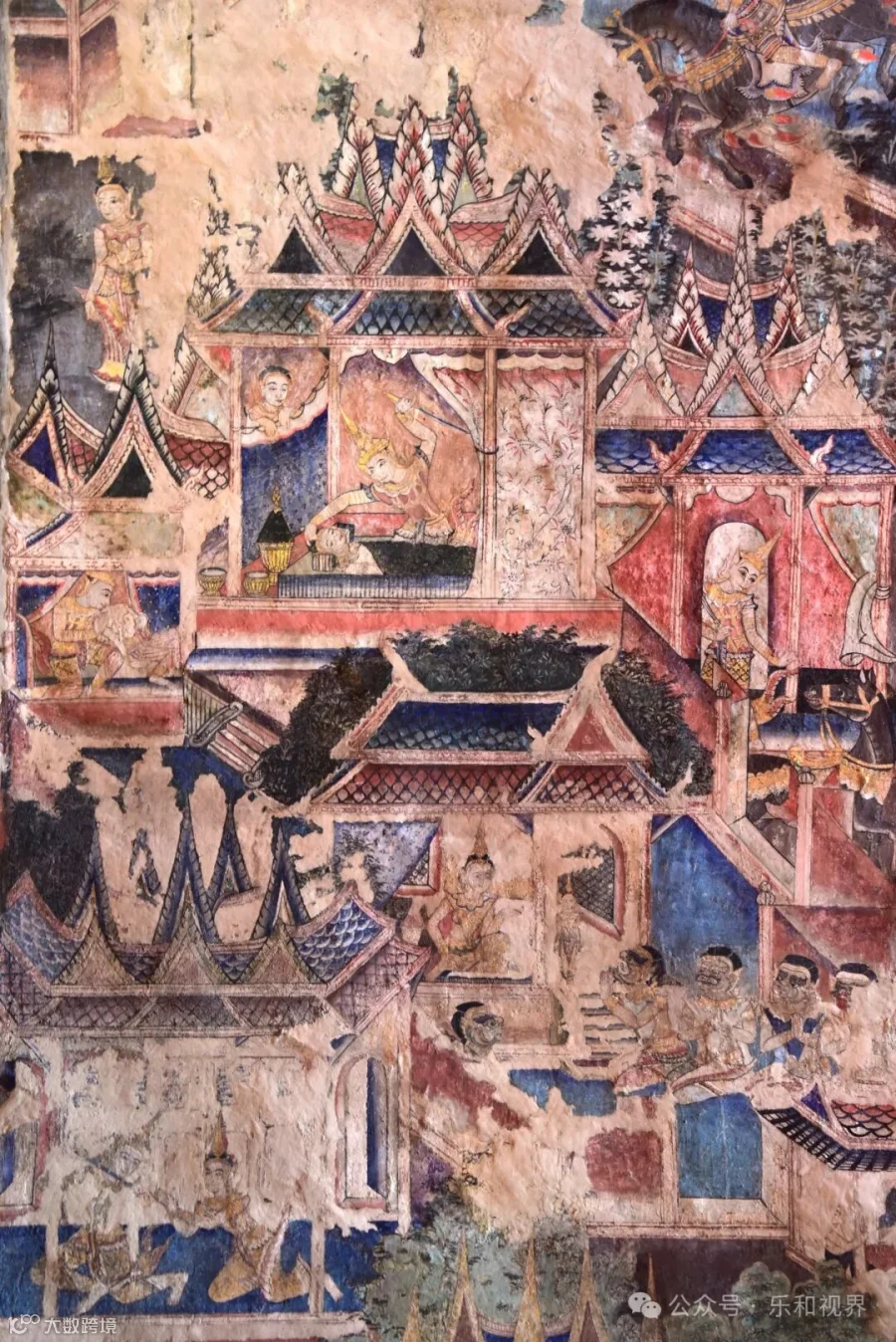
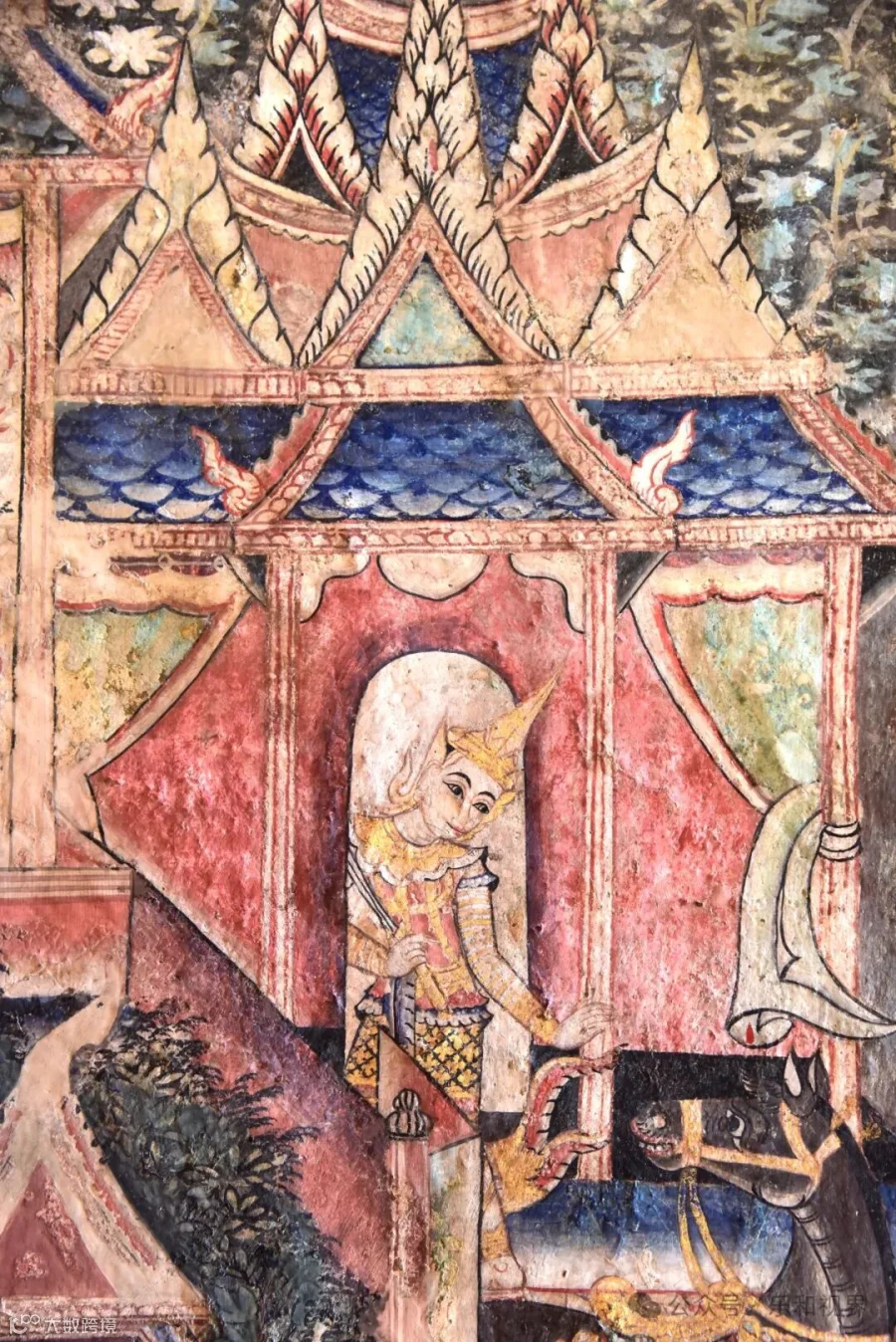
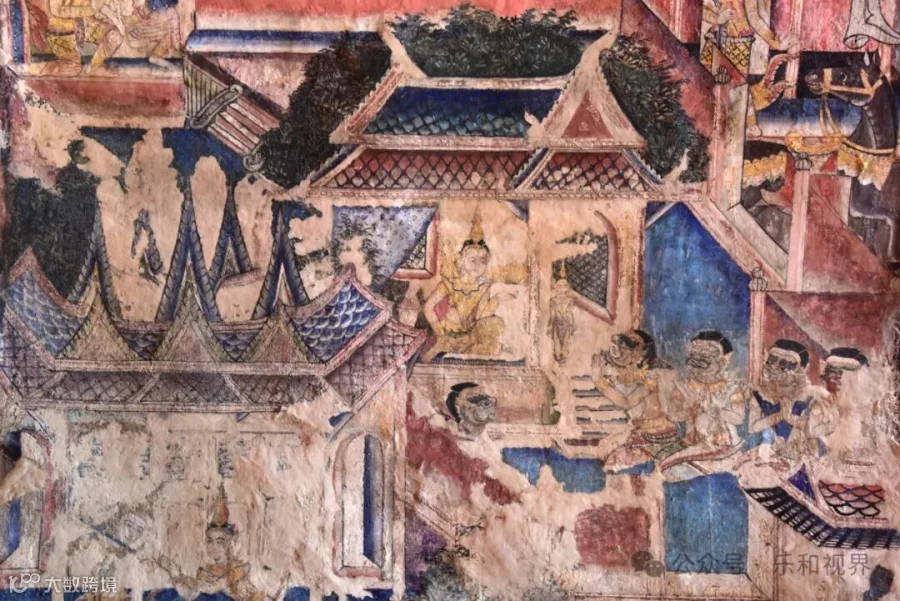
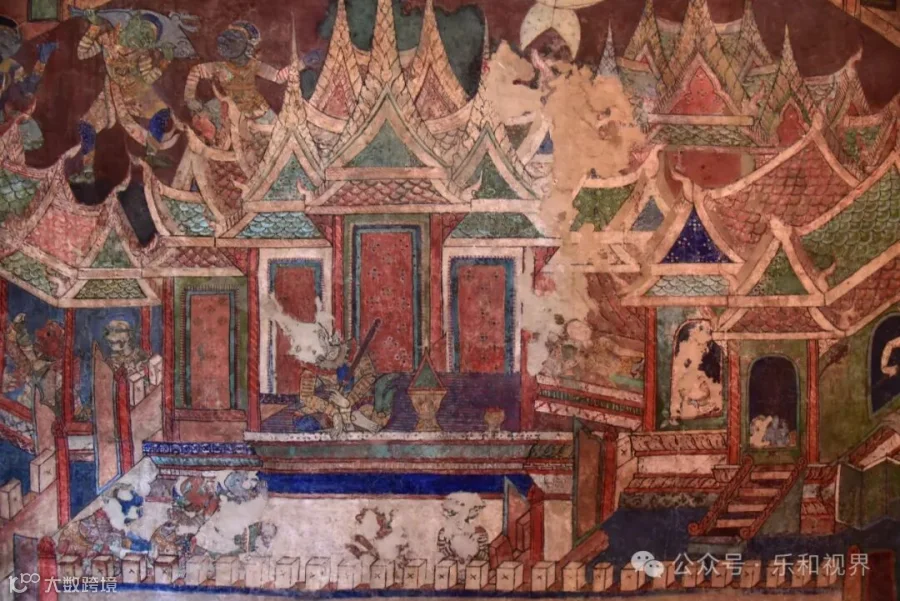
The famous murals which line the walls date from around the 1820s and were created by a Chinese artist on the order of Prince Dhammalanka, the ruler of Chiang Mai. Some of the murals are damaged but over half of the pictures can still be seen and depict many colourful scenes from the Jataka and Buddhist texts.
The murals are some of the best examples of Lanna art and are not only beautiful to look at but also give a fascinating glimpse into the way of life, customs and dress of the Lanna people around this time.
Unfortunately, the murals, despite restoration, are quite badly decayed partly due to the practice of painting on dry instead of wet plaster, although most of the figures in murals can be seen at least in part.
Two well known folk tales are depicted in the murals: the story of Sang Thong, the prince born in a conch shell on the north wall, and the tale of Suwanna Hongse and the Heavenly Phoenix on the south wall.
笔者注:原文存在疑点。上文(斜体标注处)称北墙壁画为“海螺壳里出生的王子Sang Thong的故事”,南墙壁画为“Suwanna Hongse和Heavenly Phoenix的故事”;而在下文(斜体标注处)称“Sang Thong的故事”覆盖在南墙上,北墙描绘的是“Suwanna Hongse的故事”,两处内容自相矛盾。个人观察壁画得出结论:“Sang Thong的故事”画面位于北墙,“Suwanna Hongse的故事”画面位于南墙,故将下文斜体标注处添加删除线。
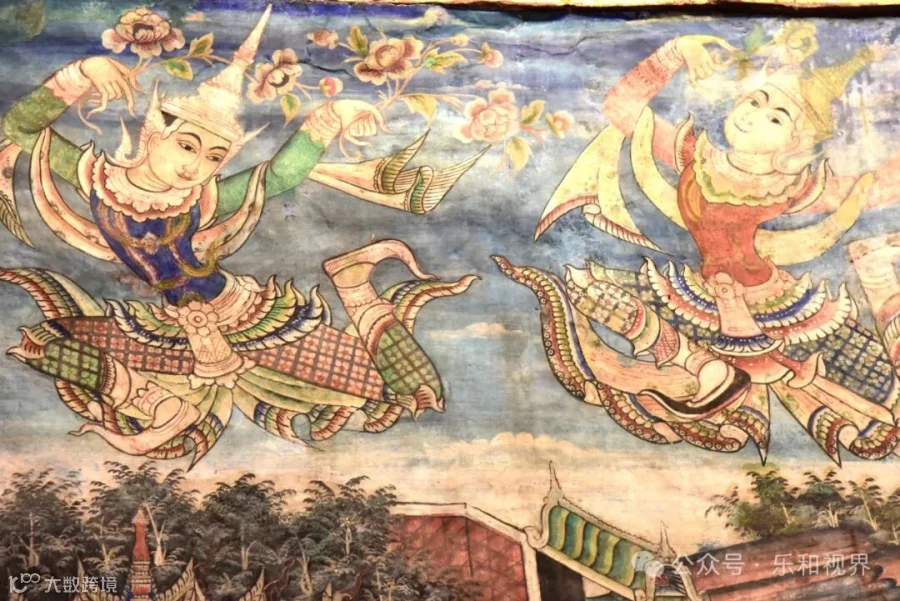
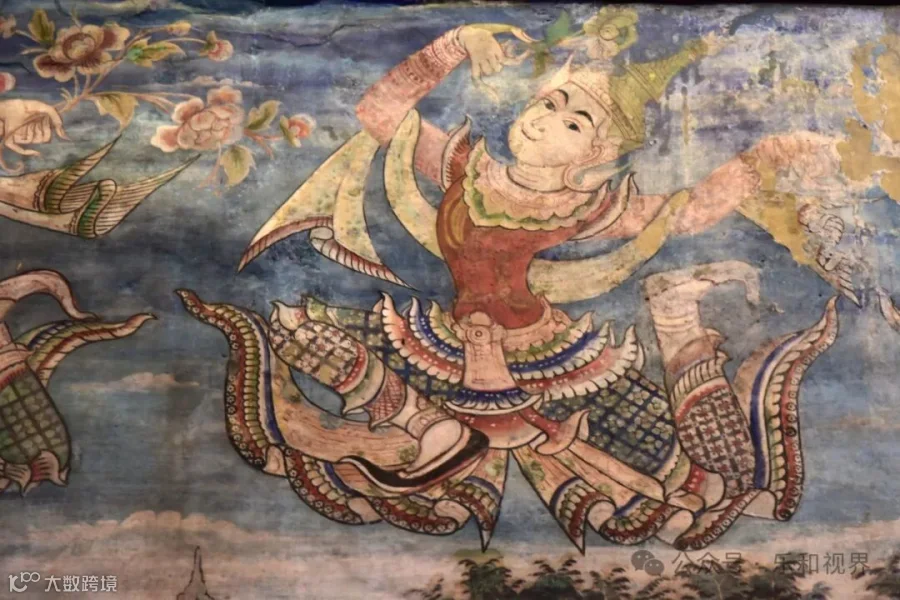
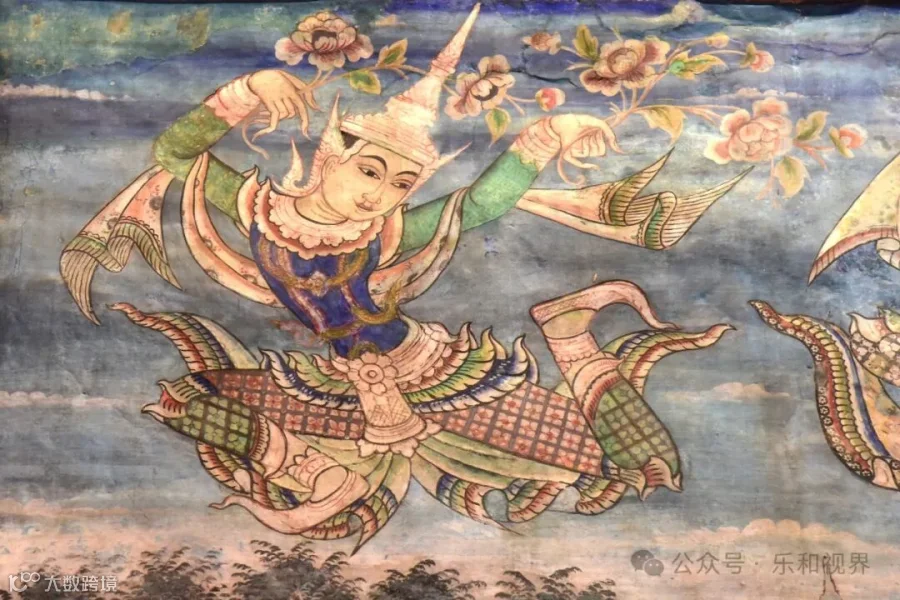
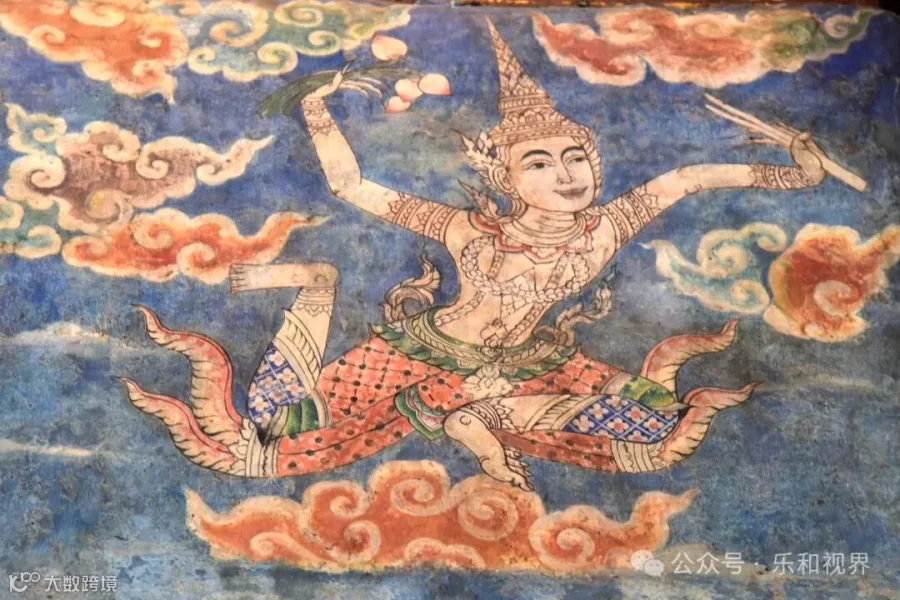
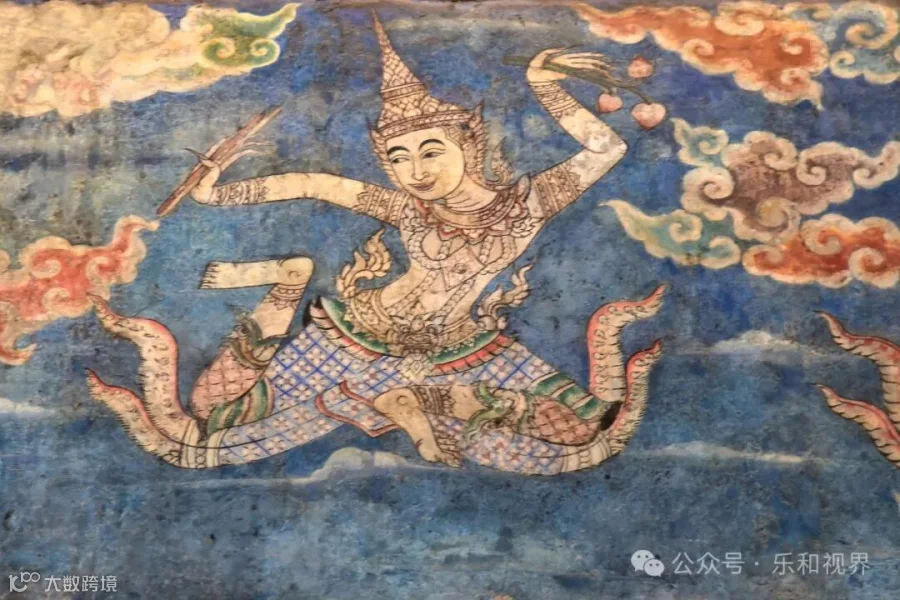
此外,墙壁画面上方有一圈“飞天”环绕,应是紧那罗(Kinnara)和紧那利(Kinnari)的形象:
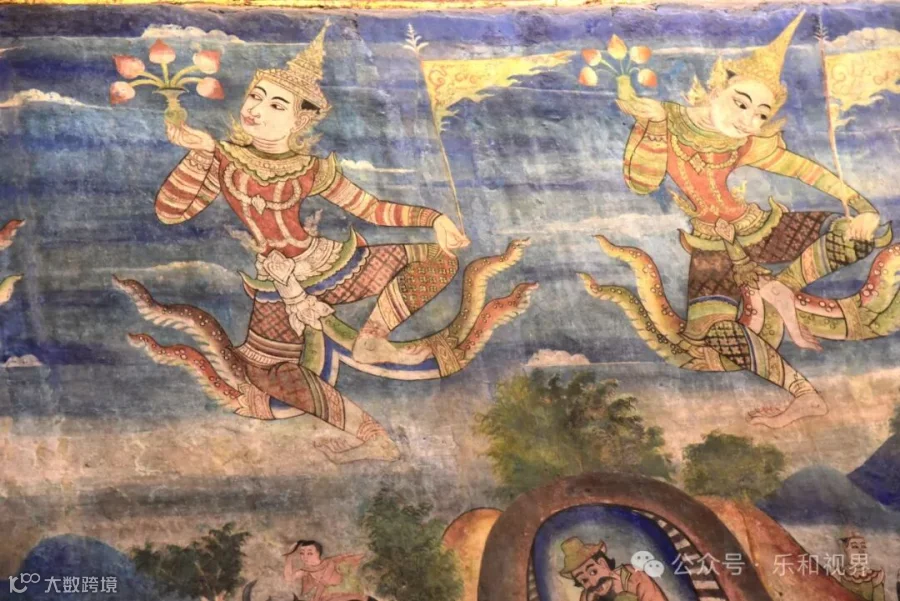
The story of Sang Thong
(north wall)
The tale of Sang Thong, the prince born in a golden conch shell, is one of the most popular stories in Thailand and known by just about everyone. It follows popular themes such as good triumphant over evil, and hidden beauty under apparent ugliness.
The tale begins with Prince Sang Thong being born to the first wife of the king in a conch shell which unexplained event causes mother and child to be ostracized from the palace.
The prince is sent to work in a house where the owner, who becomes his adoptive mother, is really an ogress who devours people and secretly keeps their bones buried in the gardens. The prince manages to escape by disguising himself as a negrito and steals the magic wand and flying shoes of the ogress.
Later, the King of Damon seeks husbands for his seven daughters and to the horror of the royal palace his youngest daughter Rochana choses the negrito who is Prince Sang Thong in disguise. Both are banished from the palace and told they can never return and they wander the countryside.
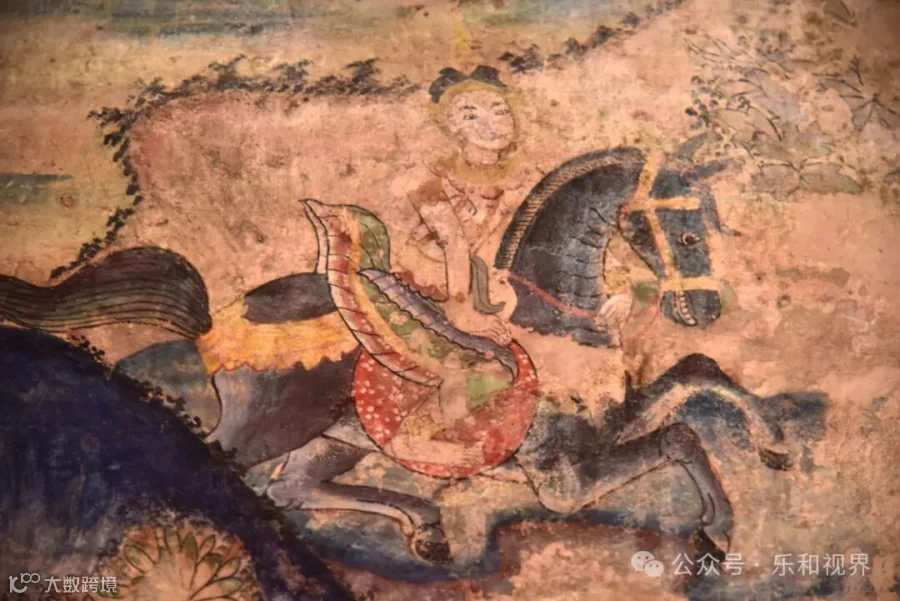
The couple learn that the king of Samon is faced with the loss of his kingdom and a polo match is arranged which, if he wins, his kingdom will be saved although he is bound to lose.
Just as it seems that the king’s team is about to be defeated, Sang Thong still in disguise, joins the game and with the help of Indra in heaven, miraculously turns certain defeat into victory.
The kingdom is saved and Prince Sang Thong reveals himself as a royal personage in his golden splendour. The couple are forgiven and accepted back into the palace and live happily ever after.
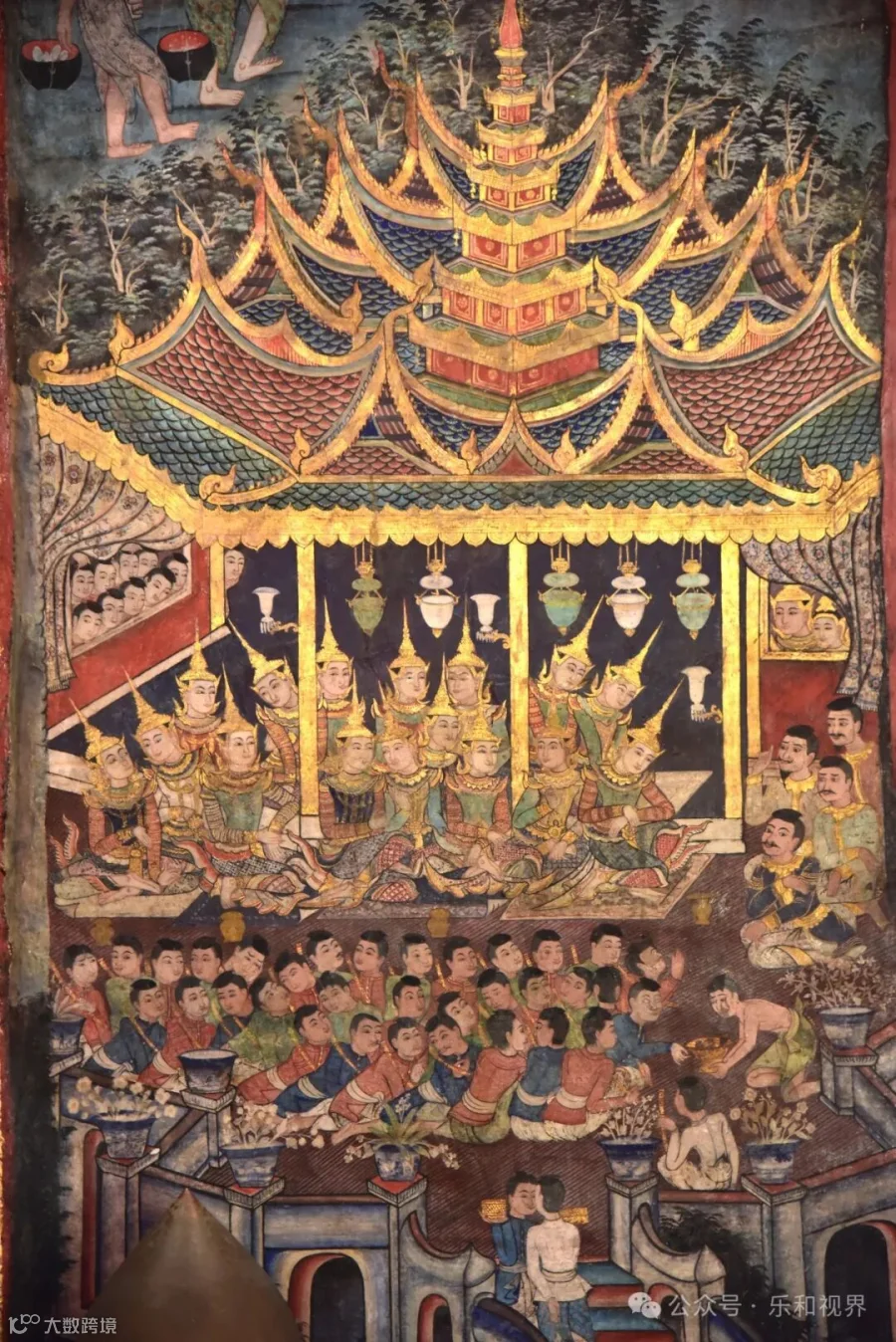
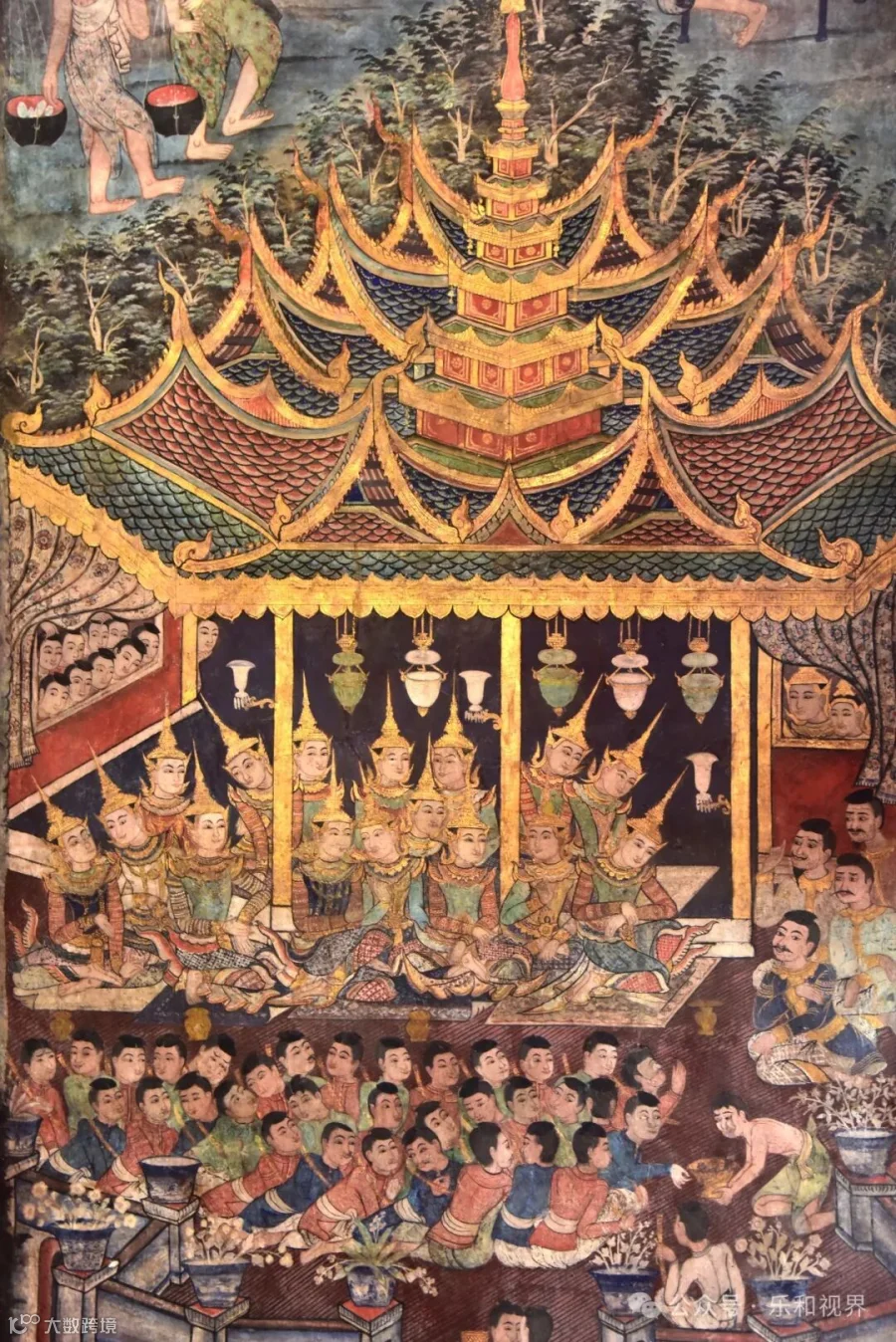
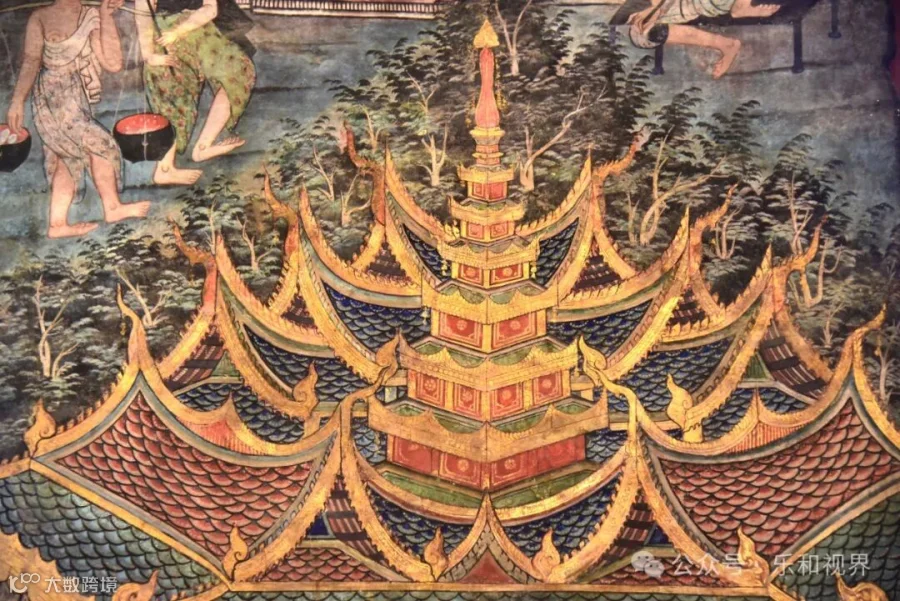
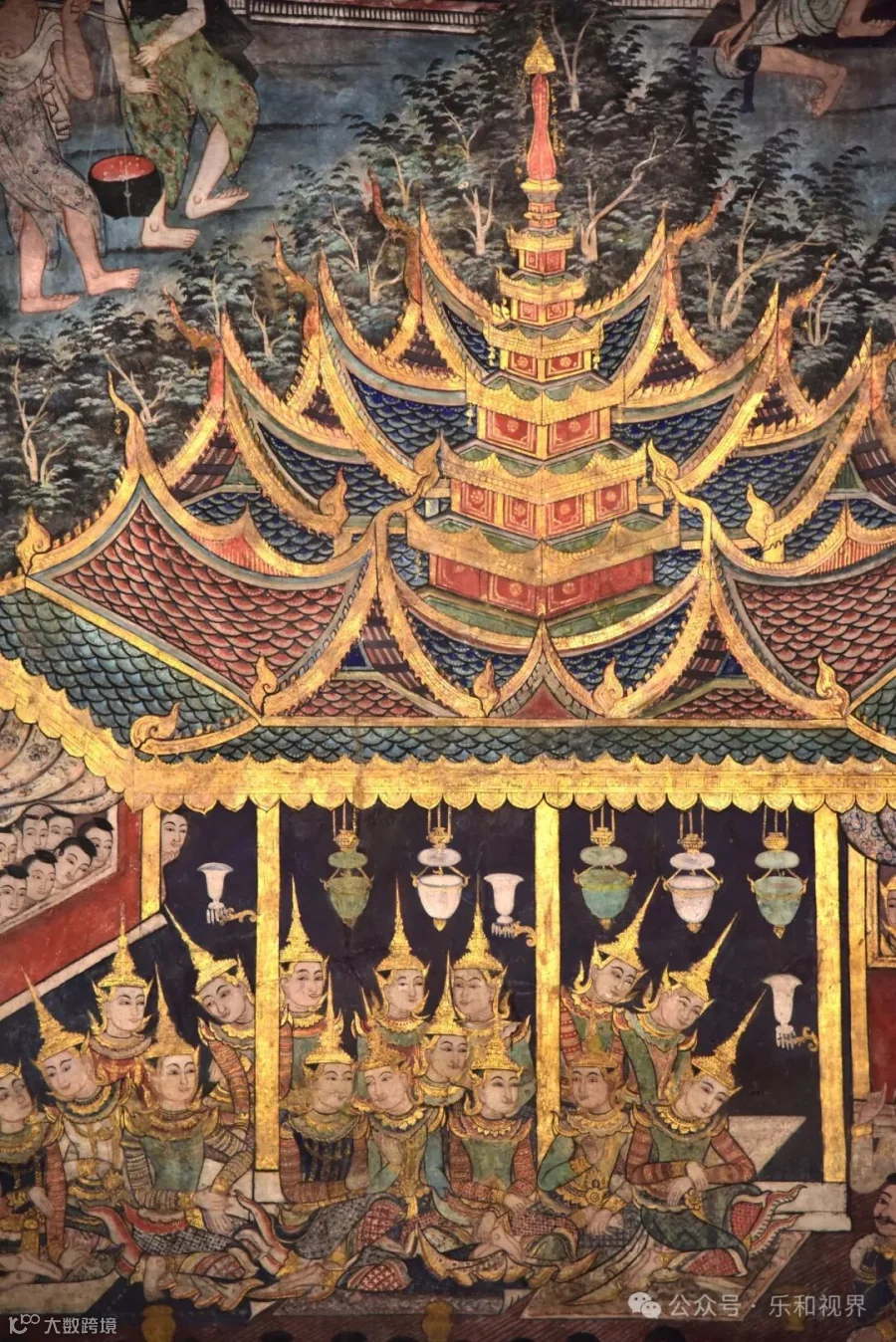
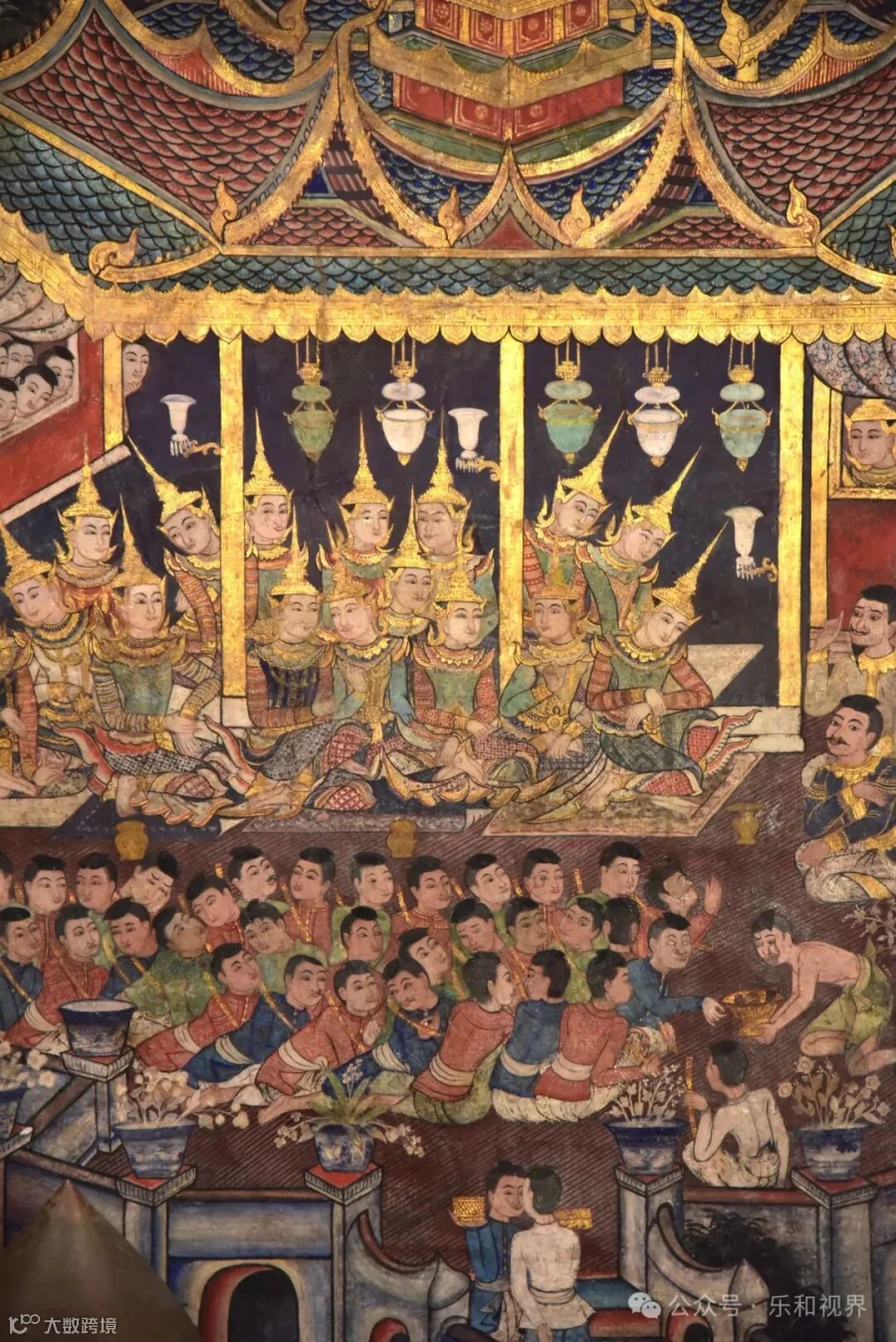
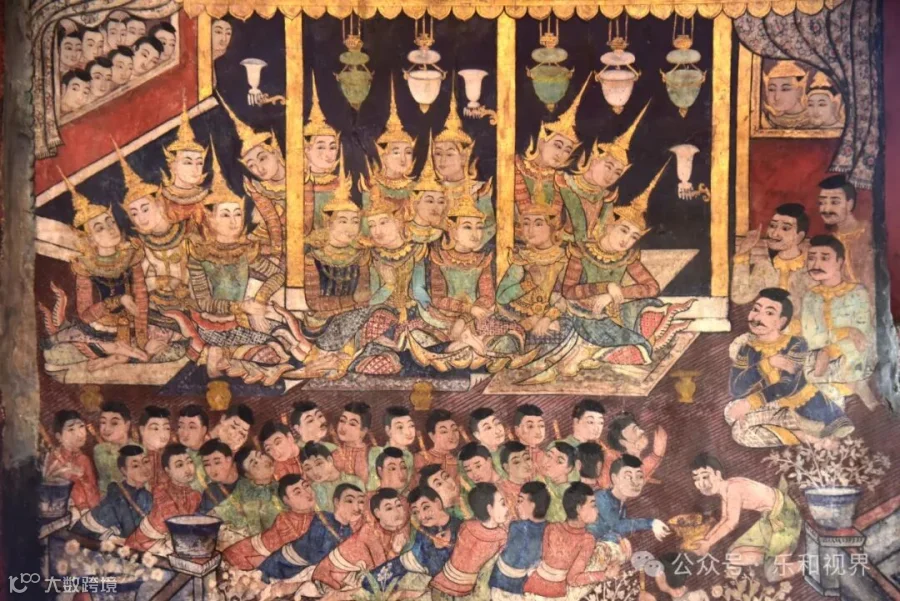
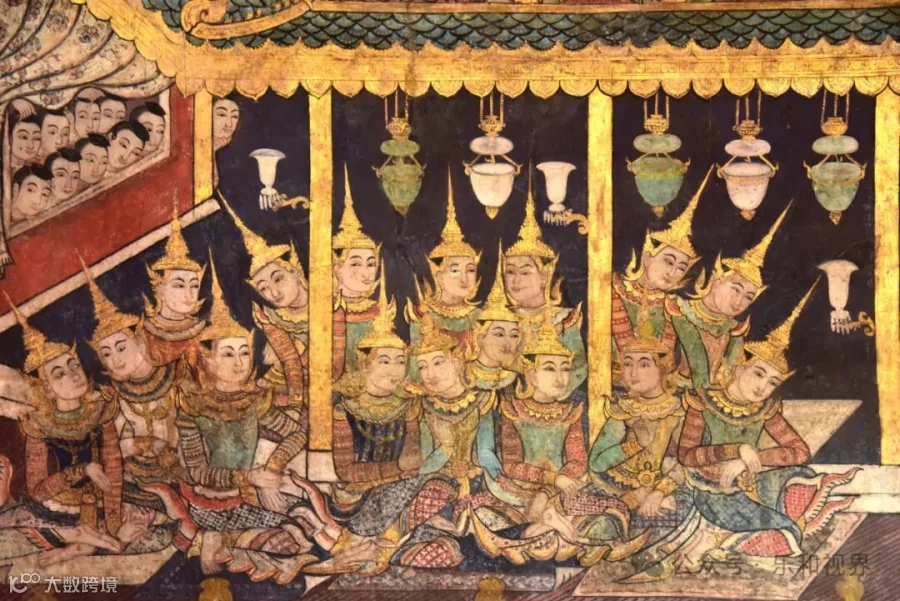
▲the royal audience
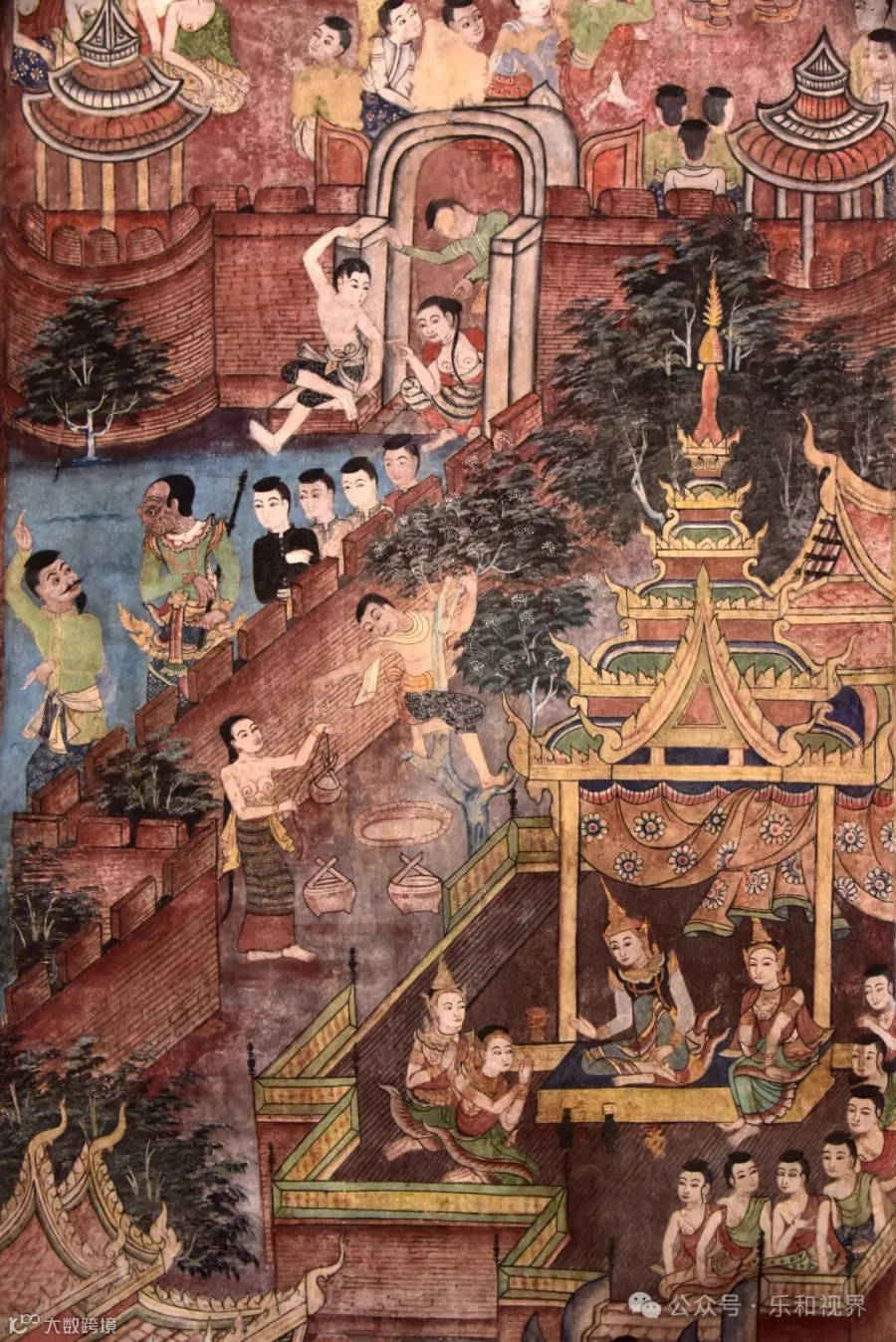
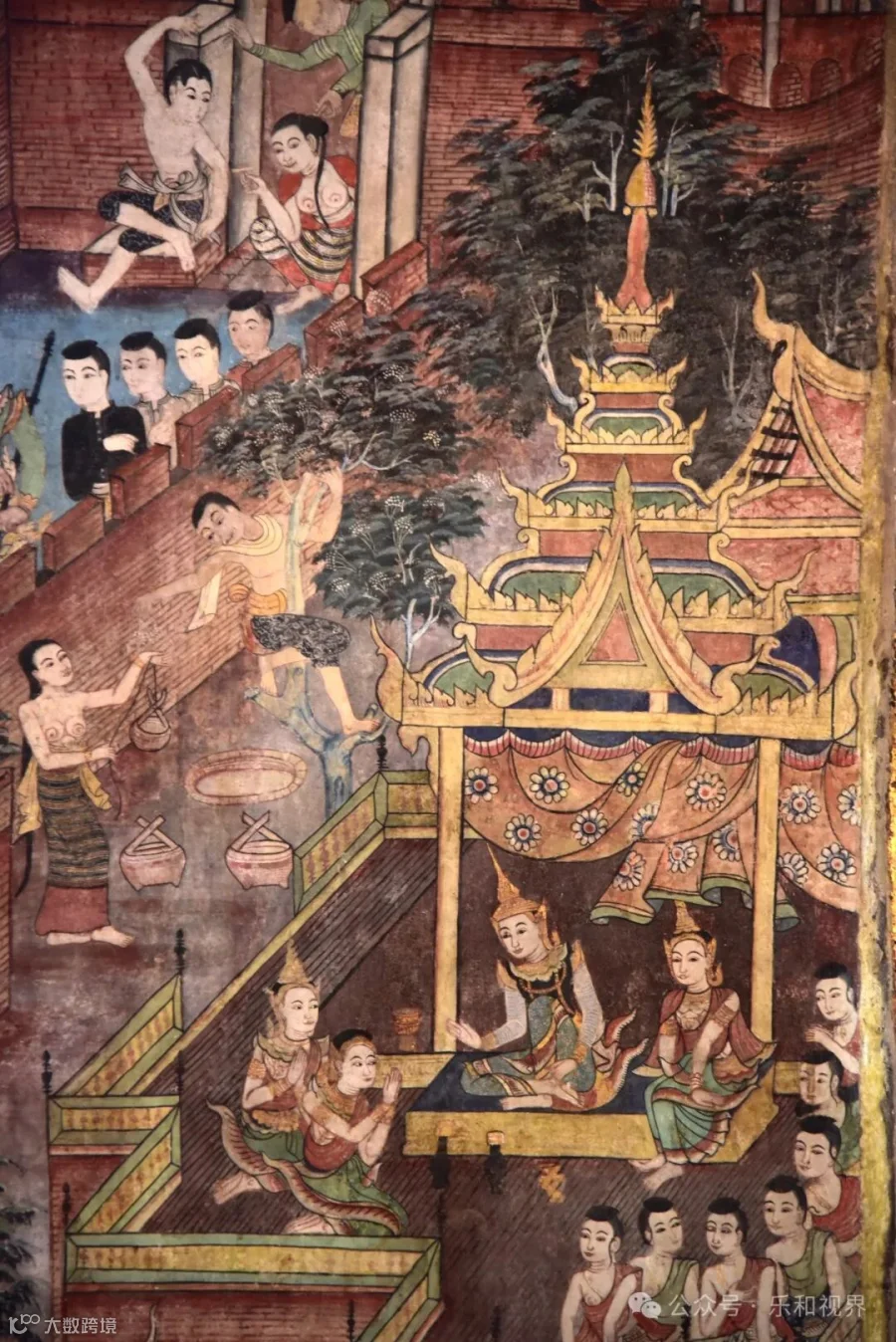
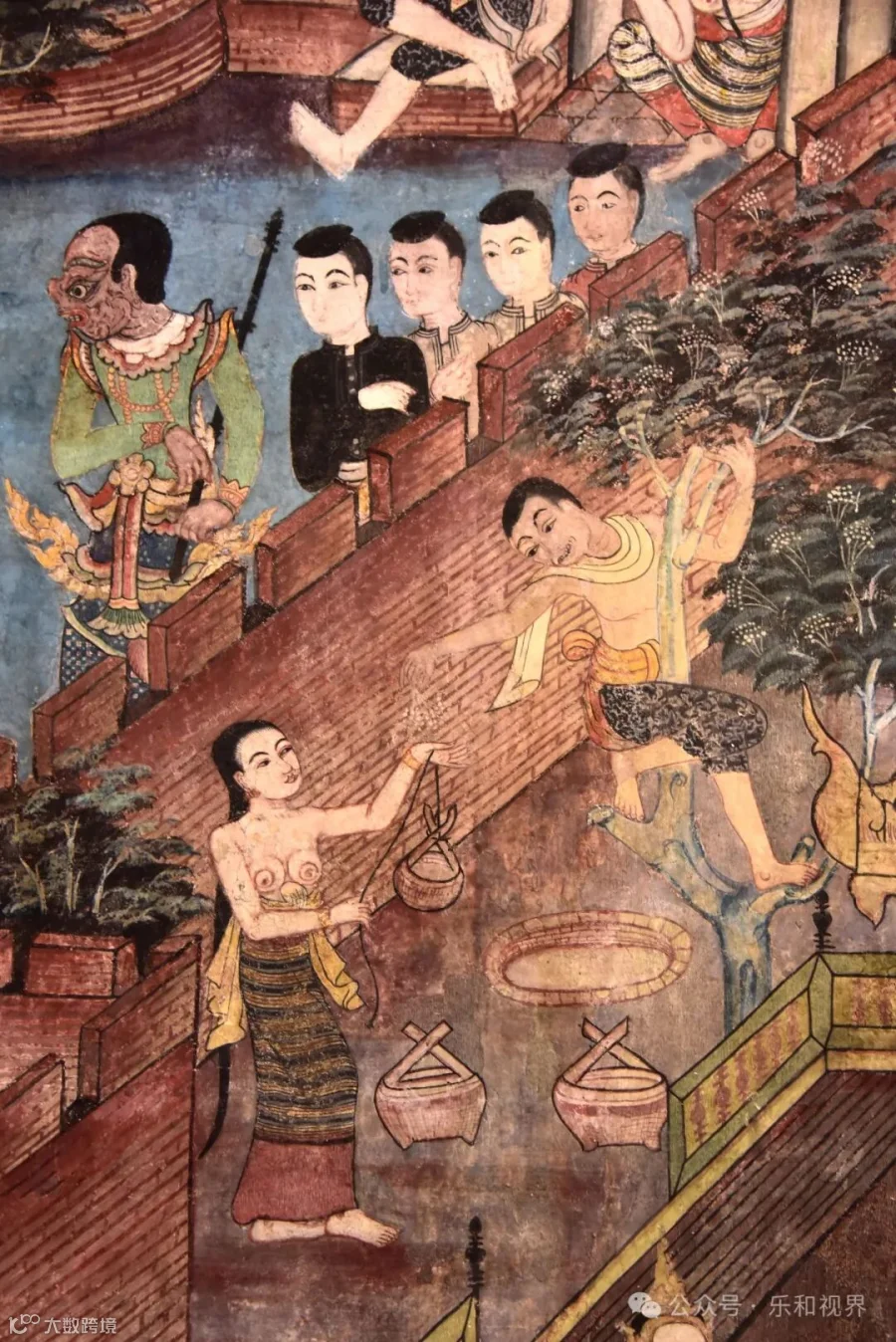
▲the royal palace with people outside
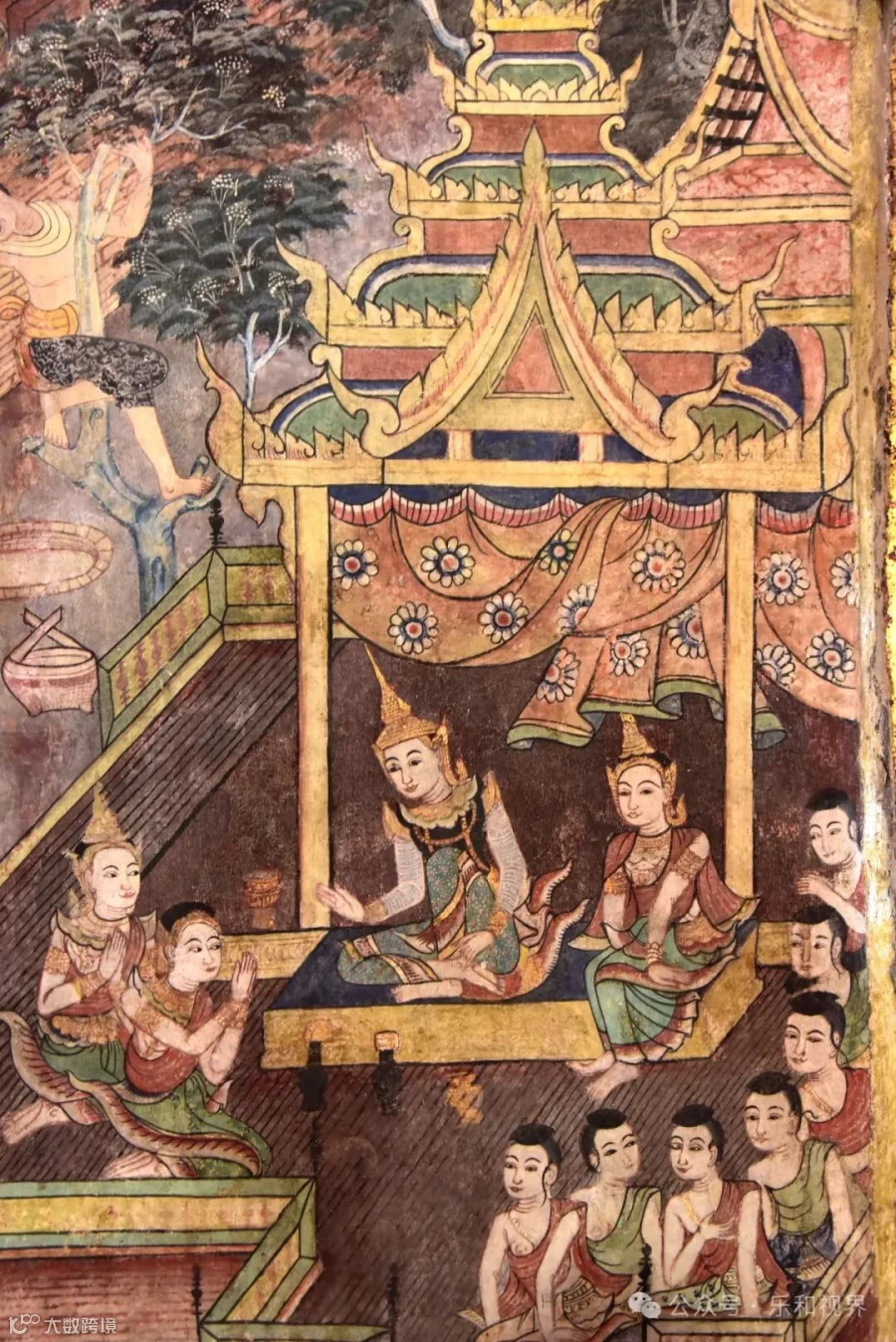
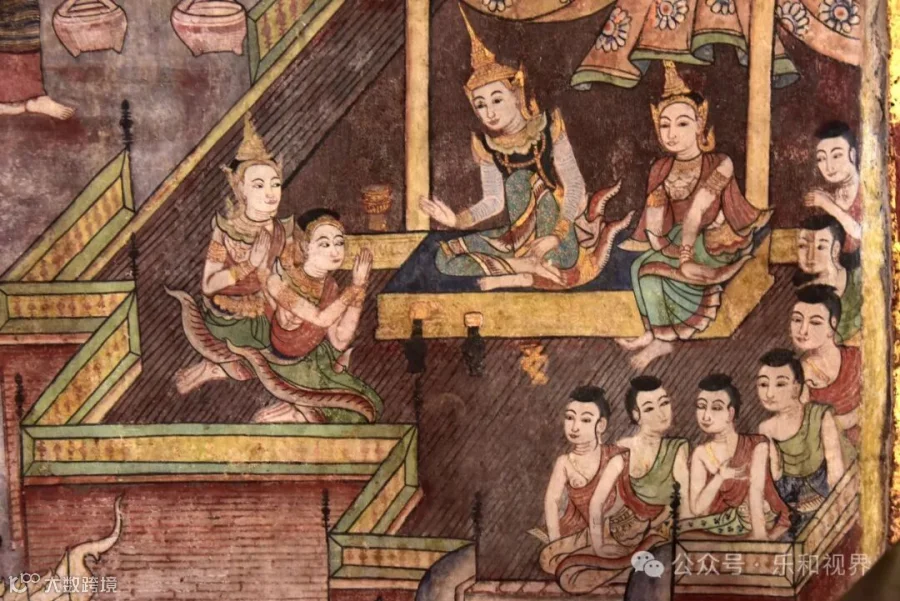
▲king and queen
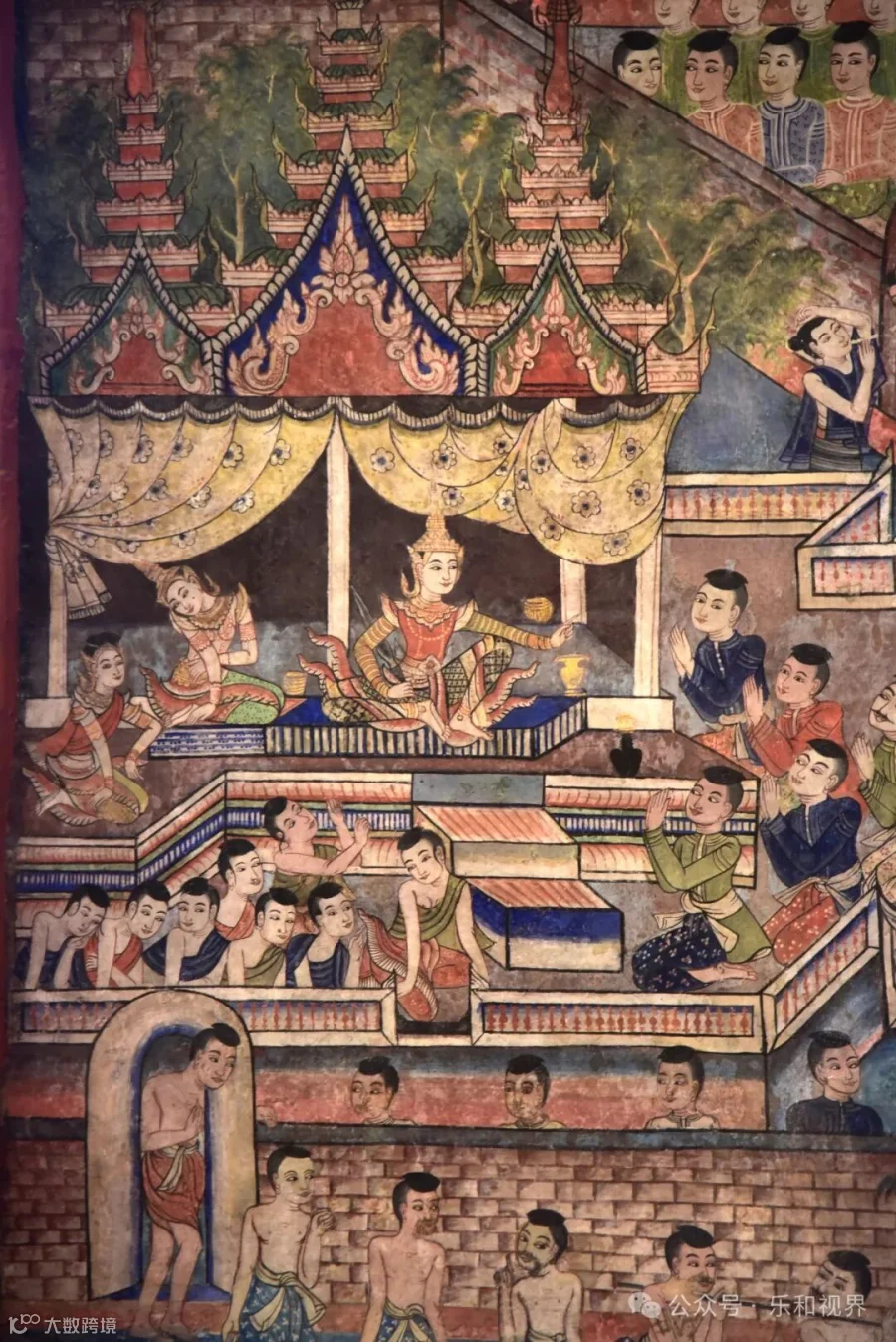
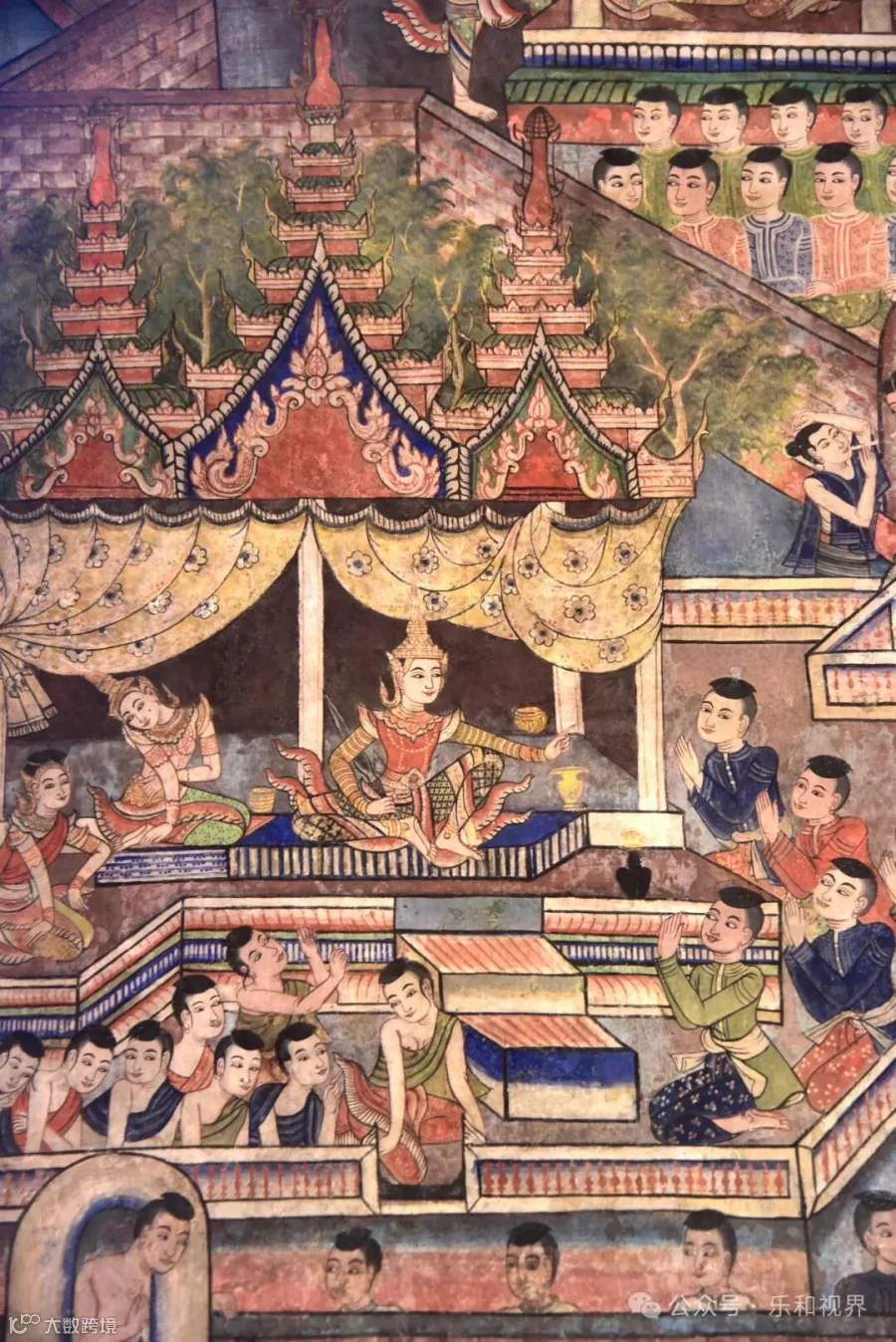
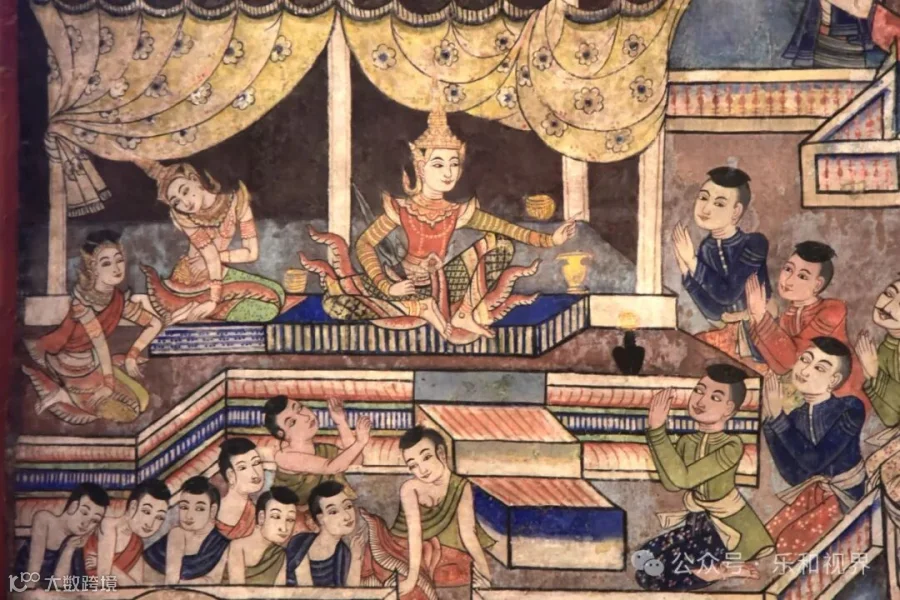
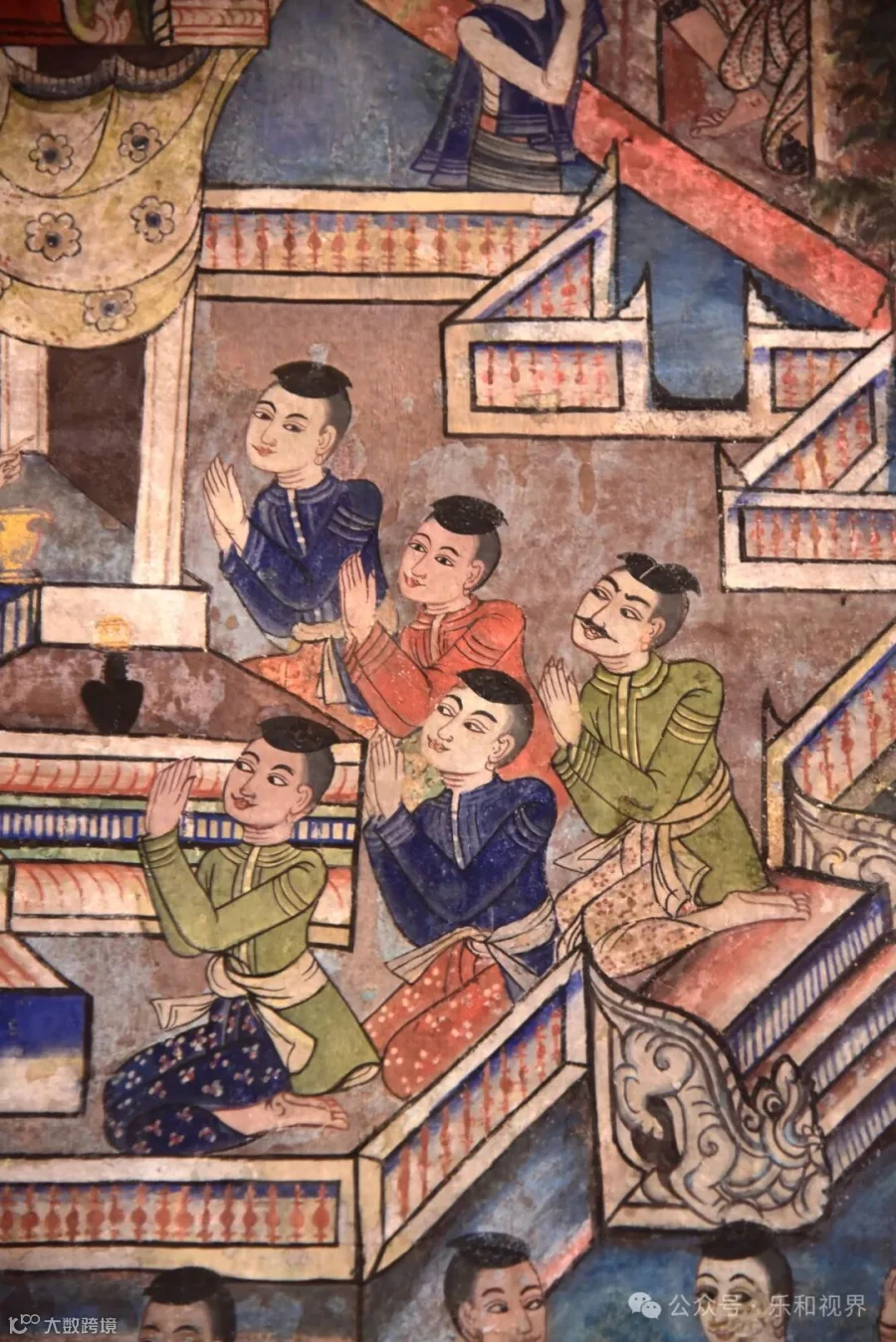
▲the royal palace with people outside
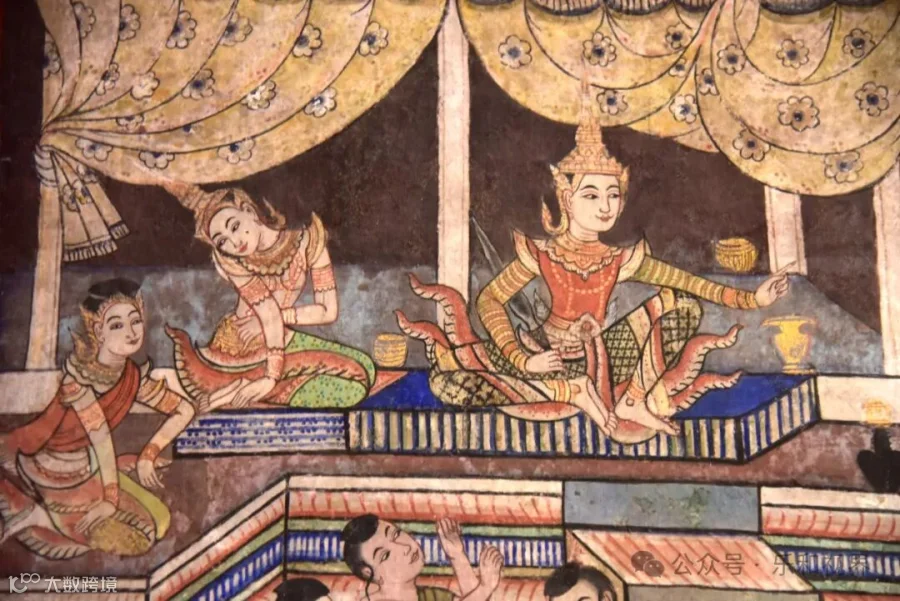
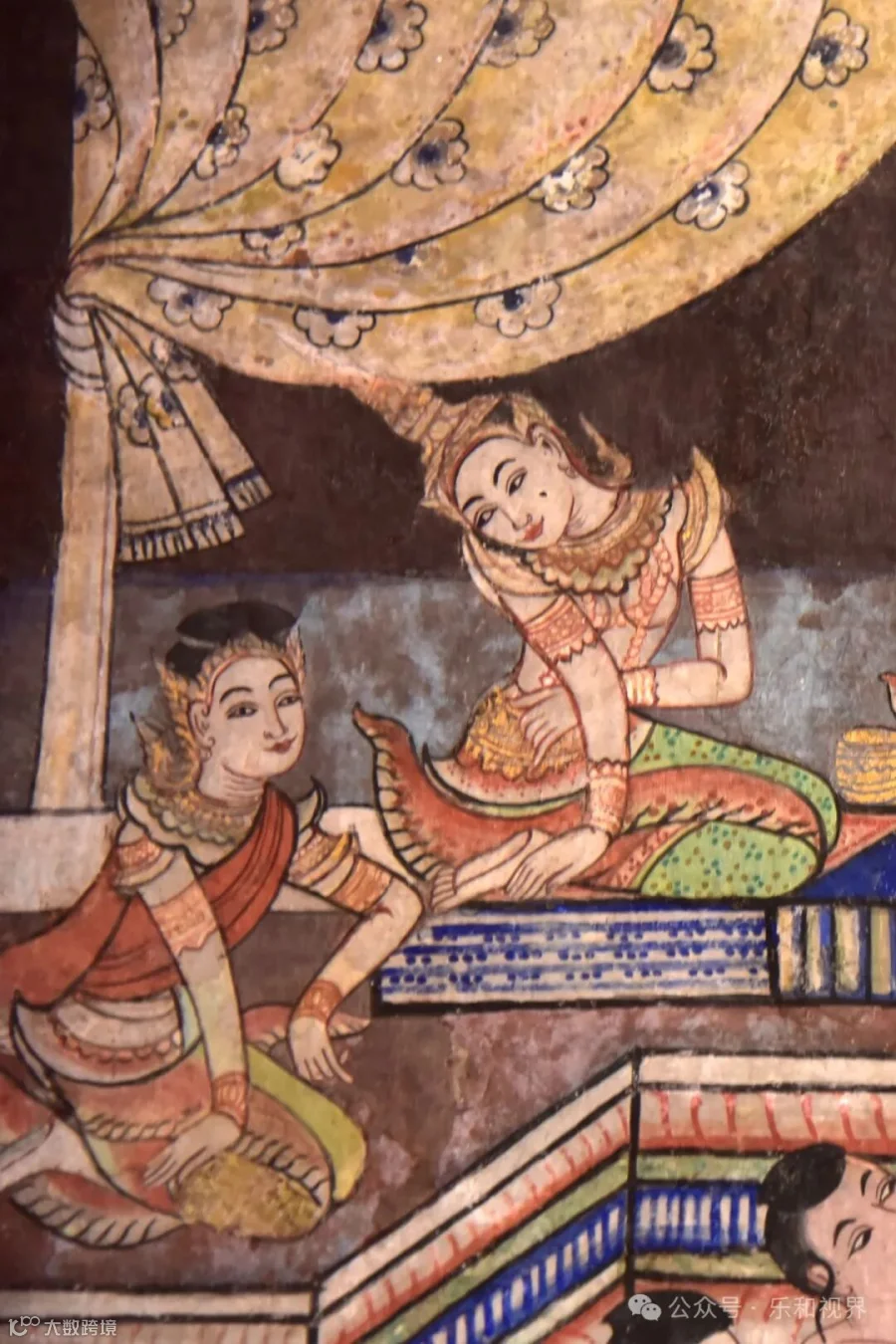
▲prince and princess
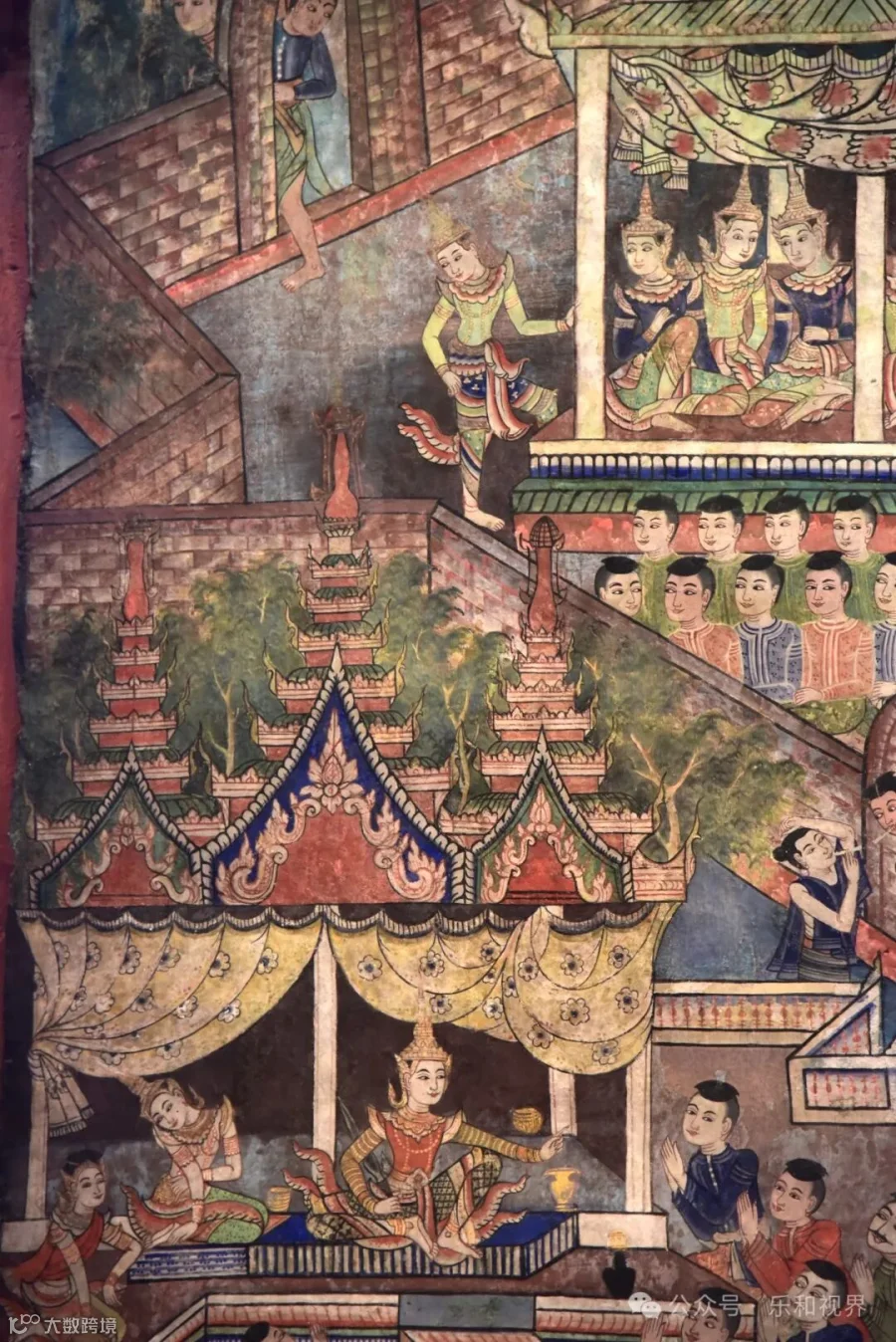
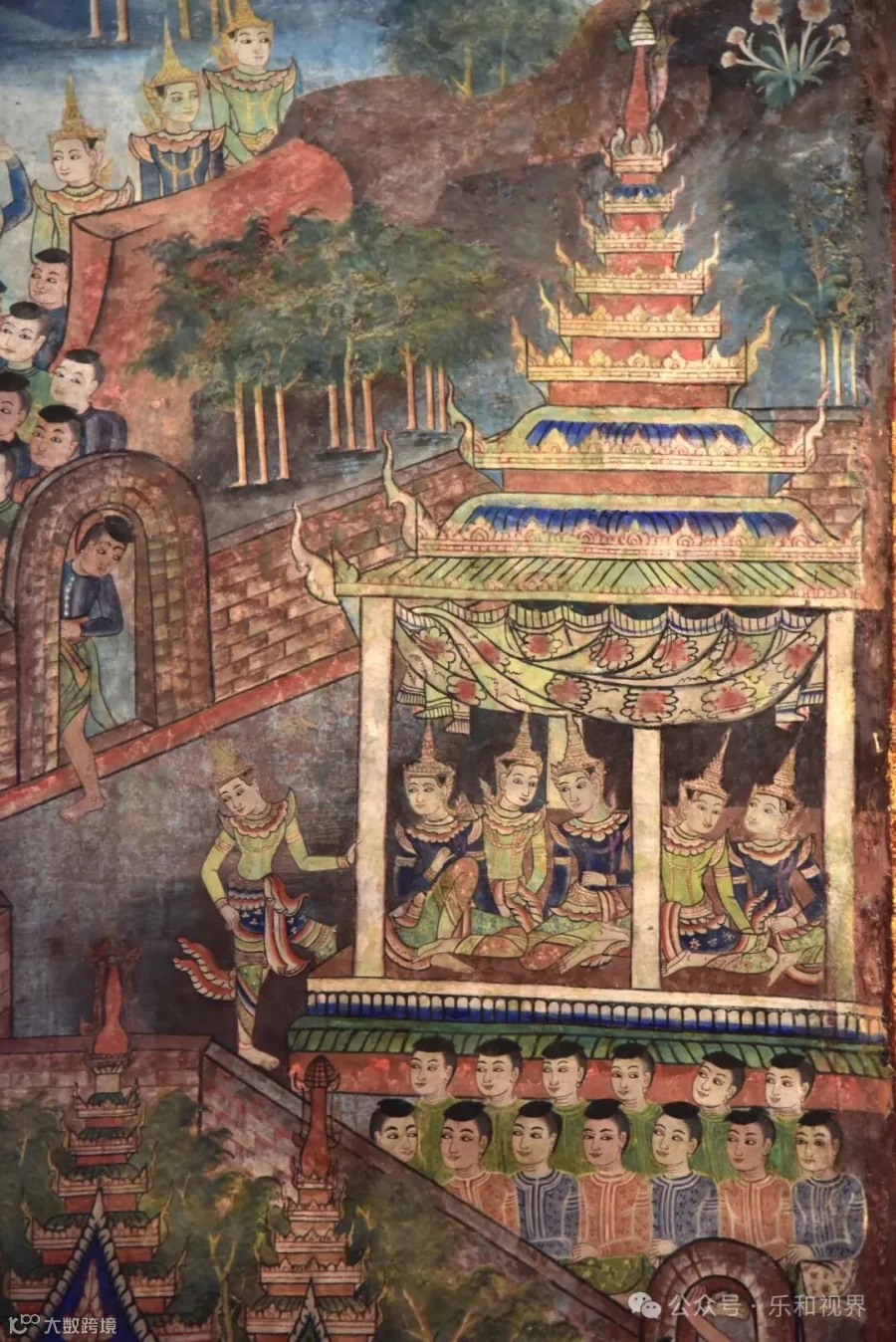
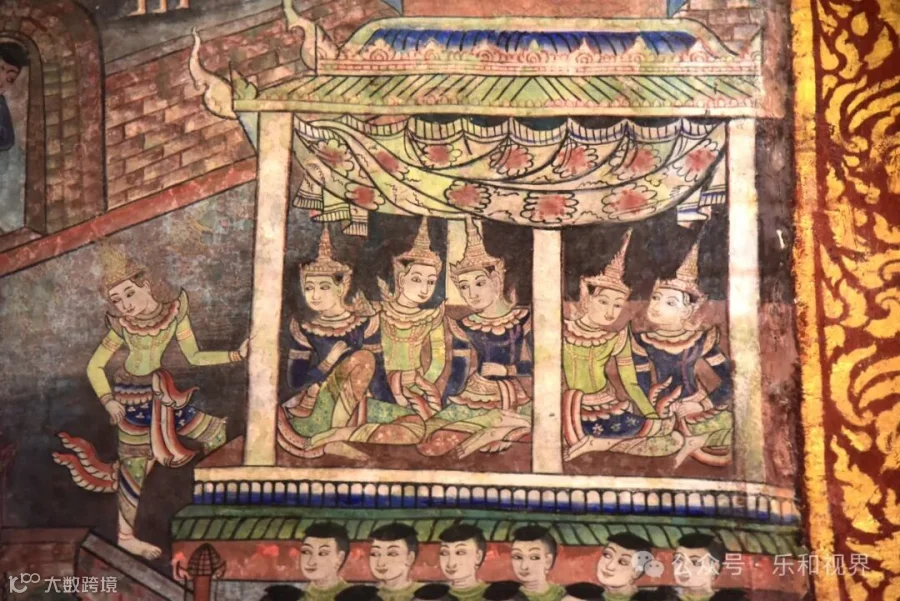
▲the royal palace
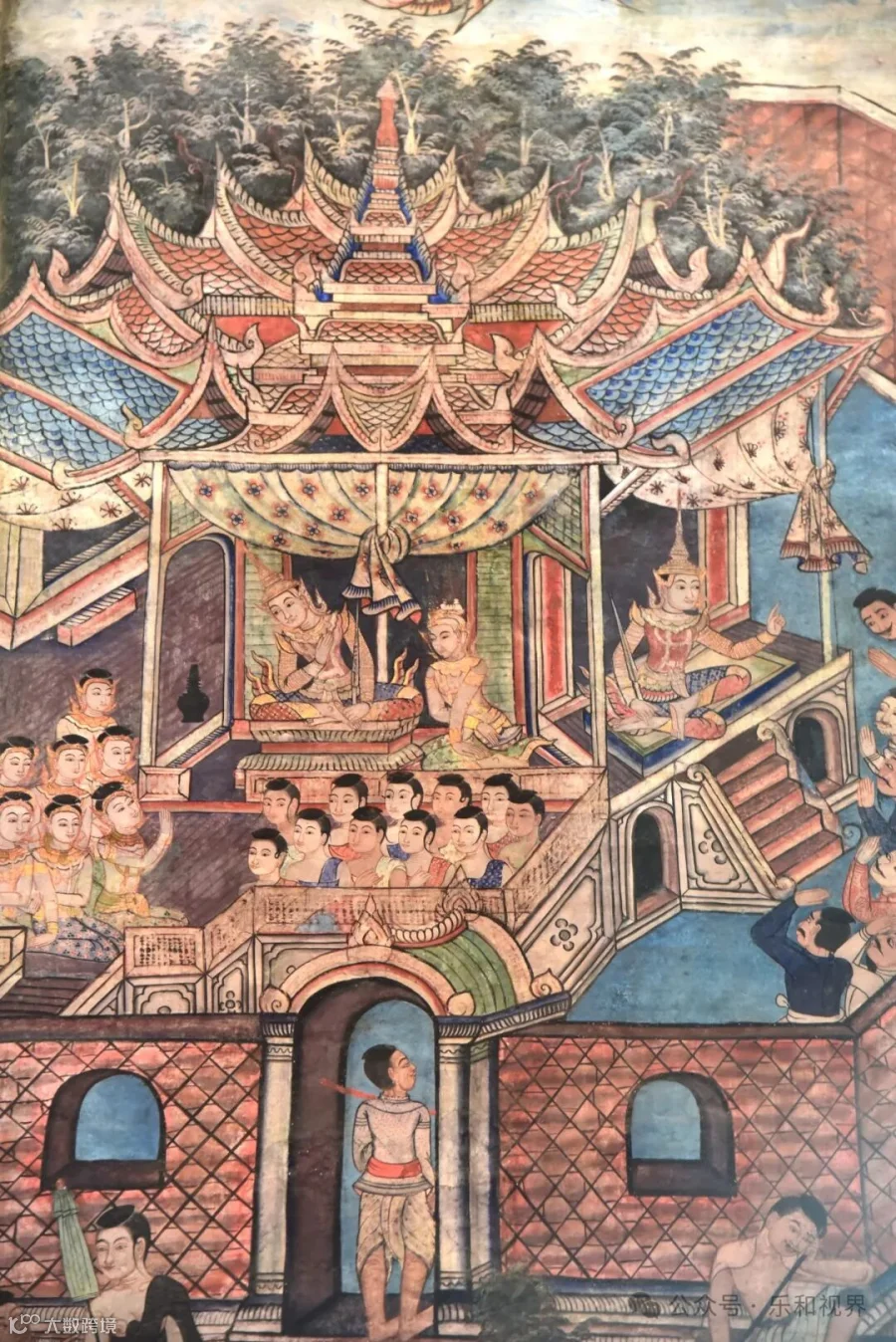
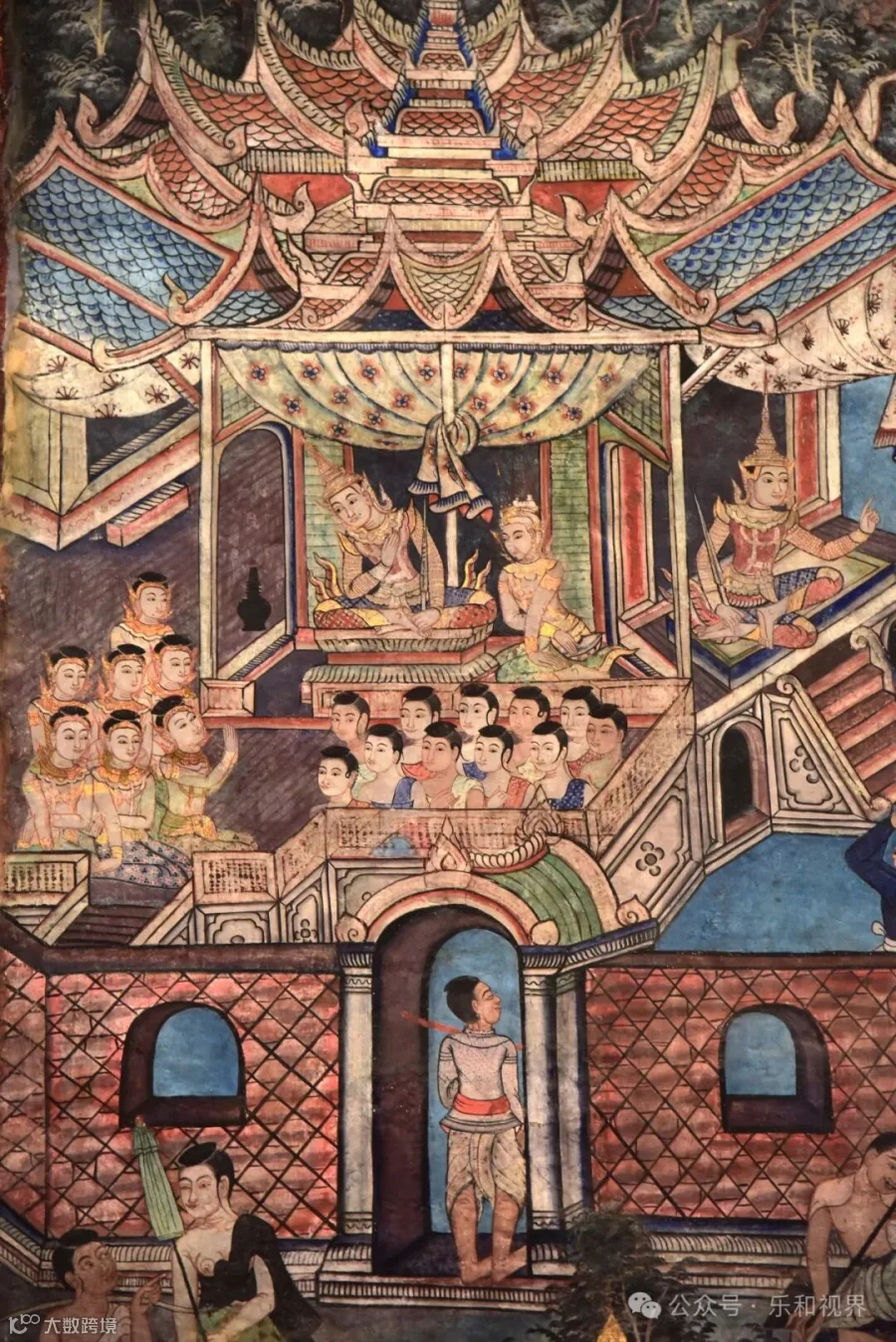
▲the royal palace
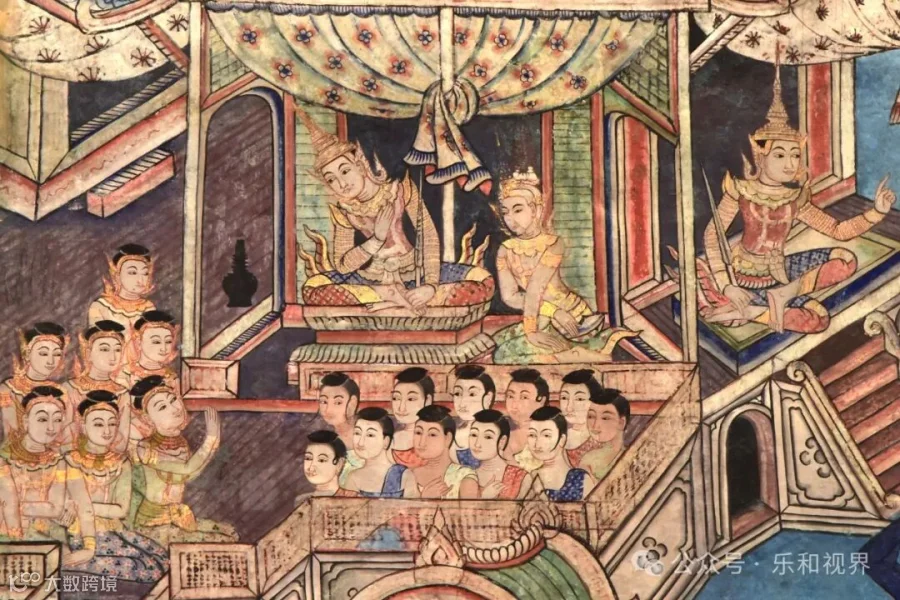
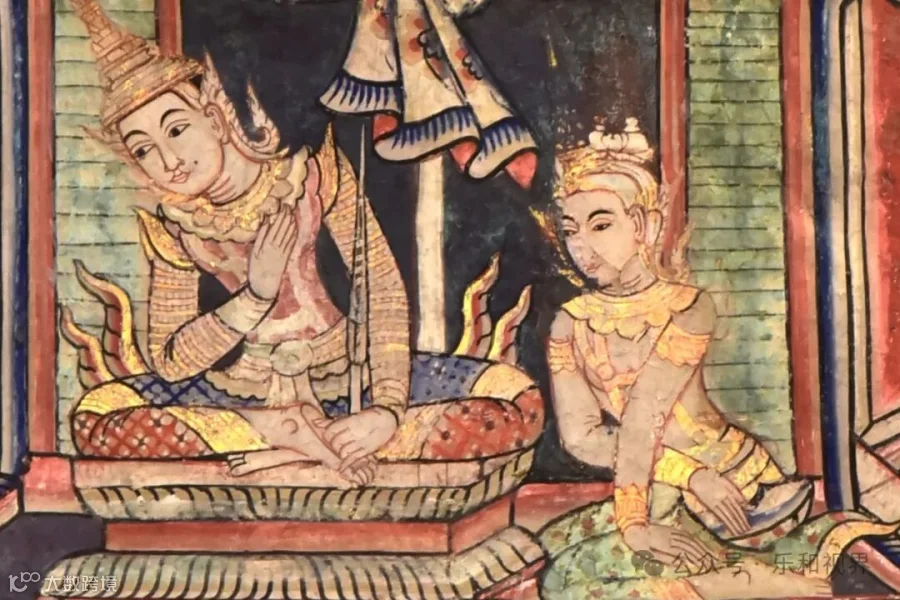
▲prince and princess
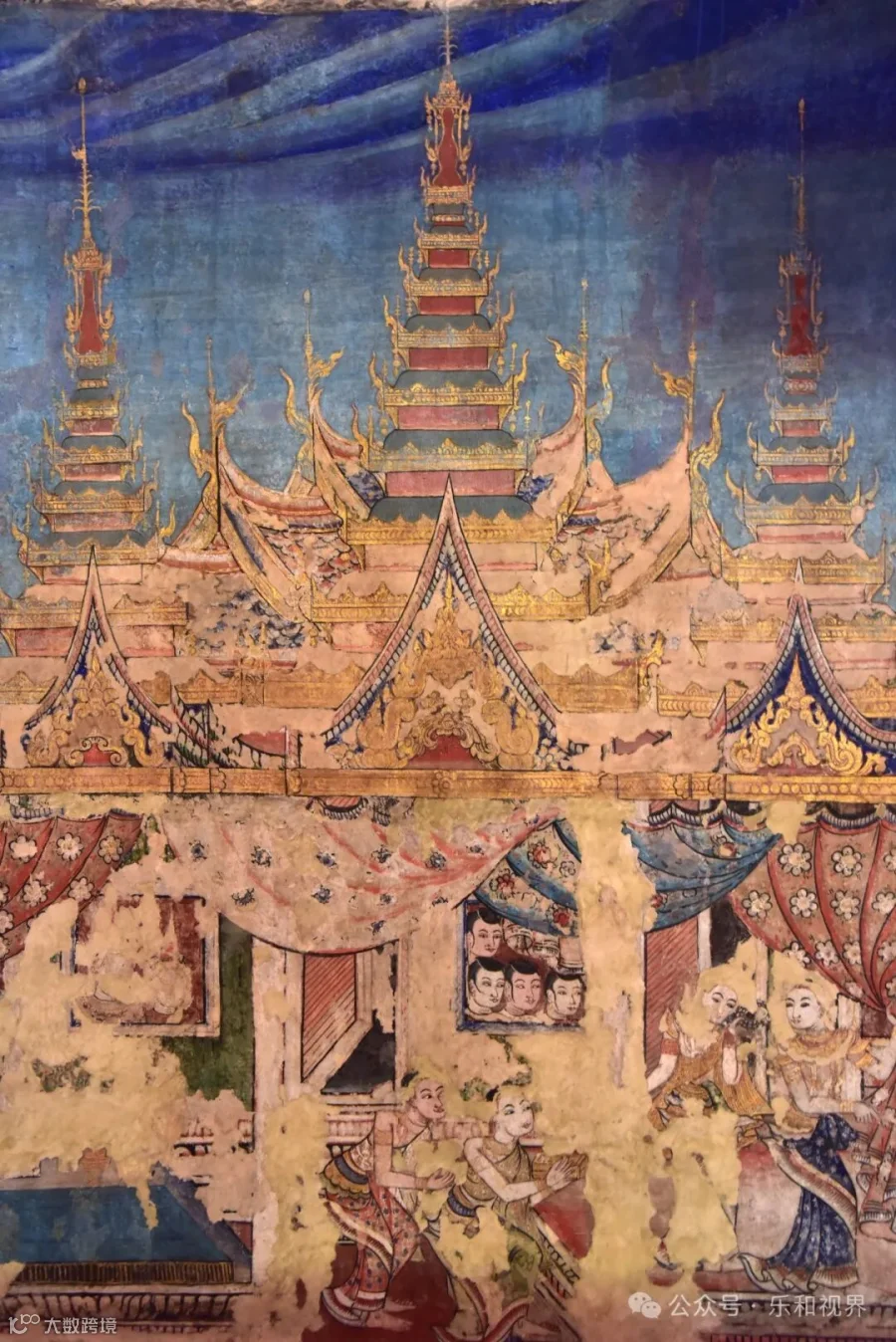
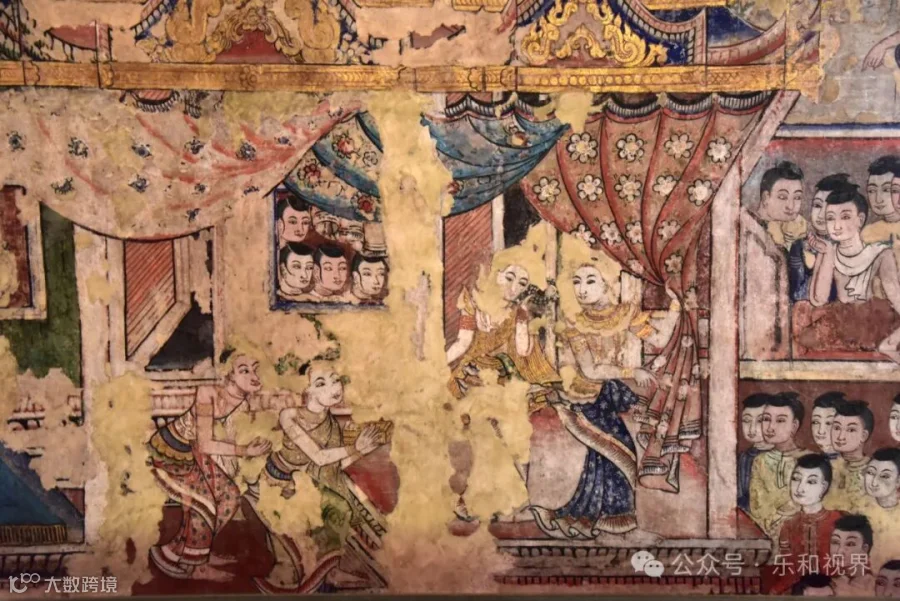
▲the royal palace
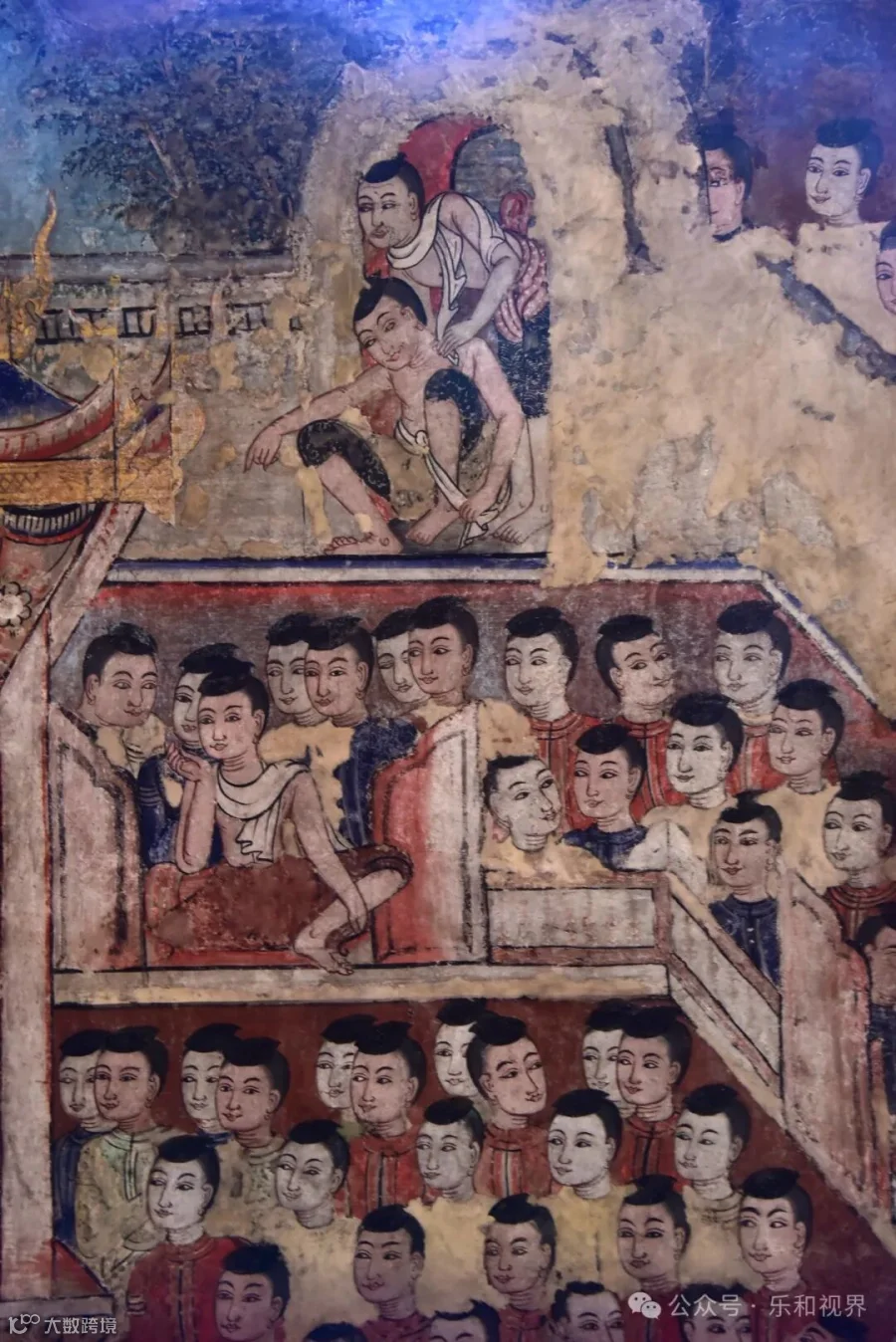
▲people outside the royal palace
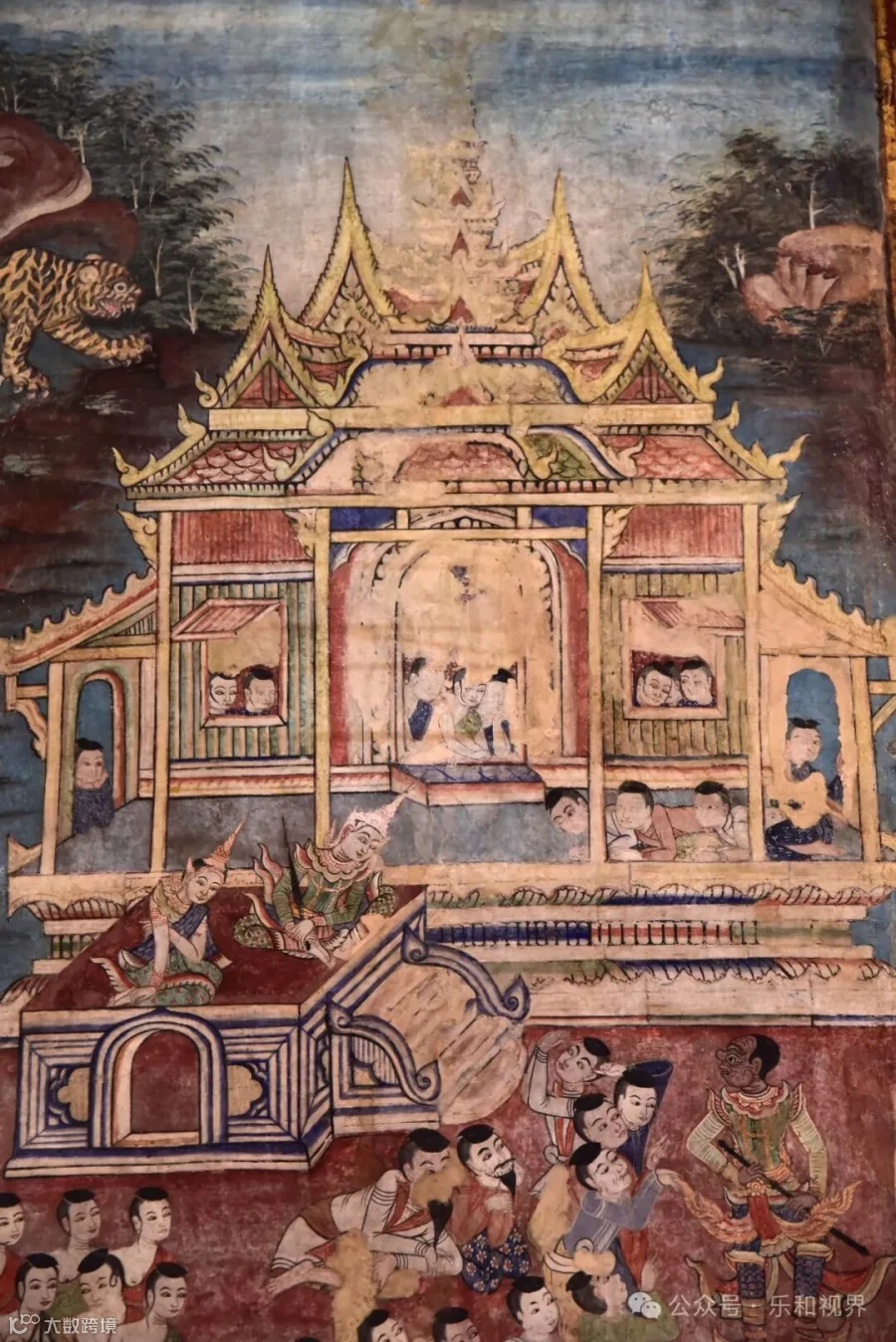
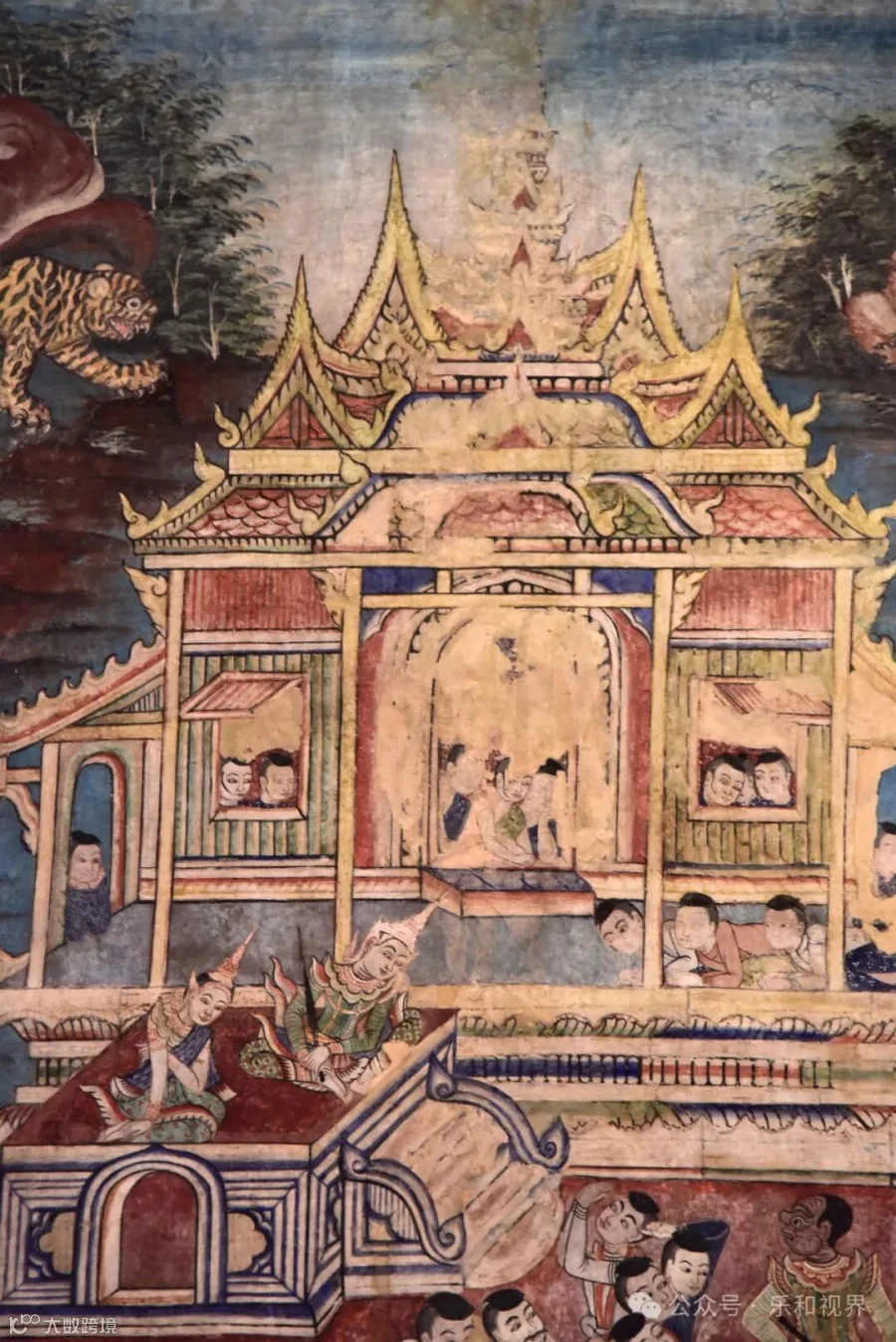
▲the royal palace
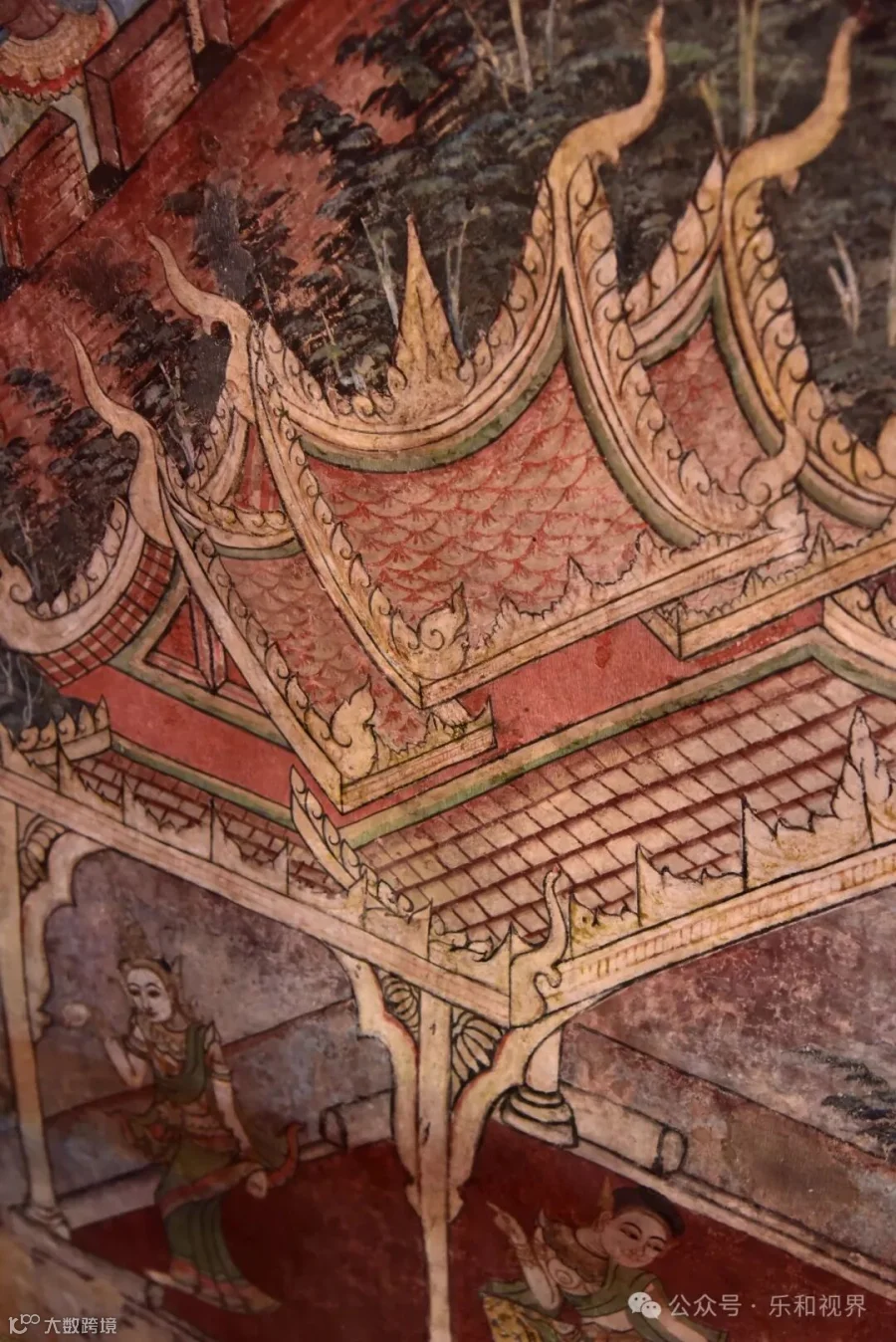
▲jumping eaves
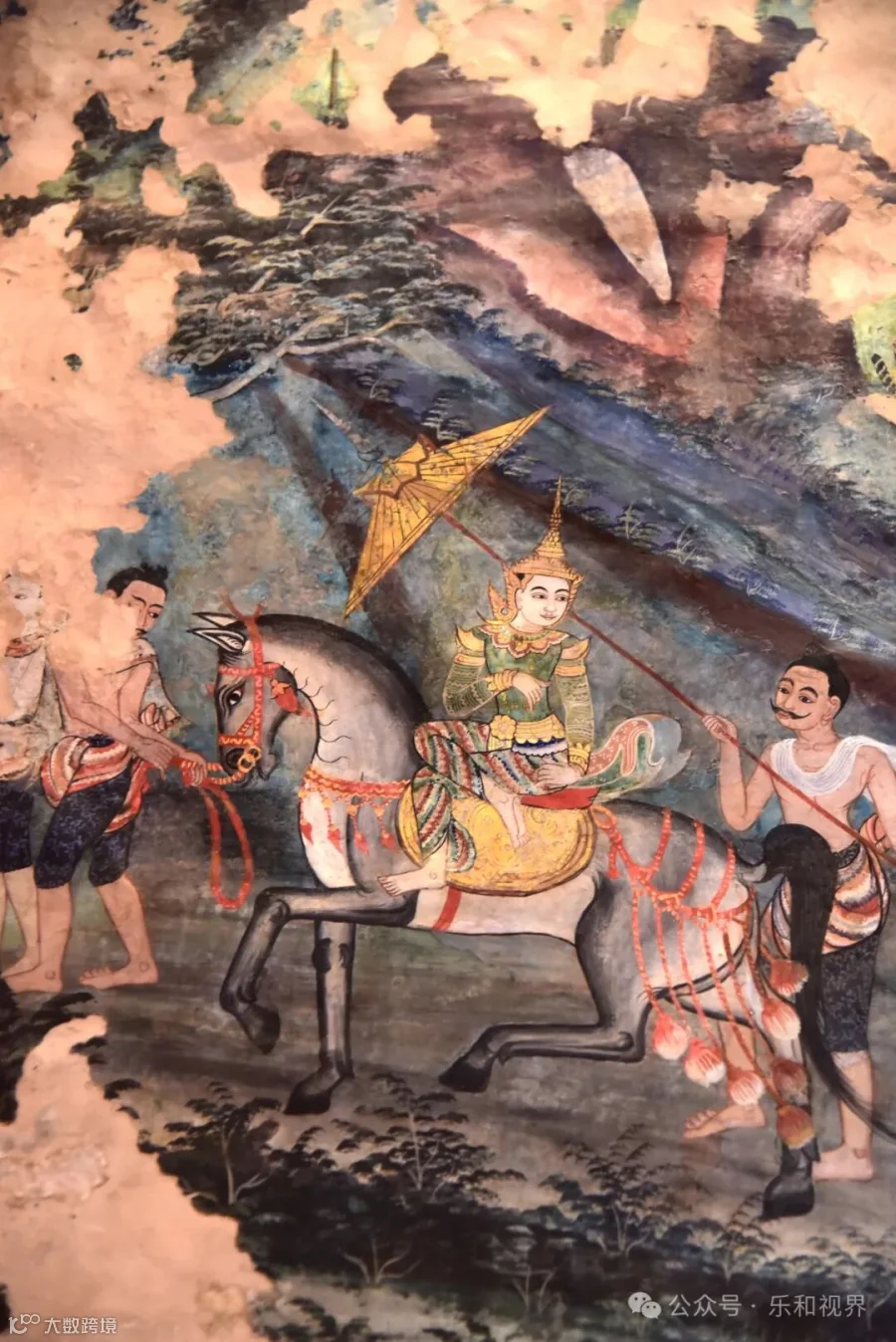
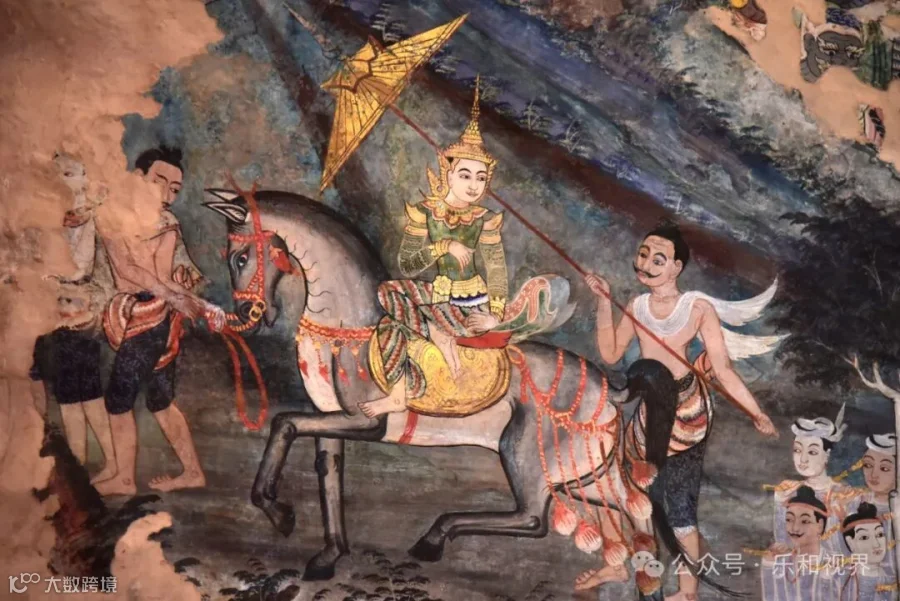
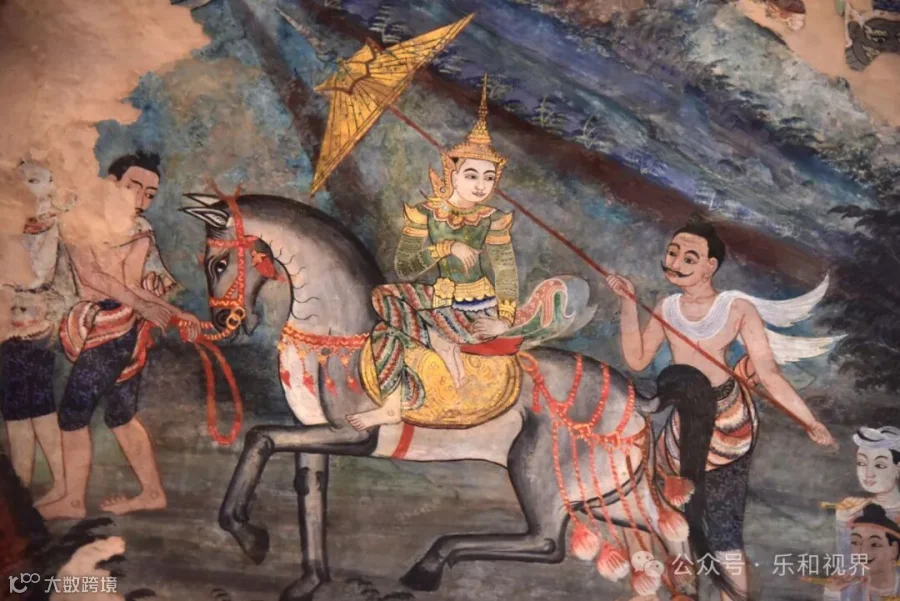
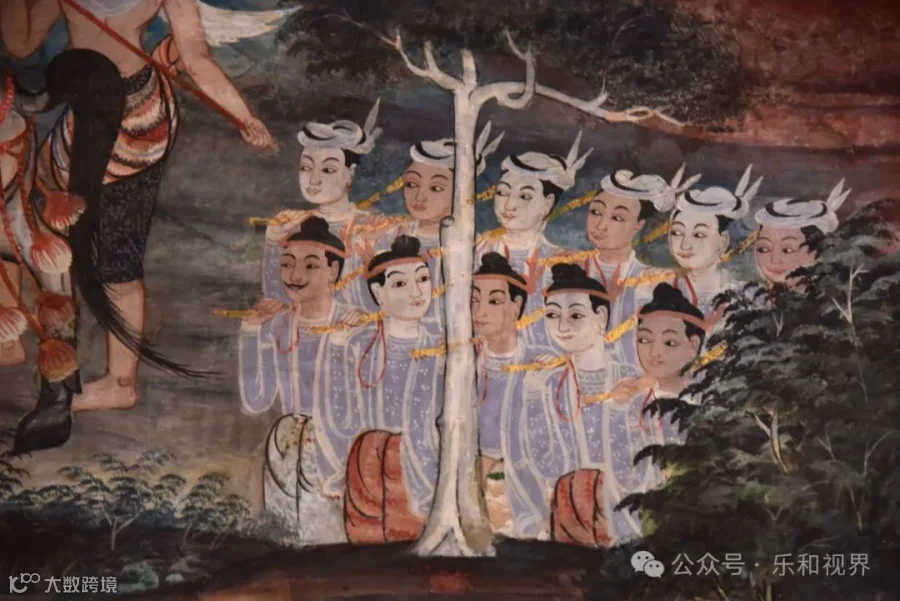
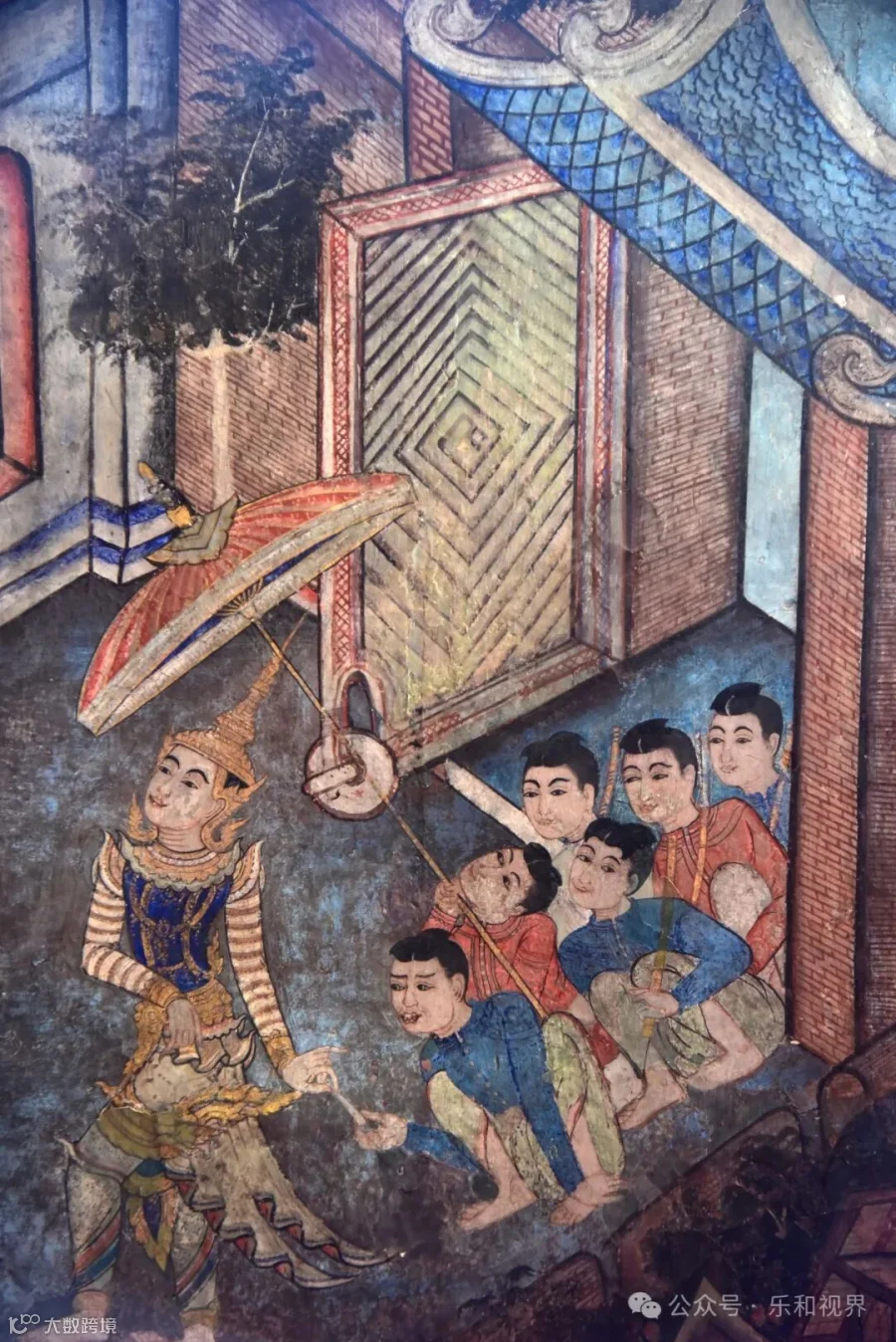
▲the royal honor guard
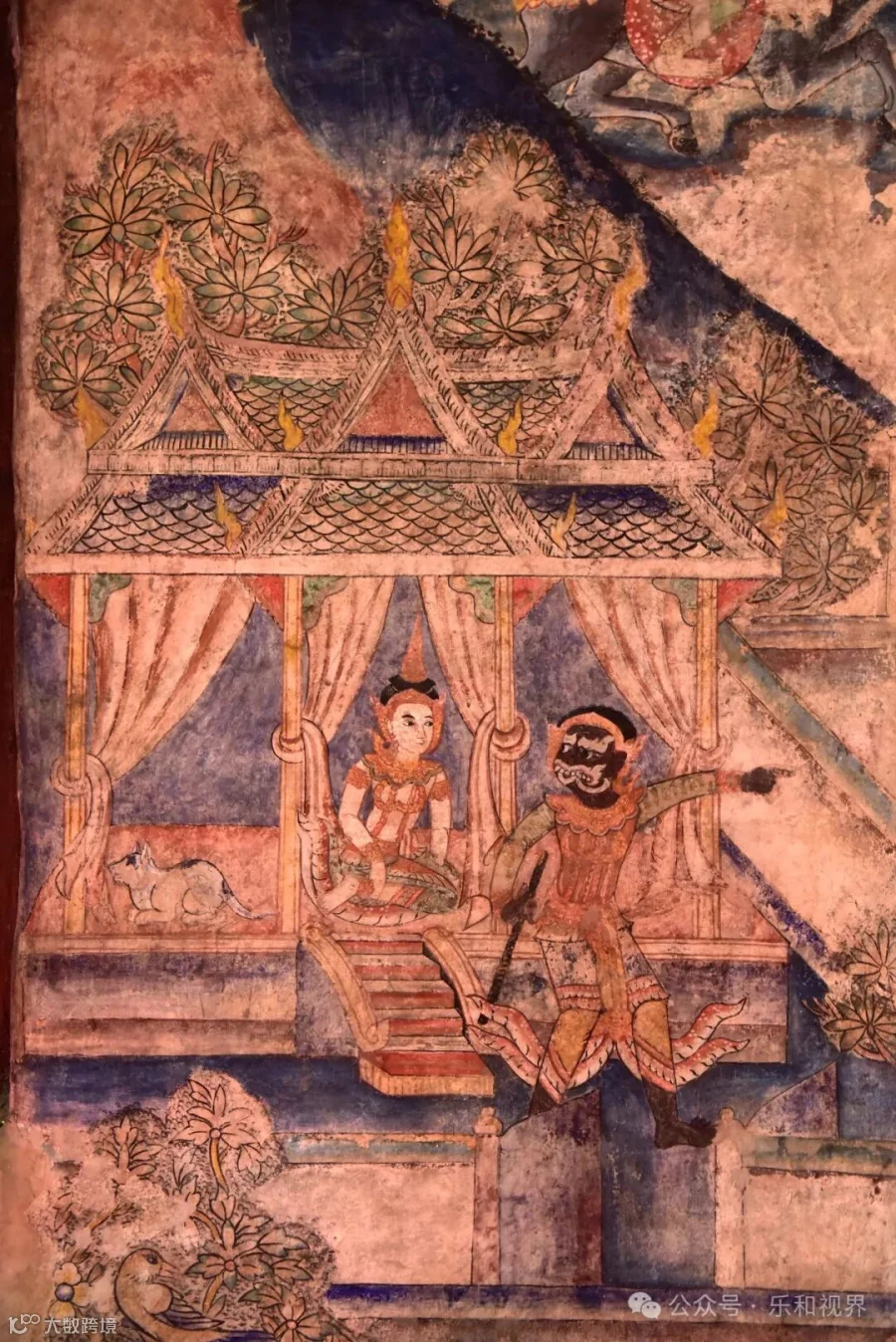
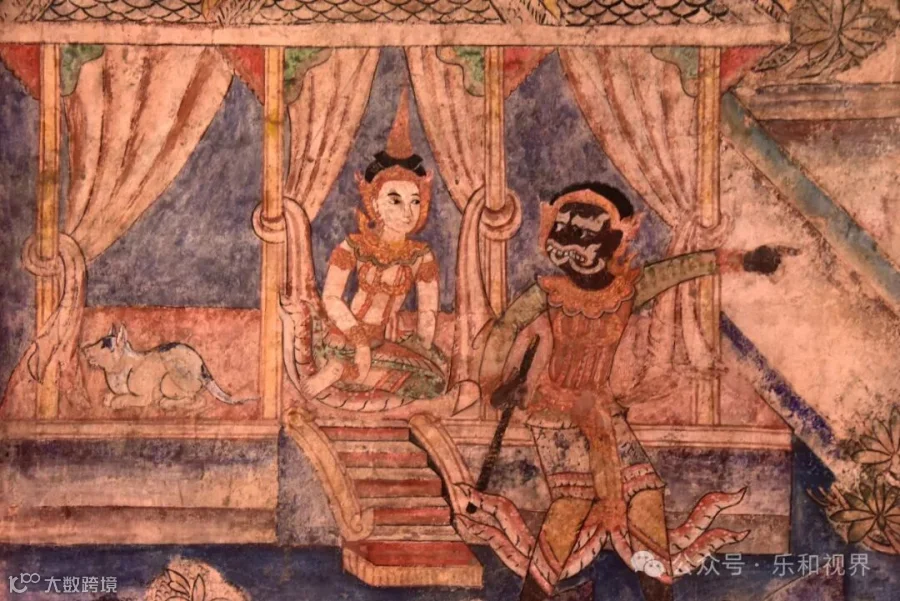
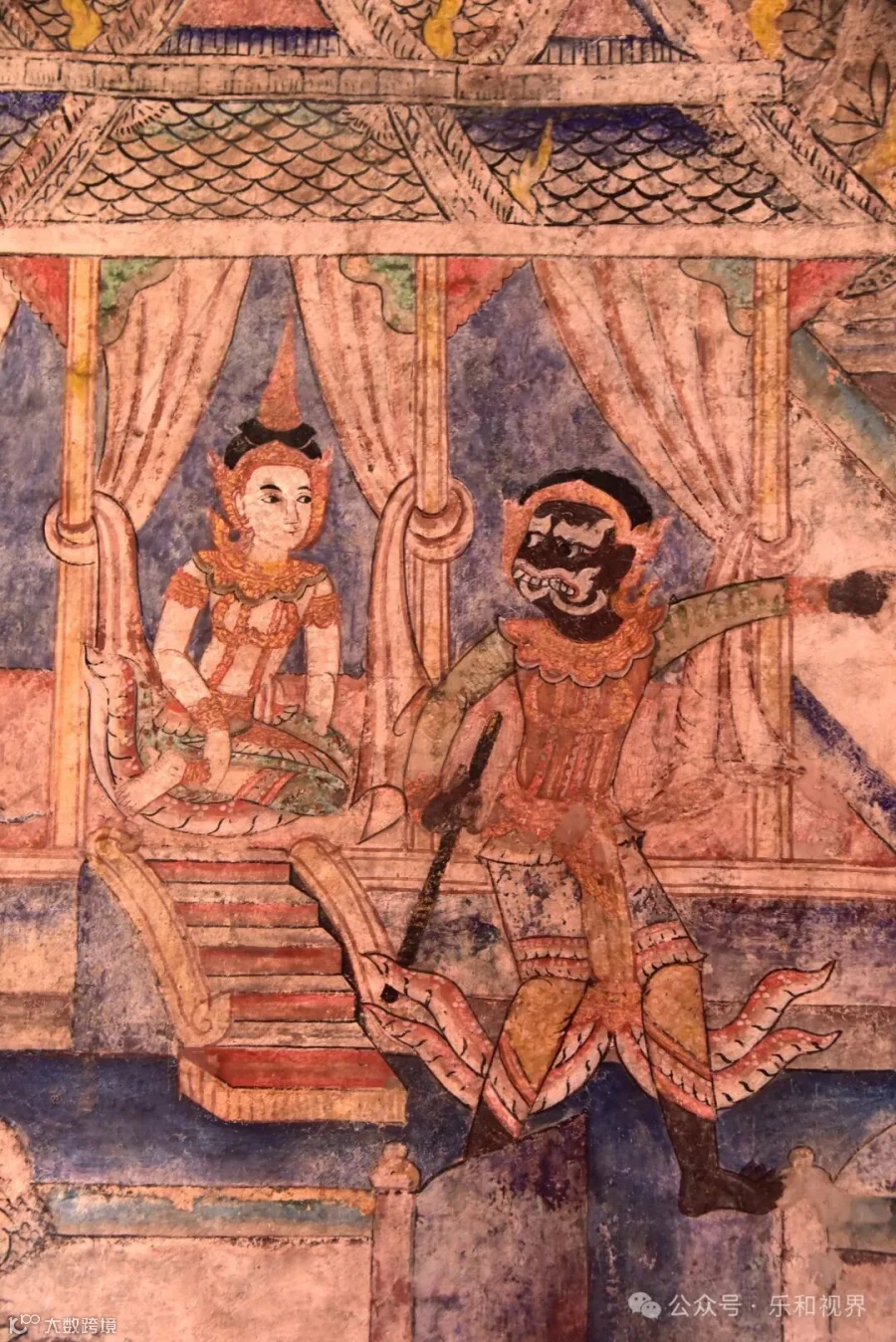
▲friendly ogre
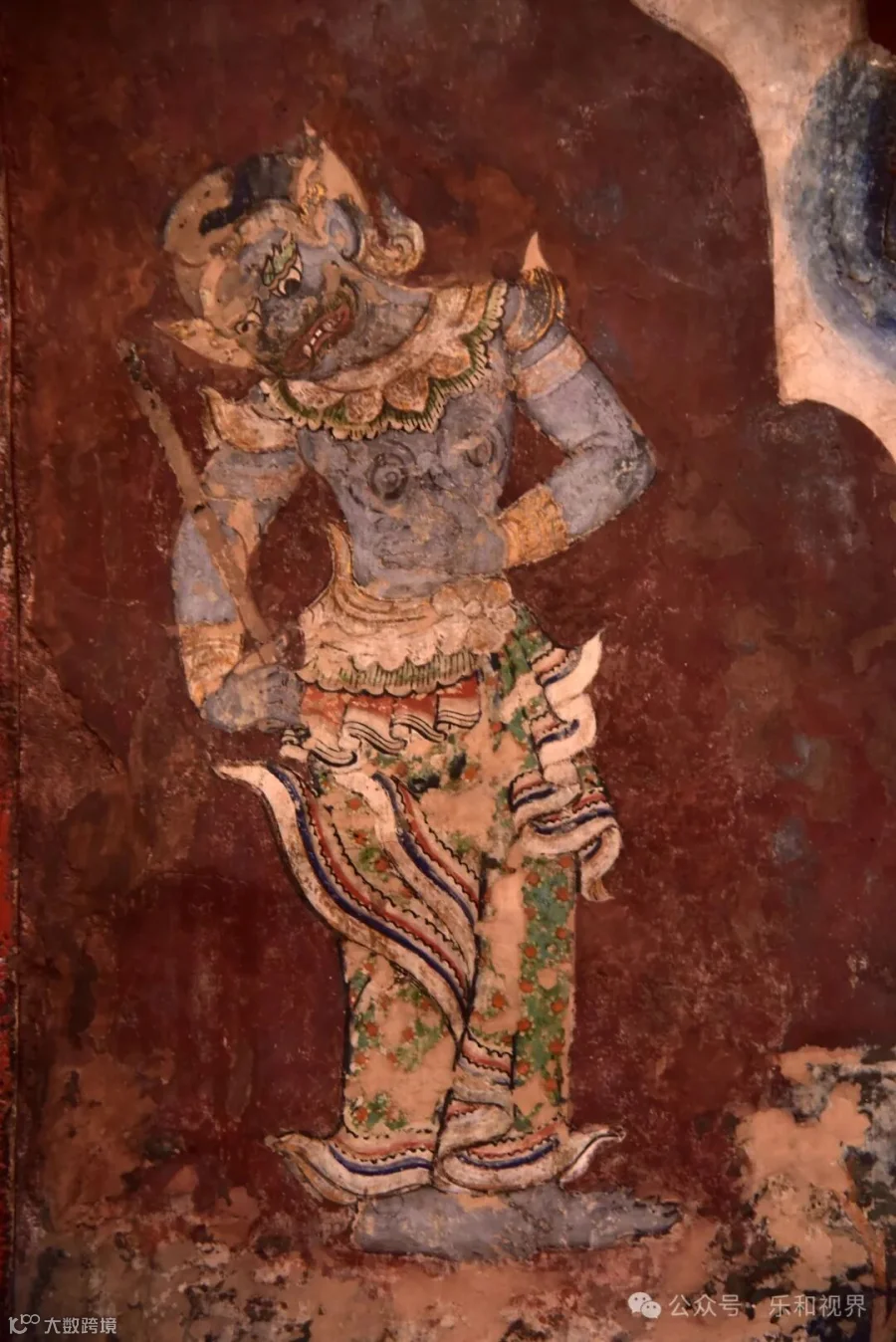
▲the ogress
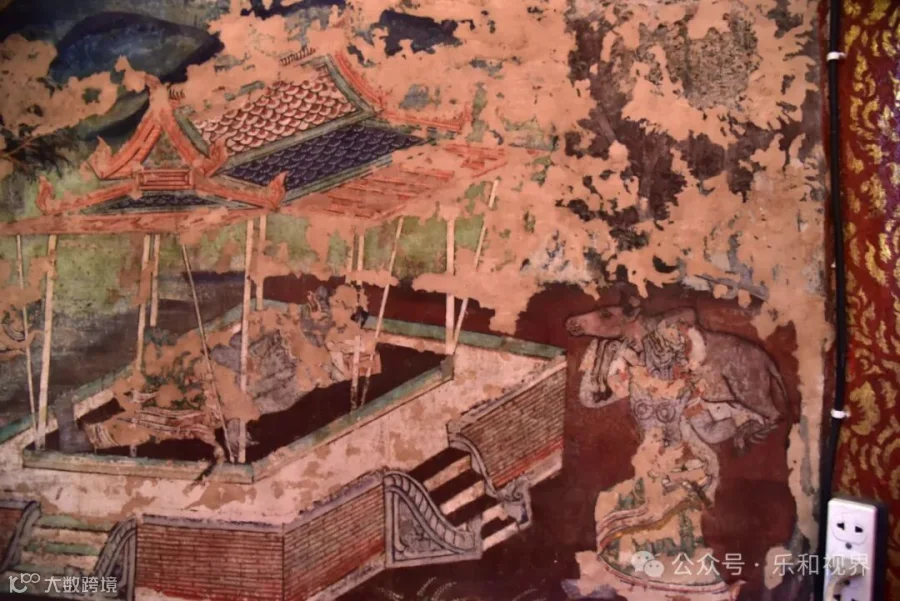
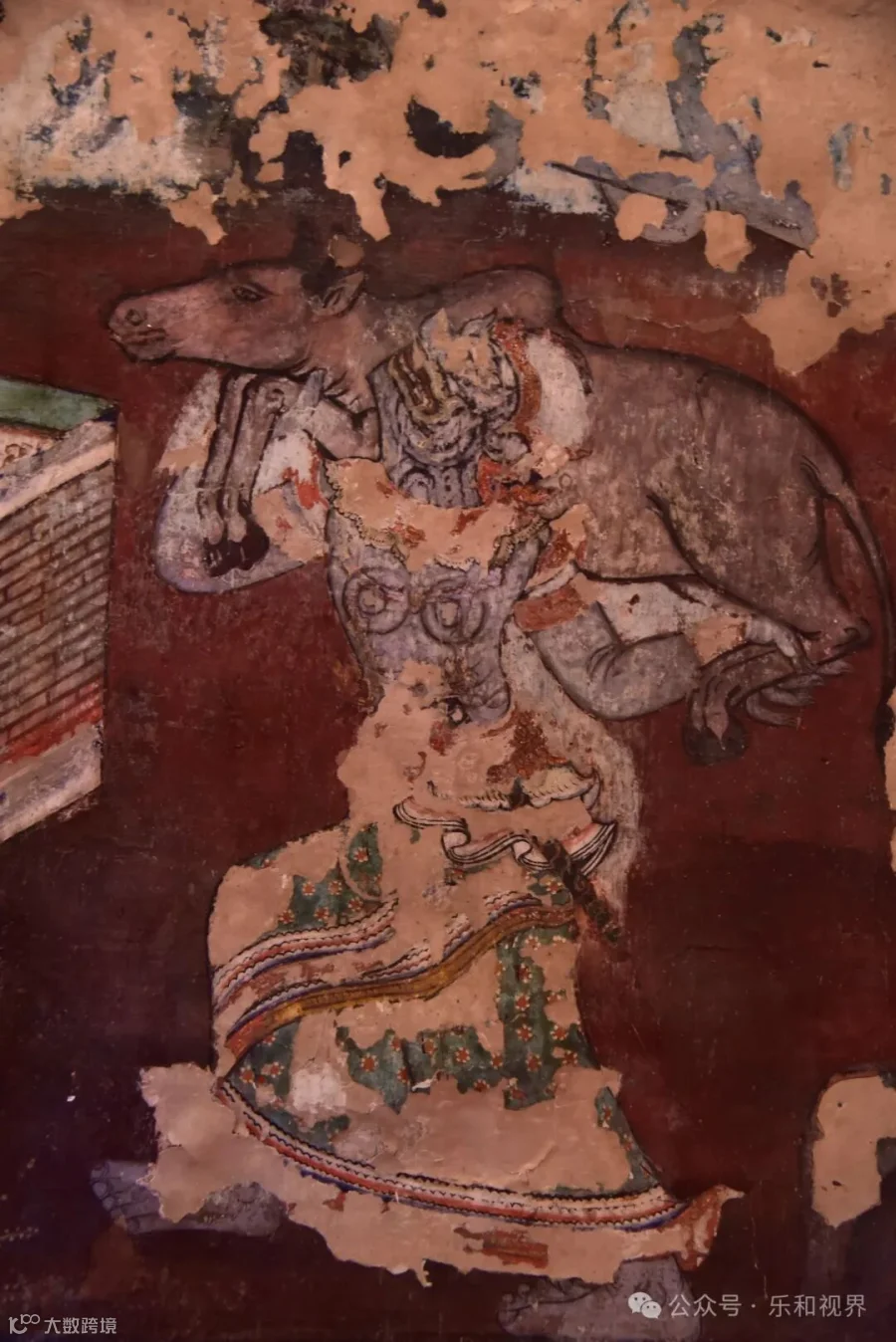
▲the ogress sacrificed for the ogre
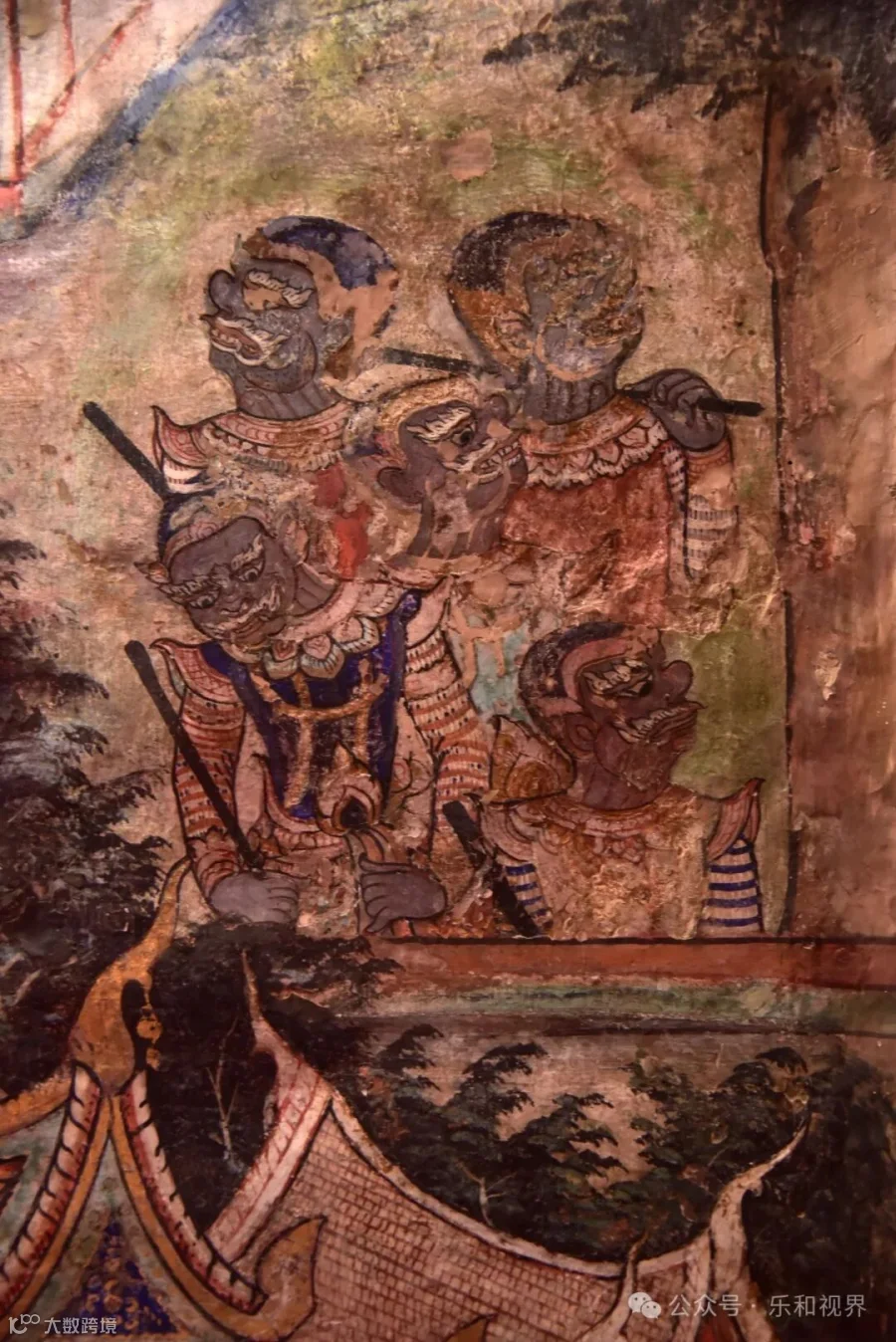
▲the ogres
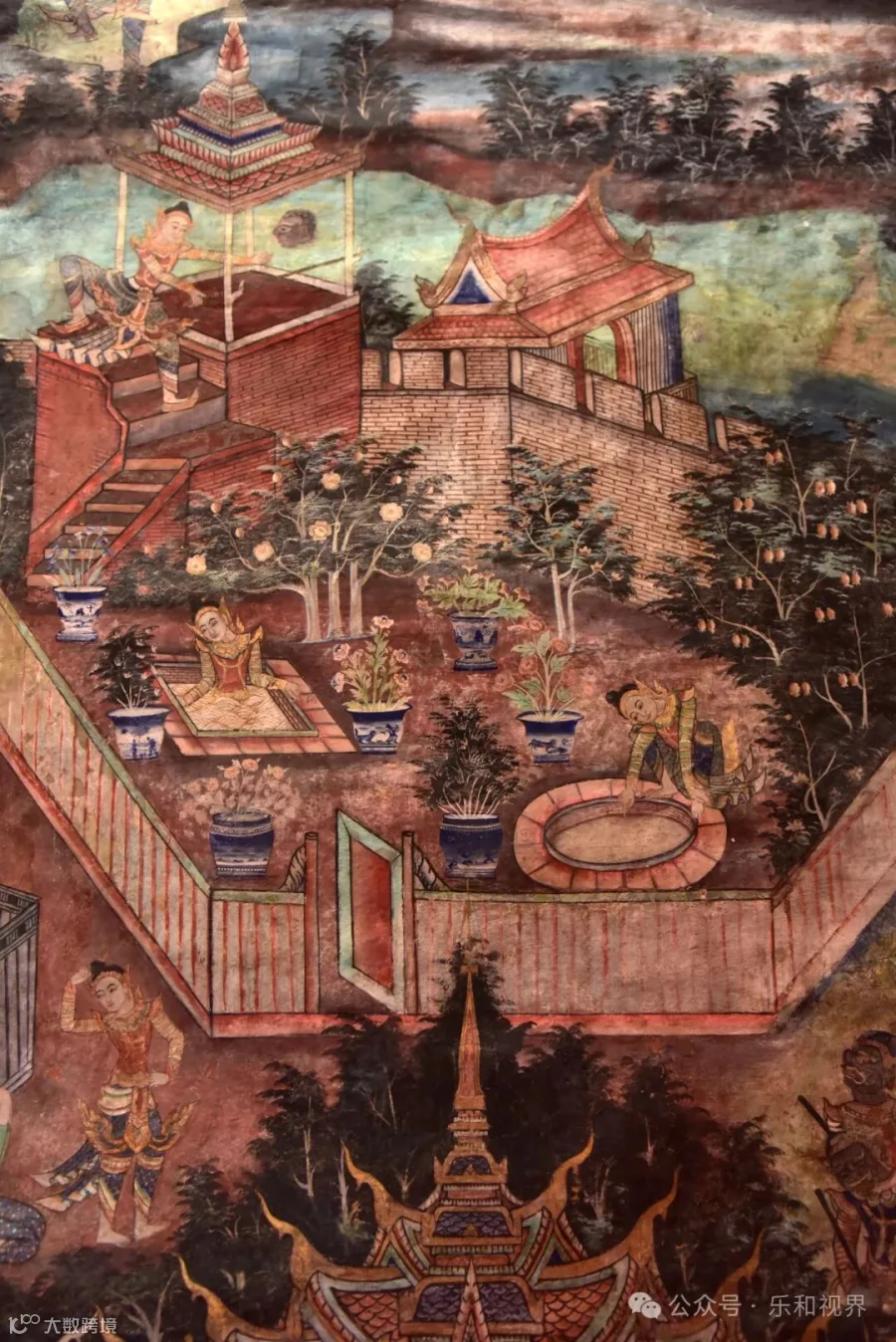
▲palace scene
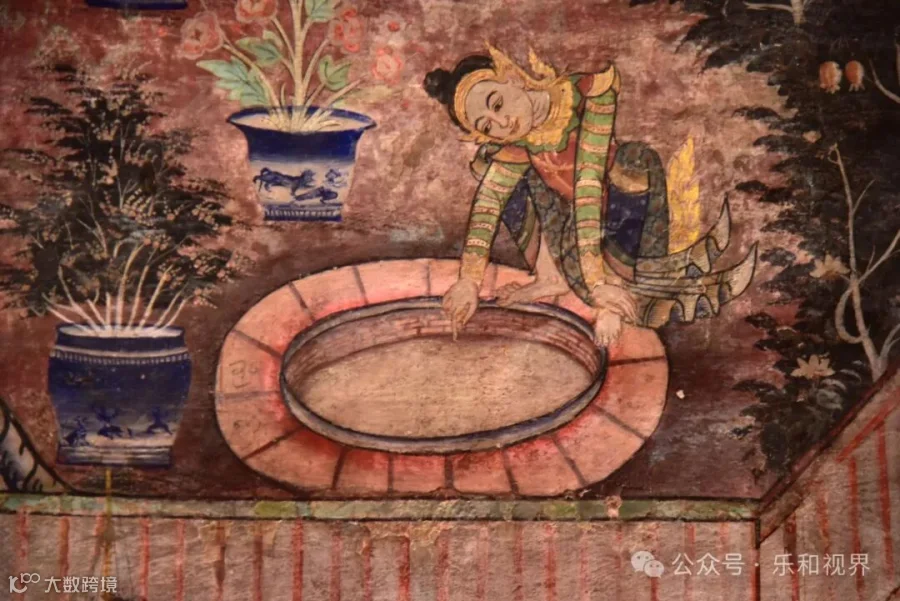
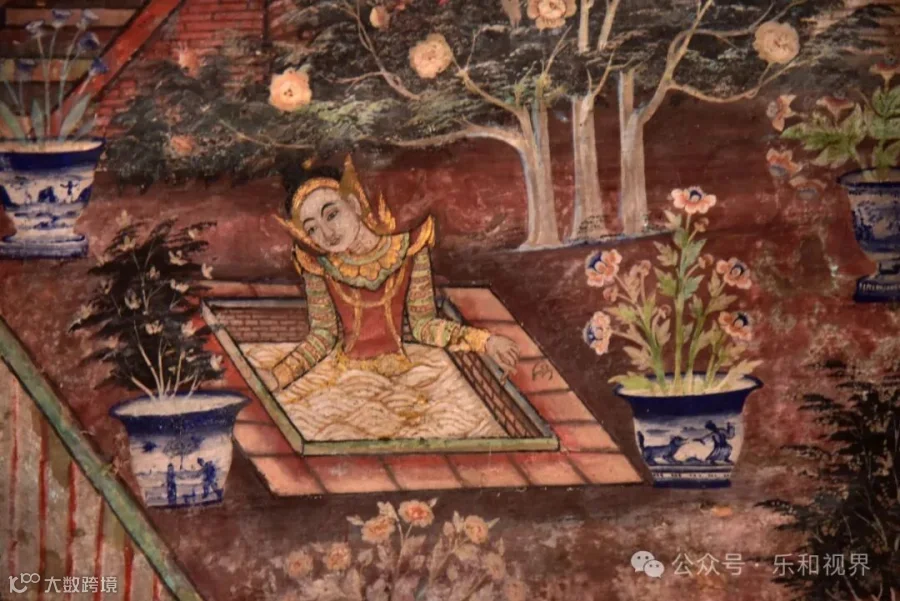
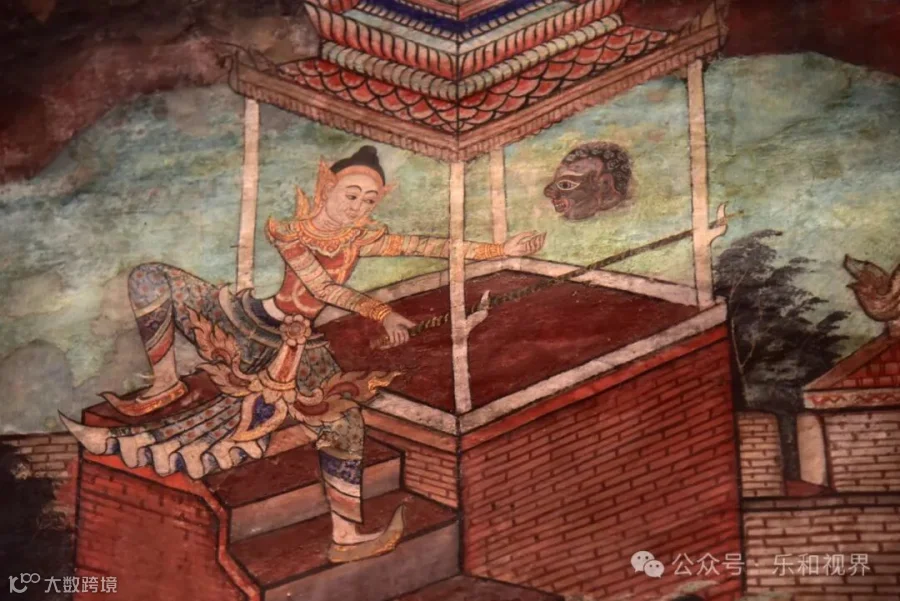
▲cut off the head of the ogre
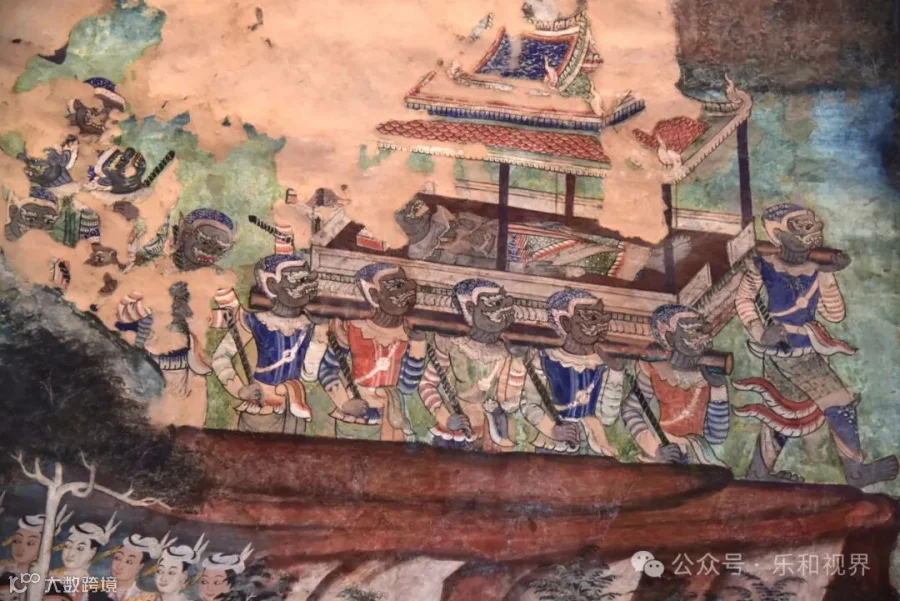
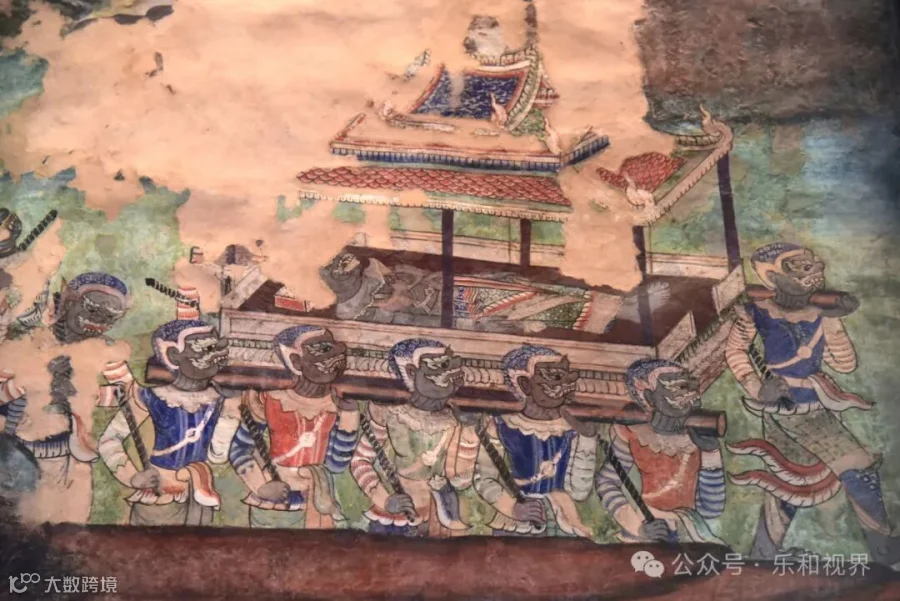
▲ogre funeral scene
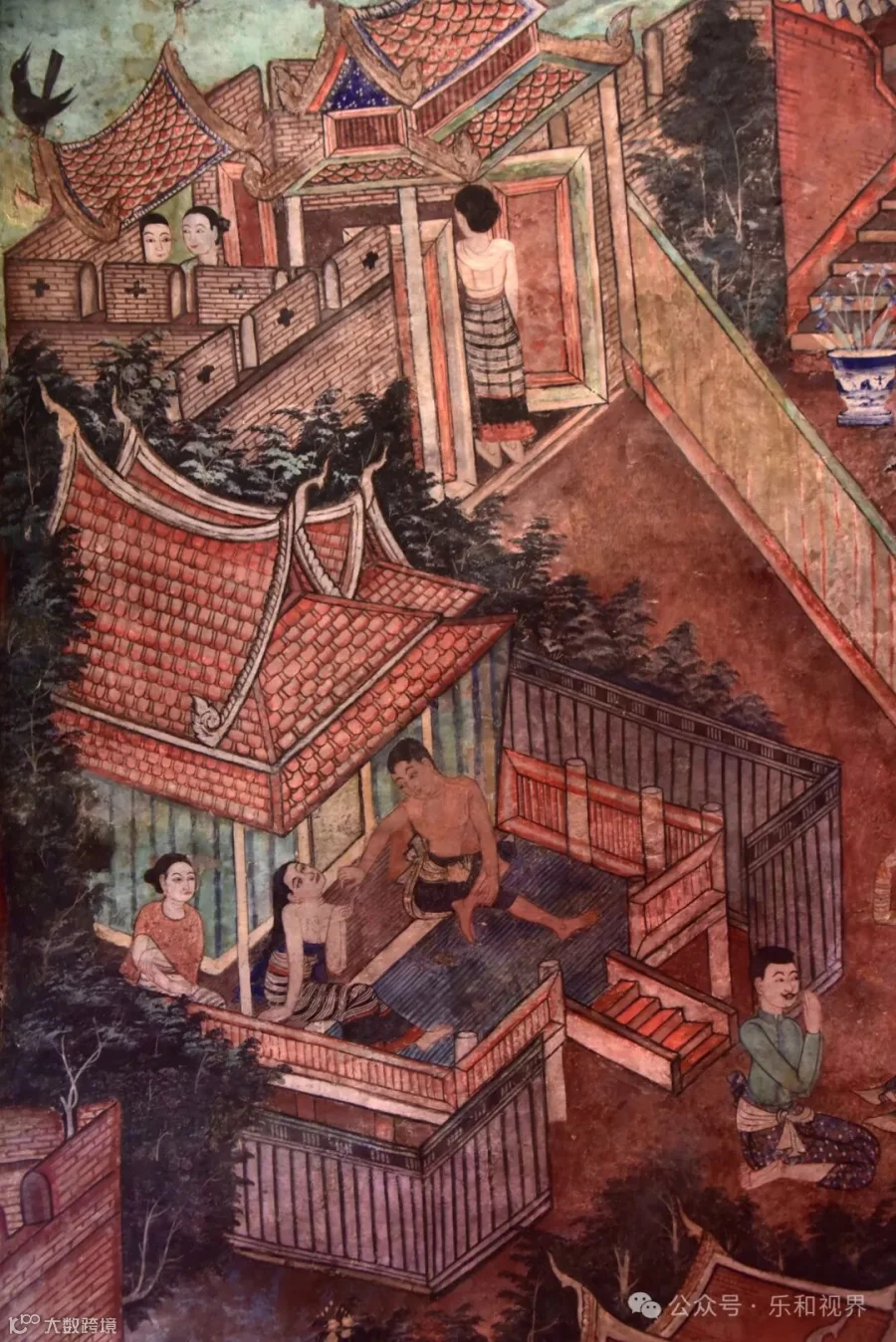
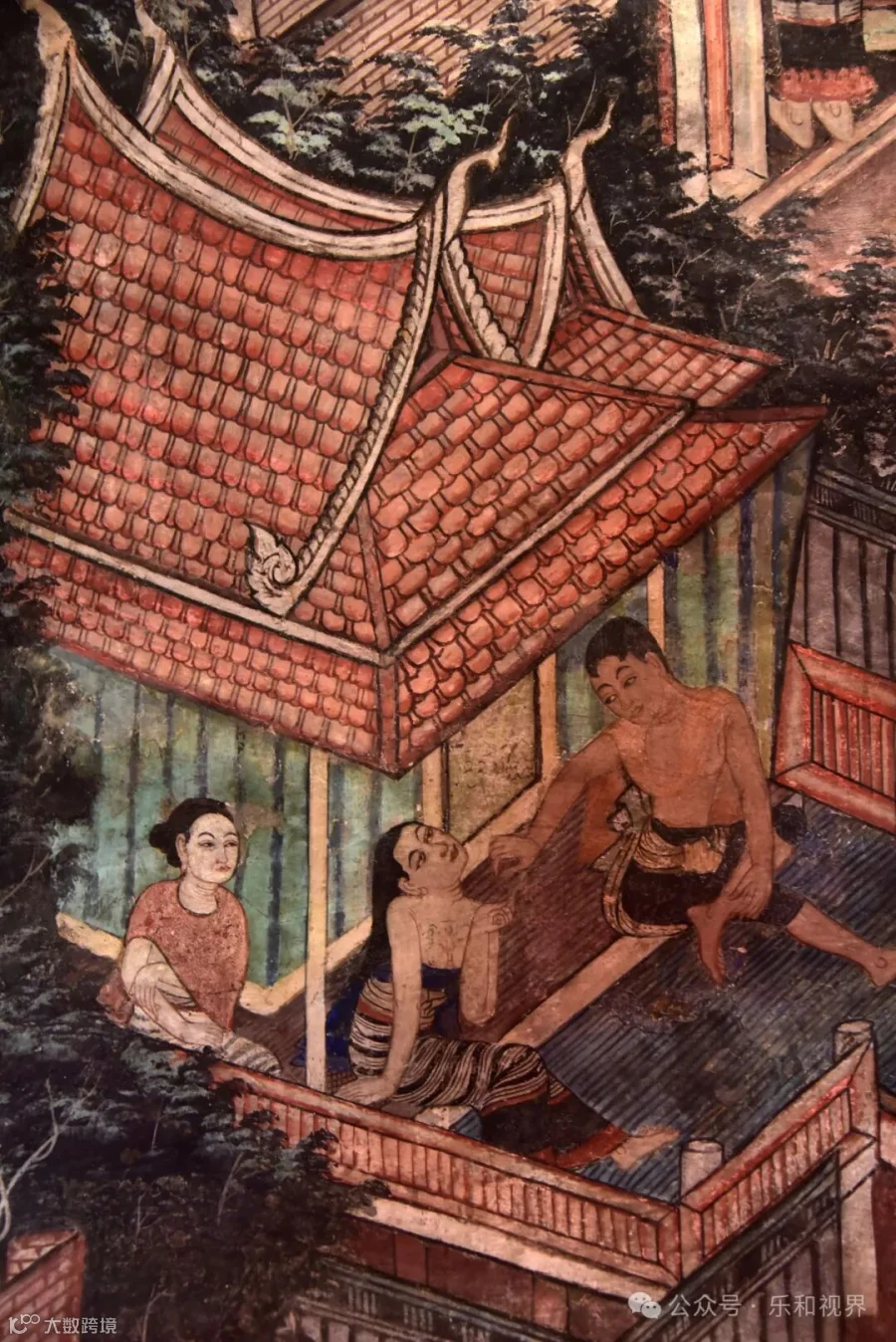
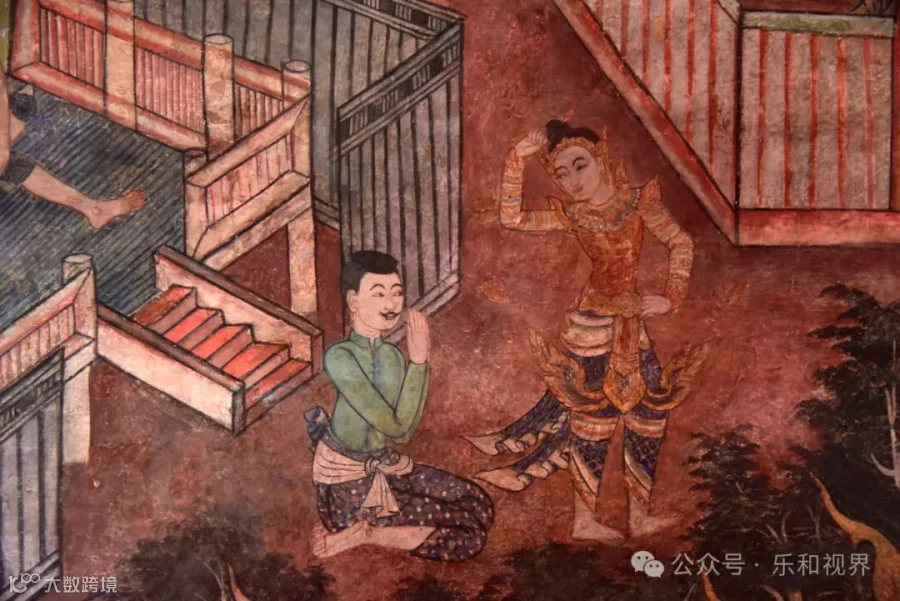
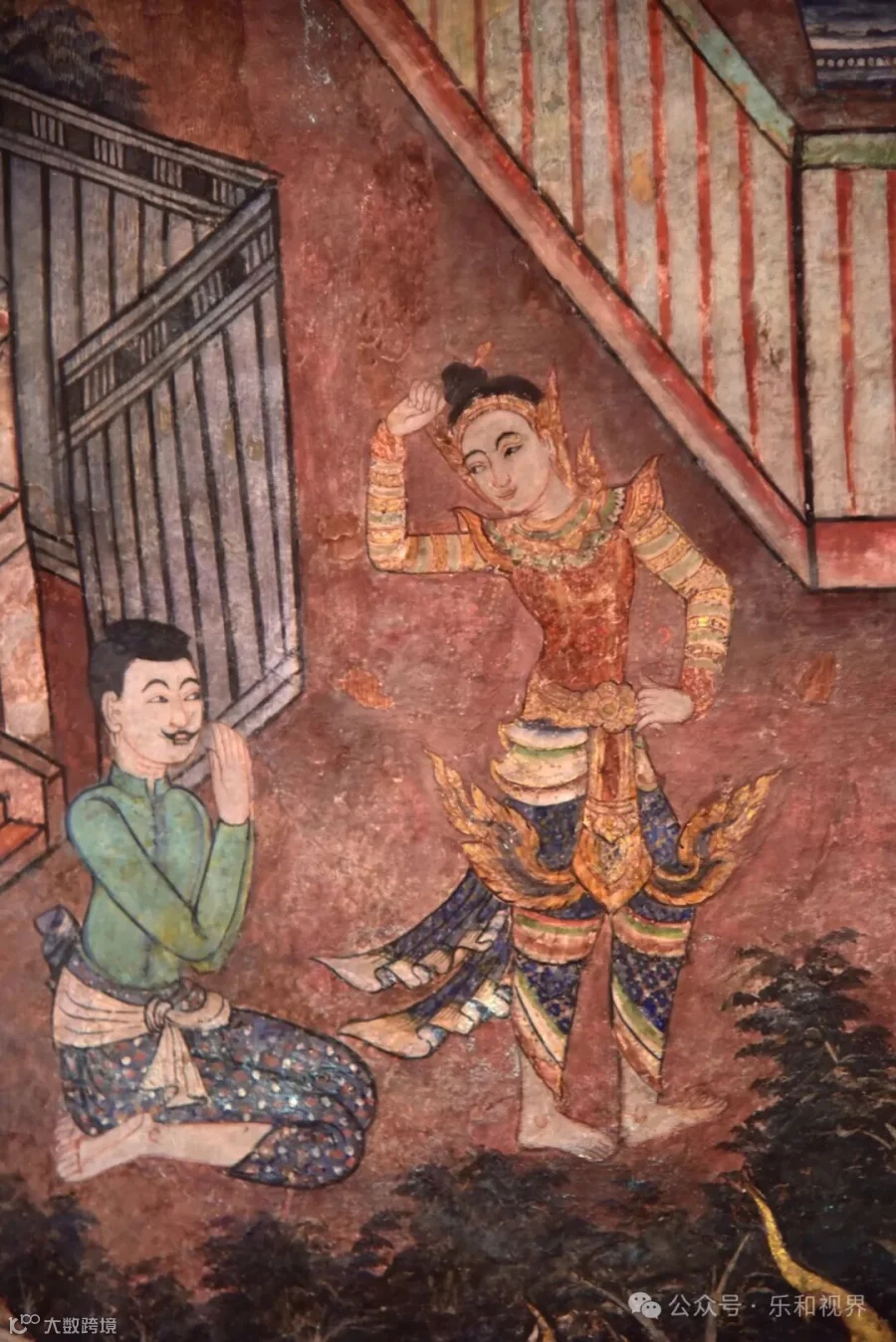
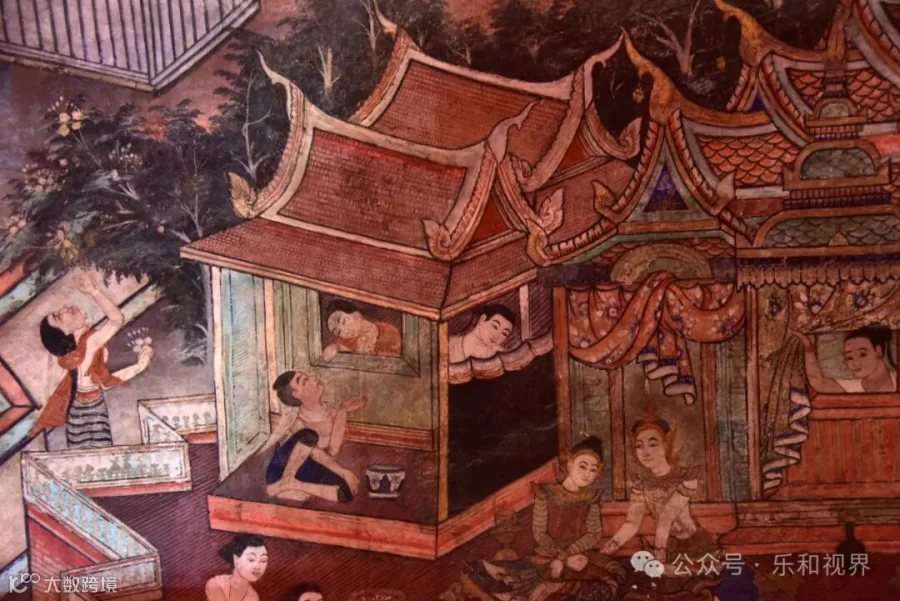
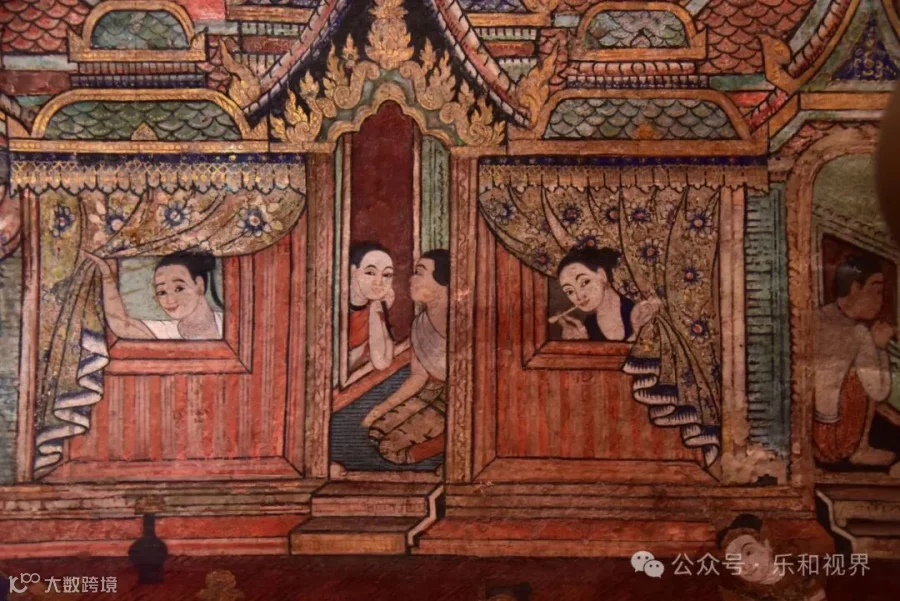
▲palace scene
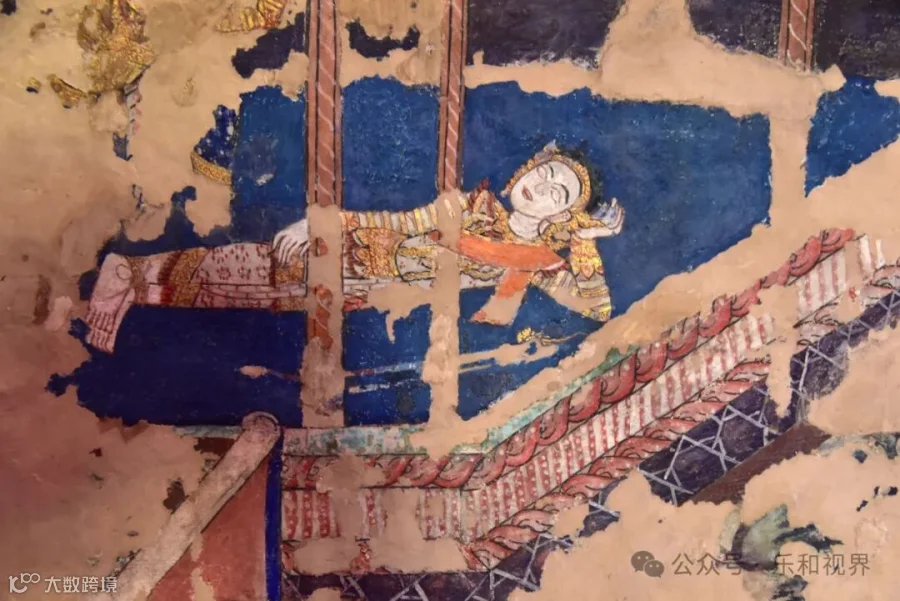
▲the sleeping prince
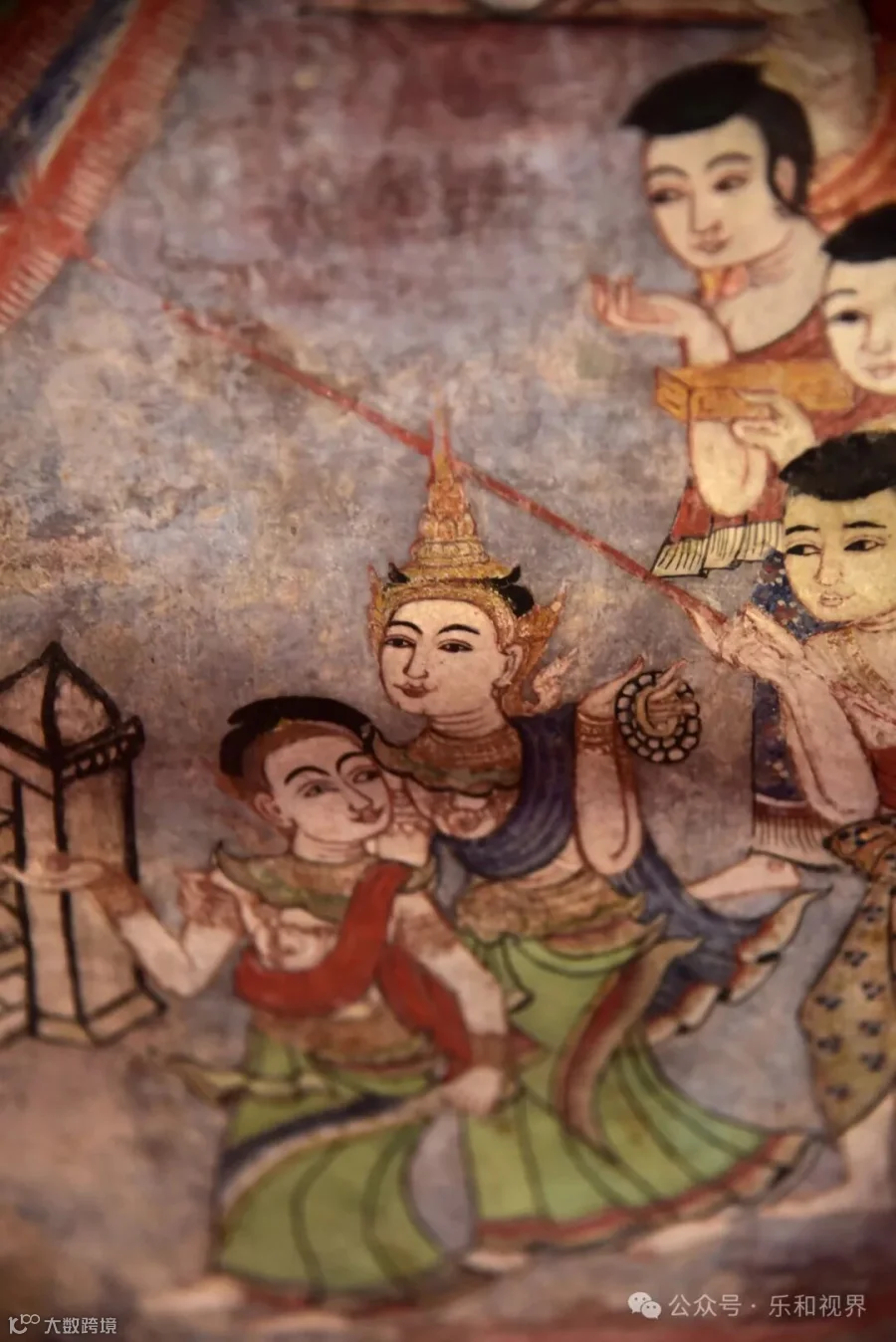
▲the princess
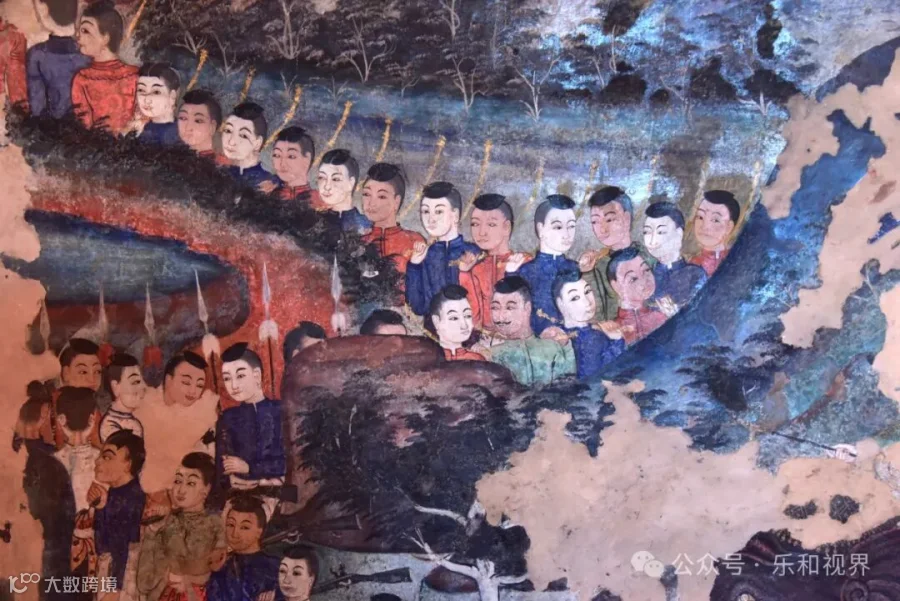
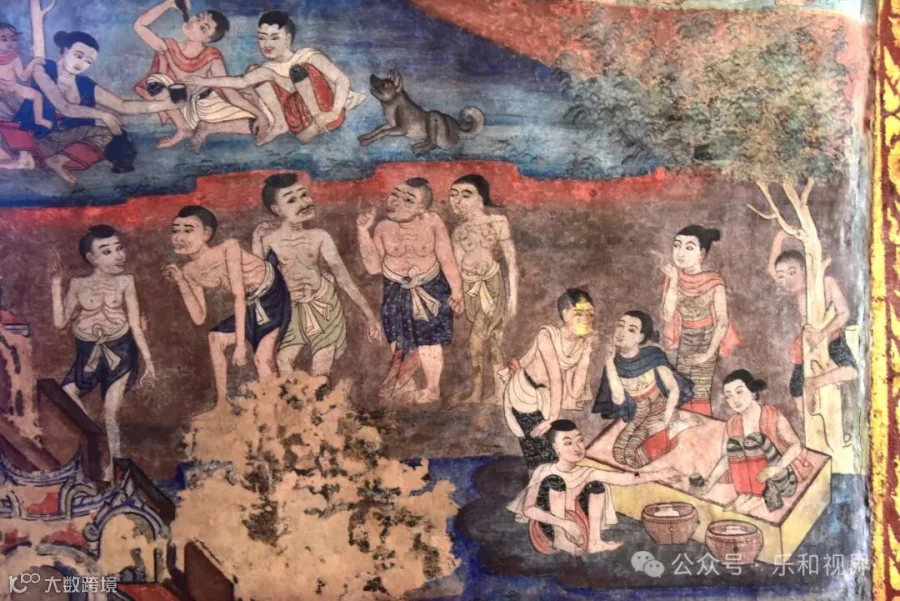
▲the picnickers
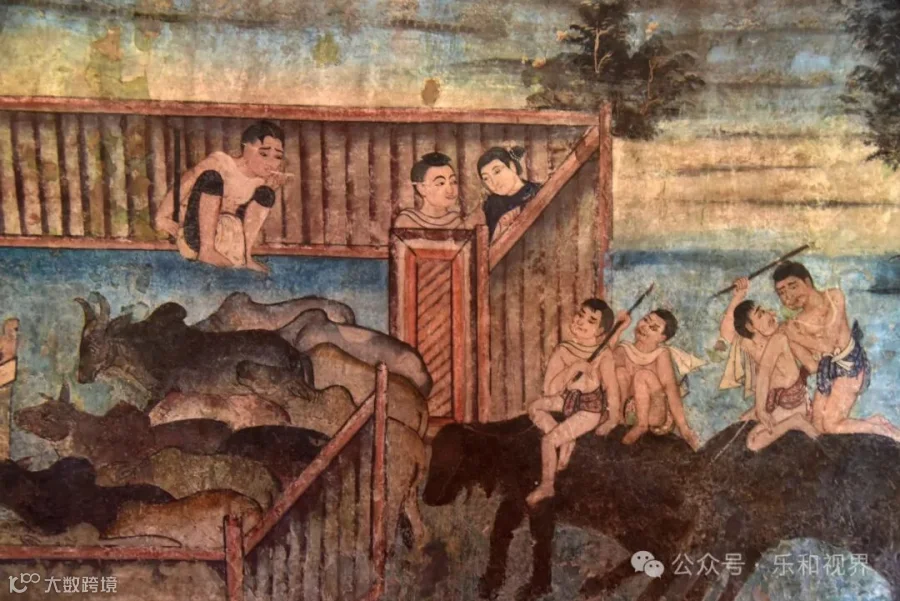
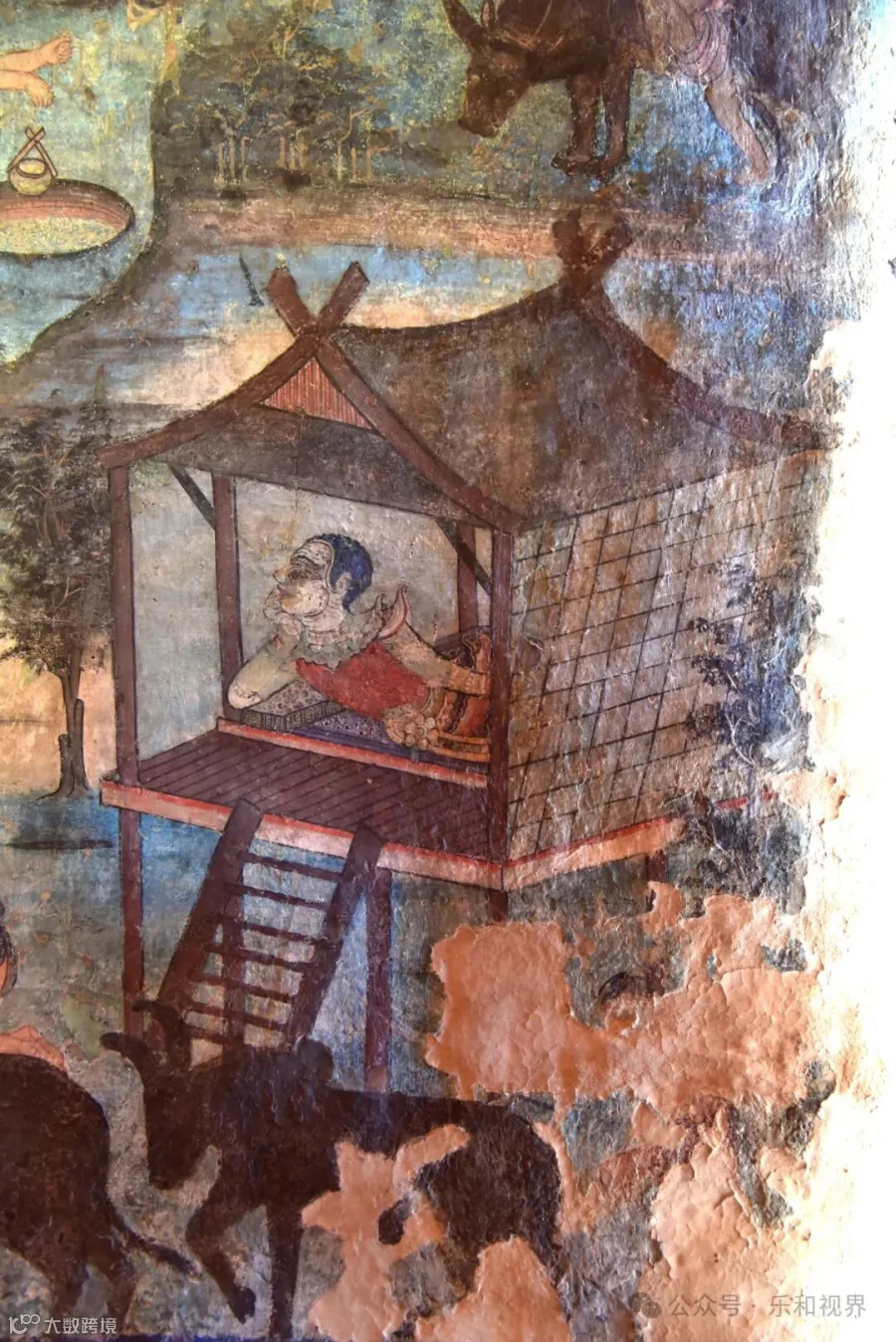
▲herd cattle
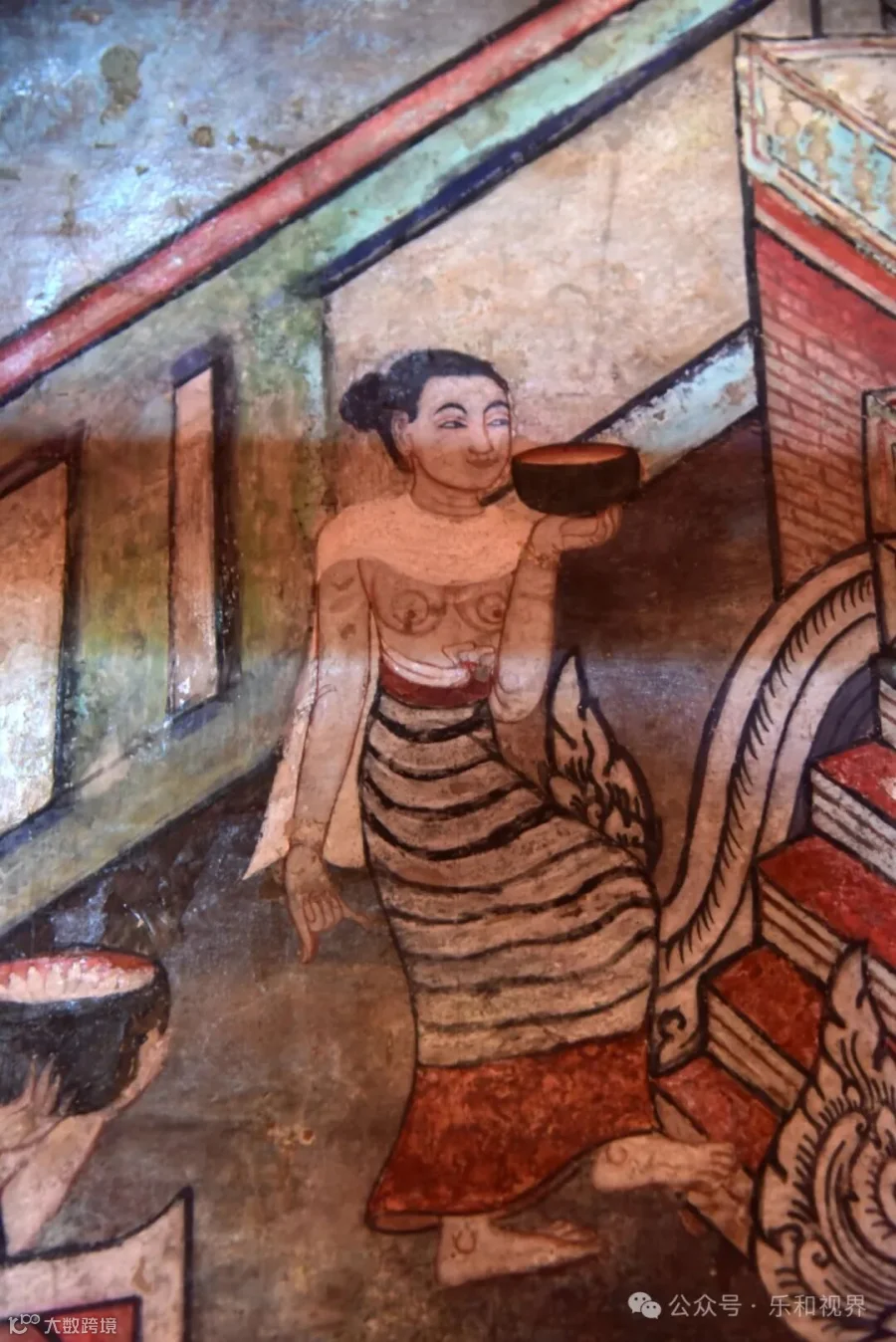
▲the woman holding the bowl
The tale of Suwanee Hongse
(south wall)
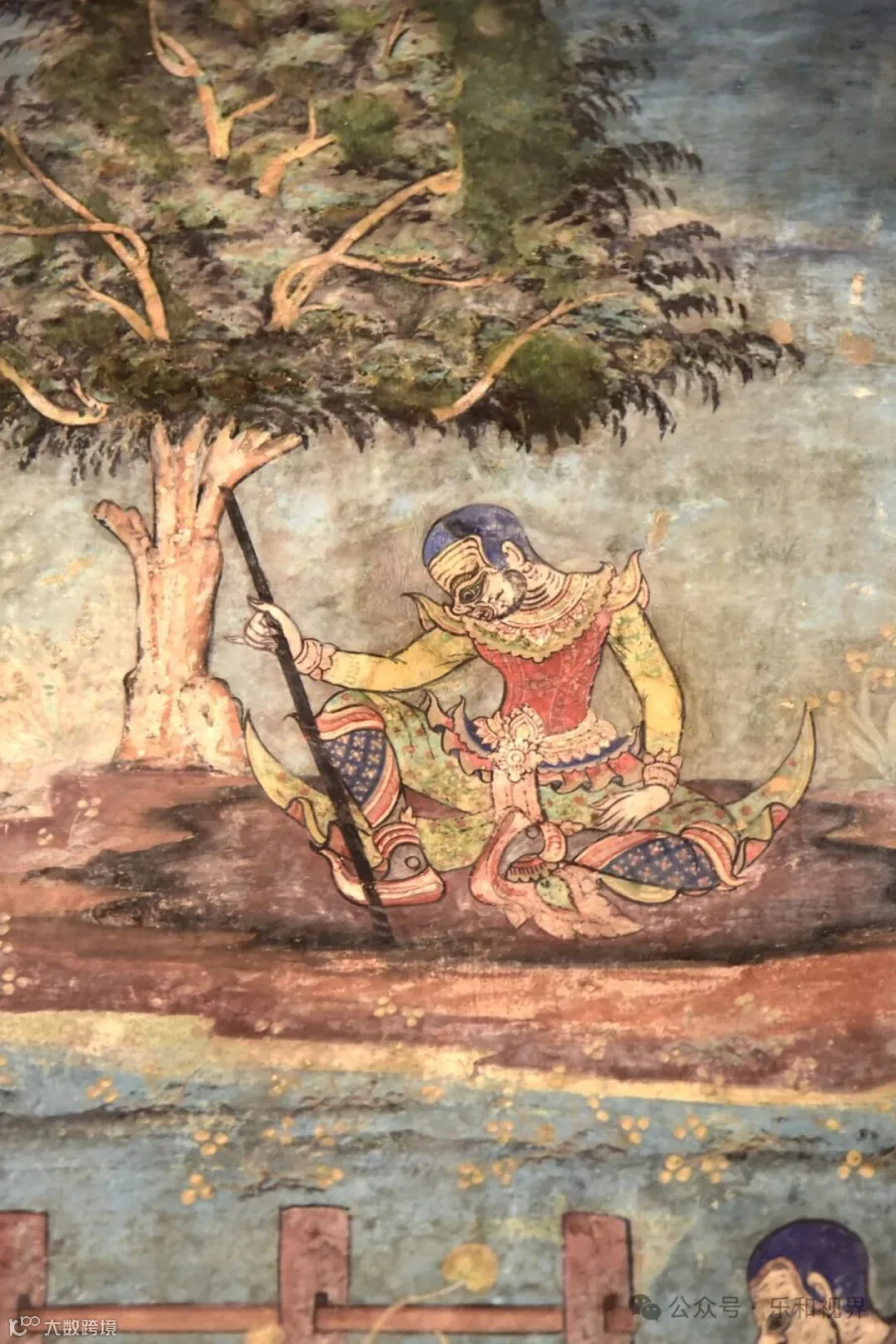
This popular and well known tale is depicted in the mural on the north wall of the Viharn Lai Kham, with the story of Sang Thong covering the south wall.
It tells the story of Prince Suwanee Hongse who is in love with a beautiful princess and searches for her by climbing the strings of a kite.
The father of the princess is a fierce ogre king and orders his other daughters to murder prince Suwanee Hongse. The prince dies and the broken hearted princess seeks mystical help to bring him back to life.
She disguises herself as a Brahmin and with the aid of a friendly but clownish ogre succeeds in restoring the prince to life.
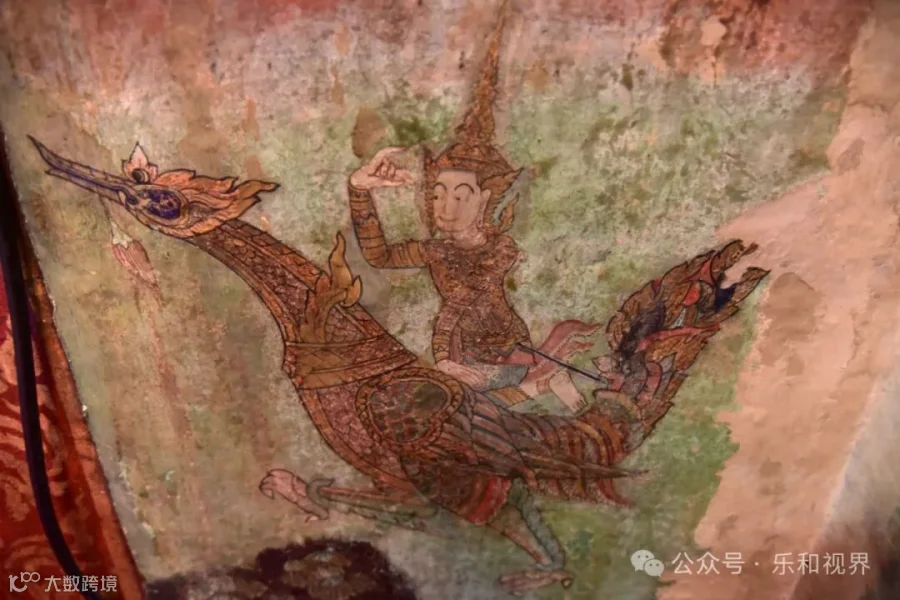
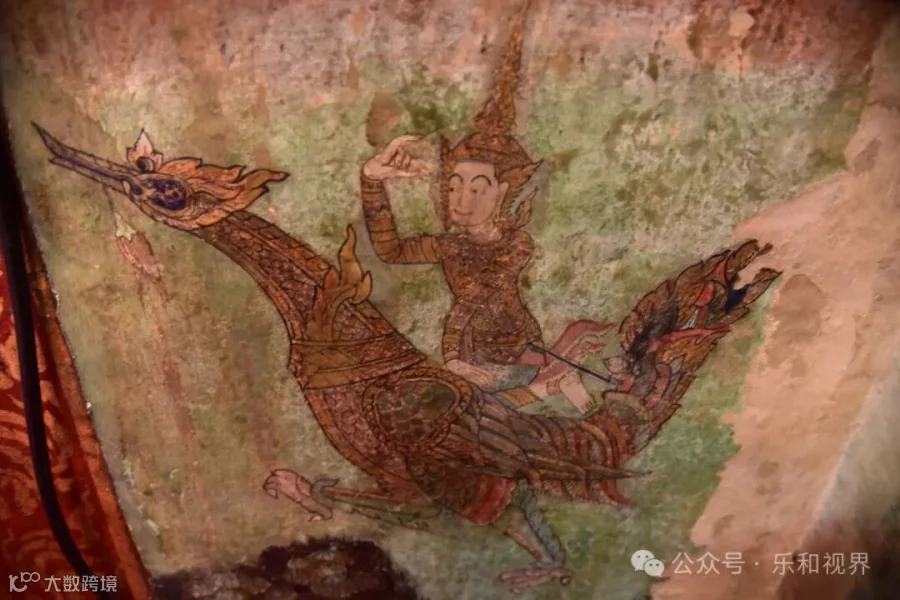
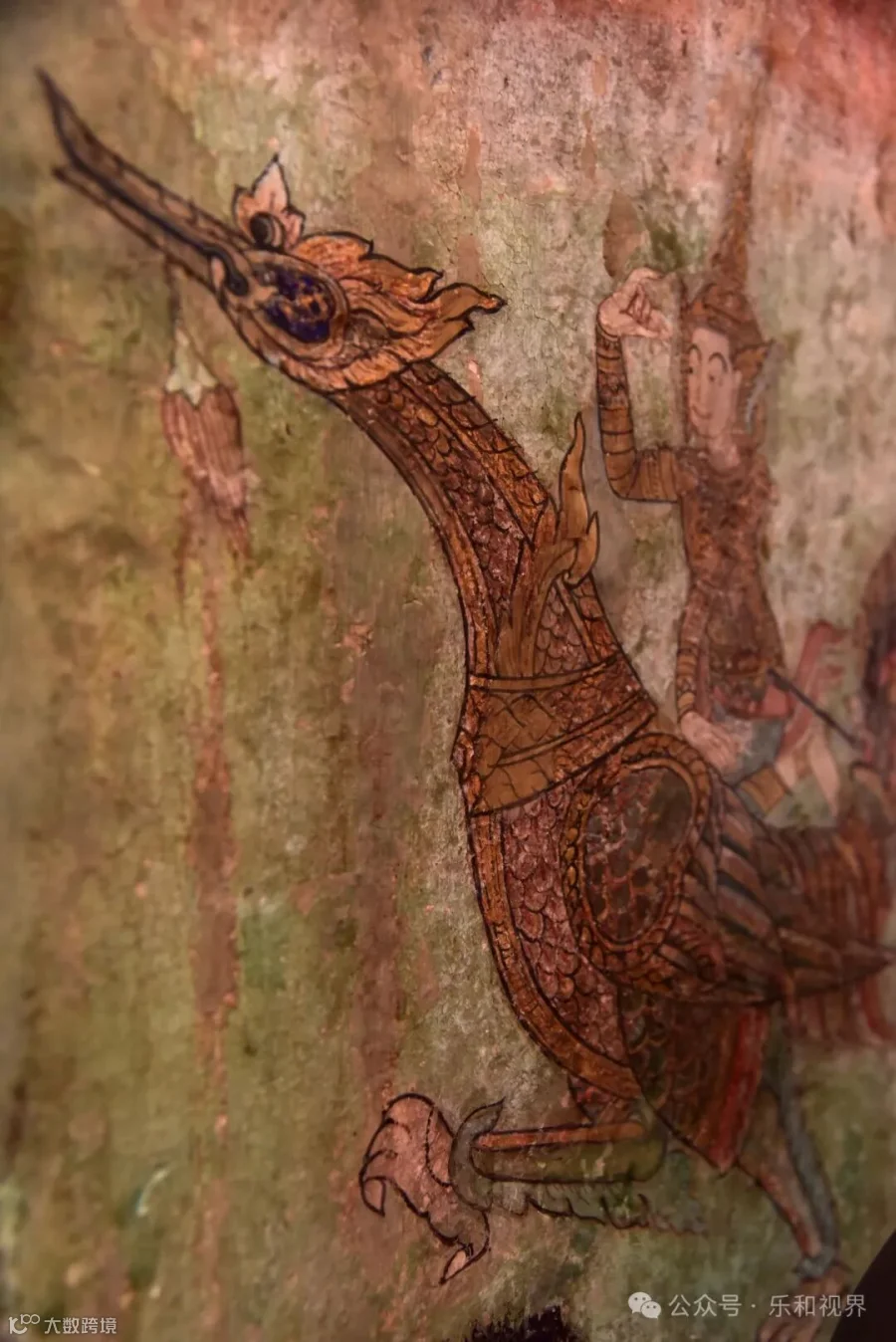
▲Suwanna Hongse and the Heavenly Phoenix
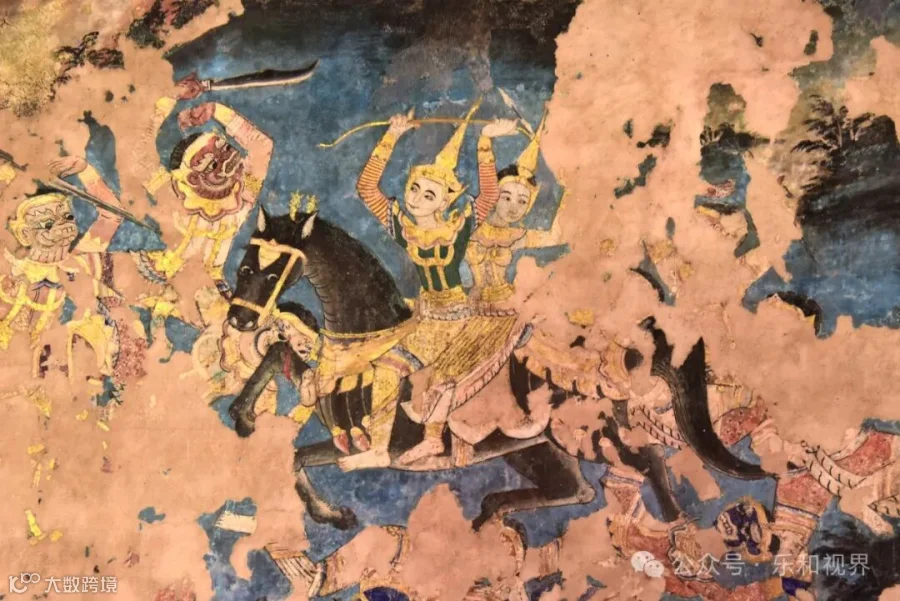
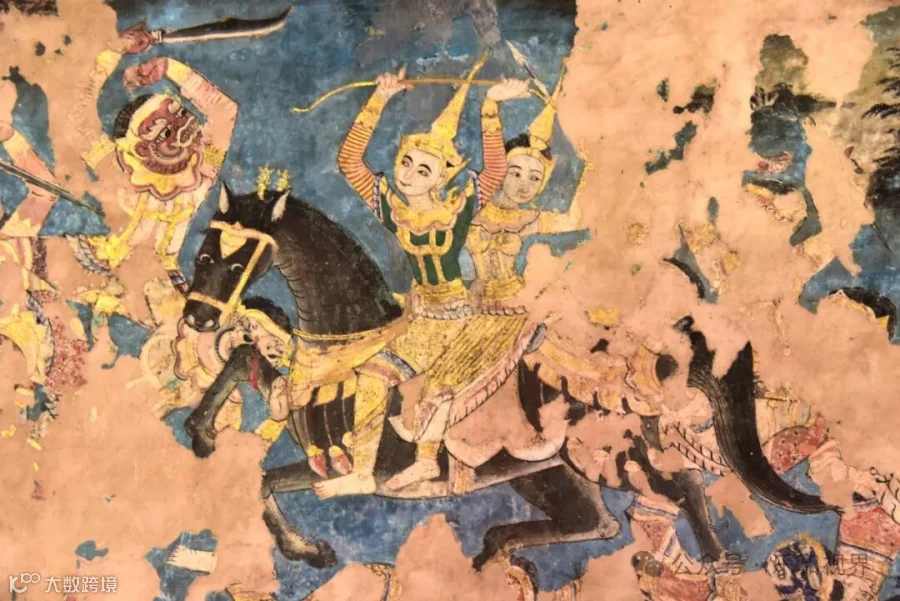
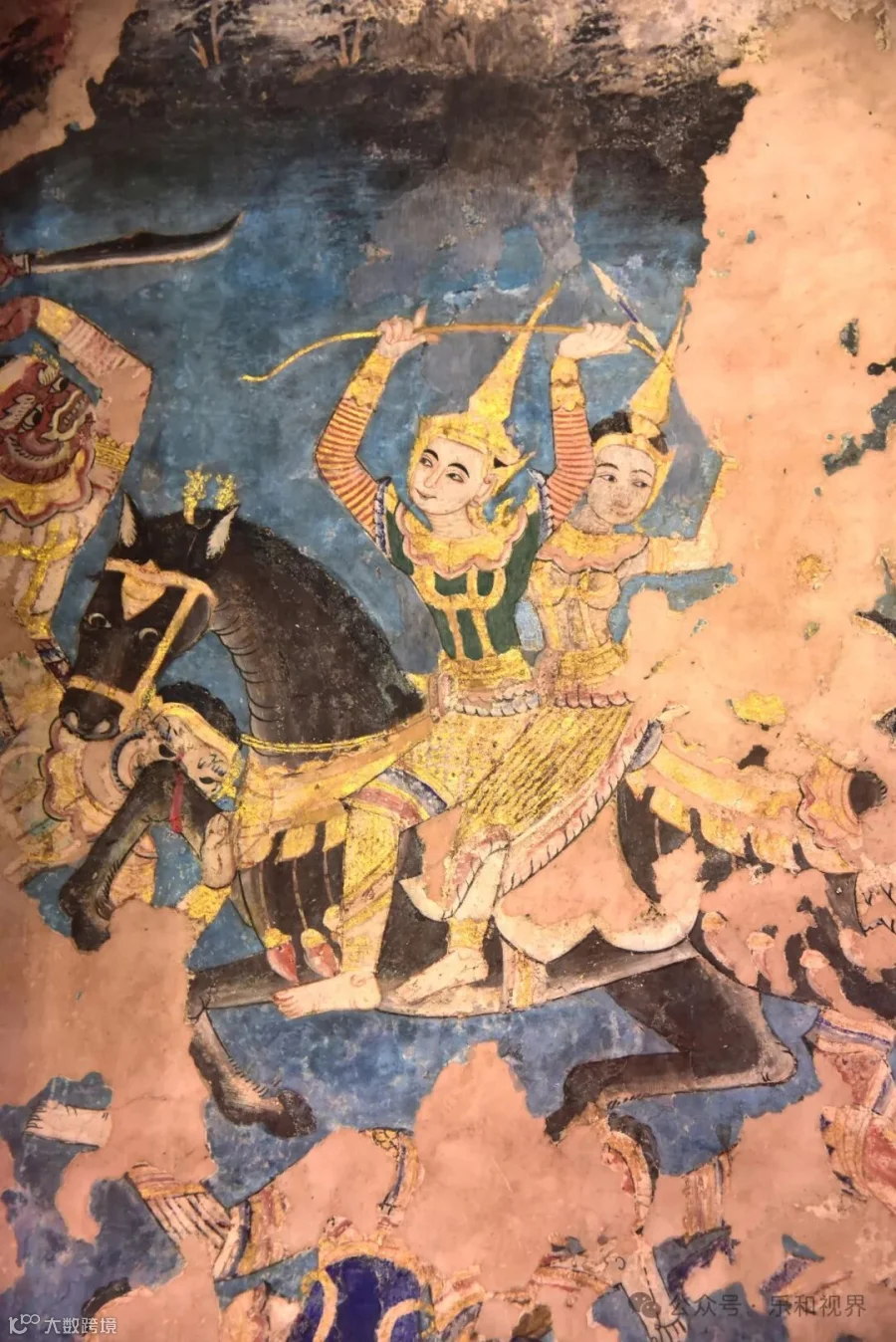
▲battle
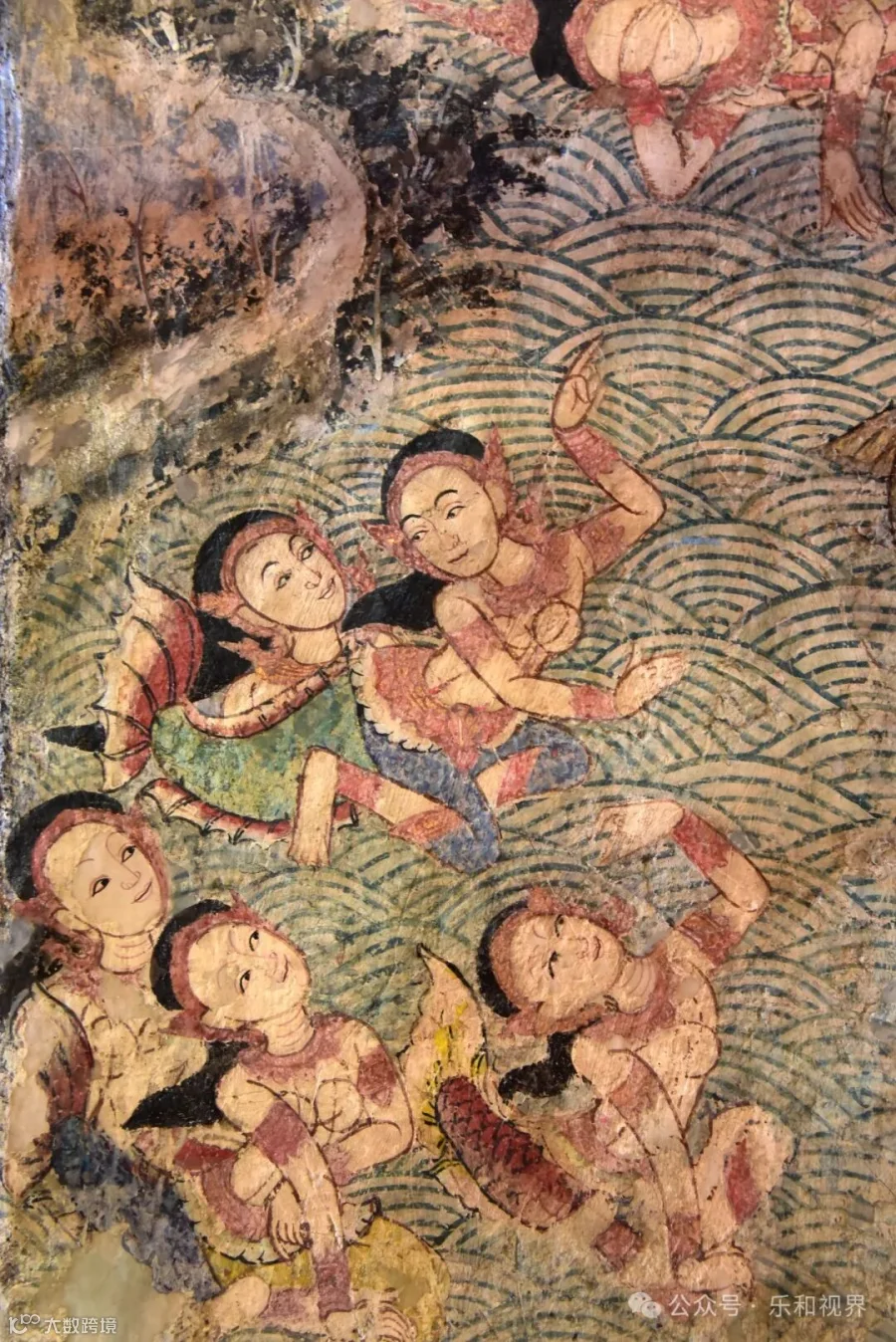
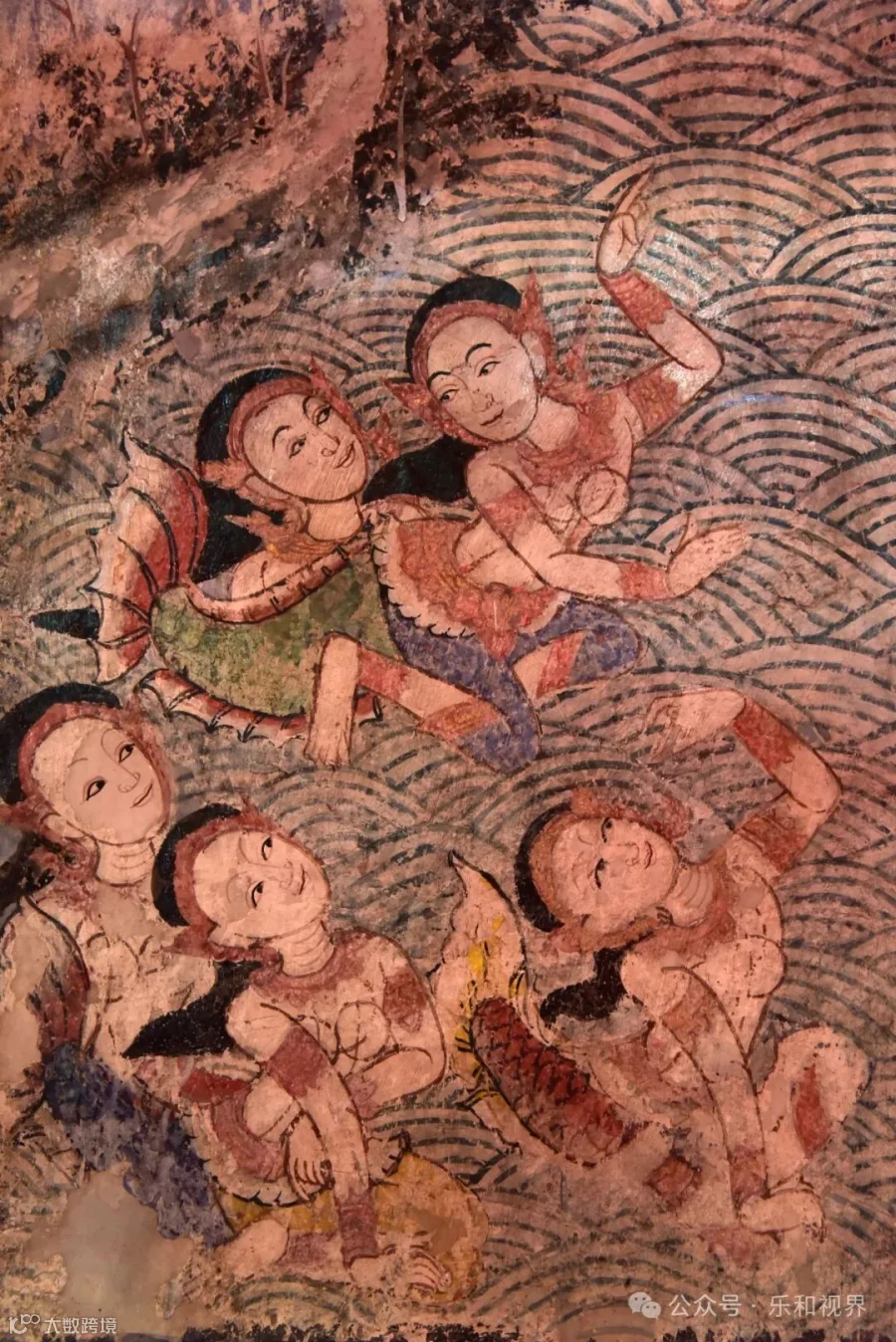
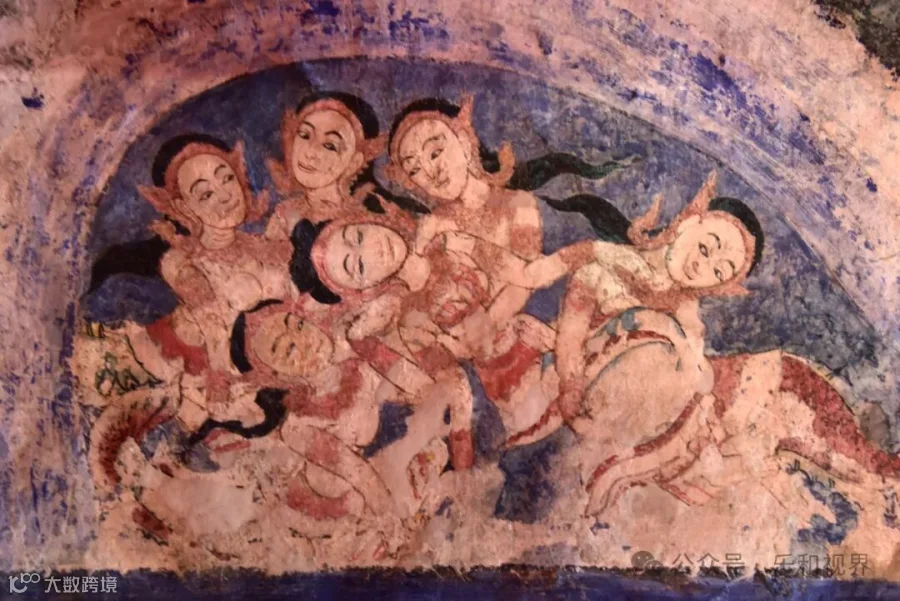
▲mermaids
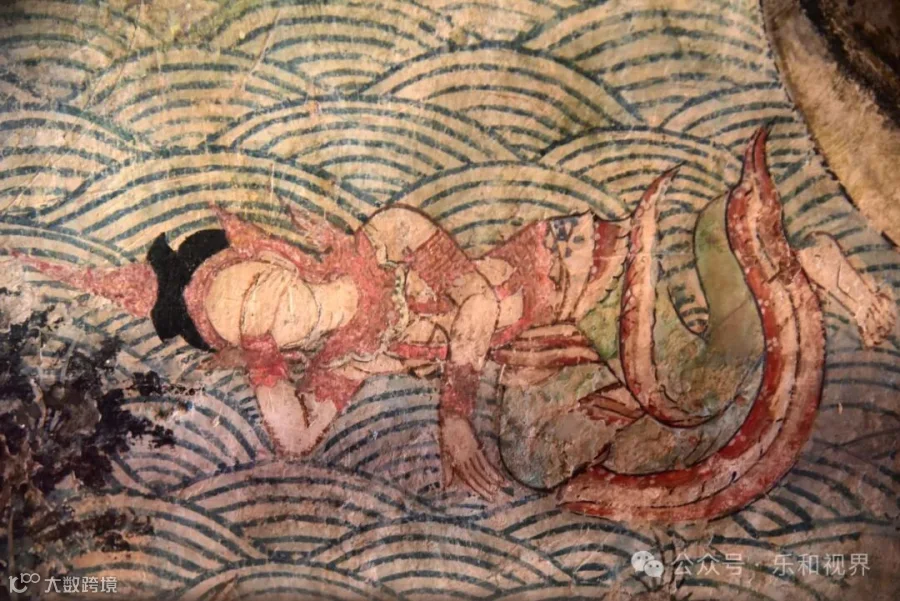
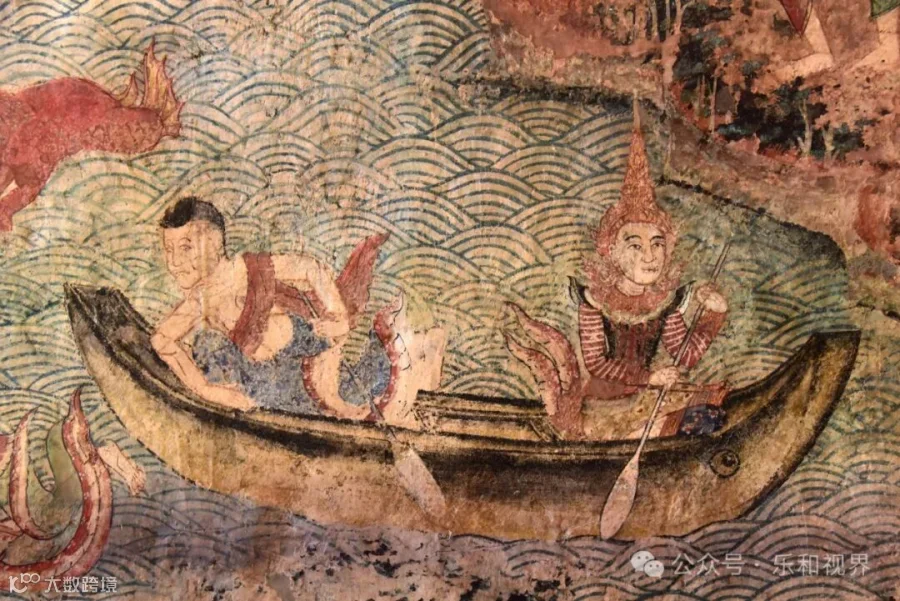
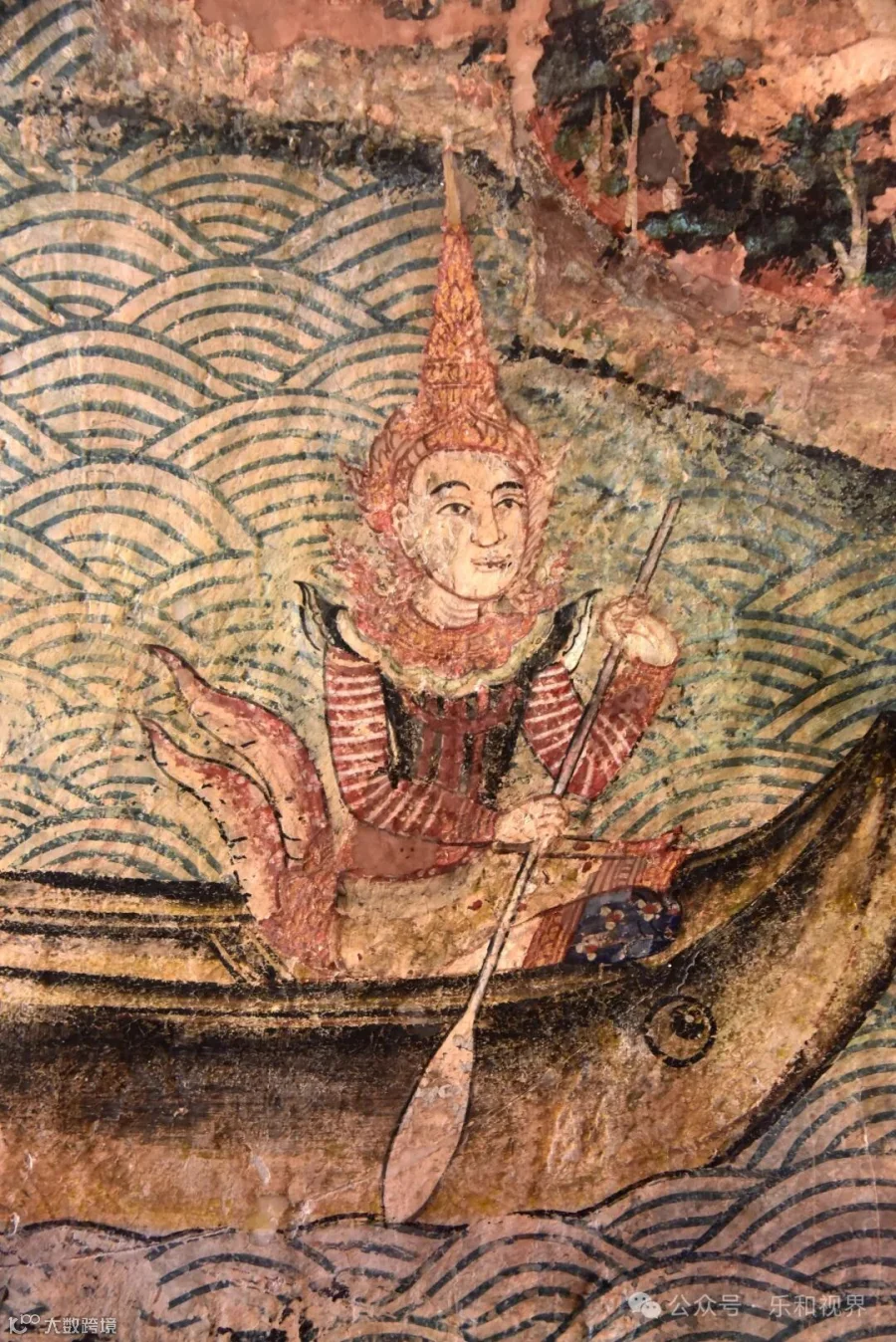
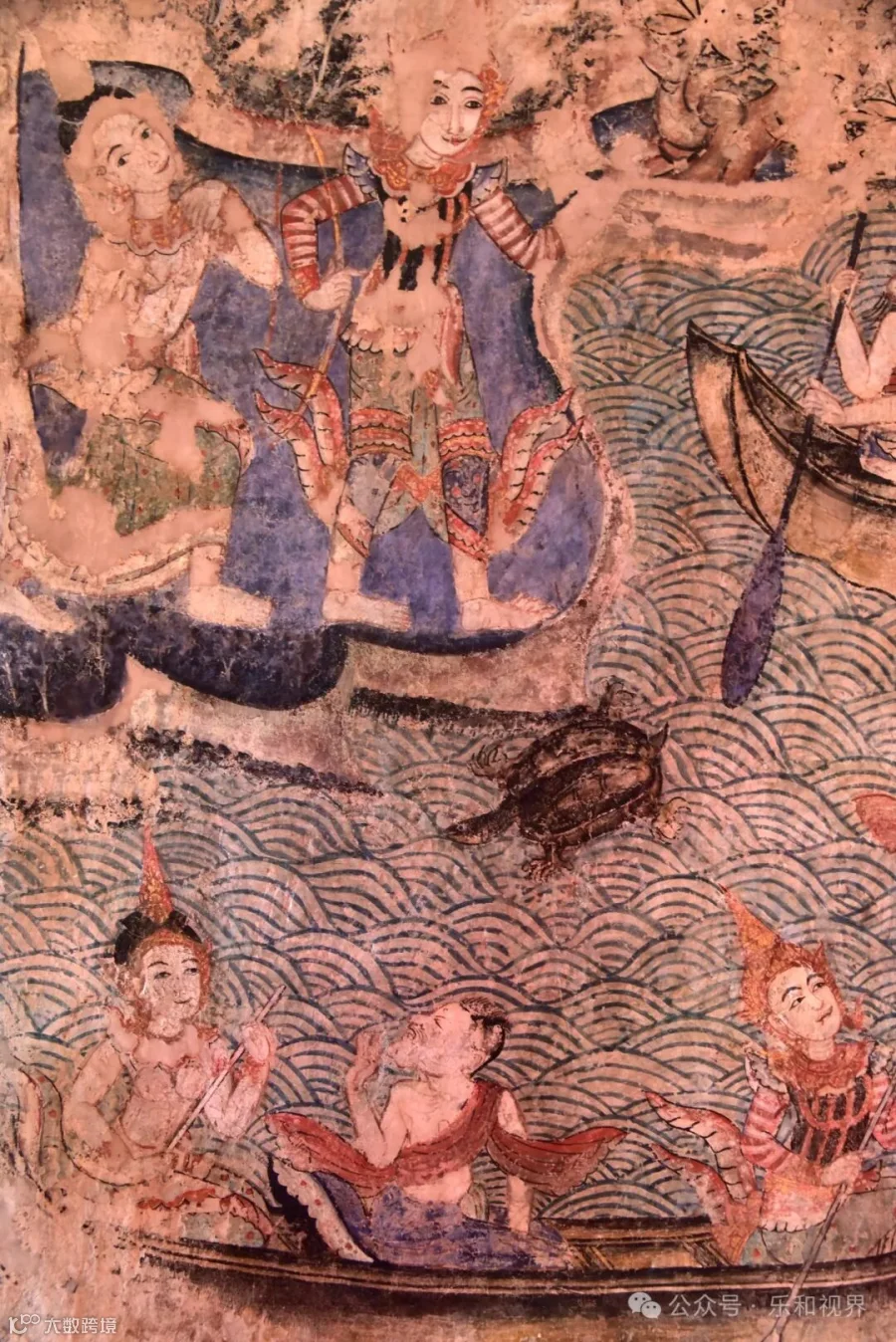
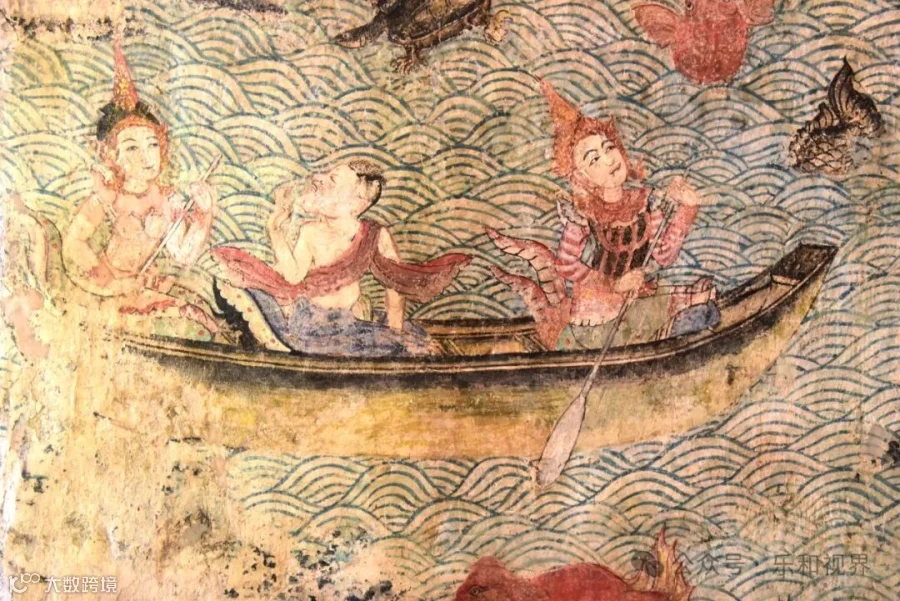
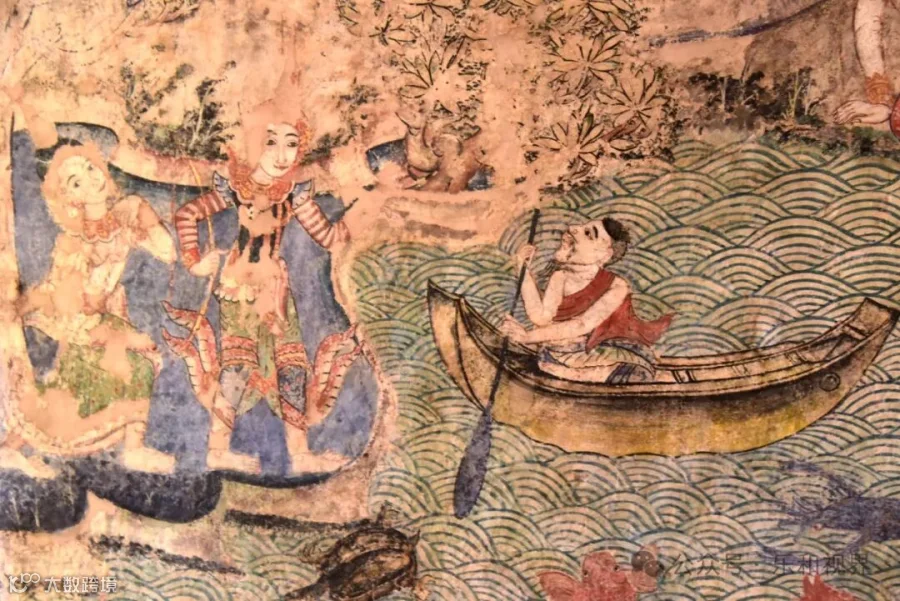
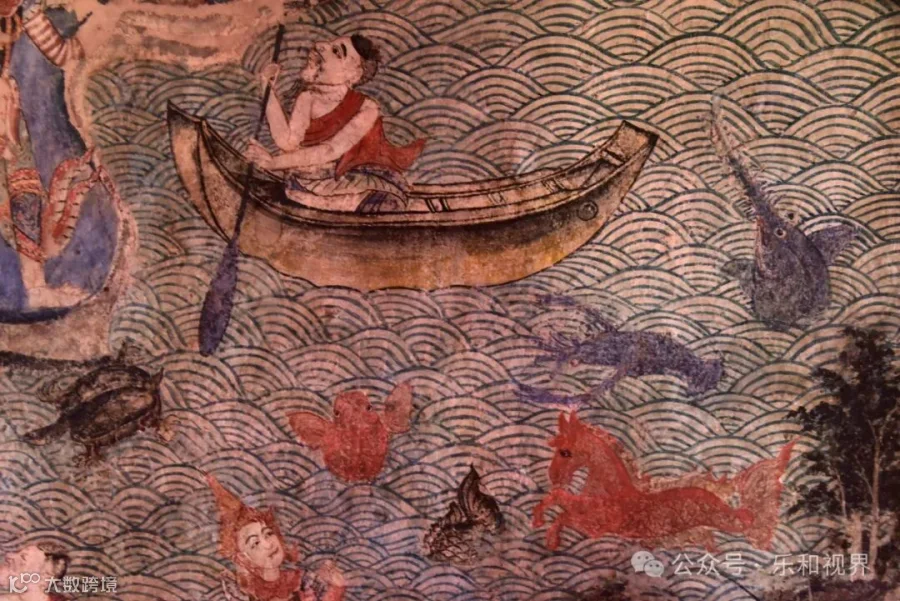
▲fishing
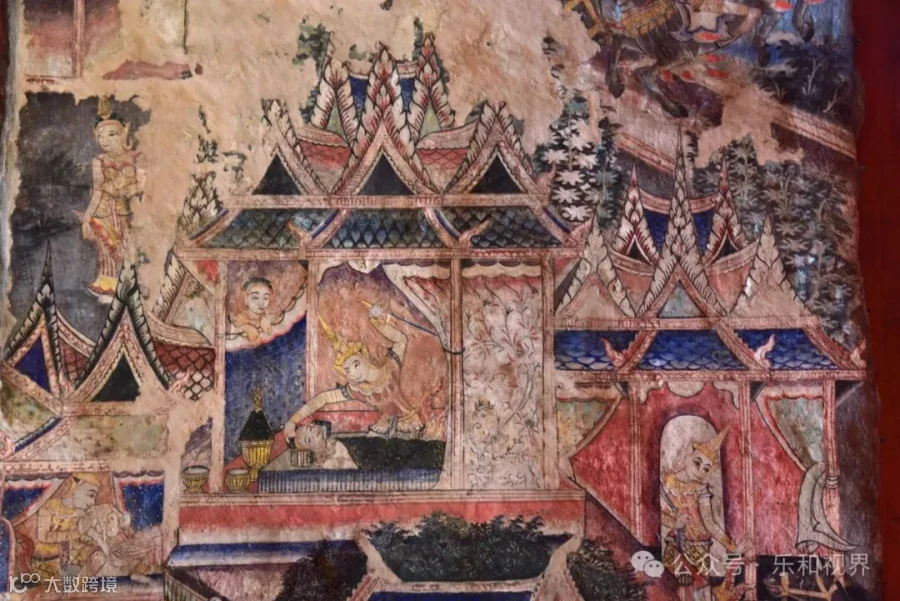
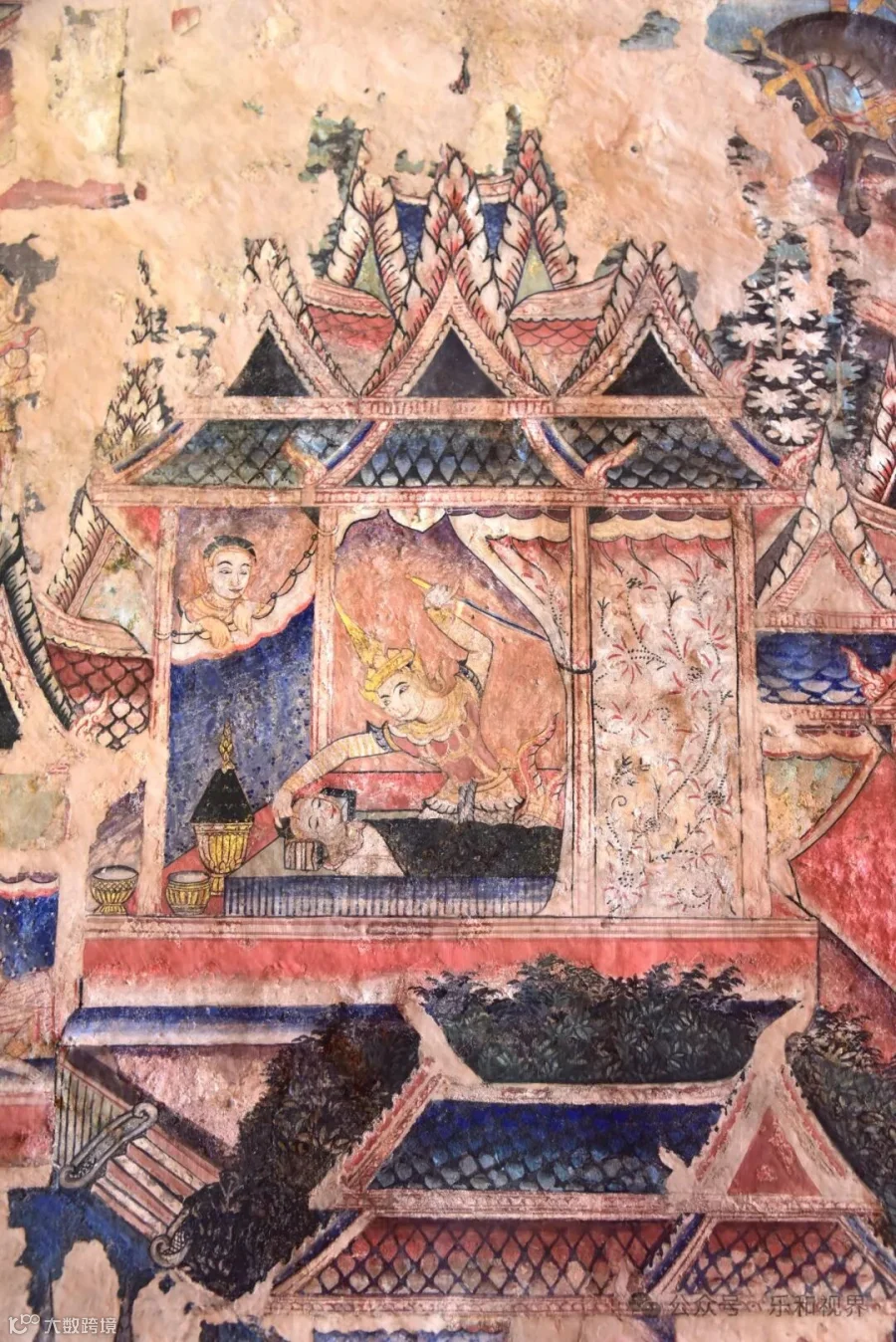
▲murder
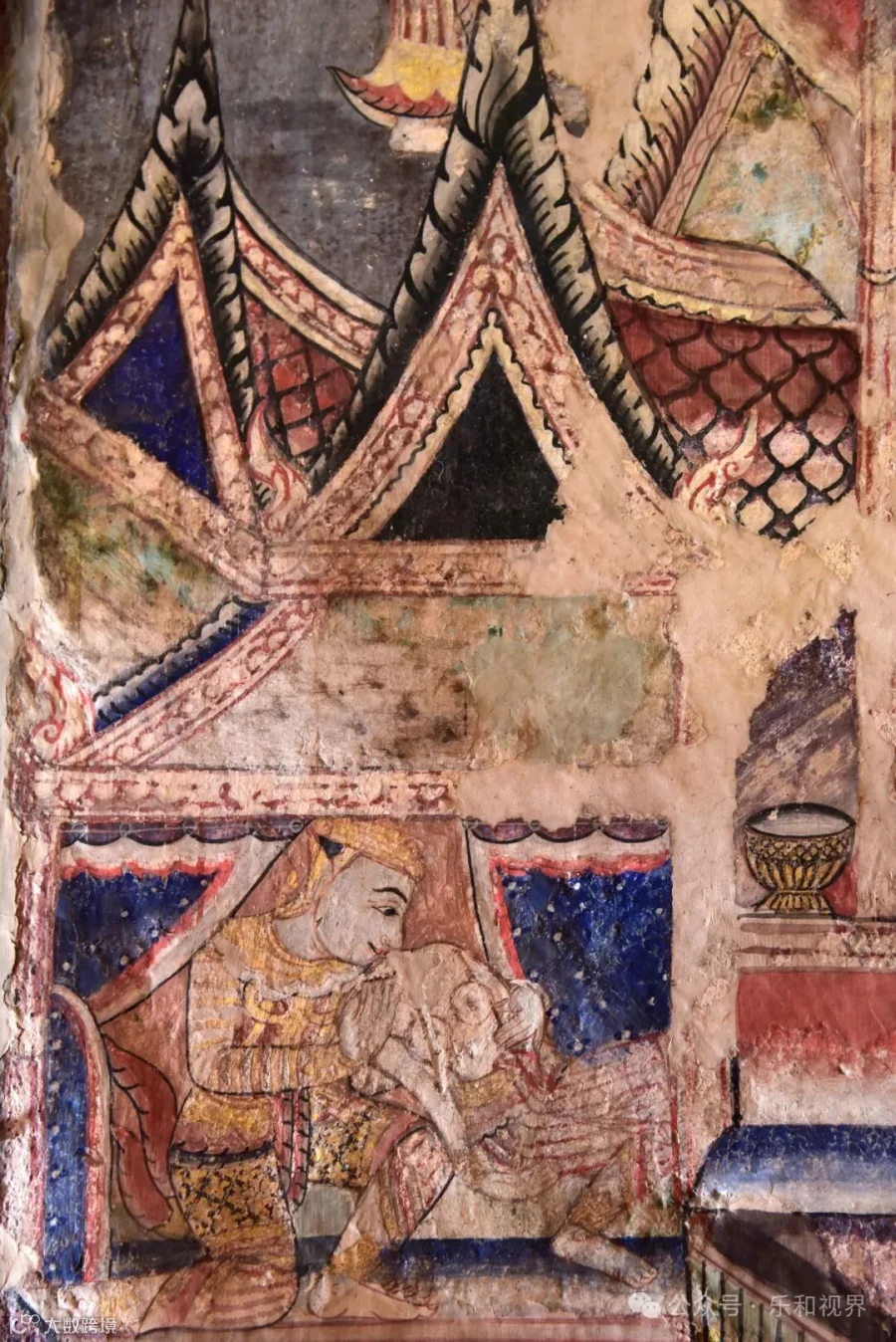
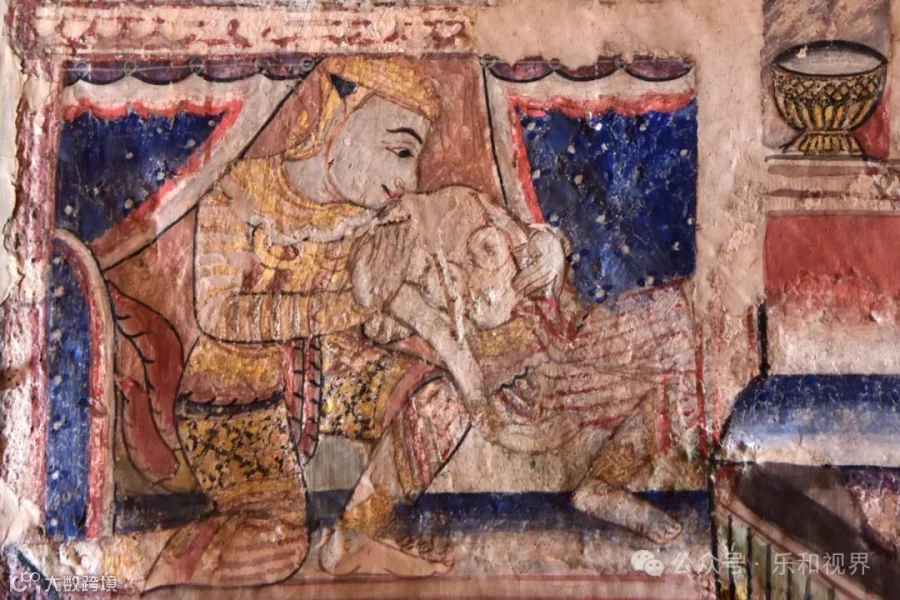
▲murder
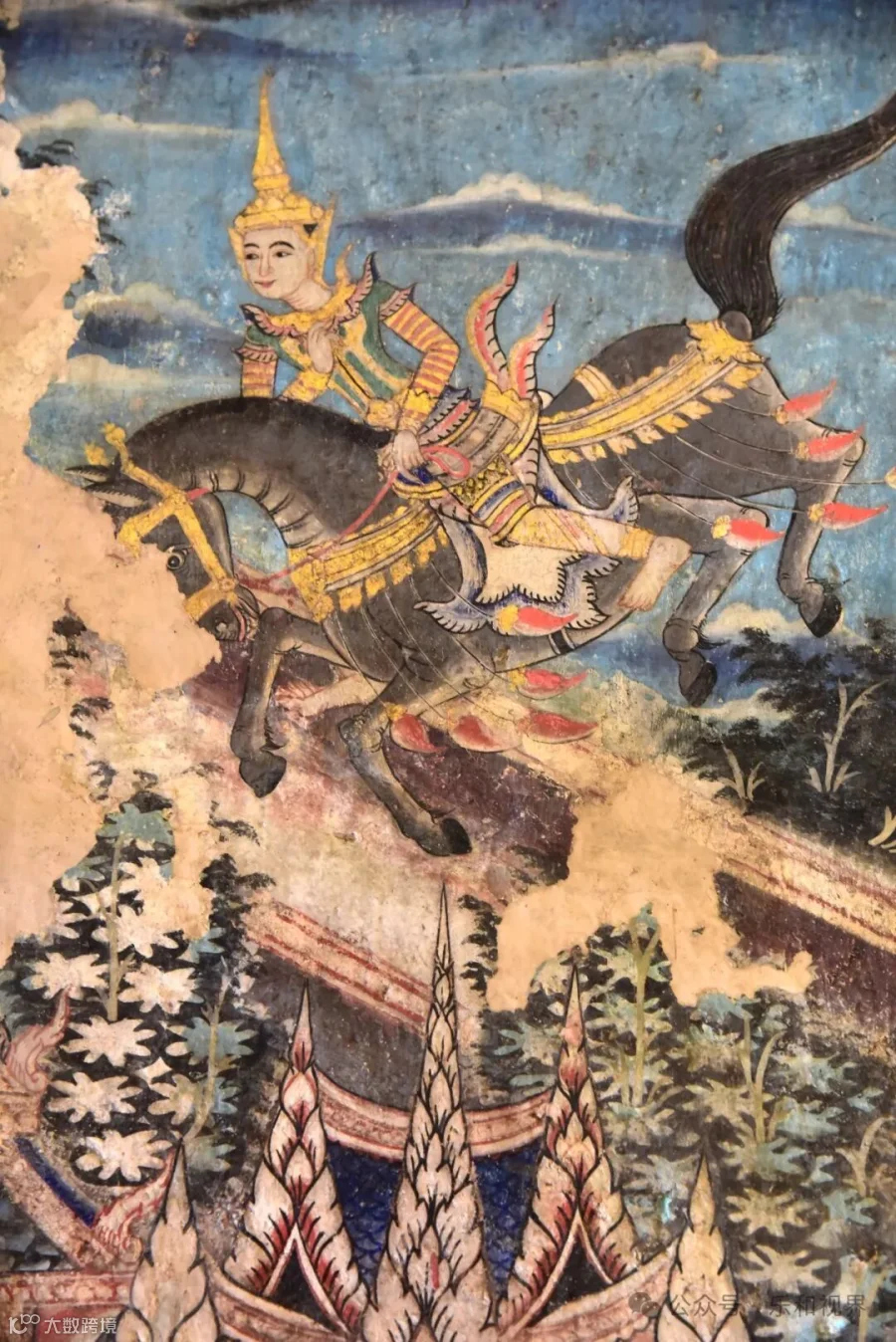
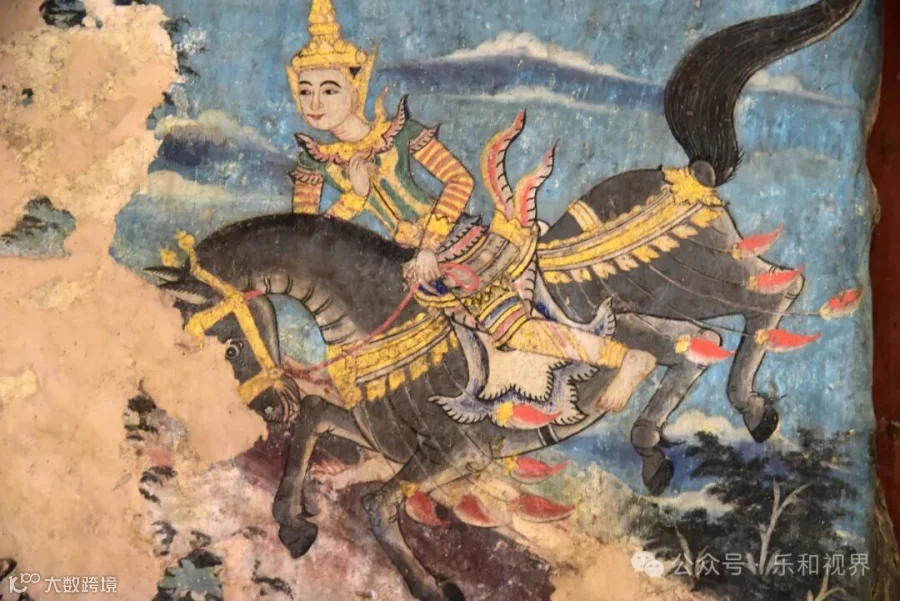
▲the prince
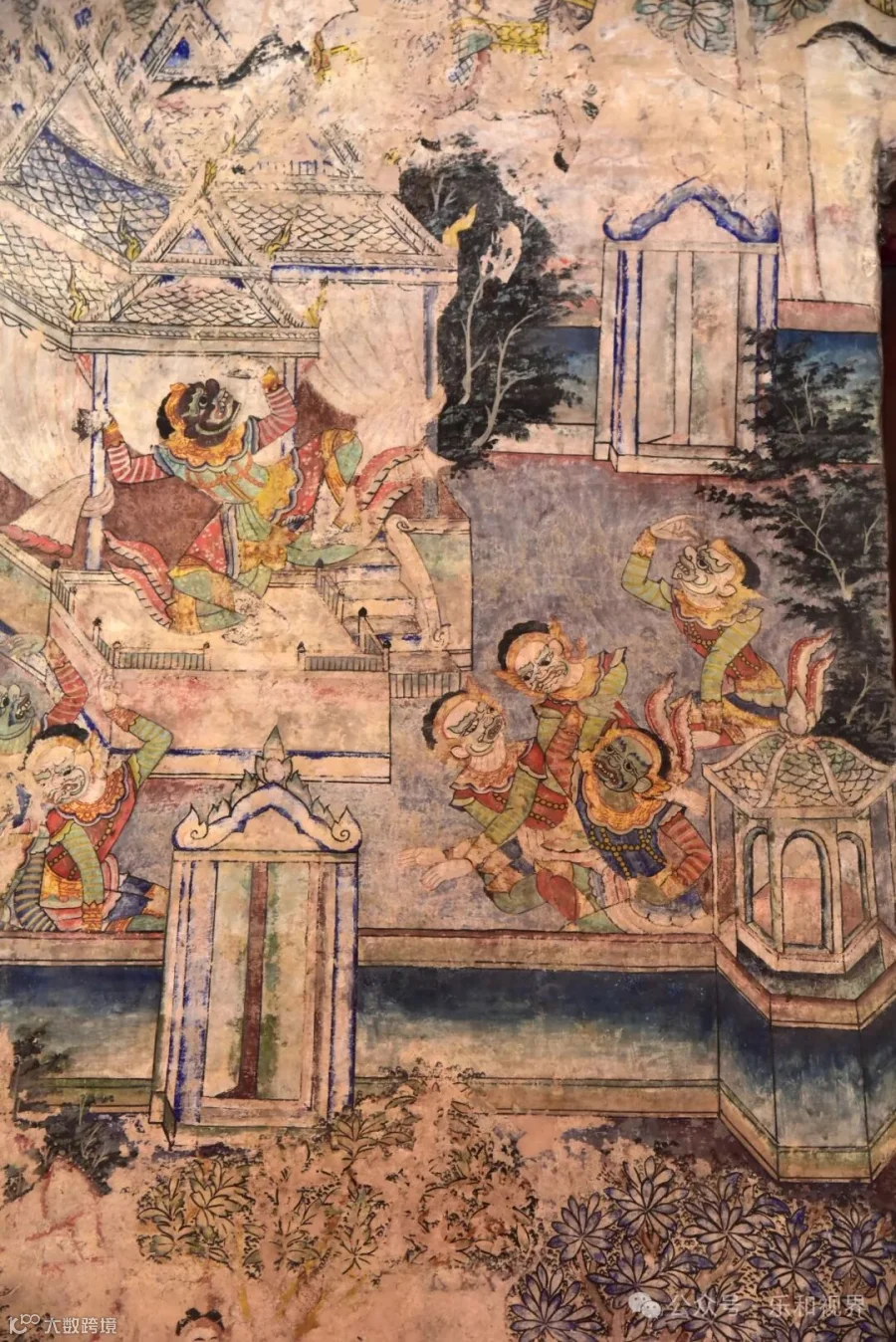
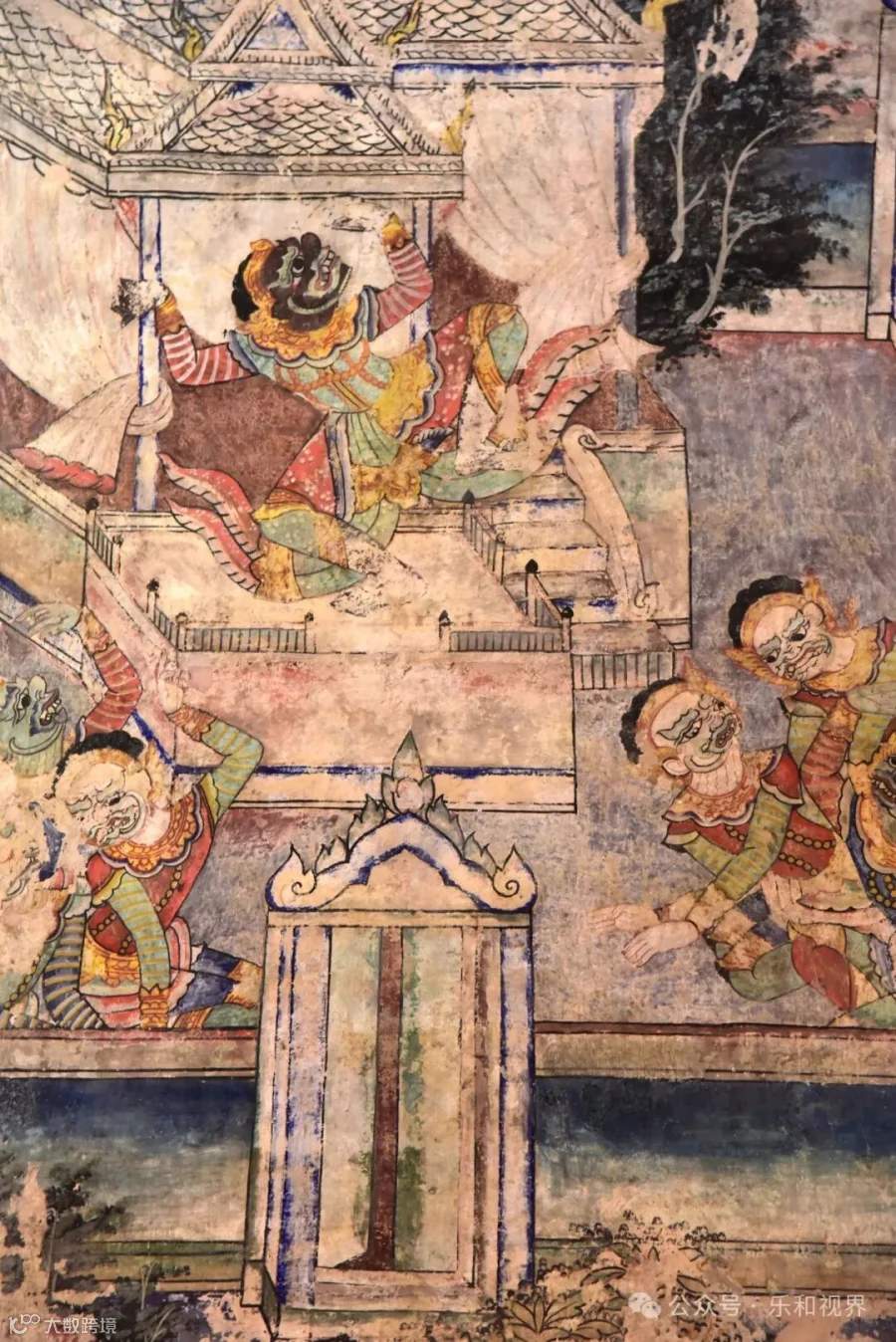
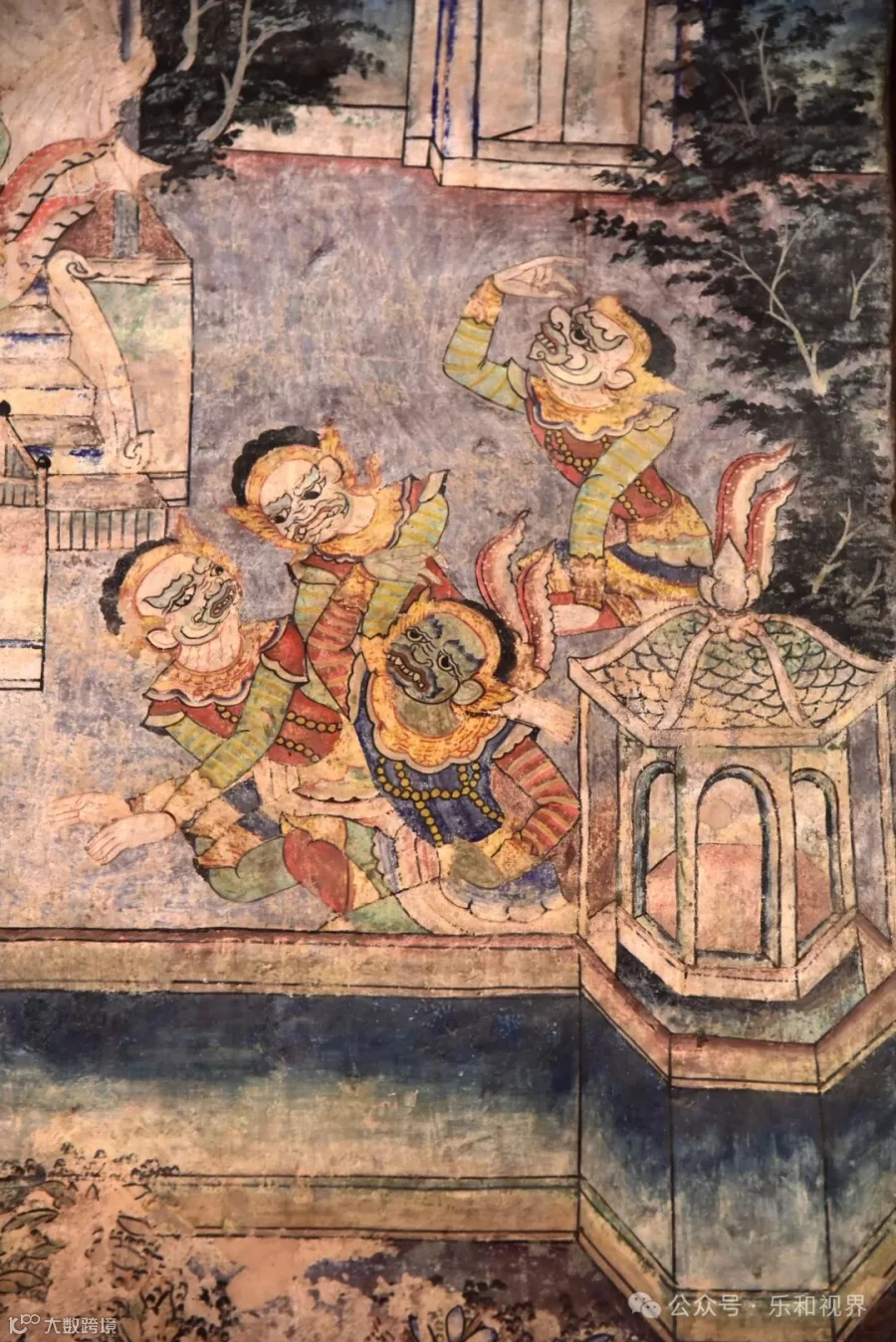
▲the ogre palace
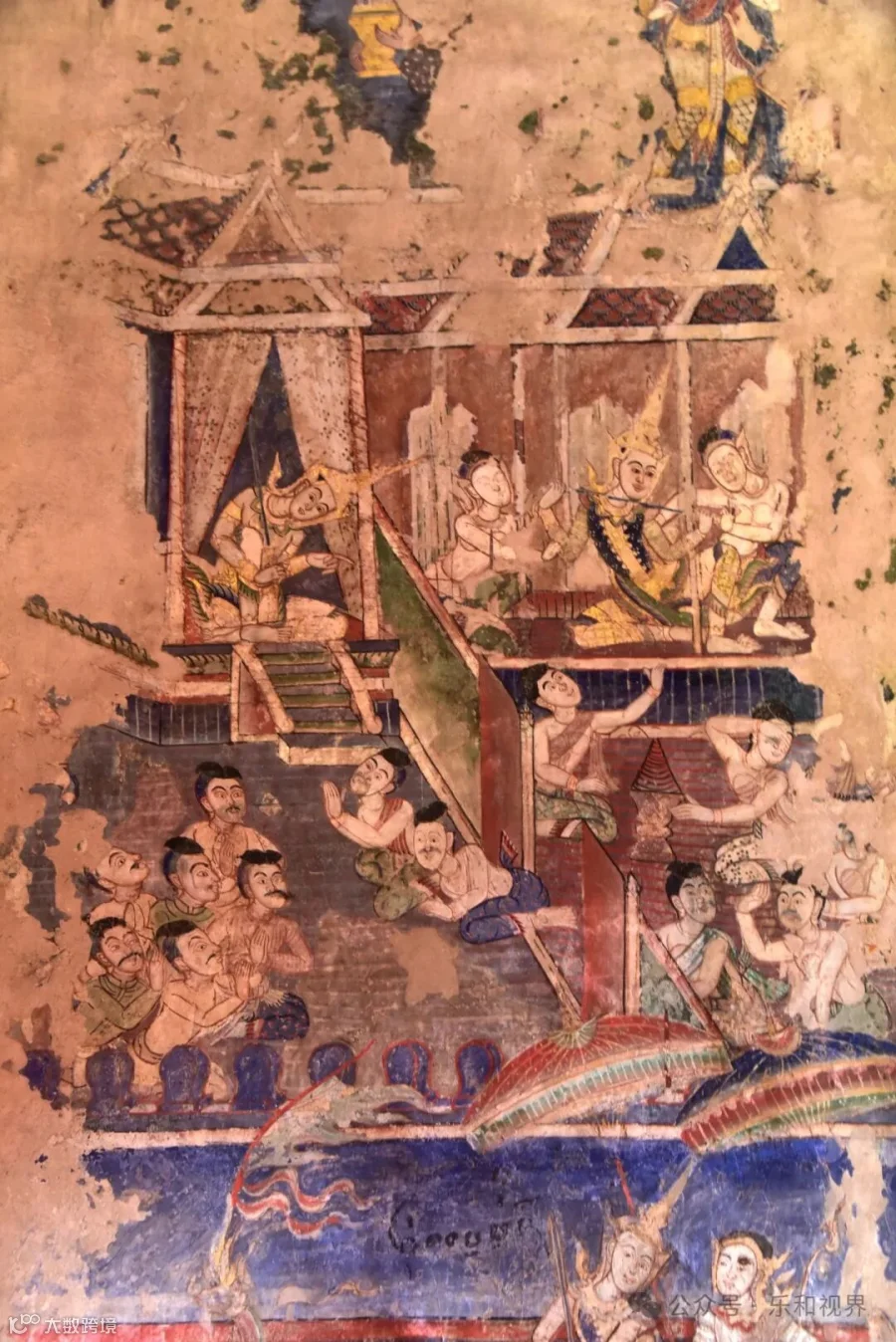
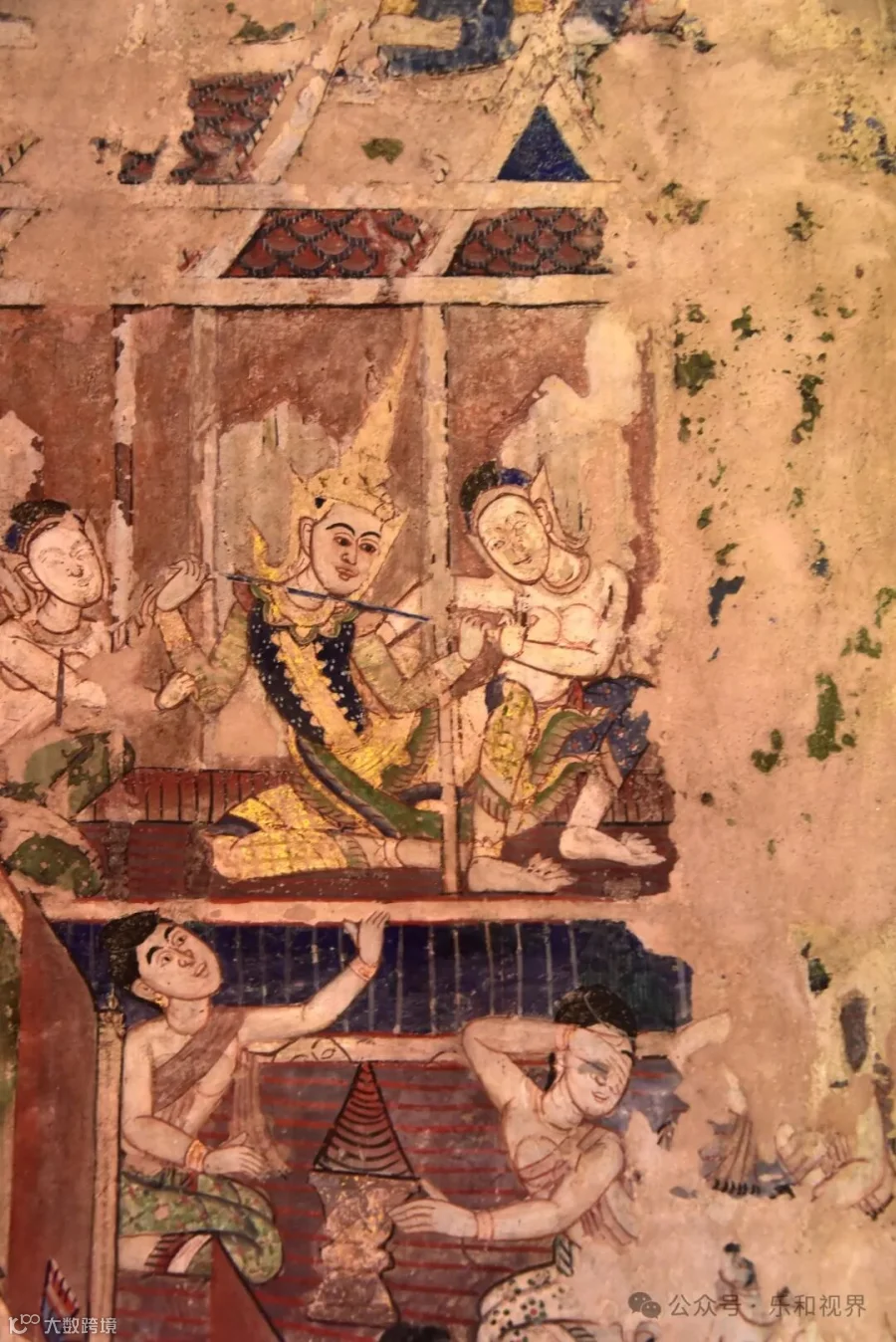
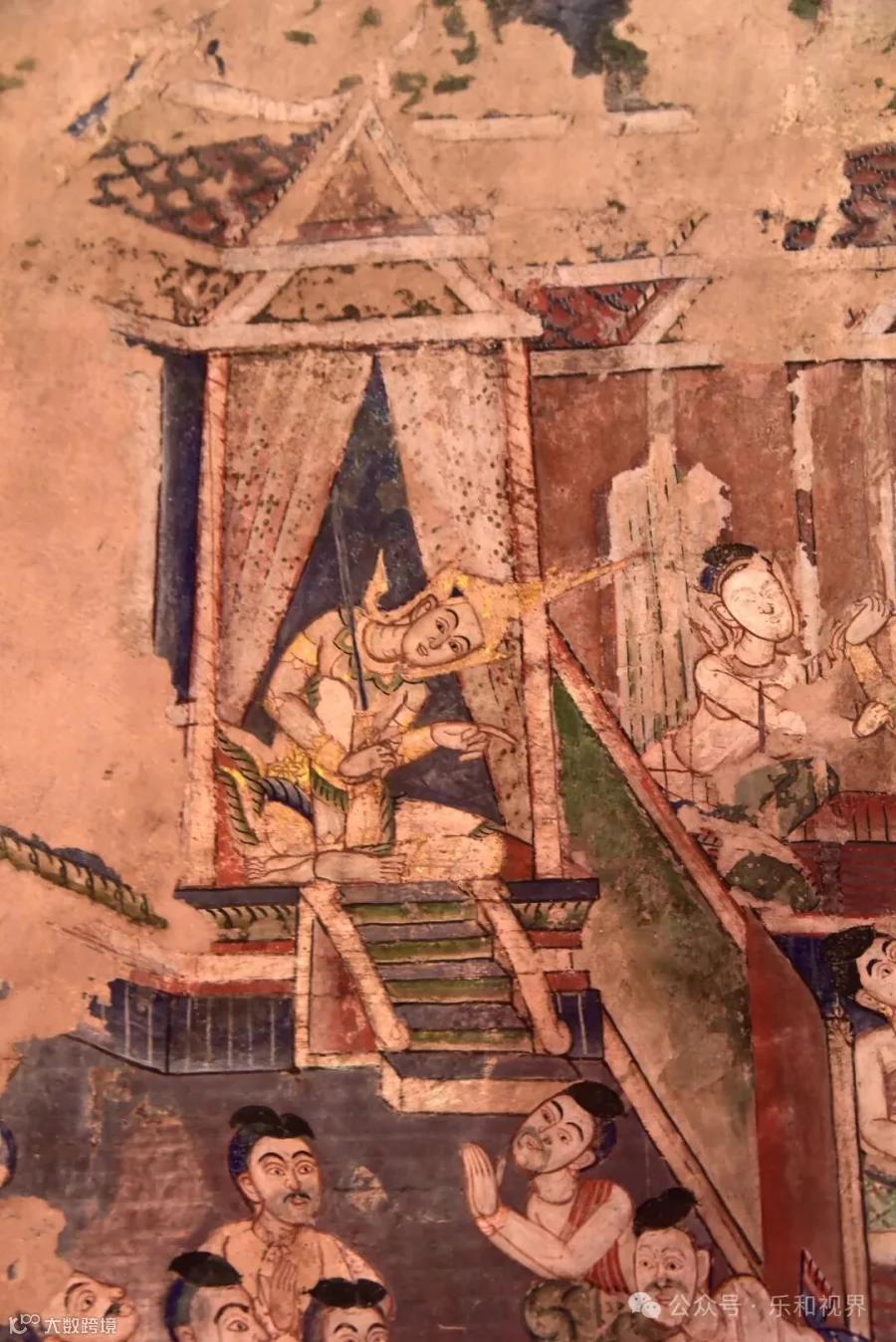
▲the royal palace with people outside
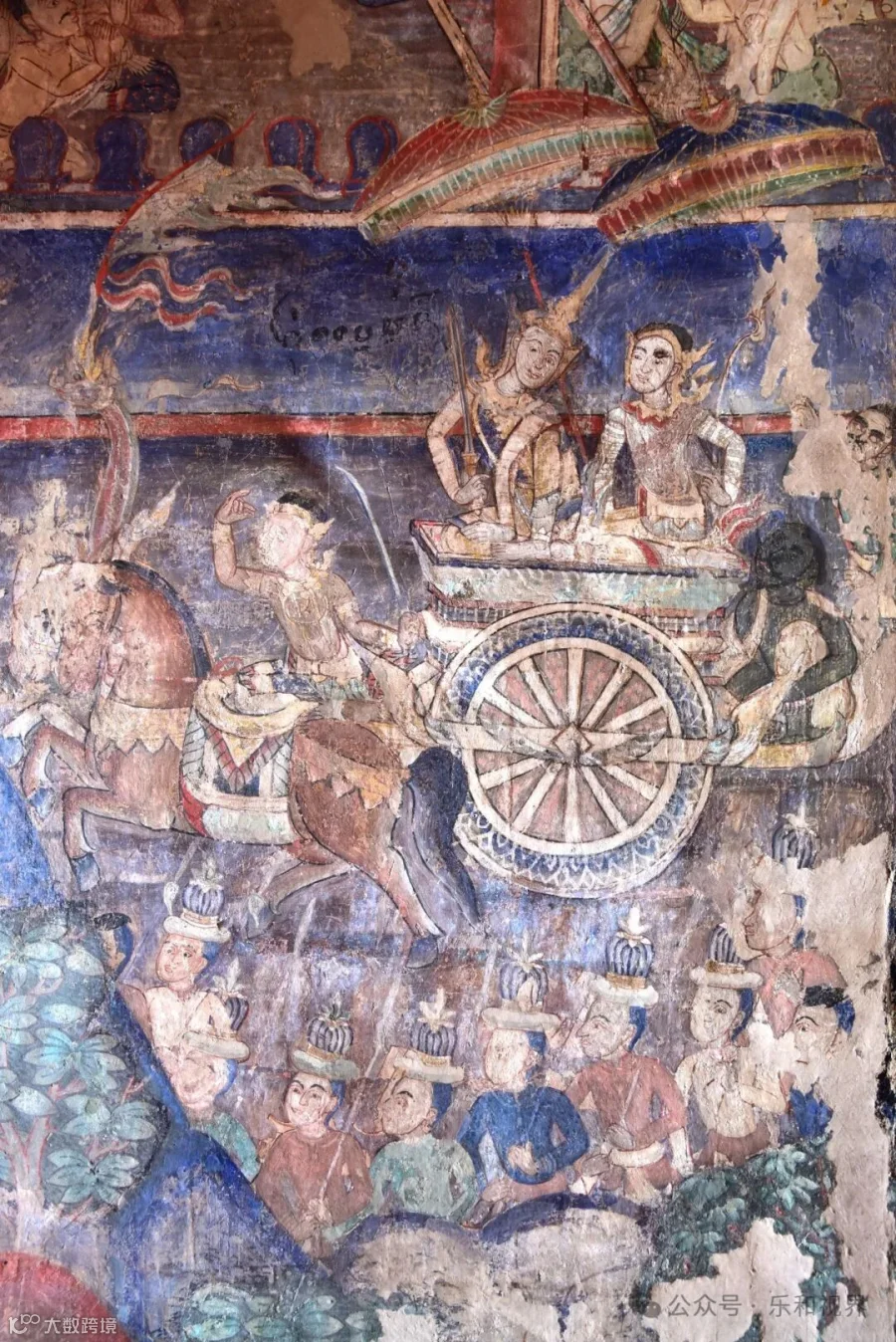
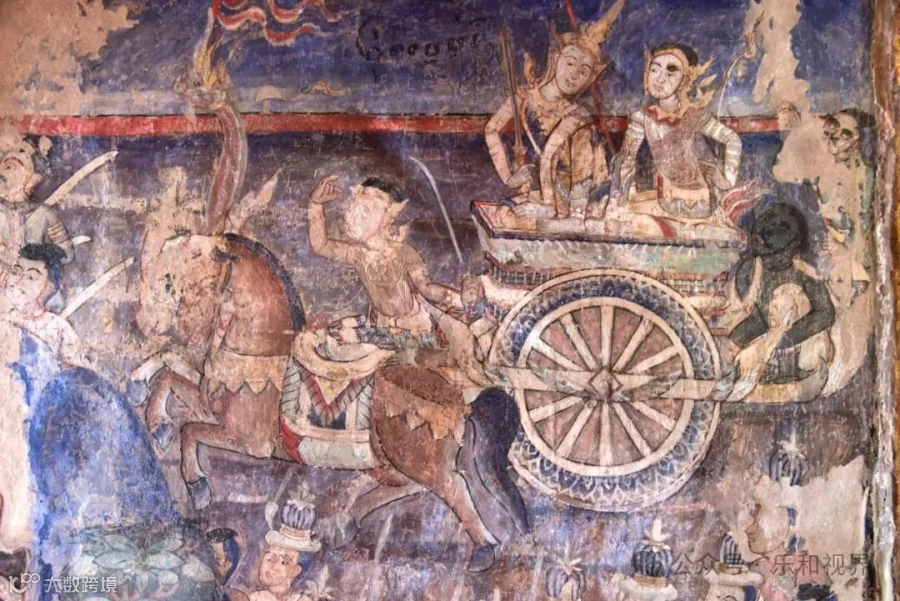
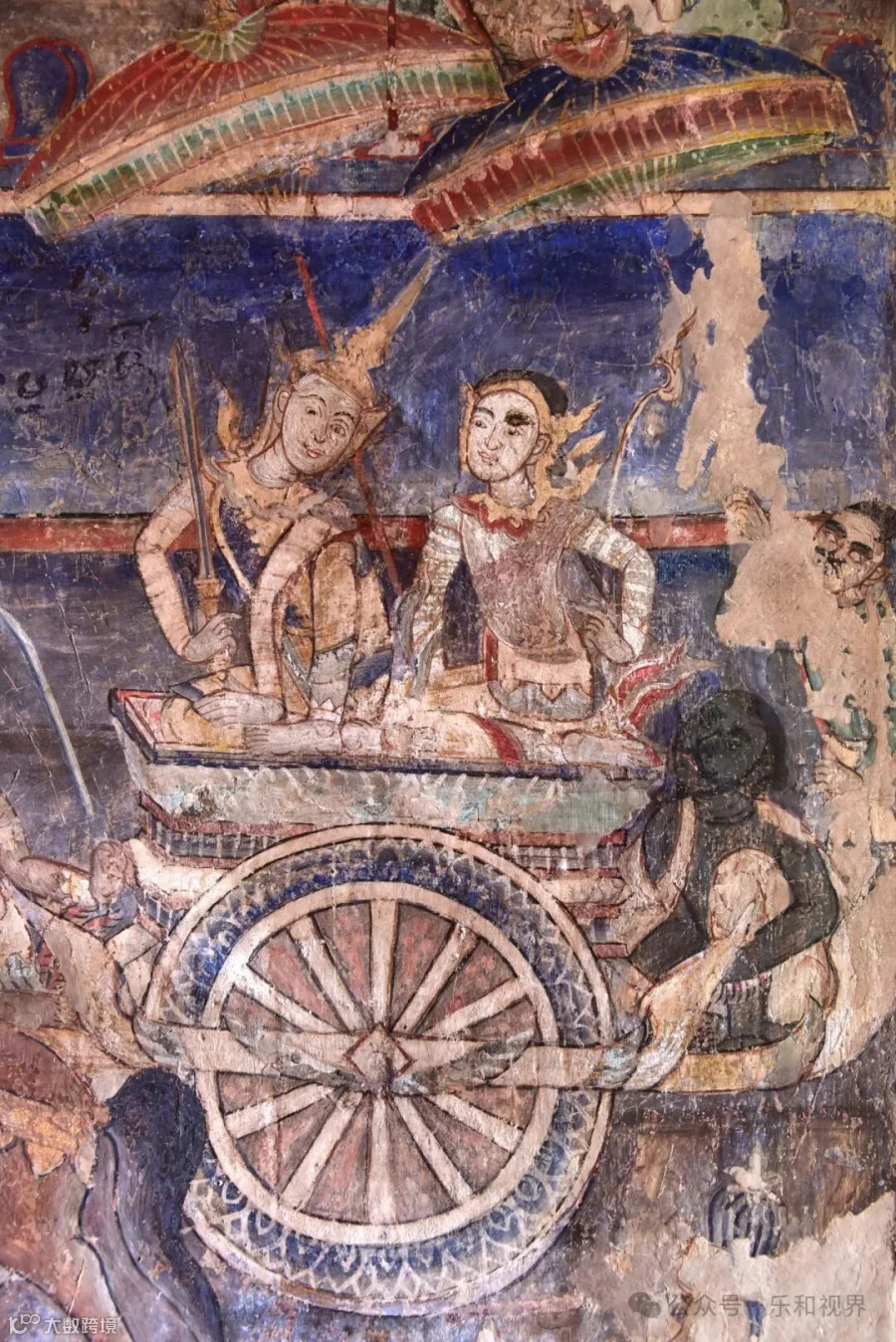
▲the royal honor guard
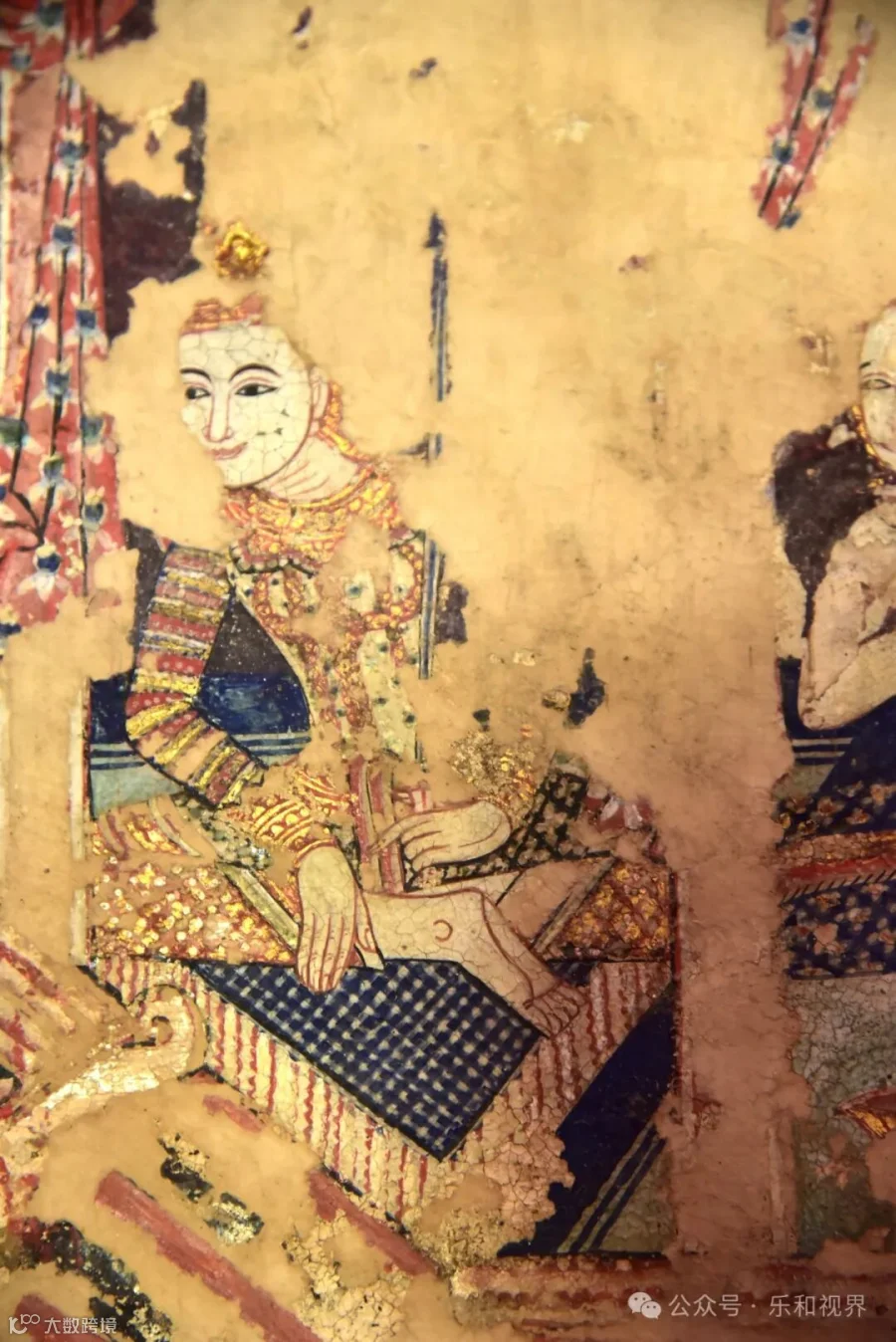
▲the prince
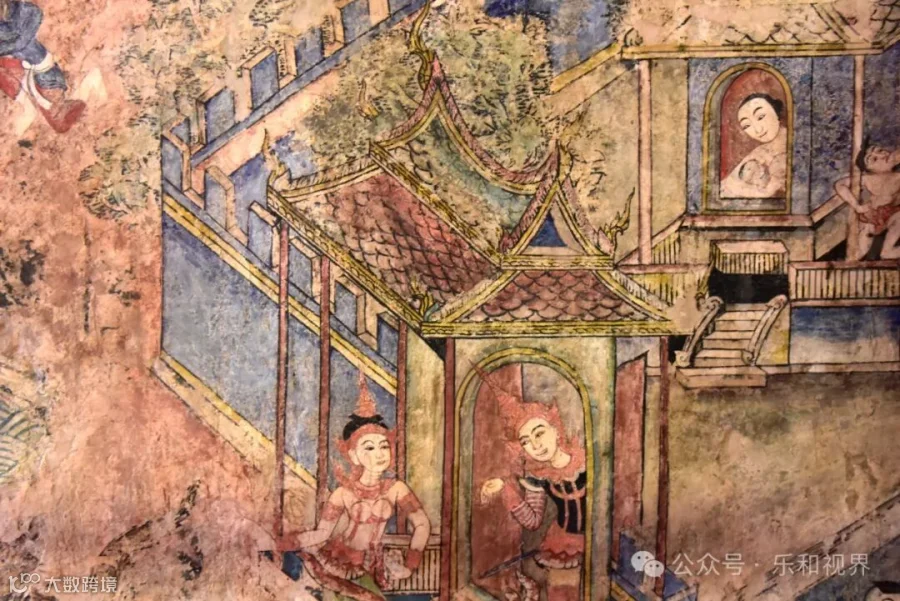
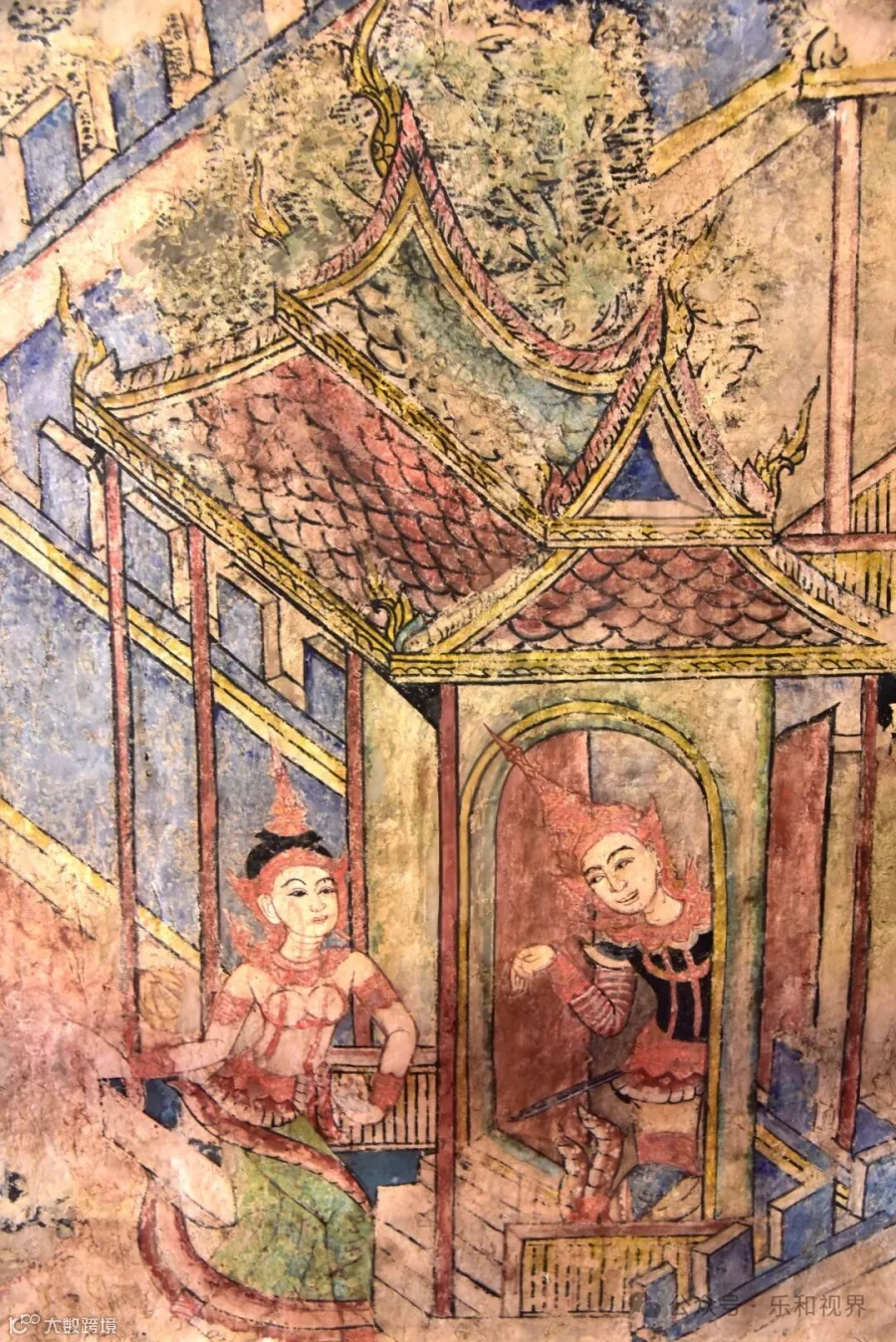
▲tryst
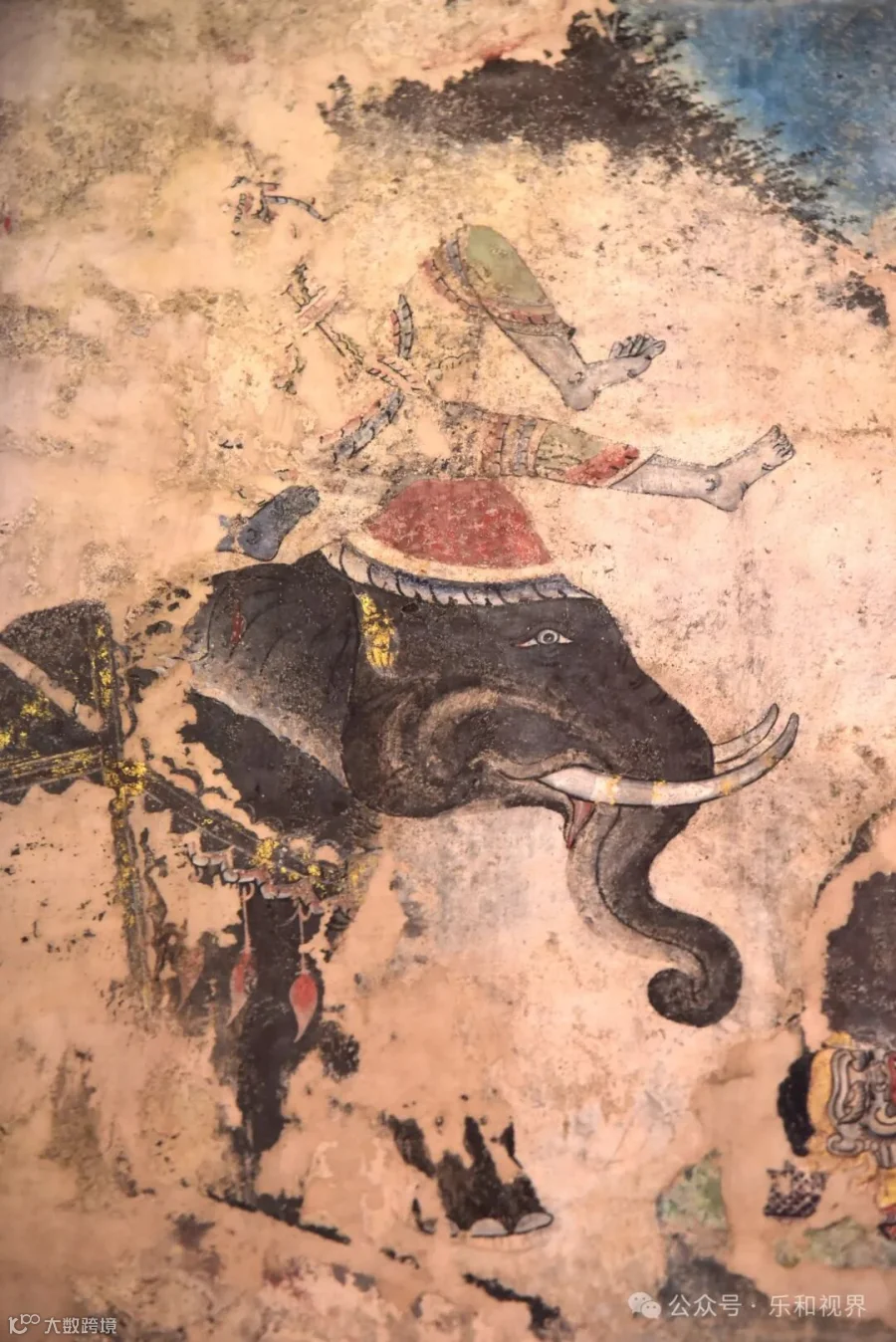
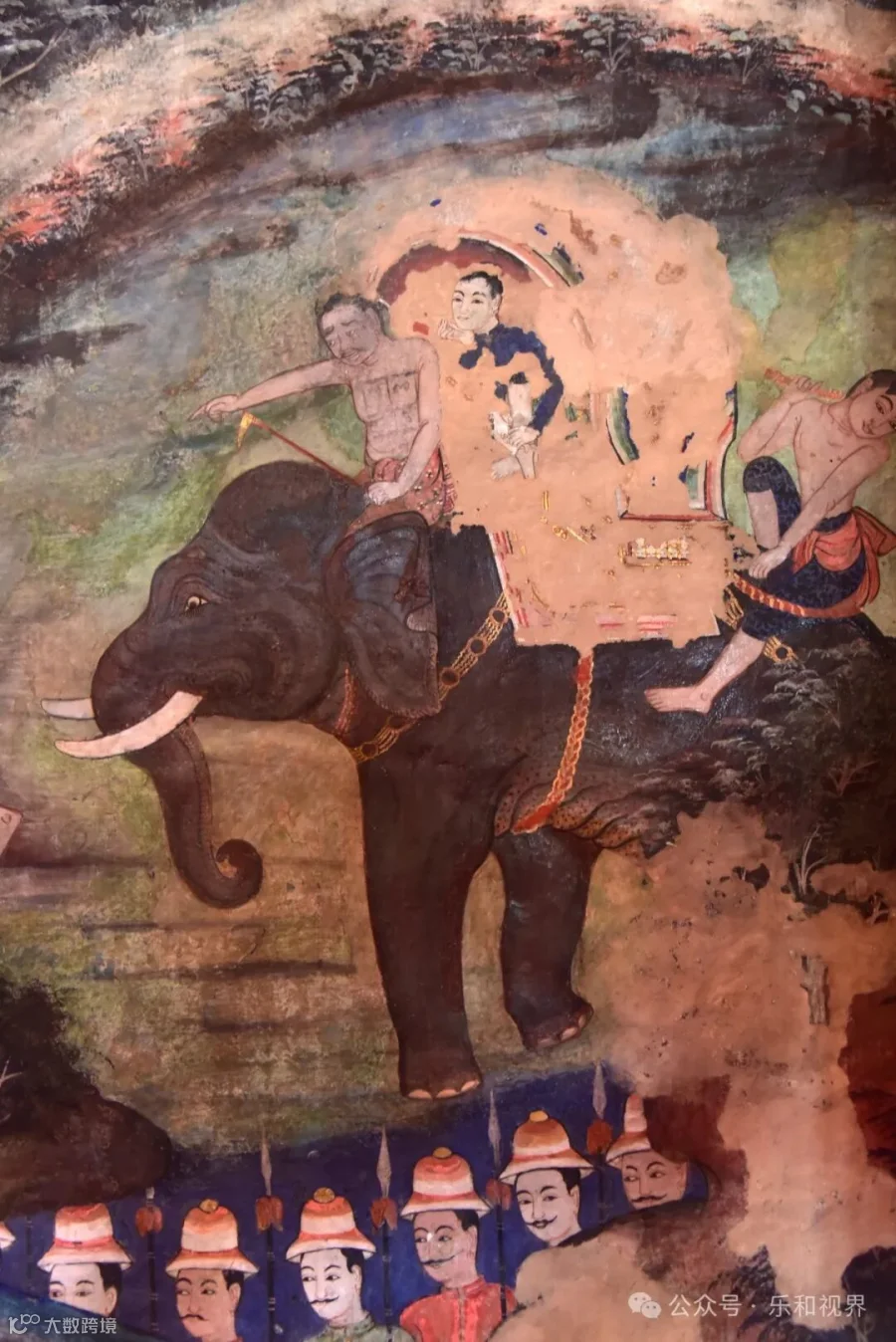
▲the elephant rider
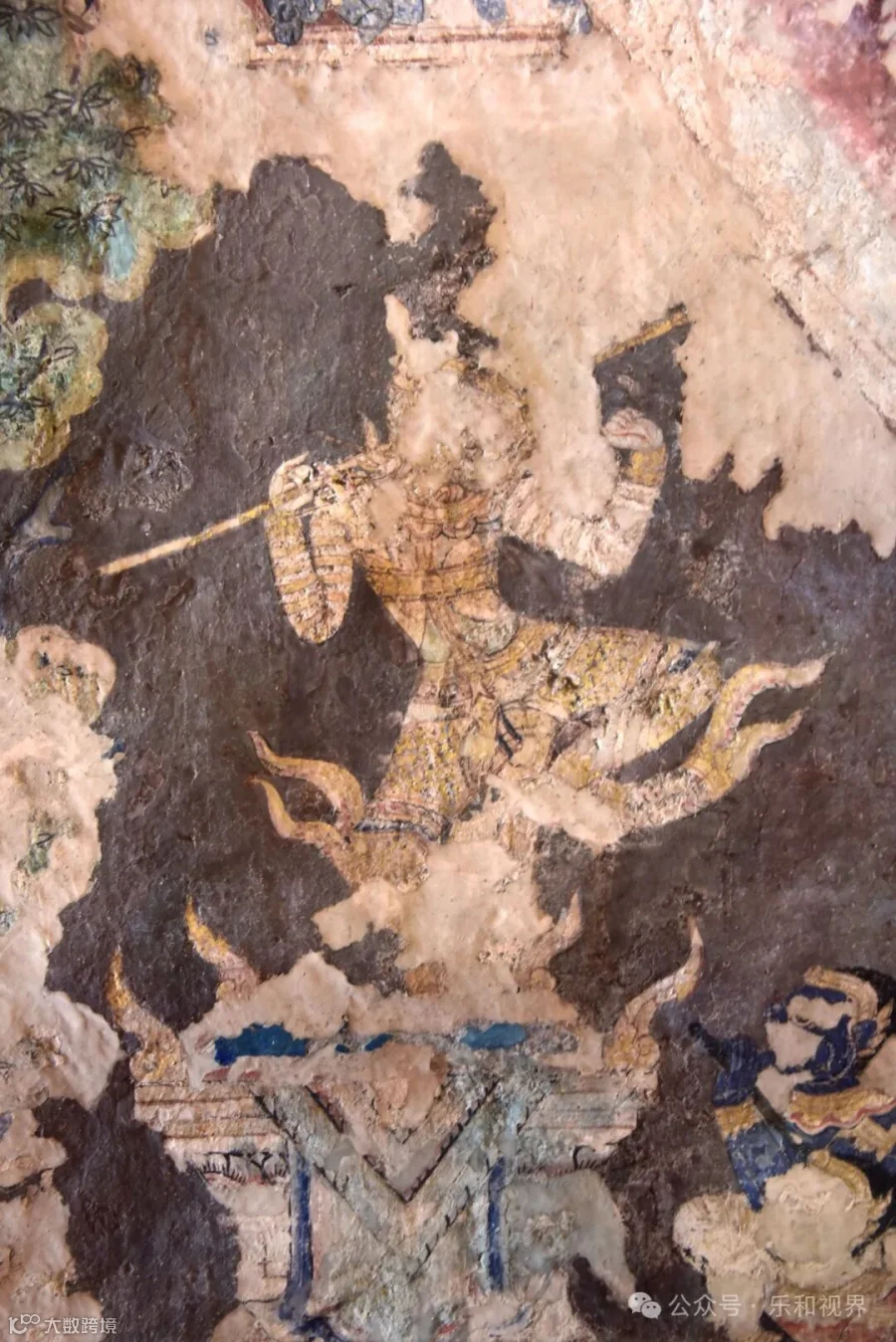
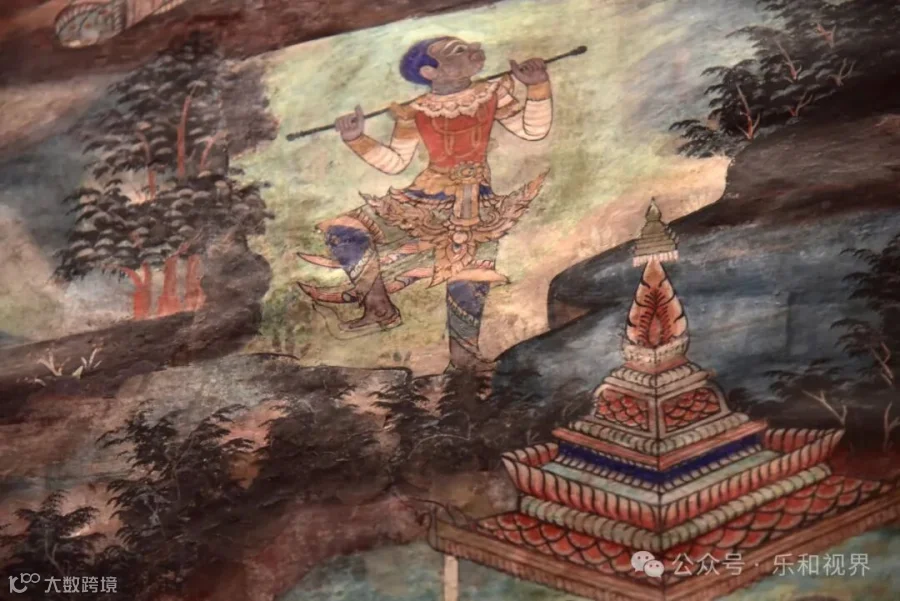
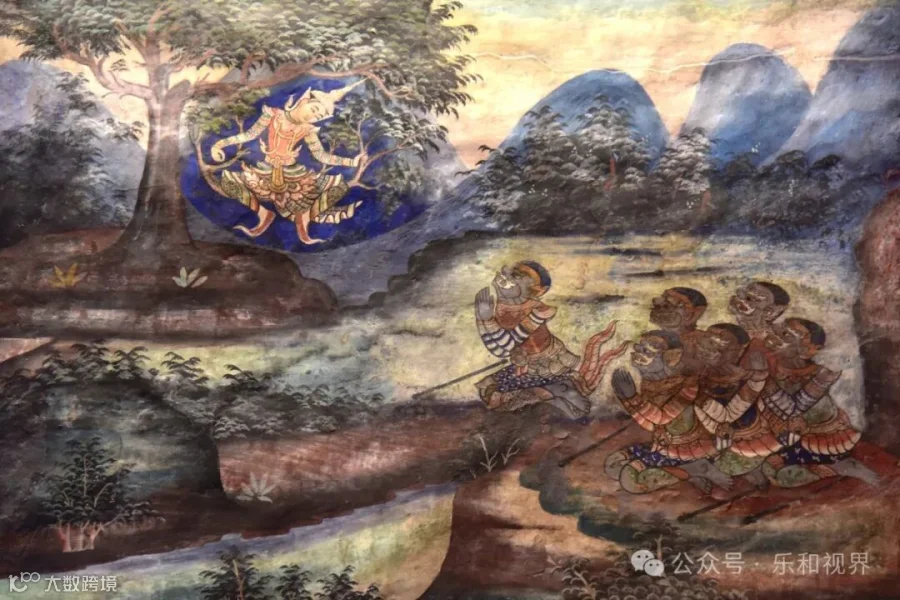
▲Hanuman(哈努曼)
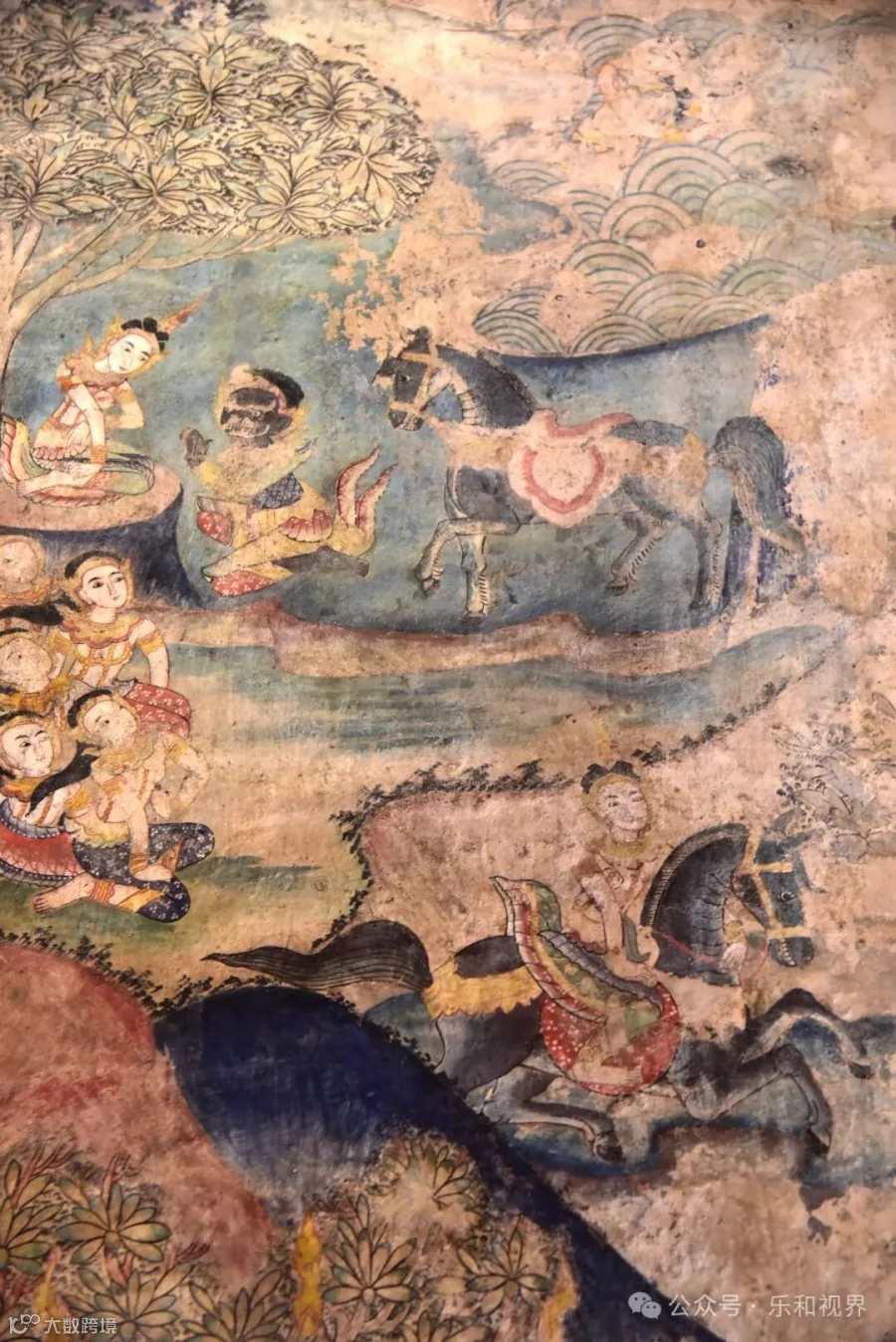
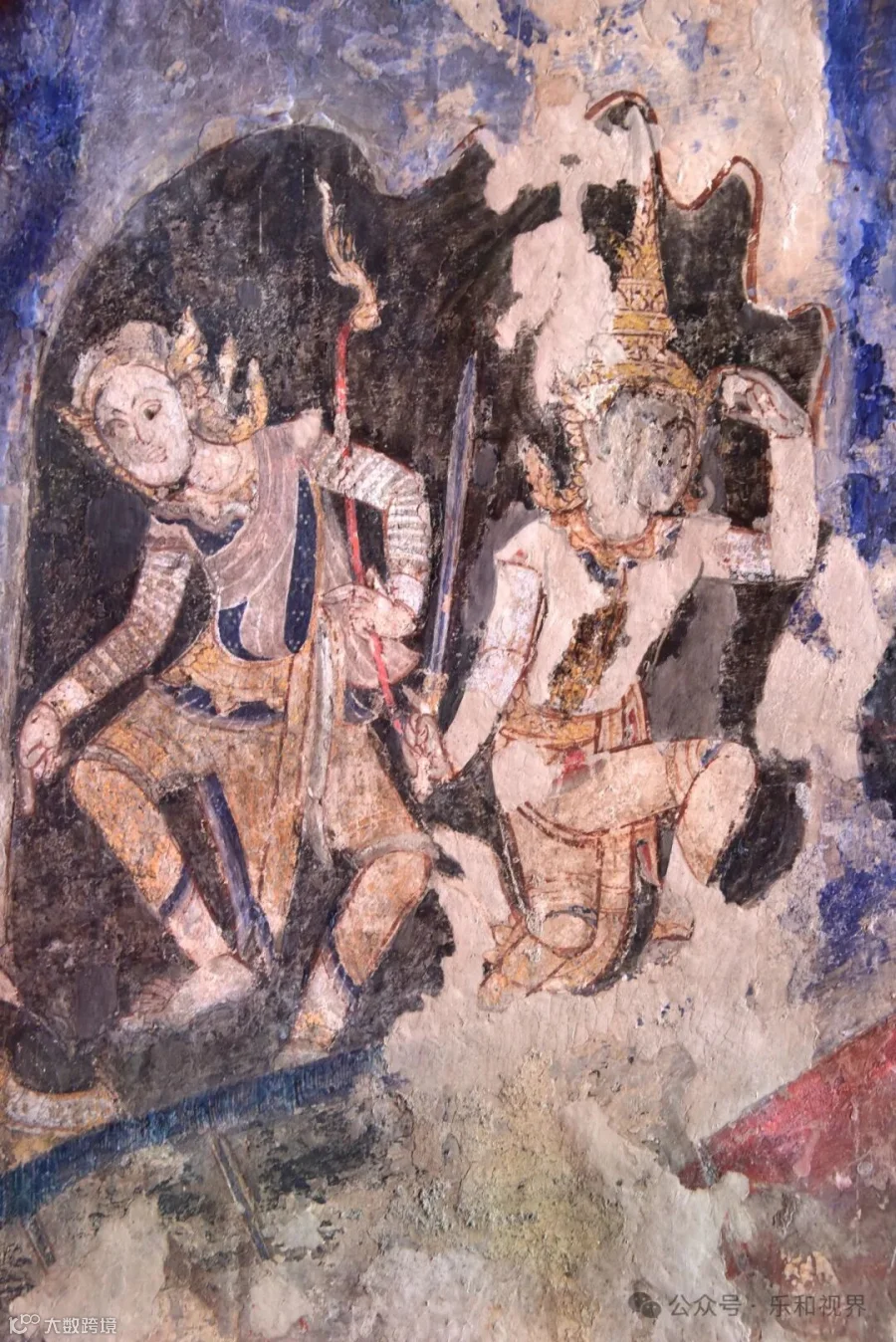
▲other scenes
The Kulai Chedi
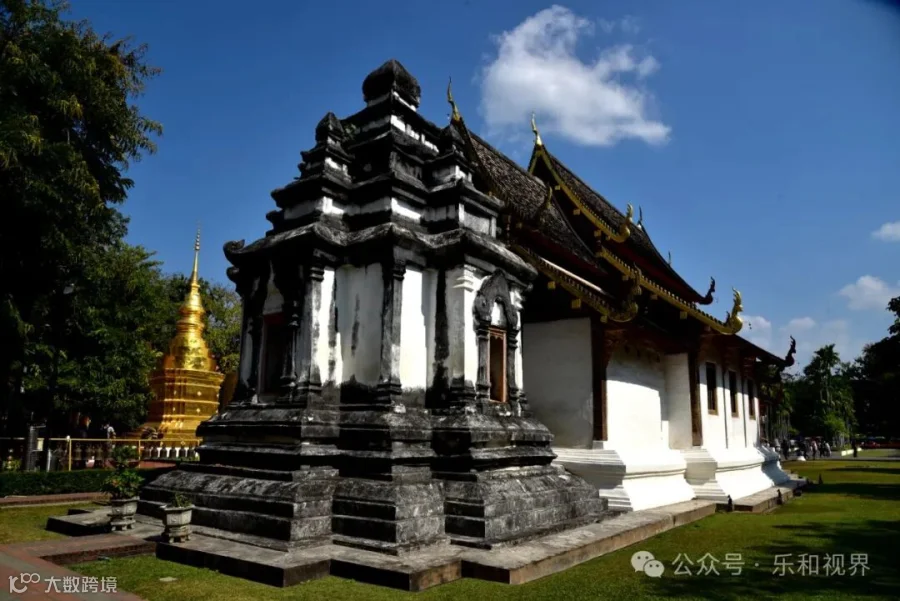
Behind the Viharn Lai Kham is a small five-tier roof pagoda constructed by King Mueangkaeo at the beginning of the 16th century. When the chedi was restored from 1813 a gold box of relics was found inside the chedi which was then returned to its place in the middle of the structure.
The chedi is unusual in that it is connected to the viharn by a small tunnel. The only other example of this in Chiang Mai is at Wat Prasat. In the west side of the chedi is an alcove with a sitting Buddha image behind glass. The whitewash has mostly faded to reveal its stone base material.
Viharn Luang
The main viharn is relatively modern and dates from 1925 having replaced the original viharn from the 15th century and contains an important Buddha image which was cast in 1477.
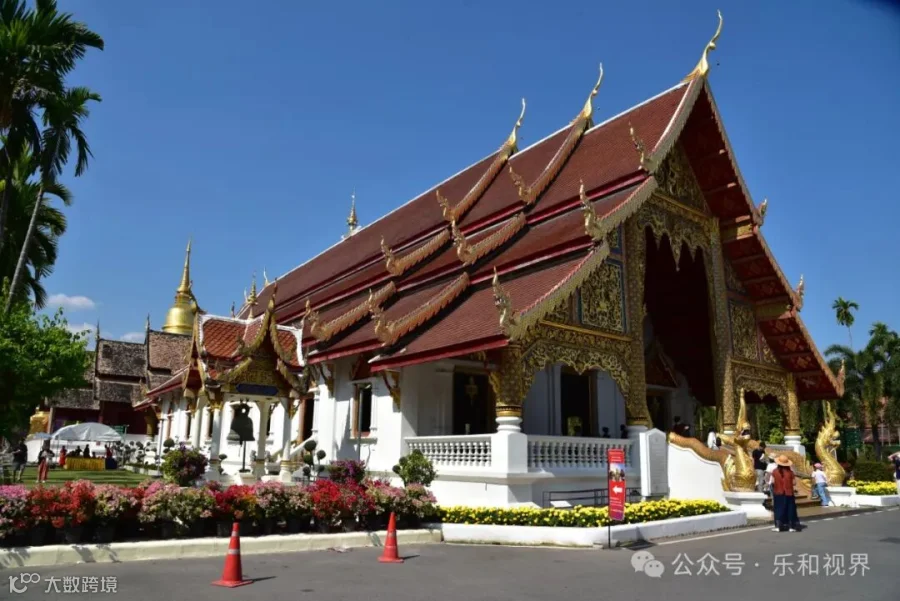
The word "Luang" means "big" and it certainly lives up to its name. The imposing facade is the first thing you see when you enter the temple. It is decorated with intricate carvings of figures and foliate patters in gilt set on a sparkling mosaic of blue glass pieces.
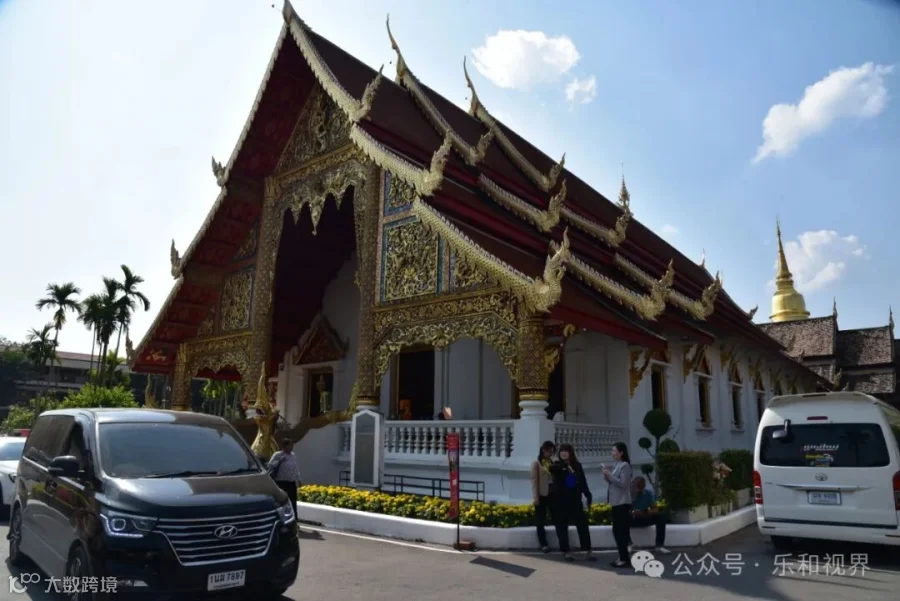
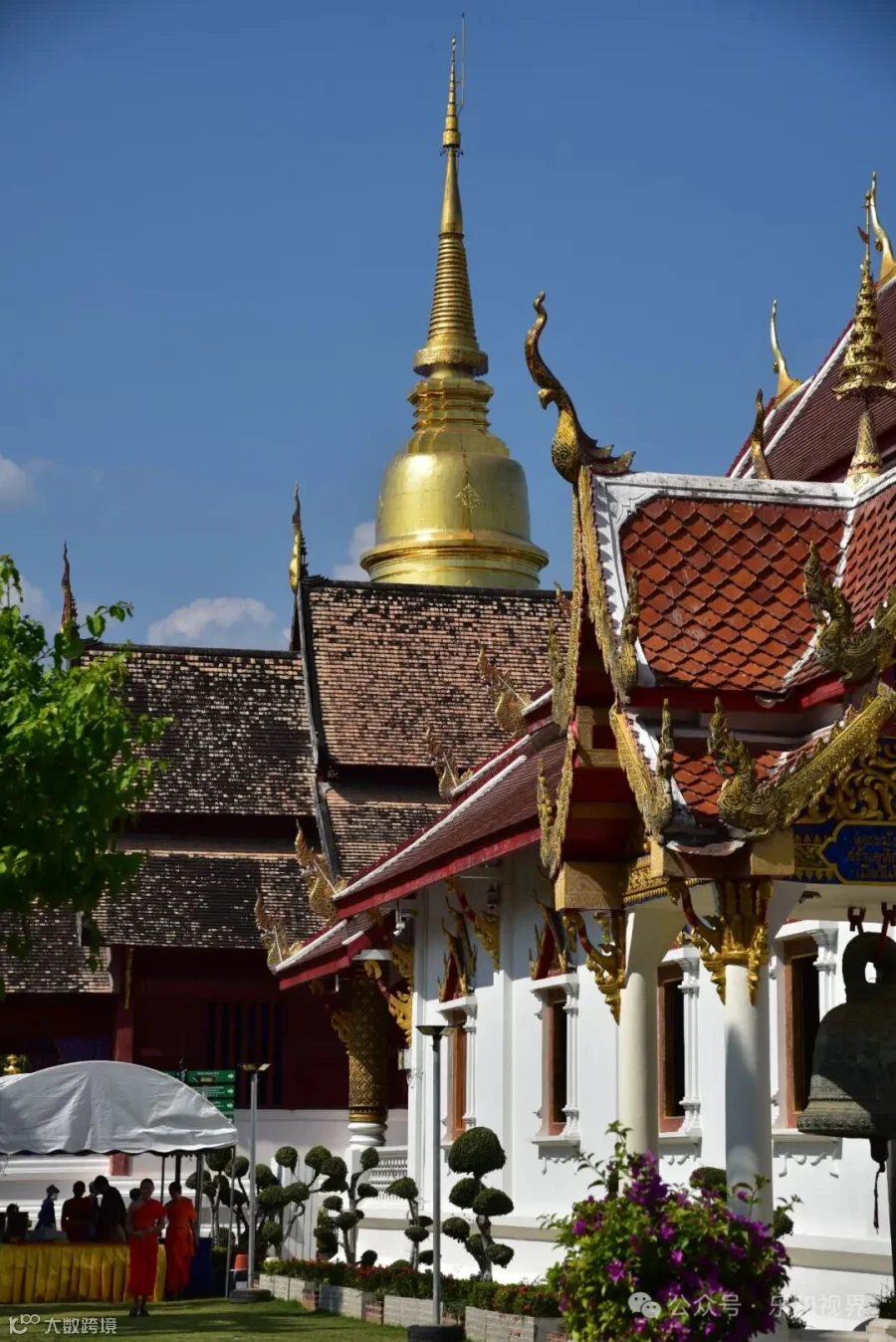
The roof is also impressive having three tiers and three horizontal splits and sweeping low to the ground in the typical Northern Thai style. As usual the bargeboards are decorated with nagas running along the edges of the roof and the apexes are adorned with slender bird chofas.
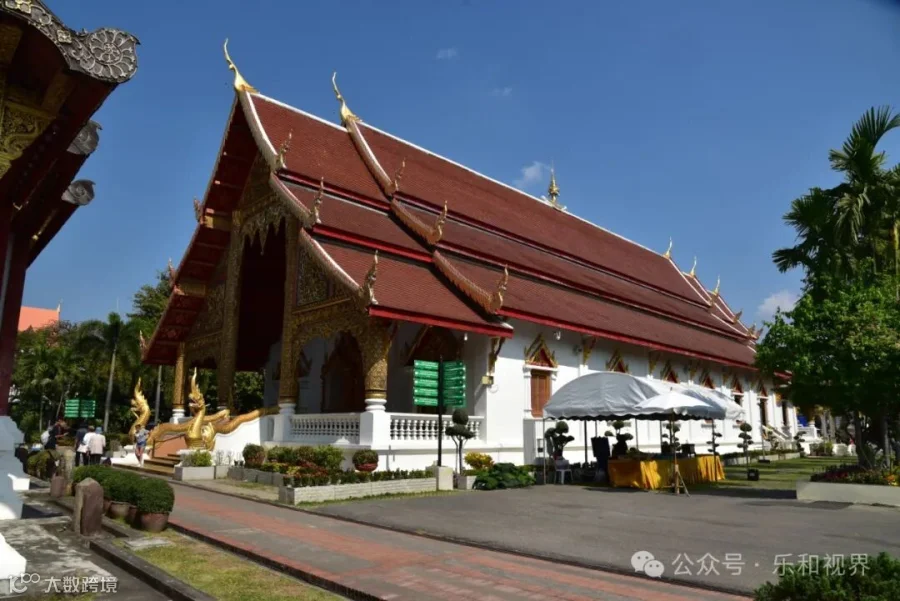
The entrance to the viharn is guarded by a fearsome pair of nagas set along the balustrades and the porch has three doors each with decoration above the lintels in the form of an arch composed of bodies of nagas. Otherwise the porch is without ornamentation.
This plain style is followed throughout the interior which is a common feature in the later 20th century temple buildings. The columns and the roof supports are plain white except for the lotus flower capitals in gilt. The walls are also plain white and this has the effect of focusing the attention on the main attraction being the Massive Buddha image.
This Buddha image called the "Phra Chaon Thong Thip Buddha" was cast in 1477 and is composed of an alloy of gold and copper. One of the most venerated Buddha images in Northern Thailand it was given by monks from Southern Yunan province of China.
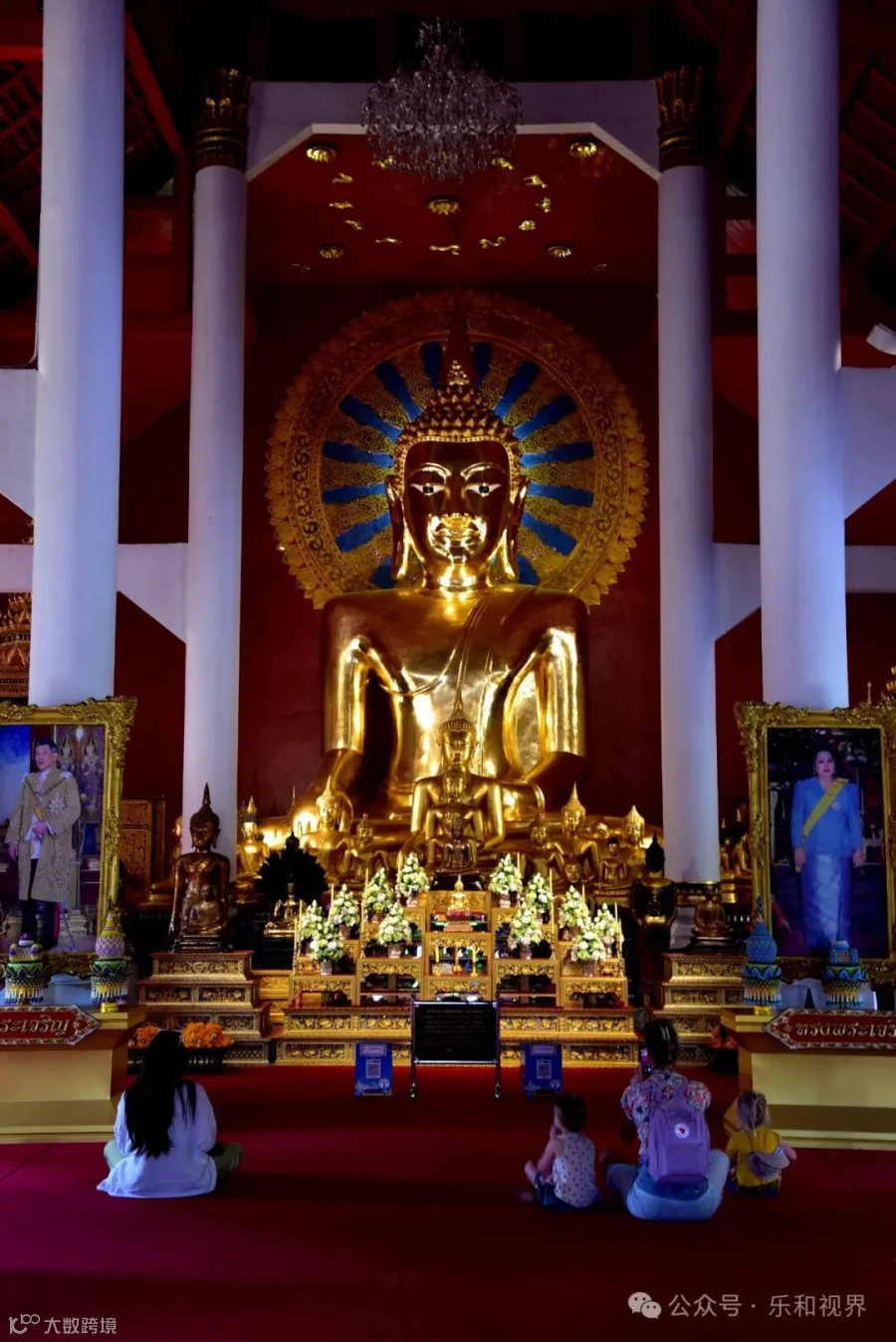
The image is very striking with the eyes well pronounced giving a watchful countenance. It is seated on a dais in the usual mudra of Subduing Mara with right hand towards the ground. In front are numerous other smaller Buddha images and an attractive arrangement of flowers, candles and ornaments on gilt tables. Behind the alter is a large wheel of Dhamma in gilt and blue decoration.
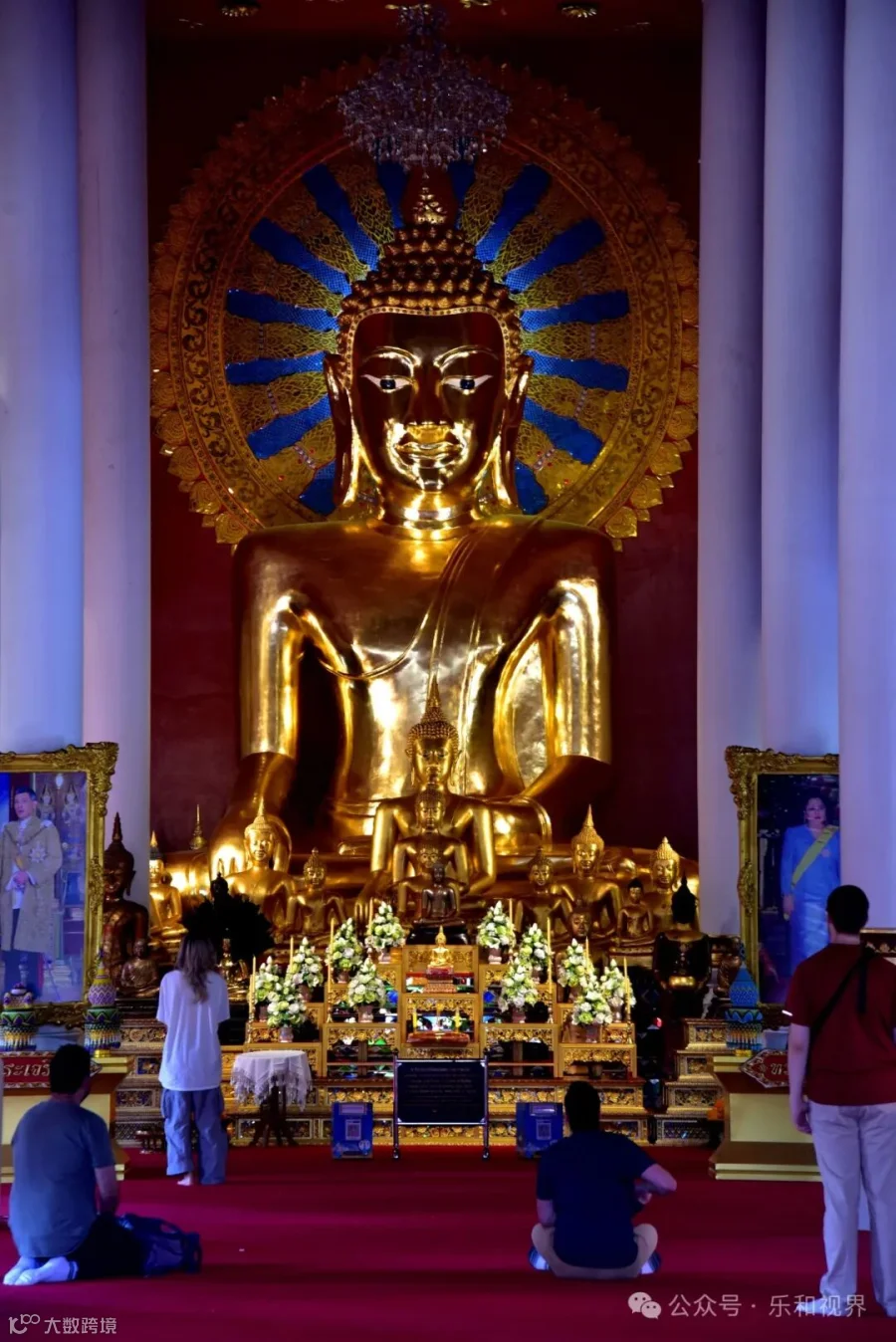
The Ubosot
The Ubosot is placed between the Viharn Luang and the large chedi. It has two entrances, one for monks on the south side and one for nuns on the north side. It is as such a song sangha ubosot('song' meaning 'two' in Thai).
It was built in 1806 in the Lanna style and mostly of teak. The roof has three interlocking tiers with unusual finials. Along the bargeboards, instead of the usual nagas, there a patterned teak pieces with kranok shaped heads protruding from the sides. In addition, the chofas placed at the apexes of the roof are ornamental and not representative of the usual bird’s head.
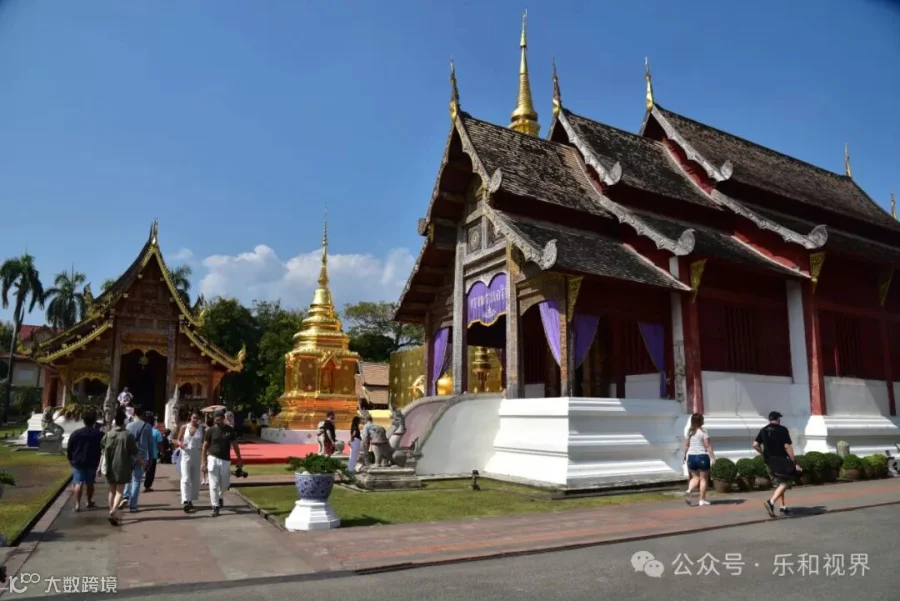
The design of the facade of the ubosot follows that of the viharn Lai Kham with Lanna style gilt carved work set in panels with few figures except for a few animals across one of the supports near the top.
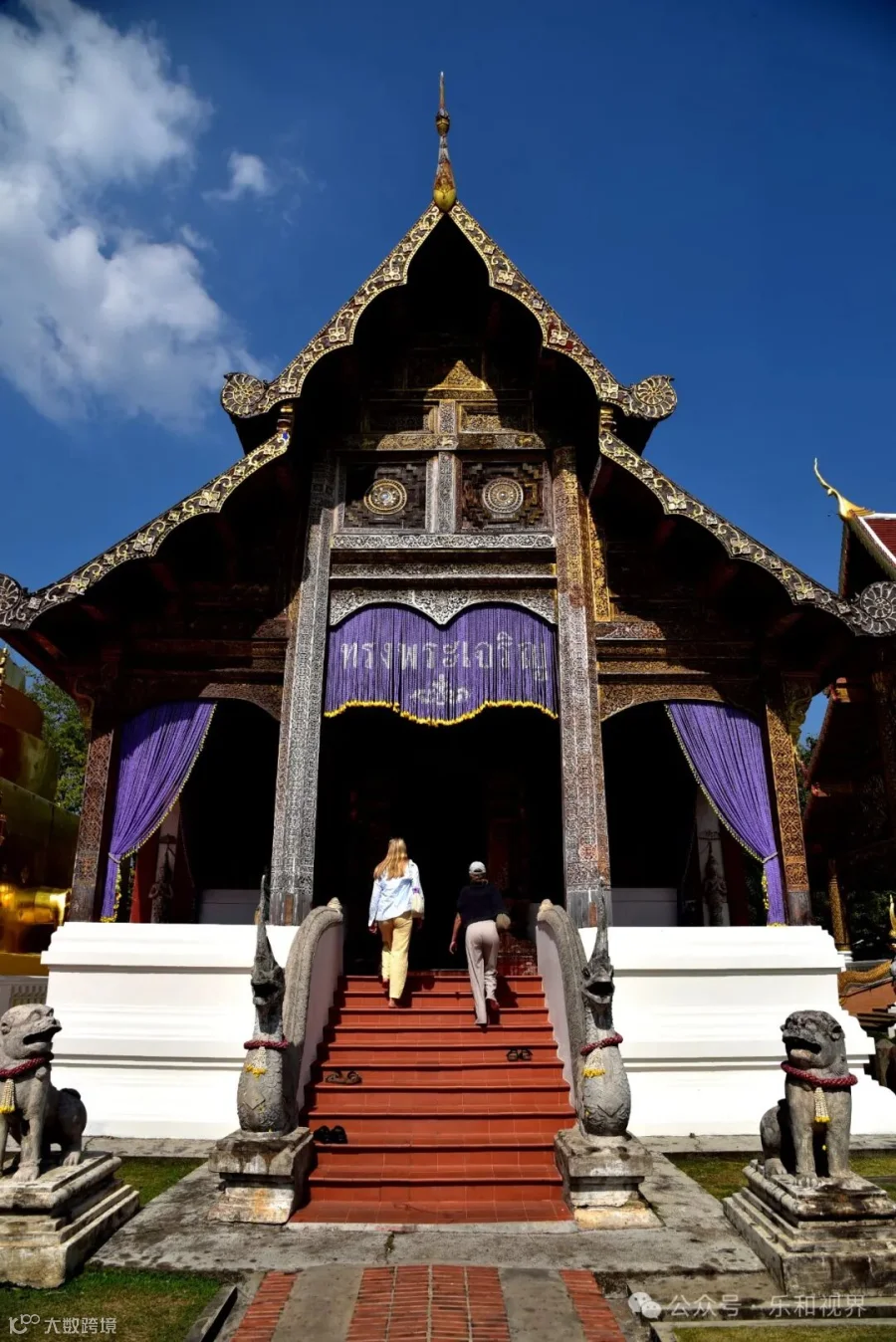
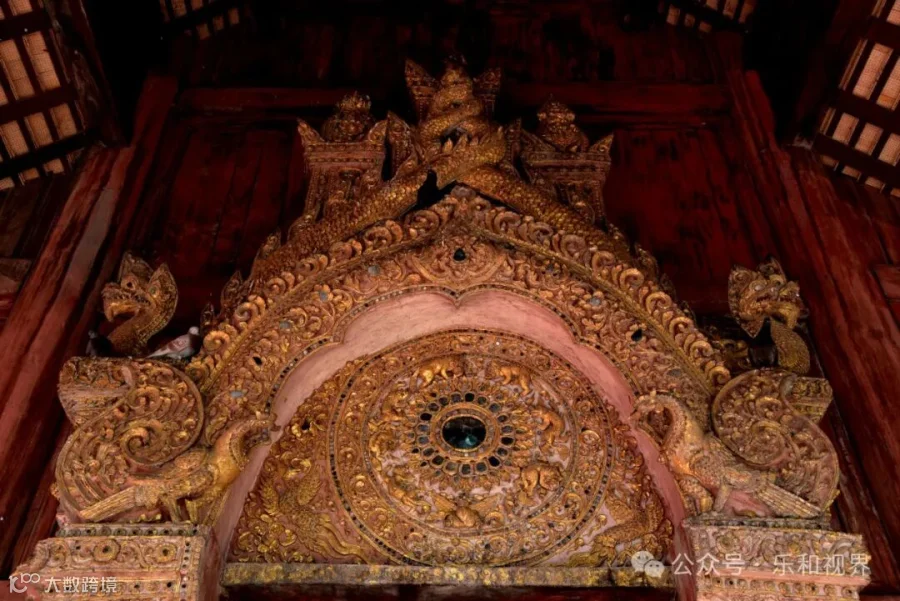
The interior is dominated by the mondop tower positioned in the centre of the room. The walls which are of teak display old photographs of the temple and past celebrations.
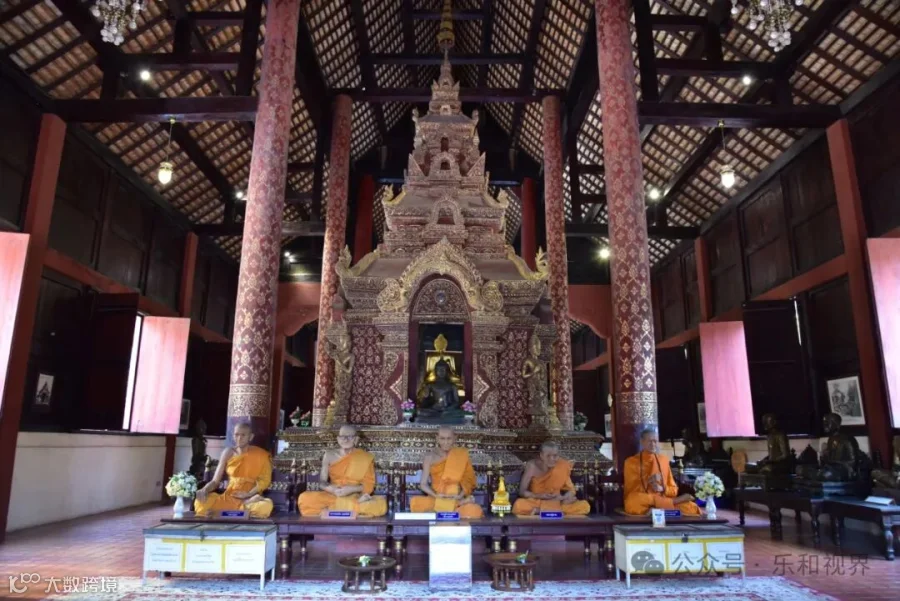
The mondop tower contains a smaller copy of the Phra Sihing Buddha, known as Phra Sihing Noi, where "noi" means "small" in Thai.
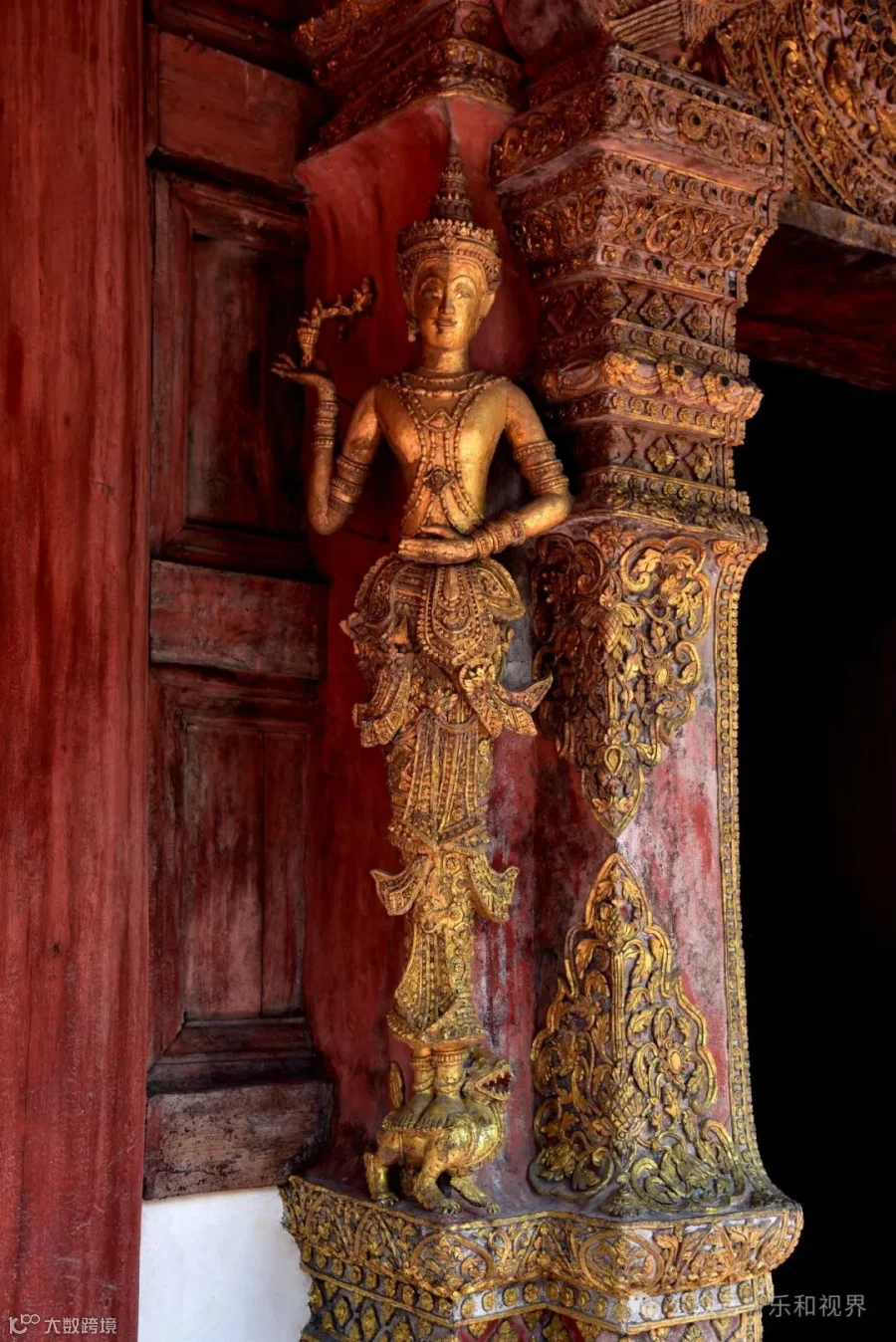
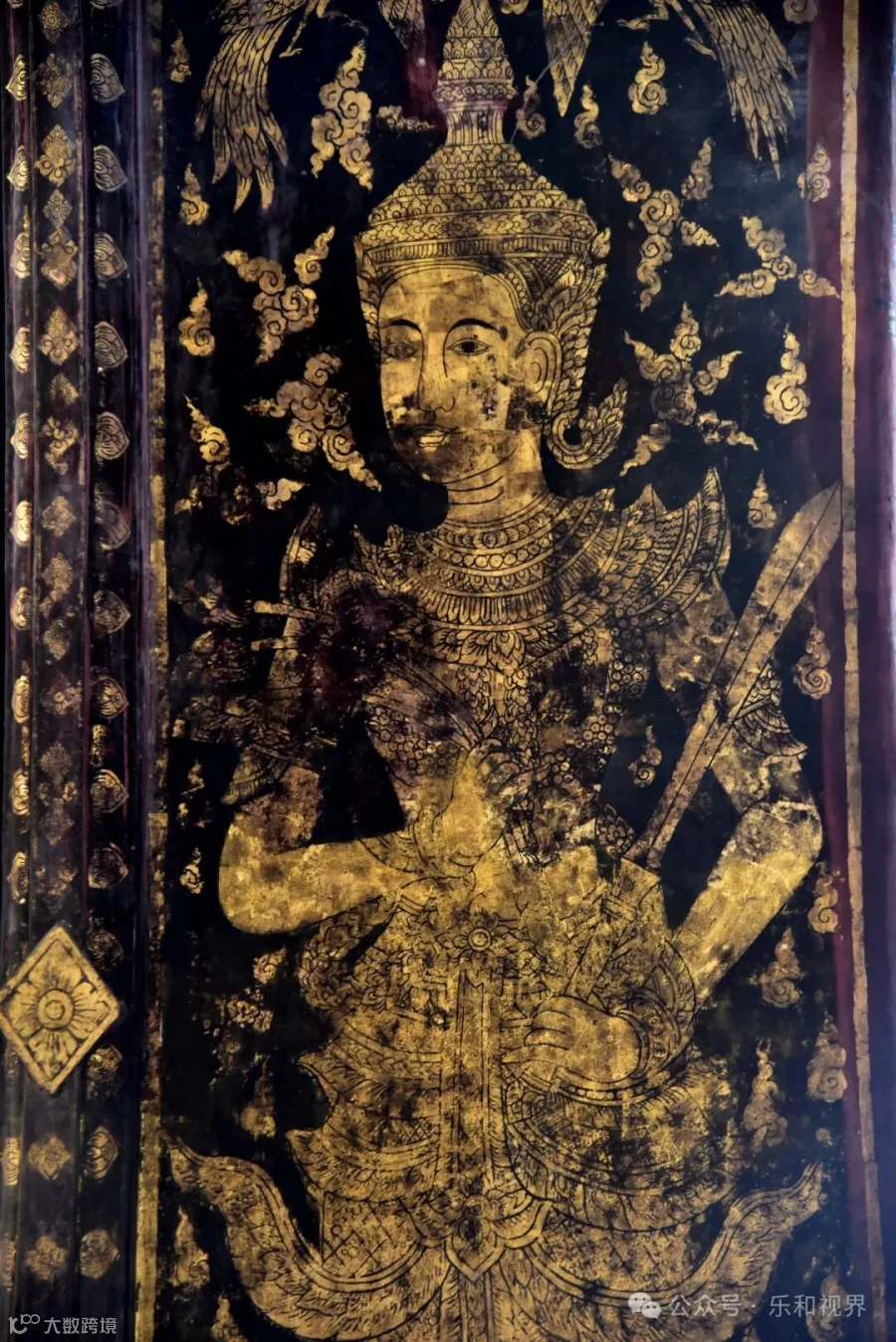
Next to mondop tower is a stone stele made from red sandstone with inscriptions carved on the front, flanked by two deva figures and a mom, a mythical creature resembling a small crocodile. The life-like figures of revered monks in wax which used to sit in front of the mondop are no longer present.
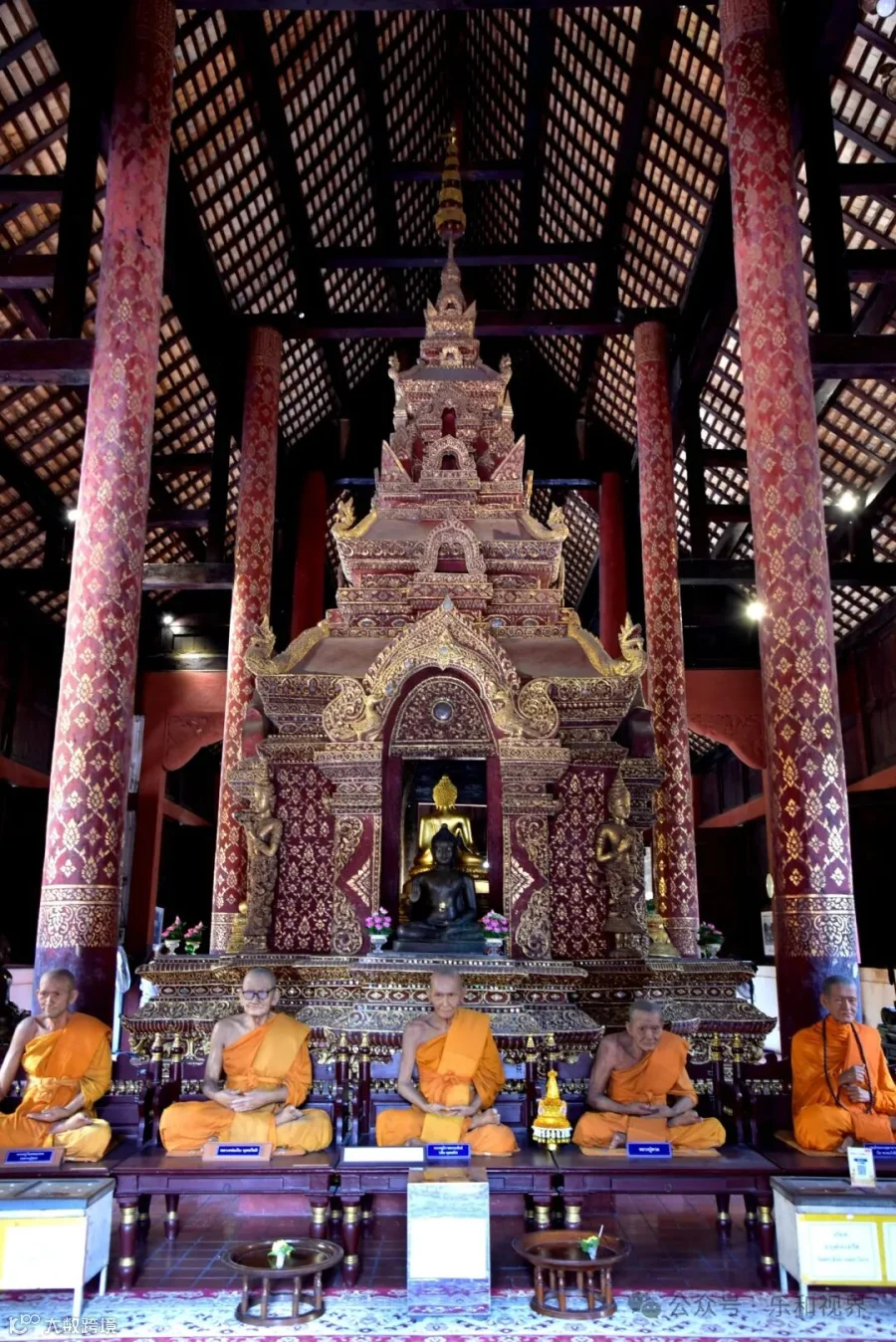
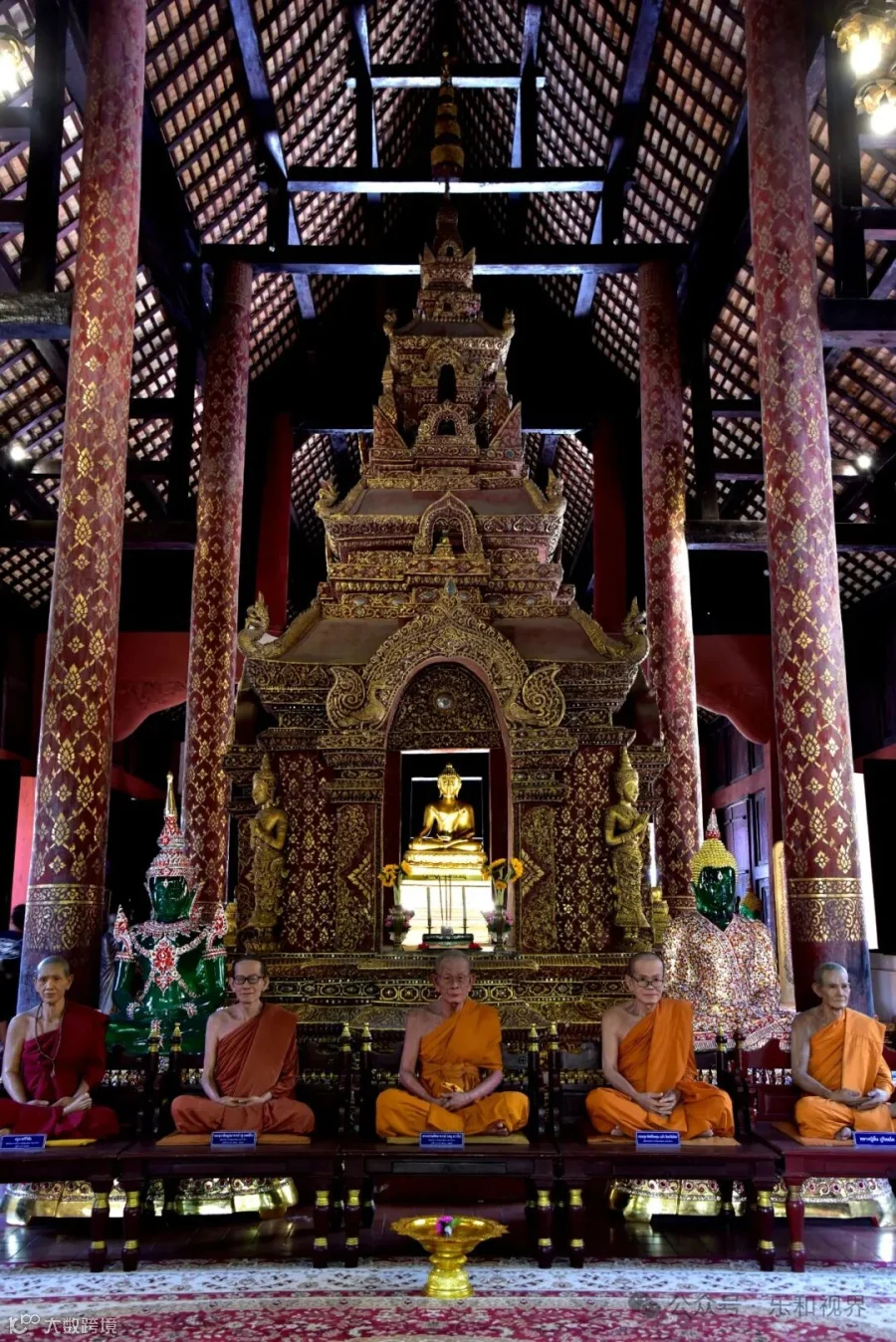
On each side of the mondop tower is a Buddha image including on the east side a copy of the "Emerald Buddha" which it’s said was originally housed at the temple in the 14th century.
There is also a Buddha image which was cast in 1898 in the mudra less seen with an open palm signifying an invitation to give alms.
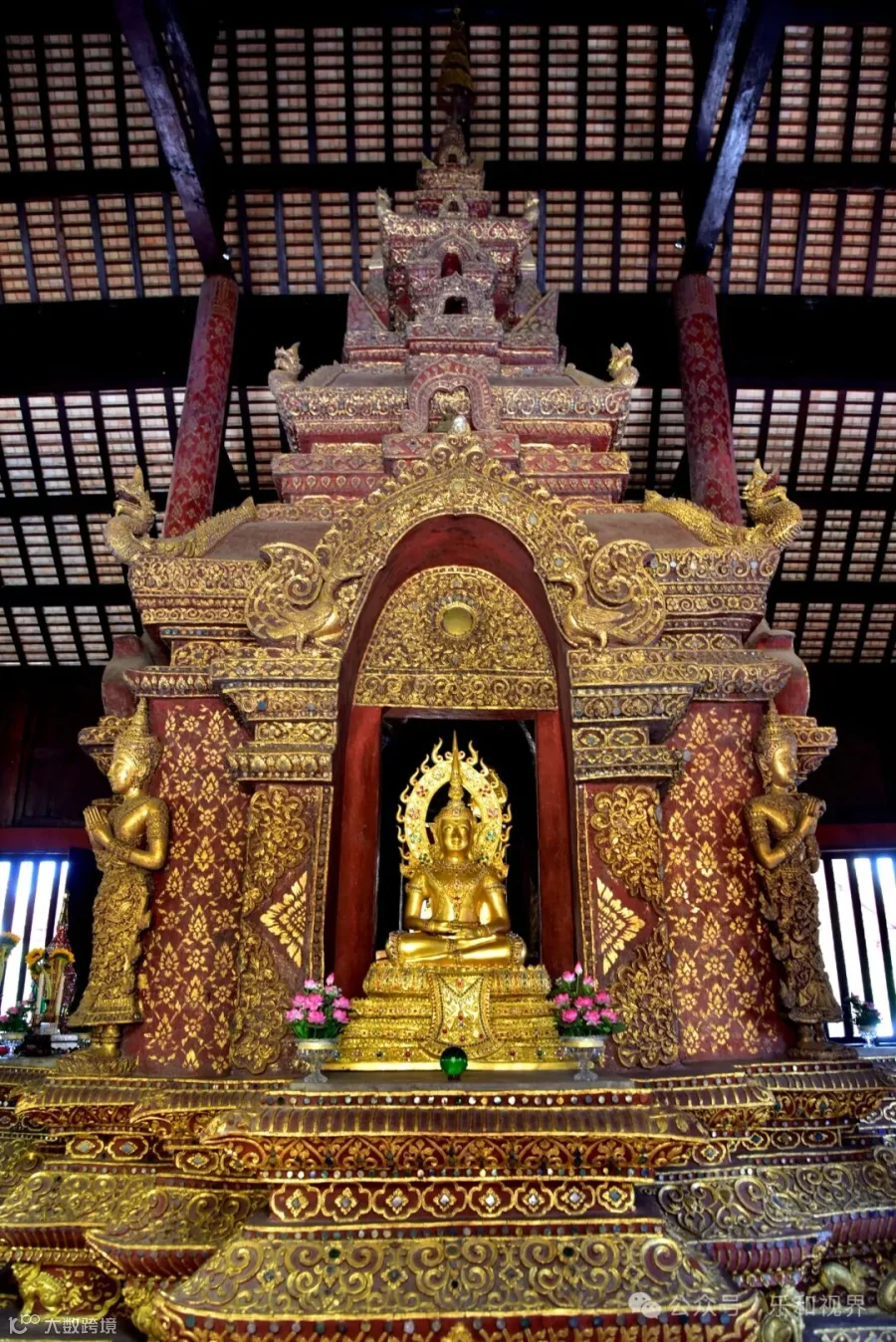
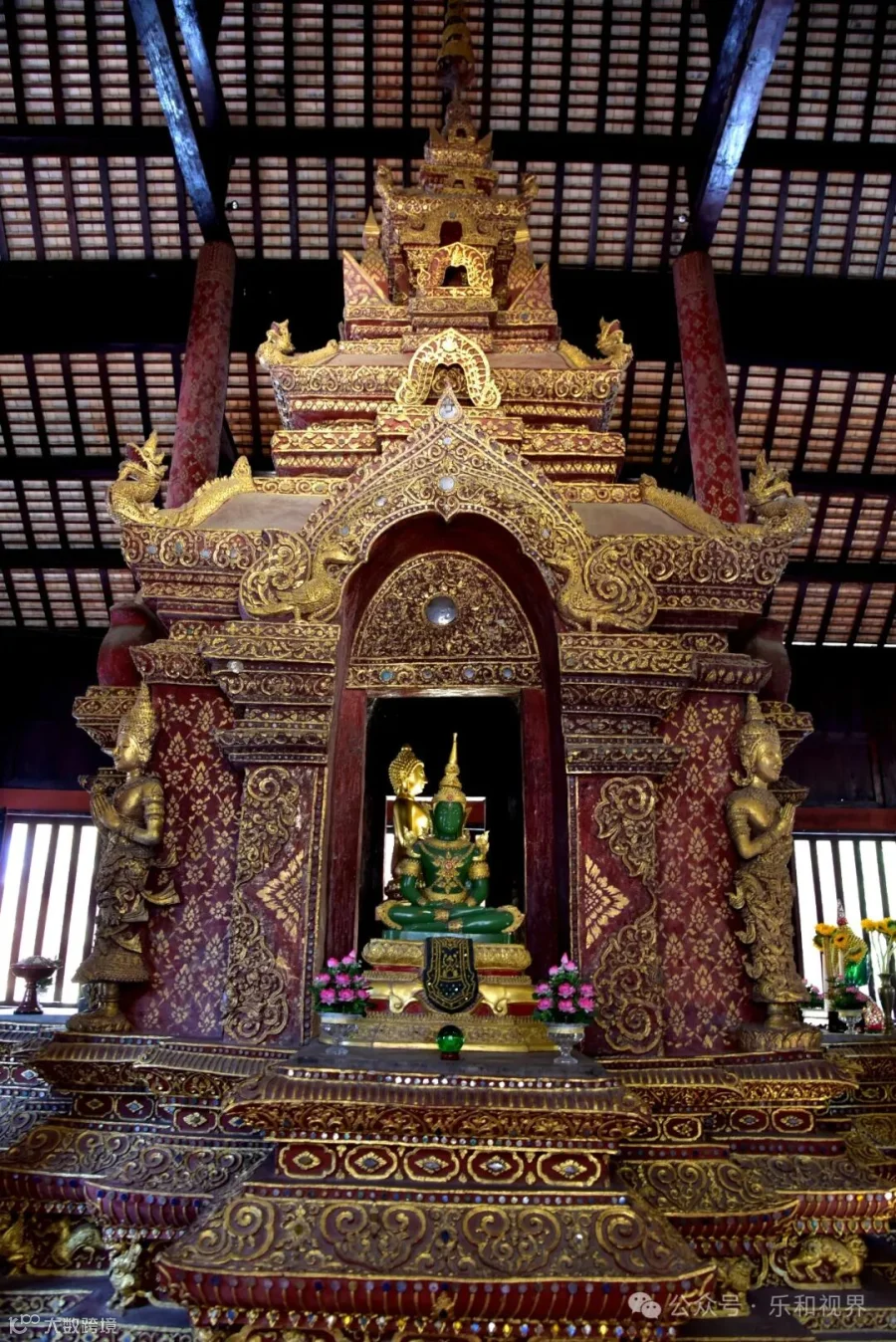
In addition, the ubosot contains the shrine containing the Buddha images for each day of the week and boxes in which you can make a donation depending on what day of the week you were born——something which every Thai adherent knows together with their zodiac animal which also plays an important part in encouraging donations. Unlike most ubosots or initiation buildings women are allowed to enter.
The Phrathatluang Chedi
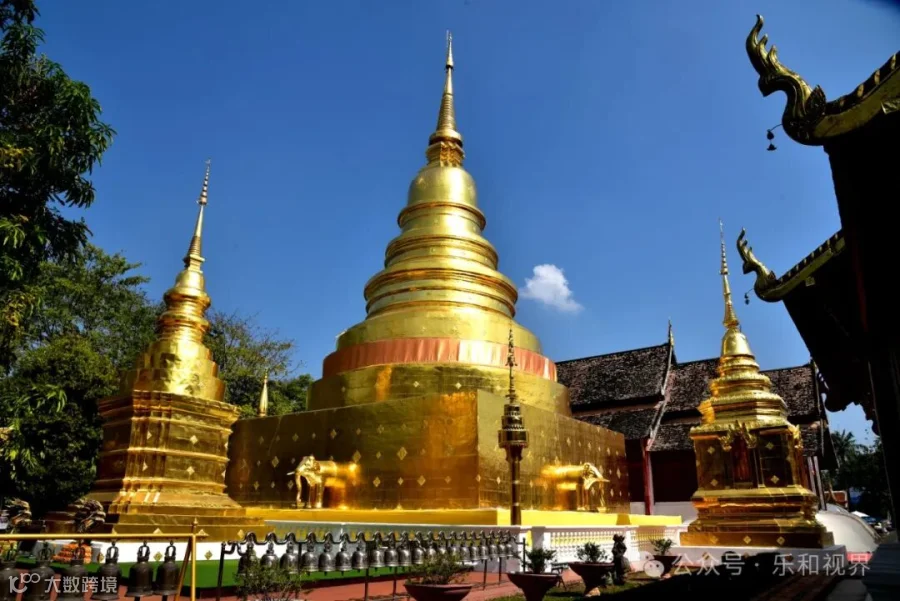
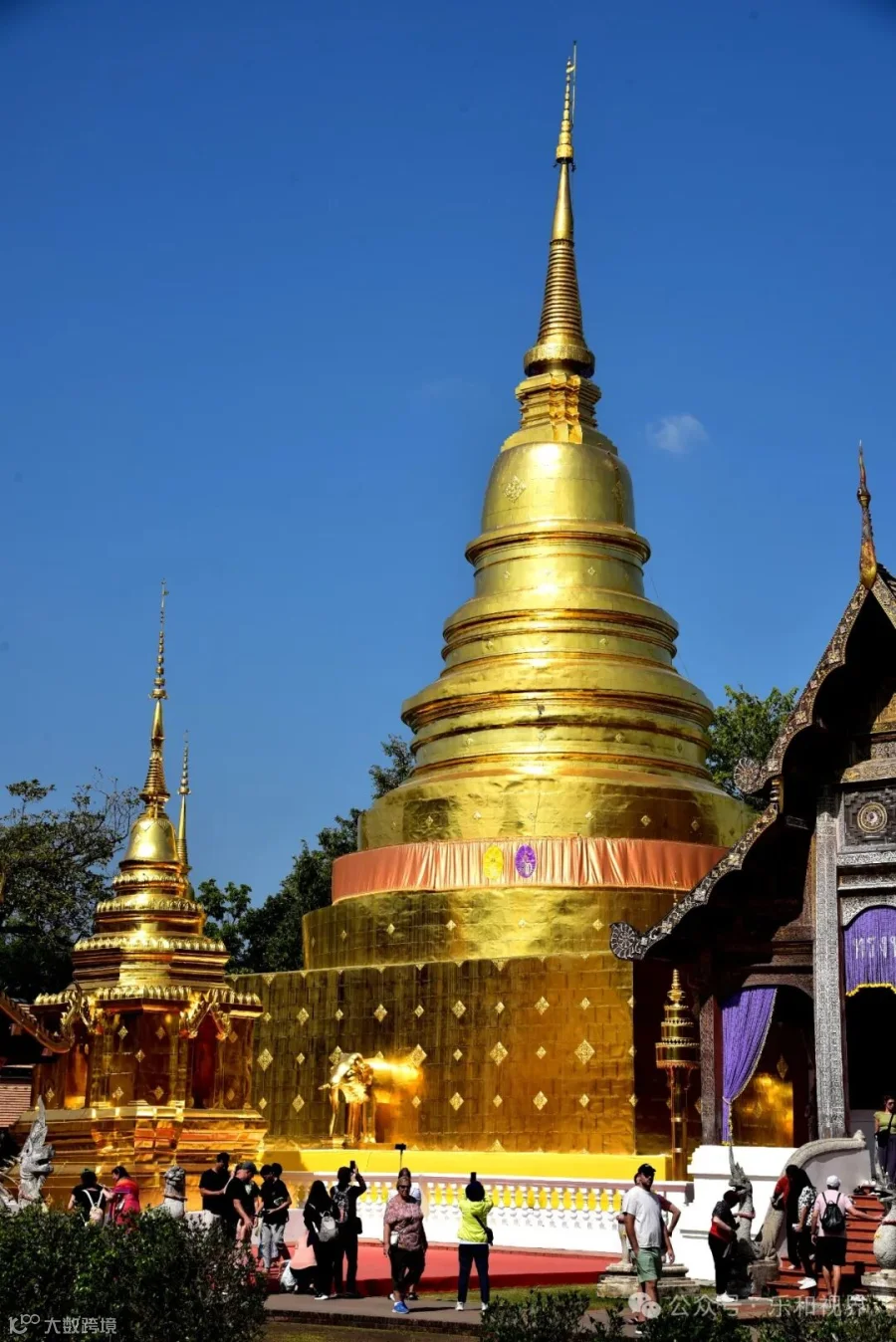
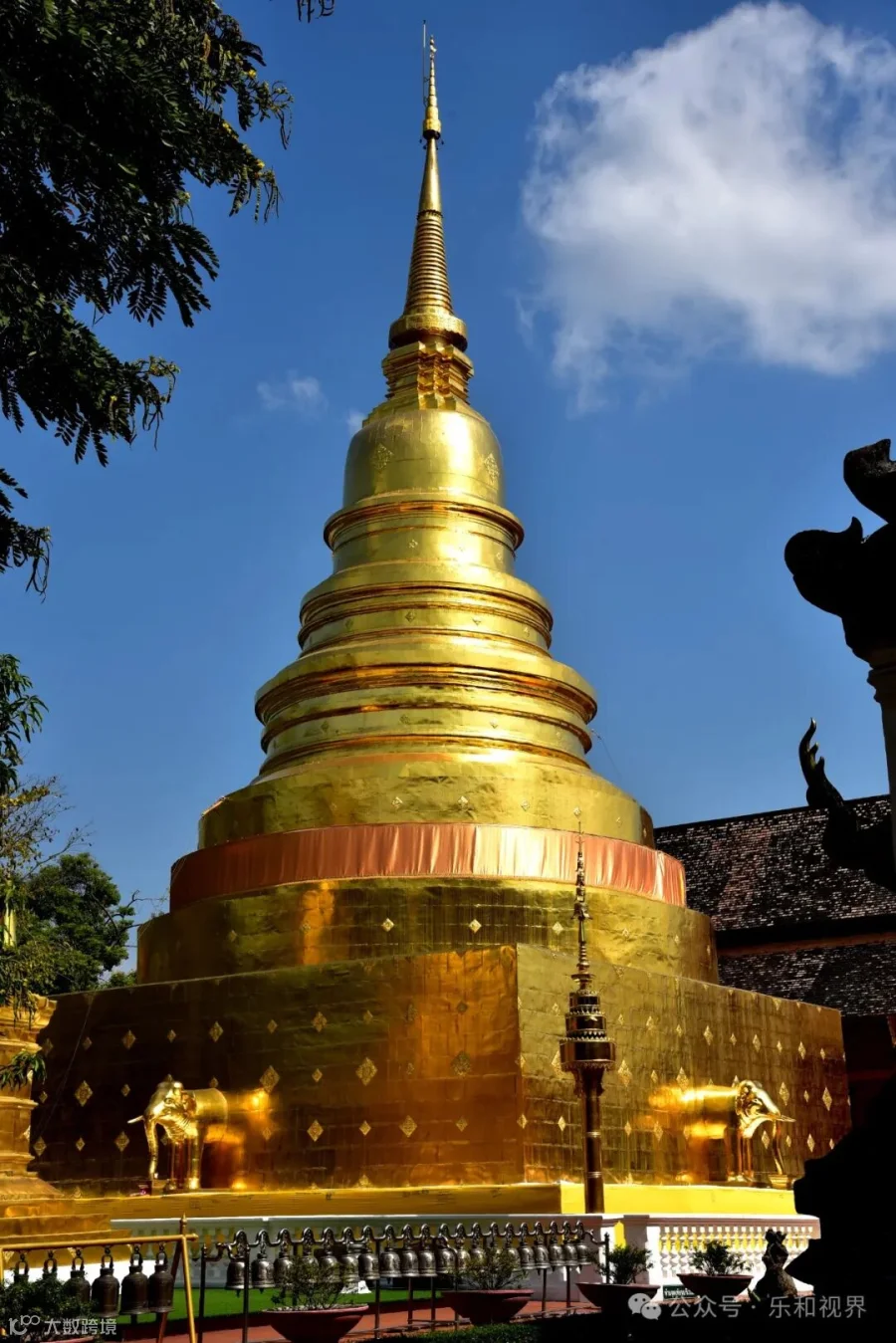
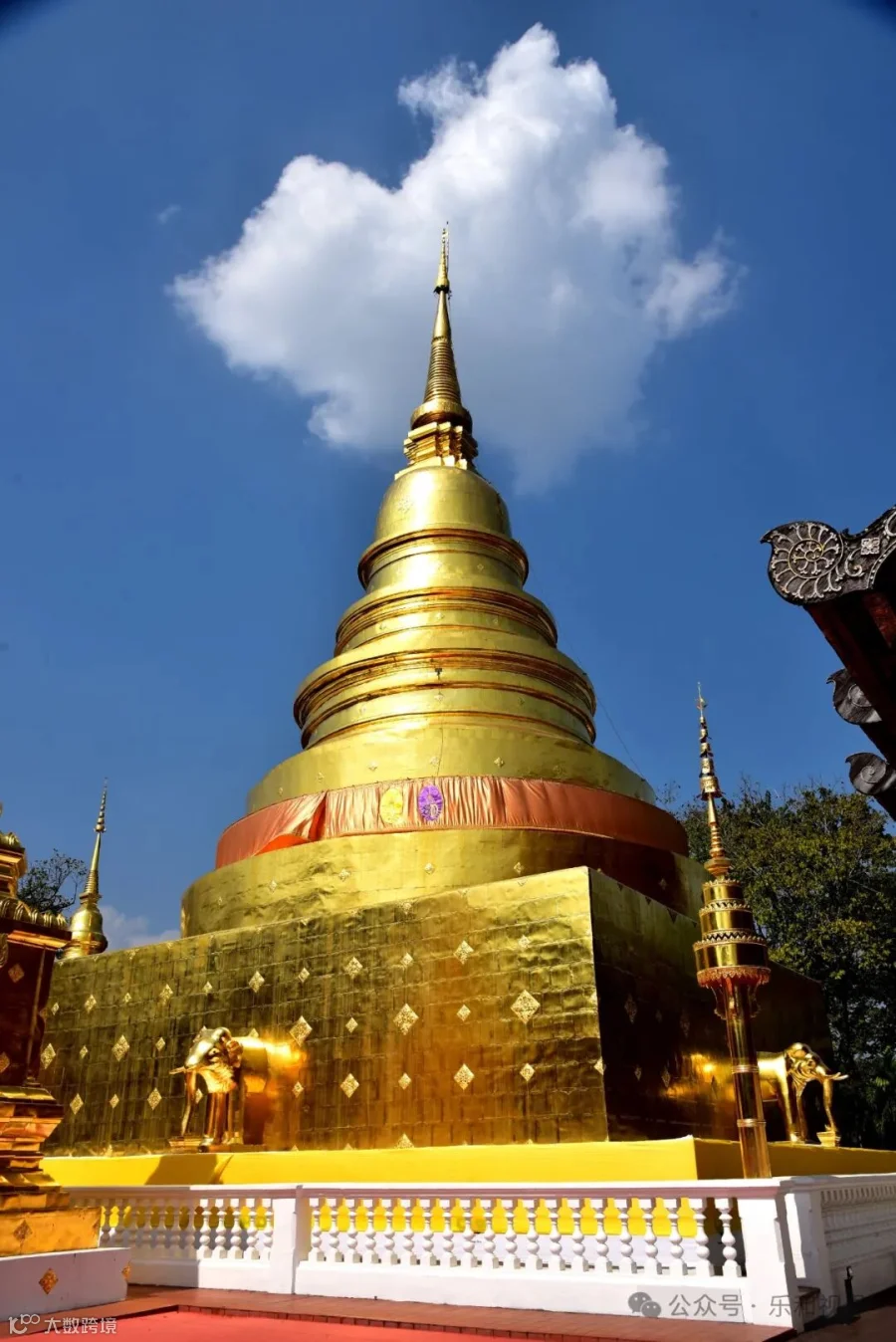
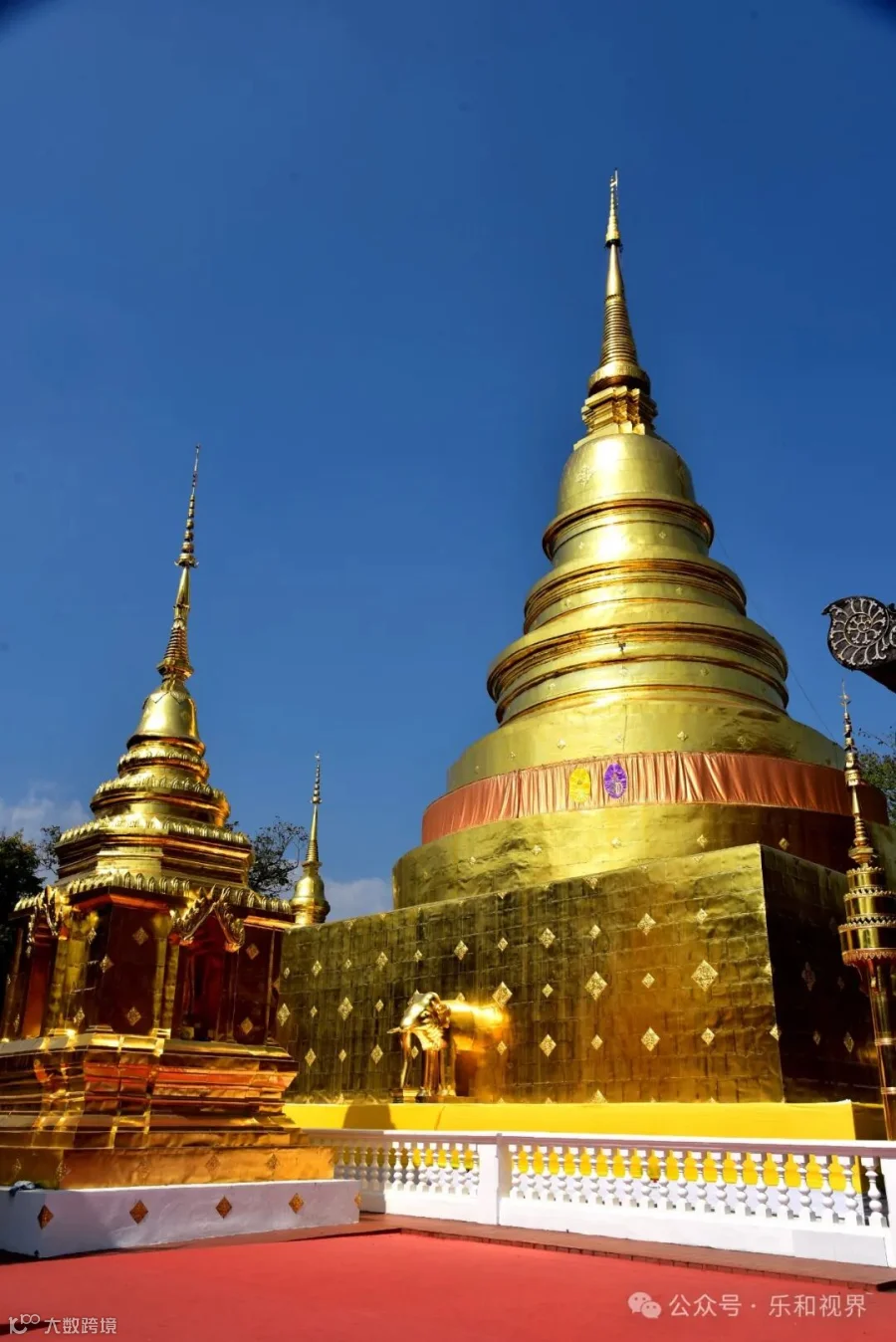
The main chedi, which dates from the establishment of the temple in 1345, has been expanded and renovated in the past The style has Lanna and Burmese features and has been entirely gilded.
The high square base has elephants protruding from the structure on each of its four sides. The base supports the circular mid-section which rises to support the bell. Above the bell is the usual finial including the hti or Burmese style umbrella.
Next to the chedi is a smaller one also gilded with a high square base in similar style.
Ho Trai(temple library)
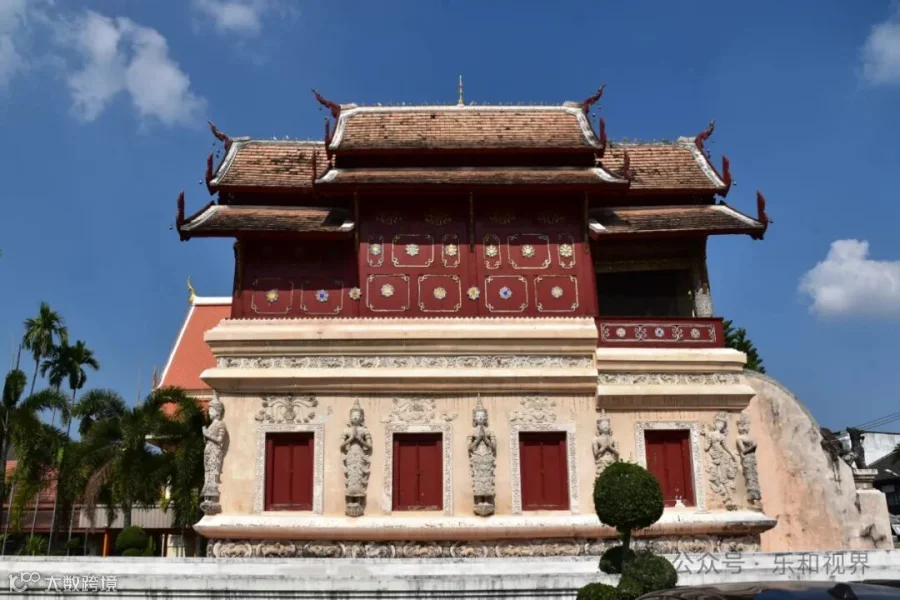
One of the other main attractions is the exquisite ho trai or manuscript depository building. It’s a masterpiece of the Lanna style of architecture and regarded as one of the most beautiful in Thailand. The building originally dates from 1477 and undergone several restorations including in 1867 and 1920.
The building has two levels as usual with the depository placed on the upper floor to protect from insects the sacred Buddhist texts which are inscribed on cut palm leaves.
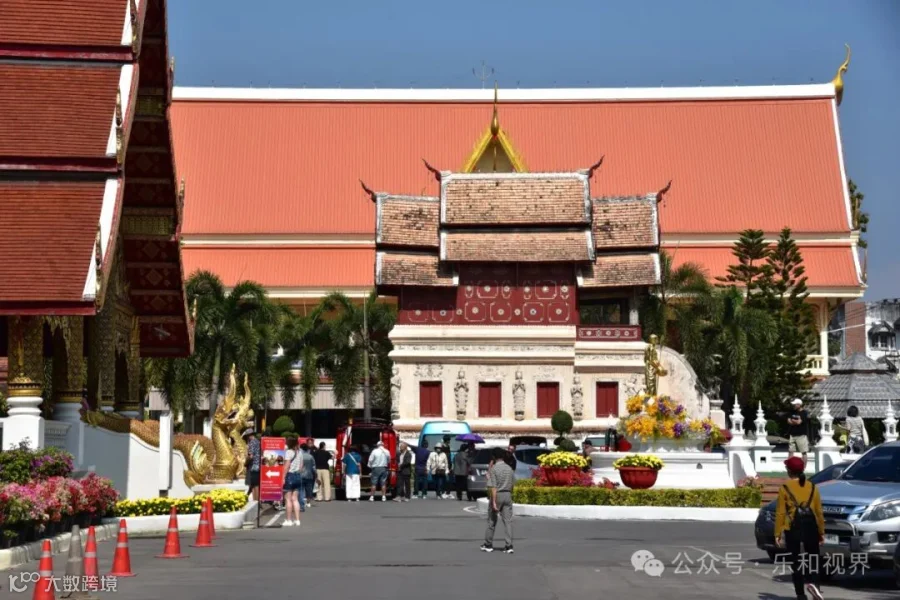
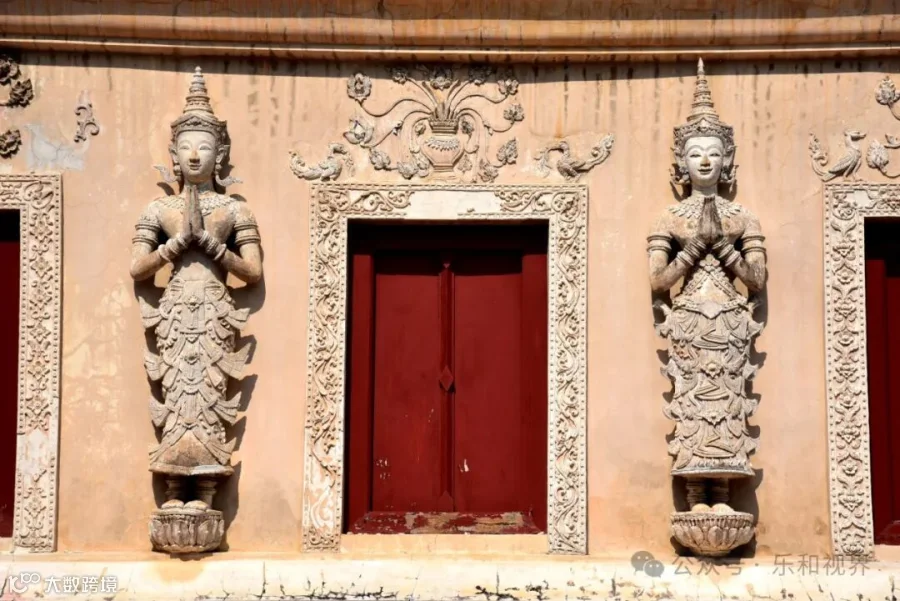
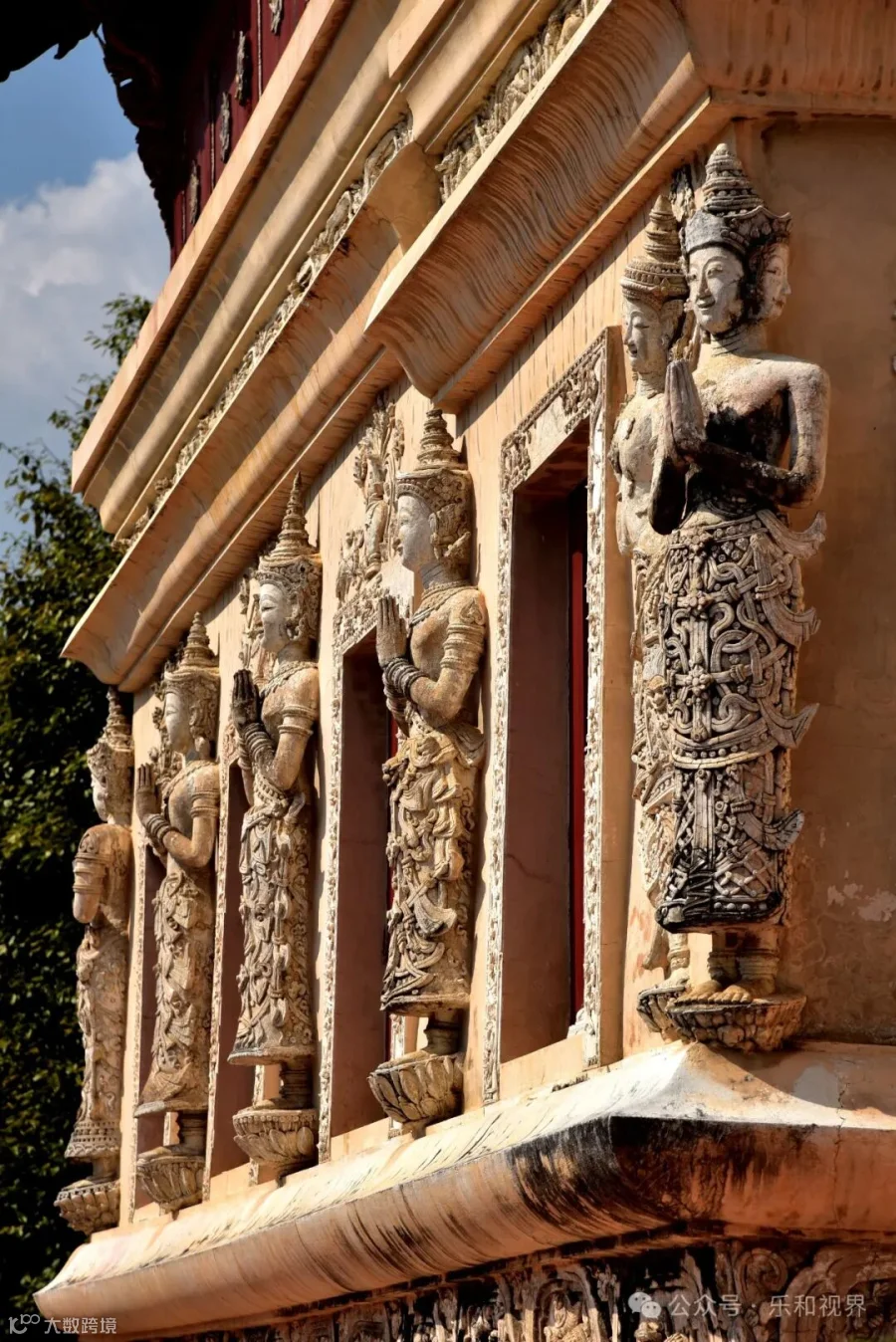
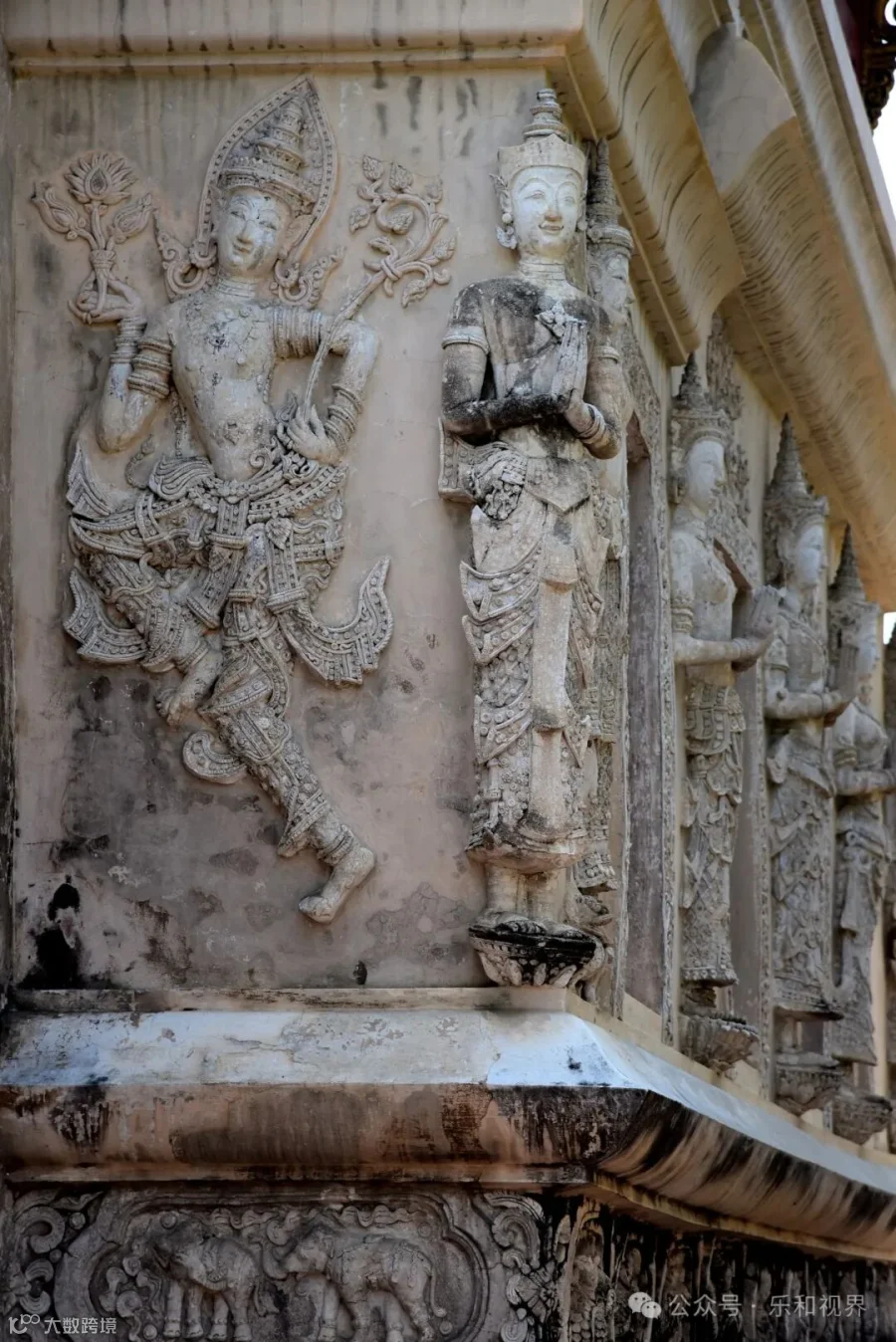
The lower section is built of stone with around 20 beautiful Devata figures in bas-relief set around the walls between the windows and on the corners. Most of the figures are in the anjali pose with hands clasped in the gesture of respect but several placed on the corners are more animated, dancing and raising lotus flowers over their shoulder.
The front entrance is guarded by makarra seen disgorging lions which is very unusual and a set of steep steps lead up to the depository.
The upper section is made of teak which is said to more resistant to decay than stone and is one of the few woods which are ignored by ants. The facade is decorated with carved foliate work in faded gilt with a tower ornament on the gable end. The walls are of teak and treated with red lacquer as are the nagas along the bargeboards and the chofa finials. Along the ridge of the roof are a line of small hamsas and in the middle a small gilt finial also with bird figures.
The End