



As with all downhole operations, those conducted on coiled tubing become more efficient and provide more value as downhole uncertainties are reduced or eliminated. To this end, a recently-developed 21⁄8-in. intelligent coiled tubing (ICT) system combines real-time downhole data monitoring with the capability to simultaneously provide downhole power, significantly improving operational efficiency and accelerating well recovery in all types of coiled tubing (CT) operations.
在所有井下作业中,连续油管作业变得更有效率,并对井下不确定性的减少或消除更有价值。为此,最新研究的21⁄8寸智能连续油管(ICT)系统,结合了实时井下数据监测和持续提供井下电力的能力,大大提高操作效率,缩短了所有类型的连续油管(CT)作业时间。
The Baker Hughes TeleCoil system provides accurate, real-time downhole monitoring of high-resolution depth correlation, differential pressure, and temperature data to allow CT field crews to react quickly to changing conditions, make decisions based on dynamic downhole events, and eliminate missed or wasted runs. It has been used to reduce operational time and cost in varied applications around the world, including two offshore projects highlighted in this article.
贝克休斯的TeleCoil系统能够提供准确、实时井下监测的高分辨率深度校正、压差和温度数据,允许连续油管现场作业人员迅速反应,并改变工作状态,基于动态井下事故做出决策,消除不必要的起下钻。它已经在世界各地不同的作业中被用于减少操作时间和成本,包括本文中重点提及两个海外项目。
智能连续油管的优势
Real-time data gathered by ICT downhole casing collar locator (CCL), pressure, and temperature sensors provide advantages over conventional CT systems for a number of well intervention and stimulation operations, including the following.
实时数据由智能连续油管井下套管接箍定位器(CCL)、压力和温度传感器进行收集,提供了优于常规连续油管系统的干预和增产作业,其优点主要包括以下几点。
Well stimulation - precise placement of fluids and isolation tools and better monitoring of diverter and acid placement
油井增产 - 流体和隔离工具更精确的定位,更好的监测前置液和酸液的位置
Milling and cutting - precise location for tubing cuts and information regarding motor operation, efficiency, and stalls
铣削和切割 - 油管切割的精确定位,考虑电机运行和效率的信息
Fishing - fish depth and movement confirmation, and enhanced pressure information
打捞 - 落鱼深度和移动的确认,增强压力信息
Gas lift - lifting efficiency monitoring and well response control, and gas lift valve operation monitoring
气举 - 举升效率监测和油井反应控制、气举阀操作监控
Perforating and abrasive jetting - depth and moving confirmation, and gun control activation, formation response, and jetting performance
射孔和磨料射流 - 深度和移动的确认,射孔枪控制激活,地层反应,射流性能
Cleanouts - solids removal efficiency monitoring, flow switching nozzles’ activation, and well control to avoid lost circulation or lost production.
清管 - 固体去除效率监测、流动转换喷嘴的激活,以及避免井漏或生产损失的油井控制
其他优势
The new real-time ICT system, designed for smaller completions and higher downhole pressures than previous 27⁄8-in. systems, consists of a 1⁄8-in. non-intrusive electrical conductor wire; the data acquisition system for delivering electrical power to the BHA sensors and for transferring the downhole data to surface; and a versatile 21⁄8-in. bottomhole assembly (BHA) that incorporates the conductor release assembly, CCL, pressure, and temperature sensor package, and BHA release function. The tool can be assembled as a sensor package, logging adapter, or camera adapter. Switching between different applications is as simple as changing out the BHA, which reduces the need to rig up and rig down, and leads to operational time and cost savings.
该新型的实时智能连续油管系统设计用于更小尺寸井眼的完井,比以往的2 7⁄8寸的系统具有更高的压力等级,包括一个1⁄8英寸的非侵入性的电导体线;为底部钻具组合传感器提供电力,并将井下数据传输到表面的数据采集系统;多功能21⁄8英寸井底钻具组合(BHA),包含导体释放短节、套管接箍定位器、压力和温度传感器组件、和底部钻具组合释放功能。该工具可以安装传感器组件、测井接头或相机接头。不同的应用之间切换简单,仅需改变底部钻具组合的结构,减少了不必要的起下钻,大大降低了作业时间和作业成本。
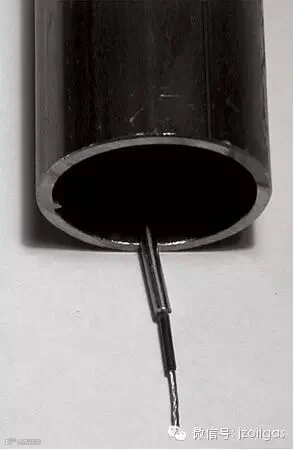
21⁄8英寸的TeleCoil 智能连续油管系统使用1⁄8英寸的非侵入性的电导体线为井下传感器或任何电激活的井下工具持续提供电力。(所有图片来自贝克休斯)
A key advantage of the 21⁄8-in. system over other ICT systems is that it can continuously provide power to the downhole sensors or any electrically activated downhole tools without the time limitations imposed by the life of the BHA battery powering these sensors or tools. The 1⁄8-in. tube is made from a corrosion-resistant alloy that is compatible with most fluids commonly used in CT operations; for example, solvents, acids, gels, and slurries. The tube and wire can operate in downhole temperatures as high as 200°C (392°F).
21⁄8英寸的系统与其他智能连续油管系统相比一个关键的优势就是它可以为井下传感器或任何电激活的井下工具持续提供电力,不会受依靠底部钻具组合电池驱动的这些传感器或工具的时间限制。1⁄8英寸管是由耐腐蚀合金制成的,适合于大多数连续油管作业中常用的流体,例如溶剂、酸、凝胶和泥浆。油管和电缆在井下作业的温度可高达200°C (392°F)。
Using the 21⁄8-in. ICT system resembles the operation principle of stiff wireline; however, it provides several advantages over braided cable. In addition to the lighter-weight BHA, the cross-sectional flow area of the ICT system is reduced by approximately one order of magnitude. Slack management of the 1⁄8-in. tube is more efficient, and the corrosion-resistant material makes the system less susceptible to corrosion.
使用21⁄8英寸智能连续油管系统类似于硬有线的工作原理,然而,它与屏蔽电缆相比提供了诸多优势。除了底部钻具组合的质量更轻,智能连续油管系统的流道面积减少了约一个数量级。管效率更高,耐蚀材料使系统更不易受腐蚀。
挪威海上钻井
In a well off the coast of Norway, production had declined significantly because of accumulations of hard barium sulfate (BaSO4) scale. Having experienced BaSO4-related declines and intervention costs in the past, the operator sought a more efficient, cost-effective solution for cleaning the well and restoring production.
在挪威近海,由于硫酸钡(BaSO4)大规模沉积导致产量大幅下降。已经具有了过去BaSO4导致的产量下降和干预成本的经验,运营商寻求更有效的、更具有成本效益的解决方案来对油井进行清理并恢复生产。
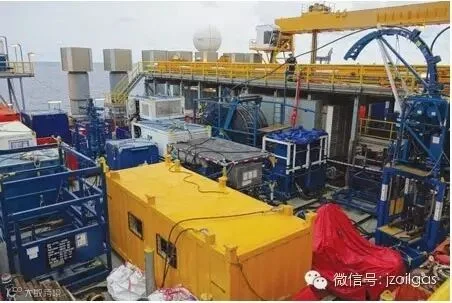
能够使用单个连续油管卷轴完成整个项目,减少海上平台上的占地面积
BaSO4 creates particularly hard scale buildup that is difficult to break loose and circulate out of the wellbore. Conventional coiled tubing methods for removing BaSO4 can require tens of trips and multiple changes at the surface between wireline and coiled tubing reels. Missed runs and non-productive time (NPT) are common in BaSO4 removal operations, driving up costs, delaying production, and increasing safety risks to personnel at the surface. To attack the BaSO4, the well team used a BHA consisting of a 5.875-in. scale mill, a 3.5-in. motor system with string magnets to capture scrap, a 3.375-in. cleanout system, and a TeleCoil ICT sensor assembly.
BaSO4会产生特别硬的垢,难以清除并循环流出井筒。传统的连续油管去除BaSO4的方法需要多次起下钻,在地面进行电缆和连续油管卷轴之间的多次调整。忽略的起下钻和非生产性时间(NPT)在BaSO4清除作业中是常见的,它推高了作业成本,延迟生产,人员在地面的安全风险增加。为了解决BaSO4问题,团队使用了底部钻具组合包括5.875寸的除锈滚筒,3.5寸的动力系统具有带磁性的管柱来捕捉碎片,3.375寸的清洗系统,和TeleCoil智能连续油管传感器钻具组合。
The success of the entire operation was facilitated by the depth control provided by the CCL and the accurate real-time downhole monitoring data provided by the pressure and temperature sensors. Using the ICT enabled prompt detection of the motor stalls and made it possible to monitor the downhole pressure and temperature data during the entire operation, improving the cleanout efficiency. Additionally, using a single CT reel throughout the entire project reduced the footprint on the offshore platform.
整个作业的成功是由套管接箍定位器提供的深度控制和压力和温度传感器提供的准确的实时井下监测数据完成的。使用智能连续油管可以激活马达迅速探测,让它可以在整个作业过程中监测井下压力和温度数据,提高清洗效率。此外,在整个项目中使用单一连续油管卷轴,减少了海上平台上的占地面积。
The intelligent milling and cleanout service dramatically reduced the number of runs, improved mill life and efficiency, and saved days of operating time. This equated to a savings of $755,000 for the operator compared to a conventional CT cleanout.
智能研磨和清洗服务极大地降低了起下钻的次数,提高了研磨的寿命和效率,并节省了数天的作业时间。与常规的连续油管清洗相比,这等同于节省了755000美元的作业费用。
巴西海上钻井
The 21⁄8-in. ICT system was selected, based on its versatility and economic and technological advantages, to help increase production from a mature offshore well in one of Brazil’s basin. The well, with MD of 3,606 m (11,831 ft) and maximum inclination of 89.3° at total depth, was showing increasing water cut and lower hydrocarbon production from a 7-in. gravel pack screen between 10,361 and 11,831 ft. At the time of the intervention, the bottomhole pressure and temperature were 250 bar (3,626 psi) and 82°C (180°F), respectively.
我们选择了21⁄8寸智能连续油管系统,是基于它的多功能性和经济技术优势,帮助在巴西的盆地的一口已开发的海上油井提高产量。该井测深3606米(11831英尺),在井底最大井斜角为89.3°,在10361至11831英尺的砾石充填筛管已经出现了越来越明显的底水锥进,产量越来越低。干预时,井底压力和温度分别是250巴(3626 psi)和82°C (180°F)。
The 21⁄8-in. sensor assembly and logging adapter were installed on a 1¼-in. CT. The drilling assembly also included a 1 11/16-in. positive displacement motor (PDM), two 2½-in. inflatable bridge plugs, and a 1¾-in. rotary jetting tool. Seven runs were performed in this well, summary as follows.
21⁄8寸传感器组合和测井接头安装在1¼寸的连续油管上。钻具组合同时还包括了111/16寸的容积式马达(PDM)、两个2½寸的充气桥塞、和一个1¾旋转射流工具。该井总共进行了7次起下钻,总结如下。
The well was drifted with the PDM to ensure proper clearance for the logging tools and other tools to be run subsequently. The ICT system’s ability to monitor the differential pressure in the BHA during the well drifting (run 1) in real time sped job progress.
该井采用容积式马达下入,以确保随后下入的测井工具和其他工具具有适当的间隙。智能连续油管系统有能力实时监测底部钻具组合下入过程中的内外压差,加快工作进度。
A logging tool was conveyed by the 21⁄8-in. logging adapter to investigate the water production zone, inorganic scales, and organic deposits. During this run, it was determined that the lower zone was producing water and that the well was full of scale and organic deposits near the production zones.
测井工具连接21⁄8寸的测井接头下入,来调查出水区、无机结垢、有机沉积。基于此次下入,我们可以确定低出水区,并确定油井生产区附近有机沉积物和垢富集。
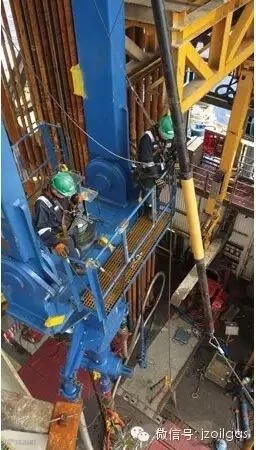
智能连续油管利用实时井下监测来帮助菲律宾作业者显著地降低海上射孔作业的作业时间和作业成本
The rotary jetting tool was used to clean out the specific locations where the inflatable bridge plugs were going to be set to isolate the water production zone. The jetting was accomplished using 10 bbl of a low pH acid system.
我们采用旋转喷射工具来清理充气桥塞所在的特定位置,充气桥塞用于隔离出水区。整个喷射作业采用10桶低pH值酸体系完成。
The first bridge plug was set while continuously monitoring the pressure differential at surface and without a ball drop. The real-time parameters collected by the BHA sensors simplified the inflatable bridge plug setting procedures, which are usually complex, and provided reliability and precision in the bridge plug setting points.
第一桥塞下入时我们持续监测地面的压差,并没有下入投球。底部钻具组合传感器收集的实时参数简化了充气桥塞设置程序,而这一程序通常是复杂的,并提供了可靠的和精确的桥塞设置点。
The main chemical treatment was performed with 95 bbl of the weak acid system and 700 bbl of an aromatic solvent, using the rotary jetting tool on all obstructed and/or damaged intervals identified in the logging run. The CCL sensor’s accuracy optimized the scale treatment performed with the rotary jetting tool.
射孔采用的主要化学处理剂包括95桶弱酸系统和700桶的芳香族溶剂,采用旋转喷射工具,对测井过程中发现的所有阻塞和/或损坏的射孔段进行射孔。套管接箍定位器传感器和旋转喷射工具能够精确的优化对结垢的处理。
The second bridge plug was set as a backup for the first bridge plug, then the final logging run was performed to evaluate the intervention results.
第二个桥塞是作为第一个桥塞的备份,随后下入测井工具来评价干预的结果。
Time and associated cost savings from using the new ICT system for this operation were substantial. All runs were performed using one reel. The ability to replace the sensor assembly with the logging adapter, without having to exchange a CT logging reel with a conventional reel or a wireline unit with a tractor tool, improved safety by considerably reducing the need to handle heavy loads.
使用新的智能连续油管系统作业在本质上节省了作业时间和作业成本。所有的下入射孔作业只使用一个卷轴。该系统能够取代传感器组件与测井接头,无需通过常规的卷轴或具有钢丝绳单元的拖车与连续油管测井卷轴进行转换,通过减少不必要的沉重负荷,大大提高了安全性。
Total timing efficiency compared to an equivalent conventional CT operation was +/- 83 hours saved. The operation successfully increased well production while decreasing water cut and saving valuable rig time.
总时间效率的常规连续油管相比节省了83小时的作业时间。该作业成功的增加了油井产量,减少了底水锥进,节省了宝贵的作业时间。
菲律宾海上钻井
For over a decade, a gas field in the Philippines produced enough natural gas to provide half the electricity needed to power Luzon Island, the largest island in the country. A recent drop in production prompted the operator to execute the second phase of its field development plan, which called for drilling two additional wells.
在过去的十年中,菲律宾的气田生产了足够的天然气来供应菲律宾最大的岛吕宋岛所需的一半的发电量。最近的产量下降使得作业者开始执行气田开发方案的第二阶段,即新钻两口井。
During the first phase of development, the operator had collaborated with the service provider to conduct perforating operations using CT. There were five wells in this phase, and each required accurate correlation of perforation depth and unloading of the well with nitrogen to create underbalance prior to perforating. Because of the complexity of the operation, a simulation run was made with a dummy gun BHA to make sure the BHA drifted and reached the bottom of the well as required. The simulation mimicked the actual perforating operation, except that the guns were not live. After reviewing data from the simulation run and confirming depth and expected downhole conditions, the well team completed perforation operations with live 4½-in. perforating guns. This resulted in clean perforations on all five wells in Phase 1.
在开发的第一阶段,作业者与服务商进行合作,采用连续油管进行射孔作业。在这个阶段有五口井,每口井均需要准确的射孔深度校正和利用氮气进行卸压,来产生负压射孔。由于作业的复杂性,我们采用具有假射孔枪的底部钻具组合进行模拟下入,确保底部钻具组合移动并下入到指定深度。该仿真模拟了实际的射孔操作,除了射孔枪不是真实的。在审核模拟运行的数据后,并确认了深度和预期的井下条件,射孔团队采用4½寸的射孔枪完成射孔作业。这使得阶段1中的无口井都是清洁射孔。
For Phase 2, the operator wanted to minimize the time that the dynamically positioned, double-redundancy (DP-2) semisubmersible rig needed to be in position. Because shifts in weather or sea conditions can cause the rig to disconnect from the subsea wellhead, the more time spent on location, the greater the risk. The new ICT service was selected to eliminate the need for an extra simulation run on each well. This solution would save a full day of rig time for each of the wells.
在阶段2,作业者希望尽量减少双冗余半潜式钻井平台所需要的定位时间。因为天气和海洋条件的变化可以导致钻井平台与水下井口断开连接,在动力定位上花费的时间越多,风险越大。作业者选择新型智能连续油管服务不再需要每口井额外的模拟下入。该解决方案可使每口井节省一天的钻井时间。
ICT perforating operations-including time to run in hole, perforate, and run out of hole-required only 13 hours for each of two wells-less than one-half the 30 hours per well for required for Phase 1 CT perforating operations. Assuming an average daily rig rate of $1.25 million, using the new ICT services with tubing-conveyed perforating solutions saved 34 hours of operational time and more than $1.77 million across both wells while reducing safety and operational risk.
智能连续油管射孔作业时间包括下入时间、射孔、取出时间,每两口井总共需要13小时,比传统的阶段1连续油管射孔作业每口井所需的30个小时减少了3/2。假设平台平均每天日费125万美元,使用新型智能连续油管服务与油管输送射孔方案,每口两井能够节省34个小时的作业时间和超过177万美元的作业费用,同时增加了安全性,降低了作业风险。
(来源:金正纵横翻译公司)