前言:
海藻提取物作为肥料使用历史悠久,随着人们对土壤健康及环境安全的重视,我国海藻肥料正迎来快速发展。近年来已经涌现出一批拥有核心技术及优秀产品的海藻肥公司;但不可否认的是,市场上也存在着大量炒作概念、夸大效果的行业乱象。
海藻提取物对农作物究竟能产生什么效果?是什么物质在起作用?该如何选择产品?如何更好的使用以发挥海藻提取物的肥料功效?分享一篇来自Russell Sharp的文章,对海藻提取物中所含物质、功能及作用机理给出了详细深入的解答!
By: Russell Sharp
在许多沿海地区,几千年来一直使用生海藻来提高农业系统的生产力。之后,在20世纪下半叶,液体海藻提取物在农作物上的使用在全球范围内变得普遍。反复使用这些提取物农民们报告说,它们对作物产量和质量产生了积极的影响。
In many coastal regions, raw seaweed has been used for millennia to improve the productivity of farming systems. Then, in the latter half of the 20th century the use of liquid seaweed extracts on crops became widespread globally. Farmers using these extracts repeatedly reported positive results on crop yield and quality.
由于这些结果不能简单地与海藻提取物的元素养分含量相关联,因此需要时间来对这些影响进行科学解释。随着我们对海藻生物化学及其作用方式的认识越来越清晰,我们不再将海藻提取物视为肥料,而是将其列为生物兴奋剂这一快速发展领域的关键产品类别之一。
As these results could not simply be correlated to the seaweed extract’s elemental nutrient content, it took time for a scientific explanation for these effects to catch up. As we have gained a clearer understanding of algal biochemistry and the associated modes of action, we no longer considered seaweed extracts to be fertilizers, and instead classify them as one of the key product classes in the rapidly developing sector of biostimulants.
下面我将使用海藻提取物时观察到的积极效果与海藻中所含化合物的最新科学知识联系起来,进一步加深我们对如何以及何时使用海藻提取物产品来最大化其功效的理解。
Below I have linked the positive effects observed when using seaweed extracts to the latest scientific knowledge of the compounds present in seaweeds to further our understanding of how and when to use seaweed extract products to maximize their efficacy.
农业中用作生物兴奋剂的海藻提取物,大部分是从褐藻(褐藻科)中提取的;最值得注意的物种是泡叶藻(有结的海草)。由于泡叶藻在北半球的潮间带生长,已经提出在该栖息地中海藻经历的反复暴露于干燥、紫外线和温度波动的压力条件,以及较慢的生长速率,导致泡叶藻中存在高浓度的生物活性物质。
Most of the seaweed extracts used in agriculture as biostimulants are extracted from species of brown algae (Phaeophyceae); most notably the species Ascophyllum nodosum (knotted wrack). As Ascophyllum nodosum grows in the intertidal zone of the Northern Hemisphere it has been proposed that the stressful conditions of repeated exposure to desiccation, ultraviolet light, and temperature fluctuations experienced by the seaweed in this habitat, combined with a slower growth rate, lead to the high concentrations of bioactive compounds present in Ascophyllum.
相比之下,热带物种,或生长在海洋深处的海带,产生更低浓度的这些生物活性化合物和更高水平的纤维素——一种既不新颖也不能刺激植物生长的化合物。
In comparison, tropical species, or the kelps that grow further out to sea, produce lower concentrations of these bioactive compounds and higher levels of cellulose; a compound that is neither novel or able to stimulate plant growth.
从微藻提取物的市场营销材料来看,由于它们在淡水中培养,因此对褐藻提取物的唯一优点是钠含量较低。然而,微藻的种植是一个快速发展的领域,因此,在未来几年有望有新的见解和产品。
From a review of the marketing material for microalgae-based extracts, it would appear the only advantage being claimed over brown seaweed extracts is a lower sodium content, due to their cultivation in fresh water. However, microalgae cultivation is a rapidly developing area of phycology and so new insights and products are expected in the coming years.
植物激素及其类似物
众所周知,藻类含有植物激素,当海藻提取物用于植物时,作物表现出与使用纯化或合成的植物激素相似的反应。然而,这些反应是否真的是由于海藻提取物中的植物激素引起的还存在疑问。
It is known that algae contain plant hormones and when seaweed extracts are applied to plants the crop exhibits similar responses to when purified/synthetic plant hormones are applied. However, it is questionable whether these responses are actually due to plant hormones in seaweed extract.
这是因为以下两点原因: ①众所周知,许多植物激素在光、热和氧化条件下很容易分解(提取液在田间从提取到输送的过程中都会经历这一切), ②当人们分析提取物中已知的植物激素时,他们发现浓度相对较低。
This is because a) many plant hormones are known to readily break down in the presence of light, heat, and oxidizing conditions (all of which an extract will experience during its time from extraction to delivery in the field), and b) when people have analyzed extracts for known plant hormones they have found comparatively low concentrations.
相反,目前公认的范式是海藻提取物中含有植物激素类似物。这些类似物与相应的植物激素具有不同的化学结构,但在应用于植物时产生相同或相似的反应。因此,积极的生长反应类似于细胞分裂素和生长素的作用通常被引用。
Instead, the current accepted paradigm is that seaweed extracts contain plant hormone analogues. These analogues possess different chemical structures to the corresponding plant hormone, but induce the same/similar response when applied to the plant. As a result, positive growth responses similar to the action of cytokinin and/or auxin are commonly cited.
海藻多糖、单糖和糖醇
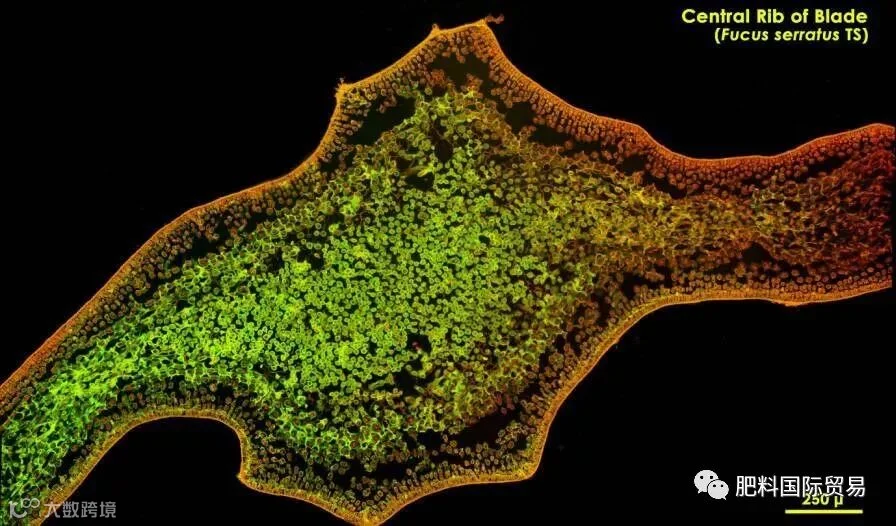
一系列的多糖是海藻特有的,它们构成了海藻生物量的主体。如下显微镜图片所示,可以看到各种多糖发出荧光(Mike Asquith, 2017)。
A range of polysaccharides are unique to algae and make up the bulk of seaweed biomass. This is illustrated in the following microscope pictures where various polysaccharides can be seen fluorescing (Mike Asquith, 2017).
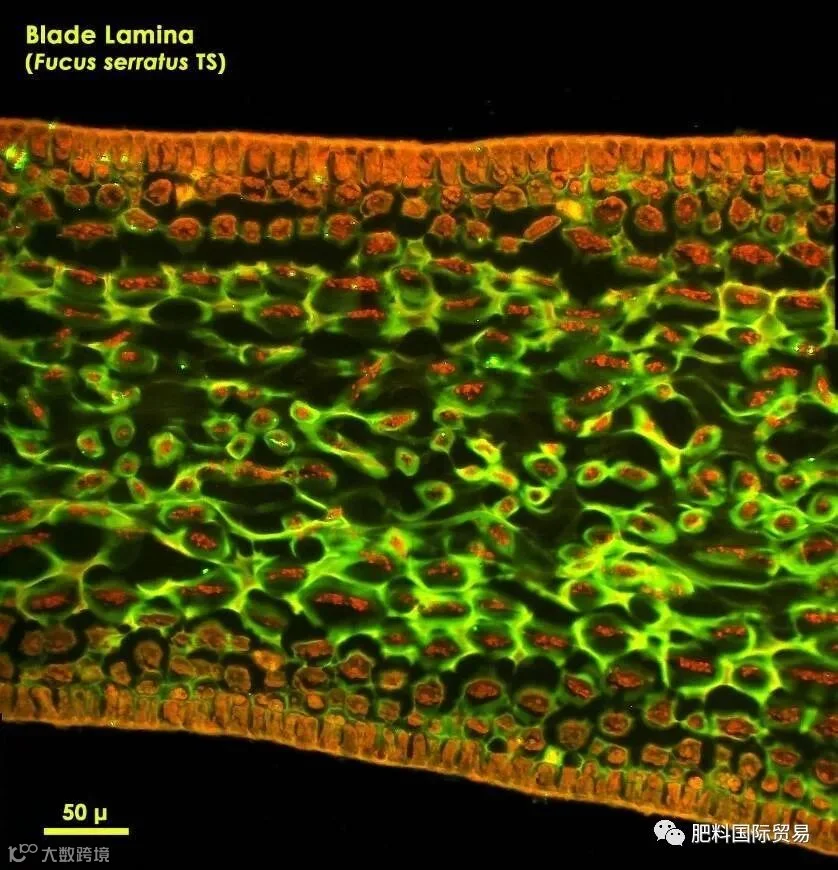
绿藻细胞壁的主要成分是乌尔万,红藻细胞壁的主要成分是沉香和卡拉胶,褐藻细胞壁的主要成分是藻酸盐和富康酸盐,其中海带素和海带多糖为贮藏多糖。在任何提取过程中,这些多糖以及它们的去聚合所产生的低聚糖和单体,已经被发现在作物上应用时会产生积极的反应。
The principal component of green algae cell wall is ulvans, in red seaweed cell walls it is agarans and carrageenans, and in brown seaweeds alginates and fucans are found in the cell walls and laminarin as a storage polysaccharide. These polysaccharides, along with the oligosaccharides and monomers that result from their depolymerisation during any extraction process, have been found to induce positive responses when applied to crops.
植物对海藻多糖处理的一个积极响应是植物防御机制的诱导,这在学术研究中被反复报道。由于这些化合物对藻类是独特的,因此已知植物将这些多糖的存在检测为“非自身”。已经证明在细胞膜上检测藻类多糖可以激活茉莉酸、水杨酸和乙烯信号传导途径。
One positive response of plants to treatment with algal polysaccharides repeatedly reported in academic studies is the induction of plant defense mechanisms. As these compounds are unique to algae, plants are known to detect the presence of these polysaccharides as “non-self”. Detection of algal polysaccharides at the cell membrane has been demonstrated to activate the jasmonic acid, salicylic acid, and ethylene signalling pathways.
这些激素途径刺激一系列化学和物理保护化合物的积累。因此,海藻提取物激活植物防御系统可用于预防作物中的非生物和生物胁迫。
These hormonal pathways stimulate the accumulation of a range of chemical and physical protective compounds. The activation of plant defenses by seaweed extracts can thus be used to pre-emptively protect against abiotic and biotic stress in crops.
然而,还需要注意的是,目前还没有证据表明植物中存在针对这些化合物的特定受体,因此它们很可能是通过刺激另一种多糖微生物相关分子模式(MAMP)的受体(如甲壳素)发挥作用的。
However, it should also be noted that there is no current evidence for a specific receptor in plants for these compounds, so they most likely work by stimulating a receptor for another polysaccharide microbe-associated molecular pattern (MAMP) such as chitin.
因此,如果诱导植物防御是你的主要目标,你应该考虑直接作用于关键细胞膜受体的产品,因为它们在该领域应该被证明更有效。在你所在的地区,也可能有监管方面的原因阻止你使用海藻提取物来对抗生物压力。
Therefore, if induction of plant defenses is your primary objective, you should consider products that act directly on key cell membrane receptors as these should prove more efficacious in the field. There may also be regulatory reasons in your region that might dissuade you from using seaweed extracts to prime against biotic stresses.
除了植物防御启动之外,藻类多糖还有许多其他作用方式,具体取决于它们的特定生化特性;
In addition to plant defense priming, there are a number of other modes of action for algal polysaccharides based on their specific biochemical properties;
海藻酸盐(海藻酸)
褐藻酸盐是一种使褐藻具有胶质性质的多糖。它们在所有褐藻中含量都很高。从褐藻中提取的褐藻酸盐用于医疗用途(如盖胃平颗粒)。在农业中,藻酸盐的凝胶特性允许在植物表面上形成微胶体,这种微胶体被认为是一种保护膜。
Alginates are the polysaccharide that give brown seaweeds their gelatinous nature. They are present in very high levels in all brown seaweed. Alginates are extracted from brown seaweed for medical use (e.g., Gaviscon). In agriculture, the gel-forming property of alginates allows for the formation of microcolloids over the surface of plants, that are thought to act as a protective film.
藻酸盐还可作为有益微生物的饲料和营养源。这包括将病原体排除在叶表面定殖的拮抗剂,以及那些散发植物激素的拮抗剂。
Alginates will also act as a feed and nutrient source for beneficial microbes. This includes antagonists that exclude pathogens from colonizing the leaf surface, and those that exude plant hormones.
甘露醇
褐藻中含有高浓度的糖醇甘露醇。许多海藻提取物是水溶性的,含有大量甘露醇。甘露醇是一种多功能化合物,主要有三个主要活性领域:
The sugar alcohol mannitol is found in high concentrations in brown seaweeds. Being water soluble, many seaweed extracts contain good levels of mannitol. Mannitol is a multifunctional compound and has three main areas of activity:
1. 抗氧化剂 Antioxidant.
甘露醇能够“清除”活性氧(ROS),活性氧会产生损害植物组织的自由基。植物在非生物胁迫下会产生高水平的活性氧,因此含有甘露醇的海藻提取物在有压力的生长条件下是一个不错的选择。
Mannitol is able to “mop up” the reactive oxygen species (ROS) that create the free radicals that damage plant tissues. ROS are produced in high levels when plants are under abiotic stresses and thus a seaweed extract containing mannitol would be a good choice in stressful growing conditions.
2. 硼配位 Boron complexing
甘露醇能与硼原子形成络合物,有效螯合重要的植物养分——硼。
Mannitol is able to form a complex with boron atoms, effectively chelating an important plant nutrient.
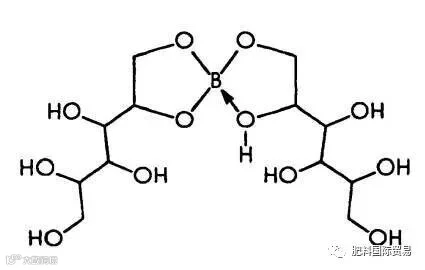
Mannitol is able to form a complex with boron atoms
甘露醇能与硼原子形成络合物
3. 真菌攻击中的信号传递 Signalling
病原真菌在攻击植物时也使用甘露醇来抑制活性氧。甘露醇和降解甘露醇的植物酶之间的相互作用是作物植物和病原体之间的斗争中的重要相互作用,其决定了疾病是否成熟。 因此,我建议如果作物已经患有真菌病,则不应使用海藻提取物。
Pathogenic fungi also use mannitol to quench ROS when attacking a plant. The interplay between mannitol and the plant’s enzymes that degrade mannitol is an important interaction in the fight between a crop plant and pathogen that determines if a disease takes hold. As a result, I recommend that seaweed extracts should not be applied if a crop is already suffering from a fungal disease.
岩藻聚糖
褐藻还含有大量的磺化多糖,这些多糖被称为富康糖或富可糖。不幸的是,关于这些物质在植物中如何发挥作用的研究很少,然而,对它们针对动物和人类的使用和影响的研究要多得多。
Brown seaweeds also contain significant levels of sulphonated polysaccharides known either as fucans or fucoidans. Unfortunately, there is a paucity of studies on how these function when applied to plants, however, their use and effects on animal and human is far better studied.
碘
众所周知,海藻是碘的良好来源,以碘化物的形式存在。与岩藻聚糖情况一样,人们对碘在人类和动物健康中的作用的理解,远远好于对碘在植物中的作用的理解。有人提出,它可以影响植物与有益微生物的相互作用,或有助于饲料或食品的生物强化,但报道有限。
It is well known that seaweed is a good source of iodine, in the form of iodide. As is the case for fucans, the function of iodine in human/animal health is far better understood than it is for how it functions in plants. It has been proposed that it could influence the interaction with beneficial microbes or help with the biofortification of crops destined for feed/food but reports are limited.
维生素B12
维生素B12对人体健康的重要性是众所周知的。然而,对于植物来说,它也被证明是有用的。如果你研究它的化学结构(见图),你会发现它是钴的天然螯合物。钴被认为是许多作物生长所必需的,并改善其他作物的生长。此外,钴对于细菌固氮所需的酶也是必不可少的。维生素B12在植物或动物体内是合成不了的,但海藻含有大量的维生素B12,海藻提取物是这种营养素的良好来源。
Vitamin B12 is well known for its importance in human health. However, for plants it can also prove useful. If you study its chemical structure (see image), you will see it is a natural chelation of cobalt. Cobalt is thought to be essential for the growth of a number of crop plants, and improve the growth of others. Furthermore, cobalt is essential for the enzymes involved in nitrogen fixation by bacteria. Vitamin B12 is not synthesized in plants or animals, but seaweeds contain high amounts and seaweed extracts are a good source of this nutrient.
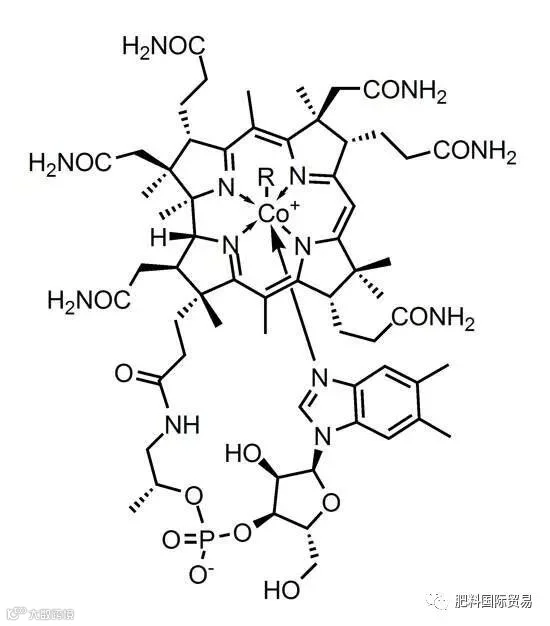
If you study vitamin B12’s chemical structure, you will see it is a natural chelation of cobalt
如果你研究维生素B12的化学结构,你会发现它是钴的天然螯合物
然而,维生素B12对碱性条件非常敏感,所以如果你对钴感兴趣,可以考虑使用冷榨法进行海藻提取物的提取。有趣的是,人们认为海藻中的维生素B12不是由海藻本身合成的,而是由生长在海藻自然潮间带(沿海)栖息地的海藻表面的细菌合成的。
However, vitamin B12 is highly sensitive to alkali conditions, so if cobalt is of interest consider using a cold-pressed seaweed extract. Interestingly, it is thought that the vitamin B12 found in seaweed is not synthesized by the algae themselves but by the bacteria growing on their surfaces in their natural intertidal (littoral) habitat.
什么东西是在海藻提取物里找不到的
What you won’t find in seaweed extracts
除了海藻中所有的活性成分,还有人声称它们也是其他化合物的良好来源。你经常会看到有人声称海藻提取物是氨基酸的良好来源,但如果海藻是氨基酸的良好来源,我们会因为它们的蛋白质含量而吃它们,但事实并非如此。因此,海藻提取物只含有非常低水平的天然氨基酸,如果你正在寻找氨基酸生物刺激剂,那么有更好的替代品可供选择。
As well as all the active ingredients in seaweed, there are claims made that they are also a good source of other compounds. Quite often you will see claims made that seaweed extracts are a good source of amino acids, but if seaweeds were a good source of amino acids, we would eat them for their protein content, but this is not true. As a result seaweed extracts only contain very low levels of amino acids naturally and if you are looking for an amino acid biostimulants there are far better alternatives available.
一些海藻提取物被阐明含有高水平的植物营养素。然而,海藻提取物天然含有非常低水平的所有宏量营养素,典型的值低于1% w/v。那些以高得多的NPK值出售的海藻提取物将添加额外的营养素,或者在碱提取物的情况下,由于使用化学提取所需的氢氧化钾,将存在钾。因此,建议您不要仅仅根据其营养成分选择海藻提取物。
Some seaweed extracts are formulated to contain high levels of plant macronutrients. However, seaweed extracts naturally contain very low levels of all macronutrients, with typical values of less than 1% w/v. Those seaweed extracts sold with much higher NPK values will have had extra nutrients added, or in the case of alkali extracts, there will be potassium present due to the use of potassium hydroxide required for the chemical extraction. Therefore, it is recommended that you do not choose a seaweed extract purely on its nutritional content.
总之,随着我们对海藻提取物在作物中发挥作用的机制有了更多的了解,我希望我们将开始看到该行业从“用于改善植物生长”的营销方式转向更科学、更明智的策略。如果您想了解更多关于海藻提取物,如何使用它们,或提取方法之间的差异,请与我们联系。
In conclusion, as we gain more insights into the mechanisms by which seaweed extracts function in crops I hope we will start to see the industry move away from the “use to improve plant growth” marketing approach toward a more scientific and informed strategy. If you would like to know more about seaweed extracts, how to use them, or the difference between extraction methods please get in touch.
By Russell Sharp, January 5, 2018
Source from AgriBuisinessGlobal
原文链接:http://www.agribusinessglobal.com/plant-health/biostimulants/seaweed-extracts-what-makes-them-work/
本文由“肥料国际贸易”翻译整理,未经许可,禁止转载!
END